
EU Kids Clothing Chemical Compliance: REACH and POPs
Quick answer: Chemical compliance for children’s clothing sold in the EU is not established by one generic “safe fabric” certificate. Buyers must identify which substances and restrictions apply to the specific textiles, prints, coatings, trims and intended uses. For relevant garment programs, this may involve REACH restrictions and the Persistent Organic Pollutants (POPs) Regulation, plus other product and consumer-information rules. The most reliable approach is a risk-based material inventory, supplier declarations, relevant accredited laboratory tests and records linking evidence to actual production lots.
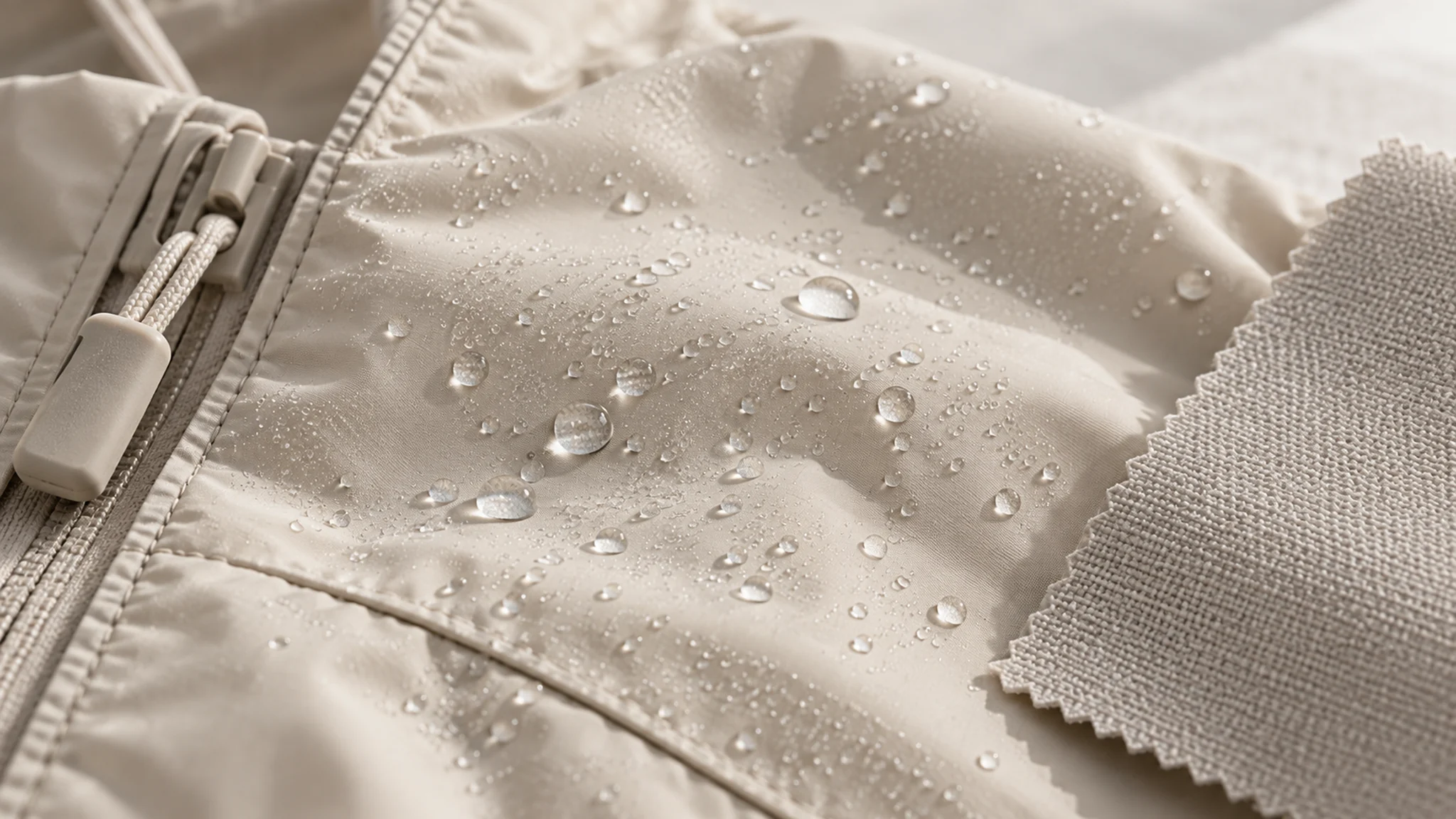
One 2026 recall involving a treated children’s jacket should not be generalized to all Chinese-made apparel. It does, however, illustrate why functionally finished textiles merit careful supplier questions.
1. Separate the legal frameworks before buying tests
REACH (Regulation (EC) No 1907/2006) includes restrictions on certain substances and articles. EU POPs rules (Regulation (EU) 2019/1021) address specified persistent organic pollutants. Both can matter to textiles, but they regulate different lists, scope and conditions. The restrictions and thresholds can change over time.
A chemical test request should cite the actual restricted substance or group, legal entry and applicability, not simply say “REACH full test.” A laboratory should help identify which rules apply to the product and which analytical methods support the requested determination.
Legal references: ECHA: REACH restrictions · EUR-Lex: POPs Regulation
2. Map all materials in the garment
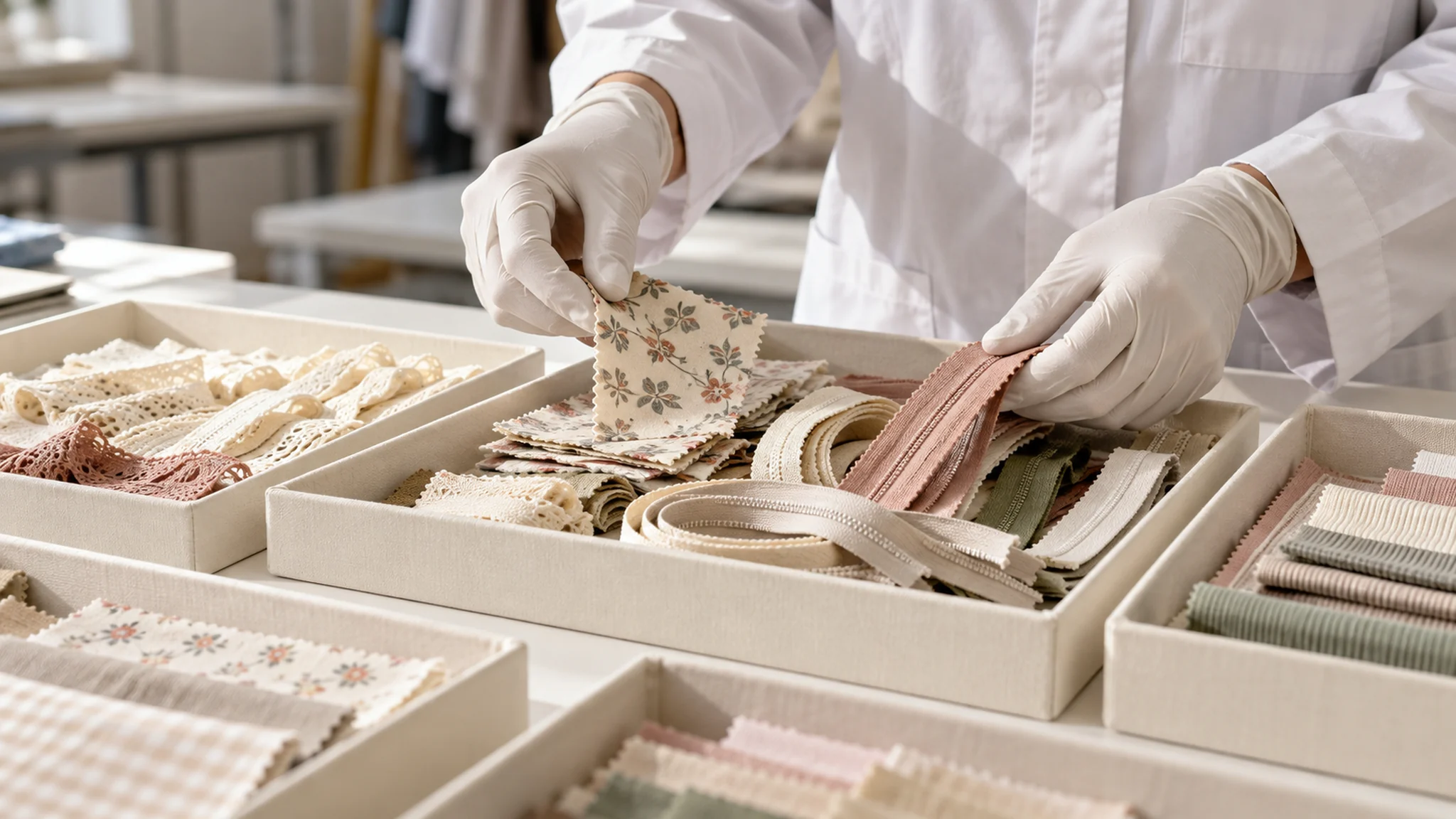
The body fabric is only one part of a jacket, printed pajamas or underwear. Consider the waistband, sewing thread, binding, coated prints, care labels, zipper tapes, plastic hardware and any finish applied after fabric formation.
| Garment component | Potential sourcing question | Evidence example |
|---|---|---|
| Dyed cotton knit | What dyes and finishing chemicals were used? | Material declaration and relevant test results |
| Printed panel | Which ink/binder and cure process? | Ink documentation and print-related testing |
| Water-repellent jacket shell | Which water-repellent chemistry is used? | Finisher declaration and targeted PFAS/PFCA review |
| Elastic waistband | Which polymer, colorant and finishing? | Trim-level specifications |
| Plastic accessories | What restricted substances may be relevant? | Component-level declaration/testing |
| Labels and transfers | Are inks/adhesives within scope? | Supplier technical data and documented risk decision |
Material statements should be version-controlled and linked to suppliers and production lots. A declaration for the shell fabric does not automatically cover a transfer print or zipper tape.
3. Why functional finishing deserves special attention
Products marketed as water-resistant, water-repellent, stain-resistant or easy-clean may involve surface treatments. Brands should ask the finisher which chemistry is used and whether restricted PFAS-related substances are present. Do not assume every waterproof jacket uses fluorinated chemistry, and do not assume every “PFAS-free” claim is substantiated by a broad enough test method.
For C9–C14 perfluorocarboxylic acids (PFCAs), their salts and related substances, see applicable REACH restrictions and any relevant exemptions/transition conditions. Other PFAS and POPs entries may also be relevant. The correct scope is product- and date-specific; have a laboratory or qualified regulatory specialist confirm it.
4. A practical restricted-substance screening system
Use a four-stage workflow:
- Inventory: list all fibers, finishes, coatings, prints and components.
- Prioritize: identify higher-risk materials and intended-market requirements using documented criteria.
- Test/document: obtain current, product-relevant evidence from a qualified source.
- Reconcile: link the evidence to samples, purchase orders, lots and packing records.
A children’s sleepwear collection using simple, untreated knit and an outdoor kids jacket with water repellency need different risk screens. Testing everything for an enormous list without reference to regulatory scope wastes money; testing nothing because the mill promised “eco fabric” creates avoidable risk.
5. Questions to ask a fabric mill or finisher
- Is the fiber content verified for the finished material?
- What dyes, finishing agents and functional treatments are applied?
- Are any substances relevant to EU REACH restrictions or POPs rules intentionally used or potentially present?
- What declarations or test reports cover the exact color, print and treatment?
- Which batch or purchase order does each report reference?
- Does a subcontracted finisher use the same chemistry as the approved sample?
- What is the procedure for changes to inks, auxiliaries, coatings or dye suppliers?
- Who pays for corrective testing when a new input is proposed?

6. How to read a laboratory report properly
A test report is evidence with boundaries. Review the sample description, photographs or identifiers, sampling date, test method, analyte list, units, laboratory accreditation scope, detection/quantification limits, reported results, applicable thresholds and interpretation. A passing result for one color does not automatically prove that a different print or finish complies.
Do not replace a missing result with a screenshot of an unrelated company certificate. If a result falls near a legal limit, ask the lab how measurement uncertainty and relevant enforcement guidance should be handled.
| Report question | Why it matters |
|---|---|
| Does this sample match our approved BOM? | Prevents substitution of unrelated test evidence |
| Are all relevant analytes included? | Avoids “PFAS tested” claims based on a narrow panel |
| Does the cited rule apply on shipment/sale date? | Limits and exemptions can change |
| Is the lot identified? | Supports investigation and repeat orders |
| Has the material changed since testing? | Determines whether prior evidence remains relevant |
7. Avoid exaggerated environmental and safety claims
“Non-toxic,” “chemical-free,” “100% sustainable,” “EU certified” and “PFAS-free” can be misleading or overly broad without defined meaning and suitable evidence. A safer technical statement identifies which test, material, report date, analytes and limits support the claim. Even a passing report is not a permanent guarantee for every future lot.
For marketing claims, also evaluate the applicable consumer-protection and green-claims rules in the destination market. Do not imply a product is certified by an agency merely because it has been tested.
8. Production lot traceability
The chemical compliance plan should survive the transition from sample room to bulk sewing. Require recorded approval if the mill changes yarn source, dye house, printer or finishing chemical. Mark the affected fabric lots and consider whether change-triggered testing is required.
A batch register can contain: final SKU/style, color, BOM revision, fabric mill, dye/print lot, trim supplier, finishing method, report identifier, shipping lot and decision owner.

9. Use a chemical evidence register
Download templates/eu-chemical-evidence-register.csv. It records material/component, substance group, applicable regulation, evidence type, report ID, lot coverage, review date and unresolved actions. Complete it with actual supplier documentation. The template itself does not establish compliance.
10. Example of a treated rain-jacket review
A brand wants a water-repellent finish on a child-size rain jacket. At design stage it identifies fabric construction, coating/finishing supplier, intended level of repellency and consumer-care conditions. Its compliance team then obtains a detailed declaration of the finishing chemistry, checks applicable EU restrictions for the date and intended product, and agrees any relevant tests with a qualified laboratory. Marketing claims are held until evidence is reviewed.
During production, the mill proposes switching to another finishing agent. Even if the hand feel and water resistance remain similar, the chemical evidence for the original finish does not automatically cover the new chemistry. The buyer should reopen the review, map the new material to the affected lot, and approve or reject the change before the goods are released.
This is why a technical material register matters more than displaying a generic “REACH approved” badge. It forces the team to ask which inputs and quantities a declaration actually covers.
11. Use sampling proportional to actual sourcing risks
Develop a material-level risk ranking using factors such as direct skin contact, finishing chemistry, intense printing, supplier change history, prior nonconformities, restricted-substance relevance and intended age group. Document the rationale for which components are tested and which are supported by other suitable evidence. Update the risk ranking after a product or rule changes.
Avoid arbitrary claims that every children’s garment needs every possible chemical test. At the other extreme, never conclude that no test is necessary just because a supplier uses natural fibers. Certain restricted substances may enter through dyes, pigments, coatings, trims and other processes.
12. Chemical documentation in the purchase agreement
Require the supplier to disclose finishing and subcontractor changes material to the agreed compliance plan. Define when evidence is delivered, how batch identities are recorded and how nonconforming results are escalated. The purchasing team should allow for time to investigate a failed result or mismatch rather than assuming new testing can be performed after the ship date without schedule impact.
For every market-specific claim, name the approved wording and the evidence register entry. If the evidence does not exist, remove or narrow the claim rather than filling the gap with reassuring but unverifiable copy.
FAQs
Does OEKO-TEX automatically prove REACH and POPs compliance?
Not automatically. A certificate may be useful evidence within its precise product and certification scope, but it must be assessed against the applicable legal requirements and actual production.
Are PFAS restrictions relevant only to rain jackets?
Functional finishes on many product types can require investigation. The appropriate scope depends on the actual chemistry, product and applicable law.
Does one passing color cover every print in a kidswear line?
Not necessarily. Different pigments, binders, treatments or suppliers may create different risks.
Can a supplier simply write “REACH compliant” on the invoice?
An unsupported statement is insufficient for a robust buyer review. Request the relevant regulation/scope, technical evidence and traceability.
What if a factory changes dye house after approval?
Record the change, assess effects on restricted substances and performance, and agree any renewed verification before approving affected bulk goods.
Related reading: GPSR for Children’s Clothing · Recycled Cotton Quality Guide · Kids Sleepwear Manufacturer
Talk to a Kidswear Manufacturing Specialist
Send your product type, reference images or tech pack, fabric composition, size range, intended market, quantity by style and color, and target delivery date. Request an OEM/ODM feasibility review and quotation. MOQ, sampling, testing responsibilities and delivery milestones are confirmed against your actual specification.