
Children’s Sleepwear Flammability Requirements: US Buyer Guide
Quick answer: In the United States, sleepwear primarily intended for children above nine months through size 14 is generally subject to the children’s sleepwear framework in 16 CFR Part 1615 (sizes above nine months to 6X) and 16 CFR Part 1616 (sizes 7–14). Covered loose-fitting sleepwear must meet the specified flammability performance requirements. Qualifying tight-fitting sleepwear and certain infant garments follow defined exceptions but must still meet other applicable safety and labeling requirements. A soft fabric, an organic claim or a “snug-looking” product photograph is not evidence of legal compliance.
This is a buyer-oriented workflow, not a substitute for reviewing the actual rules with a qualified U.S. compliance professional and CPSC-accepted laboratory. Last legal review: October 13, 2026.
Primary source: CPSC: Children’s Sleepwear Regulations
1. Start with classification, not fabric selection
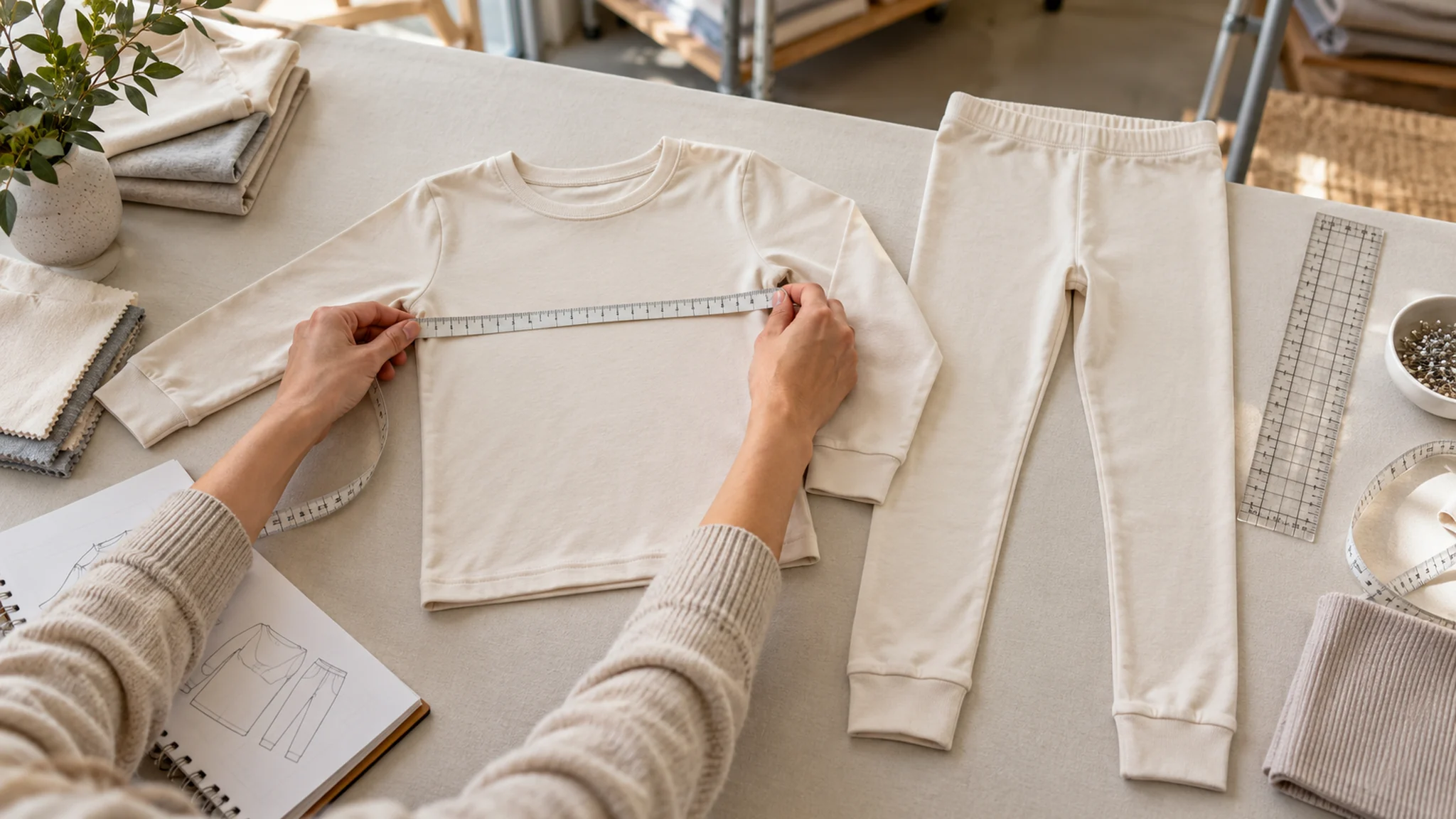
Classification looks at the nature and suitability of the garment, how it is promoted and distributed, and the likelihood of sleep-related use. Pajama sets, nightgowns, robes and products sold as loungewear can fall within the framework. Underwear and diapers are not children’s sleepwear under the cited CPSC guidance, but may have other applicable children’s product requirements.
A buyer should document: (1) target age and size range; (2) intended use; (3) product listing title, photography and sales context; and (4) actual fit and construction. Calling a pajama set “daywear” while presenting it as sleepwear elsewhere does not resolve classification.
2. What Parts 1615 and 1616 cover
| Regulatory element | Part 1615 | Part 1616 |
|---|---|---|
| Main size scope | Above nine months through 6X | 7 through 14 |
| Typical covered products | Pajamas, nightgowns, robes and similar sleep-related garments | Similar products in the larger size range |
| Core pathway | Applicable flammability requirements or a properly qualified exception | Applicable flammability requirements or a properly qualified exception |
| Buyer action | Confirm classification, performance/testing, labeling and records | Same, using relevant size tables |
The size designation and garment measurements need to align. An age label is not a substitute for the dimensions specified in the regulation.
3. Tight-fitting is a technical exception, not a marketing term
The CPSC defines tight-fitting sleepwear using detailed dimensional limits at seven locations: chest, waist, seat, upper arm, thigh, wrist and ankle. There are also construction and trim restrictions and required labels and hangtags. The limits are size-specific and must be checked against the applicable rule, not inferred from a generic size chart.
| Review item | What buyer and factory should confirm |
|---|---|
| Size range | Exact sizes mapped to the appropriate regulatory table |
| Garment dimensions | Approved and checked values at all required locations |
| Sleeves and legs | Required taper and geometry are addressed |
| Decorative trim | Extensions and attachments reviewed against rule limits |
| Permanent labeling | Required size and other information addressed |
| Consumer warning | Applicable snug-fit warning/hangtag requirements followed |
| Other flammability obligations | Applicable textile flammability rules evaluated |
Important: A close-fitting sample that passes a casual fit test is not enough. The factory should record measurement points, actual values, the rule reference and the approval decision for the relevant sample and production lots.
Reference: CPSC: Sleepwear laboratory guidance

4. Are infant sleepers exempt?
Certain garments sized nine months or smaller may fall outside the sleepwear flammability standards if the product meets the defined length and age-label conditions. The CPSC gives specific length limits for qualifying one-piece and two-piece garments. The exception is narrow: age designation alone is insufficient, and relevant general textile flammability and other product requirements still apply.
For infant garments, request the actual full garment length, garment type, age label text and the written basis for any claimed exception. Confirm with a competent specialist instead of using an informal “baby clothes are exempt” policy.
5. What testing can be required?
For products on the flame-resistant route, the relevant standard may address fabric, seams, trims and production garments. Correct specimen grouping, laundering where prescribed, sample selection and acceptance criteria matter. A single passing fabric swatch is not a substitute for a complete product-specific test plan.
CPSC guidance reports cases where prototype fabric or seams passed but finished production garments failed. This is why production lot controls are part of compliance, not an optional afterthought.
| Material / stage | Possible issue | Document to obtain |
|---|---|---|
| Base fabric | Flammability performance changes after processing | Identified material, relevant test results |
| Trim / seam | Different construction from tested prototype | Prototype and construction record |
| Dyeing / finishing | Lot-to-lot material change | Change-control and traceability log |
| Finished garment | Test route or fit exception not satisfied | Product-level evidence and size checks |
| Packaging / retail | Wrong or missing warning information | Final label and packaging approval |
Testing selection should be agreed with a laboratory accepted by CPSC for the specific rule. The scope varies by garment and applicable requirements.
6. Understand CPC responsibilities
A Children’s Product Certificate (CPC) identifies a specific regulated children’s product and its applicable rules. For an overseas-manufactured product, the U.S. importer is generally responsible for issuing it, based on qualifying evidence. The laboratory performs tests but does not issue the CPC on behalf of the responsible importer. A certificate needs its prescribed elements and appropriate supporting records.
CPSC states that, since July 8, 2026, importers of most regulated consumer products are required to eFile certificates of compliance through the relevant U.S. customs process. Confirm the current implementation and the exact product scope with your compliance and customs team before shipping.
Primary sources: CPSC CPC guidance · CPSC third-party testing
7. A compliance-first sourcing timeline
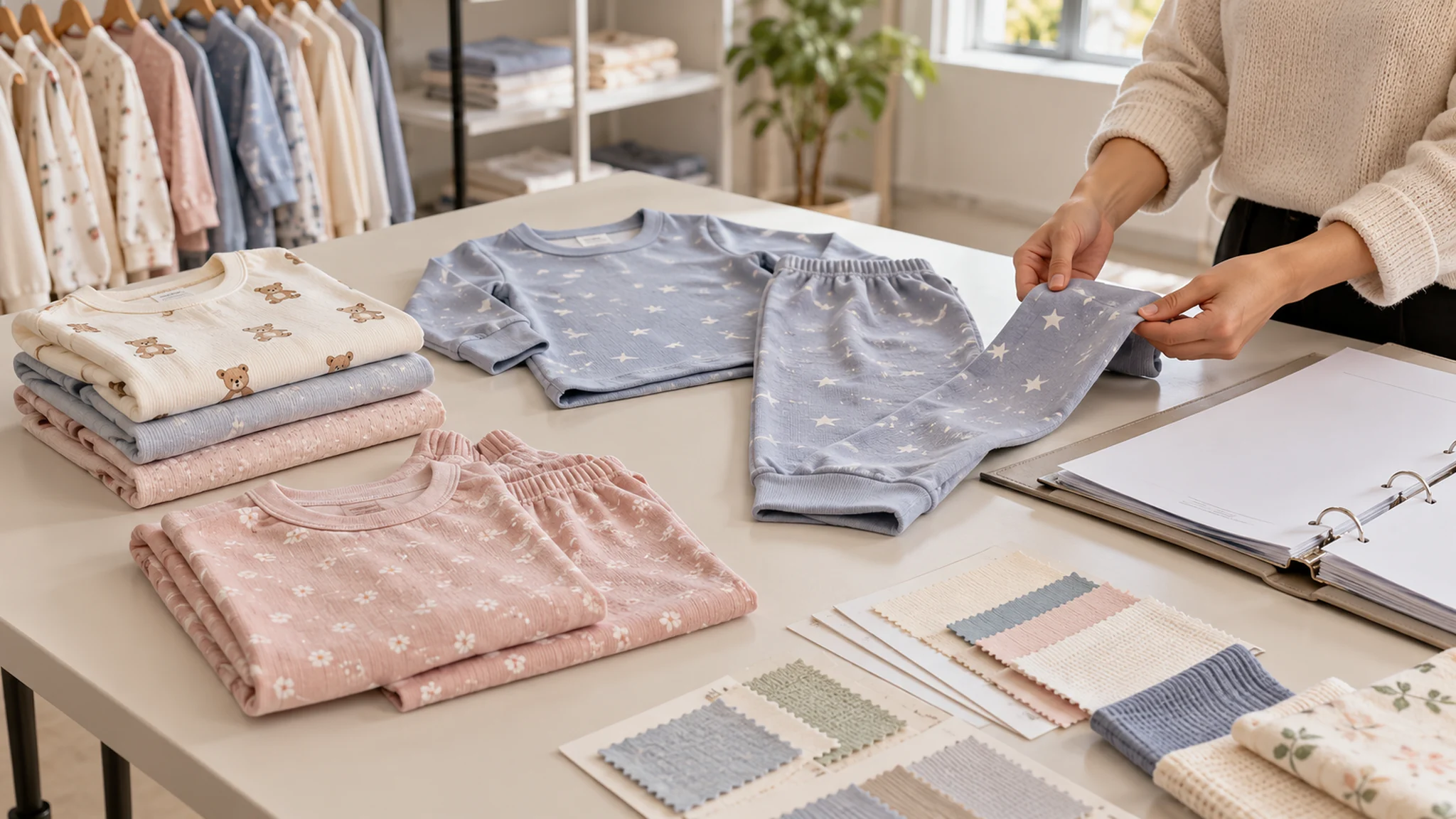
- Design gate: Identify product classification, destination country, applicable size scope and planned safety route.
- Material gate: Identify composition, trims and finishes; ask which characteristics are material to the regulatory route.
- Sample gate: Approve pattern, required dimensions, applicable labels and test plan.
- Production gate: Verify bulk construction matches the approved and tested product; track fabric/trim changes.
- Release gate: Reconcile actual batch, test evidence, CPC content, shipment data and packaging.
Do not change the fit block after approval and assume the compliance basis is automatically preserved. Even a seemingly minor change to elastic recovery, waist width or cuffs may matter for a tight-fitting exception.
8. Five mistakes US sleepwear buyers should avoid
Mistake 1: Confusing cotton with compliance. Cotton is a fiber, not a test result. A product cannot be qualified using fabric composition alone.
Mistake 2: Treating “snug fit” as self-certifying. Every relevant size-specific dimensional and labeling condition must be checked.
Mistake 3: Testing to the wrong rule. CPSC has specifically warned against using general clothing-textile flammability tests instead of the applicable children’s sleepwear rules for covered products.
Mistake 4: Reusing documents after material changes. A dated test report for one composition, design or lot must be assessed for its relevance to a changed product.
Mistake 5: Treating the factory as the importer of record. Document who issues and maintains the CPC, who submits electronic data and who can provide lab documentation when requested.
9. Pre-production review template
| Required record | Style reference | Owner | Status / question |
|---|---|---|---|
| Intended-use classification | Product listing and tech pack | Brand/importer | Confirmed / unresolved |
| Size and regulatory scope | Size chart | Compliance lead | Confirmed / unresolved |
| Route selection | Fit exception or test route | Compliance lead | Confirmed / unresolved |
| Measurements / testing | Final pattern and sample | QA / laboratory | Confirmed / unresolved |
| Label / hangtag | Artwork revision | Brand | Confirmed / unresolved |
| Lot and material traceability | Supplier records | Factory | Confirmed / unresolved |
| CPC / eFiling | Certificate file and customs data | U.S. importer | Confirmed / unresolved |
Downloadable counterpart: templates/us-sleepwear-compliance-gate.csv.
10. A practical classification discussion between brand and laboratory
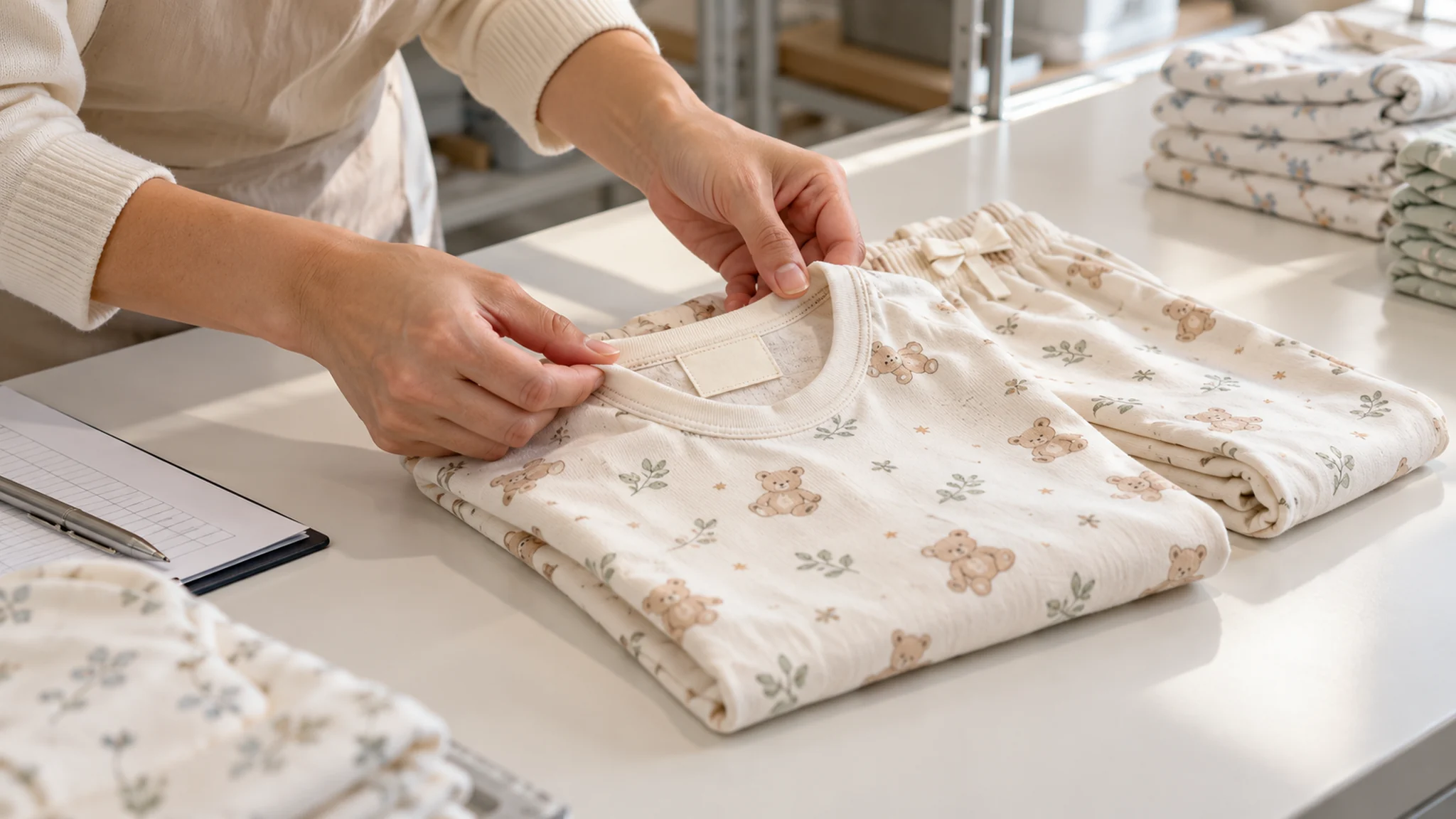
Before asking for a price, the importer can send the laboratory a complete style brief containing product images, intended use, product listing descriptions, sizes, body measurements and flat finished-garment measurements, fiber and trims, and proposed care instructions. Ask the laboratory and compliance consultant to identify the applicable federal rules, any legally available exception, specimen requirements and exact evidence needed to support certification.
An inquiry saying “please test my cotton pajamas” is incomplete: the appropriate scope may differ if the intended product is a loose nightgown, qualifying infant garment or precisely dimensioned tight-fitting set. Document the classification decision and the party responsible for it, not just the final laboratory price.
11. Example change-control decision tree
Imagine an approved tight-fitting pajama set whose supplier proposes softer elastic. The new elastic has the same nominal width as the original, so purchasing suggests it is interchangeable. The technical team should not approve solely on width. Instead, identify which dimensions and recovery properties might change in the finished garment, produce a revised sample if needed, inspect relevant sizes and check whether the previous compliance basis remains valid. Record a new decision referencing the exact component and sample revision.
A separate example is adding a decorative bow on a cuff. The decorative trim may introduce a new construction or dimensional question even if the base fabric is unchanged. A third example is moving the product from “base-layer set” marketing to pajama imagery, which can change intended-use classification. These are prompts for assessment, not declarations that every change triggers the same test.
12. Evidence file that travels with the shipment
A credible importer file connects the relevant purchase order, approved garment description, manufacturing location, size grouping, certificate applicability, qualified test reports, labels and production lot. It distinguishes the date the sample was tested from the date the shipment was produced. When an agency or retailer asks about a particular SKU, the team should be able to retrieve documents without guessing which season the test photograph came from.
If multiple factories, colors or material groups are used, map exactly what a report covers. Do not put every color under a single report merely for administrative simplicity. Any exemptions or determinations invoked should be documented with the accurate regulatory basis.
FAQs
Do all children’s pajamas need chemical flame retardants?
No. The U.S. framework permits different compliance paths, including a precisely defined tight-fitting exception. However, the existence of an exception does not establish that a particular garment satisfies it.
Can I sell loose-fitting cotton pajamas without sleepwear testing?
Do not assume so. The intended use, sizes and applicable flammability route must be evaluated, and covered products must satisfy the relevant requirements.
Does a factory-issued test report replace a CPC?
No. Test evidence can support certification, but the responsible U.S. importer generally issues the CPC for imported regulated children’s products.
Is “loungewear” automatically excluded?
No. CPSC considers actual use and promotion, not only the product name.
Does an infant size label guarantee an exception?
No. The infant exception has additional conditions, including defined garment lengths and labeling.
Related reading: Kids Sleepwear OEM Services · How to Start a Kids Sleepwear Brand · Kids Clothing Manufacturers for Startups
Talk to a Kidswear Manufacturing Specialist
Send your product type, reference images or tech pack, fabric composition, size range, intended market, quantity by style and color, and target delivery date. Request an OEM/ODM feasibility review and quotation. MOQ, sampling, testing responsibilities and delivery milestones are confirmed against your actual specification.