
Kids T-Shirt Fabric Guide: GSM, Cotton, Jersey and Shrinkage
On this page
- Why T-Shirt Fabric Is More Technical Than It Looks
- Cotton Single Jersey
- Combed vs Carded Cotton
- Organic Cotton
- Cotton-Spandex Jersey
- Single Jersey vs Interlock
- What GSM Means
- A Practical GSM Selection Framework
- Neck Rib Is Part of the Fabric System
- Shrinkage Testing
- Spirality and Side-Seam Twisting
- Printing Compatibility
- Color and Shade Control
- Kids T-Shirt Fit and Grading
- QC in Bulk Production
- How to Write a T-Shirt Fabric Spec
- FAQ
- Yarn Count and Surface Quality
- Cutting and Relaxation
- Print Placement and Size Grading
- Pre-Production Checklist
- Common T-Shirt Defects and Likely Causes
- Cost Engineering Without Making the Tee Feel Cheap
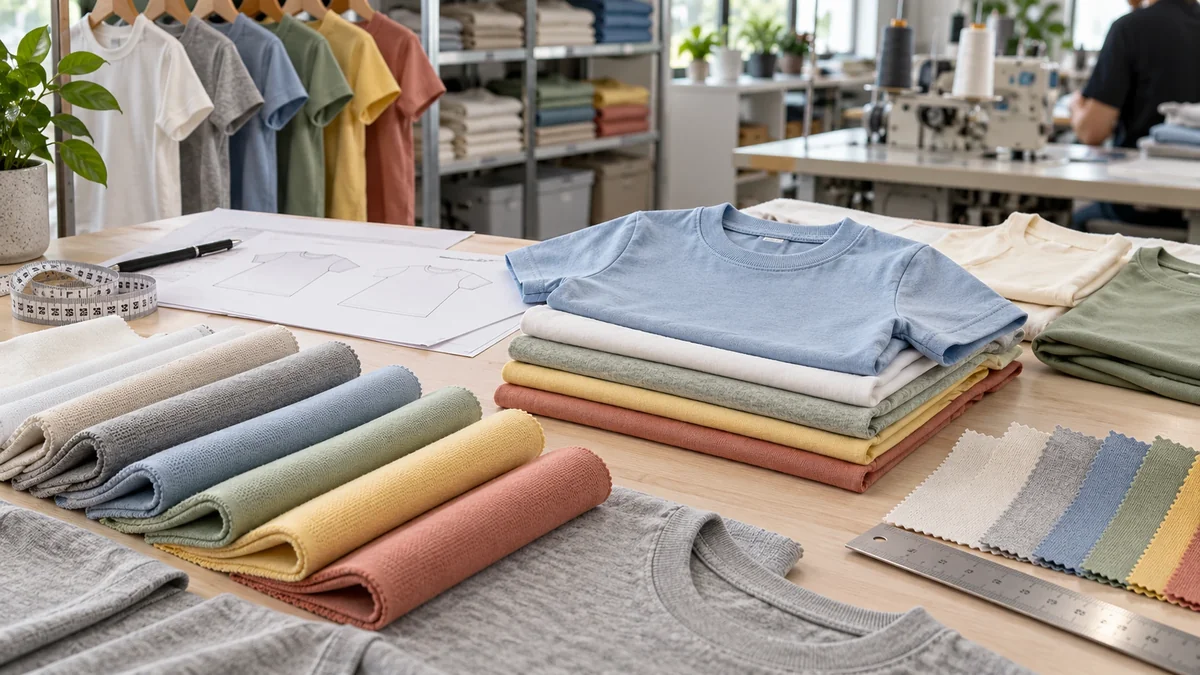
For most kids T-shirts, the fabric decision starts with four variables: fiber composition, knit construction, GSM and finishing. Cotton single jersey is the most common base; combed cotton can provide a cleaner hand; organic cotton supports a traceable natural-fiber position when verified; elastane can add recovery; and interlock offers more stability and body. The “best GSM” depends on climate, fit, opacity, price and print method. Always approve shrinkage, neck recovery and pilling on the final fabric before bulk.
1. Why T-Shirt Fabric Is More Technical Than It Looks
A T-shirt has few components, so customers notice fabric and fit quickly. Common problems include:
- twisting side seams;
- stretched necklines;
- excessive shrinkage;
- pilling;
- see-through light colors;
- print cracking;
- inconsistent shade;
- wavy hems;
- poor recovery.
These are usually fabric + construction + finishing problems, not design problems.
2. Cotton Single Jersey
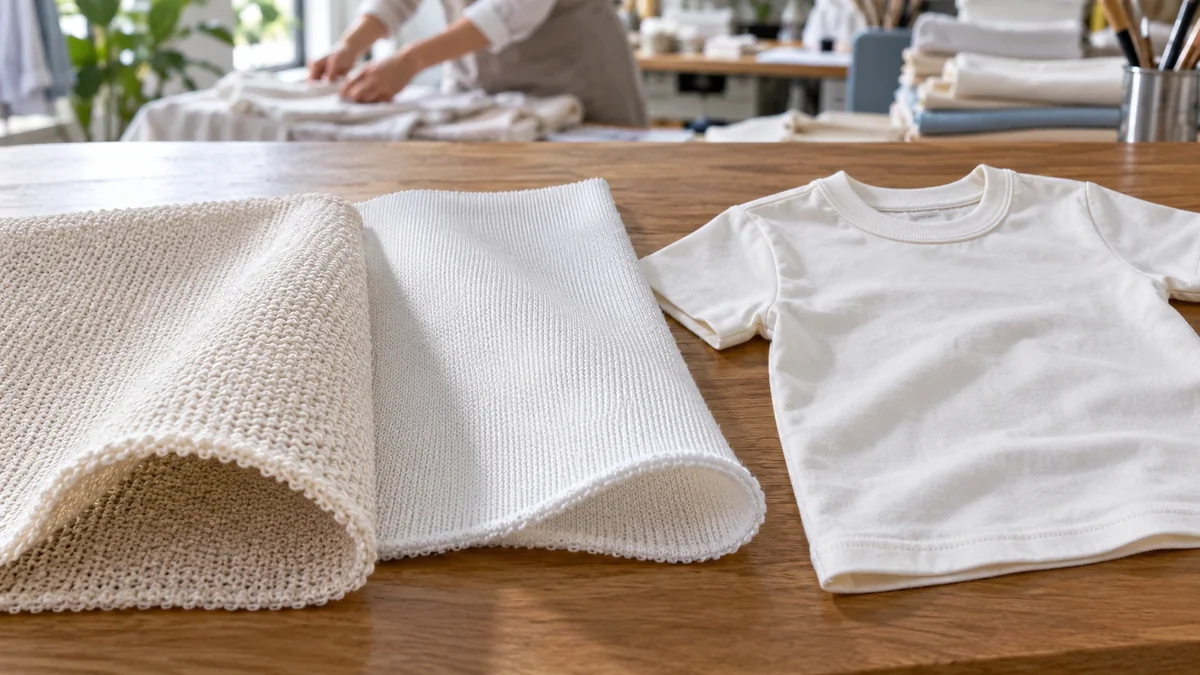
Single jersey is the standard base for many kids T-shirts.
Advantages:
- soft and familiar;
- relatively lightweight;
- good print surface;
- widely available;
- efficient for bulk production.
Risks:
- spirality;
- shrinkage;
- edge curling during sewing;
- neck distortion if binding/rib is mismatched.
3. Combed vs Carded Cotton
Combed cotton removes more short fibers and impurities during yarn preparation, generally creating a smoother, more uniform yarn than basic carded cotton.
For a premium kids T-shirt, that can support:
- cleaner surface;
- softer hand;
- better print appearance;
- reduced fuzz depending on the full fabric process.
But the final fabric still depends on yarn quality, knitting, dyeing and finishing.
4. Organic Cotton
Organic cotton can be a strong material story for baby and kids basics, but “organic” should be supported by the appropriate documentation for the claim being made.
Do not assume an organic fiber claim tells you anything about GSM, shrinkage or pilling. Those are separate specifications.
5. Cotton-Spandex Jersey
Adding elastane/spandex can improve:
- stretch;
- recovery;
- close-fit comfort;
- shape retention.
For oversized or relaxed tees, the extra stretch may be unnecessary. For fitted baby tees or base layers, it can be useful.
6. Single Jersey vs Interlock
| Feature | Single jersey | Interlock |
|---|---|---|
| Structure | single knit | double-knit structure |
| Hand | soft/light | smooth/substantial |
| Stability | moderate | higher |
| Cost | usually lower | usually higher |
| Typical use | everyday tees | premium/heavier basics |
| Edge curl | more likely | less pronounced |
Choose based on product, not which name sounds more premium.
7. What GSM Means
GSM means grams per square meter. It indicates fabric mass per area.
Broadly, lighter GSM feels lighter and can suit warm weather; higher GSM can feel more substantial and opaque. But yarn count and construction also matter.
When comparing suppliers, never compare GSM alone. Request composition + construction + GSM together.
8. A Practical GSM Selection Framework
Instead of declaring one perfect number, classify your intended product:
Lightweight summer tee
Prioritize breathability, drape and opacity in pale colors.
Standard everyday tee
Balance hand, durability, printing and cost.
Premium heavyweight tee
Prioritize body, opacity and structured silhouette, while checking whether the weight is appropriate for children and climate.
Baby tee
Prioritize softness, neck opening, seam comfort and wash stability.
Sample the actual base before deciding.
9. Neck Rib Is Part of the Fabric System
Many T-shirt failures come from the neck rib, not the body fabric.
Check:
- rib composition;
- rib GSM;
- stretch/recovery;
- neck opening measurement;
- binding ratio;
- seam construction;
- appearance after wash.
If the rib is too loose, the neck waves. If it is too tight, dressing is difficult and the neckline puckers.
10. Shrinkage Testing
Measure before and after washing.
Track:
- body length;
- chest width;
- sleeve length;
- neck opening;
- hem width;
- side-seam twist.
Set an agreed shrinkage tolerance appropriate to the fabric and product.
11. Spirality and Side-Seam Twisting
Single jersey can twist because of yarn torque and knitting/finishing conditions.
Control it through:
- yarn/fabric selection;
- knitting and finishing quality;
- relaxation before cutting;
- wash testing;
- panel alignment.
A T-shirt that looks perfect before wash can still twist afterwards.
12. Printing Compatibility
Screen/placement print
Good for many graphic tees. Check hand feel, cracking and cure conditions.
Digital print
Useful for detailed artwork and shorter development in some setups. Confirm color result and fabric pretreatment.
All-over print
Changes the sourcing model because printing occurs on fabric before cutting. Repeat size and print minimum become important.
Embroidery
Adds a premium detail but increases stiffness/weight locally. Use backing and placement appropriate for children’s comfort.
13. Color and Shade Control
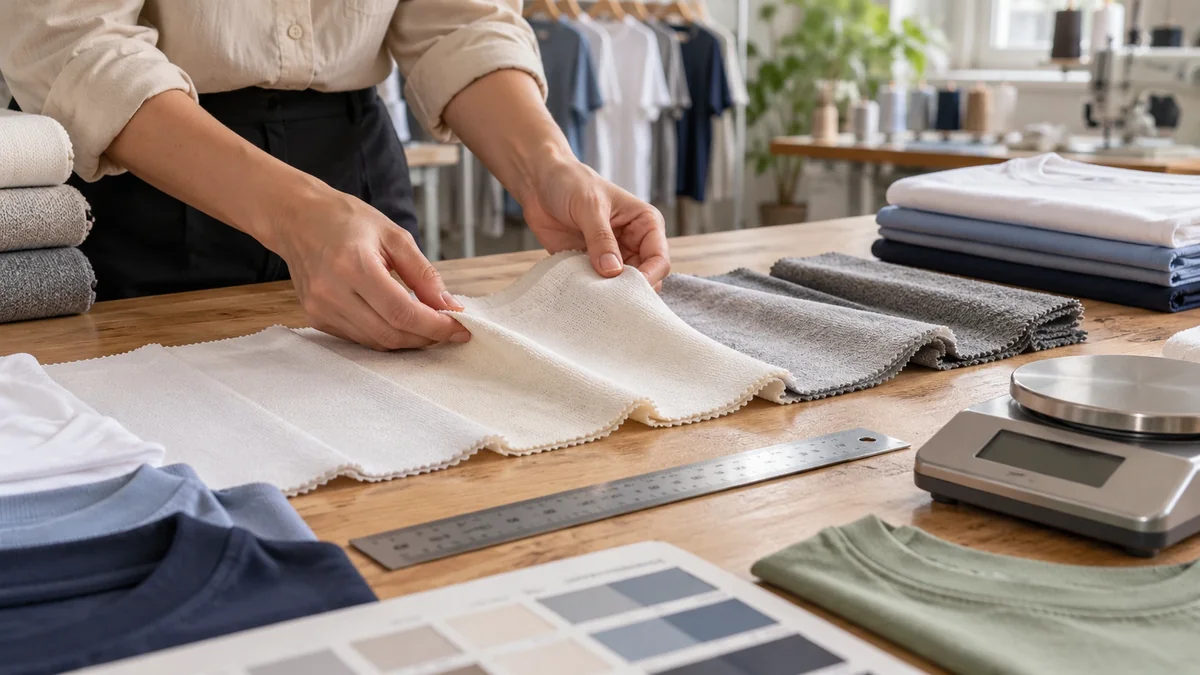
For solid-color T-shirts:
- approve a color standard;
- assess lab dips where appropriate;
- control fabric lots;
- avoid mixing visibly different shade lots in one garment/order;
- check colorfastness.
For reorder programs, record the approved color reference and supplier route.
14. Kids T-Shirt Fit and Grading
Important measurements include:
- half chest;
- body length;
- shoulder width;
- sleeve length;
- bicep;
- sleeve opening;
- neck width/drop;
- bottom opening.
Oversized tees require deliberate grading. Simply widening every size can create a neck and shoulder that become disproportionately large.
15. QC in Bulk Production
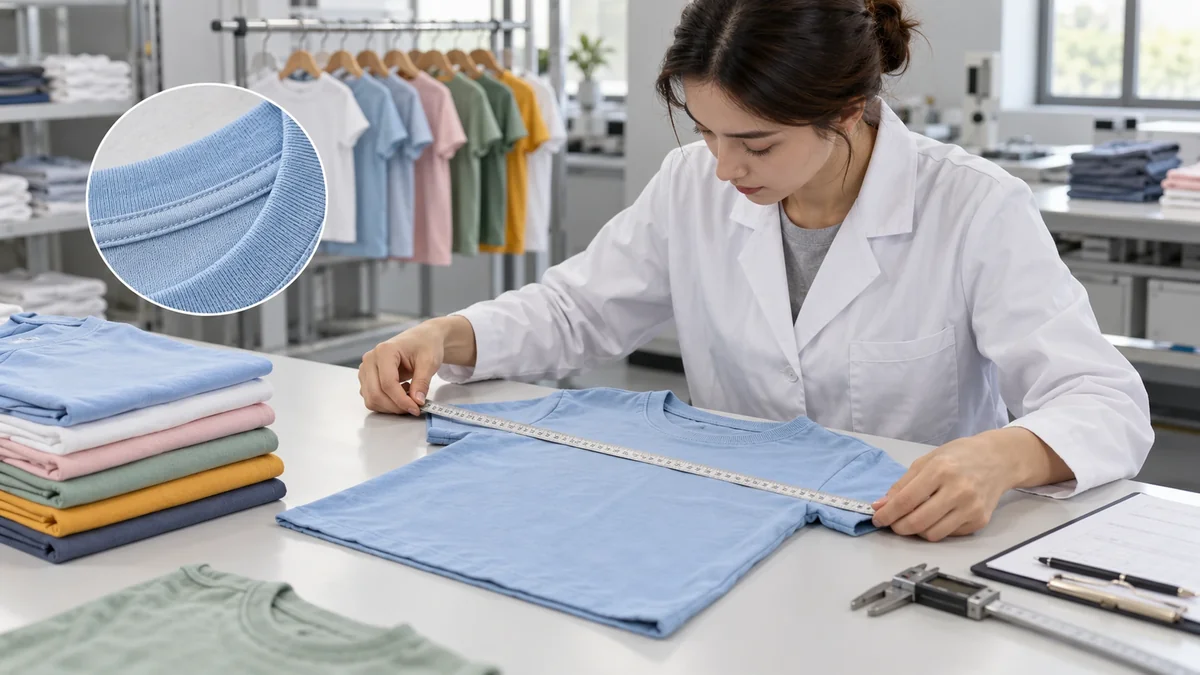
Key checkpoints:
- fabric lot/shade;
- panel symmetry;
- neck rib application;
- shoulder seam;
- sleeve pitch;
- print placement;
- hem waviness;
- measurements;
- stains/oil marks;
- loose threads;
- label position;
- packaging/size stickers.
For a basic T-shirt, consistency is the premium feature.
16. How to Write a T-Shirt Fabric Spec
Example structure:
- 100% combed cotton;
- single jersey;
- target GSM;
- reactive-dyed solid color;
- pre-shrunk/compact finish if required;
- shrinkage tolerance;
- pilling requirement;
- colorfastness requirement;
- matching rib specification;
- approved hand-feel reference.
Do not use the example values blindly; set them for your collection.
FAQ
What GSM is best for kids T-shirts?
There is no universal best GSM. Choose the weight based on season, opacity, fit, hand feel, price and print method, then approve the actual fabric sample.
Is 100% cotton better than cotton-spandex?
Not always. 100% cotton works well for classic tees; cotton-spandex can improve recovery for fitted products. The silhouette should determine the choice.
What causes T-shirt necklines to become wavy?
Common causes include a mismatched rib, incorrect rib application ratio, stretched sewing, poor recovery or shrinkage differences between rib and body fabric.
Why do T-shirts twist after washing?
Single-jersey spirality can result from yarn torque and fabric processing. Fabric selection, relaxation, cutting and wash testing are important controls.
17. Yarn Count and Surface Quality
Yarn count is another variable behind the hand feel and appearance of cotton jersey. Finer yarns can contribute to a smoother surface, but the finished result also depends on cotton quality, spinning method, knitting density and finishing.
When comparing suppliers, do not use yarn count as a standalone quality score. Ask for the final fabric sample and performance data.
18. Cutting and Relaxation
Knitted fabric can carry residual tension from rolling and finishing. If it is cut without adequate relaxation, garment dimensions can change after sewing or washing.
A controlled process may include:
- fabric inspection;
- lot separation;
- relaxation;
- marker planning;
- controlled cutting;
- panel bundling by shade/size.
This is one reason a stable T-shirt program depends on factory process as much as fabric specification.
19. Print Placement and Size Grading
For kids tees, one artwork size may look very different across 2T and 12Y.
Choose whether to:
- use one print size across all garments;
- create small/large print sizes;
- scale artwork by size group.
Define the placement from measurable reference points such as HPS/center front, not by eye alone.
20. Pre-Production Checklist
Before bulk cutting, confirm:
- body fabric;
- rib fabric;
- color;
- shrinkage result;
- pattern and grading;
- artwork size/placement;
- print color;
- label files;
- packaging;
- PP sample;
- measurement tolerances.
If any of these remain open, the order is not production-ready.
21. Common T-Shirt Defects and Likely Causes
| Defect | Likely cause to investigate |
|---|---|
| Wavy neckline | rib ratio, recovery, sewing tension |
| Twisted body | fabric spirality, relaxation, cutting |
| Uneven hem | feeding/tension or fabric instability |
| Print cracking | ink/cure/stretch mismatch |
| Excess shrinkage | fabric finishing or unaccounted shrinkage |
| Shade mismatch | mixed dye lots |
| Shoulder distortion | taping/seam handling |
A useful QC report names the defect and traces it to a process, rather than only rejecting finished pieces.
22. Cost Engineering Without Making the Tee Feel Cheap
If the quote is above target, test changes in this order:
- reduce color count;
- share fabric across styles;
- simplify packaging;
- optimize print size/method;
- adjust GSM only if product positioning allows;
- review trims and labels;
- increase order quantity if demand supports it.
Avoid cutting fabric quality blindly, because hand feel and wash performance are the product in a basic T-shirt.
Choose the Fabric Before You Lock the T-Shirt Price
Send Nuohua your tee silhouette, target GSM, composition, size range, color/print plan and quantity. We can review the base fabric, neck construction and sampling route before bulk pricing is finalized.
Or explore our kidswear manufacturing capabilities.
Nuohua Garment is a kidswear OEM/ODM manufacturer producing children’s underwear, sleepwear, baby apparel and custom kidswear for brands, retailers and wholesalers, with an 8,000 m² production base in Guangdong, China. Guidance here reflects our production experience; confirm current regulations and requirements for your market and product before ordering.