
From Swatch to Shipment: Controlling Colour and Hand-Feel Across Approval Stages
When a brand owner asks “can you match the sample?”, the honest answer from a manufacturer is that matching is not one event — it is a chain of three separate approvals. Each step protects a different risk, and each step gets more expensive to fix the later you catch the problem. This guide walks through what every kids’ clothing brand should know before bulk cutting begins, written from the factory floor rather than a marketing desk.
A fabric swatch confirms the base material is right, a lab dip confirms the colour is right, and bulk approval confirms the full production lot matches both. For kids’ apparel, signing off these three in the correct order is the cheapest insurance against off-shade, scratchy, or non-compliant garments ever reaching a child.
On this page
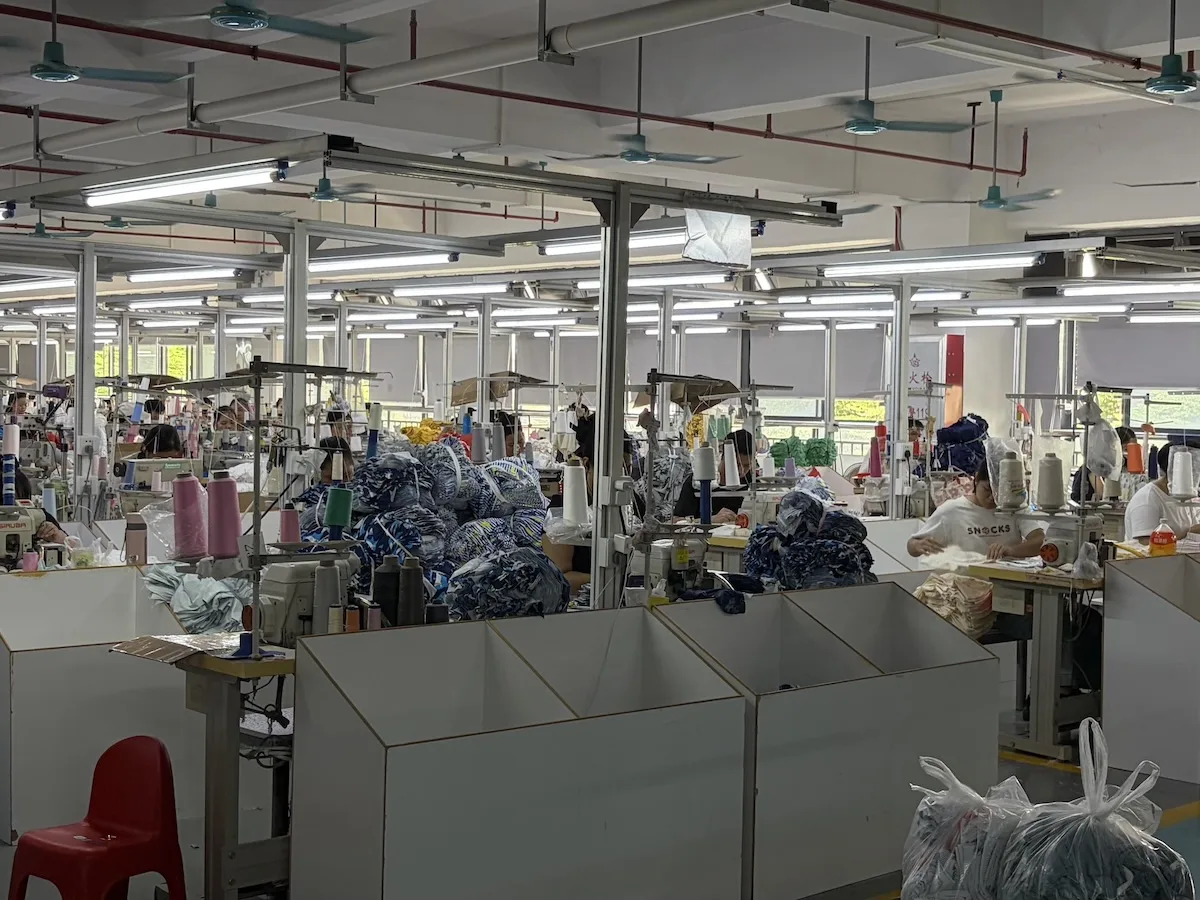
1. Why fabric approval matters more for kids’ apparel
Kids’ garments sit against the most sensitive skin for the longest hours, smaller sizes magnify any shade or hand-feel drift, and returns hit a brand’s reputation hard. The approval chain moves every one of those risks to the cheapest possible moment.
Adults tolerate a slightly off shade or a mildly stiff hand-feel. Children do not — and neither do the parents buying for them. Three factors make the approval chain non-negotiable in kidswear:
- Thinner skin, stricter rules. Children’s garments sit against the most sensitive skin for the longest hours. Markets enforce dedicated safety thresholds — China’s GB 31701 Class A (China children’s A-class safety standard), the US CPC program, and EU/UK chemical rules. Colourfastness to saliva and perspiration is tested, not assumed.
- Smaller sizes, smaller margin for error. A 1 cm shade drift on an adult dress is invisible; on a 90 cm bodysuit it reads as two different products.
- Returns hit harder. A scratchy seam or a bleeding print turns into a one-star review that names your brand. Catching it at swatch stage costs minutes; catching it post-shipment costs the relationship.
The approval chain exists to move every one of those risks to the cheapest possible moment.
2. What is a fabric swatch?
A fabric swatch is a small physical cutting (usually 10–15 cm square) of the base fabric that confirms the material itself — fibre, GSM, hand-feel and construction — is what you specified.
A fabric swatch is a small physical cutting of the base fabric — usually 10–15 cm square — that confirms the material itself is what you specified.
What a swatch confirms
- Fibre composition — e.g. Lenzing™ Modal, combed cotton, or a cotton/spandex blend, verified against your spec.
- Weight (GSM) — the single number that most predicts hand-feel and opacity. We typically run kids’ base fabrics in the 180–240 GSM interlock range.
- Hand-feel and softness — the thing a parent feels first. A swatch is the only approval stage where you can actually touch it.
- Construction — knit type (interlock vs jersey), surface finish, and a baseline read on pilling or abrasion.
- Skin-safety baseline — at Nuohua, base fabrics are sourced and tested toward GB 31701 Class A (China children’s A-class safety standard); our OEKO-TEX Standard 100 work is currently in progress, verified through third-party labs such as SGS, TÜV SÜD, and Intertek.
What a swatch does NOT confirm
- The final colour — that is the lab dip’s job.
- That a multi-thousand-piece lot will be consistent — that is bulk approval’s job.
How to approve well: if you are comparing two blends, request 2–3 swatches side by side; state a GSM target (not just “soft”); and rub the swatch lightly to check for surface fuzz before you sign.
3. What is a lab dip?
A lab dip is a small dyed sample produced to match your target colour (normally a Pantone TCX or a physical standard). It confirms the shade on this specific fibre — not the material, and not the lot consistency.
A lab dip is a small dyed sample produced to match your target colour — normally a Pantone TCX number or a physical colour standard you supply. It confirms the shade, not the material.
Why it matters even more for kids
Colour is not only aesthetic in children’s wear; it is a safety and return-risk variable. A print or dye that bleeds onto skin fails GB 31701 Class A / CPC colourfastness expectations and triggers complaints. The lab dip is where bleed-prone recipes get caught before they scale.
What a lab dip confirms
- Hue and depth under an agreed light source (we standardize on D65 daylight).
- That the dyehouse can hit your target on this fibre — a Pantone on cotton does not equal the same Pantone on Modal.
Common mistake: approving a dip under warm retail lighting, then seeing a visible drift in daylight. Always define the light source and tolerance in the brief. When unsure, request two dips (A/B) and pick before bulk.
4. What is bulk fabric approval?
Bulk approval (often a CFA — cutting fault approval — or a full rolled lot) confirms the actual production fabric matches the sealed swatch and approved dip across the entire order, before any cutting begins.
Bulk fabric approval (often a CFA — cutting fault approval — or a full rolled lot) confirms the actual production fabric matches the sealed swatch and approved dip, across the entire order.
What bulk approval confirms
- Shade band consistency — every roll falls within the accepted tolerance of the approved dip. Dye lots always drift; the question is whether they drift inside or outside the band.
- Width, weight, and defects — measured against the spec, not the promise.
- Lot-to-lot uniformity — that 500 pieces and 5,000 pieces look like the same garment.
This is the last gate before cutting. Miss it and an entire shipment can arrive with two visibly different “navy” tones.
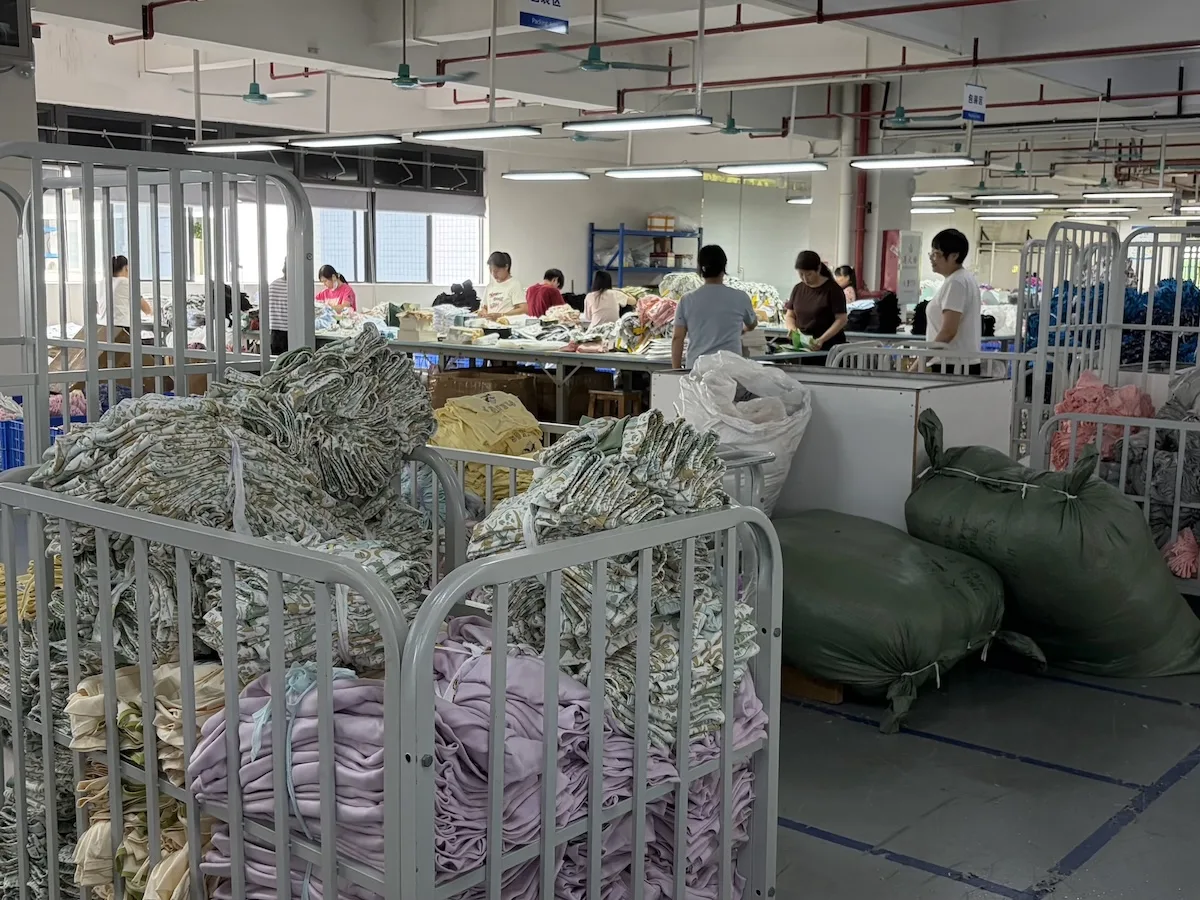
5. How the three approvals differ
Swatch answers “is the material right?”, lab dip answers “is the colour right?”, bulk approval answers “does the whole lot match both?” — and approving one step never auto-approves the next.
The three stages answer three different questions, and the discipline is that approving one step never approves the next.
| Approval | Main question | Typical sign-off | Common buyer mistake |
|---|---|---|---|
| Swatch | Is the material right? | Buyer + factory, on hand-feel & spec | Approving “soft” with no GSM target |
| Lab dip | Is the colour right? | Buyer, against Pantone TCX / physical standard | Judging under warm light, not D65 |
| Bulk approval | Does the lot match both? | Buyer + QC, against sealed swatch & dip | Assuming one roll represents the whole lot |
| Approval | Authorizes | Does NOT auto-approve |
|---|---|---|
| Swatch | Fabric sourcing & hand-feel | Colour, bulk consistency |
| Lab dip | Dye recipe for this lot | Material, weight, hand-feel |
| Bulk approval | Cutting of the full order | Final garment AQL / construction |
6. The correct sequence and what each protects
The chain runs swatch → lab dip → bulk. Skipping a step does not save money; it moves the cost downstream. A 1.5-step shade drift caught at the dip costs one re-dye; caught after cutting it can cost the whole cut.
The chain runs swatch → lab dip → bulk. Skipping a step does not save money; it moves the cost downstream. Typical, not guaranteed, ranges:
| If you skip… | What breaks | Typical cost | Typical delay |
|---|---|---|---|
| Swatch | Wrong hand-feel found at proto; fabric re-sourced | New proto fee | 7–10 days |
| Lab dip | Off-shade bulk; lot re-dyed or rejected | Re-dye or full lot | 10–15 days |
| Bulk approval | Mixed shades across shipment; returns | Replacements + brand damage | Weeks + re-ship |
Catching a 1.5-step shade drift at the lab dip stage costs one re-dye. Catching it after bulk cutting can cost the whole cut. That math is why the sequence exists.
7. How to get approved faster
Compress the chain by sending a Pantone TCX plus a physical standard, defining light source and tolerance in the brief, approving swatch and dip together for standard fabrics, and requesting a sealed golden sample the factory retains.
From the manufacturer’s side, these are the moves that compress the chain without cutting corners:
- Send a Pantone TCX plus a physical standard — screens lie; a physical chip does not.
- Define light source and tolerance in the brief — D65, ±0.5–1.0 depending on the shade.
- Approve swatch and lab dip together when the fabric is a standard program fabric (e.g. our ready Lenzing™ Modal / cotton bases) rather than a custom development.
- Request a sealed “golden sample” retained by the factory as the reference for bulk and reorders.
- Finalize the brief and fabric spec first — a complete development request before sampling removes the back-and-forth that stretches lead time.
Done tightly, the full swatch → dip → bulk chain typically closes in 7–12 days before cutting — fast enough for a launch, safe enough for a child.
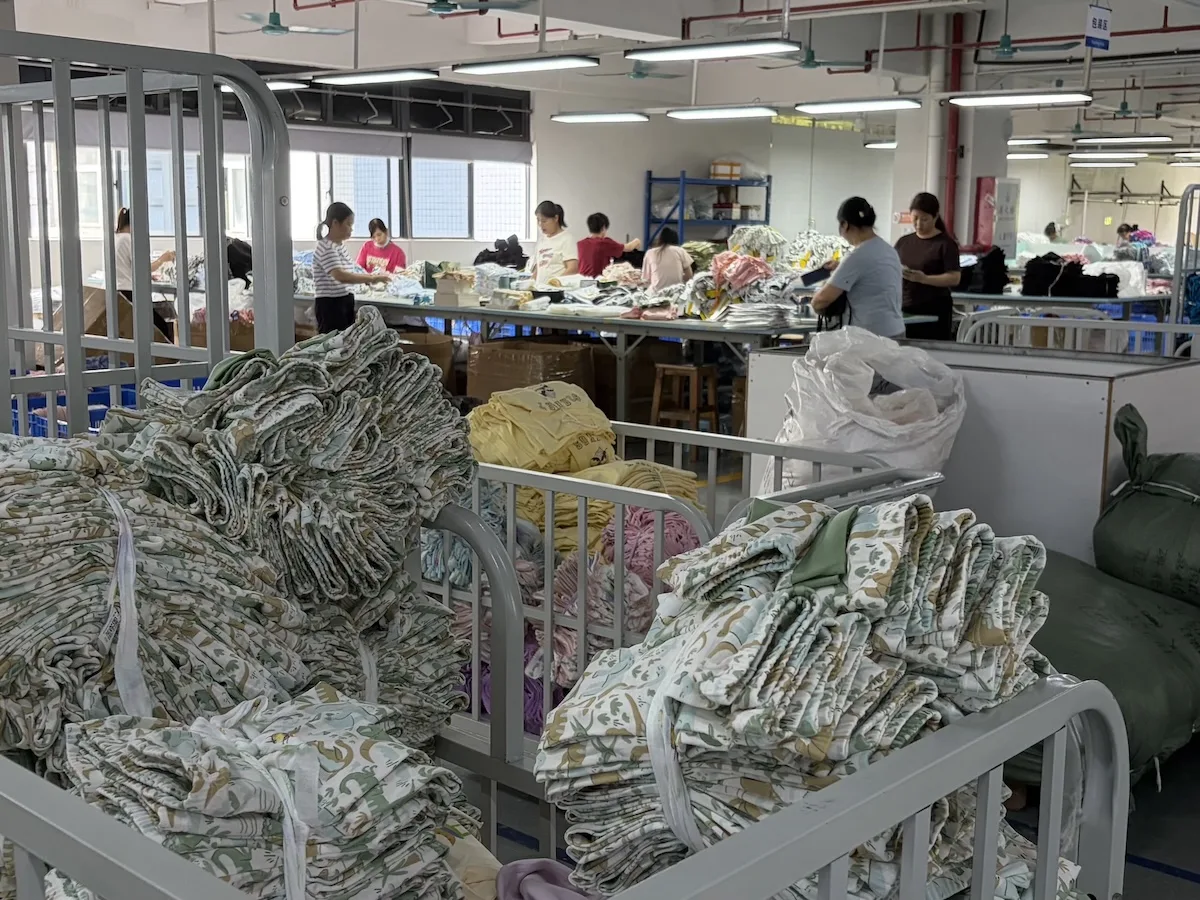
- A swatch does not guarantee lot consistency — dye lots always vary; only bulk approval controls the band.
- A lab dip does not confirm hand-feel or weight; those belong to the swatch.
- Approvals do not replace finished-goods AQL inspection — a perfect fabric can still ship with a construction defect.
- A sealed sample is only as good as the discipline to retain it; ask for it in writing.
8. Frequently asked questions
You cannot approve bulk from a swatch alone; usually one lab dip is enough (two when the shade is critical); the factory should retain the sealed sample; and prints add a strike-off step that follows the same logic as a lab dip.
Can I approve bulk from a swatch only?
No. The swatch confirms material, not colour or lot uniformity. Skipping the dip and bulk approval is the fastest way to an off-shade shipment.
How many lab dips are normal?
Usually one; two (A/B) when the shade is critical or the fibre is unusual. Requesting both upfront is cheaper than a surprise re-dye.
Who keeps the sealed sample?
The factory should, as the reference for bulk and reorders. Explicitly request it so it is not discarded after the first run.
Does this apply to printed styles too?
Yes. Prints add a strike-off step — an approved print proof before bulk printing — which follows the same logic as a lab dip for ground colour.
How long does the whole chain take?
Typical 7–12 days before cutting for standard fabrics; custom developments run longer. These are planning ranges, not guarantees — they depend on your brief’s completeness.
Building a kids’ line and want the approval chain handled properly from swatch to bulk?