
Best Fabric for Baby Clothes: Cotton vs Bamboo vs Modal
On this page
- What Makes a Fabric Suitable for Baby Clothing?
- Cotton Jersey
- Cotton Interlock
- Organic Cotton
- Viscose Made From Bamboo
- Modal
- Cotton-Spandex Blends
- Muslin / Double Gauze
- Fabric Comparison for Babywear Brands
- GSM: Why Weight Matters
- Wash Testing
- OEKO-TEX and Baby Products
- How to Choose Fabric by Product
- What to Put in the Fabric Specification
- FAQ
- Dyeing and Finishing Can Change the Fabric as Much as the Fiber
- Sensitive-Skin Marketing: Keep Claims Measurable
- Fabric Decision Matrix by Brand Position
- Fabric Cost Should Be Evaluated Per Garment, Not Per Meter Alone
- Keep an Approved Fabric Library
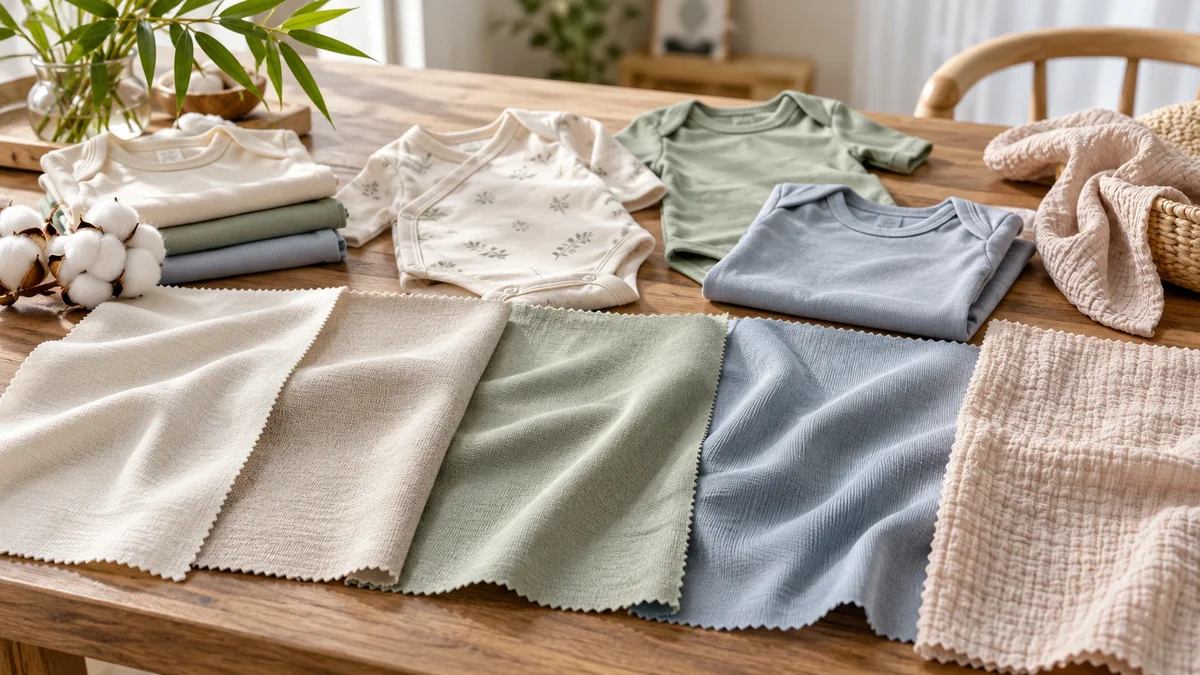
There is no single best fabric for every baby garment. Cotton jersey and interlock are strong choices for everyday basics; organic cotton can support a traceable natural-fiber position when documentation is verified; viscose made from bamboo and modal can provide a very soft, fluid hand; and small amounts of elastane can improve stretch recovery. The best choice depends on product type, climate, fit, washing, print method, price and the compliance/claim requirements of the market.
For manufacturing, choose the fabric by measurable specification—not fiber name alone.
1. What Makes a Fabric Suitable for Baby Clothing?
Evaluate:
- softness after repeated washing;
- breathability and thermal comfort;
- stretch and recovery;
- dimensional stability;
- pilling;
- colorfastness;
- seam performance;
- dye/print compatibility;
- trim compatibility;
- traceability and claim support;
- cost and supply continuity.
A soft hand on the cutting table is only the first test.
2. Cotton Jersey
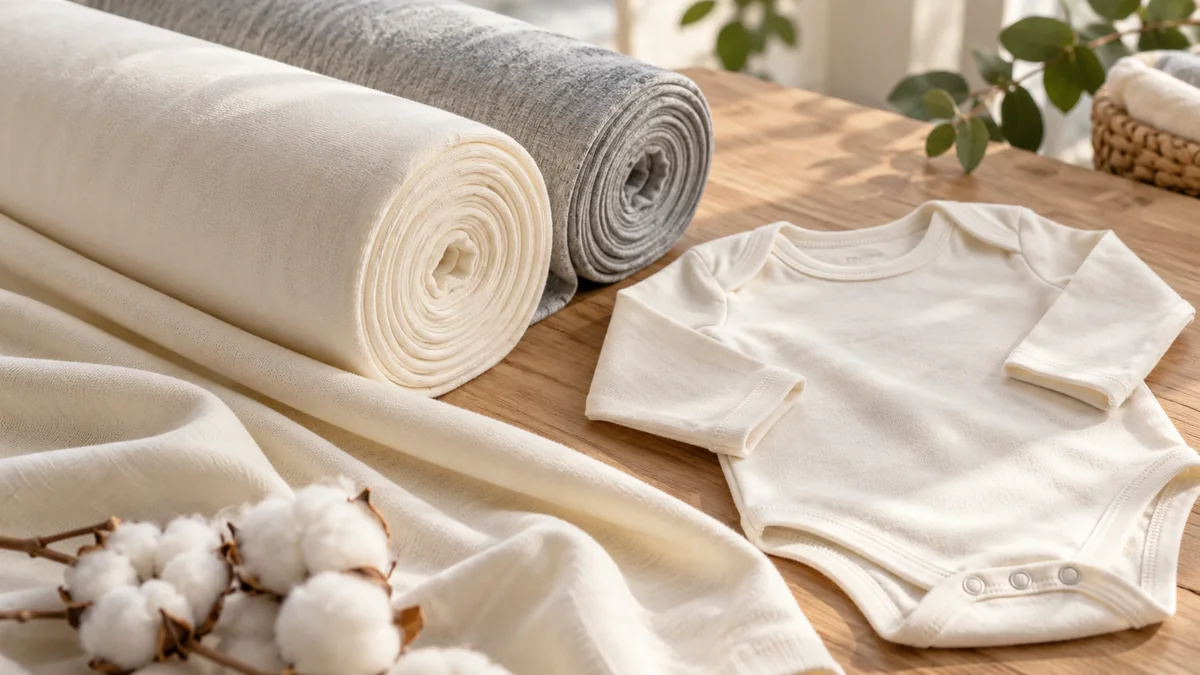
Cotton single jersey is widely used for baby T-shirts, bodysuits and lightweight sets.
Advantages
- familiar natural-fiber story;
- breathable everyday feel;
- broad supplier base;
- works with many print methods;
- suitable for basics.
Watch points
- shrinkage;
- spirality;
- neckline recovery;
- pilling depending on yarn quality;
- lower stretch recovery without elastane.
Combed cotton typically gives a cleaner, smoother yarn than a more basic carded cotton option, although final performance still depends on yarn, knitting and finishing.
3. Cotton Interlock
Interlock is a double-knit construction with a smoother, more stable structure than lightweight single jersey.
Good for:
- newborn bodysuits;
- sleepers;
- cooler-weather basics;
- premium-feel tops;
- styles where stability matters.
It can feel more substantial and stable but may cost more and be warmer at the same fiber composition.
4. Organic Cotton
Organic cotton is still cotton. The performance depends on yarn, knit and finishing just as conventional cotton does.
The difference for a brand is primarily sourcing and verified organic status. If you intend to claim GOTS-certified material or product, verify the certification chain and scope. GOTS 8.0 was released in March 2026, with mandatory adherence beginning March 1, 2027.
Do not use a certification logo merely because the fabric supplier says “organic.”
5. Viscose Made From Bamboo
This material can deliver:
- soft hand;
- fluid drape;
- comfortable stretch when blended with elastane;
- strong appeal in baby sleepwear and basics.
However, in the U.S., FTC guidance says regenerated rayon/viscose made using bamboo as the source should be identified as rayon/viscose made from bamboo rather than being marketed as if it were mechanically processed natural bamboo fiber.
Manufacturing watch points
- pilling;
- wet dimensional stability;
- recovery;
- skew/spirality;
- colorfastness;
- heavy wet handling;
- accurate fiber labeling.
6. Modal
Modal is a regenerated cellulose fiber often selected for softness and drape.
It can work well in:
- baby tees;
- pajamas;
- lounge sets;
- underwear;
- soft basics.
Test pilling, shrinkage and recovery on the final knit construction. “Modal” alone does not tell you the GSM, structure or performance.
7. Cotton-Spandex Blends
A small amount of elastane/spandex can improve:
- body stretch;
- shape retention;
- neckline recovery;
- close-fit comfort.
But more stretch is not automatically better. The right percentage depends on yarn, knit density and intended fit.
8. Muslin / Double Gauze
Cotton muslin or double gauze is popular for lightweight baby products such as:
- swaddles;
- loose rompers;
- summer separates;
- loveys/accessories where appropriate.
It has a casual, airy texture but behaves differently from jersey. It does not offer the same stretch and may require different seam/fit choices.
9. Fabric Comparison for Babywear Brands
| Fabric | Hand feel | Stability | Stretch | Best use | Key risk |
|---|---|---|---|---|---|
| Cotton jersey | soft/familiar | medium | low-medium | tees, bodysuits | shrinkage/spirality |
| Cotton interlock | smooth/substantial | high | moderate | sleepers, premium basics | warmth/cost |
| Organic cotton knit | depends on construction | depends | depends | natural/traceable ranges | unsupported claims |
| Viscose from bamboo + elastane | very soft/fluid | medium | high | pajamas, soft sets | pilling/recovery/labeling |
| Modal blend | soft/drapey | medium | medium-high | premium basics | pilling/stability |
| Double gauze | airy/textured | low-medium | low | summer rompers/swaddles | seam stability |
10. GSM: Why Weight Matters
GSM is grams per square meter. It helps describe fabric mass but does not equal quality.
Two 180 GSM fabrics can feel different because of yarn count, knit structure and finishing.
When developing babywear, compare:
- composition;
- construction;
- GSM;
- hand feel;
- stretch/recovery;
- shrinkage;
- intended season.
11. Wash Testing
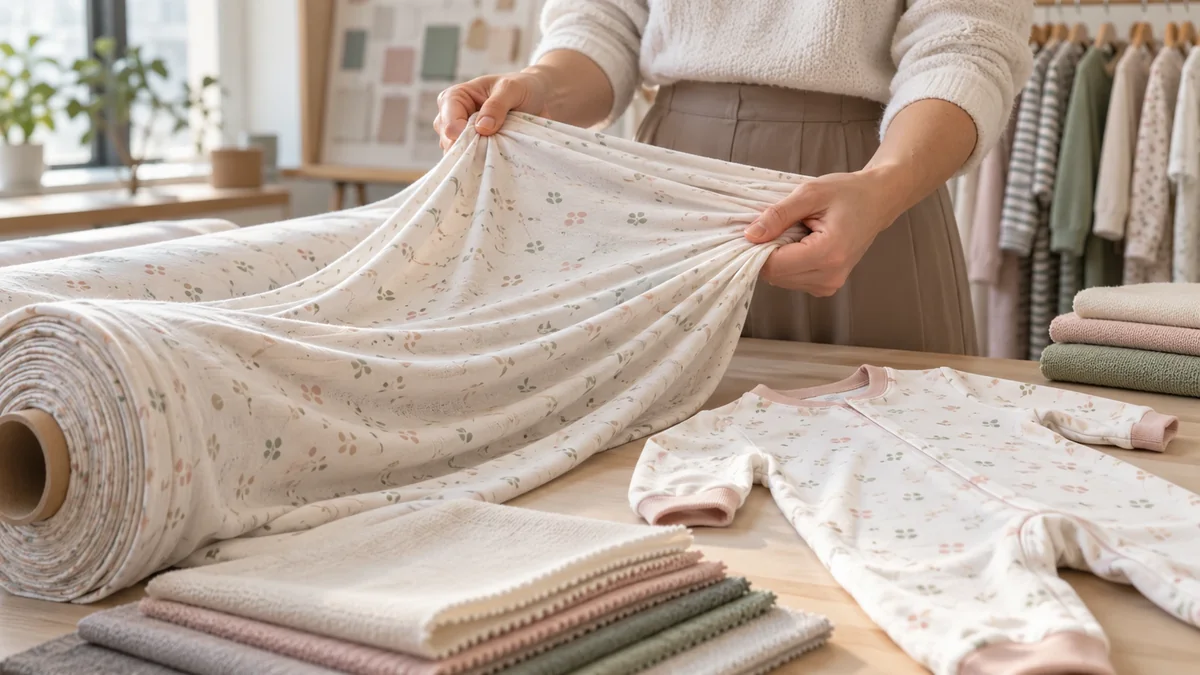
A baby product may be washed frequently, so sample approval without wash testing is incomplete.
Review after wash:
- length/width shrinkage;
- twisting;
- neckline shape;
- pilling;
- surface fuzz;
- color;
- print cracking;
- seam puckering;
- snap/zip performance.
Use the actual intended care instruction when possible.
12. OEKO-TEX and Baby Products
OEKO-TEX STANDARD 100 Product Class 1 covers products for babies and children up to 36 months and uses the strictest requirements/limit values within the standard. If you make an OEKO-TEX claim, verify the certificate and whether the relevant fabric/product falls within scope.
Certification status should be checked, not assumed from a supplier logo.
13. How to Choose Fabric by Product
Bodysuits
Cotton jersey/interlock or soft stretch blends; prioritize neckline recovery and wash stability.
Pajamas
Cotton stretch jersey, interlock, modal blends or viscose-from-bamboo blends depending on fit and market.
T-shirts
Cotton jersey, organic cotton jersey or blends; prioritize neck rib and shrinkage.
Rompers
Choose based on silhouette: jersey for stretch comfort, woven/muslin for airy loose fits.
Leggings
Cotton-spandex or other recovery-focused stretch knit.
14. What to Put in the Fabric Specification
Do not write only “organic cotton” or “bamboo.” Include:
- generic fiber composition;
- knit construction;
- GSM;
- color;
- finish;
- stretch expectation;
- shrinkage tolerance;
- pilling expectation;
- print/dye method;
- certification/claim requirement;
- approved hand-feel reference.
FAQ
Is cotton the best fabric for baby clothes?
It is one of the most versatile options, but the best construction depends on the product. Interlock may be better than light jersey for some sleepers; stretch blends may fit better for close-fitting garments.
Is bamboo fabric natural?
Most soft “bamboo” apparel is regenerated rayon/viscose made using bamboo as the cellulose source, not mechanically processed natural bamboo fiber. U.S. labeling and advertising should reflect that distinction.
Is modal safe for baby clothes?
Modal is widely used in apparel, but product suitability depends on the finished fabric, dyes/finishes, construction and testing—not the fiber name alone.
What GSM is best for baby clothes?
There is no universal best GSM. Lightweight summer tees, bodysuits and winter sleepers need different weights. Evaluate GSM together with construction and performance.
15. Dyeing and Finishing Can Change the Fabric as Much as the Fiber
Two fabrics with identical composition and GSM may feel different after dyeing and finishing.
Finishing can influence:
- softness;
- shrinkage;
- width;
- surface fuzz;
- pilling;
- dimensional stability;
- sheen;
- hand feel.
Approve the production-representative finished fabric, not only a greige or generic swatch.
16. Sensitive-Skin Marketing: Keep Claims Measurable
Babywear marketing often uses terms such as “hypoallergenic,” “chemical free,” “non-toxic” or “antibacterial.” These can create regulatory and substantiation questions.
A more defensible product-development approach is to describe facts you can support:
- fiber composition;
- certification status if verified;
- tested substances if supported by a report;
- seam construction;
- wash method;
- absence/presence of specified finishes.
Avoid broad health or safety claims unless you have appropriate evidence.
17. Fabric Decision Matrix by Brand Position
| Brand position | Strong starting options | Development priority |
|---|---|---|
| Natural everyday basics | cotton jersey/interlock | shrinkage, softness, durability |
| Organic premium | verified organic cotton | traceability, certification scope |
| Ultra-soft sleepwear | viscose-from-bamboo/spandex, modal blends | recovery, pilling, labeling |
| Warm-climate babywear | lighter jersey, gauze | opacity, seam stability |
| Premium structured basics | interlock/heavier jersey | hand feel, weight, cost |
18. Fabric Cost Should Be Evaluated Per Garment, Not Per Meter Alone
Higher-priced fabric can sometimes improve cutting yield, reduce defects or support a higher retail price. Lower-priced fabric can create extra shrinkage or quality claims.
Compare:
- fabric price;
- usable width;
- marker efficiency;
- wastage;
- defect rate;
- garment weight;
- expected quality position.
The cheapest meter is not always the cheapest garment.
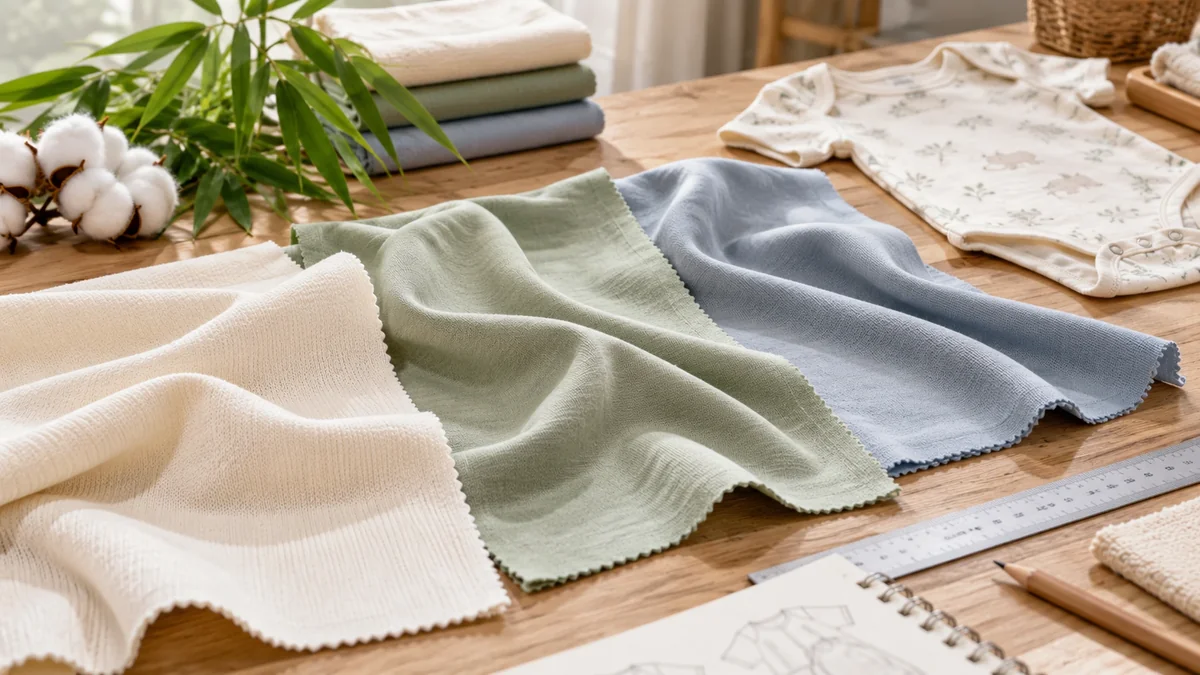
19. Keep an Approved Fabric Library
For repeat programs, retain:
- swatch;
- supplier/mill reference;
- composition;
- construction;
- GSM;
- color reference;
- test results;
- wash-test notes;
- approved garment style.
This reduces redevelopment when a successful product needs replenishment.
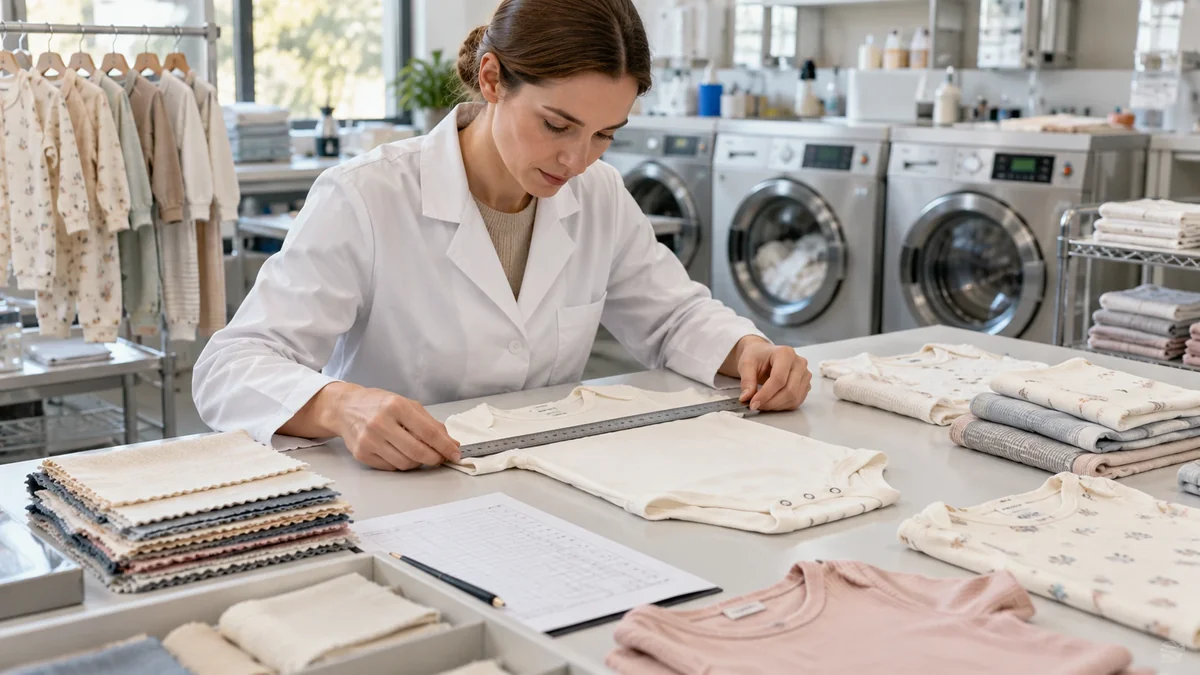
Compare Fabric Before You Commit to a Collection
Send Nuohua the product type, target hand feel, season, market, fit and price position. We can help compare practical fabric constructions before the sample pattern is finalized.
Or explore our kidswear manufacturing capabilities.
Nuohua Garment is a kidswear OEM/ODM manufacturer producing children’s underwear, sleepwear, baby apparel and custom kidswear for brands, retailers and wholesalers, with an 8,000 m² production base in Guangdong, China. Guidance here reflects our production experience; confirm current regulations and requirements for your market and product before ordering.