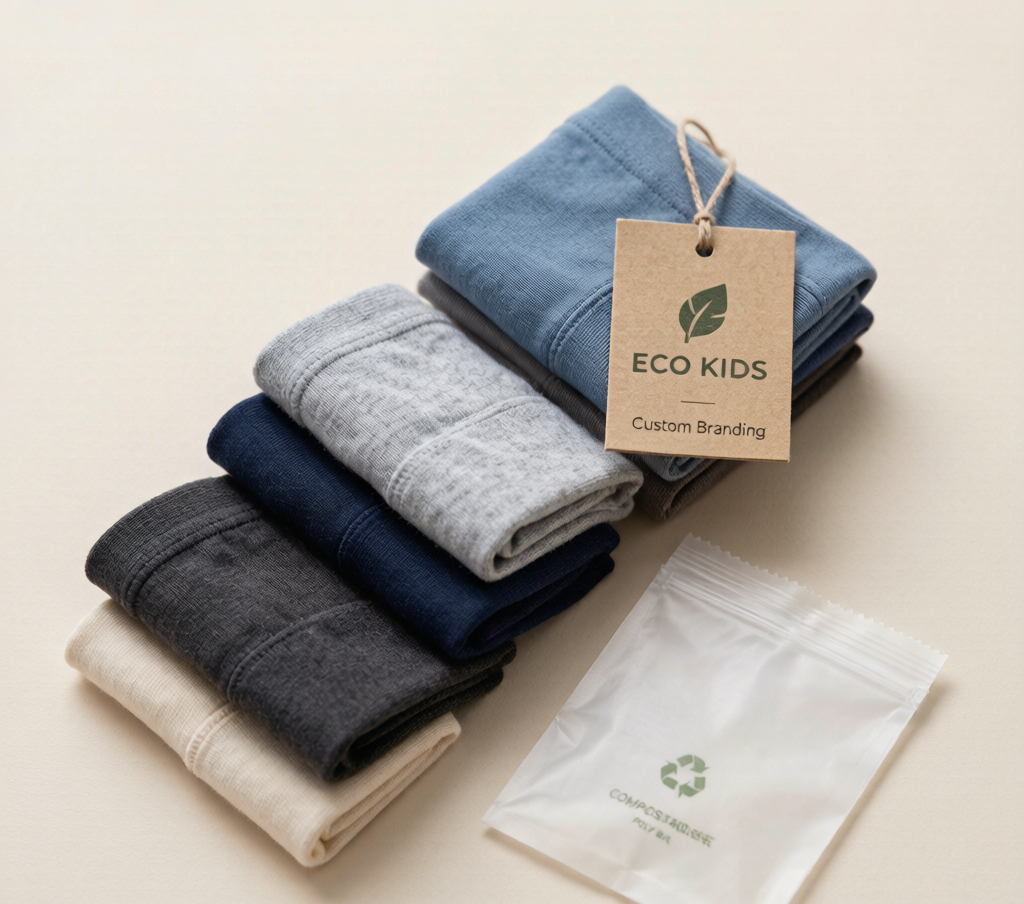
A Bill of Materials (BOM) is the single source of truth that decides both your unit cost and whether the first sample looks, feels, and fits the way you pictured. For kids’ underwear, the biggest cost and sampling swings come from fabric composition and weight (GSM), elastic type and skin-safety spec, label and certification requirements (GB 31701 Class A, CPC), and the color-matching method. Hand a factory a vague BOM and you pay for extra sampling rounds; hand over a precise one and your first sample lands at 80–90% of intent.
Every kids’ underwear style you develop lives or dies on a document most buyers underestimate: the Bill of Materials (BOM). It is far more than a parts list. A proper BOM records every component — fabric, elastic, trims, labels, hardware, packaging — with its exact specification, approved supplier, and unit cost. Get it right and your quote is accurate and your first sample is close. Get it wrong and the gaps show up as surprise costs, mismatched handfeel, and repeat sampling that quietly eats your launch window.
This guide explains, from a manufacturer’s bench, exactly which BOM details move cost and sampling accuracy the most for children’s innerwear — and how to write a BOM a factory can actually build to. If you are still in the discovery phase, our guide to finding and shortlisting a kids’ underwear manufacturer in China covers where to source and what to screen first.
- What a kids’ underwear BOM actually contains
- Fabric specs: the largest cost and sampling lever
- Elastics, trims & hardware: small items, big variance
- Color matching: the quiet sampling killer
- Certifications in the BOM: cost you cannot skip for kids
- Why a precise BOM lowers sampling cost
- Nuohua’s BOM-to-sample workflow
- Buyer’s BOM checklist before you request a quote
What a Kids’ Underwear BOM Actually Contains
A children’s underwear BOM typically lists every component that touches the garment and its cost:
- Body fabric — e.g., 95% bamboo viscose / 5% spandex, 160–180 GSM, single jersey.
- Contrast or lining fabric — crotch lining, usually 100% cotton for skin contact.
- Elastic — waistband and leg openings; specify width, tension, and latex-free status.
- Trims — woven label, care label, size tag, heat-transfer logo.
- Hardware — snaps on bodysuits/onesies, any adjusters.
- Packaging — OPP bag, hangtag, sticker, shipping carton.
- Compliance artifacts — test reports and certificate references.
The rule is simple: each line needs a specification, not a name. “Soft cotton” is not a spec; “combed cotton 1×1 rib, 180 GSM, reactive-dyed” is. The difference is the difference between a quote you can trust and a quote that hides a resample.
Fabric Specs: The Largest Cost and Sampling Lever
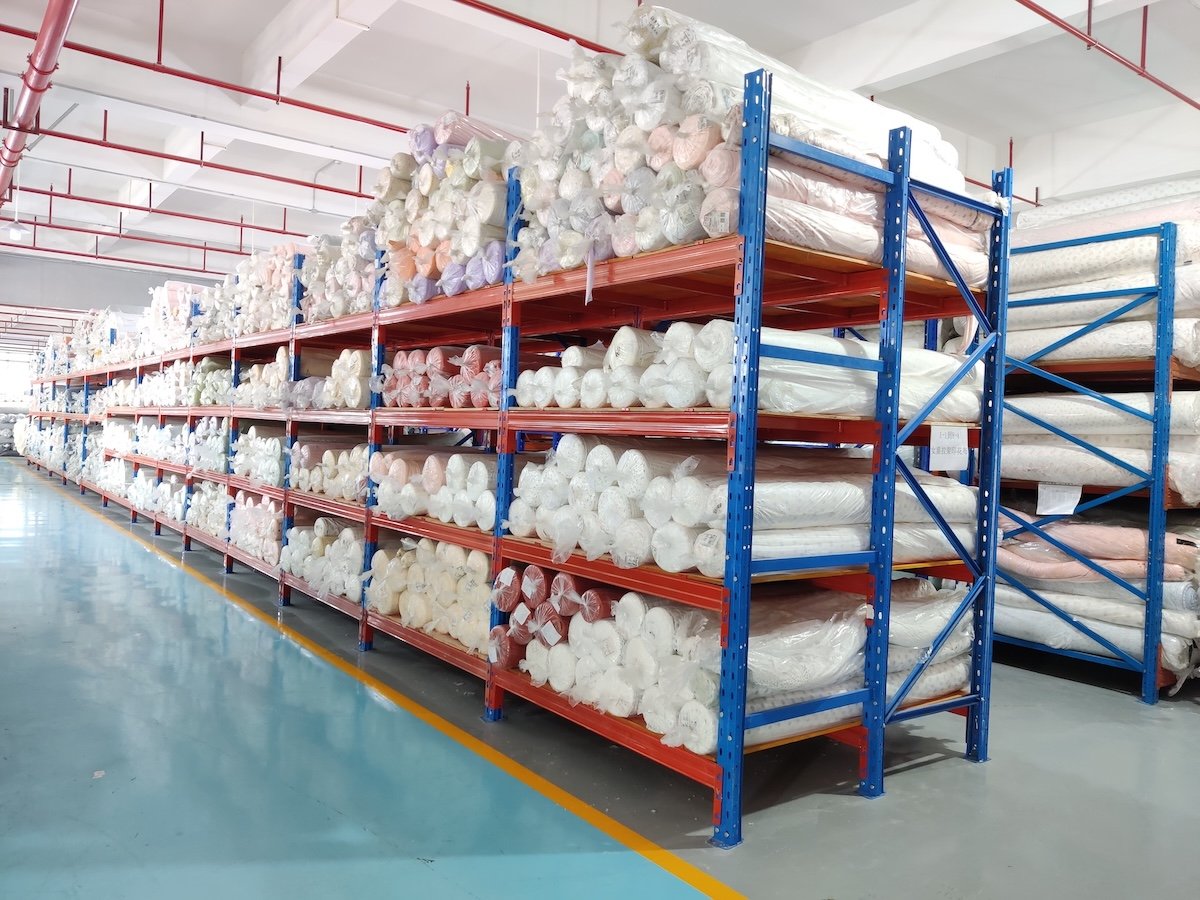
Fabric is usually 40–60% of a kids’ underwear unit cost, and it is where sampling goes wrong most often. Four details decide everything:
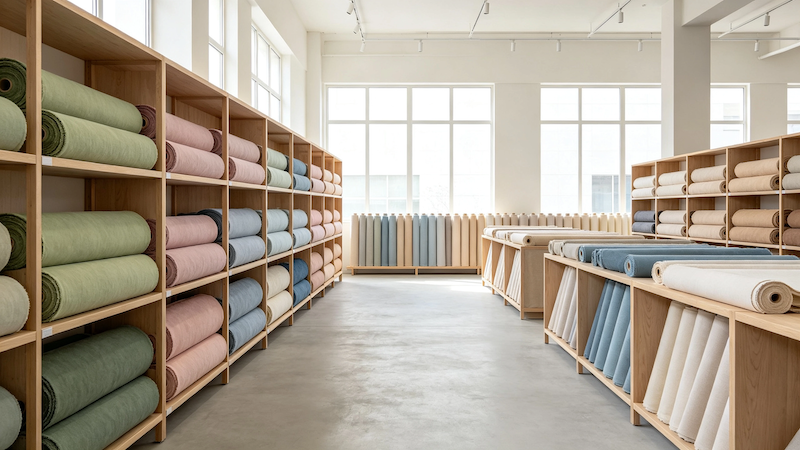
- Composition & blend ratio. Bamboo viscose, modal, combed cotton, and recycled poly each sit in different price bands. A vague “bamboo” can be read as 70% or 95% bamboo, changing both cost and drape.
- Weight (GSM). 160 vs 200 GSM changes material cost per meter and the handfeel. Samples at the wrong weight fail the “feels premium” test even when cut perfectly.
- Knit structure. Single jersey, rib, or interlock affects stretch recovery and opacity — both critical for underwear.
- Dye method. Reactive dye (better colorfastness, higher cost) vs pigment (cheaper, can stiffen). Piece-dyed vs yarn-dyed also changes lead time.
A precise fabric line means the factory pulls the right greige, the right weight, and the right dye process the first time — so your sample matches your intent instead of becoming round two. Where the right fabric clusters sit also shapes lead time and price; our overview of China’s kids’ underwear manufacturing regions breaks that down.
| Spec dimension | Vague brief | Precise brief | What it changes |
|---|---|---|---|
| Composition | “Bamboo” | 95% bamboo viscose / 5% spandex | Cost band, drape, stretch |
| Weight | “Medium” | 175 GSM | Material cost, handfeel |
| Knit | “Stretchy” | 1×1 rib | Recovery, opacity |
| Dye | “Nice color” | Reactive-dyed, Pantone 14-4318 | Colorfastness, lead time |
Elastics, Trims & Hardware: Small Items, Big Variance
Kids’ skin is sensitive, so elastic is not a commodity you leave to chance.
- Latex-free requirement. Many buyers mandate latex-free covered elastic for children. That is a different, often pricier material than standard elastic — and omitting the requirement invites a resample.
- Width and tension. A 12 mm soft waistband vs an 8 mm firm one changes comfort and cost.
- Branded vs generic. Branded elastic with a woven logo carries a per-meter premium and a longer lead time.
Trims seem trivial but add up: woven labels cost more than printed; a care label that must carry GB 31701 Class A and CPC references needs a compliant template. Hardware like nickel-free snaps for bodysuits must be tested for migration limits. Each undefined trim becomes a guess — and a guess is a sampling redo.
Color Matching: The Quiet Sampling Killer
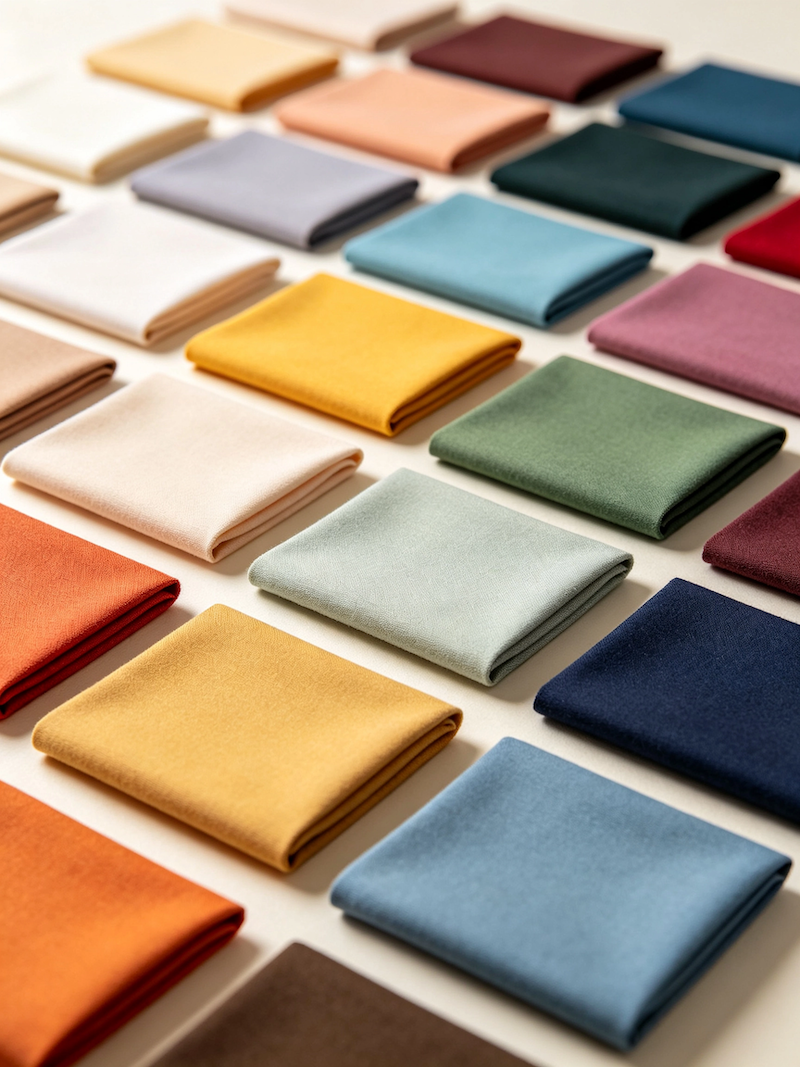
“Match the color in this photo” is one of the most expensive sentences in apparel development. Without a Pantone (or equivalent) reference, factories interpolate and dye lots drift. A precise BOM lists a Pantone TCX/TX or a physical swatch, the tolerance (typically ±0.5–1.0 ΔE), and whether a shade band is required before bulk. That single line prevents the “this isn’t the green I meant” resample that costs a week of calendar time.
Certifications in the BOM: Cost You Cannot Skip for Kids
For children’s skin-contact garments, compliance is part of the BOM, not an afterthought at shipping:
- China: GB 31701 Class A applies to infant and young-child skin-contact items — the strictest tier.
- United States: a CPC (Children’s Product Certificate), backed by third-party testing, is required.
- EU / International: OEKO-TEX Standard 100 screens for harmful substances; Nuohua is advancing this certification, and its status is in progress.
- Third-party proof: test reports from SGS, TÜV SÜD, or Intertek are what buyers ask to see.
- Market-specific marks: items for the EAEU region may need EAC confirmation — this is verified per order, not assumed.
These testing and documentation steps carry real cost and lead time. A BOM that leaves them blank produces a quote that is artificially low and a shipment that can be stopped at customs.
Fabric composition % + GSM + knit + dye method; elastic width, tension, latex-free (yes/no); label type and care-label compliance text; Pantone or physical color swatch + tolerance; hardware type and finish (e.g., nickel-free); target markets and which certificates to include; packaging spec. A factory can quote tightly and sample accurately on the first try only when all of these are explicit.
Why a Precise BOM Lowers Sampling Cost
Sampling is where vague BOMs bleed money. Each undefined line forces the factory to pick a default; if the default is wrong, you burn a sampling round — typically 7–14 days plus freight — correcting it. A precise BOM lets the factory build the first sample to roughly 85–90% of intent, so you spend your review on fit and detail, not on re-explaining the fabric. Fewer rounds means lower development cost and a faster path to bulk, which matters most for seasonal kids’ lines with a fixed window.
Nuohua’s BOM-to-Sample Workflow
At Nuohua Garment we start every new style with a shared BOM template so nothing is left to assumption:
- Brief & build: You brief the style; we return a filled BOM with suggested specs and a transparent cost breakdown.
- Material lock: We pull approved fabrics and elastics, and for color-critical runs we produce a shade band before bulk dyeing.
- First sample: Sewn to the locked BOM, with the actual trim and label references attached — not stand-ins.
- Bulk discipline: Production uses the same BOM with no silent substitutions, and relevant test reports (SGS, TÜV SÜD, Intertek, GB 31701 Class A, CPC) travel with the shipment.
This is the same discipline we apply whether you are still shortlisting a manufacturer or already vetting a long-term OEM/ODM partner. If you want to arrive prepared, our kids’ underwear production-readiness checklist lists exactly what to have ready before development starts.
Buyer’s BOM Checklist Before You Request a Quote
- Fabric: composition %, GSM, knit structure, dye method, origin if required.
- Elastic: width, tension, latex-free (yes/no), branded or generic.
- Trims: label type, care-label compliance text, logo method.
- Color: Pantone or physical swatch + tolerance.
- Hardware: type, finish (e.g., nickel-free), test standard.
- Compliance: which markets (CN / US / EU / EAEU) and which certificates to include.
- Packaging: bag, hangtag, carton spec.
Send this and a factory can quote tightly and sample accurately on the first try — no surprises, no silent substitutions.