Sourcing children’s underwear and sleepwear from Alibaba can cut your landed cost dramatically — but for a children’s product, one bad supplier does more than ruin a shipment. It can put non-compliant fabric against a child’s skin and sink a brand overnight. This guide walks from first search to final inspection, with the compliance layer most “Alibaba safety” articles quietly skip.
Quick Answer
To source kids’ underwear from Alibaba safely: (1) search with both keyword and RFQ, but treat “Verified Supplier” as a paid badge, not a safety certificate; (2) pick a factory for price and lead time, or a trading company for small mixed orders; (3) always pay through Trade Assurance — never by offline T/T, WhatsApp, or “refund later” promises; (4) insist on pre-shipment AQL inspection by SGS, BV, or QIMA; (5) for children’s products require CPC (US) and GB 31701 Class A (China) compliance. Start with a paid sample and a 100–300 pc pilot before scaling.
In this guide
- What Alibaba.com Is (and Isn’t)
- The 7-Step Safe Sourcing Flow
- Keyword Search vs RFQ
- “Verified Supplier” ≠ Safe
- Factory vs Trading Company
- Red Flags Checklist
- MOQ Reality for Kids’ Underwear
- Sample Before You Commit
- How Trade Assurance Protects You
- How to Pay Without Getting Scammed
- Alibaba Logistics vs Your Forwarder
- Quality Inspection: AQL + Third-Party
- The Compliance Layer Most Guides Miss
- FAQ
1. What Alibaba.com Is (and Isn’t)
Alibaba.com is a B2B wholesale marketplace, not a retail store. Most suppliers are Chinese manufacturers or trading companies. Think of it as a permanently-open trade show: thousands of booths, one search bar. That scale is the upside — and the risk. Anyone can open a storefront, pay for a badge, and list products they have never made. Your job is to separate the workshop from the storefront.
For children’s apparel specifically, the platform is only the introduction. The real diligence happens in compliance documents, not in the chat window.
2. The 7-Step Safe Sourcing Flow
| Step | What you do | Safety control |
|---|---|---|
| 1. Define specs | Write fabric, size range, compliance, and MOQ | Clear spec = comparable quotes |
| 2. Search | Keyword + RFQ | Cast a wide, filtered net |
| 3. Shortlist | Check years, certifications, replies | Drop stores with no compliance docs |
| 4. Sample | Pay for a real sample | Tests commitment + quality |
| 5. Verify | Request CPC / GB 31701 / audit reports | Compliance gate for kids’ product |
| 6. Pay safe | Trade Assurance only | Escrow protects your money |
| 7. Inspect | Pre-shipment AQL by 3rd party | Catch defects before they sail |
Our 11-details quote checklist expands step 2–3 if you want the exact fields to send.
3. Keyword Search vs RFQ
Two ways to find suppliers. Keyword search — type “kids seamless training bra” and browse. Good when you know the product. RFQ (Request for Quotation) — post your spec and let suppliers bid. Faster when you don’t want to build a long list. Either way, the three filters that matter are: years on platform, response rate, and whether they show real compliance certificates, not just a gold badge.
4. “Verified Supplier” ≠ Safe
A “Verified Supplier” badge means a third-party agency confirmed the company exists — it is essentially a paid membership. It says nothing about product quality, child-safety compliance, or whether they will ship on time. Treat it as a starting point, not a pass. The suppliers worth your time will happily show CPC test reports, GB 31701 Class A certificates, and third-party audit letters (SGS, TÜV SÜD, Intertek) on request.
Field test: email three specific questions — fabric composition, lead time at your MOQ, and which compliance certificates they hold for children’s products. A professional factory answers clearly and proposes options. A vague replier is your answer.
5. Factory vs Trading Company
| Direct Factory | Trading Company | |
|---|---|---|
| Best for | Single product type, price-sensitive, steady volume | Many styles/colors, small mixed orders |
| Price | Lower (no middle margin) | Higher (marks up the factory) |
| Lead time | Shorter | Longer (coordinates factories) |
| Flexibility | Low — runs fixed lines | High — mixes many factories |
| Compliance proof | Direct from source — strongest | Must relay factory’s docs |
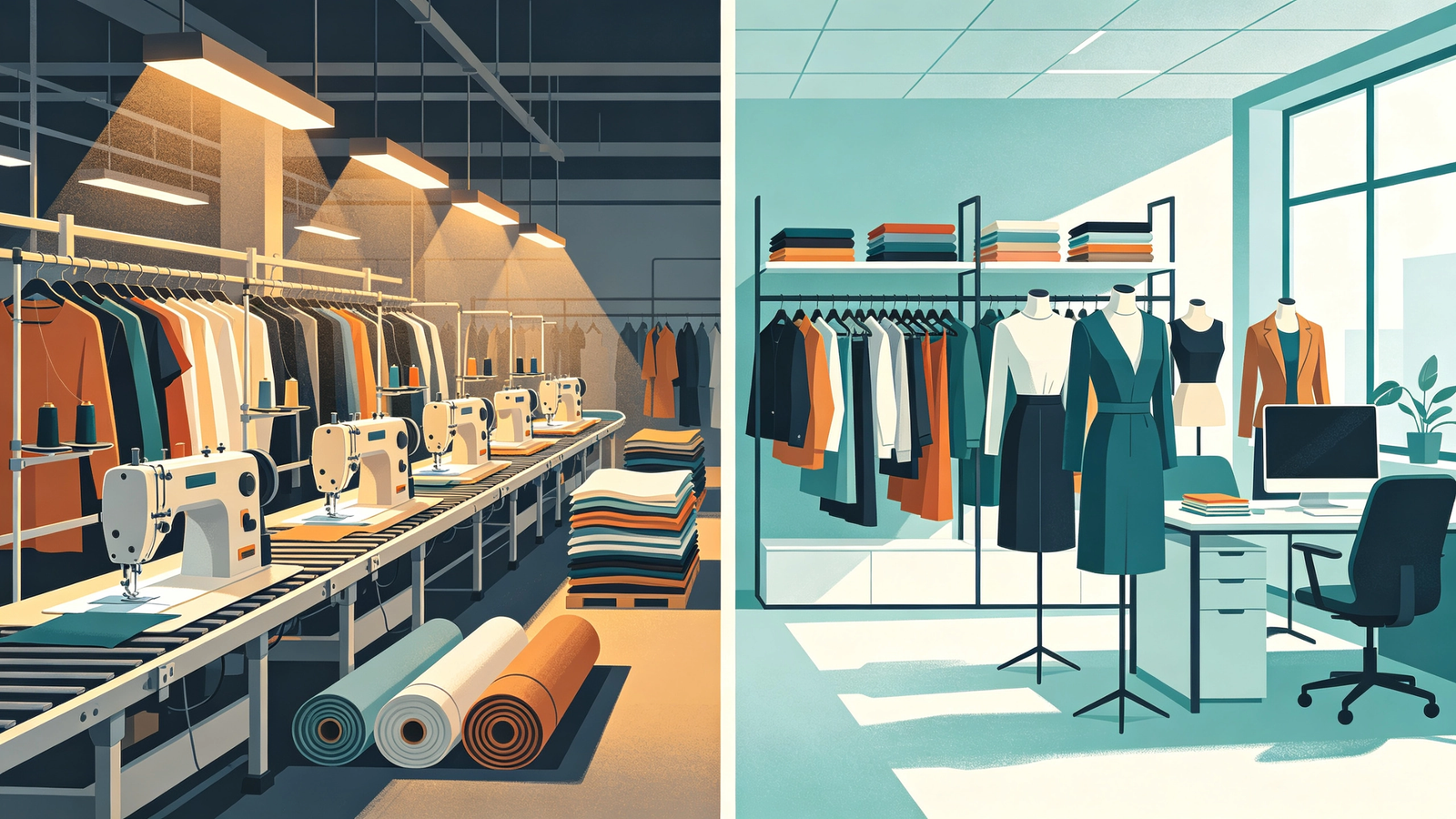
For a focused kids’ underwear or sleepwear line, a factory usually wins on price, lead time, and — critically — direct compliance evidence. Choose a trader only when you need dozens of unrelated styles in one small order.
6. Red Flags Checklist
Walk away (or pause) if you see any of these:
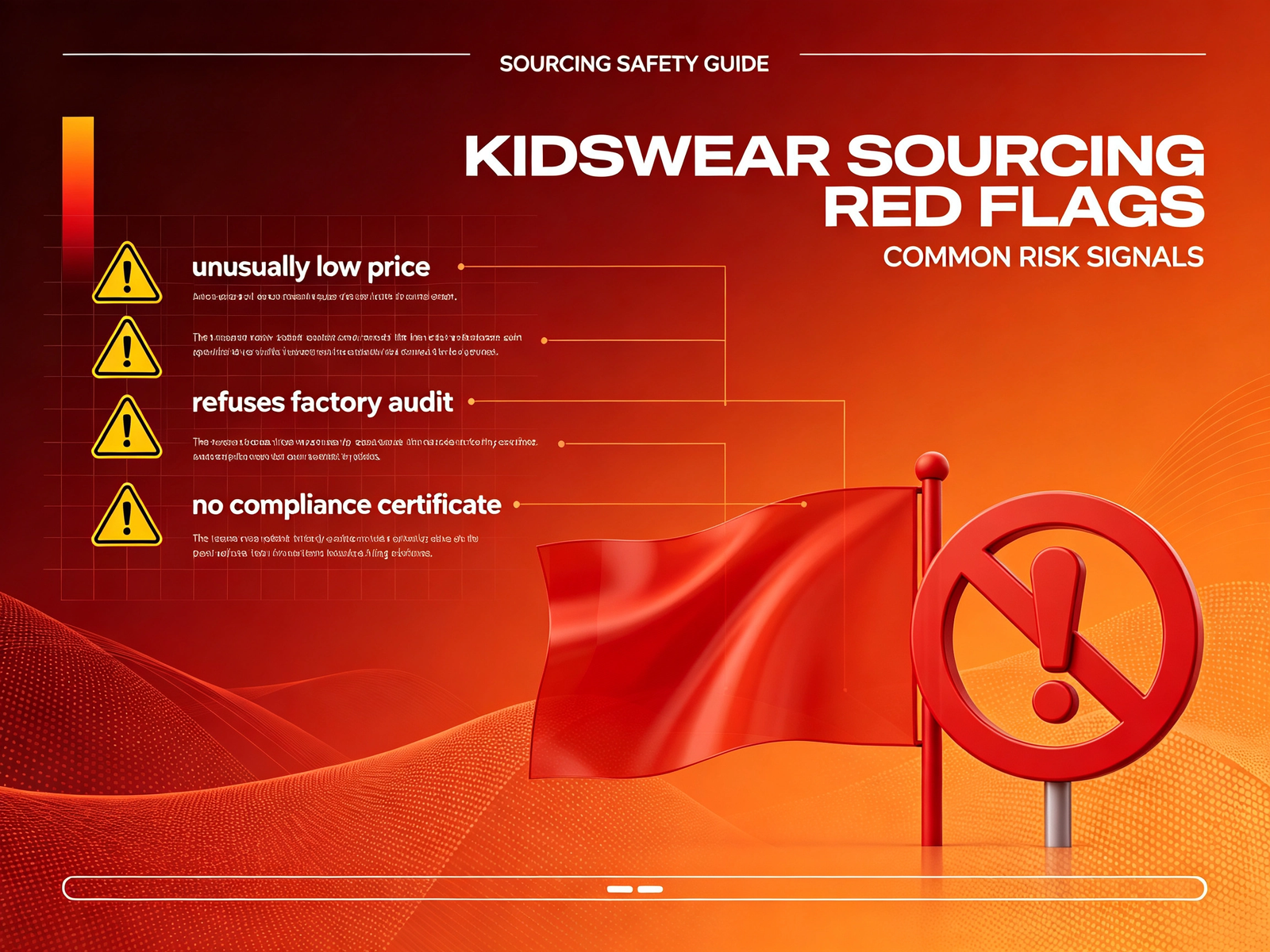
- No compliance docs for a children’s product — no CPC, no GB 31701, no test report on request.
- Push to pay off-platform — “Pay me by T/T / WhatsApp / PayPal friends-and-family and I’ll give a discount.” That discount is the scam.
- Prices far below market with no explanation — usually mixed-grade fabric or a bait-and-switch.
- Refuses a sample or ships a different quality than the production run.
- Vague replies that dodge fabric composition and certification questions.
- No factory photos or video when you ask for a live walkthrough.
7. MOQ Reality for Kids’ Underwear
MOQ depends on product type, value, and customization. Ready-to-ship stock starts from 2 pcs on selected in-stock styles, colors and sizes. For custom kids’ underwear, simple print/embroidery can start around 2 pcs per selected in-stock style/color, while seamless lines need a full production run — thousands of pieces — because the knitting machine is set up for one program. If your quantity sits just under MOQ, some factories negotiate, especially for a first order.
At Nuohua we start custom kids’ underwear at 2 pcs per selected in-stock style / per color (flexible for sampling), so a new brand can pilot a real production line without overcommitting.
8. Sample Before You Commit
A paid sample is the cheapest diligence you will ever buy. It tests two things at once: the supplier’s commitment (do they reply, refine, and ship on time?) and the product (fabric hand-feel, stitching, label correctness). Physically inspect the sample — images lie, a seam does not. Keep 1–2 backup suppliers so one weak sample doesn’t stall your launch.
9. How Trade Assurance Protects You
Trade Assurance is Alibaba’s free escrow: you pay into the platform, funds release to the supplier only after you confirm the order shipped and met terms. If quality falls short or the supplier misses the agreed ship date, you open a dispute and can get refunded — if you uploaded solid evidence (emails, photos, inspection report).
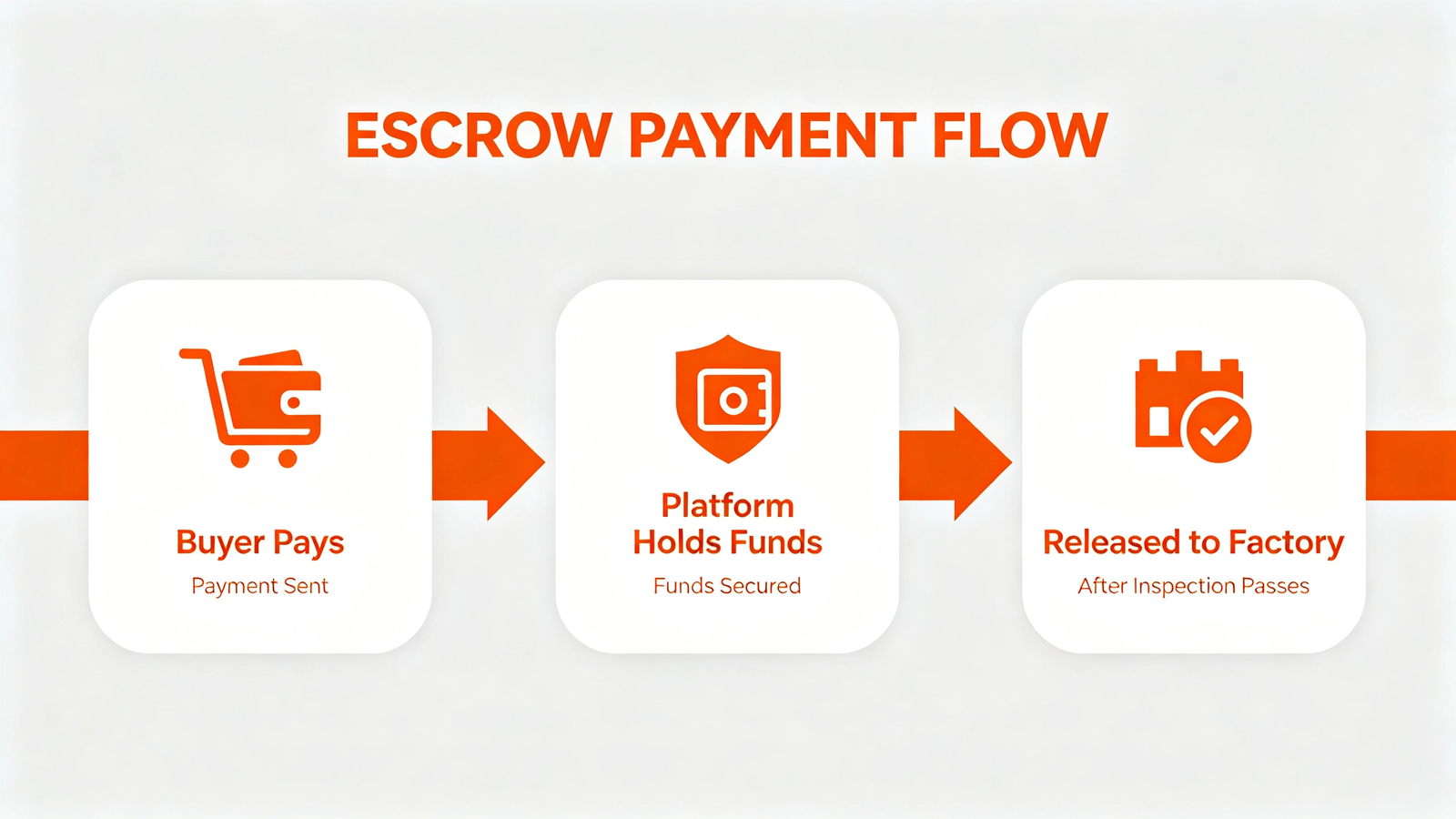
Evidence rule: discuss specs, deadlines, and quality on email, not only on Chat Now / WeChat / WhatsApp. Email threads are what Alibaba adjudicators accept as proof.
10. How to Pay Without Getting Scammed
| Method | Use when | Safety |
|---|---|---|
| Trade Assurance (card / online bank / T/T via platform) | Any order | Safe — escrow protected |
| PayPal (no Trade Assurance) | Under ~$500 | Medium — suppliers wary of 180-day chargeback |
| Direct T/T to supplier bank | Never, for new suppliers | Risky — no platform protection |
| WhatsApp / “refund later” / crypto | Never | Scam — zero recourse |
Any “pay me directly and I’ll discount” request is the single most common Alibaba scam pattern. If it isn’t routed through Trade Assurance on the platform, your money has no umbrella.
11. Alibaba Logistics vs Your Forwarder
Alibaba runs its own logistics (powered by Freightos) where you compare quotes inside the platform. Alternatively, use your own freight forwarder. If you use the supplier’s forwarder, ask for a CIF price (cost + insurance + freight to your port); if you use your own, ask for FOB (free on board at the China port). Express is fast but pricey; ocean is cheap but slow. Either way, confirm the carton dimensions and gross weight with the supplier before quoting.
12. Quality Inspection: AQL + Third-Party
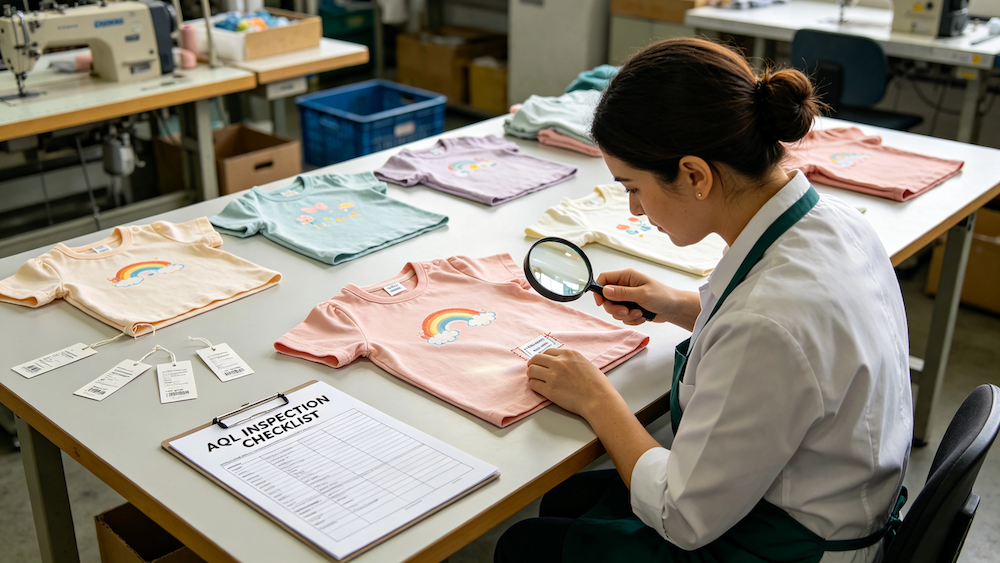
Inspect before shipping, not after. Alibaba’s inspection service lets you book vetted providers — SGS, Bureau Veritas (BV), and CCIC — often at a discount; beyond the platform you can also use QIMA or V-Trust. Most charge roughly $200–300 per inspector per day and apply AQL sampling. A “Pass” report is your green light; a “Fail” means negotiate rework before the container leaves.
Because we run compliant kids’ production ourselves, we also support client-requested inspections at our line — see our manufacturing page for how a real floor handles QC.
13. The Compliance Layer Most Guides Miss
This is where children’s apparel diverges hard from “generic Alibaba buying.” A child’s product carries legal safety duties the platform won’t enforce for you:
- United States — CPC: Children’s products need a Children’s Product Certificate backed by CPSIA third-party testing (lead, phthalates, flammability). No CPC, no legal US sale.
- China — GB 31701 Class A: Infant and toddler textiles must meet Class A (the strictest) limits for formaldehyde, pH, and color fastness.
- EU — CE / EN 14682: Cord and drawstring safety on kids’ clothing; general textile regulations apply.
Ask every shortlisted supplier for the actual test reports, not a promise. At Nuohua we manufacture to CPC and GB 31701 Class A standards, audited by SGS, TÜV SÜD, and Intertek, with OEKO-TEX Standard 100 currently in progress — so a US or China-bound kids’ line starts from a compliant base rather than a gamble. Our China sourcing regions guide shows where compliant capacity clusters.
Bottom line: for kids’ underwear, “cheap + fast” without compliance paperwork is the most expensive mistake on Alibaba. The certificate is the product.
14. FAQ
Is Alibaba safe for kids’ clothing?
Yes, if you use Trade Assurance, verify compliance documents (CPC / GB 31701), and inspect before shipping. The platform is a tool; safety comes from your process.
What does “Verified Supplier” actually mean?
A paid badge confirming the company is real. It is not a quality or safety certification. Always ask for test reports and audit letters.
Factory or trading company for a small kids’ brand?
A factory wins on price, lead time, and direct compliance proof for a focused line. Use a trader only when you need many unrelated styles in one small mixed order.
What is the safest payment method?
Trade Assurance paid through the Alibaba platform (card, online bank, or T/T inside the order). Never pay by direct T/T, WhatsApp, or “discount if off-platform” requests.
How much MOQ for custom kids’ underwear?
Simple print/embroidery can start around 2 pcs per selected in-stock style/color; seamless lines need a full run (thousands). Nuohua starts at 2 pcs per selected in-stock style/color for sampling flexibility.
Do I need a CPC to sell kids’ underwear in the US?
Yes. A Children’s Product Certificate backed by CPSIA testing is required for children’s products sold in the US. Request the supplier’s test report before ordering.
Start small, verify hard
Sourcing kids’ underwear from Alibaba safely is a process, not a lucky click: shortlist on evidence, sample before committing, pay only through Trade Assurance, inspect before the container sails, and never skip the compliance certificate. When you are ready to pilot a compliant line at low MOQ, send us your spec or review our OEM/ODM vetting guide first.