
Placing a kids underwear bulk order is not the same as ordering samples or a small trial run. Between a signed purchase order and a finished container there is fabric, cutting, sewing, compliance testing, inspection, and freight — and every stage has a cost and a clock. This guide walks through the process from the manufacturer’s side, so private-label founders and sourcing teams can plan realistic quantities, timelines, and budgets. The numbers below are the ones we work with every day at our own factory in China; nothing is padded, and nothing assumes a best case that rarely happens.
On this page
- Kids Underwear Bulk Order: The Quick Answer
- What a “Bulk Order” Actually Means: Tiers and MOQ
- MOQ by Product Type
- From PO to Container: The 6 Steps
- Lead Time Math: Sampling, Production, Shipping
- Deposits, Balance and Incoterms
- Pre-Shipment Inspection: AQL You Can Actually Use
- Common Bulk Order Mistakes and What They Cost
- A Bulk Order Template for Your Factory
1. Kids Underwear Bulk Order: The Quick Answer
A kids underwear bulk order at Nuohua Garment is a production run of 2 pcs on selected in-stock styles, colors and sizes or more per style per colour for custom underwear, or 1,000 sets per design for sleepwear. From a signed purchase order, a typical order ships in 40–55 days: 7–14 days of sampling and approval, 30±5 days of bulk production, 1–3 days of inspection, and 5–35 days of freight depending on air or sea.
Three things delay a bulk order more than anything else: unapproved lab dips, a late size-curve confirmation, and missing compliance documents. All three can be settled before the first metre of fabric is cut, and all three are your responsibility as the buyer, not the factory’s. The rest of this article breaks the order into its parts — what a bulk order is, what each product type requires as a minimum, the six steps from PO to container, the lead-time arithmetic, payment and Incoterms, and a pre-shipment inspection routine you can actually run.
2. What a “Bulk Order” Actually Means: Tiers and MOQ
A bulk order is a production run large enough to consume full rolls of fabric and keep a sewing line efficient. Below the minimum order quantity — 2 pcs on selected in-stock styles, colors and sizes on stock-fabric programs (custom runs are quoted separately, per fabric and colour) for custom kids underwear — a factory cannot order greige fabric economically, so the per-unit price climbs fast.
Buyers new to sourcing often think of order size as one continuous dial. Factories think in tiers, because each tier touches a different part of the operation differently. Understanding these tiers is the fastest way to understand why MOQ exists at all.
| Tier | Typical quantity | Purpose | Unit price position |
|---|---|---|---|
| Sample order | 1–3 pieces per style | Check construction, fit and print | Highest — carries development labour |
| Trial / small order | 50–200 pieces | Test the market or size grading | Mid — dye-lot minimums not yet absorbed |
| Bulk order | 2 pcs on selected in-stock styles, colors and sizes (underwear); 1,000 sets per design (sleepwear) | Full production run | Lowest — fixed costs spread across the run |
| Repeat order | Re-run of an approved style | Replenish inventory | Lowest — no new sampling or lab dips |
The jump from trial to bulk matters because fabric is bought by the roll, dyeing runs by the bath, and cutting by the marker. A sample order might be cut by hand and sewn by the development team, which is why three pieces can cost more than thirty pieces of the same style in bulk. A bulk order spreads those fixed costs — greige fabric, dye bath, marker, line setup — across hundreds or thousands of units instead of dozens.
At our factory, we produce more than 1,000,000 pieces a month across 300+ staff on an 8,000 sqm floor, so the economics of a bulk run are built into how we schedule. A ready-stock order from 2 pcs fits one line for a short run; a 1,000-set pyjama order is a different animal entirely because each set consumes several times the fabric and sewing time of a single pair of briefs.
3. MOQ by Product Type
MOQ follows fabric and cutting economics, not one fixed number. Underwear carries a ready-stock minimum of 2 pcs; sleepwear sets carry a 1,000-set-per-design-per-colour MOQ because a pyjama set consumes far more fabric and far more sewing time per unit.
Different product types carry different minimums. Treating MOQ as a single number is the fastest way to misprice a line before you have even sampled it.
| Product | MOQ | Unit | Why |
|---|---|---|---|
| Custom kids underwear (briefs, boxer briefs, triangle) | From 2 pcs | on selected in-stock styles, colors and sizes | Greige fabric and dye-lot minimums |
| Sleepwear / pyjama sets | 1,000 | sets per design per colour | Multi-piece construction, larger fabric consumption |
| In-stock fabric underwear | From 2 pcs | on selected in-stock styles, colors and sizes | No setup fee — fabric already on the shelf |
| Custom fabric development | Project-based | — | Separate development line, quoted per project |
Two in-stock fabrics remove a big chunk of that friction for underwear lines. The first is a 91.9% Lenzing™ Modal + 8.1% Spandex interlock at 220–240 GSM — no cotton, no setup fee. The second is a 49.9% Lenzing™ Modal + 43.3% Cotton + 6.8% Spandex interlock at around 220 GSM, also in stock with no setup fee. Both let you start a bulk order without waiting on greige production or a dye run. Cotton-only fabrics and other cotton blends fall under custom fabric development, which is a separate line with its own timeline and minimums.
Fastest path to a first bulk order: use in-stock fabric. It carries no setup fee and no extra dyeing lead time, which removes two of the three most common delays before production even starts. You can still customise cut, print, labels and packaging — only the base fabric is fixed.
4. From PO to Container: The 6 Steps
Every bulk order passes through six stages: purchase-order confirmation, lab-dip and pre-production-sample approval, bulk fabric and cutting, sewing and finishing, the six-stage QC with needle detection, and packing and loading.
Knowing the sequence helps you see where your own decisions gate the schedule. Here is how a bulk order moves through our factory.
- PO and tech pack confirmation. The factory confirms quantity, size curve, colour, artwork, packaging and ship date against your tech pack. Anything vague at this stage becomes an email thread later.
- Lab dip / swatch approval. If the colour is custom, the factory dyes a lab dip against your reference. Approve it from the physical swatch, never from a phone photo.
- Pre-production sample (PPS) approval. One fully finished sample in the correct fabric, trims, labels and packaging. This is the last realistic chance to catch a construction error before cutting.
- Bulk fabric, cutting and sewing. Greige fabric is knitted and dyed, then cut in a marker that nests sizes to minimise waste, then sewn on the line. Our sewing floor runs on the INA hanging production system, which keeps piece flow steady across a run.
- Finishing, six-stage QC and needle detection. Every piece passes through the six-stage quality control chain, including a needle detector so no broken needle fragment leaves the factory.
- Packing and loading. Pieces are folded, polybagged, carton-marked to your spec, and loaded according to the Incoterm you chose.
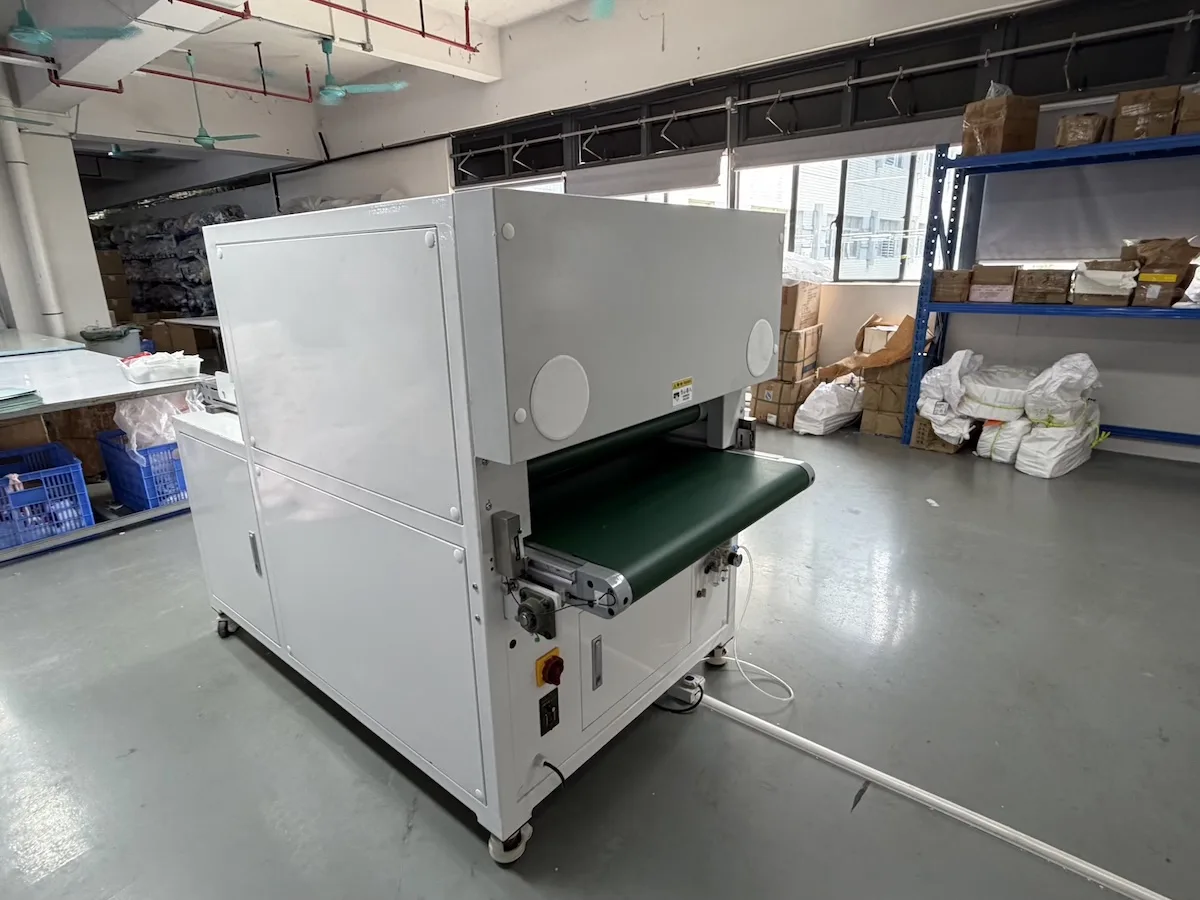
Most buyers underestimate how much the approval gates — steps 2 and 3 — drive the whole timeline. A one-week delay signing off a lab dip pushes cutting, sewing and shipping by the same week, because everything downstream waits on that single decision.
5. Lead Time Math: Sampling, Production, Shipping
Plan 40–55 days door-to-door by sea. Sampling and approval take 7–14 days, bulk production runs 30±5 days, inspection takes 1–3 days, and sea freight adds 20–35 days. Air freight adds only 5–10 days but costs several times more per piece.
Lead time is simple arithmetic, but only if you count every stage and not just the sewing. Here is the honest breakdown we give buyers.
| Stage | Duration | Notes |
|---|---|---|
| Lab dip / swatch approval | 5–10 days | Only if the colour is custom |
| Pre-production sample | 5–7 days | After fabric and trims are confirmed |
| Bulk production | 30±5 days | For a 100–1,000 piece run |
| Finishing + six-stage QC + needle detection | Included in bulk window | Runs in-line with production |
| Pre-shipment inspection | 1–3 days | Internal or third-party |
| Sea freight | 20–35 days | Port to destination port |
| Air freight | 5–10 days | For urgent replenishment only |
Build a 5–7 day buffer into every milestone. Delays almost always happen at approval points — lab dips waiting for sign-off, samples sitting in a buyer’s inbox — not on the sewing floor. If your launch date is fixed, back-calculate from the container arrival and add that buffer at the front, not the back.
6. Deposits, Balance and Incoterms
A typical first bulk order runs on a 30% deposit to confirm production and a 70% balance before shipment. Incoterms decide who owns risk and freight: FOB puts you in control of freight, CIF bundles cost, insurance and freight into one quote, and DDP gives the factory door-to-door responsibility including duties.
Payment and Incoterms are where a bulk order gets its final cost and risk profile. Both are negotiable, but the defaults below reflect standard trade practice for children’s apparel.
| Incoterm | Who books freight | What’s included | Best for |
|---|---|---|---|
| EXW | Buyer | Goods at the factory gate | Rare for first orders |
| FOB | Buyer | Factory delivers to the port of loading | Experienced importers with a forwarder |
| CIF | Factory (to destination port) | Cost + insurance + freight | First-time buyers who want one quote |
| DDP | Factory | Everything, including import duties | Founders who want door-to-door simplicity |
For a first order, the usual structure is a 30% deposit to lock the production slot and cover fabric, with the 70% balance settled before the container is released. This is normal trade practice, not a red flag — fabric is a cash outlay the factory cannot recover if a buyer disappears. Repeat orders can often negotiate different terms once trust is established. Whatever the split, get it in writing on the purchase order so the payment schedule and the ship schedule match.
7. Pre-Shipment Inspection: AQL You Can Actually Use
Use AQL 2.5 for major defects, 4.0 for minor defects, and zero tolerance for critical safety defects, sampled under General Inspection Level II. This is the practical default for kids underwear: it catches problems before the container leaves the factory rather than after it reaches your warehouse.
AQL (Acceptance Quality Limit) is a sampling standard, not a pass/fail on every single piece. You inspect a statistically drawn sample against a defect table, and the result tells you whether the whole lot ships. The sample size scales with lot size, and inspection level II is the standard default for apparel.
| Class | AQL | Example |
|---|---|---|
| Critical | 0 (zero tolerance) | Exposed needle, choking hazard, sharp edge |
| Major | 2.5 | Hole in fabric, broken seam, wrong size label, badly misaligned print |
| Minor | 4.0 | Loose thread, slight shade variation within tolerance, minor crease |
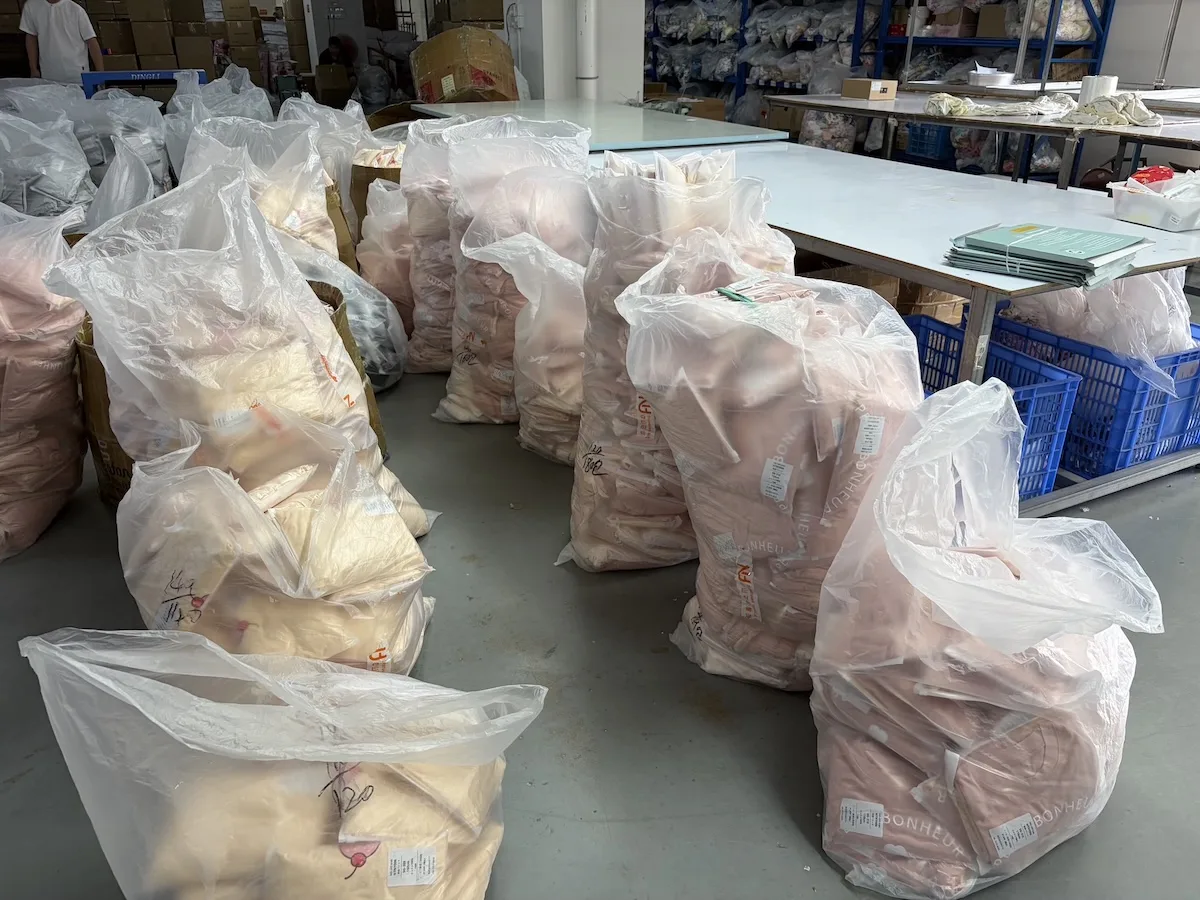
Critical defects are the non-negotiable column for children’s products. A broken needle fragment or a small choking hazard is a recall risk, not a discount item — which is why our six-stage QC chain ends with needle detection and keeps the overall defect rate under 0.3%. Every run is also checked against GB 31701 Class A (China’s children’s A-class safety standard). When a buyer requests third-party verification, the testing is performed by independent laboratories such as SGS, TÜV SÜD, Intertek, or a CPC-issuing testing body — these are third-party testing labs, not certificates our factory holds. OEKO-TEX Standard 100 is currently in progress at our facility and will be referenced once granted.
8. Common Bulk Order Mistakes and What They Cost
The most expensive mistakes are approving lab dips from phone photos, changing size ratios after cutting, and skipping pre-shipment inspection. Each either forces a re-run, leaves dead stock, or ships defects the buyer has to absorb.
Most bulk-order problems are decisions made in the first or last week of the project, not on the sewing floor. Here is what each mistake actually costs.
| Mistake | What happens | Cost |
|---|---|---|
| Approving colour from a phone photo | Shade mismatch vs the approved swatch | Re-dye or a discounted sell-through |
| Changing the size ratio after cutting | Excess in some sizes, shortage in others | Dead stock or split shipments |
| Skipping PPS approval | Construction error replicated across the run | Full re-run |
| No pre-shipment inspection | Defects found at the destination warehouse | Return or rework at your cost |
| Late compliance documents | Container held at customs | Demurrage and storage fees |
Shade approval is the single most avoidable delay in bulk kidswear. Approve colour from a physical swatch under standard lighting and keep it as the reference for the entire run. If you and the factory are not looking at the same swatch, you are not agreeing on the same product.
9. A Bulk Order Template for Your Factory
Send the factory a complete order brief in one document: product, style and colour codes, size curve, fabric spec, trims and labels, packaging, compliance target, Incoterms and destination port, and target ship date. A complete brief removes most of the back-and-forth that delays a bulk order.
A complete brief is the difference between a bulk order that starts in days and one that limps through weeks of clarification. Use this checklist as your order template — each line should be one clear, final answer.
- Product and style codes with a reference sample or photo.
- Fabric spec — composition, GSM and knit structure, or simply “use in-stock fabric” to skip setup.
- Size curve with the percentage split across sizes, not just the list of sizes.
- Colour and print artwork in a final, production-ready file.
- Trims and labels — waistband, care label, size label, and whether labels are printed or sewn in.
- Packaging — polybag, hangtag, carton mark and fold style.
- Compliance target — GB 31701 Class A for China, CPC via a third-party lab for the US.
- Incoterm and destination port.
- Target ship date and budget.
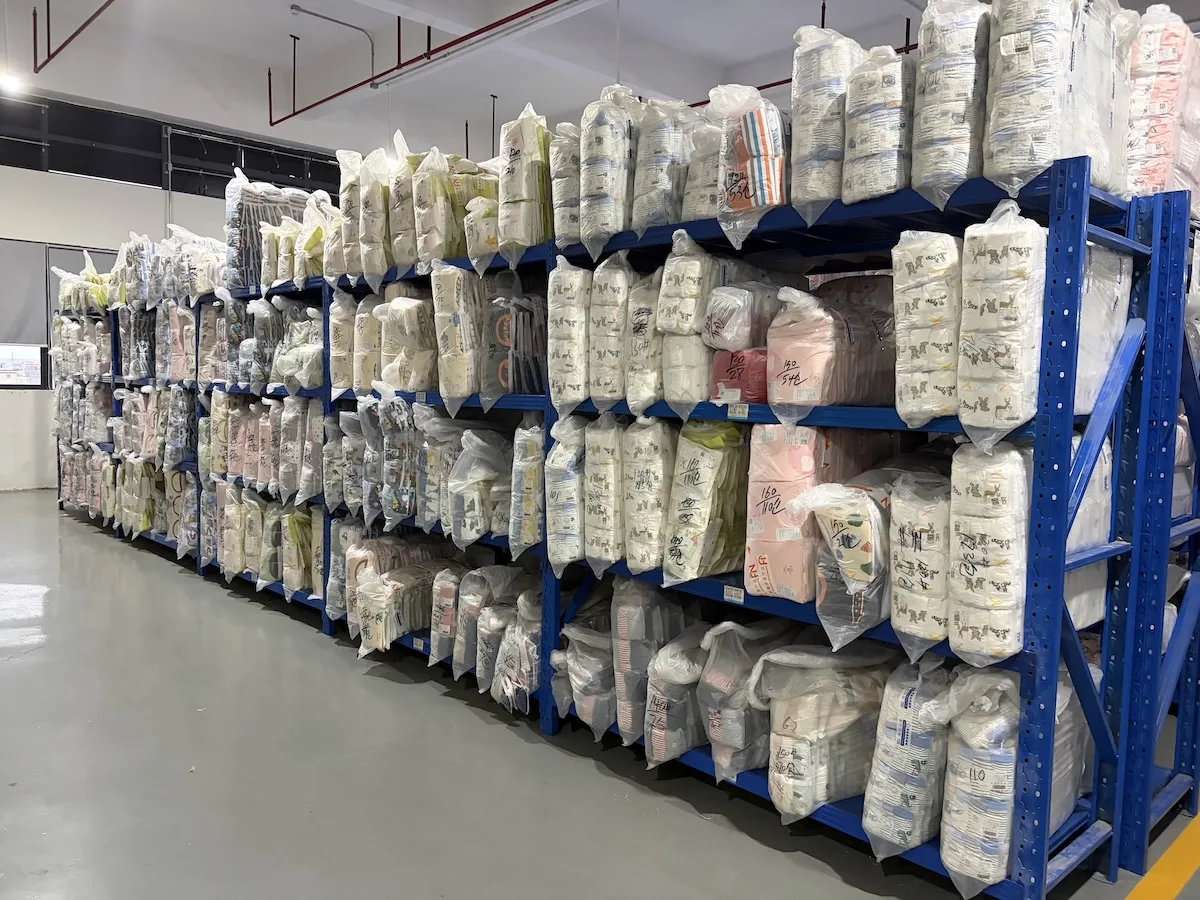
If you can fill every line of this template before contacting a factory, you will get an accurate quote and a realistic date on the first pass — and you will look like a buyer who has done this before.
Ready to place a kids underwear bulk order with a factory that gives you honest MOQs, lead times and inspection standards?