
Almost every kidswear brand eventually hits the same fork in the road: your designer sends a tech pack, your factory replies with a fabric question, and suddenly you are being asked to choose between “knit” and “woven” — two words that sound like sewing trivia but quietly decide how your product stretches, breathes, shrinks, survives fifty washes, and feels against a five-year-old’s skin.
For underwear, sleepwear, and everyday basics, this is not a cosmetic detail. The wrong construction can turn a beautiful sample into a garment that pills at the seams, twists after washing, or feels stiff exactly where a child is most sensitive. This guide explains the real difference between knit and woven fabric, shows how each behaves in production, and gives you decision tables and a buyer checklist you can reuse on every kids’ underwear program you develop.
Quick Answer
For kids’ underwear, sleepwear, and most next-to-skin basics, knit fabric is almost always the right choice. Knit is made by looping yarn, so it stretches, recovers, and moves with the body — ideal for briefs, boxer briefs, training bras, and soft pajamas. Woven fabric (yarns crossed at right angles) is stronger and more structured but has little natural stretch, so it suits outer layers like shirting, dresses, and woven pajama sets rather than snug underwear. When in doubt for underwear: choose a soft cotton or modal knit with a touch of spandex.
- What “knit” and “woven” actually mean
- How each fabric behaves on the body
- Knit vs woven: side-by-side comparison
- Which construction for which kids’ product
- Common knit fabrics we run for kids’ underwear
- How production and cost differ
- Quality, safety, and skin-contact standards
- Buyer checklist before you approve a fabric
- Frequently asked questions
1. What “Knit” and “Woven” Actually Mean
The difference comes down to how the yarn is turned into cloth.
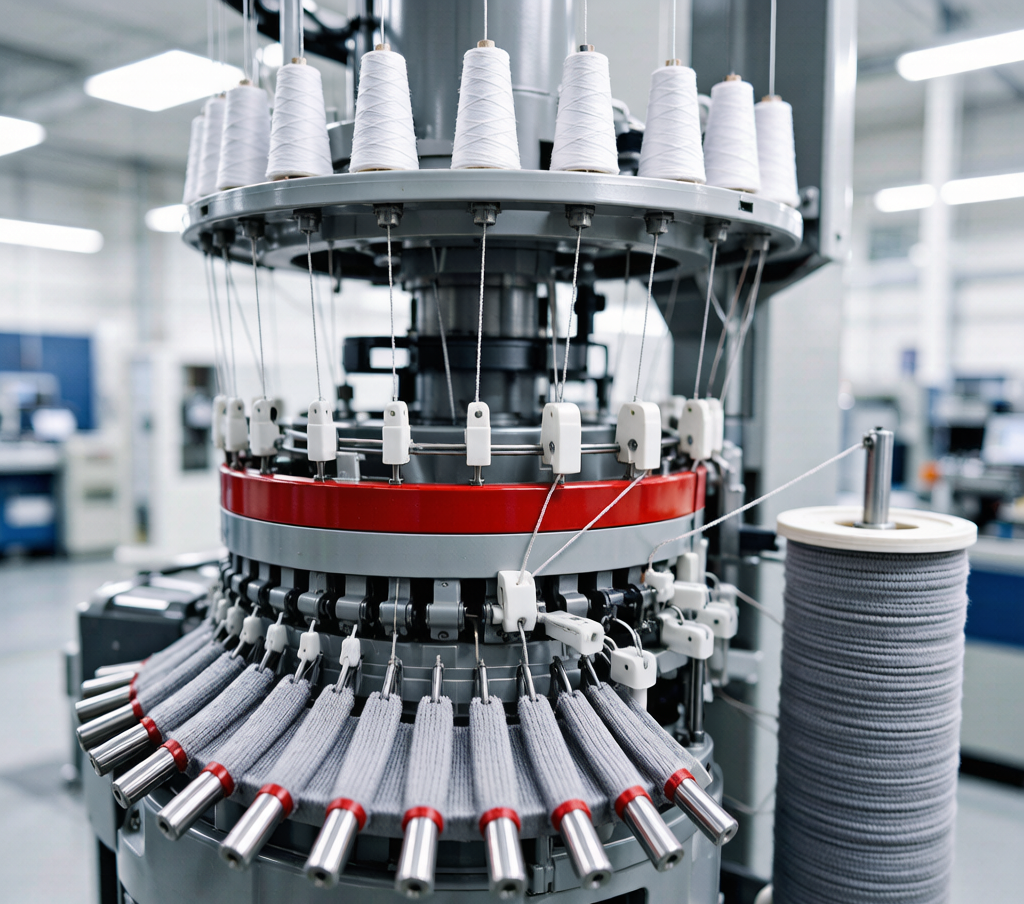
Knit fabric is built from a single yarn (or set of yarns) formed into interlocking loops, like a hand-knitted scarf produced at industrial speed on a circular or flat knitting machine. Because the structure is a chain of loops, the fabric can extend and spring back. That is why a T-shirt, a pair of briefs, and a soft training bra all move with you — they are knits.
Woven fabric is built from two sets of yarns crossed at 90 degrees on a loom: the lengthwise “warp” and the crosswise “weft.” Locking the yarns at right angles produces a stable, flat cloth with very little give (unless elastane is deliberately added). Denim, poplin shirting, and canvas are all wovens.
2. How Each Fabric Behaves on the Body
Construction dictates behavior, and behavior is what parents actually feel when they handle your product.
Stretch and recovery
Knit stretches in multiple directions and recovers its shape, which is exactly what underwear needs as a child runs, sits, and grows between size changes. Woven barely stretches, so a woven brief would either bind or need a much looser, less secure fit.
Softness and next-to-skin comfort
The looped structure of knit traps a little air and drapes softly, giving that “second-skin” hand feel. Wovens can be made soft (think brushed cotton flannel) but tend to feel flatter and more structured — better as an outer layer than against sensitive areas.
Breathability and moisture
Both can breathe well depending on fiber and finish, but knit’s open loop structure generally moves air and moisture more freely, which matters for underwear worn all day.
Shape retention and durability
Here woven has an edge: its locked grid resists stretching out of shape and frays less along a cut edge, which is why structured outerwear is woven. Quality knit holds shape well too, but only when the yarn, gauge, and any spandex content are correctly specified — a cheap knit is where bagging and pilling appear.
3. Knit vs Woven: Side-by-Side Comparison
| Property | Knit fabric | Woven fabric |
|---|---|---|
| Structure | Interlocking loops of yarn | Warp & weft yarns crossed at 90° |
| Natural stretch | High (multi-directional) | Low (unless elastane added) |
| Shape recovery | Good, with correct spec | Very stable, minimal give |
| Next-to-skin feel | Soft, flexible, “second skin” | Flatter, more structured |
| Breathability | Generally high | Varies with weave density |
| Edge fraying | Low (can be left raw / bound) | Higher (needs finished seams) |
| Wrinkle resistance | High | Lower (creases more) |
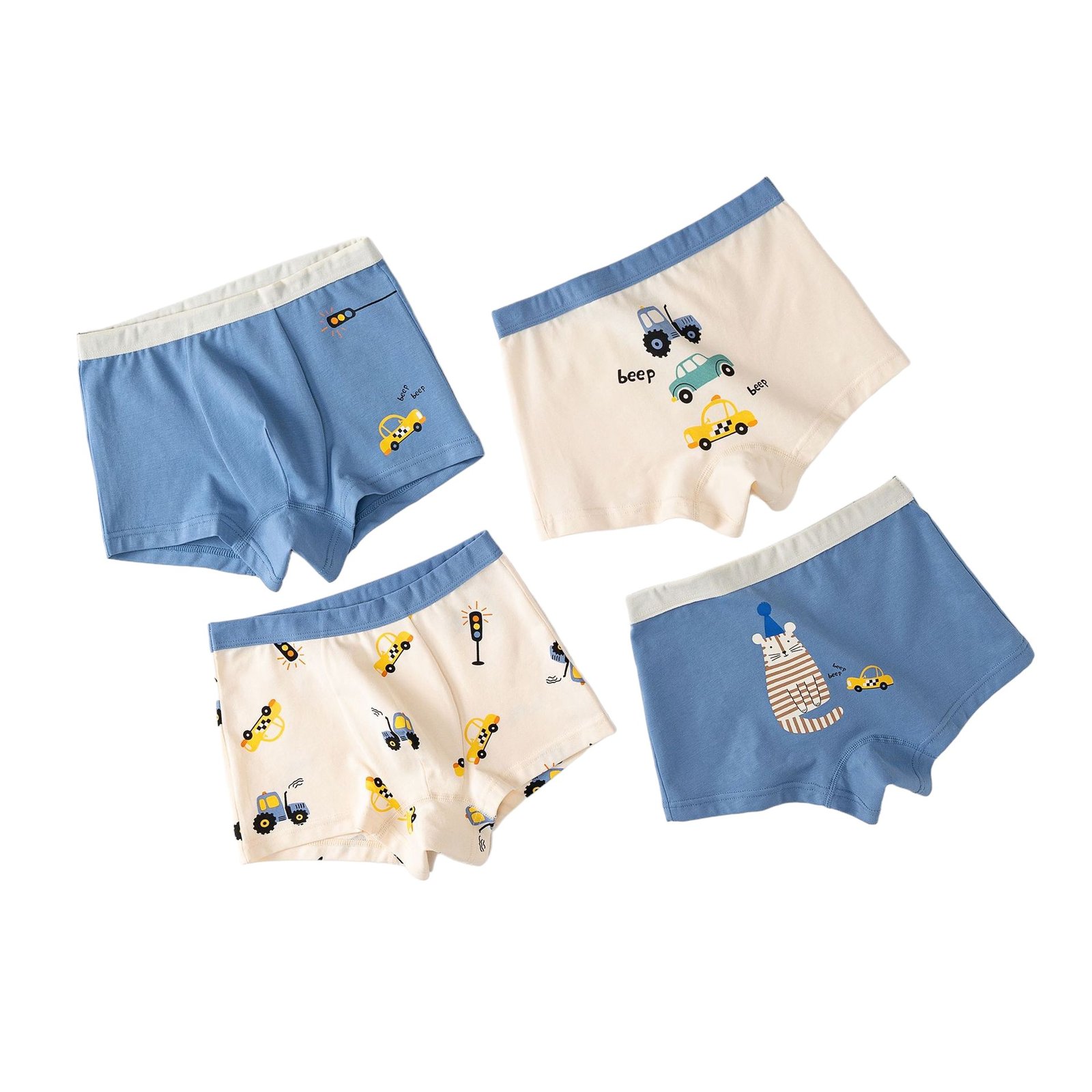
| Best for kids | Underwear, tees, sleepwear, training bras | Shirting, dresses, woven pajama sets, outerwear |
4. Which Construction for Which Kids’ Product
Here is how we typically guide brands across a full kids’ basics range.
| Product | Recommended | Why |
|---|---|---|
| Briefs & boxer briefs | Knit | Needs stretch, recovery, all-day comfort |
| Training bras / bralettes | Knit (often seamless) | Soft, tag-free, no rigid seams on skin |
| Undershirts / vests | Knit | Close fit, breathable base layer |
| Soft pajama sets | Knit | Cozy, flexible for sleep movement |
| Classic woven pajamas | Woven | Crisp look, structured button-front styling |
| Everyday T-shirts | Knit | Comfort and easy movement |
| Dresses & shirting | Woven | Structure, drape, and defined shape |
5. Common Knit Fabrics We Run for Kids’ Underwear
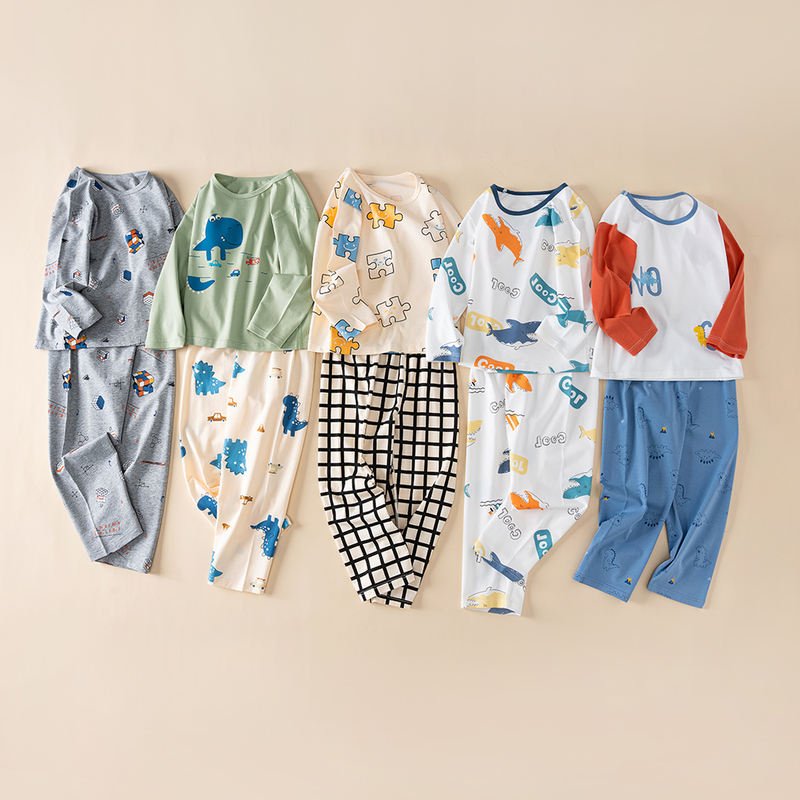
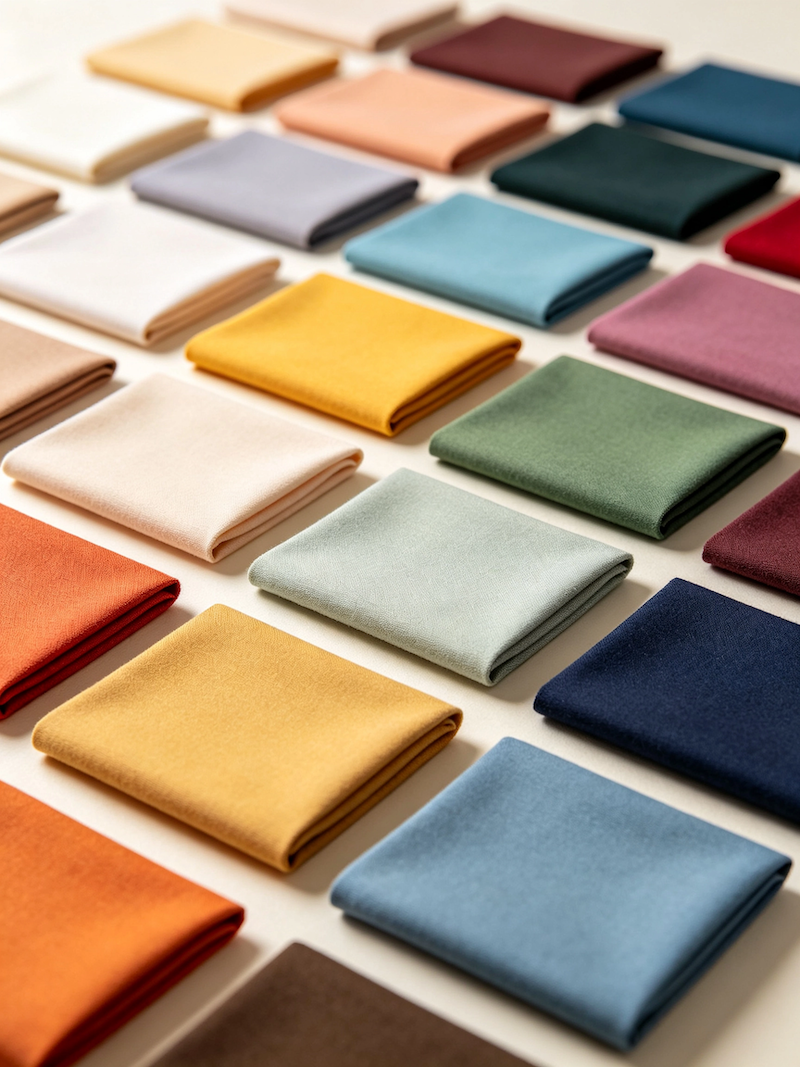
Within “knit” there is still a real menu, and the fiber blend changes the feel, price, and care as much as the construction does.
- Combed cotton single jersey — the everyday standard: soft, breathable, easy to print. A small percentage of elastane adds recovery.
- Cotton / spandex rib — more stretch and a snug hold, common in waistbands and fitted briefs.
- Modal / micro-modal blends — silky, cool hand feel and excellent for premium next-to-skin ranges.
- Interlock knit — a denser, smoother double knit that holds shape well for undershirts and structured briefs.
- Seamless engineered knit — knit to shape on specialized machines so there are fewer or no side seams, ideal for training bras and sensitive-skin lines.
6. How Production and Cost Differ
The two constructions also move through the factory differently, which affects lead time, minimums, and price.
Cutting and sewing
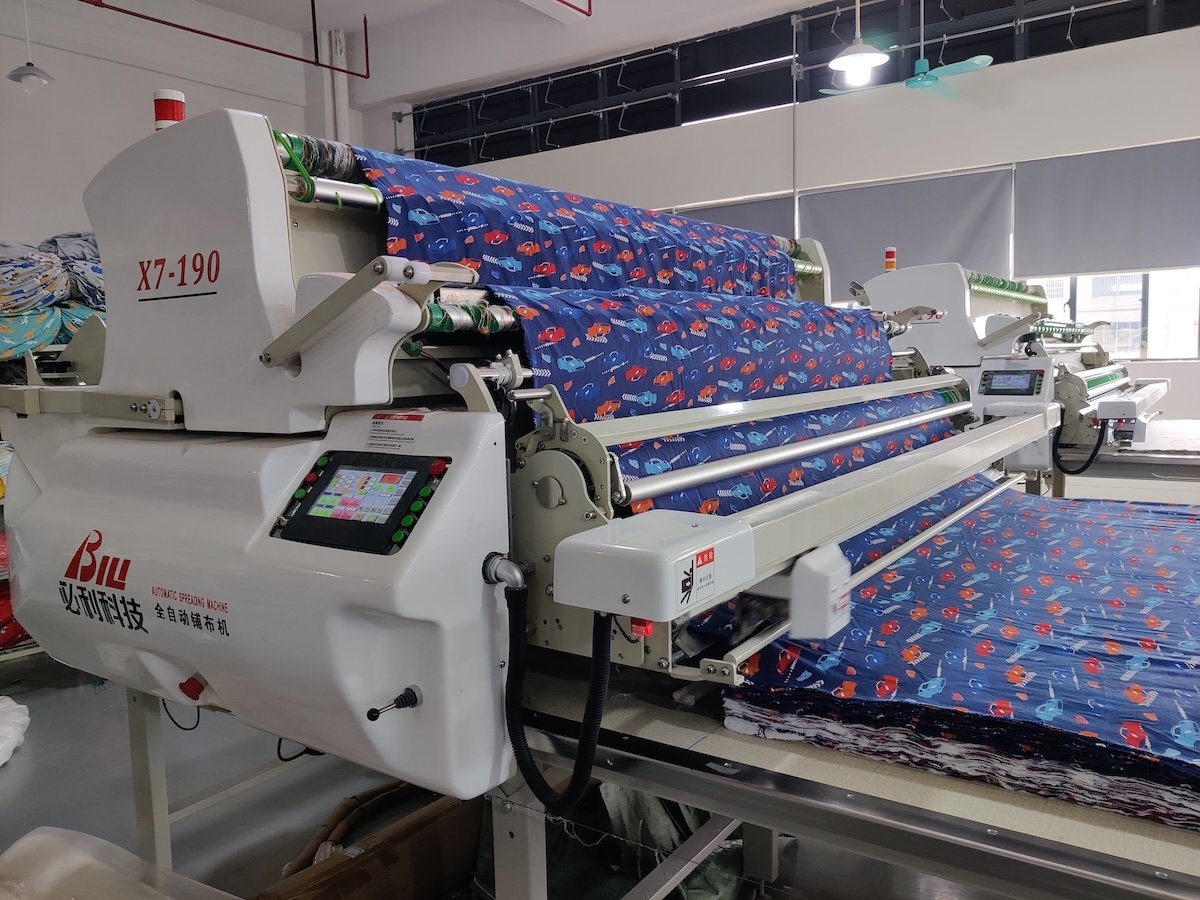
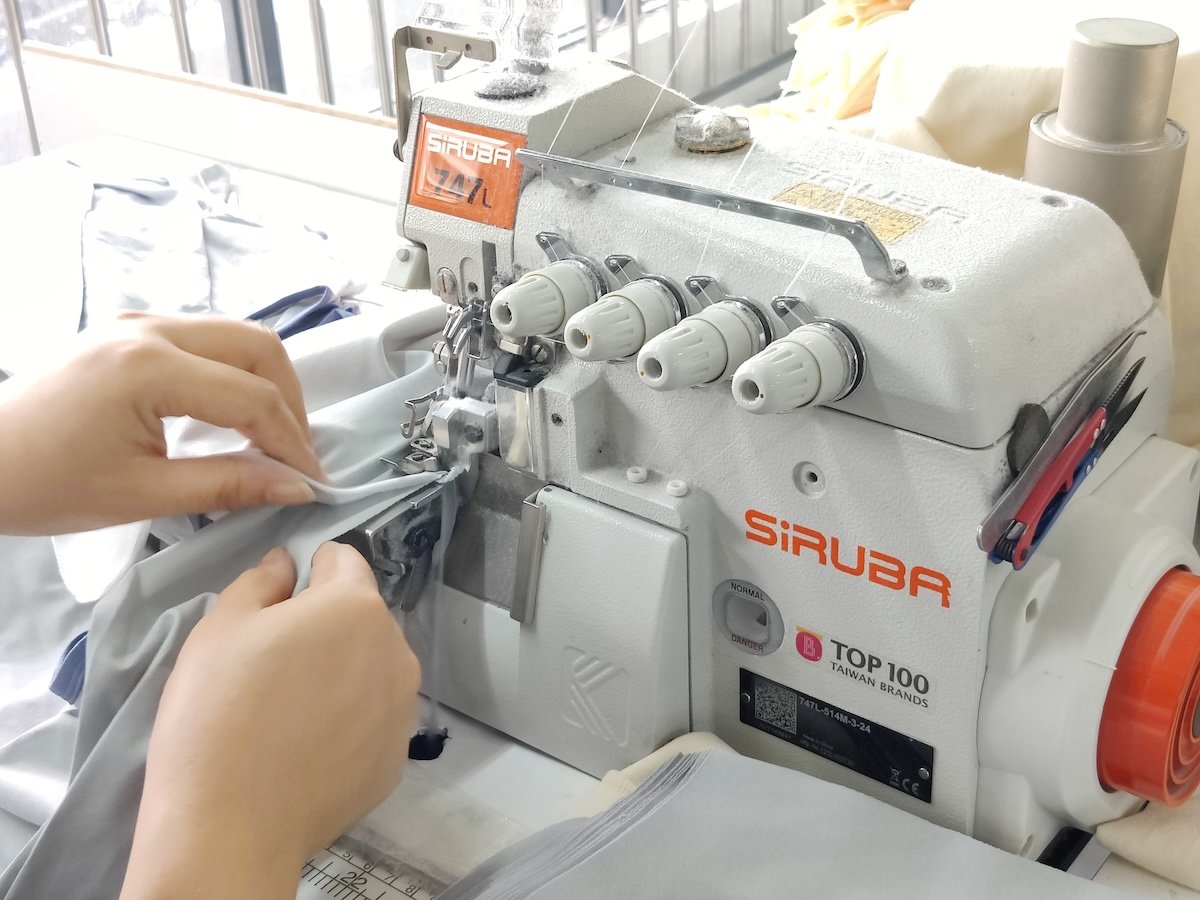
Knit fabric is stretchy, so it is spread and cut carefully to avoid distortion, then sewn on stretch-capable machines (overlock and coverstitch) so the seams move with the fabric. Woven is more stable to cut but frays, so seams must be fully finished.
Seams that matter for underwear
For next-to-skin kids’ garments, seam choice is a comfort decision. Flatlock and coverstitch seams sit flat against the skin, and tag-free heat-transfer labels remove the scratchy woven care tag entirely — small details that parents notice immediately.
| Factor | Knit | Woven |
|---|---|---|
| Sewing machines | Overlock / coverstitch (stretch seams) | Lockstitch (stable seams) |
| Seam finishing | Often flatlock for comfort | Must enclose raw edges |
| Fabric handling | Relax before cutting to avoid distortion | Stable, easier to align |
| Shrinkage control | Pre-shrink / compact finishing critical | Generally lower shrinkage |
7. Quality, Safety, and Skin-Contact Standards
Because underwear sits against skin all day, fabric choice is inseparable from safety. Whatever construction you pick, the fabric and trims must clear children’s product requirements in your target market.
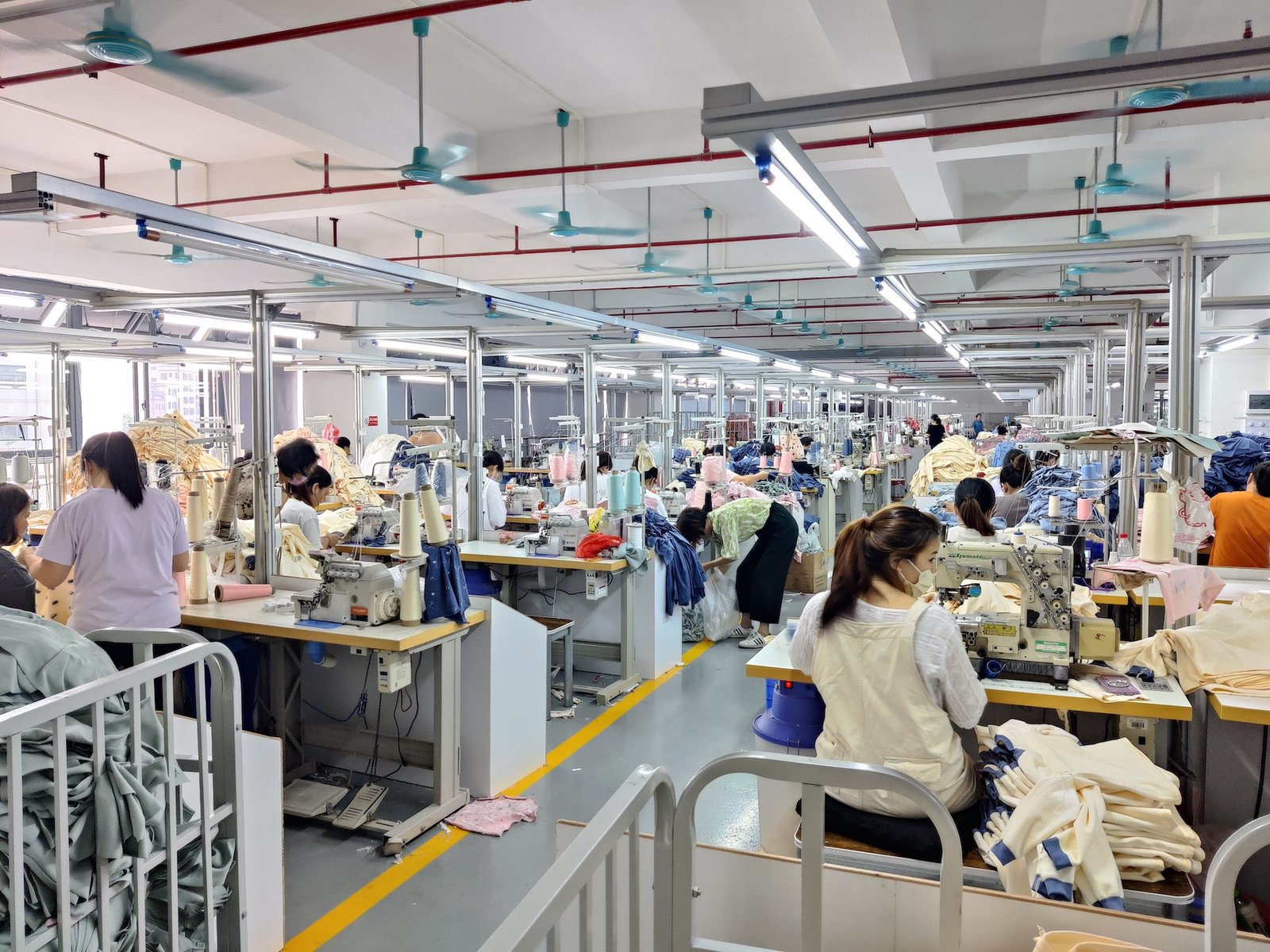
At Nuohua Garment, our kids’ garments are produced to internationally recognized safety standards, including GB 31701 Class A (the highest safety grade for garments with direct skin contact for infants and young children) and testing through leading third-party laboratories such as SGS, TÜV SÜD, and Intertek. For the US market we can supply products supported by a CPC (Children’s Product Certificate), and selected components carry ETL LISTED verification. We are also currently advancing our compliance with OEKO-TEX Standard 100 certification (in progress) for further reassurance on harmful-substance limits.
8. Buyer Checklist Before You Approve a Fabric
Run through this before you sign off any knit or woven quality for a kids’ underwear program:
- Construction confirmed — knit or woven, and (for knit) jersey, rib, interlock, or seamless.
- Fiber blend and GSM written into the tech pack, not just “cotton.”
- Stretch and recovery checked on a physical sample, washed at least once.
- Shrinkage after wash tested to your acceptable tolerance.
- Seam type specified (flatlock / coverstitch for next-to-skin comfort).
- Labeling decided — tag-free print vs sewn label.
- Safety standard named for your market (e.g. GB 31701 Class A, CPC for the US).
- Color reference agreed against a physical or Pantone standard before bulk dyeing.
Frequently Asked Questions
Is knit or woven better for kids’ underwear?
Knit is better for underwear in almost all cases. Its looped structure stretches and recovers, so briefs, boxer briefs, and training bras move with the child and stay comfortable all day. Woven fabric is stronger and more structured but lacks natural stretch, making it better suited to outer layers.
Does knit fabric shrink more than woven?
Knit can shrink more if it is not finished correctly, because the loops relax in washing. A reputable factory controls this with pre-shrinking and compacting, then confirms shrinkage against an agreed tolerance on a washed sample. Always test shrinkage before approving bulk.
Why do some kids’ underwear knits feel so much softer than others?
Softness comes from fiber choice (combed cotton, modal), yarn quality, knit gauge, and finishing — not just the word “cotton.” Two jerseys at the same price can feel very different, which is why fiber blend and GSM should be locked into the tech pack.
Can woven fabric ever be used for kids’ underwear?
Rarely, and usually only for loose woven boxer shorts or structured woven pajama sets rather than fitted briefs. For anything worn snug against the skin, knit remains the practical choice.
What is the minimum order to develop a custom knit for our brand?
Our standard MOQ is 2 pcs on selected in-stock styles, colors and sizes, with flexibility for sampling. Custom fabric development, colors, sizing, and private-label packaging are all available around that minimum.
Turn the Right Fabric Into the Right Product
Knit vs woven is not a trivia question — it is the first real quality decision in any kids’ underwear program. Get it right and your product feels soft, fits as the child grows, and survives the wash pile; get it wrong and no amount of branding can rescue the hand feel.
Nuohua Garment is a specialist OEM/ODM manufacturer of kids’ underwear, training bras, and soft basics, with fully customized fabric, sizing, colors, and private-label packaging from a low ready-stock minimum of 2 pcs on selected in-stock styles, colors and sizes per item. If you would like help matching the right knit or woven construction to your range — backed by GB 31701 Class A, CPC, SGS, TÜV SÜD, and Intertek testing — explore our manufacturing capabilities or send us your tech pack for a fabric recommendation and quote.