
Sleepwear That Breathes: Matching Fabric Weight to Kids’ Night Comfort
The single number that most predicts whether a child sleeps well in a given pajama is not the colour or the print — it is the sleepwear fabric weight, expressed in GSM (grams per square metre), paired with the fibre. Too heavy and a child overheats and wakes; too light and the same child gets cold or the garment goes see-through. This guide explains, from the factory floor, how GSM and fibre choice shape night comfort, what we actually use for kids’ sleepwear, and the regulatory reality buyers need to know — stated honestly, without implying safety certifications we do not hold.
On this page
1. Why fabric weight decides night comfort
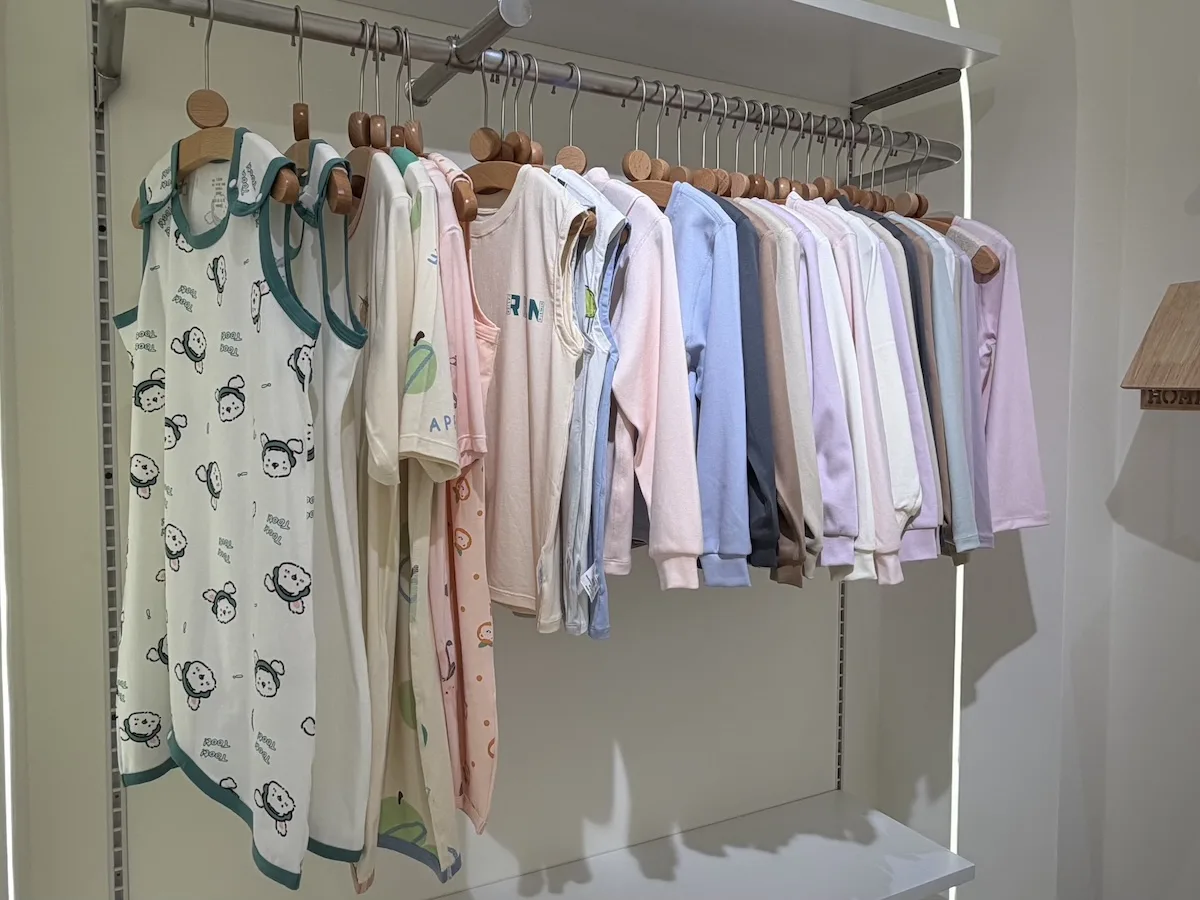
Fabric weight (GSM) sets how much air and warmth the cloth traps. For kids’ sleepwear, the goal is a fabric that breathes so body heat escapes, but still buffers against a cool room — usually a light-to-mid interlock in the 180–240 GSM band rather than a heavy winter fleece worn next to skin all night.
Comfort at night is mostly heat and moisture management. A sleeping child generates heat but cannot regulate bedding like an adult. The pyjama becomes the first layer of climate control:
- Too heavy — a dense, high-GSM cloth traps heat; the child overheats, sweats, and wakes or kicks the covers off, then gets cold.
- Too light — a thin, open knit passes heat too fast and, on white or pastel colours, can go see-through (covered in our opacity guide).
- Just right — a breathable mid-weight knit that moves moisture and buffers temperature swings.
That “just right” window is narrower for kids than adults because their surface-area-to-mass ratio is higher and their rooms vary more. Weight is the lever we tune first, then fibre.
2. GSM explained: the number behind “feels right”
GSM (grams per square metre) is the fabric’s weight per unit area and the closest proxy to how a cloth will feel and perform. For kids’ sleepwear we typically work in a light-to-mid range — around 160–240 GSM for knits — where the fabric breathes yet still drapes and holds shape through washing.
GSM is the most useful single spec a buyer can write, because it predicts hand-feel, opacity, and warmth together. Rough bands for kids’ knits:
| GSM band | Typical feel | Use in kids’ sleepwear | Trade-off |
|---|---|---|---|
| 120–160 | Very light, airy | Hot-climate sleep tee / summer | Best breathability, lower opacity on light colours |
| 160–200 | Light-mid, soft | All-season pajama body | Balanced comfort; check opacity on white |
| 200–240 | Mid, substantial | Cooler-room sets, interlock | Warmth + opacity; still breathable in interlock |
| 240+ | Heavy / brushed | Winter or brushed inner | Warmth, but watch overheating risk |
Two points worth stressing: first, GSM is not the same as thickness — a tightly knit light fabric can feel denser than a loosely knit heavy one. Second, the knit structure matters as much as the number. An interlock at 200 GSM breathes and recovers differently from a jersey at the same GSM; our sleepwear bases are mostly interlock for stability and opacity (see our interlock vs jersey note).
3. Fibre choice: Modal, brushed cotton, and blends
For kids’ sleepwear we lean on Lenzing™ Modal and cotton-Modal blends for breathability and softness, with brushed cotton for cooler rooms. Modal moves moisture well and stays smooth; cotton-Modal blends add the familiar cotton hand. We do not use bamboo as a kids’ sleepwear base fabric.
Fibre sets how the GSM “behaves.” Three families dominate our sleepwear programs:
Lenzing™ Modal
Modal is a regenerated cellulosic fibre (from beech pulp) known for a smooth, cool hand and good moisture transport. In sleepwear it helps the skin stay dry, which is the real driver of “did the child sleep through.” Our in-stock base 91.9% Lenzing™ Modal + 8.1% Spandex, interlock, 220–240 GSM is a frequent sleepwear choice: no cotton, no setup fee, and a stable, breathable cloth.
Cotton-Modal blends
A blend keeps Modal’s smoothness while adding the cotton hand many brands want for “natural” positioning. Our in-stock 49.9% Lenzing™ Modal + 43.3% Cotton + 6.8% Spandex, interlock, ~220 GSM is used for pajama bodies where a touch of cotton reads as softer and more familiar. Both in-stock bases ship without a setup fee.
Brushed cotton
Brushing raises a soft nap on the inner face, trapping a little warm air — good for cooler rooms. The trade-off is breathability: a heavily brushed surface holds more heat, so we reserve it for cooler climates and specify the brush lightly to keep air moving.
4. Breathability and thermal balance, by climate
Breathability comes from fibre moisture transport plus knit openness; thermal balance comes from GSM. Hot bedrooms want 160–200 GSM Modal; cool bedrooms want 200–240 GSM or a lightly brushed inner. The aim is steady skin temperature, not maximum warmth — overheating, not cold, is the more common night-comfort complaint.
Matching fabric to the child’s actual room is more useful than picking one “winter” cloth for everyone. A practical split:
| Room / climate | Suggested base | Why |
|---|---|---|
| Warm / no AC | 160–200 GSM Modal interlock, short set | Max breathability, less trapped heat |
| Temperate | 200–220 GSM Modal or Modal-cotton | Balanced buffer through the night |
| Cool / heated-off | 220–240 GSM or lightly brushed inner | Adds warmth without a heavy fleece |
The common mistake is over-layering: a heavy sleep set plus a warm doona overheats the child, who then wakes sweaty. A breathable mid-weight knit under a normal blanket is usually the steadier choice. Moisture transport matters here — Modal and cotton-Modal move sweat away from skin faster than polyester, which is why we avoid static synthetics against children’s skin at night.
5. Sleepwear regulation: what buyers must know
Children’s sleepwear receives stricter regulatory treatment than daywear in the US and EU — covering fibre content, labelling, and chemical safety — and compliance is built into the bill of materials (BOM) from the first sample. We source and test base fabrics toward GB 31701 Class A and use third-party labs (SGS, TÜV SÜD, Intertek); we do not claim specific flame-retardant certifications, and buyers should confirm the exact standard for their target market.
This section is deliberately careful, because sleepwear is the category where overclaiming hurts brands most.
- Stricter by design. Markets such as the US and EU apply dedicated rules to children’s sleepwear covering things like fibre content, labelling, and chemical safety thresholds that go beyond general apparel. The exact requirements differ by market and by garment type (e.g., tight-fitting vs loose).
- Compliance lives in the BOM. The practical control is structural: the base fabric, trims, and prints are selected and tested toward the relevant children’s safety expectations from the start — at Nuohua, base fabrics are sourced and tested toward GB 31701 Class A (China children’s A-class safety standard), with third-party testing through labs such as SGS, TÜV SÜD, and Intertek.
- What we do NOT claim. We do not state that our sleepwear carries specific flame-retardant certifications, and we will not write “flame-retardant” as a product claim. Where a market requires a particular test or treatment, that must be specified and verified for the destination — it is a buyer-and-factory decision, documented per order, not a generic promise.
- OEKO-TEX status stated honestly. Our OEKO-TEX Standard 100 work is currently in progress; we say “in progress,” never “certified.”
6. Specifying sleepwear fabric in a tech pack
Write the sleepwear fabric as a real spec: fibre and exact blend, GSM and knit (interlock), spandex %, target market and compliance expectation, and a pilling/recovery note. Naming an in-stock base (our Modal or Modal-cotton interlock) removes setup fees and shortens lead time versus a custom development.
A sleepwear tech pack that prevents bulk surprises names the following, not “soft pajama fabric”:
- Fibre & blend — e.g. “49.9% Lenzing™ Modal / 43.3% Cotton / 6.8% Spandex” or the all-Modal base.
- GSM & knit — “interlock, 220 GSM.” Interlock gives stability and opacity; jersey is lighter but can need higher GSM for modesty.
- Spandex % — drives waistband and cuff recovery (see our seam and trim notes).
- Compliance line — target market + the safety standard expected (GB 31701 Class A as our baseline; market-specific tests named per order).
- Finish — brushed inner yes/no, and a pilling grade if important.
Choosing an in-stock base is the fast, low-risk route: no setup fee, known hand-feel, known compliance pathway. A custom cotton-only or other cotton blend is possible but runs on our custom development line with its own timeline.
7. MOQ, lead time, and how we build it
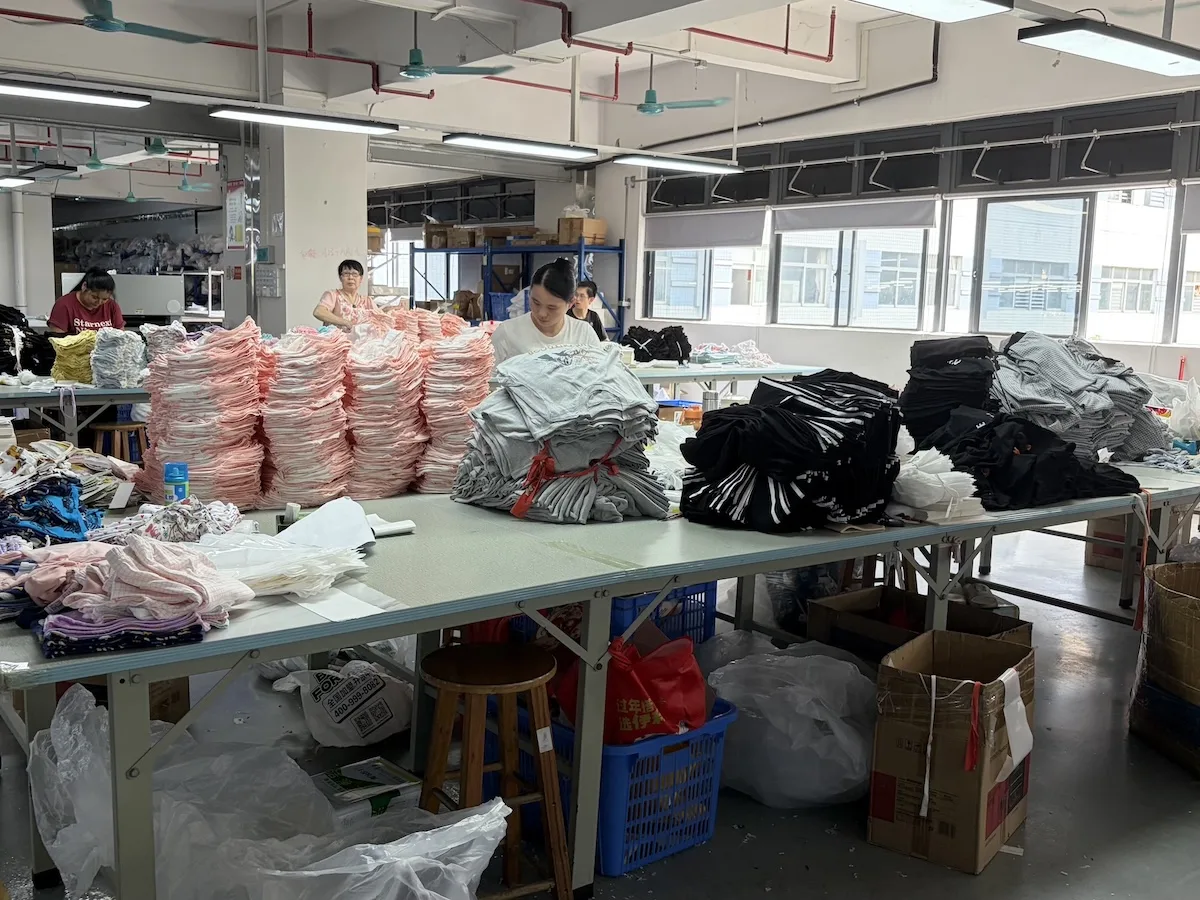
Sleepwear and pajama sets carry a minimum of 1,000 sets per design (distinct from the ready-stock minimum of 2 pcs on custom kids’ underwear). In-stock Modal bases remove the fabric setup fee; a custom cotton development adds a development step. Build the compliance BOM into the first sample so bulk is not re-worked later.
Two numbers trip up first-time sleepwear buyers, so we state them plainly:
| Product | Minimum order | Note |
|---|---|---|
| Custom kids’ underwear | 2 pcs on selected in-stock styles, colors and sizes | Lower entry point for briefs/bodysuits |
| Sleepwear / pajama sets | 1,000 sets per design | Sets are cut as a paired program |
The sleepwear MOQ is higher because a set is a coordinated program — body, pant or short, and trims cut and matched together — and the compliance documentation is per design/colour. Using an in-stock base keeps the fabric setup fee at zero and trims the development window; a custom cotton blend starts with a fabric development stage.
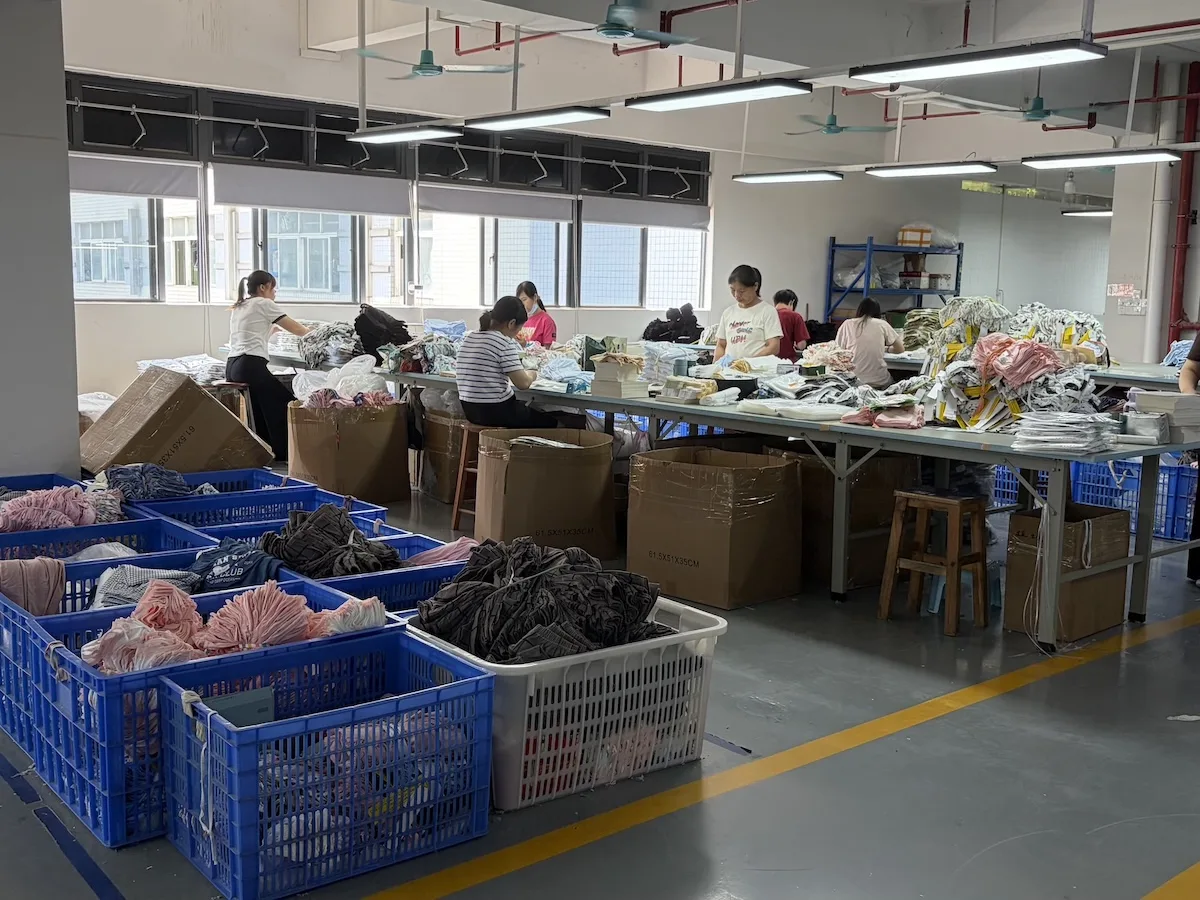
Our 8,000 sqm facility with 300+ staff and an INA hanging production system supports roughly 1,000,000+ pieces per month across programs, with the same staged QC discipline (including needle detection) that protects underwear applied to sleepwear. The practical path for a new sleepwear brand: pick an in-stock base, lock the GSM and compliance line in the tech pack, and let the BOM carry the safety expectation from sample one.
Planning a kids’ sleepwear line and want the fabric weight, fibre, and compliance built into the BOM from the first sample?