
Bound Vs Flatlock Seams: Which Finish Belongs in Kids’ Underwear
Underwear is the one garment category where the seam is never more than a few centimetres from a child’s skin. A seam done poorly is not a cosmetic issue; it is the difference between a kid who forgets they are wearing underwear and a kid who keeps tugging at a leg opening all day. This article compares the three seam constructions that actually appear in kids’ underwear production, bound, flatlock, and standard overlock, and explains when each belongs in your spec.
On this page
1. Why Seams Matter More in Kids’ Underwear
Seams matter more in kids’ underwear because they sit directly against thin, sensitive skin for long, continuous wear and flex with every movement. The finish that touches the skin, not the outside look, is what determines comfort, so the seam construction must be chosen for the inside feel first.
In a hoodie, an imperfect inner seam is hidden under a shirt. In underwear, the same seam is the product’s main interface with the body. Three realities make this category unforgiving:
- Continuous contact. Underwear is worn for many hours with no layer between the seam and skin.
- High flex. Leg openings and waistbands stretch and relax thousands of times a day, so a seam that is merely “acceptable” when flat becomes irritating in motion.
- Thin skin. Children’s skin barrier is still developing, so the same mechanical rub that an adult ignores produces redness faster.
This is why we treat the seam as a comfort component with its own specification, equal in importance to the fabric. A premium modal interlock is wasted if the leg opening is finished with a rough, raised stitch against the thigh.
2. The Three Seam Types: Overlock, Flatlock, Bound
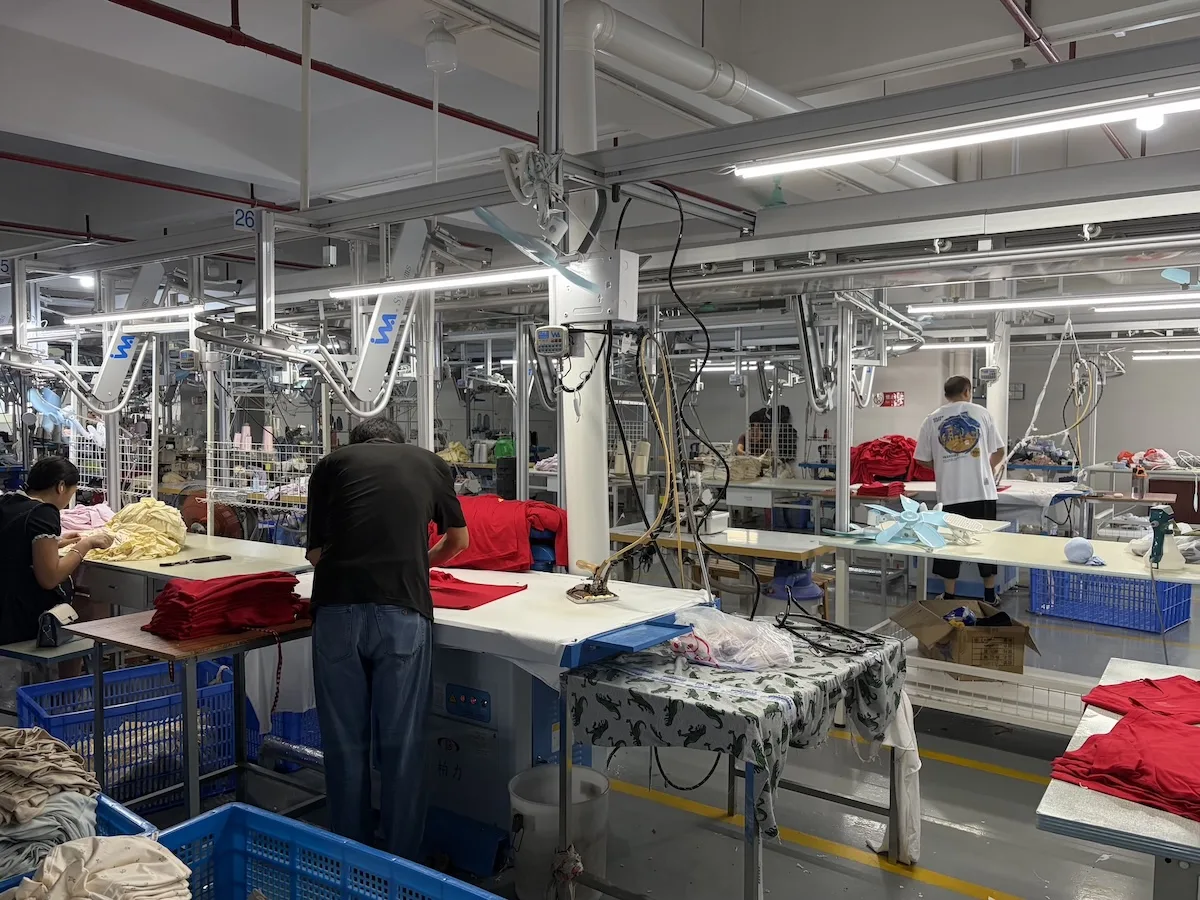
Standard overlock trims and loops the edge, fast and cheap but leaves a raised inner stitch. Flatlock butts two edges and stitches them flat with a visible ladder look, very smooth against skin. Bound (covered) seams wrap the raw edge in a strip of fabric, enclosing it fully for the softest internal feel. Each trades cost against comfort differently.
These three are not marketing categories; they are distinct machine constructions with different internal geometry.
Standard overlock (serger)
An overlock cuts the fabric edge and stitches it with loopers, producing a neat, slightly raised seam with a thread chain on the inside. It is the default for speed and cost. The inside chain is the part that can feel textured against skin, which is why overlock alone is often reserved for side seams rather than directly against high-contact zones.
Flatlock
A flatlock butts two fabric edges together and locks them with a flat stitch, so the seam lies almost level with the fabric on both sides. The inside shows a tidy “ladder” or braid pattern rather than a raised chain. Because nothing protrudes, it is comfortable against skin and is a staple of premium and activewear underwear.
Bound (covered / wrapped) seam
A bound seam encloses the raw edge inside a separate strip, usually a soft ribbing or self-fabric binding, so the inside presents a smooth covered ridge with no exposed raw edge at all. It is the softest internal finish and is common on leg openings and waistbands of higher-end kids’ underwear, at the cost of more material and labour.
| Seam type | Inside feel | Stretch behaviour | Durability | Relative cost / speed |
|---|---|---|---|---|
| Overlock (standard) | Raised chain, can feel textured | Good with balanced tension | Strong edge finish | Low cost, fast |
| Flatlock | Flat, smooth ladder | Less give if over-tightened | Very strong, flat | Medium cost, slower |
| Bound (covered) | Softest, fully enclosed edge | Good with elastic binding | Edge fully protected | Higher cost, slowest |
3. Skin Comfort: Removing the Scratchy Edge
Comfort is won by eliminating protrusion against skin. Bound seams win because the edge is fully enclosed in soft fabric; flatlock wins because the seam is level with the cloth; standard overlock is the riskiest against skin because its inner chain sits proud. For leg openings and waistbands, choose bound or flatlock.
The skin does not feel “stitches”; it feels pressure points and edges. A raised overlock chain concentrates pressure along a line, and on a moving leg opening that line is in near-constant friction. Flatlock removes the protrusion by butting edges level. Bound construction goes further by wrapping the edge so even the fabric cut line is hidden.
The role of the binding material
A bound seam is only as soft as its binding. A soft, fine-gauge ribbing or a self-fabric strip in the same modal blend stays supple; a stiff or coarse binding defeats the purpose. The binding should match the garment’s stretch so it does not pucker or choke the opening.
4. Stretch Recovery and Durability Under Wear
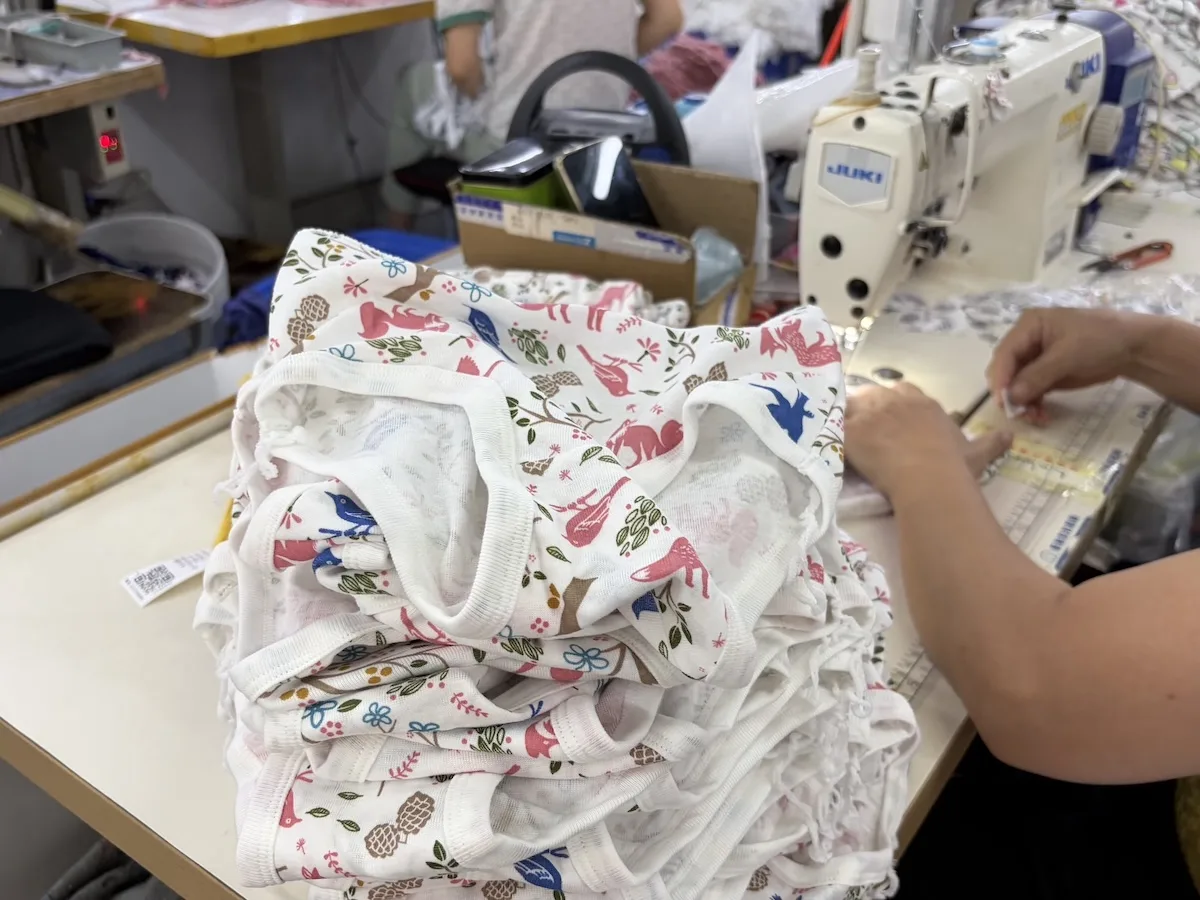
Stretch recovery is about the seam returning to shape after stretching, not just stretching once. Overlock with balanced tension recovers well; flatlock can lose recovery if pulled too tight during sewing; bound seams recover well when paired with elastic binding. Durability follows from how well the edge is enclosed and how balanced the tension is.
Kids’ underwear lives in a stretch-and-release cycle. A seam that stretches but does not spring back leaves a wavy, loose opening that rides up. The construction and the machine tension both matter:
- Overlock recovers reliably when the needle and looper tensions are balanced; unbalanced tension is the usual cause of a wavy seam.
- Flatlock is strong but unforgiving: over-tightened, it restricts stretch and can “bridle” the fabric; set correctly, it holds shape firmly.
- Bound depends on the binding’s own elasticity. A good elastic-binding combo recovers cleanly and also protects the fabric edge from fraying.
5. Cost and Production Speed by Seam Type
Standard overlock is the cheapest and fastest, needing one operation. Flatlock adds a slower, more skilled operation. Bound seams are the most material- and labour-intensive and slowest of the three. The cost difference is per-unit and compounds across thousands of pieces, so the choice should match the brand’s price tier and comfort promise.
Cost is not just the thread; it is machine time, operator skill, and the binding component. On a bulk run of thousands, the per-piece gap between overlock and bound is small in absolute terms but meaningful across the order.
| Seam type | Operations | Material add-on | Speed | Best price tier |
|---|---|---|---|---|
| Overlock | One (plus optional coverstitch) | None | Fastest | Value to mid |
| Flatlock | One specialised operation | None | Medium | Mid to premium |
| Bound | Binding feed + stitch | Binding strip | Slowest | Premium |
For custom kids’ underwear, our development minimum is 2 pcs on selected in-stock styles, colors and sizes, which is enough to sew and wash-test each seam type you are weighing before committing the bulk run to one finish. Sleepwear and pajama sets follow a different minimum of 1,000 sets per design, reflecting their separate production line.
6. Appearance and the Brand Signal
The seam is also a visible brand signal. Flatlock reads as technical and premium with its clean ladder line; bound edges read as soft and considered; standard overlock reads as functional and value. Choose the finish that matches the brand story, because customers do notice the inside of kids’ underwear when they first open the pack.
Parents inspect the inside of kids’ underwear before the first wear. The seam they see sets an immediate quality impression:
- Flatlock signals sporty, engineered comfort; common in premium and active lines.
- Bound signals gentle, soft, “made for delicate skin” positioning.
- Overlock signals honest, functional value; perfectly acceptable for side seams and many everyday styles when the high-contact zones are finished softer.
None of these is “wrong”; they are different positions. The mistake is specifying a value seam on a premium line, or paying for a bound finish where an overlock on a side seam would never be felt.
7. When to Specify Which Seam
Specify bound or flatlock on leg openings and waistbands where the seam touches skin directly; reserve standard overlock for side seams and low-contact joins. Match the finish to your price tier and comfort promise, and write the seam type per location into the tech pack so bulk is built to the spec, not the factory default.
The practical rule is location-based, not absolute. Write the seam type against each seam in the tech pack, because a factory left to default will almost always choose the fastest finish.
| Garment zone | Recommended seam | Reason |
|---|---|---|
| Leg opening (inner contact) | Bound or flatlock | Direct skin contact, high flex |
| Waistband (inner contact) | Bound or flatlock | Continuous rub against skin |
| Side seam | Overlock (or flatlock) | Low contact, cost-efficient |
| Gusset join | Overlock or bound | Depends on brand tier |
| Decorative panel | Flatlock | Visible, premium ladder look |
We run all three constructions on our lines, so the decision is yours on comfort and brand grounds rather than limited by what a factory stocks. During development we will typically sew a wash-test comparison of the two finishes you are deciding between and report how each edge behaves after a simulated wear-and-wash cycle, so the bulk spec is evidence-based.
Deciding between bound and flatlock for your kids’ line? Our team can sew and wash-test both so your bulk spec is proven, not assumed.