
The Kids’ Underwear Fabric Shortlist: A Manufacturer’s Practical Guide
Most fabric catalogues are a liability for a new kids’ underwear brand — a thousand options, none of them stress-tested for a three-year-old’s skin or a 10,000-piece reorder. This guide takes the opposite approach. Below is the shortlist of fabrics Nuohua Garment actually runs for children’s underwear and sleepwear, with the numbers that matter: GSM, best use, skin-safety notes, and whether each one is in-stock or custom-developed. It is written so you can pick a base in an afternoon and brief the factory the same day.
On this page
1. Why a shortlist, not a catalogue
A shortlist beats a catalogue because kids’ underwear has hard constraints — skin safety, stretch recovery, opacity, and reorder consistency — that most “pretty” fabrics fail. Fewer, proven bases mean faster approvals and reliable reorders.
A long catalogue tempts you to optimise for the swatch photo. But children’s underwear is judged on things a photo cannot show: does it recover after 50 washes, does it stay opaque when stretched, does it sit softly against skin all day, and will the second production lot match the first? Those are constraints, not preferences.
So we keep a deliberately short list of fabrics our team knows how to dye, cut, and reorder consistently. Two of them are held in-stock with no setup fee, which means a launch can start without a development cycle. The rest are custom-development lines we run for brands that need a specific hand-feel or blend.
2. How we evaluate a fabric for kids’ underwear
We score every candidate on five things: skin-safety compliance, hand-feel, GSM/opacity, stretch recovery, and reorder consistency. A base has to clear all five before it earns a place on the shortlist.
Every fabric on the shortlist below was admitted on the same five tests:
- Skin safety. Sourced and tested toward GB 31701 Class A (China children’s A-class safety standard), with third-party testing available through SGS, TÜV SÜD, and Intertek as required.
- Hand-feel. The first thing a parent judges. We prioritise smooth, low-pill surfaces that stay soft after washing.
- GSM and opacity. Weight predicts both softness and whether the fabric goes sheer when stretched. Kids’ bases mostly sit in the 180–240 GSM interlock range.
- Stretch recovery. A waistband or brief that bags after one wear is a return. Spandex content (even a small percentage) protects the recovery.
- Reorder consistency. Can we hit the same shade and hand-feel on order number five? That is where an in-stock, qualified base wins.
3. The shortlist: five fabrics we run
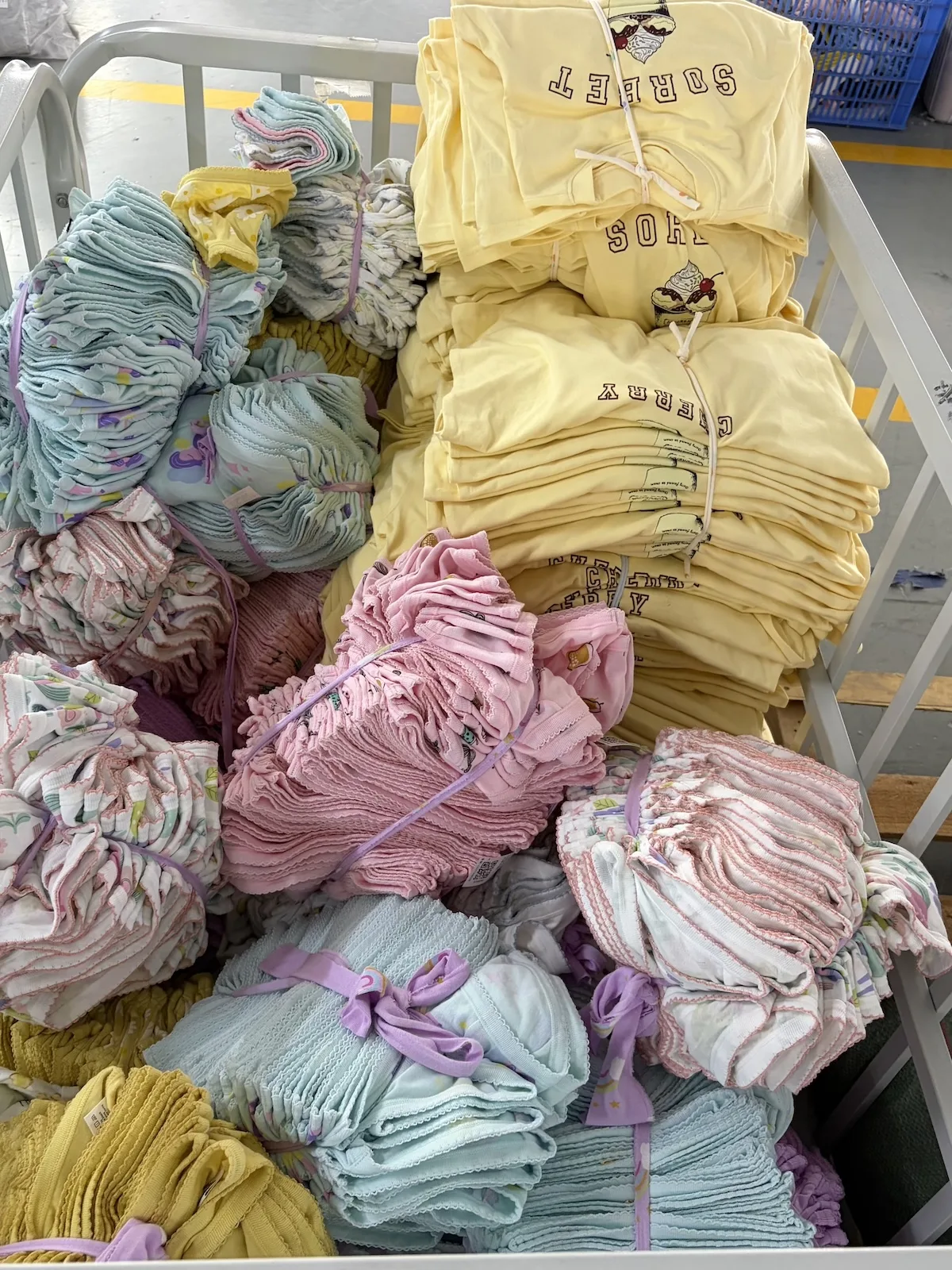
The five bases are: 100% combed cotton (custom), cotton-spandex (custom), Lenzing™ Modal + Spandex 91.9/8.1 (in-stock), a cotton-Modal blend 49.9/43.3/6.8 (in-stock), and other Modal / cotton-Modal ratios as custom development.
Here is the actual list, in the order most brands evaluate them.
3.1 Combed cotton (100%)
The natural, breathable classic. Combed cotton has the short fibres removed, so it pills less and feels cleaner against skin than carded cotton. We run it as a custom development (not in-stock) because we qualify the cotton source and GSM to your spec.
3.2 Cotton-spandex
Cotton with a small elastane content (commonly around 95% cotton / 5% spandex). Adds recovery for briefs and active styles while keeping a natural hand. Also a custom development line.
3.3 Lenzing™ Modal + Spandex — 91.9% Lenzing™ Modal / 8.1% Spandex
Our flagship in-stock base: interlock, 220–240 GSM, no cotton, no setup fee. Lenzing™ Modal (from botanic cellulose) gives a noticeably smoother, more fluid hand than cotton, and the 8.1% spandex holds shape through washes. This is the base we reach for when the brief says “premium soft.”
3.4 Cotton-Modal blend — 49.9% Lenzing™ Modal / 43.3% Cotton / 6.8% Spandex
The second in-stock base: interlock, ~220 GSM, no setup fee. It balances Modal’s smoothness with cotton’s familiar feel and a touch more spandex for recovery — a versatile everyday base.
3.5 Other Modal and cotton-Modal ratios
When a brand needs a specific hand-feel target, we develop bespoke Modal or cotton-Modal ratios as a custom development line. Cotton-only or other cotton blends fall into this custom bucket rather than in-stock.
4. GSM, hand-feel and best use compared
Combed cotton and cotton-spandex sit around 180–200 GSM for breathable everyday wear; the two in-stock Modal bases run ~220–240 GSM for a smoother, more substantial premium feel. Higher GSM reads as softer and more opaque but less feather-light.
The single number that most predicts how a base will feel and perform is GSM. Here is the shortlist side by side.
| Fabric | Composition | Knit / GSM | Best use | Stock status |
|---|---|---|---|---|
| Combed cotton | 100% combed cotton | Interlock, ~180–200 GSM | Breathable everyday briefs, vests, sleep basics | Custom development |
| Cotton-spandex | ~95% cotton / 5% spandex | Interlock, ~180–200 GSM | Stretch briefs, active and snug-fit styles | Custom development |
| Lenzing™ Modal + Spandex | 91.9% Lenzing™ Modal / 8.1% Spandex | Interlock, 220–240 GSM | Premium soft bodysuits, leggings, everyday luxury | In-stock, no setup fee |
| Cotton-Modal blend | 49.9% Lenzing™ Modal / 43.3% Cotton / 6.8% Spandex | Interlock, ~220 GSM | Balanced everyday base, soft with a cotton feel | In-stock, no setup fee |
| Custom Modal / cotton-Modal | Brand-specific ratios | Interlock, variable | Bespoke hand-feel targets | Custom development |
Note the two in-stock bases carry the higher GSM — that is part of why they read as “premium” the moment a parent touches them, while still staying breathable for all-day wear.
5. Skin-safety notes you can stand behind
All bases are sourced and tested toward GB 31701 Class A; OEKO-TEX Standard 100 work is currently in progress; and third-party testing is performed through SGS, TÜV SÜD and Intertek as required. The shortlist stays within our young-children material policy.
Parents buy trust, not fibre chemistry — but the chemistry has to be there. Here is the safety position behind every fabric above.
| Standard / test | What it covers | Our status |
|---|---|---|
| GB 31701 Class A (China children’s A-class safety standard) | Formaldehyde, pH, odour, AZO amines, and saliva/perspiration colourfastness for children’s garments | Base fabrics sourced and tested toward this standard |
| OEKO-TEX Standard 100 | Independent testing for harmful substances across the supply chain | Currently in progress |
| Third-party testing (SGS / TÜV SÜD / Intertek) | Market-specific compliance and colourfastness verification | Performed as required per market |
We are careful with wording here on purpose: OEKO-TEX Standard 100 is currently in progress, not granted, and SGS, TÜV SÜD and Intertek are third-party test bodies we use — not certificates we hold. What we can state plainly is that the shortlist is built around children’s safety thresholds from the fibre up, with none of the bases falling outside our young-children material policy.
6. In-stock vs custom development
In-stock bases (the two Modal programs) need no setup fee and can start a launch immediately; cotton-only or other cotton blends are custom development and carry a development cycle. Stock-fabric underwear programs run from 2 pcs on selected in-stock styles, colors and sizes; custom runs (custom colour or new fabric development) are quoted separately, per fabric and colour.
The practical difference between the two in-stock Modal bases and the custom cotton lines is lead time and setup, not quality:
- In-stock (no setup fee): 91.9% Lenzing™ Modal / 8.1% Spandex, and 49.9% Lenzing™ Modal / 43.3% Cotton / 6.8% Spandex. Qualified, held, and ready — ideal for a first run or a fast reorder.
- Custom development: combed cotton, cotton-spandex, and bespoke Modal/cotton-Modal ratios. We develop the base to your spec, which adds a development step before bulk.
- MOQ: custom kids’ underwear is 2 pcs on selected in-stock styles, colors and sizes. Sleepwear and pajama sets are a separate line at 1,000 sets per design — keep the two MOQs distinct when you plan.
The in-stock routes are the fastest way to a consistent, compliant first order; the custom route is for when the hand-feel brief demands a blend we do not already hold.
7. Decision table: pick by priority
If you want premium softness fast, pick the in-stock 91.9/8.1 Modal-Spandex; if you want a cotton feel with softness, pick the in-stock 49.9/43.3/6.8 blend; for natural cotton or stretch-active, go custom; for a unique hand-feel, develop a bespoke ratio.
When a founder asks “which one?”, the answer depends on what the brand is optimising for. Use this table as the shortcut.
| If your priority is… | Recommended base | Why |
|---|---|---|
| Softest premium hand-feel, fast start | Lenzing™ Modal + Spandex (91.9/8.1), in-stock | Smoothest hand, no setup fee, ready to cut |
| Balanced cotton feel + softness | Cotton-Modal blend (49.9/43.3/6.8), in-stock | Familiar cotton touch with Modal smoothness |
| Natural cotton, breathable basics | Combed cotton (custom) | Natural fibre, qualified to your GSM spec |
| Stretch / active / snug fit | Cotton-spandex (custom) | Elastane recovery for movement |
| A unique hand-feel target | Custom Modal / cotton-Modal ratio | Developed to a specific brief |
8. Putting the shortlist to work
Start with the two in-stock Modal bases if you need speed and consistency, or brief a custom cotton/Modal development if the hand-feel target is specific. Either way, lock GSM and skin-safety expectations in the development request.
A shortlist is only useful if it shortens your decision. The fastest safe path is one of the two in-stock Modal bases: no setup fee, qualified for children’s safety thresholds, and consistent enough that order five matches order one. If your brand story is built on a specific cotton hand-feel or a bespoke blend, the custom development route gets you there — just budget the development step and the ready-stock minimum of 2 pcs.
Whichever base you choose, the next step is the same approval chain: swatch to confirm the material, lab dip to confirm the colour, and bulk approval to confirm the lot. That is how a shortlist becomes a product a parent trusts.
Ready to pick a base and brief the factory the same day?