
How to Source Baby Clothes from China: 2027 Buyer Guide
On this page
- Decide What You Are Sourcing
- Factory, Trading Company or Sourcing Agent?
- Shortlist by Product Evidence
- Send a Structured RFQ
- Ask What the MOQ Really Means
- Order Samples Before Bulk
- Verify Claims and Documents
- Build Compliance Into the Purchase Order
- Agree on QC in Writing
- Control Changes
- Plan Shipping After Production Logic Is Clear
- Red Flags
- Buyer Checklist
- FAQ
- Compare Incoterms Carefully
- Build a Golden-Sample System
- Communicate Changes With Version Control
- Negotiate the Variables That Matter
- Pre-Shipment Inspection: What to Check
- Keep a Supplier Performance Record
To source baby clothes from China, define the product and destination market first, shortlist suppliers that actually specialize in baby or kidswear, send a structured RFQ, compare like-for-like specifications, order and test samples, verify business and compliance documentation, agree on a measurable QC plan, then place bulk production with clear payment, inspection and shipping terms. The biggest sourcing mistakes come from choosing by unit price before fabric, fit, testing and MOQ assumptions are aligned.
1. Decide What You Are Sourcing
Before contacting suppliers, specify whether you need:
- ready-stock baby basics;
- private-label existing styles;
- ODM modifications;
- full OEM from a tech pack;
- organic cotton products;
- soft stretch sleepwear;
- custom prints;
- gift sets or retail packaging.
These are different projects. A supplier can quote only as accurately as the brief allows.
2. Factory, Trading Company or Sourcing Agent?
All three models can be legitimate.
Direct factory
Best when you want technical communication, repeat production and a narrower category handled deeply.
Trading company
Useful when you want multiple product types from different factories managed through one commercial contact.
Sourcing agent
Useful for supplier search, local coordination, inspection and multi-factory consolidation.
The problem is not the model; the problem is believing you are buying directly from a factory when you are not. Ask who owns the production facility, who issues the invoice, and where the product will actually be made.
3. Shortlist by Product Evidence
For baby apparel, look for evidence of:
- small-size pattern making;
- knit construction experience;
- bodysuits, rompers, sleepers and sets;
- snap/zipper handling;
- fabric inspection;
- sample-room capability;
- child-product QC;
- needle control;
- export-market documentation.
A huge catalog is not proof of expertise.
4. Send a Structured RFQ
Include:
- style images/tech pack;
- fabric composition and construction;
- target GSM;
- size range;
- quantities by style/color;
- print/embroidery;
- trims;
- labels;
- packaging;
- destination market;
- target ship date.
Ask suppliers to quote the same specification. Otherwise you may compare 160 GSM cotton from one supplier with 200 GSM organic interlock from another and think the price difference is a factory margin issue.
5. Ask What the MOQ Really Means
Baby-clothing MOQ can be driven by fabric dyeing, custom printing, trim supply and packaging.
Ask:
- Is MOQ per color?
- Can sizes mix?
- Can styles share one fabric lot?
- Is the fabric in stock?
- Is the print digital, rotary, screen or placement print?
- What is the minimum for custom labels and bags?
Nuohua’s current model includes ready stock from 2 pcs on selected styles and selected custom baby apparel from 150–300 pcs per color, while fully customized programs are confirmed after reviewing the full specification.
6. Order Samples Before Bulk
For custom sourcing, the sample should verify:
- fabric hand feel;
- actual composition/specification;
- garment measurements;
- neckline and closure function;
- seam bulk;
- print quality;
- snap/zip operation;
- label placement;
- wash performance.
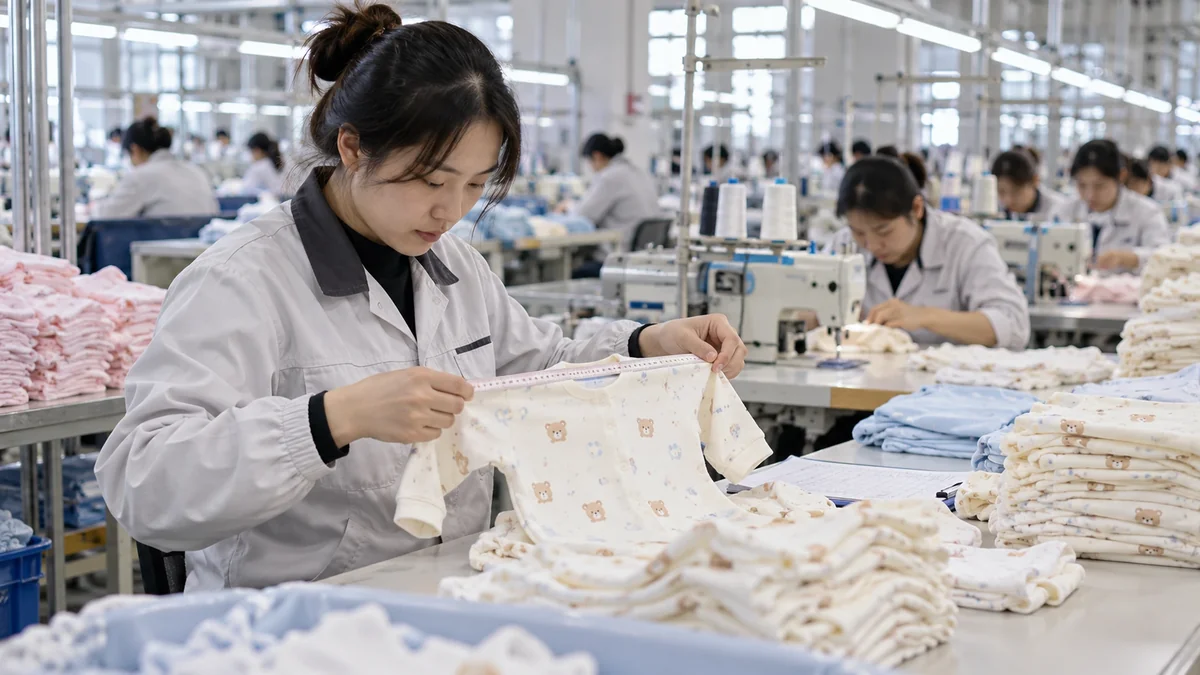
Take measurements before and after washing. Photograph and record approved details instead of relying on memory.
7. Verify Claims and Documents
Do not treat a PDF logo as verification.
For certification or testing claims:
- check certificate holder name;
- check scope;
- check product/fabric coverage;
- check validity date;
- use the issuing organization’s verification tools where available;
- confirm whether the certificate belongs to the factory, fabric mill or another supplier in the chain.
For organic claims, ask how the material and transaction documentation connect through the supply chain. For OEKO-TEX claims, confirm the certificate and covered article/material. For U.S. children’s products, identify the rules applicable to the final product and the responsible certification party.
8. Build Compliance Into the Purchase Order
Tell the supplier the destination market. Do not use “international standard” as a requirement.
For U.S. regulated children’s products, CPSC rules may require third-party testing and a Children’s Product Certificate. Importers of most regulated consumer products subject to certification requirements have been required to eFile certificate data since July 8, 2026.
Sleepwear can have additional flammability requirements depending on product definition and fit.
9. Agree on QC in Writing
A useful QC specification includes:
- measurement tolerances;
- fabric/shade standard;
- workmanship standard;
- print placement tolerance;
- closure function;
- critical defect examples;
- packaging count;
- inspection method;
- approved sample reference.
If you plan third-party inspection, tell the factory before production, not after goods are packed.
10. Control Changes
One of the most common sourcing failures is an unrecorded substitution.
Require written approval for changes to:
- fabric mill;
- composition;
- GSM;
- color;
- trim;
- print process;
- pattern;
- label material;
- packaging.
A substitute may look similar but perform differently after wash.
11. Plan Shipping After Production Logic Is Clear
Shipping decisions should follow order size and launch timing.
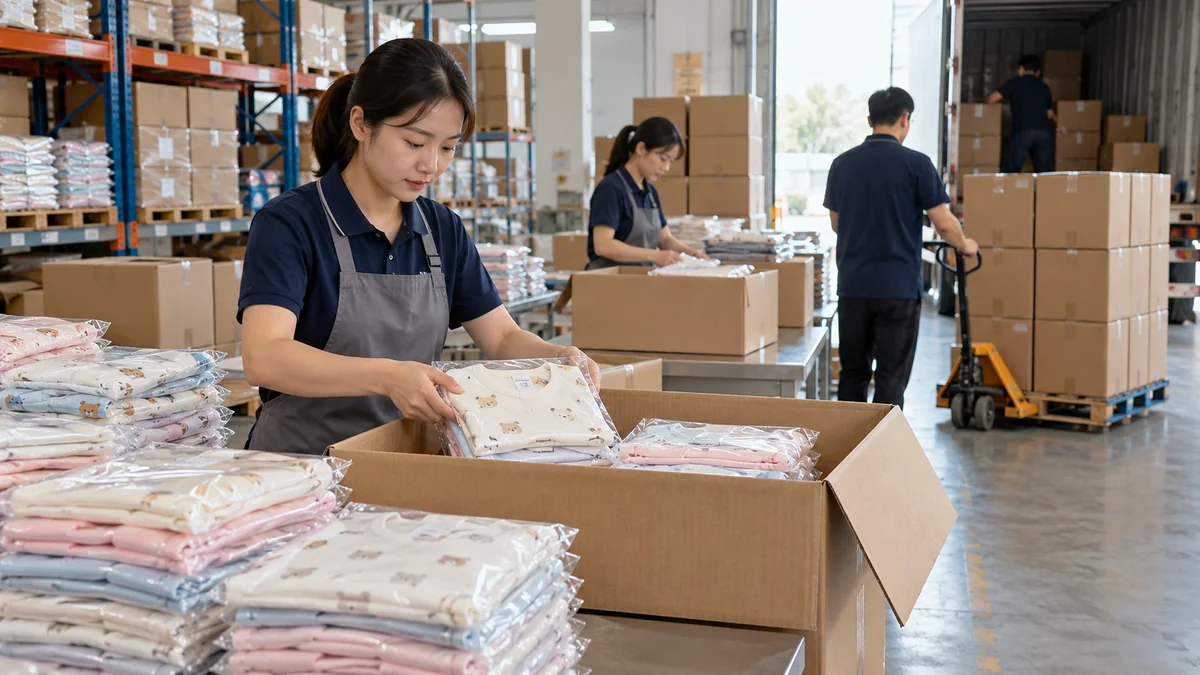
Options can include courier, air freight, sea freight and consolidated logistics. Compare landed cost and transit risk, not freight price alone.
If a deadline is important, build time for:
- sample approval;
- fabric/trim procurement;
- bulk production;
- inspection;
- rework buffer;
- export handling;
- transit;
- customs clearance;
- fulfillment intake.
12. Red Flags
Be careful if a supplier:
- cannot explain where production happens;
- quotes before reading your specification;
- offers the same MOQ for every product;
- refuses sample measurement records;
- cannot identify fabric construction;
- changes terminology between “bamboo,” rayon and viscose without clarity;
- uses unverifiable certification graphics;
- insists no inspection is necessary;
- pressures you to pay 100% before an agreed production milestone without a commercial reason.
Buyer Checklist
- [ ] Product brief complete
- [ ] Destination market identified
- [ ] Suppliers shortlisted by category
- [ ] Like-for-like RFQs sent
- [ ] MOQ basis clarified
- [ ] Samples ordered
- [ ] Samples measured and washed
- [ ] Certification/testing claims verified
- [ ] PO specification complete
- [ ] QC plan agreed
- [ ] Inspection plan agreed
- [ ] Shipping method selected
- [ ] Landed cost calculated
FAQ
Is it safe to source baby clothes from China?
Yes, many international brands source baby apparel from China. Safety depends on the specification, supplier controls, testing, inspection and compliance process—not the country name alone.
Should I use Alibaba to find suppliers?
It can be useful for discovery, but platform presence is not a substitute for technical verification, sampling and written quality requirements.
How do I know if a supplier is a real factory?
Ask for facility details, production-process evidence, business information, live video or visit options, and confirm whether the production category matches your product. Samples and technical communication are also revealing.
What is the biggest sourcing mistake?
Comparing unit prices before specifications are aligned. The lower quote may simply be a different fabric, GSM, trim or packaging assumption.
13. Compare Incoterms Carefully
A quotation may use EXW, FOB, CIF, DDP or another commercial term. The lowest number is not necessarily the lowest landed cost.
Clarify who is responsible for:
- pickup from factory;
- export customs;
- origin charges;
- main freight;
- insurance if arranged;
- destination charges;
- import clearance;
- duty/tax;
- final delivery.
For new buyers, ask the forwarder to provide a written landed-cost breakdown before choosing a shipping term.
14. Build a Golden-Sample System
When the final sample is approved, document it as the bulk reference.
A good approval record includes:
- photos from multiple angles;
- measurement sheet;
- fabric/color reference;
- print/embroidery reference;
- trim details;
- label placement;
- packaging;
- approval date and version.
If possible, both buyer and factory retain an equivalent approved sample. This reduces subjective debates during final inspection.
15. Communicate Changes With Version Control
Messaging apps are useful for speed but poor as the only record of technical changes.
Use a revision log:
| Revision | Change | Approved by | Date |
|---|---|---|---|
| V1 | Initial sample | Buyer | — |
| V2 | Increase body length | Buyer | — |
| V3 | Final color and label | Buyer | — |
The exact format is less important than making sure the sewing line receives the latest approved version.
16. Negotiate the Variables That Matter
Price negotiation is more productive when you know the cost drivers. Ask what happens if you:
- reduce color count;
- share fabric across styles;
- use stock fabric;
- simplify packaging;
- increase quantity;
- change print method;
- remove a custom trim;
- consolidate shipping.
This turns negotiation into product engineering rather than simply demanding a lower number.
17. Pre-Shipment Inspection: What to Check
Before release, verify:
- total quantity;
- size/color assortment;
- measurements;
- workmanship;
- fabric/color appearance;
- printing/embroidery;
- labels;
- packaging;
- barcodes where used;
- carton marks;
- critical safety/needle-control documentation where applicable.
A final inspection is not a substitute for inline control, but it is an important release checkpoint.
18. Keep a Supplier Performance Record
After each order score:
- sample accuracy;
- communication speed;
- on-time performance;
- bulk defect rate;
- packing accuracy;
- documentation accuracy;
- responsiveness to corrective action.
Sourcing improves when decisions are based on order history rather than memory.
Send a Babywear Sourcing Brief for Review
Provide the style, fabric, sizes, quantity, destination market and branding requirements. Nuohua can review whether the request fits ready stock, selected customization or a full OEM route before sampling begins.
Or explore our kidswear manufacturing capabilities.
Nuohua Garment is a kidswear OEM/ODM manufacturer producing children’s underwear, sleepwear, baby apparel and custom kidswear for brands, retailers and wholesalers, with an 8,000 m² production base in Guangdong, China. Guidance here reflects our production experience; confirm current regulations and requirements for your market and product before ordering.