Short on time? Start with the 4 most-read sourcing articles — or scroll down for the complete library organised by stage.
How to Use This Sourcing Guide
Sourcing children’s underwear and sleepwear is a chain of decisions, and the order matters. A fabric chosen before you understand flammability rules can force a redesign. A factory quoted before you have a tech pack will quote you a number that changes later. This guide is organised in the sequence buyers actually work through, from finding a manufacturer to shipping the first order.
Every article below is written for brand owners, buyers and sourcing managers — not for factories. Where an answer depends on your market, quantity or fabric, we say so rather than giving you a single number that will not survive contact with your tech pack.
Tip. Start with how to start a kids’ underwear brand if you are early stage, or jump straight to 11 details to send for an accurate quote if you already have a tech pack.
Stage 1 — Finding and Vetting a Manufacturer
The first stage is not finding a supplier; it is building a shortlist you can genuinely compare. Most buyers start on a marketplace and get overwhelmed by listings that all look identical.
- Where established kidswear brands find underwear manufacturers — the channels that actually produce working relationships, and the ones that mostly produce noise.
- How to find and shortlist a manufacturer in China — a 2026 buyer’s process for moving from a long list to three serious candidates.
- How boutique brands vet an OEM/ODM partner — the questions that separate a real factory from a trading company.
- Manufacturing regions compared: Guangdong vs Fujian vs Zhejiang — what each cluster is genuinely stronger at.
- China vs Vietnam — an honest comparison rather than a sales pitch for either.
- How to source from Alibaba safely — verifying who you are actually talking to.
- Sourcing for Saudi Arabian brands — regional requirements and labelling considerations.
Stage 2 — Choosing Fabric and Materials
Fabric is the largest single driver of both unit cost and customer satisfaction. It also determines which compliance route your product has to follow. Two garments can look identical on screen and behave completely differently after twenty washes.
- The complete fabric sourcing guide — how to weigh each fibre against cost, comfort and compliance.
- What bamboo fabric actually is — and why it is usually not what the marketing says.
- Modal and EcoCosy® explained — why a branded fibre behaves differently from a generic one.
- Combed cotton vs cotton/spandex blend — the recovery-versus-breathability trade-off.
- Knit vs woven construction — and what each means for fit and stretch.
- Best fabrics for kids’ pyjamas — including how US flame-resistance rules shape the choice.
- Elastic waistband types — comfort, compliance and how to specify them properly.
Stage 3 — Cost, MOQ and Commercial Terms
This is where most first-time brands get surprised. The gap between an advertised minimum and a workable one usually comes down to colourways, because each colour is a separate dye lot with its own setup.
- What it costs to manufacture children’s underwear — a full 2026 cost breakdown.
- What a private label pyjama line costs to start — realistic startup budgets.
- Low MOQ manufacturing — what a genuinely small first run does and does not buy you.
- How BOM detail affects cost accuracy — why a vague spec produces an unreliable quote.
- 11 details to send for an accurate quote — the checklist that removes the guesswork.
- Custom manufacturing vs off-the-shelf import — five differences that matter more than price.
- OEM vs ODM vs private label — which model fits your stage.
- How fast turnaround can realistically be — and what it costs you.
Stage 4 — Compliance, Testing and Quality Control
Children’s products face the strictest rules in apparel. A failed test does not just delay a shipment; it can trigger a recall and delisting. The practical question is never “are you certified” but “who tested this, against which standard, and can I verify the report”.
- US and EU compliance checklist — CPSIA, CPC and REACH in one place.
- The Children’s Product Certificate explained — what a CPC is and when you need one.
- OEKO-TEX for private label kidswear — what it means, how to verify it, and how it differs from other schemes.
- Why fibre spot checks fail — and how the strictest infant safety thresholds help you avoid it.
- The safe underwear buyer’s guide — what to look for and what to avoid.
- AQL inspection explained — how to set an acceptance level that actually protects you.
Stage 5 — Development, Sampling and Production
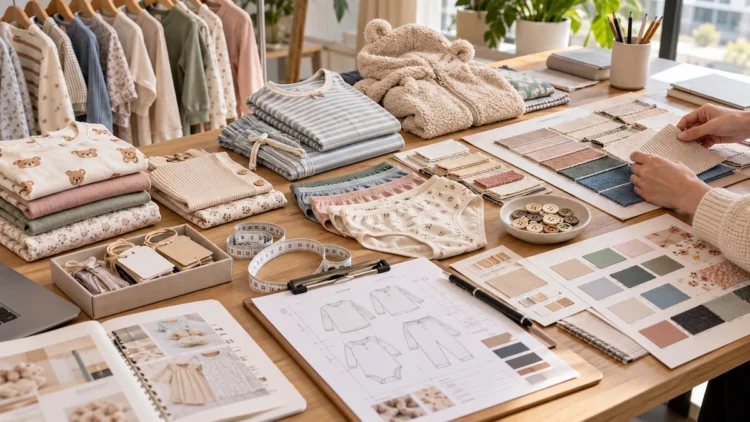
Development is where a design becomes something a factory can actually make repeatedly. Most delays trace back to a specification that was never quite finished.
- How to create a tech pack — structure and the detail level factories need.
- Specifying fabric, lining and trims — the sections buyers most often leave incomplete.
- Writing a development request — how to get a useful first sample instead of a disappointing one.
- From tech pack to delivery — the full sequence, stage by stage.
- Production readiness checklist — what your manufacturer needs before a line starts.
- How 3D virtual sampling works — and its honest limits for children’s underwear.
- The complete custom production guide — end to end.
Sizing, Market Trends and Category Planning
- Size charts by market — US, EU, UK and AU, by age, height and waist.
- How to start a kids’ underwear brand — a step-by-step 2026 roadmap.
- US kidswear trends 2026 — the shift from throwaway basics to certified comfort.
- Premiumisation in kids’ products — what B2B buyers should plan for.
- From inspiration photos to a production-ready brief — turning a Pinterest board into a spec.
- Sleepwear for Amazon sellers — a private-label playbook.
- Private label underwear: the complete brand owner guide.
Five Mistakes That Cost Buyers the Most
- Choosing fabric before checking the compliance route.A fibre that feels perfect may force you down a flame-resistance treatment you did not budget for.
- Comparing quotes that are not quoting the same thing.Without a tech pack, two suppliers are pricing two different garments.
- Treating MOQ as a per-style number.It is almost always per colourway. Three prints of one style is usually three minimums.
- Skipping the pre-production sample to save a week.The week you save is usually spent three times over on rework.
- Accepting a certificate image instead of a test report.A logo proves nothing; a named laboratory and standard does.
If you are working through these stages now and want a specific answer rather than a guide, send your tech pack and target quantity to request a quote — you will have itemised pricing within one to two business days.
Who This Guide Is Written For
We wrote this library for three kinds of reader, and the articles are structured so you can read across them or dip into a single stage.
- First-time brand owners who have a concept, a rough size range and no manufacturing experience. Start with how to start a kids’ underwear brand, then work through the compliance stage before you spend anything on fabric.
- Sourcing and buying teams at established brands who already produce somewhere and are either adding a category or changing supplier. The vetting and cost breakdown articles are written for you.
- Amazon and marketplace sellers moving from resale into private label. The commercial terms and turnaround articles cover the parts of manufacturing that marketplace selling does not prepare you for.
One note on how we approach the numbers. Children’s garment pricing depends on fabric, quantity, colourway count, construction and packaging, and any single figure quoted without those five inputs is guesswork. Where we can give a range we do; where the honest answer is “it depends on your tech pack”, we say that instead of inventing a number.
Why We Publish This
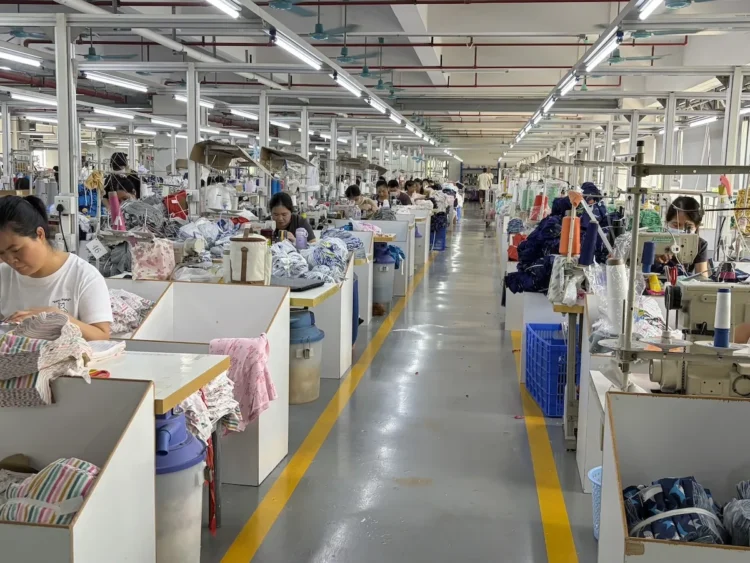
Nuohua Garment has manufactured children’s underwear, sleepwear and baby apparel since 2016, producing for brands selling into the US, EU, UK, Australia and the Middle East. That means we sit on one side of these conversations every day — which is exactly why it is worth being precise about where our advice is general and where it is self-interested.
The compliance, fabric and development guidance here applies whoever you manufacture with. The commercial observations reflect what we see on our own lines and are worth testing against a second supplier before you rely on them. If a piece of advice in this library would push you toward a decision you would not otherwise make, treat it as a starting point for a conversation rather than a conclusion.
Find a kidswear or kids’ underwear manufacturer, evaluate OEM and ODM partners, and understand sampling and production workflows — from supplier shortlisting through to bulk delivery.