
Kids Clothing Quote Comparison: How to Compare OEM Prices
Quick answer: To compare children’s clothing manufacturer quotes, normalize the product specification, order quantity, packaging, certification scope and delivery terms before comparing unit prices. A $2.10 EXW offer and a $2.65 FOB offer do not tell you which supplier is cheaper because they may contain different services and risks. Ask each supplier to itemize the same bill of materials, MOQ assumptions, one-time charges, test responsibilities and price validity.
Price comparison is not about pressuring a factory to send the lowest possible number. It is about establishing the cost of the same sellable, appropriately documented garment from design approval to your receiving location.
1. Why a cheaper unit price can be the more expensive purchase
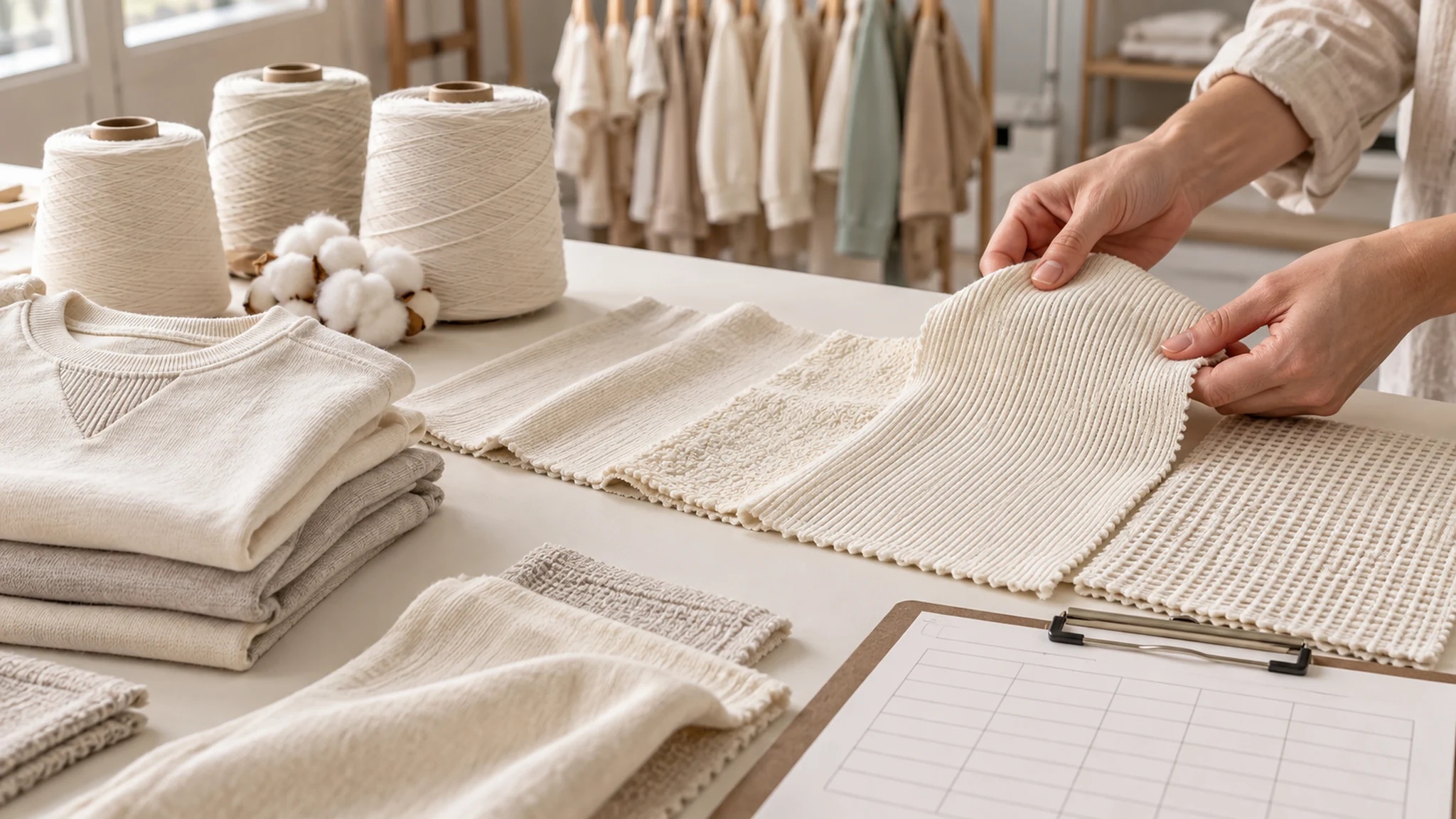
Two quotes may both say “kids cotton boxer briefs” yet assume different fabric GSM, fiber composition, elastic width, gusset construction or packaging. Even when the garments match, one quote may exclude export cartons or testing while another includes them. Comparing headlines can reward the supplier who omitted the most detail.
Build a locked RFQ specification that all candidates receive. It should include front/back reference or tech pack, fiber content, construction, target GSM and tolerance, all trims, sizes and color-level quantities, labeling, target market, the intended test scope, packing method, delivery term, destination and inspection approach.
2. Make a quote comparison matrix
The following example uses illustrative numbers only; it is not a NuohuaGarment quotation or industry price benchmark.
| Commercial item | Supplier A | Supplier B | What to verify |
|---|---|---|---|
| Unit price | $2.10 EXW | $2.65 FOB | Different terms cannot be ranked yet |
| Quantity | 1,000 pcs | 1,000 pcs | Same size/color mix? |
| Sample development | $100 | $80 | Included revision rounds? |
| Custom waistband | Excluded | Included | Same artwork/width? |
| Label and individual bag | Excluded | Included | Same specifications? |
| Testing | Buyer arranged | Buyer arranged | Same applicable scope? |
| Inland transport/export costs | Buyer responsibility | Terms-specific seller responsibility | Clarify exact named locations |
| Quotation validity | 14 days | 21 days | Subject to material changes? |
The table cannot produce a winner until excluded items and freight responsibilities are priced on comparable terms. FOB under Incoterms 2020 is not the same as delivery to the importer’s warehouse; CIF and DDP also allocate costs and risks differently. For authoritative definitions, use ICC Incoterms guidance and your freight contract.
3. Use a landed-cost model without inventing charges
Define a consistent receiving point. A useful purchasing model is:
Estimated landed cost per sellable unit = (merchandise + apportioned setup/sample expenses + testing + packing + applicable inland/export transport + main freight + insurance + duties/taxes + clearance/destination costs + other applicable costs) ÷ units received and accepted.
Only add charges applicable to the chosen Incoterm and destination, and avoid double-counting items already included by the seller. Customs duties depend on classification, origin and current destination rules. Recoverable VAT is not necessarily an economic cost for every importer; keep tax and cash-flow treatment distinct.
When a quote states the unit price includes “testing,” ask precisely which rules, products, laboratories and test reports it covers. “CPC included” is an especially ambiguous phrase: the U.S. importer is generally responsible for issuing the certificate for overseas-manufactured regulated children’s products, while laboratories provide testing evidence.
4. Compare fabric like a technical buyer
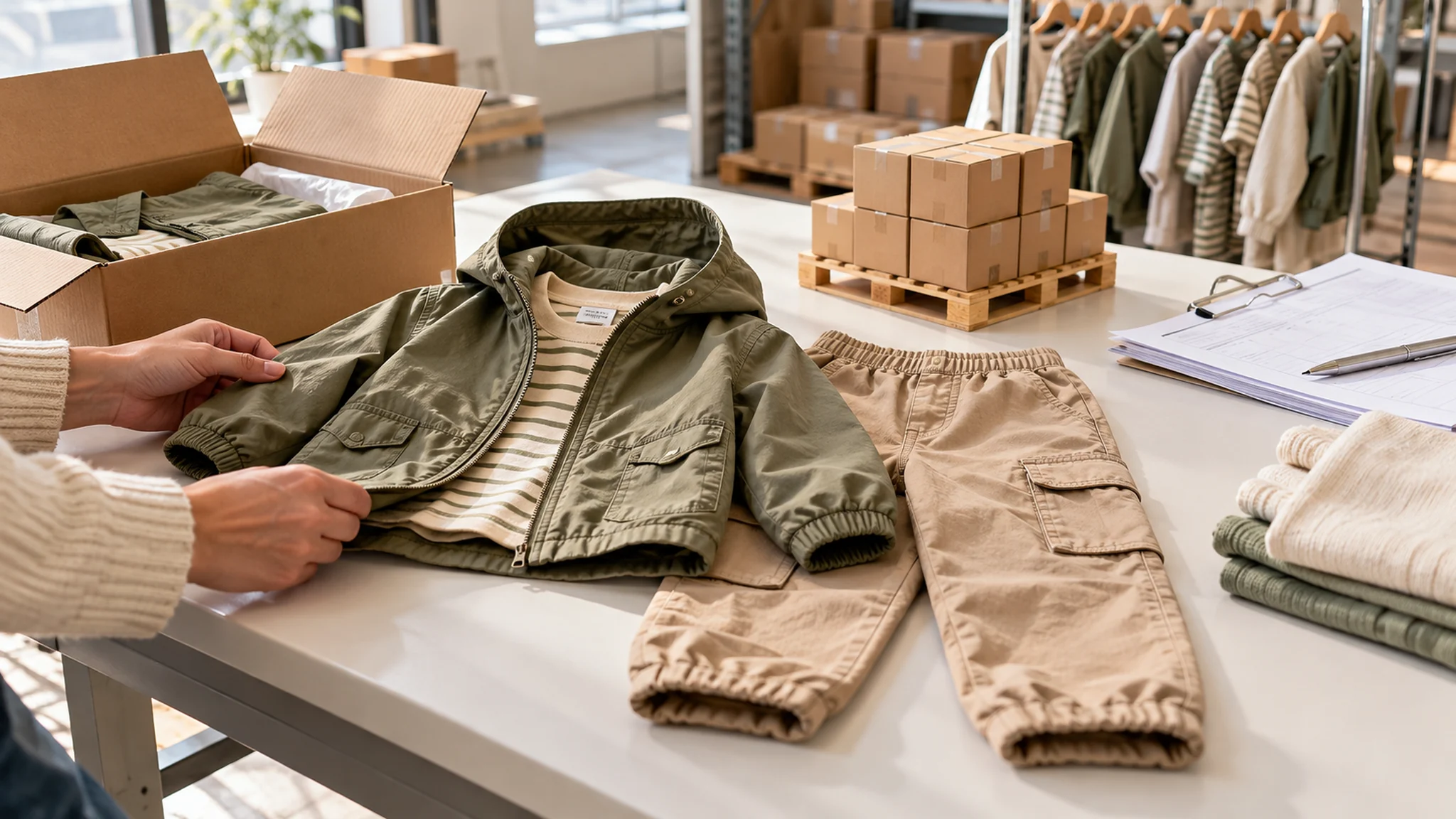
For kidswear, a BOM comparison must go beyond cotton percentage:
| Specification | Why it affects price | Evidence |
|---|---|---|
| Composition | Fiber costs and product claims | Finished fabric specification |
| GSM and width | Fabric usage per garment | Actual measured sample |
| Yarn and knit | Hand feel, recovery and durability | Swatch and supplier declaration |
| Shrinkage target | Extra finishing or rejection risk | Agreed wash test |
| Dye / print method | Minimum lots and consistency | Lab dip, strike-off, artwork |
| Elastic and trims | Comfort, durability, bespoke minimums | Approved component reference |
Do not compare a 180-GSM jersey brief with a 230-GSM interlock brief as though they were a single specification. A supplier may be offering a legitimate lower-cost alternative rather than the requested product. Put it in an alternative quote column instead of silently overwriting the original brief.
5. Compare the actual MOQ by style and color
A proposal that says “300 pieces minimum” may mean 300 total, 300 per style, or 300 per color. These structures create very different buying commitments. Request a complete MOQ sentence plus a size split for each program.
At NuohuaGarment, selected ready-stock goods can start from 2 pieces on eligible styles, colors and sizes. Selected low-MOQ custom styles may start from 150–300 pieces per color, subject to fabric and customization. Existing kids’ underwear/print programs typically start at 1,000 pieces per style and color with mixed sizes; custom sleepwear typically starts at 1,000 sets per design. Full OEM/ODM is confirmed after specification review. Those categories must not be merged into a single “our MOQ” headline.
6. Price validity is part of the comparison
A quote without a validity period is difficult to use in planning. Request the date until which the commercial offer stands and which assumptions it depends on. Ask whether a delay in order confirmation can alter yarn prices, dye-house bookings, foreign exchange assumptions, freight or lead time.
For a repeat order, compare the cost of a stable supply program as well as the first shipment. A lower first order price loses its advantage if the supplier replaces your selected elastic or stops supporting the approved base fabric without warning.
7. Score risk and service separately from price
There is no universally correct weighted score. Create your own decision criteria based on the product. A technical kids’ sleepwear launch may place more emphasis on safety documentation; a plain ready-stock test may prioritize physical availability and shipping reliability.
| Criterion | Evidence requested | Pass/review/fail |
|---|---|---|
| Correct tech pack interpretation | Written exceptions list and sample | ___ |
| Batch traceability | Material/lot identifier examples | ___ |
| Pre-production release process | Sample sign-off template | ___ |
| Quality defect handling | Corrective action policy | ___ |
| Labeling and market compliance | Named responsibilities | ___ |
| Reorder feasibility | Component sourcing plan | ___ |
| Timely and complete communication | Clear RFQ response | ___ |
Do not award extra points because a vendor displays generic badges with no report numbers or product applicability.
8. A fair negotiation sequence
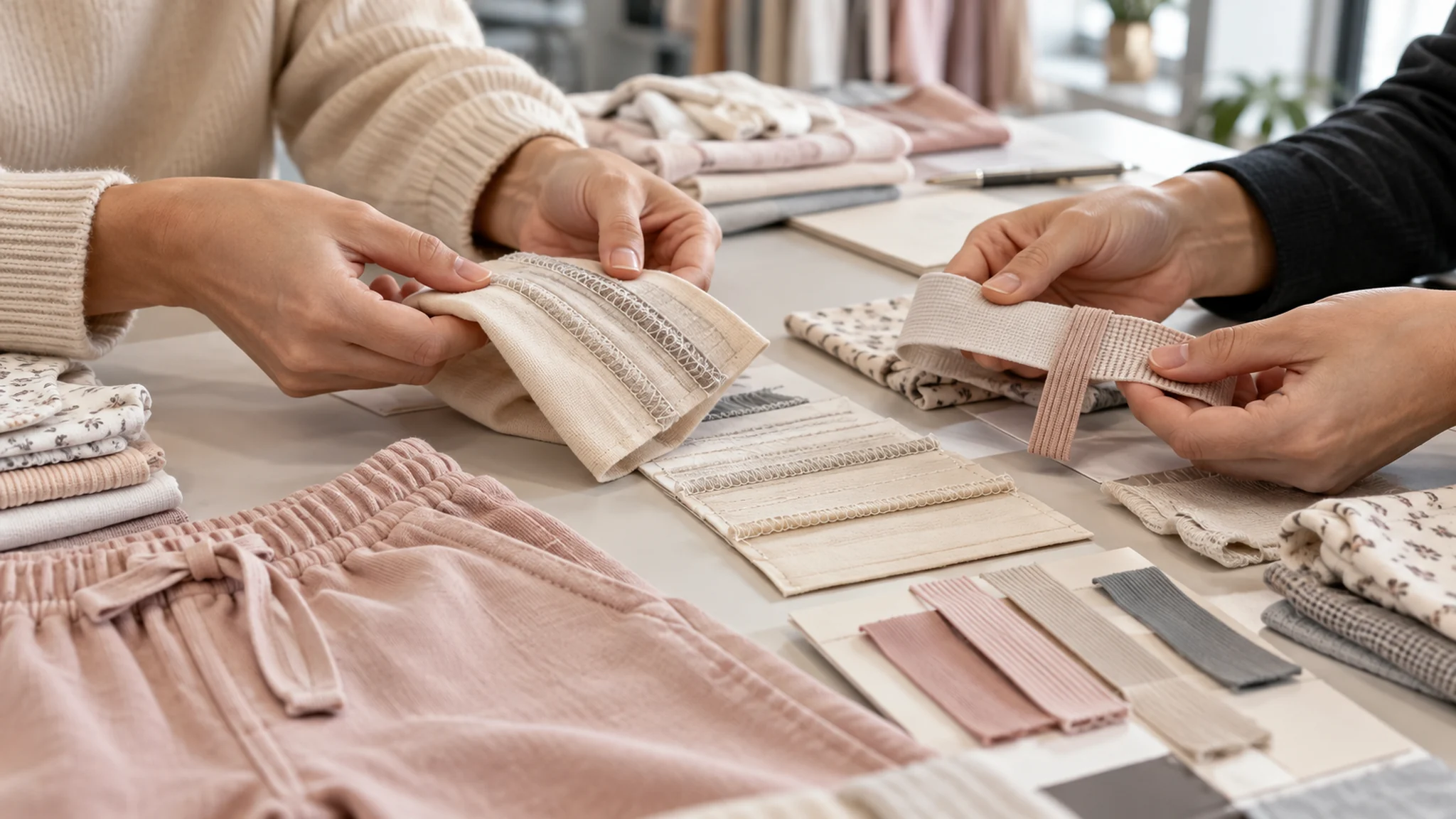
First, clarify: Ask what is included and what has been assumed. Second, standardize: Give suppliers a common final spec and delivery term. Third, separate options: Keep a quote for your required construction and a second quote for any material substitution. Fourth, negotiate tradeoffs: Explore fewer colors, shared trims, phased delivery or eligible stock materials. Fifth, confirm: Freeze the accepted BOM, sample and price validity in the purchase order.
Request a price-break table only after the above is clear; otherwise “cheaper at 5,000 units” might rely on different fabric procurement conditions that do not apply to your real 1,000-unit launch.
9. Red flags a serious buyer should document
Beware of a factory promising every MOQ with no specifications; quoting a chemically treated material but providing no substance information; refusing to disclose which cost lines are excluded; asserting “all certificates included” without product-specific details; promising a fixed ship date before approvals; or changing components between quote and sample.
Equally, a cautious supplier that asks detailed questions is not necessarily difficult. It may be preventing a hidden mismatch that becomes expensive after production.
10. Your RFQ comparison worksheet
The downloadable CSV in this package, templates/oem-quote-comparison.csv, has blank columns for the items above and a buyer decision. Use a version number for every RFQ revision so an old quote does not get matched to a new sample.
11. Build the same-SKU quote package for every supplier
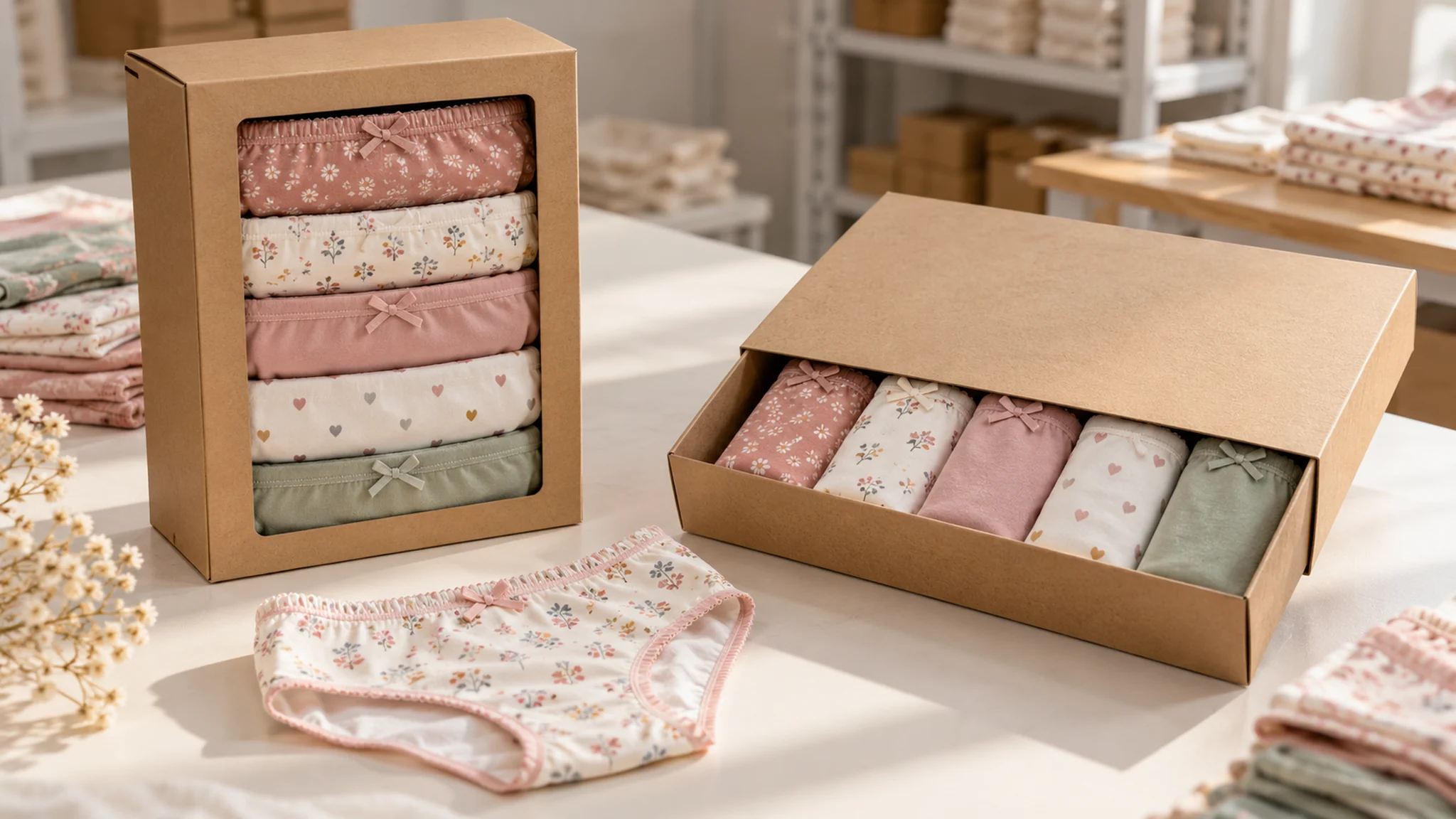
Select one representative style and issue a short frozen RFQ. Attach a signed tech pack revision, an image of the accepted reference sample if available, a BOM with fiber and material details, target quantity broken down by size and color, packaging and labeling requirements, test-scope responsibilities, requested destination term and deadline for clarification questions. Ask suppliers to return a written exceptions list alongside the quotation.
This single step often reveals hidden differences. If one factory quotes the specified interlock and another substitutes lighter jersey, the second offer becomes a technical alternative that needs its own price column. It should not silently become the comparison baseline. If one supplier includes a custom waistband and the other assumes a standard stock elastic, the pieces are not yet comparable.
12. Check purchase-order clauses that protect the agreed product
A buying contract should describe exactly which documents control the delivered garment. Refer to approved sample IDs, tech-pack version, BOM/print revisions, quantity and size mix, inspection plan, acceptable deviations and escalation steps. It should say how substitutions are approved, how delays are communicated, and which documents must accompany shipping and payment milestones.
A commercial invoice is not a technical quality agreement. Conversely, a technical specification does not settle freight risk or payment terms. Both need to match the same style and shipment. Buyers should seek appropriate legal review for contractual provisions relevant to their jurisdictions.
13. How to negotiate without damaging quality
A supplier may identify cost-saving options such as shared fabric across colors, simpler labels, fewer print screens or a consolidated size assortment. Ask for a costed alternative showing what changes and what stays the same. Preserve performance requirements and any legal safety requirements. If a reduction is achieved by lowering GSM or removing an inspection, evaluate the resulting quality or compliance risk rather than recording only the cheaper price.
Negotiating capacity commitments before a reliable rolling forecast exists can also create more exposure than savings. Begin with realistic quantities and an agreed process to review reorder requirements, then discuss material reservation when the demand history justifies it.
FAQs
What is the best way to compare manufacturers with different MOQs?
Calculate total commitment and landed cost for your actual size/color split, then separately evaluate whether your sell-through can absorb the larger order. The smallest unit price is not necessarily the best inventory decision.
Should I use EXW, FOB or DDP when comparing quotes?
Any can be compared if you normalize costs and responsibilities to the same destination, but do not treat different Incoterms as equivalent. Confirm the exact named place and Incoterms version.
Should supplier quality be scored using certifications alone?
No. Request product-specific test evidence, process controls, batch records, appropriate approvals and responses to actual technical questions.
Can I negotiate custom packaging on a small trial order?
Sometimes, but packaging suppliers have their own minimums. Request a separate price for standard packaging and bespoke packaging to see the true cost.
What is missing if a quotation does not mention price validity?
The buyer cannot reliably determine how long the offer and its material assumptions will stand. Request the validity date, currency and re-quote triggers.
Related reading: Children’s Underwear Manufacturing Cost · Kids Underwear Bulk Order Guide · Kids Clothing MOQ and Reorder Lead Time
Talk to a Kidswear Manufacturing Specialist
Send your product type, reference images or tech pack, fabric composition, size range, intended market, quantity by style and color, and target delivery date. Request an OEM/ODM feasibility review and quotation. MOQ, sampling, testing responsibilities and delivery milestones are confirmed against your actual specification.