
If you are building a private-label kids’ underwear or sleepwear brand, the question that decides whether your first container clears customs is not “which colorway should I launch first.” It is “which kids clothing safety certifications do I actually need?” Every major market asks that question in a different form, and none of them accepts another market’s answer as a substitute.
The United States wants a Children’s Product Certificate (CPC) backed by third-party CPSIA testing. China wants GB 31701 Class A for infants and Class B for older children’s direct-skin-contact garments. The European Union wants GPSR conformity, EN 14682 cord-and-drawstring compliance, and REACH chemical limits. In this guide we explain each framework from a manufacturer’s perspective, so you can plan compliance before you cut a single sample. If you are still narrowing down a supplier, start with our kids’ underwear manufacturing overview.
On this page
- The Quick Answer: What Each Market Actually Requires
- The Three-Market Certification Matrix
- GB 31701 Class A: China’s Mandatory Children’s Safety Standard
- CPC + CPSIA: The US Children’s Product Certificate
- EN 14682: Cord and Drawstring Safety in the EU
- OEKO-TEX Standard 100: Chemical Safety Testing
- Fiber Content and Care Label Requirements
- A Compliance Checklist for Private-Label Brands
- Common Mistakes: Treating a Testing Lab Like a Certificate
1. The Quick Answer: What Each Market Actually Requires
There is no single, universal kids clothing safety certificate. The US requires a CPC declaration backed by CPSC-accepted third-party tests; China requires GB 31701 (Class A for infants, Class B for older children’s skin-contact garments); the EU requires GPSR conformity plus EN 14682 cord rules and REACH chemical limits. You certify against the market you ship into, not the factory’s home market.
The word “certification” is the source of most of the confusion in this space, because buyers use it loosely to mean three different things, and conflating them is what causes rejected shipments and surprise fees.
A standard is a rule, not a document you hold. GB 31701 is a mandatory Chinese standard; CPSIA is a US federal law; EN 14682 is an EU standard. A test report is what a laboratory produces after running your fabric or finished garment through a defined method. A certificate is a declaration someone signs, asserting that the product meets the standard, and it must be backed by those test reports.
The practical consequence: a brand importing into the US needs a CPC that the importer signs, supported by test reports from a CPSC-accepted lab such as SGS, TÜV SÜD or Intertek. A brand selling in China needs the garment to meet GB 31701 and the label to state its class. A brand selling in the EU needs cords that comply with EN 14682 and chemicals that comply with REACH, then self-declares conformity under GPSR. There is no single document that covers all three at once, so plan for the market you actually ship into.
2. The Three-Market Certification Matrix
Three markets, three frameworks. The US regulates children’s products through CPSIA and the CPC; China through the mandatory GB 31701 standard; the EU through GPSR, REACH and EN 14682. The table below maps each market’s regulation, document, chemical limits and physical rules side by side.
| Market | Core regulation | Document you need | Key chemical limits | Key physical rules | Who issues the document |
|---|---|---|---|---|---|
| United States | CPSIA plus 16 CFR flammability rules | Children’s Product Certificate (CPC) | Lead ≤100 ppm (substrate), lead in surface coating ≤90 ppm, phthalates ≤0.1% | Small parts, cords, flammability (16 CFR 1610; sleepwear 1615/1616) | US importer or domestic manufacturer, based on CPSC-accepted lab reports |
| China | GB 31701 (mandatory national standard) | Third-party test report to the correct class | Class A: formaldehyde ≤20 mg/kg, pH 4.0-7.5, azo dyes banned, lead ≤90 mg/kg, cadmium ≤100 mg/kg | No head/neck cords under 7 years, attachment pull ≥70 N, no small parts | Third-party lab test report; class is marked on the label |
| European Union | GPSR + REACH + EN 14682 | Self-issued Declaration of Conformity | Azo dyes banned, phthalates and heavy metals restricted under REACH | EN 14682 cord and drawstring rules | Importer or manufacturer (self-declaration) |
What this table hides is timing and ownership. The “document” column is what brands usually fixate on, but the hard work sits in the two columns before it: knowing which rules apply to your exact product, and proving compliance with third-party tests. If your line is a mix of underwear and sleepwear, the answer changes by product — which is why we break each framework down below. For a broader look at how a kids’ line comes together on the factory floor, see our kids’ clothing manufacturing overview.
3. GB 31701 Class A: China’s Mandatory Children’s Safety Standard
GB 31701 is China’s mandatory national standard for infant and children’s textile products. Class A is the strictest tier and applies to infants aged 0-36 months (height ≤100 cm). Underwear, sleepwear and other direct-skin-contact garments for children aged 3-14 must meet at least Class B.
GB 31701 divides children’s textile products into three classes. Class A covers infant products for babies up to 36 months — the tier that matters for baby bodysuits, first-layer underwear and infant sleepwear. Class B covers products worn in direct contact with the skin for children aged 3 to 14, which includes kids’ underwear and pajamas. Class C covers outerwear that does not touch the skin directly, such as coats and jackets. Each tier has its own limits, and Class A is meaningfully stricter than Class B on chemistry.
| Requirement | Class A (infants 0-36 months) | Class B (skin contact, 3-14 years) | Class C (outerwear, 3-14 years) |
|---|---|---|---|
| Formaldehyde content | ≤20 mg/kg | ≤75 mg/kg | ≤300 mg/kg |
| pH value | 4.0-7.5 | 4.0-8.5 | 4.0-9.0 |
| Banned azo dyes (carcinogenic amines) | Prohibited (≤20 mg/kg detection) | Prohibited | Prohibited |
| Color fastness to saliva | ≥4 grade | Not required | Not required |
| Heavy metals (coated/printed areas) | Lead ≤90 mg/kg, cadmium ≤100 mg/kg | Restricted | Restricted |
| Phthalates (6 substances total) | ≤0.1% | Restricted | Restricted |
| Cords and drawstrings | No head/neck cords under 7 years (height ≤130 cm); waist ≤360 mm; cuff ≤75 mm | Same cord rules | Same cord rules |
| Attachments (buttons, snaps) | Pull force ≥70 N for parts larger than 6 mm; no sharp edges | No small parts | No small parts |
Two rows in that table deserve emphasis because they drive real production decisions. The first is formaldehyde. Class A allows no more than 20 mg/kg, which means infant garments must be dyed and finished with low-formaldehyde auxiliaries and then washed thoroughly before packing. The second is color fastness to saliva, a test that only applies to Class A. Babies chew and suck on fabric, so the standard demands that color not transfer under saliva — a far more aggressive condition than normal water or perspiration testing, and one that changes which dyes and fixation processes a mill can use.
Beyond chemistry, GB 31701 sets physical rules. For children under 7 years (height ≤130 cm), there must be no cords or drawstrings in the head and neck area at all; functional waist cords may extend no more than 360 mm from their fixed point, and cuff cords no more than 75 mm. Attachments such as buttons and snaps larger than 6 mm must withstand at least 70 N of pull force so they cannot be torn off and swallowed, and there must be no accessible sharp edges or points.
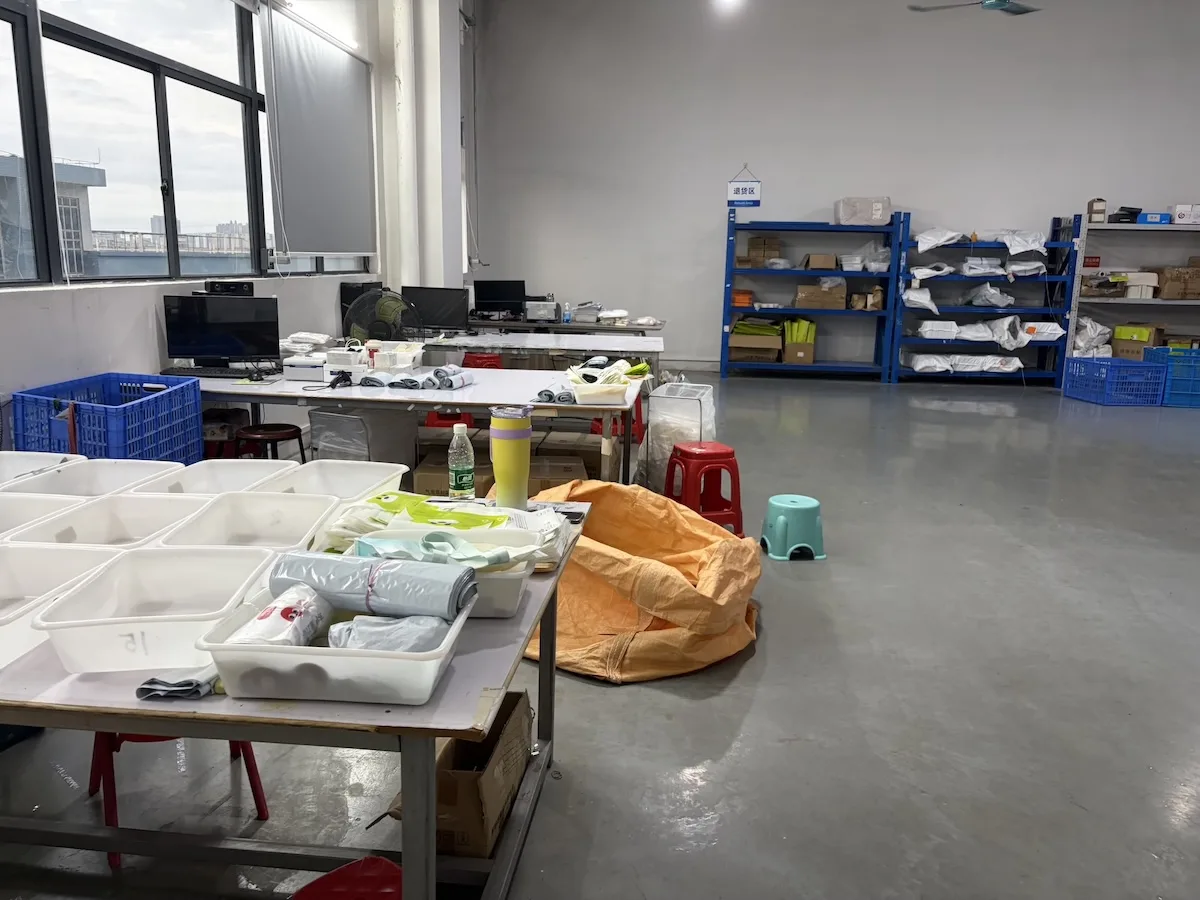
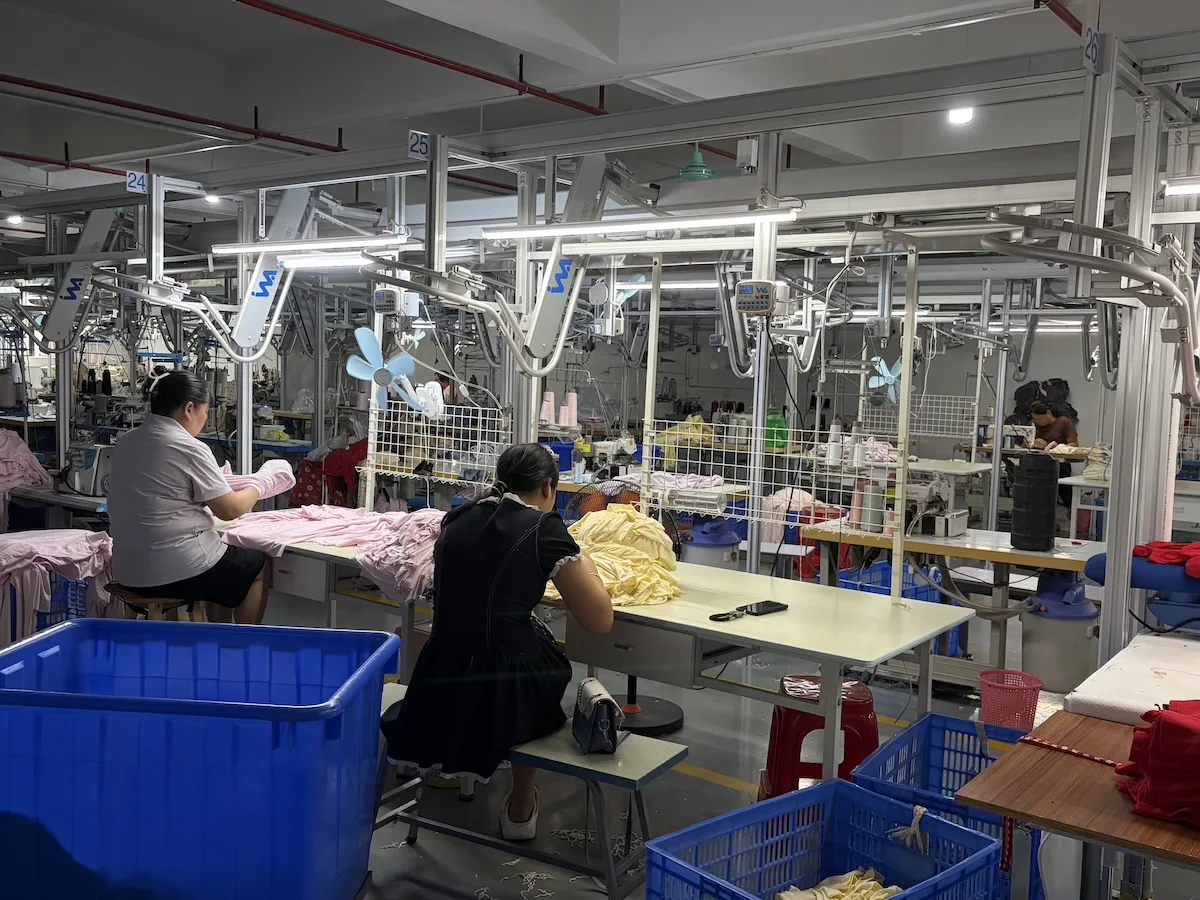
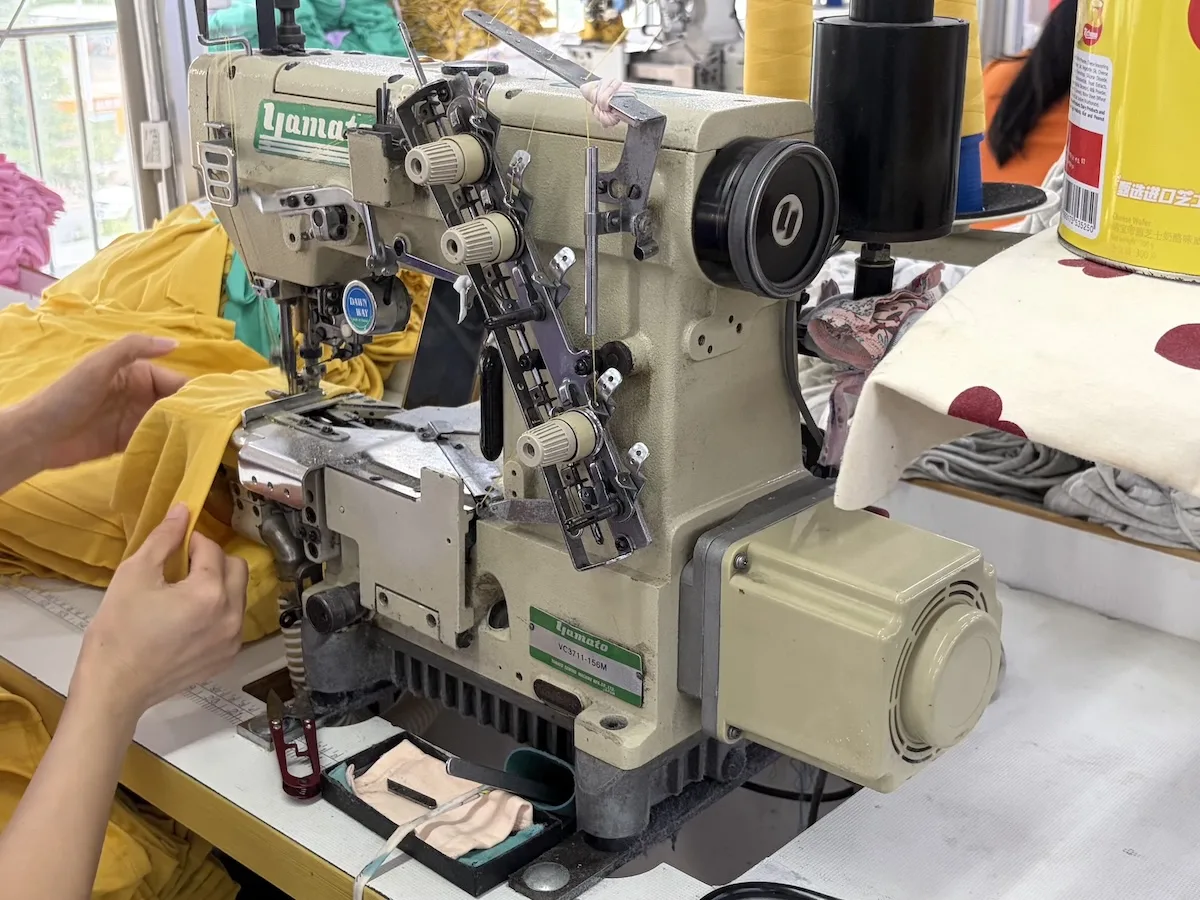
From the factory side, meeting GB 31701 Class A is a process, not a paper. At Nuohua Garment we test infant and children’s lines against the Class A thresholds, and our six-stage QC includes needle detection on every order — a physical-safety step that catches a broken needle before a garment ever reaches a child. How the factory is structured matters more than what it claims, which is exactly what our factory audit checklist helps you verify.
4. CPC + CPSIA: The US Children’s Product Certificate
The CPC is a declaration the US importer or domestic manufacturer signs, stating the product meets every applicable CPSIA rule. It must be supported by test reports from a CPSC-accepted third-party lab. Labs such as SGS, TÜV SÜD and Intertek run the tests and issue reports; they do not issue your CPC.
CPSIA sets the chemical floor for children’s products in the US. Total lead in accessible substrate parts is limited to 100 ppm, and lead in paint or surface coatings to 90 ppm. Phthalates — including DEHP, DBP, BBP and DINP — are limited to 0.1% in child care articles and toys. For clothing, the tests that matter most are lead and phthalate content in fabrics, prints, buttons, snaps and zipper components. A printed design or a dyed trim can be the difference between a pass and a fail, so component sourcing is part of compliance, not an afterthought.
Flammability is the other pillar, and it matters disproportionately for sleepwear. General wearing apparel is tested to 16 CFR 1610. Children’s sleepwear has its own, stricter standards: 16 CFR 1615 for sizes 0-6X and 16 CFR 1616 for sizes 7-14. Sleepwear must be either flame-resistant or tight-fitting, and tight-fitting garments require a label stating the item is not flame-resistant because it must fit snugly. A sleepwear manufacturer has to know which route each design takes before cutting fabric, because the pattern, the fabric and the label all change together.
The CPC itself must contain seven elements: product identification, the list of applicable safety rules, the name and address of the certifying party, the records contact, the date and place of manufacture, the date and place of testing, and the laboratory’s identification. Every children’s product must also carry a tracking label with the manufacturer, production date and batch, so a recall can be traced to its source.
5. EN 14682: Cord and Drawstring Safety in the EU
EN 14682 is the EU standard governing cords and drawstrings on children’s clothing. For children up to 7 years (height ≤134 cm), cords or drawstrings in the hood and neck area are prohibited outright.
The EU does not have a single “children’s clothing certificate” the way the US has the CPC. Instead, safety is layered: the General Product Safety Regulation (GPSR) requires every product to be safe, REACH restricts chemicals, and EN 14682 specifically controls cords and drawstrings — the leading physical hazard on children’s garments.
EN 14682 splits children into two bands. Young children (up to 7 years, height ≤134 cm) may not have any cords or drawstrings in the hood and neck area, and functional cords elsewhere are tightly restricted. Older children (7-14) may use cords, but with strict length and design limits: no free ends longer than 75 mm, no protruding cord loops, and waist cords limited to 360 mm from the fixed point. In practice, most EU-bound kids’ underwear and sleepwear designs simply avoid drawstrings at the neck and waistband entirely, which is the safest and cheapest way to stay compliant.
A common misconception is that clothing needs a CE mark. CE marking applies to toys and personal protective equipment, not to general clothing. Kids’ clothing in the EU is covered by GPSR, and the responsibility sits with the importer or manufacturer to keep a technical file and ensure the product is safe. The factory’s job is to supply designs and samples that already satisfy EN 14682, so the brand is not correcting cord placements at the last minute on a finished garment.
6. OEKO-TEX Standard 100: Chemical Safety Testing
OEKO-TEX Standard 100 is a voluntary, independent chemical-safety label for textiles, not a legal entry requirement. At Nuohua Garment, OEKO-TEX Standard 100 is currently in progress; our chemical testing is carried out by third-party labs such as SGS, TÜV SÜD and Intertek.
OEKO-TEX Standard 100 tests finished textiles for a long list of regulated and non-regulated substances: formaldehyde, heavy metals, banned azo dyes, phthalates, PFAS and hundreds more. Products are assigned to a class, with Class I for babies and infants carrying the strictest limits. For a kids’ underwear or sleepwear brand, an OEKO-TEX label is a powerful trust signal with parents and retailers, precisely because it goes beyond the legal floor and screens for substances no single market law covers.
But it is important to be precise about wording. OEKO-TEX is a certification you earn through testing and audit by an OEKO-TEX institute; it is not the same as a one-off lab report, and it is not a customs requirement. We state our status honestly: our OEKO-TEX Standard 100 certification is currently in progress. Until it is granted, we do not claim it. In the meantime, all our chemical testing is performed by independent third-party labs such as SGS, TÜV SÜD and Intertek, so every order still ships with a documented chemical trail.
7. Fiber Content and Care Label Requirements
Every market requires a fiber composition label and care instructions, but the details differ. China requires the GB 31701 class and infant-product wording on the label; the US requires fiber content under the Textile Fiber Products Identification Act plus a CPSIA tracking label; the EU requires fiber names and care symbols under the EU Textile Regulation.
Fiber content must be accurate and stated in the correct fiber names. A garment made from 91.9% Lenzing Modal and 8.1% Spandex must say exactly that; you cannot round “Modal” down to “viscose” or quietly drop the Spandex. The US Textile Act and the EU Textile Regulation both define the permitted generic fiber names and the tolerance around them, and care instructions use standardized symbols so the message survives any language barrier.
| Requirement | China (GB 31701) | US (CPSIA + Textile Act) | EU (Textile Regulation) |
|---|---|---|---|
| Safety class marking | Required — state the class (A, B or C) and “infant product” wording for Class A | Not required | Not required |
| Fiber content | Required, accurate composition | Required, generic fiber names under the Textile Act | Required, fiber names under the EU Textile Regulation |
| Care instructions | Required | Required | Required (care symbols) |
| Tracking / batch label | Not required | Required under CPSIA section 103 | Traceability under GPSR technical file |
| Placement note | Durable labels must not touch the skin directly on infant garments | No placement restriction | No placement restriction |
One practical detail stands out: for infant garments in China, a sewn-in durable label must not sit directly against the skin — the standard requires it to be placed where it will not irritate. That single requirement changes how we position printed versus sewn-in labels on bodysuits and first-layer pieces, which we cover in our printed vs sewn-in labels guide.
8. A Compliance Checklist for Private-Label Brands
Work backward from the market. Confirm the age bracket, then the garment type, then the applicable class, then the third-party test scope, then the label content, then file every document with a named owner.
Compliance fails in the gaps between steps, not inside any single step. The checklist below assigns each step an owner so nothing is left to a vague “someone will handle it.”
| Step | Action | Who owns it | Why it matters |
|---|---|---|---|
| 1 | Confirm target market(s) and age bracket | Brand | The age bracket changes the class and the standard |
| 2 | Confirm garment type: underwear (skin contact) vs sleepwear (US flammability rules) | Brand + factory | Sleepwear triggers 16 CFR 1615/1616 in the US |
| 3 | Determine the applicable class: GB 31701 Class A/B, CPSIA/CPC, or GPSR/EN 14682 | Factory + lab | Testing scope follows the class |
| 4 | Scope the third-party tests: lead, phthalates, azo, formaldehyde, pH, cords, flammability | Lab (SGS, TÜV SÜD, Intertek) | Missing one test invalidates the file |
| 5 | Run tests on pre-production samples | Lab | Fixing fabric now is cheap; fixing a container is not |
| 6 | Finalize labels: safety class, fiber content, care, tracking label | Factory | Labels must match the certified market |
| 7 | Issue the CPC or Declaration of Conformity | Importer / brand | Only the importer or manufacturer can sign it |
| 8 | File records: test reports, certificates, technical files | Brand | Authorities can ask 3-5 years after the sale |
Run the tests before bulk production, not after. A fabric that fails an azo or phthalate test at the pre-production stage is a re-dye or a component swap; the same failure discovered on a packed container is a recall. Keep every test report and certificate for three to five years, because both US and EU rules allow authorities to request them well after the sale has closed.
9. Common Mistakes: Treating a Testing Lab Like a Certificate
The most common — and most damaging — mistake is wording a lab as if it were a certificate: saying a product is “SGS certified” or “TÜV certified.” SGS, TÜV SÜD and Intertek test and report; they do not grant a certificate you can cite as a credential. The certificate is something you sign.
These wording mistakes look trivial but they signal a real misunderstanding of who is accountable for what. Here is how the same claim should be phrased.
| Don’t write | Write instead |
|---|---|
| “SGS certified” or “TÜV certified” | “Third-party tested by SGS / TÜV SÜD” |
| Claiming an OEKO-TEX certificate that is not yet granted | “OEKO-TEX Standard 100 in progress” |
| “We hold a CPC” | “Products are tested to CPSIA so you can issue your CPC” |
| “GB certified” (vague) | “Complies with GB 31701 Class A” |
| “CE certified clothing” | “CE applies to toys and PPE, not general clothing; clothing falls under GPSR” |
Compliance wording is a small thing that signals a big thing. When a sourcing partner gets these distinctions right, it means the QC team and the lab process behind them are disciplined. When a supplier gets them wrong — claiming a certificate it does not hold — assume the same sloppiness extends to the dye house and the needle-detection station. Ask for the test reports, not the adjectives.
Ready to put compliance first? Nuohua Garment manufactures kids’ underwear and sleepwear to GB 31701 Class A, arranges third-party CPSIA testing through labs such as SGS, TÜV SÜD and Intertek, and is working toward OEKO-TEX Standard 100. Request test reports, sample specifications and a compliance plan before you commit to an order.