
Most kids’ clothing brands are not born from a blank sketchbook — they are born from a decision about how to make the product. Before you think about fabrics, sizes or prints, you choose a manufacturing model, and that single choice quietly sets your MOQ, your upfront cost, your control over fit, and how quickly you can reach customers. In this article we explain OEM, ODM and private label kids clothing from the manufacturer’s side of the table, so you can match the model to your brand stage instead of paying for capability you do not need yet.
On this page
- The Three Models in One Paragraph
- OEM, ODM and Private Label Compared Side by Side
- OEM in Depth: You Bring the Tech Pack, We Produce
- ODM in Depth: Mature Styles, Your Label
- Private Label in Depth: Stock Styles, Your Branding
- Cost, Control and Development Timeline Compared
- Matching the Model to Your Brand Stage
- Red Flags When Choosing a Model
- How to Talk to a Factory (the Manufacturer’s Side)
1. The Three Models in One Paragraph
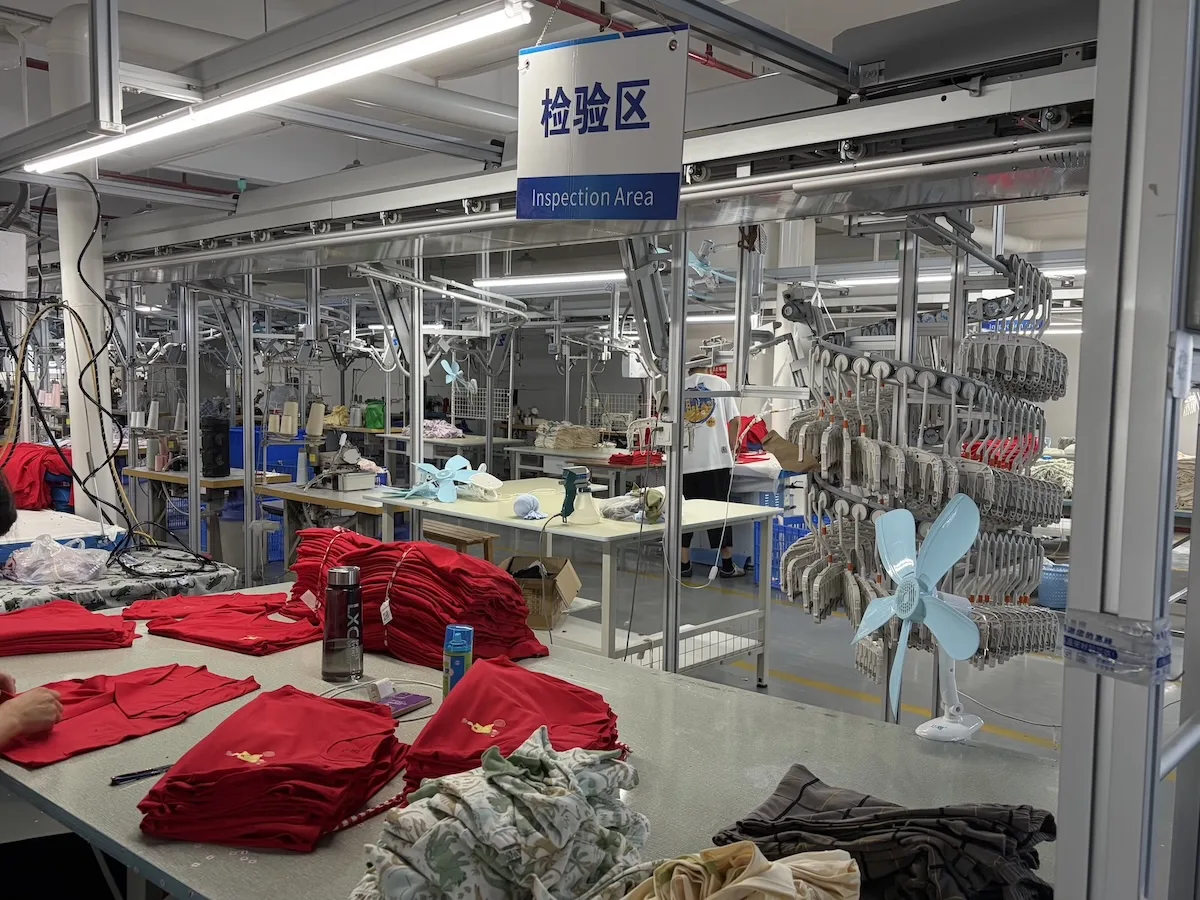
OEM means you own the design and hand the factory a full tech pack; the factory only cuts, sews and finishes. ODM means the factory owns a library of proven, ready-to-produce styles and you pick one, change the label and colourway, and ship it under your brand. Private label means the factory’s stock styles are re-labelled or lightly customised with your prints, trims and packaging. OEM gives you the most control and the longest timeline; ODM and private label trade some control for speed and a lower entry cost.
When we talk about OEM ODM private label kids clothing at Nuohua Garment, we are describing three distinct commercial arrangements, not three product qualities. What changes between them is who owns the design, who owns the pattern, and where the risk sits.
That distinction matters more in kids’ clothing, because children’s apparel carries a heavier compliance load. Whichever model you pick, the finished garment still has to meet the safety standard of its destination market — GB 31701 Class A (China children’s A-class safety standard) for the Chinese market, or third-party testing to CPC requirements for the US. The model changes how the product is developed, not the bar it has to clear.
Manufacturer’s note: these three terms are used loosely across the industry, which is why two suppliers can quote very different prices for the “same” model. Before comparing quotes, always confirm who owns the pattern, the fabric development and the sampling cost.
2. OEM, ODM and Private Label Compared Side by Side
If you remember one thing, remember who owns the design. In OEM you own it; in ODM and private label the factory owns the base style and you own the branding. Every other difference — MOQ, cost, lead time, exclusivity — flows from that single point of ownership.
Use the table to shortlist the model, then read the sections below for the why behind each row.
| Dimension | OEM | ODM | Private Label |
|---|---|---|---|
| Who owns the design | You (your tech pack) | Factory (proven style library) | Factory (finished stock style) |
| Who owns the pattern / block | You, or built to your spec | Factory | Factory |
| Fabric development | Custom or in-stock | Mostly in-stock | In-stock |
| MOQ (kids’ underwear) | 2 pcs on selected in-stock styles, colors and sizes | 2 pcs on selected in-stock styles, colors and sizes | Lowest; stock-dependent |
| Upfront development fee | Highest (sampling, lab dips, fit) | Low | Minimal to none |
| Control over fit and fabric | Full | Partial (colour, print, label) | Branding only |
| Typical lead time | Longest | Medium | Shortest |
| Best for | Established brands with unique designs | Growing brands scaling fast | New brands testing a market |
The MOQ for OEM and ODM looks similar on paper for custom kids’ underwear; the real difference is everything before production — OEM pays for sampling, grading, lab dips and fit rounds, while ODM has most of that work already done in its library.
One more distinction: private label and ODM are not the same thing. ODM still involves choosing a style and applying your colourway and print, a short development step. Private label means the garment already exists and you are essentially rebranding it.
3. OEM in Depth: You Bring the Tech Pack, We Produce
OEM (Original Equipment Manufacturing) is a build-to-spec model. You send a complete tech pack — graded sizes, flat sketches, fabric spec, seam and stitch details, trims and colourways — and the factory produces exactly to your document. You keep full design ownership; the factory is paid to execute.
OEM is the right choice when the product itself is your competitive edge — a signature fit, a proprietary waistband construction, or a fabric story no one else can copy.
A workable OEM tech pack for a kids’ underwear or sleepwear line should contain at least the following:
- Graded size chart — the full height and waist range (for example 90 cm through 160 cm) with grading increments, so the factory knows how the pattern steps between sizes.
- Flat sketches with seam callouts — front and back views marking waistband type, leg opening finish and gusset construction.
- Fabric spec — fibre blend, knit structure (for example interlock), and target GSM.
- Construction details — bound, flatlock or overlock seams, elastic type, and any reinforcement at stress points.
- Trim and labelling spec — care label, size label, hang tag and any brand-specific packaging.
- Colourways and print artwork — Pantone references or print files with placement instructions.
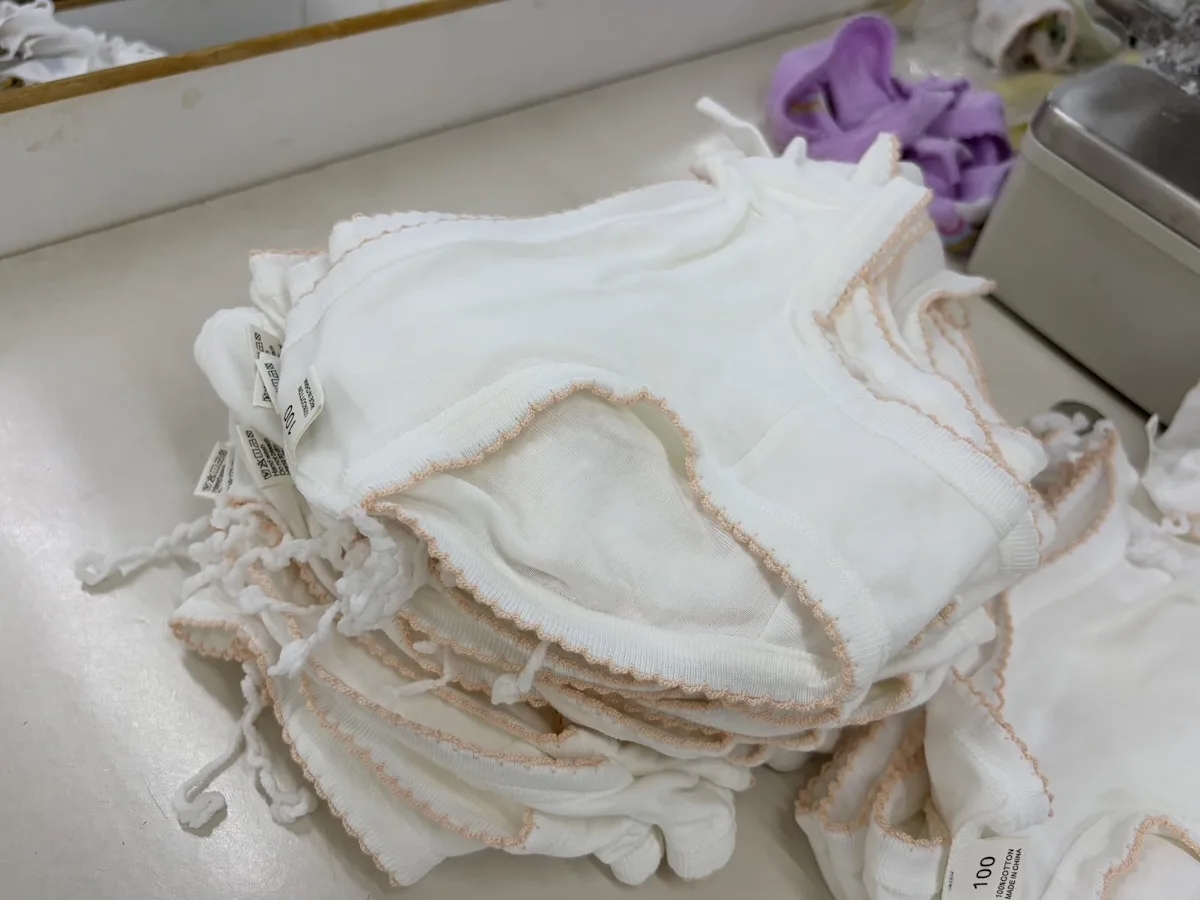
Fabric is where OEM buyers most often underestimate cost. If your design can be made on an in-stock fabric — such as our 91.9% Lenzing™ Modal + 8.1% Spandex interlock at 220–240 GSM, or the 49.9% Lenzing™ Modal + 43.3% Cotton + 6.8% Spandex interlock at roughly 220 GSM — you skip the fabric setup fee and the mill lead time entirely. If you need a cotton-only or a custom cotton blend that is not on our shelf, that becomes a custom fabric development project with its own knitting and dyeing cycle. For a deeper read on choosing fabric without overbuilding, see our fabric shortlist guide.
Sampling in OEM follows a predictable path: first sample, fit sample, then a pre-production (PP) sample that freezes the specification before bulk. Colour is approved separately through lab dips and swatch approval, because a colour that looks right on a screen rarely survives the first dye lot unchanged. Expect a few weeks of back-and-forth here; this is normal.
MOQ in OEM reflects the setup work involved: for custom kids’ underwear the standard minimum is 2 pcs on selected in-stock styles, colors and sizes, and for sleepwear or pajama sets it is 1,000 sets per design. Safety compliance still applies to every OEM garment, with GB 31701 Class A as the baseline and third-party testing by labs such as SGS, TÜV SÜD or Intertek where a destination market requires it.
4. ODM in Depth: Mature Styles, Your Label
ODM (Original Design Manufacturing) flips the ownership: the factory has already designed, patterned and tested a library of styles, and you license the finished product under your own brand. You choose the style, the colour, the print and the label — you do not design the garment from scratch.
ODM is the fastest way to get a proven product into your brand. Because the pattern has already survived real production and washing, you inherit that fit and construction knowledge instead of paying to discover it. Many growing brands run their core basics on ODM and reserve OEM effort for hero pieces.
What you can still change in ODM is more than most buyers expect:
- Colourway — any combination from the factory’s dyed fabric range.
- Print — our facility holds 3,000+ prints to choose from, or you supply artwork for a custom print.
- Labels and packaging — your brand name, logo, care and size labels, hang tags and retail packaging.
- Small trims — waistband colour, thread colour and similar finishing details.
What you generally cannot change cheaply in ODM is the block itself — the silhouette, seam construction and graded fit — because those belong to the factory’s library. If you need a different silhouette, you have stepped into OEM territory, and the cost should be quoted differently.
The fabric economics also tilt toward ODM. In-stock fabrics carry no setup fee, so an ODM first order can start production almost immediately after colour and print are confirmed. The two in-stock blends we most often run for kids’ lines are the 91.9% Lenzing™ Modal + 8.1% Spandex interlock (220–240 GSM) and the 49.9% Lenzing™ Modal + 43.3% Cotton + 6.8% Spandex interlock (about 220 GSM).
Why ODM fit is usually safer: a factory-owned style has been through the full QC cycle before you ever see it. At Nuohua Garment that means a 6-stage QC with needle detection on a line that runs at under 0.3% defect rate. You are not buying an untested idea; you are buying a style that has already been de-risked.
5. Private Label in Depth: Stock Styles, Your Branding
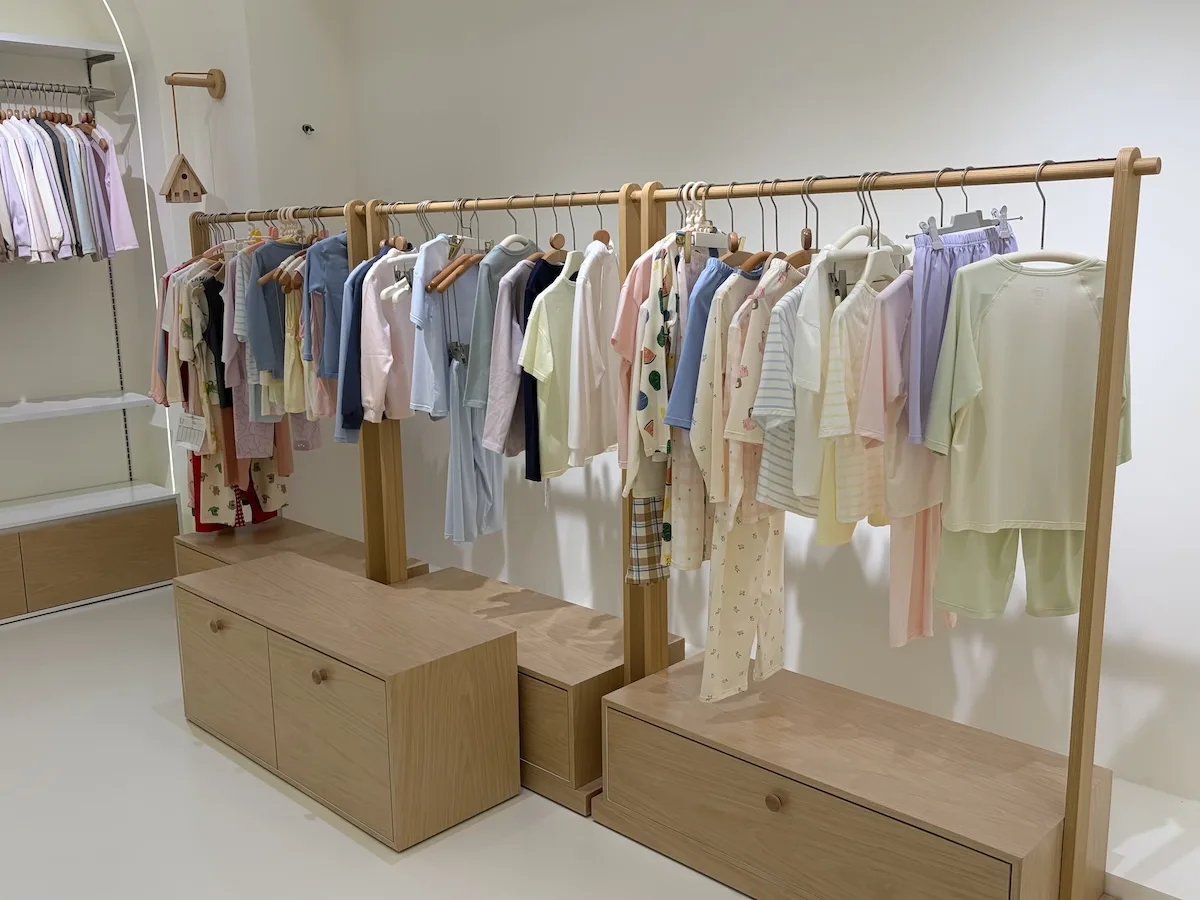
Private label is the lightest-touch model. The factory holds finished stock styles; you add your brand name, logo, care and size labels, packaging and sometimes a custom print. You buy an existing product and make it yours — the fastest route to a branded kids’ line with the smallest cash outlay.
Private label is where most new kids’ brands start, and for good reason: it removes nearly every variable except branding. You confirm the stock style, choose your labelling and packaging, and the product ships in the shortest lead time of the three models.
The branding work is more involved than buyers expect. The main decisions are:
- Label type — a sewn-in woven label versus a printed care/size label. Printed labels reduce skin irritation and eliminate a separate sewing step; sewn-in woven labels feel more traditional. We compare both in our guide to printed vs sewn-in labels for kids’ clothing.
- Care and size label content — fibre composition and care instructions are mandatory on the garment, so the label is a compliance document.
- Hang tags and packaging — the retail-facing brand assets that make a stock style feel like your own collection.
One warning for every private-label buyer: compliance does not disappear just because the style is stock. The garment must still meet the destination market’s safety standard, which for us means GB 31701 Class A (China children’s A-class safety standard) with third-party testing by SGS, TÜV SÜD or Intertek where required. For a dedicated walkthrough, see our private label kids’ underwear page.
6. Cost, Control and Development Timeline Compared
The headline difference is where the money and the time go. OEM front-loads cost into sampling and development but delivers the lowest unit price at volume; ODM and private label cost little to start but give you a higher unit price and less exclusivity. Your choice is really a trade between control, unit cost and speed to market.
Buyers who compare only the unit price usually pick the wrong model. The development fee and the timeline come first, because those are what a small brand feels in cash and weeks before a single garment sells.
| Factor | OEM | ODM | Private Label |
|---|---|---|---|
| Unit price at volume | Lowest | Mid | Highest |
| Development fee | Highest (sampling, grading, lab dips) | Low / nominal | None / minimal |
| First sample time | 1–2 weeks after tech pack and fabric | 5–10 days | Immediate (stock) |
| Lead time to shipment | Longest (sampling + bulk) | Medium | Shortest |
| Exclusivity | Full — the design is yours | Shared base, your colourway | None — stock style |
| Risk if the style fails | Highest (you own the design) | Moderate | Lowest |
The “risk if the style fails” row matters most to a startup. In OEM, a design that does not sell is a loss you absorb alone; in private label, an unsold stock style cost you almost nothing to develop, so you can walk away cheaply. That asymmetry is why we tell first-time founders to start at the private-label end and move toward OEM only when demand is proven.
Lead time deserves one clarification. Bulk production itself is similar across models once the spec is frozen — typically around 30 ± 5 days for the sewing run, plus finishing, inspection and freight. What differs is everything before bulk: OEM adds weeks of sampling, ODM adds days of colour and print confirmation, and private label adds essentially nothing. Ask any supplier to split “development” from “production” — that split is where the models actually diverge.
For the full picture of what a first order costs across all models, see our startup cost and MOQ breakdown.
7. Matching the Model to Your Brand Stage
Startups testing a first run should start with private label or ODM to validate demand cheaply; growing brands adding SKUs and identity should move to ODM with custom prints and packaging; established brands that need a defensible product and a unique fit should invest in OEM. Most successful brands run more than one model at the same time — ODM for core basics, OEM for hero styles.
The cleanest way to decide is to look at what your brand is solving. A brand in month one is validating demand; in year two it is chasing margin and identity; in year four it is defending uniqueness.
| Stage | What you are solving | Recommended model | Why | Typical first order |
|---|---|---|---|---|
| Pre-launch / test | Validate demand, protect cash | Private label | Fastest, lowest risk | Small trial, stock-dependent |
| Early growth | Build identity, add SKUs | ODM | Proven fit + custom print/colour | 2 pcs on selected in-stock styles, colors and sizes |
| Scaling | Exclusivity, margin, unique fit | OEM | Own pattern, full control | Larger, multi-colour programmes |
| Mature | Balance speed and uniqueness | ODM core + OEM hero | Best of both | Mixed |
There is no rule that a brand must pick one model forever. Successful brands tend to move left across this table as cash and data grow, not in one jump. A common path: launch on private label, reinvest into ODM with a custom print, then commission one OEM hero product a season later.
Our honest advice: do not start with OEM just because you have a strong brand vision. Start with the model that gets a real product in front of real customers fastest, and let sales data tell you when to invest in a proprietary design. The vision will wait; the cash runway will not.
8. Red Flags When Choosing a Model
Watch for a factory that pushes one model without asking about your market, budget or design ownership; a factory that cannot show a tech-pack review process for OEM; and any supplier that quotes a safety standard without a third-party test report to back it. The model is only as good as the factory’s honesty about what it can and cannot do.
Most sourcing problems are not caused by a bad model — they are caused by a supplier that mislabels what it is selling. These are the patterns we see most often:
- Pushes ODM when you asked for OEM, without explaining the cost and lead-time trade-off. A good factory explains the difference; a bad one quietly swaps in a stock style.
- Cannot show how it reviews a tech pack. If a factory accepts an OEM order but cannot describe how it grades, samples and freezes the spec, it is unlikely to build your design faithfully.
- Quotes a price before seeing a tech pack or a colour/print reference. A real quote depends on fabric, construction and quantity; a number given before any of that is a guess, not an offer.
- Cannot produce third-party test reports. For a claimed safety standard, ask for the document from a lab such as SGS, TÜV SÜD or Intertek. A logo on a website is not a test report.
- Hides the fabric mill or won’t confirm fibre composition. You have a right to know exactly what your product is made of; it is printed on the care label by law in most markets.
- Promises a very low MOQ for a fully custom design with no sampling cost. That is usually a stock relabel in disguise.
Ask for the document, not the logo. A real factory can show a third-party test report from SGS, TÜV SÜD or Intertek covering GB 31701 Class A and fibre composition. If a supplier only shows a certificate image on a website, ask for the file.
For a full checklist on verifying a supplier before you commit, read our factory audit checklist.
9. How to Talk to a Factory (the Manufacturer’s Side)
The fastest way to a useful quote is to lead with the five things a factory actually needs: target market, age range, style reference, fabric preference and MOQ tolerance. A clear first message gets a clear first quote; a vague one gets a list of questions instead.
From our side of the table, the enquiries that move fastest answer our questions before we ask them. Every factory needs the same baseline information to recommend the right model — and to tell you honestly when your design cannot be made as imagined.
| Item | Why it matters | Example |
|---|---|---|
| Target market | Sets the safety standard and testing route | “US — CPC required” |
| Age range | Sets size grading and safety class | “2–8 years” |
| Style reference | Pins the model and construction | “Boxer brief, flatlock seams” |
| Fabric preference | Decides in-stock vs custom development | “Modal-spandex interlock, 220–240 GSM” |
| MOQ tolerance | Sets the model | “Fine with ready stock from 2 pcs per style/colour” |
| Print / artwork | Defines colourways and placement | “3 prints, front panel” |
A good factory will ask questions back. When we ask about your destination market, it is because the safety standard — GB 31701 Class A for China, CPC with third-party testing by SGS, TÜV SÜD or Intertek for the US — changes the testing plan and sometimes the trims. When we ask about MOQ tolerance, it is because a ready-stock-from-2-pcs reality cannot support a full OEM programme. These questions are how an honest factory prevents rework, not how it slows you down.
You should also expect a factory to say “no” when it should. If a design cannot be made on in-stock fabric without a custom development cycle, or if a low MOQ makes OEM irrational, a trustworthy supplier will tell you and offer the next-best model. That candidness separates a factory that wants a long-term account from one that wants a single order.
Not sure which model fits your brand stage? Tell us your target market, age range and MOQ tolerance, and we will recommend the right path — OEM, ODM or private label — with real costs and lead times attached.