
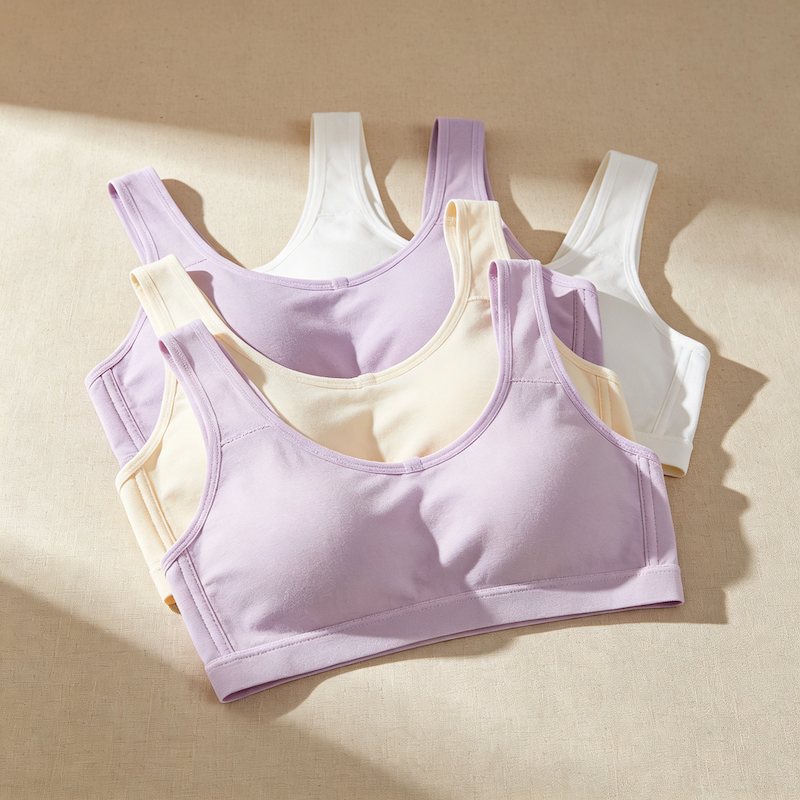
For a child between 8 and 12, the shift from non-padded to a first bra is a physical and emotional milestone. The last thing that developing skin needs is a scratchy side seam, a stiff tag, or a fabric that irritates after two washes. That is why “seamless” — known in China as boneless construction — has become the default expectation for training bras sold into the US and EU.
This article walks B2B buyers through exactly how a seamless training bra is made in our Zhongshan facility, and why each step matters for the brands that private-label or OEM them.
Why “Seamless” Matters for Children’s Skin
A conventional bra is cut from flat fabric and sewn at the side, creating a raised seam that sits directly against the torso. For adults that is tolerable; for a child wearing the garment 10+ hours a day, it becomes a friction point. Seamless knitting removes that seam entirely by forming the cup and body in one piece on a circular knitting machine. No side seam, no rub, no red marks.
Step 1 — Yarn & Fabric Selection
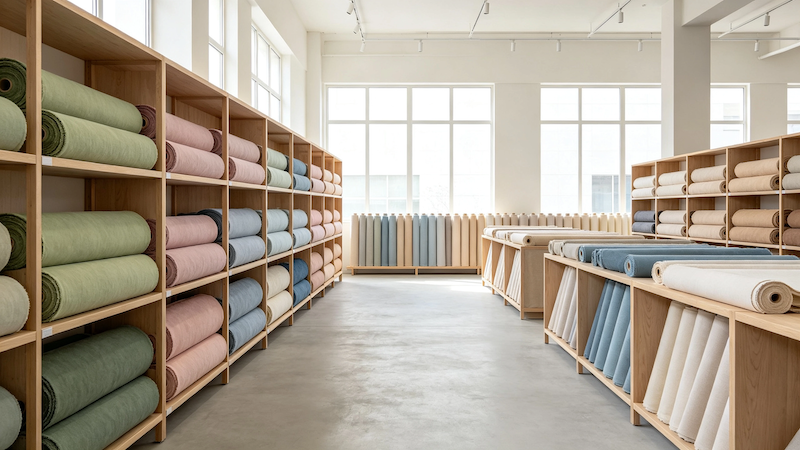
It starts with the fibre. For training bras we typically work with:
- High-count combed cotton — breathable, soft-hand, and the base for most A-Class skin-contact garments.
- Bamboo viscose blends — moisture-wicking, ideal for active pre-teens.
- Modal — smooth drape, popular for the “quiet luxury” pastel looks trending in 2026.
All fabrics are sourced from traceable mills and can be supplied with certification documentation on request. Our eco-textile compliance is advancing through OEKO-TEX Standard 100 certification (In Progress).
Step 2 — One-Piece Seamless Knitting
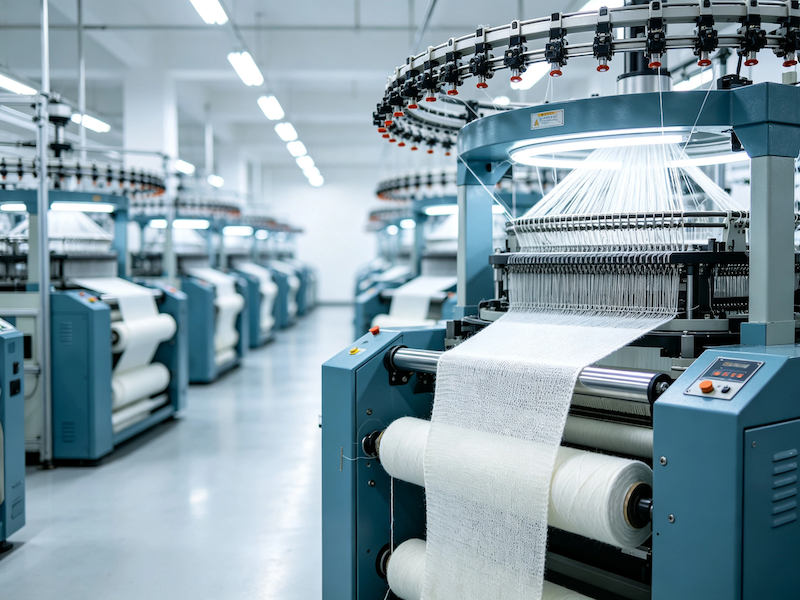
The body and cup are knitted in a single operation on computerized circular knitting machines. This is the core of boneless construction: the garment emerges from the machine as a near-finished tube, with the cup shaping built into the knit structure rather than cut and sewn later. The result is a smooth interior with zero side seams.
Step 3 — Bonding Instead of Sewing
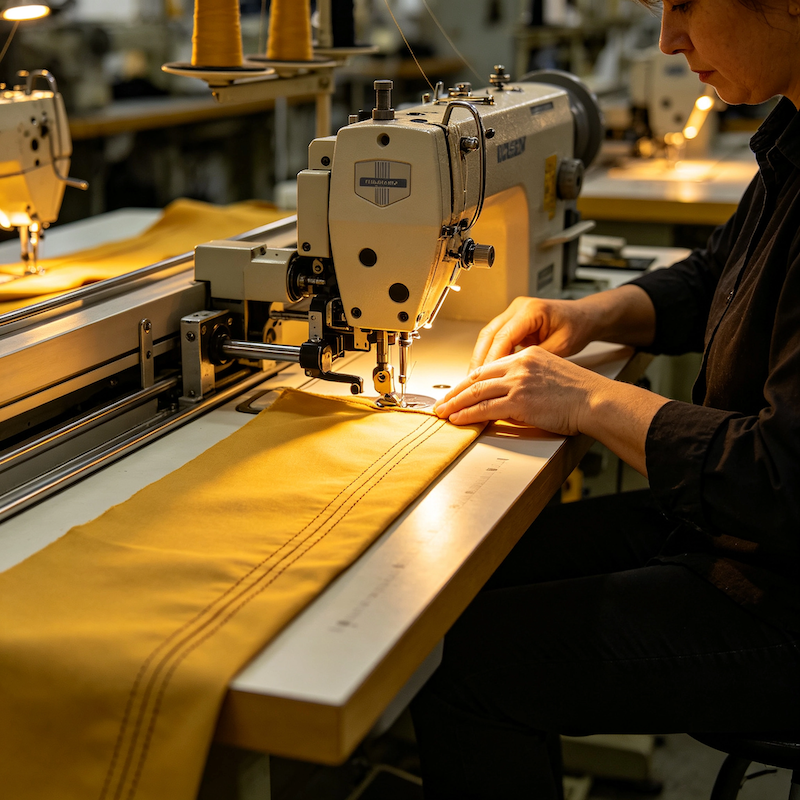
Where a conventional bra needs stitched joins, seamless training bras use heat-bonded or ultrasonic-welded seams at the straps and underband. This keeps the interior completely flat. For buyers, the quality signal is simple: turn the bra inside out — if you see no raised thread at the side, it is genuinely seamless.
Step 4 — Tag-Free Labeling
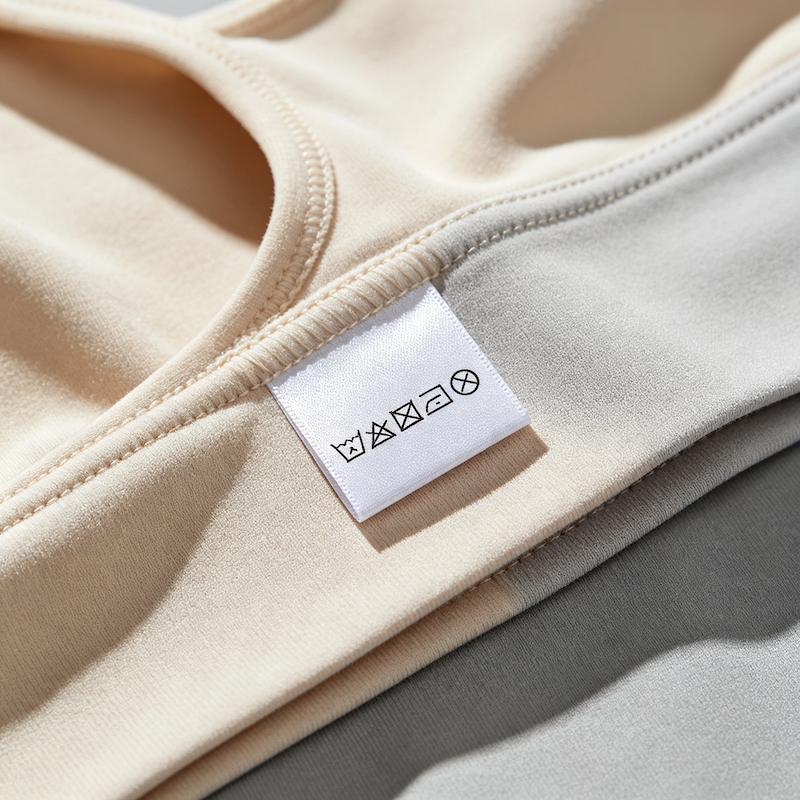
Care information is printed directly onto the fabric with skin-safe ink rather than sewn as a woven tag. No tag means no itch point at the back of the neck or along the side. This is one of the cheapest upgrades a brand can request and one of the highest-impact for child comfort.
Step 5 — Custom Dyeing to Pantone
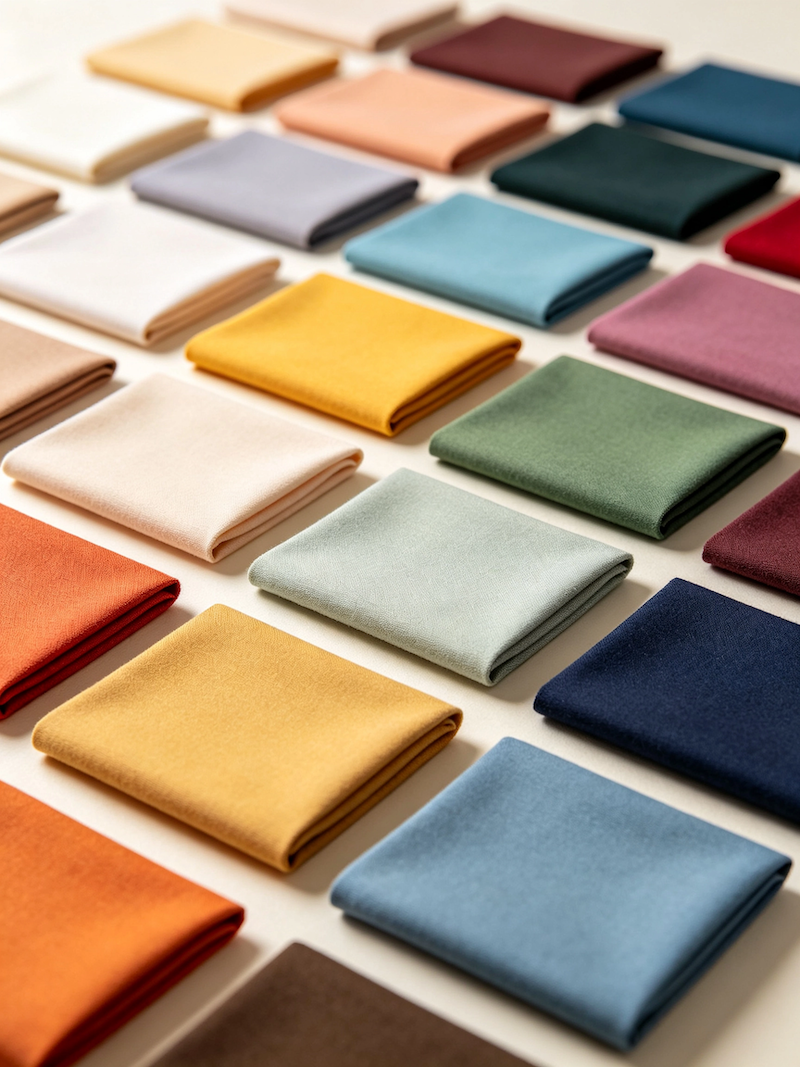
Because we run in-house dyeing, a buyer can match a seasonal colour story exactly — from lavender training bras to botanical-print capsules — to a Pantone reference. Small-batch dye lots are supported, which is what makes low-MOQ colour testing viable.
Step 6 — Inspection Against Skin-Contact Safety Standards
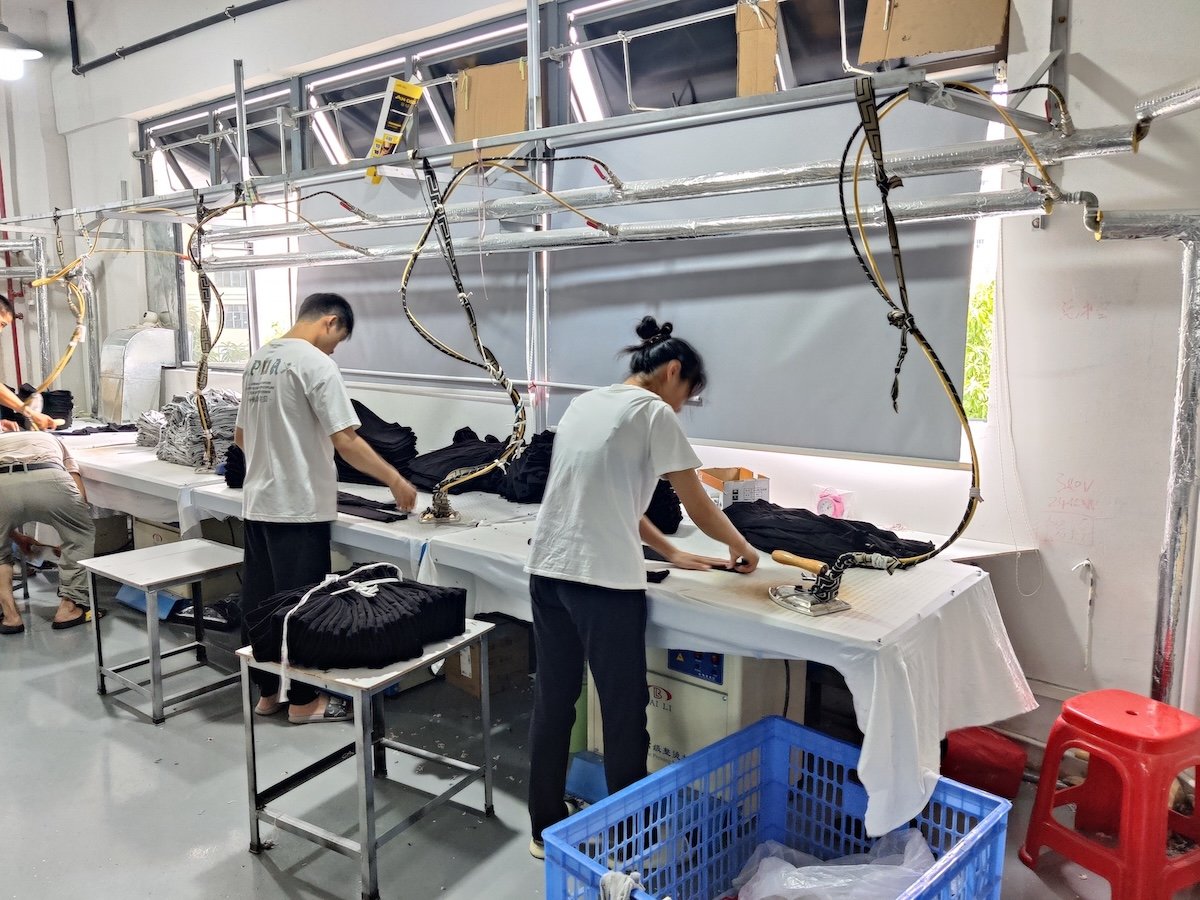
Every skin-contact line is built to meet the strictest applicable safety classes. At Nuohua we produce against:
- GB 31701 Class A (Infant Grade A) — the strictest Chinese safety class for skin-contact garments, covering formaldehyde, pH, and dye limits.
- CPC (Children’s Product Certificate) — required for the US market.
- Independent verification by SGS, TÜV SÜD, and Intertek — third-party proof, not self-claim.
OEKO-TEX Standard 100 is currently In Progress as we advance eco-textile compliance.
Step 7 — Packing & Private Label
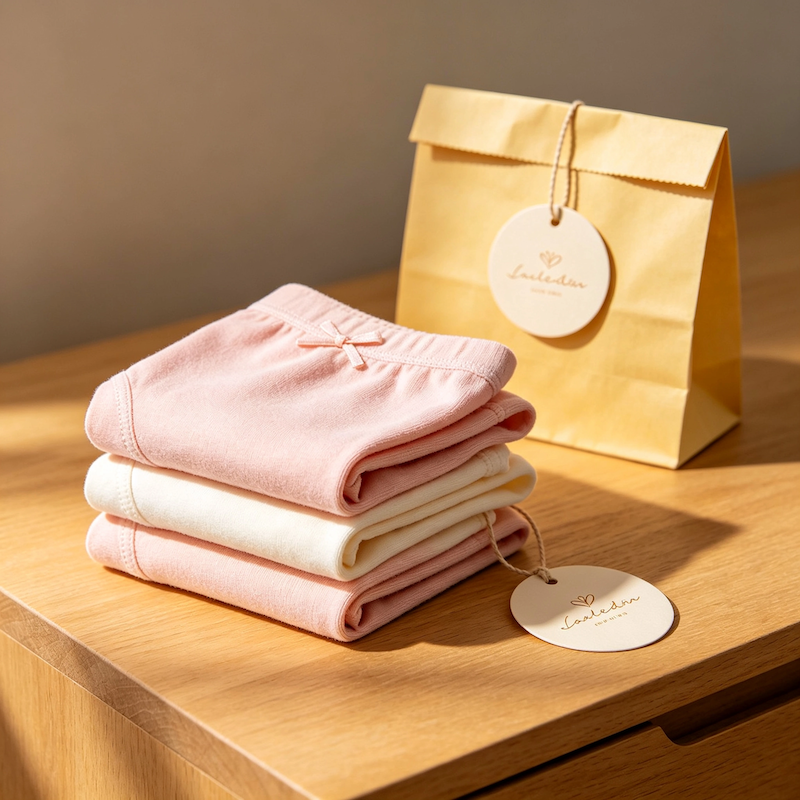
Finished pieces pass pressing, final inspection, and folding before packing. Private-label options include custom neck tags, hangtags, and compostable poly bags — all produced under one roof to keep lead time short.
What This Means for Your Brand
For a private-label or OEM buyer, the seamless process translates into three commercial advantages:
- Lower return risk — comfort complaints drop when there is no seam to irritate.
- Premium positioning — “seamless, tag-free, A-Class” is exactly the certified-comfort story 2026 buyers pay for.
- Low entry barrier — our MOQ is 100 pcs per style / colour, so you can test a seamless line before scaling.
Frequently Asked Questions
What does “seamless” actually mean in manufacturing?
It means the garment body is knitted in one piece on a circular machine rather than cut and sewn, eliminating side seams. In China it is called boneless construction.
Can I get a seamless training bra certified to US standards?
Yes. We build every skin-contact line to GB 31701 Class A and support CPC documentation for the US market, with production verified by SGS, TÜV SÜD, and Intertek.
What is the minimum order for a custom seamless line?
100 pcs per style / colour, with full customization of size, fabric, colour, and private label.
Ready to Start Your Seamless Line?
We are a Zhongshan-based OEM/ODM manufacturer with 10+ years of export experience and a monthly capacity of 1,000,000+ pcs across all lines and a defect rate under 0.3%. Explore OEM Kids Clothing → or Request a Factory Tour →