From Tech Pack to Delivery: How a Kids’ Underwear Order Is Made
The real kids underwear OEM process, step by step — from tech pack and INA smart hanging to 6 QC checks, needle detection, AQL, and 48-hour spot-stock shipping.
A lot of factory websites describe their process in three vague words: “design, produce, ship.” That tells you nothing. Below is the actual sequence a compliant kids’ underwear order follows at a verified low-MOQ mill (Nuohua Garment) — the same steps that protect your CPC paperwork and your delivery date.
Step 0 — The Tech Pack (your blueprint)
Everything starts with a complete tech pack:
- Flat sketch (front/back), measurements per size (90–160 cm),
- Fabric spec (100% combed cotton 40S, GSM, composition),
- Trim list (elastic, label, tag, snap/button),
- Print placement, color standard, and packaging.
A weak pack = re-sampling. A complete pack = usually 1–2 rounds. → Build your pack
Step 1 — Quote & MOQ Confirmation
- MOQ from 2 pcs on selected in-stock styles (ready stock) confirmed.
- Quote breaks out sampling, fabric, CMT, trim, test, and freight.
- Lead time stated in writing (bulk 15–30 days; spot-stock 48h).
Step 2 — Proto Sample & Approval
A physical sample is made to your pack. You check fit, hand-feel, print, and stitch. Approval unlocks bulk. Sampling fees are typically refunded on first PO.
Step 3 — Material Preparation & Certification
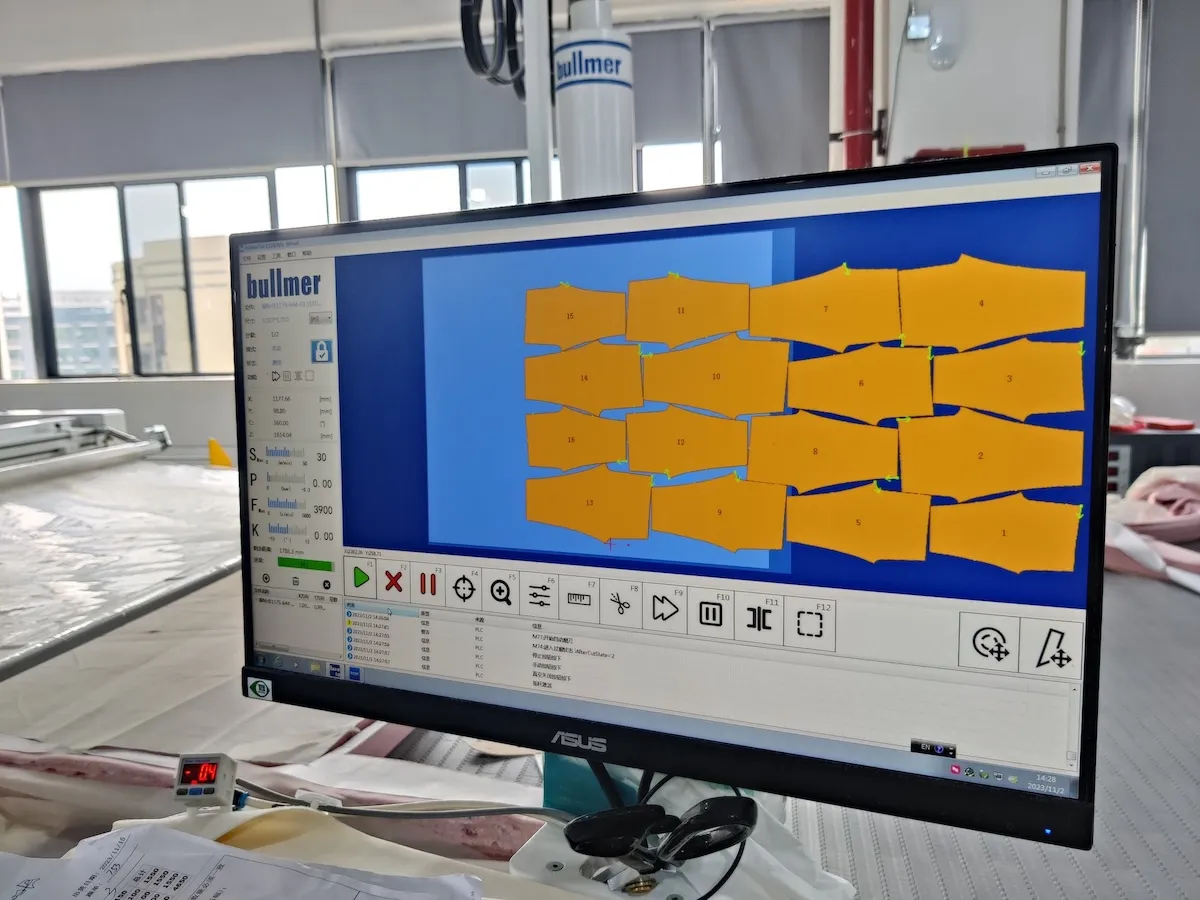
- Fabric and trims received and verified against spec.
- For US-bound: the CPC test plan is set with a CPSC-recognized lab (EQ-T, Lab ID 1693). GB 31701 Class A applies for skin-contact compliance.
- No compliant cert plan = no bulk cut. This is the line most careless mills cross.
Step 4 — Pattern, Grading & Cutting
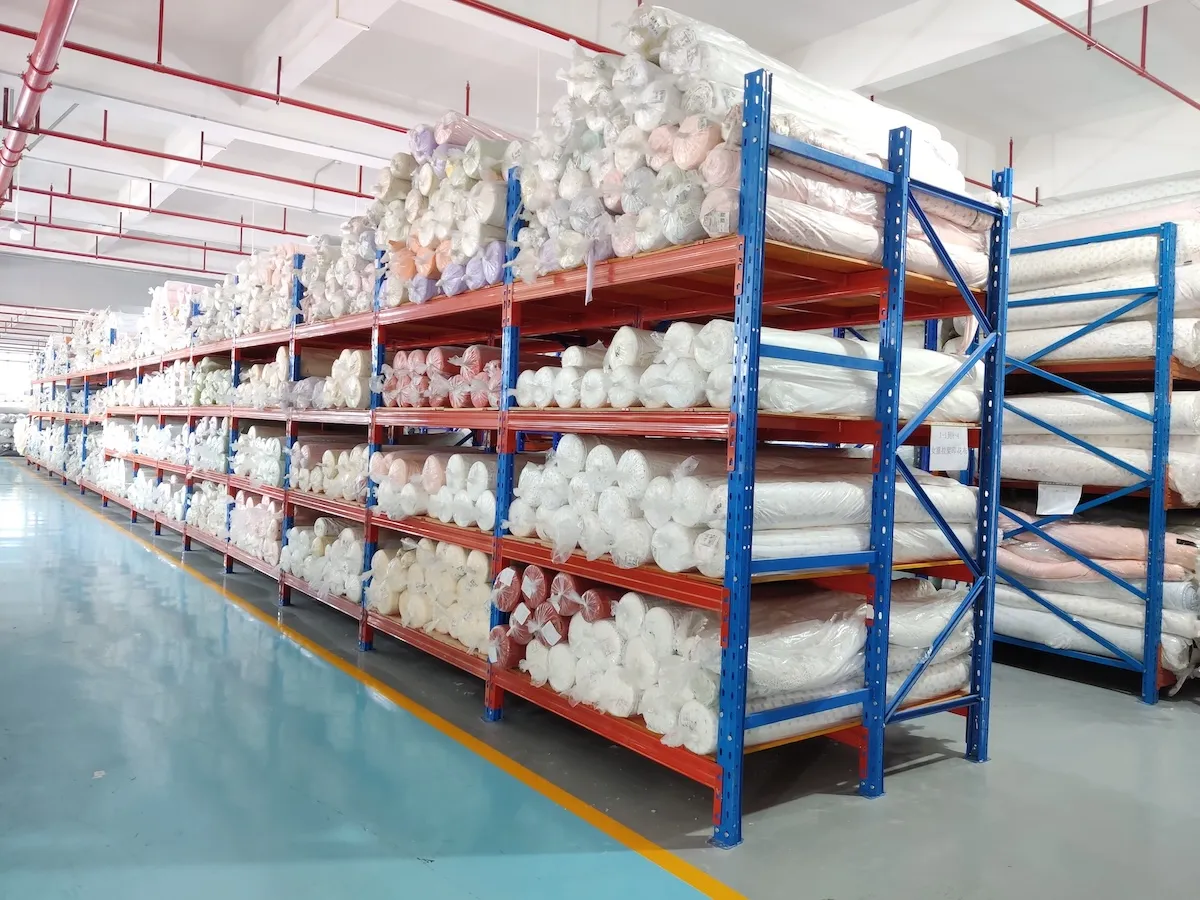
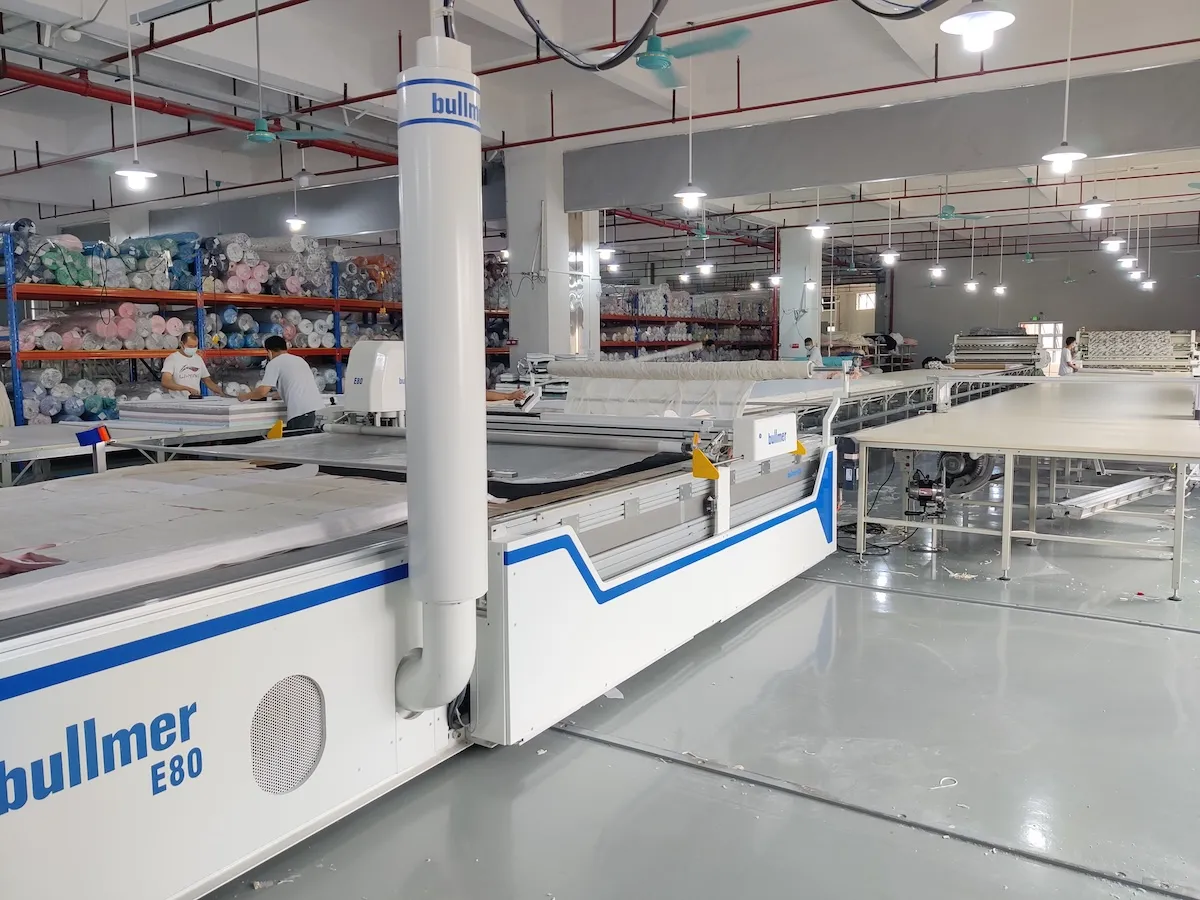
Patterns graded across 90–160 cm. Lay-plan optimized to reduce waste. CNC/auto spreading where available. Cut panels tagged by lot for traceability.
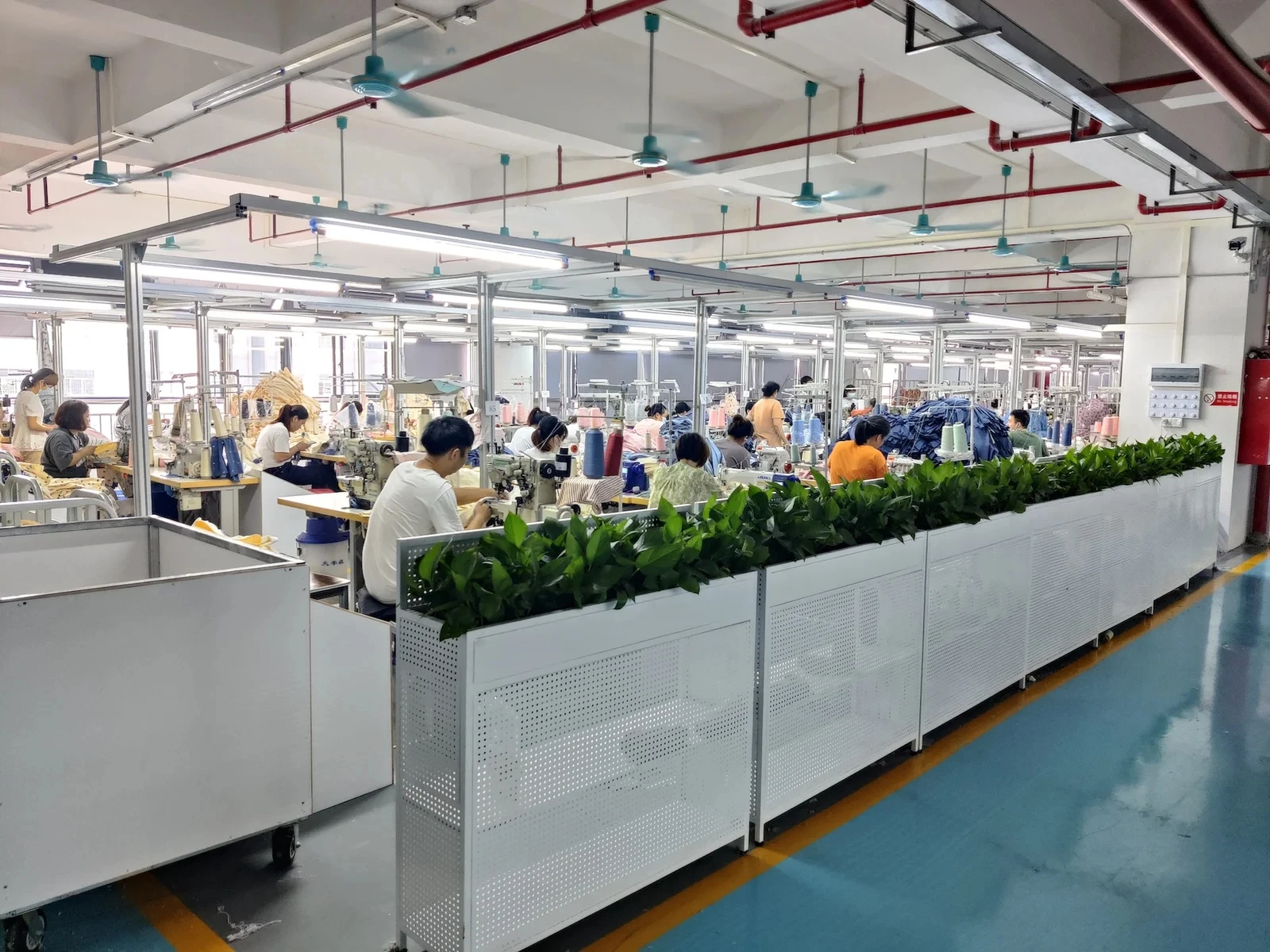
Step 5 — INA Smart Hanging System (the floor advantage)
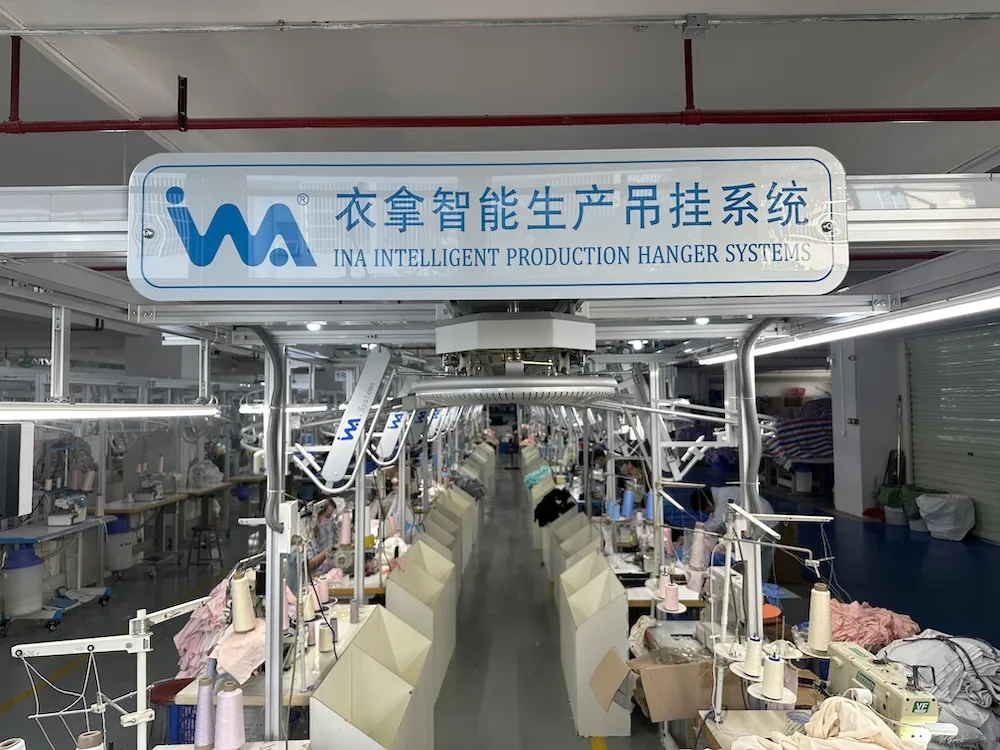
Instead of piles on the floor, garment parts move on the INA Smart Hanging System — a real, in-use line balancing system. Benefits you care about:
- Wrinkle-free transport between stations,
- Traceable unit flow (which line, which operator),
- Less handling = fewer defects.
This is a genuine differentiator versus open-bench mills. Ask any factory whether they run a hanging system or floor stacking.
Step 6 — Sewing & Inline QC (Check 1–4)
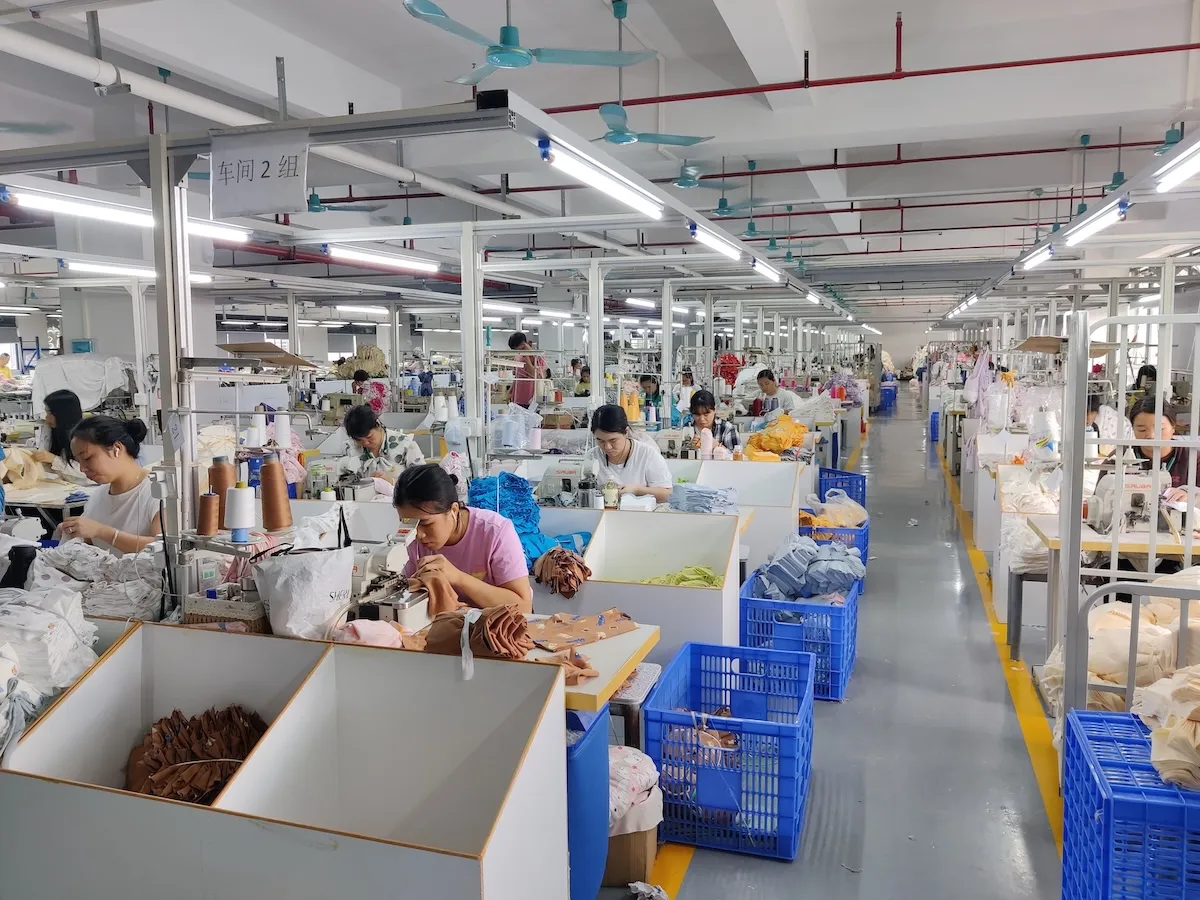
Operators sew with 4-needle 6-thread flatlock and label/trim application. Inline QC happens at 4 checkpoints, not just at the end:
- After cutting (panel defect),
- During sewing (stitch/flatlock),
- After trimming (label position),
- Before finishing (fit/size).
Step 7 — Finishing & Needle Detection (Check 5)
Every finished piece passes a dedicated needle-detection machine — critical for kids’ apparel (broken-needle risk). Units flagged are pulled. This is Check 5 of 6.
Step 8 — Final Inspection & AQL (Check 6)
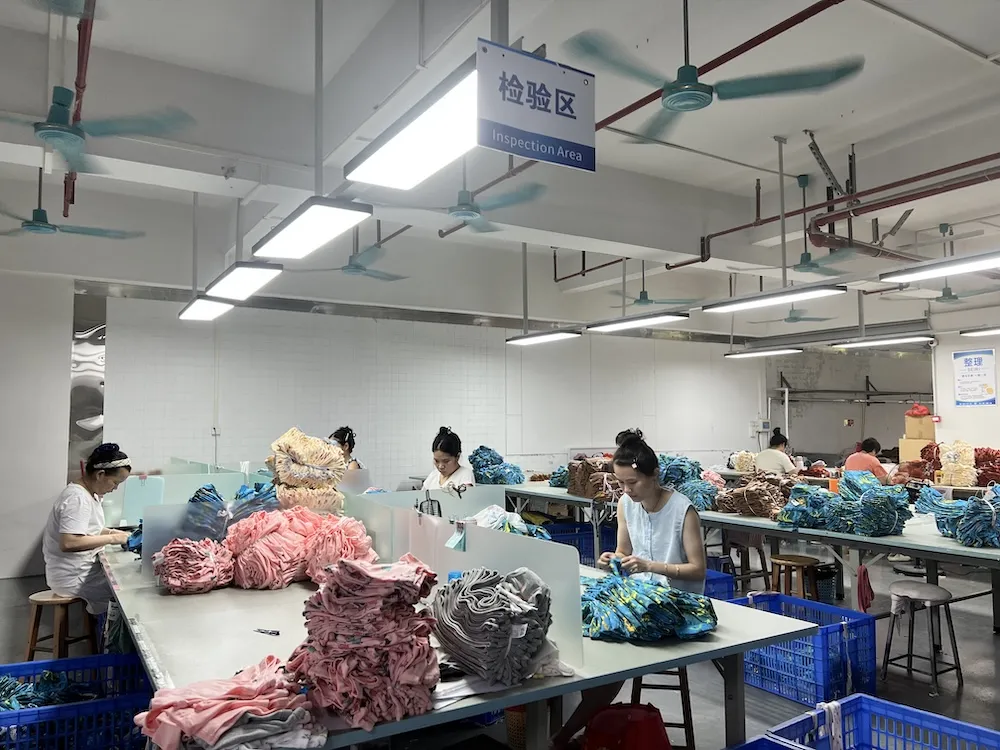
A final QC pulls a statistical sample per ANSI/ASQ Z1.4 (AQL 2.5) and verifies:
- Size/measurement tolerance,
- Print alignment,
- Label/care-tag correctness,
- Packaging per your spec.
Documented defect rate target: under 0.3%. You receive the report pre-shipment.
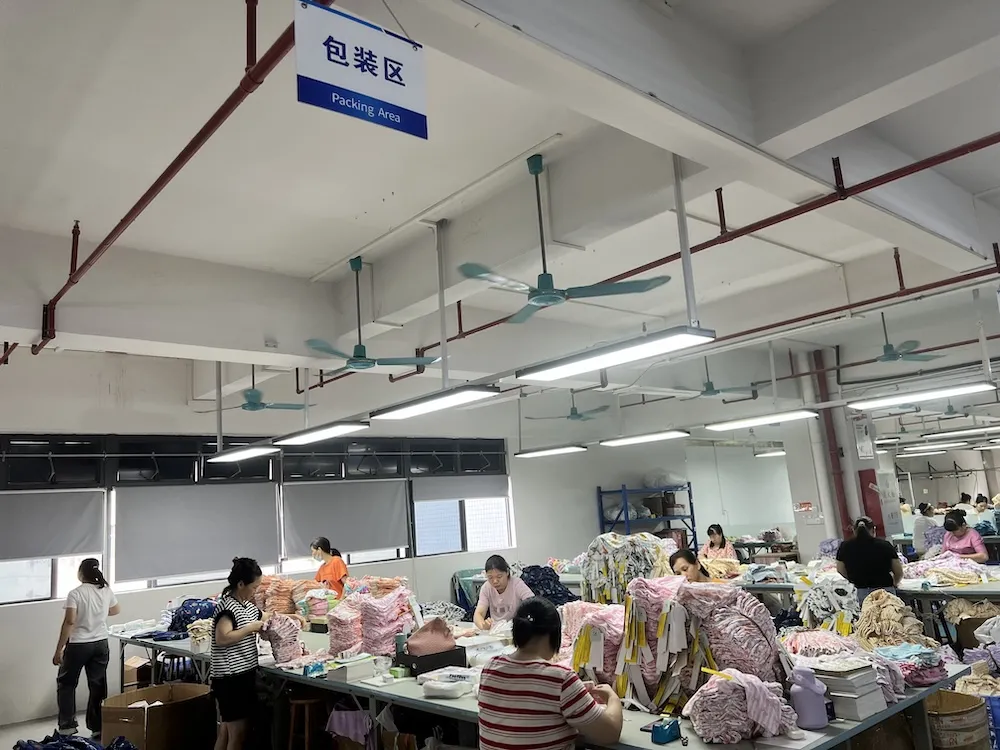
Step 9 — Pressing, Fold & Pack
Units pressed, folded, polybagged with your custom woven label + care tag + hangtag. Cartons built to your shipping standard (or Amazon FBA ready).
Step 10 — Spot-Stock or Made-to-Order Ship
- Spot stock: existing styles ship in 48 hours.
- Made-to-order: 15–30 days after approval, then EXW/FOB/CIF per Incoterm.
- Full CPC + test report pack handed over with the shipment.
The 6 QC Checks at a Glance
| # | Stage | Catches |
|---|---|---|
| 1 | Cutting | Panel flaws, wrong fabric |
| 2 | Sewing | Stitch, flatlock, seam |
| 3 | Trimming | Label place, print |
| 4 | Pre-finish | Fit, size |
| 5 | Needle detect | Broken-needle risk |
| 6 | Final AQL | Overall compliance |
Red Flags If a Factory Can’t Describe This
- “We just make and ship” (no inline QC),
- No needle-detection machine for kids’ wear,
- No named CPC lab / Lab ID,
- Refuses a pre-shipment AQL report,
- Cannot state MOQ in writing.
Why This Process Protects Your Brand
Every step above is a checkpoint that stops a non-compliant or defective unit before it reaches your customer — and before it reaches US Customs. A transparent process is not a nice-to-have; it is your insurance.
—
Frequently Asked Questions
Q1: How many QC checks should a kids’ underwear factory do?
At least inline + final, but best practice is 5–6 staged checks. Nuohua runs 6 (cutting, sewing, trim, pre-finish, needle detection, final AQL) with a defect target under 0.3%.
Q2: What is the INA Smart Hanging System?
A real, in-use line-balancing conveyor that moves garment parts between stations wrinkle-free and traceably. It reduces handling defects versus floor-stacked benches.
Q3: Is needle detection really required for kids’ wear?
Not a written US law for all items, but it is industry-standard risk control for children’s apparel (broken-needle injury). A compliant mill runs a dedicated needle detector on every piece.
Q4: What AQL level is standard for kids’ apparel?
ANSI/ASQ Z1.4 AQL 2.5 for major defects is the retail norm. Some brands use 1.5 for kids. Confirm your accepted level in the PO.
Q5: How long from tech pack to delivery?
Sampling 7–10 days; bulk 15–30 days after approval; spot-stock reorders 48 hours. Total first order typically 4–6 weeks door-to-port depending on freight.
Q6: What documents ship with my order?
CPC (CPSC-recognized lab), test report, packing list, commercial invoice, and AQL report. For China dual-market, GB 31701 Class A report too.
Q7: Can I request a live factory view of the process?
Yes — verified mills offer video tours of the hanging line, QC, and needle detection. Always request before bulk.
Q8: What is the MOQ for this full process?
2 pcs on selected in-stock styles, colors and sizes on stock-fabric programs — the process above runs identically at low MOQ, not just at volume.
Q9: Do you support custom prints in this workflow?
Yes — your artwork or the mill’s 3,000+ print library is applied at the trim/print stage, verified at Check 3.
Q10: What Incoterms are supported?
EXW, FOB, and CIF are typical. Confirm in the quote so freight/duty responsibility is clear.
Start Your Order With a Verified Process
Send your tech pack and MOQ — we confirm sampling, CPC plan, and lead time in writing before any cut.
Nuohua Garment | Email: info@nuohuagarment.com | WhatsApp: +8615011985393 | nuohuagarment.com