
Kids Underwear Fabric Guide: Pick the Right Fabric for Every Style, Age & Season
A kids underwear fabric guide written from the factory floor — which fabric actually fits boxer briefs, triangle briefs, pajama sets, thermal layers and training bras, matched to age group and season. No marketing fluff, just what a brand buyer should specify.
Every week a brand buyer asks us the same question: “What is the best fabric for kids’ underwear?” The honest answer is that there is no single best fabric — there is a best fabric for each job. Boxer briefs, pajama sets, thermal layers and training bras put completely different demands on a knit. Age group and season change the answer again.
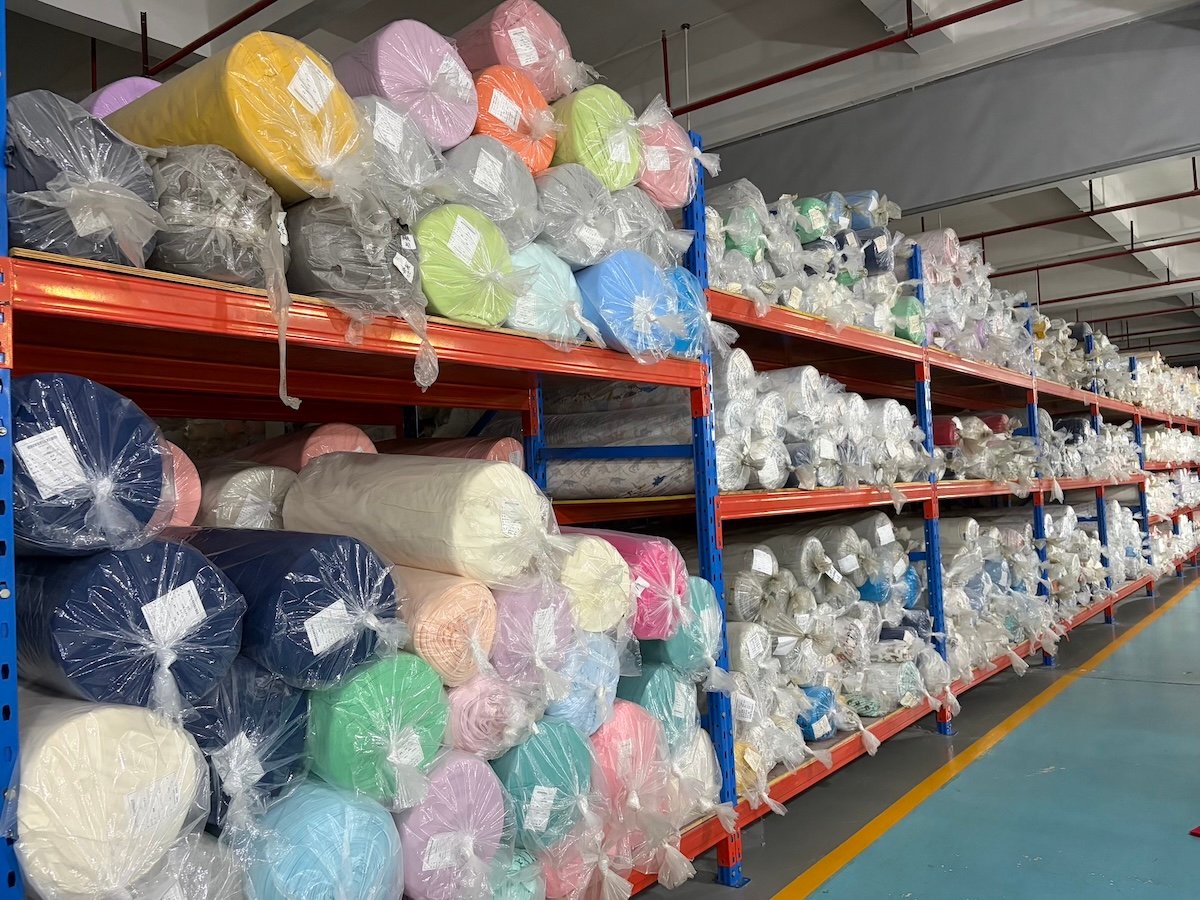
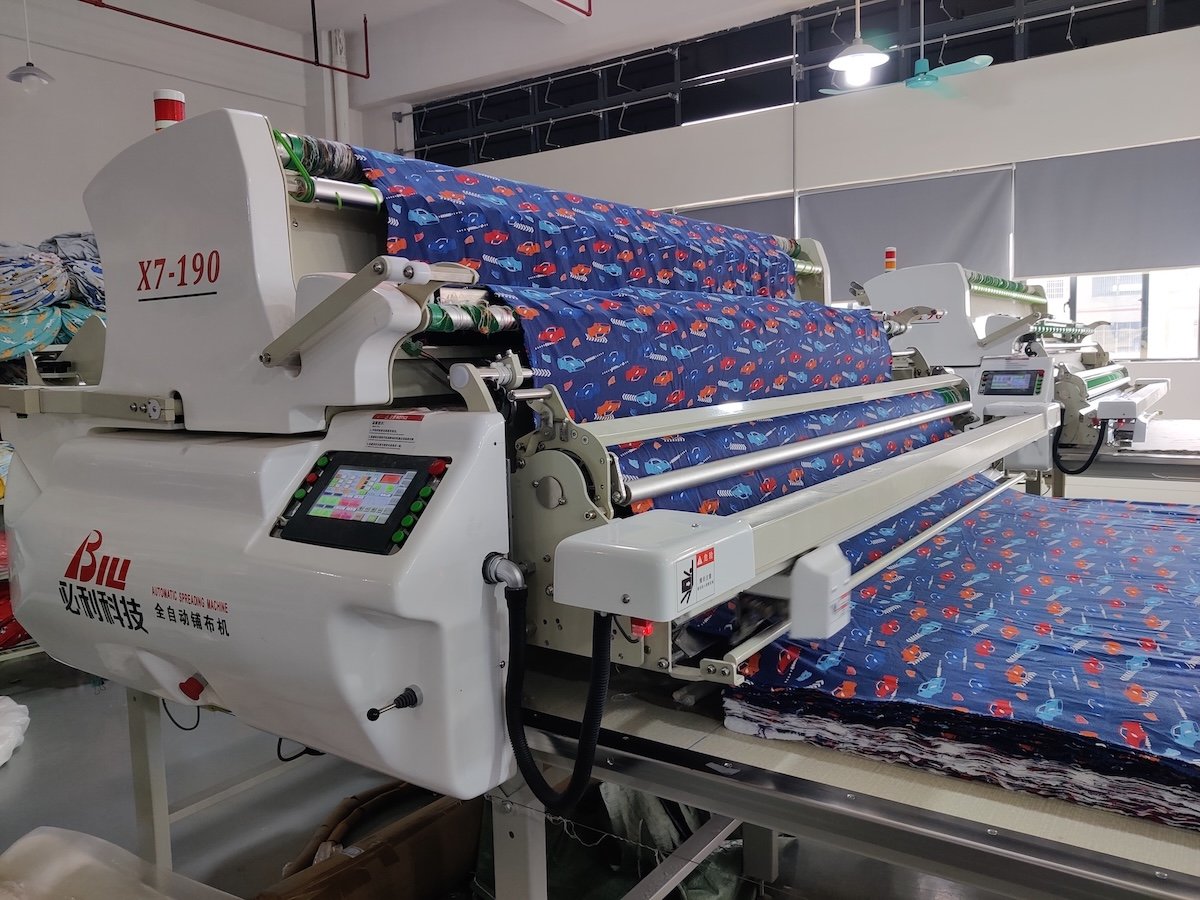
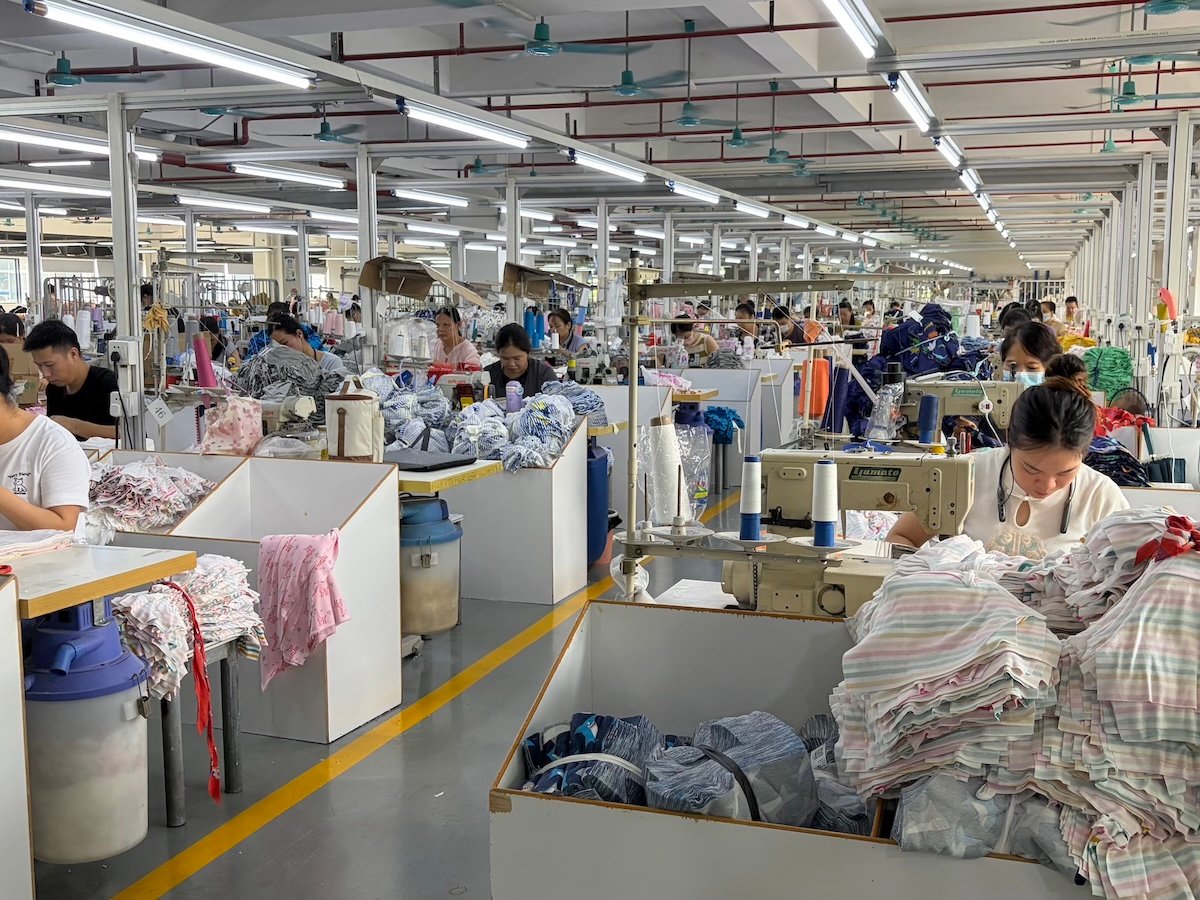
This guide is a decision index: for each product type, we tell you the fabric we actually cut, why, and what it costs in performance terms. Where a topic deserves a deeper dive, we link to the full article. Everything below is produced in our own 8,000 m² facility with 300+ workers and 1,000,000 pcs monthly capacity.
The Short Answer: Match Fabric to Product Type
| Product Type | Recommended Fabric | Why (2-Second Version) | Deep Dive |
|---|---|---|---|
| Boxer Briefs / Briefs (everyday) | 100% Combed Cotton or 95/5 Cotton-Spandex | Soft, breathable, durable; spandex adds recovery for active fit | Combed Cotton vs Cotton-Spandex |
| Triangle Briefs (girls) | Combed Cotton (5A or 10A grades) | Smooth against skin, prints hold color, easy wash | Combed Cotton deep dive |
| Pajama Sets / Sleepwear | 100% Combed Cotton 40S (snug-fit) or EcoCosy®/Modal | Cotton = CPC-friendly snug-fit; cellulosic = softer drape | Best Pajama Fabrics |
| Thermal Base Layers | Brushed Cotton-Spandex (280 gsm double-brushed) | Traps warmth, soft interior, no itch on skin | See product line below |
| Training Bras / Camisoles | EcoCosy® Modal or Rayon-Spandex (seamless) | Smooth, moisture-managing, gentle on developing skin | Modal vs EcoCosy® |
| Bamboo Lines (teen / adult) | Bamboo Viscose blends | Silky, cool, naturally breathable — teen segment | Bamboo Fabric Guide |
If you only remember one rule: cotton for everyday wear, cellulosic (Modal/EcoCosy®) for premium softness, brushed cotton for cold seasons. The table above is the full decision matrix we use internally when a buyer walks in with a sketch.
1. Everyday Innerwear: Combed Cotton vs Cotton-Spandex
For boxer briefs, briefs and triangle briefs, cotton is the default — but “cotton” covers two very different fabrics. 100% Combed Cotton uses longer-staple fibers (the combing process removes short fibers and impurities), giving a smoother, softer, more durable knit. 95% Cotton / 5% Spandex adds ~5% stretch for shape recovery — the fabric bounces back after pulling on, which kids’ active-wear demands.
What we see in practice: 100% cotton briefs run cooler and more breathable for summer and younger kids; the cotton-spandex blend keeps fit through the school day and suits boxer briefs, which need to stay in place under trousers. Our 5A and 10A antibacterial grades are available on both — a supplier-level treatment you can spec in your tech pack.
2. Sleepwear: Cotton 40S vs EcoCosy® / Modal
Pajama sets have a different job than underwear: they sit against skin for 8-10 hours, so breathability and softness beat stretch. Two fabrics dominate our pajama line:
- 100% Combed Cotton 40S (snug-fit): the workhorse. Breathable, absorbent, CPC-friendly for the US, easy to print with our 3,000+ stock patterns. Costs less per set than cellulosic options.
- EcoCosy® / Modal: a regenerated cellulosic fiber from FSC/PEFC-certified wood pulp. Buttery-smooth, moisture-managing, and it stays soft wash after wash. Premium positioning, licensed hangtag available.
Season matters here too: cotton for warm nights and year-round basics, modal/EcoCosy® for the premium soft-claims brands and transitional seasons. See the full comparison in our pajama fabric deep dive and the Modal vs EcoCosy® article.
3. Thermal Layers: Brushed Cotton Wins
For thermal base layers (tops, leggings, pajama sets for cold months), we cut 95% Cotton / 5% Spandex at 280 gsm, double-side brushed. The brushing raises a soft nap on both sides — the inside sits warm and non-itchy against skin, the outside holds warmth. The 5% spandex keeps the layer hugging the body (heat-trapping), and the heavier GSM gives real insulation in 0°C-15°C / 32°F-59°F weather.
If you are building a cold-season capsule, pair a brushed cotton top with brushed leggings in the same fabric — one fabric spec, one color run, simpler inventory.
4. Training Bras & Camisoles: Smooth Is Everything
Developmental innerwear (training bras, camisoles, modest daily-wear bras) needs zero seams that dig in and fabrics that manage moisture without feeling damp. Two constructions we run:
- EcoCosy® Modal blends — silky smooth, breathable, gentle on developing skin. Premium positioning for tween lines.
- Rayon-Spandex seamless knit — one-piece seamless construction, four-way stretch, no underwire, no rigid side seams. The entry-to-mid tier seamless option.
Both skip the wiring and bones entirely — a must for first-time bra wearers. Spec a smooth, tagless, seamless construction and your QC will thank you.
5. Age Group: How the Answer Changes
Baby / Toddler (0-3)
100% cotton, softest grades. Skin is most sensitive; prints should be water-based and AZO-free. GB 31701 Class A baseline.
Kids (4-9)
Cotton or cotton-spandex for active play. Durability and easy wash matter most; stock prints speed up sampling.
Tween (10-13)
Transition zone: modal/EcoCosy® for softness, cotton-spandex for fit, seamless for training bras. Both fibers work — match to brand story.
Teen (14+)
Bamboo viscose and modal for premium comfort; performance blends for sports. See our bamboo guide.
6. Season: One More Dimension
- Spring / Summer: 100% cotton (coolest) or bamboo viscose / modal for moisture management. Lighter GSM (150-165 gsm).
- Autumn / Winter: brushed cotton 280 gsm for thermal layers; cotton jersey for everyday under trousers.
- Transitional: modal/EcoCosy® bridges both — soft and breathable without being heavy.
7. Compliance: What the Fabric Must Carry
Fabric choice interacts with compliance in one big way: snug-fit cotton sleepwear avoids flame-retardant treatment for the US, while loose-fit styles need FR treatment. That single decision can swing your per-unit cost by US$0.20-0.50. Plan fabric and fit together.
How to Spec It in Your Tech Pack (Copy-Paste)
Product: Kids boxer briefs (3-pack) | Fabric: 95% Combed Cotton / 5% Spandex, 40S, 165 gsm | Gusset: same grade | Antibacterial: 5A supplier grade | Prints: stock library or custom | Compliance: GB 31701 Class A + CPC (EQ-T Lab 1693) | MOQ: from 2 pcs on selected in-stock styles, colors and sizes (stock-fabric programs)
Frequently Asked Questions
Q1: What is the best fabric for kids’ underwear?
There is no single best — match to product. Everyday briefs: 100% combed cotton or 95/5 cotton-spandex. Sleepwear: cotton 40S or EcoCosy®/Modal. Thermal: brushed cotton 280 gsm. Training bras: seamless rayon-spandex or modal.
Q2: Is 100% cotton or cotton-spandex better for kids’ boxer briefs?
100% cotton runs cooler and simpler; the 95/5 blend keeps fit through the school day and suits active play. For boxer briefs under trousers, most brands choose the blend.
Q3: What is EcoCosy® and why is it different from regular modal?
EcoCosy® is a licensed, traceable modal made from FSC/PEFC-certified wood pulp with chain-of-custody documentation and an authorized hangtag. Generic modal cannot prove its source. Full detail: Modal vs EcoCosy®.
Q4: Which fabric is best for kids’ pajamas in the US market?
100% combed cotton 40S snug-fit — it avoids flame-retardant treatment cost while meeting CPC. Premium lines use EcoCosy®/Modal for softness. See pajama fabric guide.
Q5: What is bamboo fabric, and can I use it for kids?
Bamboo fabric is bamboo viscose — a regenerated fiber, not raw bamboo fiber. We offer bamboo viscose blends mainly for teen/adult lines. More: bamboo guide.
Q6: What GSM should kids’ underwear fabric be?
Everyday cotton knits: 150-165 gsm. Thermal brushed knits: 280 gsm. GSM is a spec decision tied to season and price point — we cut to your target.
Q7: Do I need CPC testing for every fabric I use?
Testing is per fabric/style construction; some colorways share a cert. Ask the lab (e.g., EQ-T, CPSC Lab ID 1693) which combinations are covered.
Q8: What does 5A / 10A antibacterial grade mean?
5A and 10A are supplier-level antibacterial grades available on cotton knits. They are a spec option you can add — not a certification on its own. Specify in your tech pack if needed.
Q9: What is the minimum order quantity for custom kids’ underwear?
MOQ is from 2 pcs on selected in-stock styles, colors and sizes on stock-fabric programs; custom runs (custom colour or new fabric development) are quoted separately, per fabric and colour. Sampling is available first — usually 7-10 days, then bulk in 15-30 days.
Q10: Can I use stock prints to save cost?
Yes — our library holds 3,000+ patterns. Stock prints skip engraving and strike-off costs and cut sampling time. Custom prints are welcome too.
Get a Fabric-Matched Quote
Send us your product type, age range and season — we will recommend the fabric and quote sampling + bulk.
Nuohua Garment | Email: info@nuohuagarment.com | WhatsApp: +8615011985393 | nuohuagarment.com