
A fabric comparison based on specifications, not marketing labels.
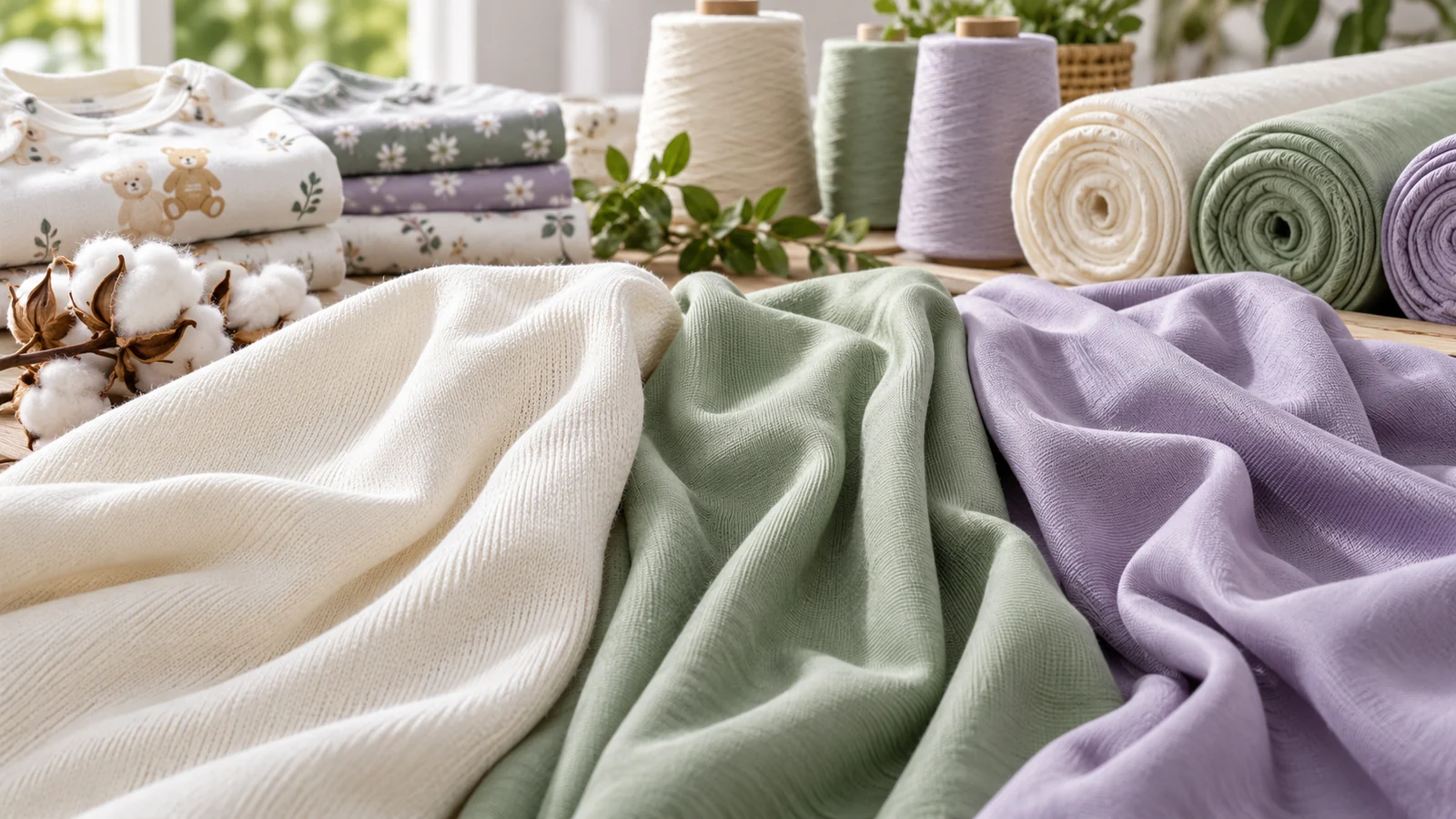
This kids pajamas fabric comparison evaluates cotton, bamboo-derived viscose and modal using testable specifications rather than marketing claims.
“Which fabric is best for kids’ pajamas?” is the wrong first question for an OEM buyer. A better one is: Which verified fiber and knit specification will deliver the fit, price point, durability and consumer experience required by our collection? Cotton, bamboo-derived viscose and modal can all feel soft, but their handling, labeling and supply-chain characteristics differ.
On this page
- 1. Understand what each fiber name actually means
- 2. Kids pajamas fabric comparison table for sourcing teams
- 3. Compare like with like
- 4. Why GSM is useful but insufficient
- 5. Measure stretch and recovery on the finished garment
- 6. Review chemical and sustainability claims carefully
- 7. Plan sampling for all three options
- 8. Choose the fabric that makes repeat orders predictable
- Request a laboratory and wash-performance comparison
- Evaluate supplier substitutions with change control
- Write a fabric brief that prevents vague quotes
- Frequently asked questions
1. Understand what each fiber name actually means
Cotton is a natural cellulose fiber. Combed cotton can provide a smooth yarn surface, but comfort and durability still depend on yarn, knitting, processing and garment construction. Modal is a regenerated cellulose fiber made using a defined industrial process and often blended with elastane or cotton. Bamboo-derived viscose/rayon is regenerated cellulose whose plant source may be bamboo; it is not the same as mechanically processed natural bamboo fiber.
The distinction matters in the US because the FTC specifically warns against labeling rayon made from bamboo simply as “bamboo”. Request the manufacturer’s fiber content evidence and correct generic labeling names rather than copying a competitor’s product title.
2. Kids pajamas fabric comparison table for sourcing teams
| Purchase criterion | Cotton jersey | Viscose/rayon made from bamboo | Modal / modal blends |
|---|---|---|---|
| Typical feel | Familiar, breathable, can be structured or soft | Often smooth, fluid and cool-feeling | Often smooth, soft and drapey |
| Fit potential | Stable with suitable construction; stretch via knit or elastane | Drape may require attention to stretch and recovery | Often used for soft drape; elastane changes recovery |
| Wash risk to test | Shrinkage, twist, dye fastness | Wet dimensional stability, pilling, recovery | Shrinkage, pilling, surface change |
| Specification priority | Yarn, knit, GSM, finishing | Generic fiber name, blend, wet processing | Fiber origin/brand claim, blend, knit |
| Marketing claim caution | “Organic” requires substantiation | Avoid unqualified “natural bamboo” claims | Do not imply a branded fiber without supply evidence |
This table is a starting point, not a substitute for technical data. Two samples called “modal pajamas” may behave very differently if one is lightweight single jersey and the other is a dense rib knit.
3. Compare like with like
A useful comparison controls the variables. Request samples at similar fabric weights and silhouettes, then measure hand feel, opacity, pilling, shrinkage and recovery using documented tests. A 150 GSM lightweight viscose knit and a 220 GSM cotton rib are not a meaningful fiber-only comparison.
Ask for the exact fiber percentages, textile test report scope, fabric width, dye lot, GSM and shrinkage limits. For new prints, request a strike-off and wash comparison before locking colorways. Keep the lab method and conditions consistent between suppliers when possible.
4. Why GSM is useful but insufficient
GSM means grams per square meter and helps describe fabric mass. It does not tell you whether the fabric is dense or open, brushed or smooth, stretchy or rigid. For a two-piece pajama set, evaluate weight together with knit type, sleeve/leg length, size range and intended climate. A lightweight summer short set and a brushed winter set require different benchmarks.
Rather than stating an arbitrary “best GSM,” write your target as a range to be validated against your prototype. Confirm whether your price quotation applies to finished fabric weight after processing, since shrinkage and finishing can change material consumption.
5. Measure stretch and recovery on the finished garment
Fit becomes especially important for children’s sleepwear sold into the United States. Some styles may use a legally defined tight-fitting exception, which requires specific garment measurements and other conditions. Choosing a stretchy material does not automatically qualify the design; the finished garment must be evaluated against the relevant requirements, including CPSC’s tight-fitting garment guidance.
Do not allow a material substitution after fit and testing approval without a documented change assessment. A softer replacement elastane blend may change dimensions after wear and washing, even if both compositions look similar on a hangtag.
6. Review chemical and sustainability claims carefully
A supplier may offer organic cotton, recycled blends or branded cellulosic fibers, but the brand should verify the actual supply chain for the purchased lot. An OEKO-TEX® certification, a GOTS transaction certificate and a test report describe different matters; do not use one as proof of another. Where a program is described as “in progress,” do not advertise the finished product as certified.
Avoid unsupported “eczema safe,” “hypoallergenic,” “antibacterial” and “chemical-free” claims. Such phrases can create regulatory and consumer-protection exposure. A more useful consumer promise is a well-specified fabric and honest care guidance supported by actual measurements and tests.
7. Plan sampling for all three options
Request an A/B/C sample pack containing the same silhouette in comparable cotton, bamboo-derived viscose and modal constructions, if feasible. Then test them through the same wash sequence, document changes in length and width, check seam performance, evaluate pilling and compare how the fabric feels after drying. Sample reviews should include people responsible for merchandising and technical quality—not only the designer.
| Decision gate | Question |
|---|---|
| Commercial | Does the material fit the target retail price and replenishment plan? |
| Technical | Does it meet shrinkage, pilling, opacity and recovery targets? |
| Regulatory | Is the actual finished garment pathway documented? |
| Labeling | Is composition and fiber terminology accurate? |
| Supply | Can the approved quality be reordered consistently? |
8. Choose the fabric that makes repeat orders predictable
For a basic everyday range, consistency of size and laundering may outweigh a dramatic showroom hand feel. For a premium drape-led collection, regenerated-cellulose knits may make sense if stability and claims are well controlled. The “best” fabric is the one your target buyer values and your supply chain can reproduce.
Nuohua discusses broader fabric and flammability topics in its existing pajama fabric guide. Use that resource for foundational material questions; use this comparison when drafting the actual purchasing specification.
Request a laboratory and wash-performance comparison
Rather than asking “Is this fabric premium?”, send the mill or garment manufacturer a comparison checklist with named methods and acceptance criteria. Ask for fabric width and weight; fiber composition; stretch and recovery; dimensional change after a documented wash process; colorfastness; pilling and surface change; and the full garment measurements after laundering. The correct test method and acceptance limits depend on the fabric, garment and target market, so agree them with your technical team.
A buyer can use a simple decision matrix to assess several candidate knits. Assign performance weights based on the actual product brief—for example, wash stability might outweigh extra drape for an everyday toddler set, while a premium boutique range may place more weight on hand feel. Do not label any fiber universally “best” merely because it wins one subjective category.
Evaluate supplier substitutions with change control
Imagine a cotton-modal blend has passed wear and wash evaluation, but a supplier offers a different regenerated cellulose fiber due to mill availability. The new fabric feels similar on the hanger yet has different recovery. Changing the fiber can affect size grading, label wording, marketing claims and possibly the evidence needed for a specific safety pathway. A replacement should therefore have its own material code, sample assessment and approval before it enters production.
This change-control principle is particularly important in seasonal custom prints, where a hurried substitution may appear only after the bulk fabric has been dyed. Require the production team to retain the approved fabric swatch, not just a name or GSM figure.
Write a fabric brief that prevents vague quotes
Send a one-page brief listing the final fiber terminology, composition tolerances, knit type, target weight and width, target color, print and finishing, wash performance, relevant chemical testing requirements, and intended age/market classification. Ask suppliers to mark which criteria they can meet and which require development. Add a question about reorders: Will the same mill, construction, dyeing and finishing process remain available next season?
The ideal outcome is not winning a debate between cotton and modal. It is approving a documented construction that a manufacturer can reproduce at a commercially workable cost.
Frequently asked questions
Is bamboo viscose the same as natural bamboo fabric?
No. Rayon/viscose made from bamboo is a manufactured regenerated-cellulose fiber and must be described accurately under applicable labeling rules.
Is cotton always better for sensitive skin?
Not necessarily. Hand feel and wearer comfort depend on the whole fabric and its finishing. Avoid making medical or allergy claims without appropriate evidence.
Does a higher GSM mean better quality?
No. GSM describes mass per area, not the complete quality of knit, yarn, finish, dyeing or garment construction.
Which fabric meets US children's sleepwear rules?
Compliance is product- and route-specific. Fiber type alone cannot establish that an item satisfies 16 CFR 1615/1616 or a defined exception.
Content is intended for wholesale sourcing and educational use. Product specifications, quotations, certifications, labeling and import obligations must be confirmed for the actual style, market and shipment. References to regulatory guidance were checked October 2026.
Ready to discuss your kids sleepwear collection?
Share designs or reference images, target market, fabric, style/color quantities, size range and required delivery date. Nuohua can review OEM/ODM feasibility and provide a specification-based quotation.