
Keeping Prints True: Colourfastness and Opacity in Bulk Kids’ Apparel
A printed toddler dress can look flawless on the sample table and still come back from a customer with faded motifs after three washes. In kids’ apparel, where garments are washed hot, worn hard, and left in sunlight, print performance is not a finishing touch, it is a core quality attribute. This article explains what colourfastness and opacity really mean in production, how the print method changes the outcome, which tests tell you the truth, and how a disciplined bulk line keeps every batch consistent.
On this page
- What Colourfastness Means for Printed Kids’ Apparel
- The Three Fastness Tests: Crocking, Wash, and Light
- How Print Method Changes the Fastness Equation
- Opacity: Why a Print Reads True Over Any Base
- Test Methods and Acceptable Grading (AATCC / Cotec)
- Controlling Consistency Across Bulk Production
- Where Final Inspection Catches Fastness and Opacity Defects
1. What Colourfastness Means for Printed Kids’ Apparel
Colourfastness is the print’s ability to hold its colour and not transfer it to other surfaces when rubbed, washed, or exposed to light. For printed kids’ apparel, the three that matter are crocking (rub), wash, and light fastness. Opacity is a separate property: how completely the print covers the base fabric so the colour reads true.
“Fast” in this context does not mean speedy. It means fixed, stable, unwilling to move. A fast print stays on the garment and stays the right shade; a poor print either fades on the garment or bleeds onto whatever it touches, including a child’s skin or a white sibling onesie in the same wash.
Two distinct failure modes are easy to confuse:
- Fading — the print loses intensity on the garment itself (a wash- or light-fastness problem).
- Crocking / bleeding — the print rubs off onto another surface, measured as colour transfer (a rub-fastness problem).
Both are quality escapes, but they are caught by different tests and caused by different production mistakes. Treating them as one vague “print quality” issue is the first reason brands get inconsistent bulk.
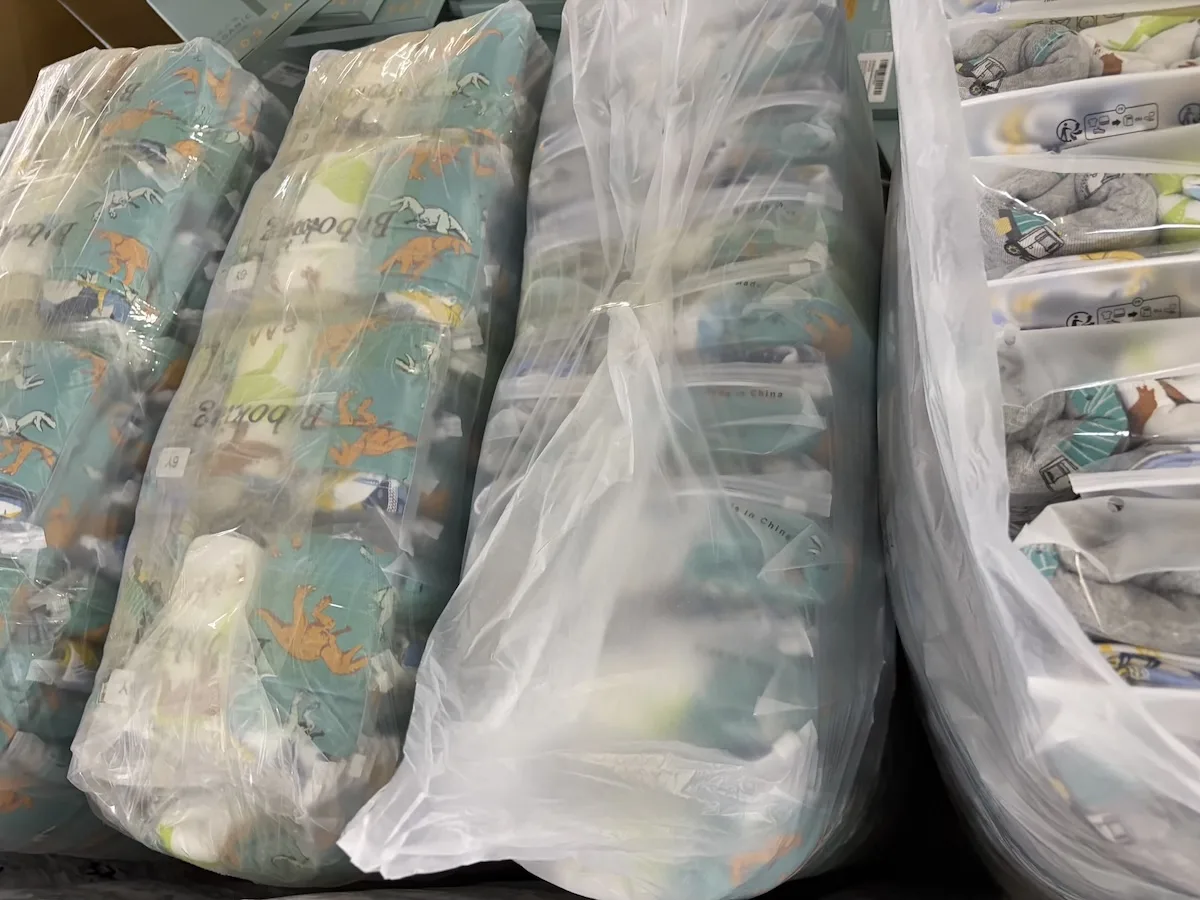
2. The Three Fastness Tests: Crocking, Wash, and Light
Crocking (rub) fastness checks colour transfer when the print is rubbed, dry or wet. Wash fastness checks colour loss and transfer through a simulated laundry cycle. Light fastness checks fading under sustained exposure to light. All three should be specified before bulk, because each responds to a different part of the print process.
These three tests map onto the three ways a kids’ print actually degrades in a home:
Crocking (rub) fastness
A crockmeter rubs a white test cloth against the printed surface, both dry and wet, then measures how much colour transferred to the cloth. Wet crocking is the stricter test and the one that separates a properly cured print from a poorly fixed one. In kids’ wear, crocking matters because a printed waistband rubs against skin and upholstery all day.
Wash fastness
A wash-fastness test tumbles the printed sample with a multi-fibre adjacent fabric under a defined temperature and time, then grades both the print’s colour change and the staining on the adjacent fibres. This is the test that predicts the “faded after three washes” complaint.
Light fastness
A light-fastness test exposes the print to a controlled light source (often a xenon-arc lamp) for a set period and grades fading against blue-wool standards. It predicts how a printed sundress fares after a summer of windowsill and playground exposure.
3. How Print Method Changes the Fastness Equation
Rotary screen printing gives strong, consistent fastness on long runs because ink penetrates the fabric and is cured in volume. Digital (inkjet) printing offers detail and short runs but fastness depends heavily on pre-treatment and curing. Dye sublimation gives excellent fastness but only bonds to polyester, so it is unsuitable for cotton-rich kids’ underwear blends.
The single biggest variable in print fastness is not the ink colour, it is how the ink is put into the fabric and fixed there. The three methods we run behave very differently:
| Method | How it fixes colour | Typical rub/wash fastness | Light fastness | Best for |
|---|---|---|---|---|
| Rotary screen | Ink pressed through screen, penetrates, cured | Strong and consistent | Good with stable pigments | Repeat patterns, long runs |
| Digital (inkjet DTG) | Printed, pre-treatment + heat cure | Good if cured; weaker if not | Good with stable inks | Detail, short runs, photoreal |
| Dye sublimation | Dye gas bonds inside polyester fibre | Excellent | Excellent | Polyester garments only |
Why sublimation is limited for kids’ underwear
Dye sublimation produces arguably the most durable print because the colour becomes part of the fibre, not a layer on top. But it only works on polyester and high-poly blends; the dye simply will not bond to cotton or modal. Since our in-stock kids’ underwear bases are modal- and modal-cotton interlocks, sublimation is generally not the right tool for that product line, though it remains excellent for polyester sleepwear and outer layers.
The digital-printing caveat
Digital printing’s fastness lives or dies on two steps the customer never sees: pre-treatment of the fabric to accept ink, and the final cure. Skip or under-do either and the print crocks badly. On a bulk line this means the cure oven profile must be locked and monitored, not set once and forgotten.
4. Opacity: Why a Print Reads True Over Any Base
Opacity is how completely the print covers the base fabric. A print with poor opacity lets the garment colour show through, muddying the design and making whites look grey. On dark bases a white underbase layer is required; on sheer or low-density knits the base fabric itself must be dense enough or the print looks washed out.
Colourfastness is about whether the print stays; opacity is about whether the print looks right in the first place. A print can be perfectly fast and still look wrong if it is not opaque enough for the base it sits on.
- On dark bases: a white underbase is printed first, then the colour on top. Too thin an underbase and navy shows through a “white” bunny, turning it grey.
- On light bases: opacity is easier, but very pale pastels on a cream fabric can still lose punch without enough deposit.
- On sheer knits: even a dense print cannot fix a fabric that is see-through; here the answer is a denser base cloth, covered in our fabric-weight guide.
5. Test Methods and Acceptable Grading (AATCC / Cotec)
We evaluate prints against established methods such as AATCC crocking (AATCC 8 / 116), wash (AATCC 61), and light (AATCC 16) fastness, with equivalent Cotec and other accredited-lab protocols used where a market requires them. Results are graded on the Gray Scale from 1 (severe change) to 5 (no change); most kids’ programs specify a minimum of Grade 4.
The grading language matters because “it passed” means nothing without a scale. Fastness is rated on the AATCC Gray Scale where 5 is no change and 1 is severe change or heavy transfer. A program that specifies “Grade 4 minimum” is asking for negligible change; “Grade 3” tolerates noticeable but acceptable change.
| Property | Representative method | Simulates | Typical program target |
|---|---|---|---|
| Rub (crocking), dry | AATCC 8 / 116 | Everyday friction, dry | Grade 4+ |
| Rub (crocking), wet | AATCC 8 / 116 | Moist friction, stricter | Grade 3-4+ |
| Wash | AATCC 61 | Laundry cycles at set temp | Grade 4+ (colour change & staining) |
| Light | AATCC 16 | Sustained light exposure | Grade 4+ |
Equivalent protocols and market specifics
AATCC is the US-centered framework, but many export programs reference equivalent methods through accredited bodies such as Cotec and other independent laboratories. The grade scale is the same idea regardless of the house: quantify the change, do not eyeball it. For brands selling into the EU or US, finished-garment safety and colour-related checks are typically verified through third-party testing by SGS, Intertek, TÜV SÜD, or CPC rather than treated as a certificate we hold. OEKO-TEX Standard 100 is currently in progress across our lines.
6. Controlling Consistency Across Bulk Production
Consistency comes from locking the variables: one approved lab-dip, a fixed ink recipe and cure profile, batched base fabric, and inline checks at the start of every run. The biggest bulk failures are caused by changing the cure temperature, swapping an ink batch, or mixing base-fabric dye lots, not by the print design itself.
A single perfect sample is easy. Five thousand identical, fast, opaque prints are the hard part. The controls that earn that consistency are process controls, not heroics:
- One approved reference. Bulk is matched to a signed lab-dip, not to memory. See our lab-dip approval workflow.
- Locked cure profile. The cure oven temperature and dwell time are documented and checked at the start of each run; a 10-degree drift is enough to drop rub fastness a grade.
- Batched base fabric. One dye lot of base cloth per bulk order prevents the same print reading differently on two subtly different bases.
- Inline start-of-run check. The first metres are crock- and opacity-checked before the run proceeds.
| Symptom at bulk | Likely root cause | Control in production |
|---|---|---|
| Poor rub fastness on one batch | Under-cured ink / wrong cure profile | Oven profile logged and verified each run |
| Colour looks different across boxes | Mixed base-fabric dye lots | Single dyed-lot base per order |
| White prints look grey on dark bases | Insufficient white underbase | Underbase weight set at lab-dip |
| Fading after washes | Unstable pigment or thin deposit | Ink spec fixed at development |
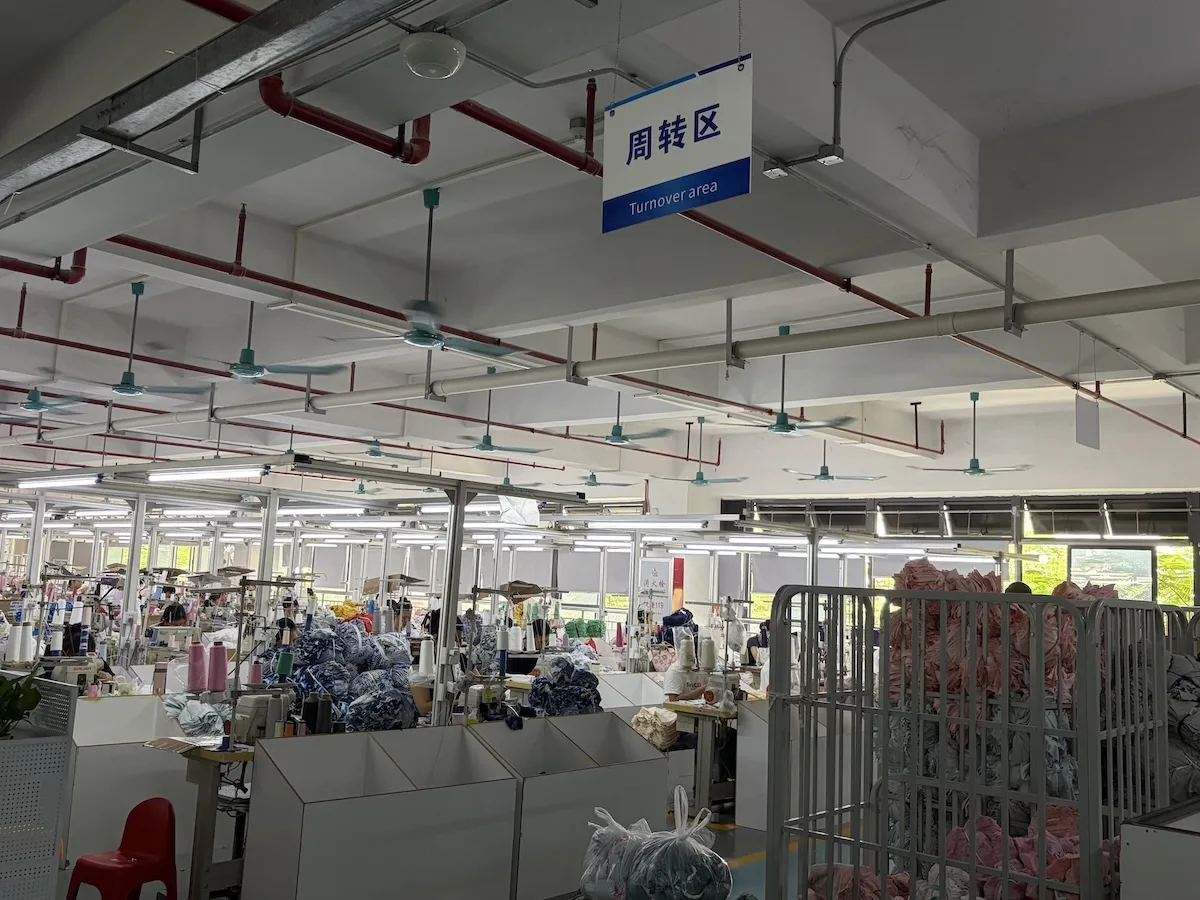
Our line runs on an INA hanging production system that keeps printed panels moving without stacking and scuffing, and the same bulk order is produced against one approved master so a 1,000-piece run prints the same at piece one and piece one thousand. With more than 3,000 prints developed in-house, the repeatability comes from the system, not from re-inventing each order.
7. Where Final Inspection Catches Fastness and Opacity Defects
The final-inspection stage is the last line where a fastness or opacity escape is caught before shipment. At this point the team verifies print alignment, opacity against the approved swatch, and pulls samples for crocking and wash checks, so a drifting cure or mixed base lot is stopped rather than shipped.
Even with strong inline controls, a disciplined final inspection is what converts “probably fine” into “verified.” Our 6-stage quality process includes needle detection and a dedicated final-inspection stage where printed garments are reviewed under consistent lighting against the approved master swatch.
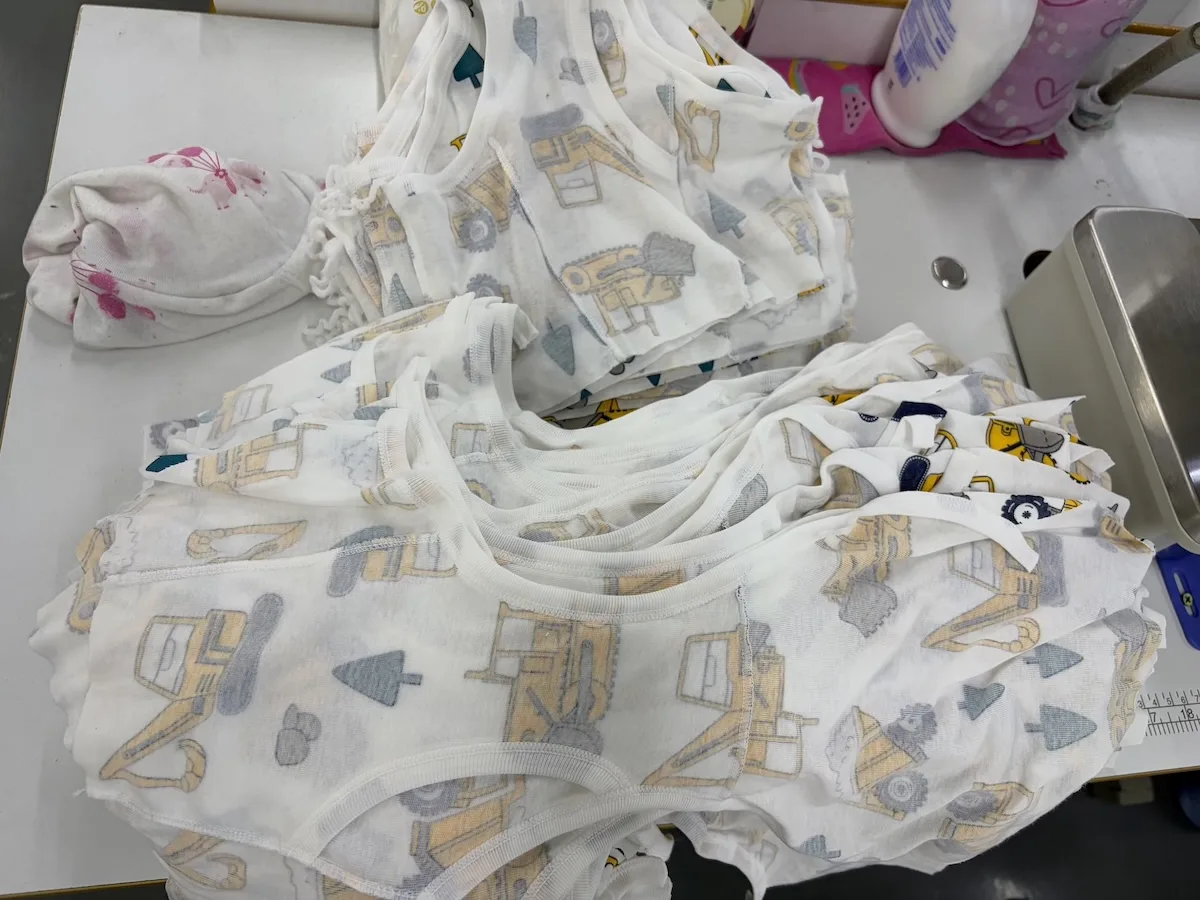
What the final-inspection team looks for on prints specifically:
- Opacity match — the print is compared to the signed swatch so a thin underbase or off-base colour is visible before packing.
- Placement and registration — motifs land where the tech pack specifies, with no misalignment between colour layers.
- Surface feel — no uncured tackiness, which is an early warning of a rub-fastness failure.
- Sample pull for testing — periodic samples are sent for crocking and wash verification rather than assumed good.
Want prints that survive real homes? Send us your artwork and base fabric and we will run a fastness and opacity check before bulk.