
What Is Modal Fabric for Kids’ Clothing? (And Why EcoCosy® Beats Generic Modal)
Modal shows up constantly in premium kids’ basics — and for good reason. It is soft, drapey, and stays smooth wash after wash. But “modal” is not one thing. There is a real difference between a generic modal fiber and a licensed, traceable modal such as EcoCosy®. For a kids’ brand that cares about skin safety and supply transparency, that difference is the whole story.
What is modal fabric?
Modal is a regenerated cellulosic fiber made from wood pulp — most often beech wood. It is part of the same family as viscose and lyocell, but spun to a finer, stronger filament. The result is a fabric that feels silkier than cotton, drapes well, and resists pilling better than standard viscose. For kids’ underwear and sleepwear, modal is prized because it is smooth against sensitive skin and holds color well.
Modal is also relatively low-impact to produce when the pulp comes from managed forests and the process recovers its solvents. That “when” is the catch — and where generic and licensed modal diverge.
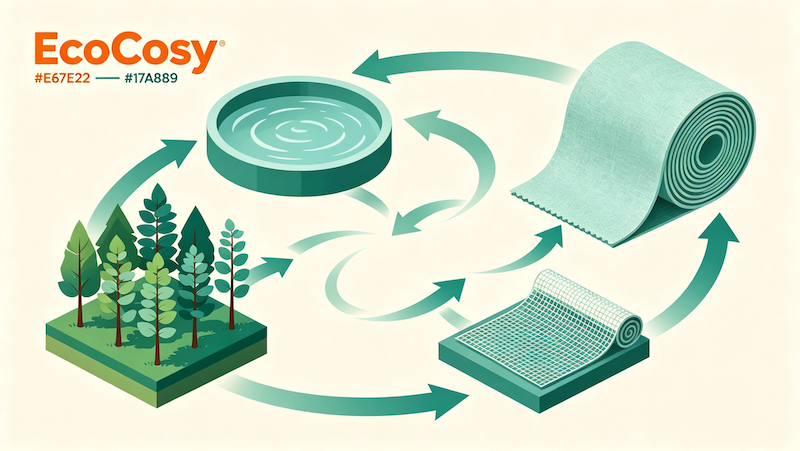
How modal is made: from wood pulp to smooth fiber
Modal is a regenerated cellulosic fiber, which means it starts as plant material and is re-formed into fiber rather than being spun directly from a natural staple like cotton. The route: wood pulp (most often beech) is dissolved, pushed through spinnerets into fine filaments, then washed and finished. The result is finer and stronger than standard viscose, which is why modal feels silkier and pills less.
Why the “process” step is where generic and licensed modal split
The fiber itself can look identical off the line. The difference is the input and the loop: a managed forest source plus a closed-loop solvent recovery produces a cleaner, traceable fiber, while an unspecified-pulp route cannot prove where it came from. That is the entire reason a brand should care about the license — not the hand-feel, which a child cannot tell apart, but the proof a buyer or retailer can ask for.
Modal vs cotton vs bamboo: which to choose for kids
| Combed Cotton | Bamboo Viscose | Modal / EcoCosy® | |
|---|---|---|---|
| Source | Cotton plant | Bamboo pulp | Wood pulp (beech) |
| Hand-feel | Soft, matte | Silky, cool | Buttery, smooth |
| Breathability | High | High | High |
| Wash stability | Good | Good | Very good (holds shape) |
| Traceability | Per mill | Per mill | EcoCosy®: full chain-of-custody |
| Best use | Everyday basics | Sensitive / hot-skin kids | Premium soft lines, training bras |
Breathability and moisture — what parents feel
All three cellulosic options breathe well; modal’s edge is that it moves moisture and dries a touch faster than cotton while staying smoother against skin. For sleepwear and active basics that matters on warm nights. It is not a dramatic performance gap, so we usually let the brand choose on hand-feel and story rather than on a spec sheet.
Why modal is loved for kids’ skin
- Smooth hand-feel: fewer fiber ends means less friction on delicate skin.
- Breathable and moisture-managing: good for sleepwear and active basics.
- Color retention: dyes take evenly, so prints stay crisp.
- Wash stability: keeps its softness and shape far longer than generic viscose.
These are exactly the properties a parent pays a premium for. The question is whether the modal in your garment can prove where it came from.
Generic modal vs EcoCosy® modal
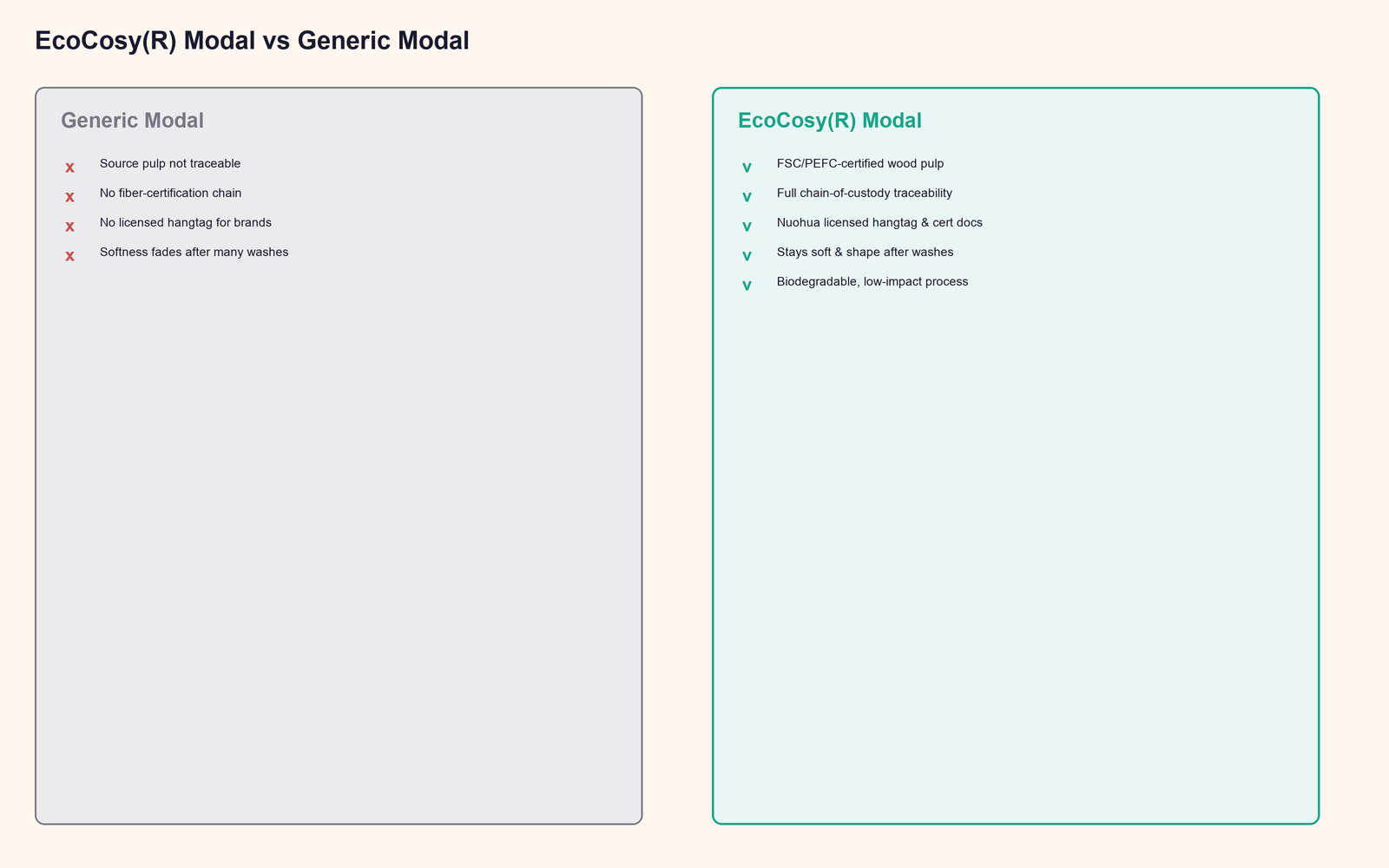
| Generic Modal | EcoCosy® Modal | |
|---|---|---|
| Fiber source | Wood pulp, origin often unspecified | FSC / PECF-certified wood pulp |
| Traceability | No chain-of-custody | Full chain-of-custody documentation |
| Brand license | None | Nuohua holds EcoCosy® authorization |
| Hangtag / proof | None for the brand | Licensed EcoCosy® hangtag available |
| After-wash feel | Softens unevenly over time | Stays soft and shaped |
The fabric on the child is nearly identical. The difference is what you can prove to a buyer, a retailer, or a customs officer. EcoCosy® gives you a licensed fiber with forest certification and a verifiable chain of custody — which generic modal simply cannot.
Why it matters for B2B: a licensed fiber lets you print a real hangtag, answer a retailer’s sustainability questionnaire, and document the material for compliance files. Generic modal leaves that box permanently empty.
EcoCosy®: the licensed, traceable difference
EcoCosy® is a branded cellulosic fiber made from 100% FSC / PECF-certified wood, produced through a low-impact, closed-loop process, and fully biodegradable. Nuohua Garment holds EcoCosy® authorization, which means we can supply the fiber with proper documentation and apply the licensed EcoCosy® hangtag to your finished garments.

For a private-label brand, that turns a soft fabric into a sellable claim: “made with EcoCosy® — FSC-certified wood pulp, traceable, biodegradable.” That is a line a generic modal garment cannot print.
Caring for modal, blending it, and the sustainability story
Washing and caring for modal
Modal washes like cotton but rewards a little care: cold-to-warm wash, mild detergent, low-heat dry. It resists pilling better than generic viscose, but high heat still weakens any elastane blended with it. We print care guidance on every Nuohua label so the end buyer keeps the softness the garment was sold on.
Blends: modal + spandex, and modal + cotton
We typically blend 5% elastane with modal for recovery in training bras and snug sleep sets, or keep it pure for maximum softness in baby bodysuits. A modal-cotton mix is a good bridge when a brand wants modal’s drape with cotton’s familiarity. Either way the cloth is produced to GB 31701 Class A for skin contact, with third-party testing available through SGS, TÜV SÜD, and Intertek.
Sustainability and biodegradability
EcoCosy® modal is made from 100% FSC / PEFC-certified wood and is fully biodegradable at end of life. The licensed route also documents a low-impact, closed-loop process, so the sustainability claim is backed by paper, not just a word on the hangtag. Generic modal may share the biodegradability but cannot show the forest certification or the chain-of-custody — which is exactly what a retailer’s sustainability questionnaire asks for.
Bottom line for brands: if you never need to prove the fiber, generic modal is fine. If you sell to retailers, advertise sustainability, or want a real hangtag, EcoCosy® is the version that survives the questions.
How we use modal in kids’ underwear & sleepwear
At Nuohua we run modal (including EcoCosy®) for:
- Girls’ training bras and soft briefs where smoothness matters most.
- Baby and toddler bodysuits and sleep sets.
- Premium pajama tops where drape and color retention sell the line.
We typically blend modal with a small amount of elastane for recovery, or keep it pure for maximum softness. Either way it is produced to GB 31701 Class A for skin-contact kids’ wear, with third-party testing available through SGS, TÜV SÜD, and Intertek.
If you are weighing modal against other fibers, our combed cotton vs cotton-spandex guide and our bamboo sleepwear playbook cover the alternatives by use case.
Frequently Asked Questions
Is modal safe for kids’ skin?
Yes — modal is smooth, breathable, and widely used in kids’ basics. We produce it to GB 31701 Class A for skin contact.
Is EcoCosy® the same as generic modal?
The fiber feels similar, but EcoCosy® adds FSC/PEFC-certified pulp, a chain-of-custody, and a licensed hangtag. Generic modal offers none of that.
Can I put the EcoCosy® hangtag on my brand?
If we supply EcoCosy®-authorized fabric, yes — Nuohua holds the authorization and provides the licensed hangtag and docs.
Does modal need flame treatment for US sleepwear?
Only loose-fitting sleepwear does. Snug-fit modal sleep sets use the snug-fit exemption with correct labeling.
What is the MOQ for a modal line?
Our standard 2 pcs on selected in-stock styles, colors and sizes applies, including EcoCosy® modal runs.
Is modal warmer or cooler than cotton for pajamas?
Comparable — modal breathes like cotton and dries a little faster. Choose GSM for the season; the fiber choice is about hand-feel and story more than temperature.
Does modal shrink?
Less than cotton. Properly finished modal holds its shape and size through washes, which is why it is prized for fitted training bras and sleep sets that must keep their fit.
Can I mix EcoCosy® modal with other fibers in one garment?
Yes — a modal-elastane or modal-cotton blend is common. The EcoCosy® hangtag applies to the modal portion; we document the exact fiber split for your label and compliance file.
Is EcoCosy® modal more expensive than generic modal?
Usually a little, because of the licensed fiber and documentation. Brands treat it as a premium tier — the cost is recovered by the hangtag story and the retailer-ready proof.
Ready to build a modal line?
Tell us your target market and whether you want the EcoCosy® license, and we will return a fabric and hangtag recommendation plus a sample plan. Request a quote or review our trust center for certifications and testing.