
Table of Contents 📌
- 1. Introduction: The Risk of ‘Aesthetic Gaps’
- 2. Section 1: Fabric Engineering & Fiber Specs
- 3. Section 2: Construction Excellence (Flatlock)
- 4. Section 3: Color, Print, and Dye Logic
- 5. Section 4: Safety & Grade A Compliance
- 6. Section 5: Building the Tech Pack Brief
- 7. Nuohua’s Industrial Advantage (MOQ 2 pcs on selected in-stock styles, colors and sizes)
- 8. Conclusion: From Vision to Inventory
1. Introduction: Bridging the Gap Between Vision and Industrial Reality
In the high-end children’s apparel industry, a beautiful inspiration photo from Pinterest or Instagram is a double-edged sword. While it provides a visual target, it lacks the technical vocabulary required for a production line. For B2B buyers—ranging from independent boutique owners to established global retailers—the journey from a digital image to a physical garment is fraught with potential miscommunication. At Nuohua Garment, based in the manufacturing heart of Huizhou, we specialize in translating these ‘vibes’ into rigorous Style Briefs. We’ve seen countless projects stalled because a factory interpreted ‘soft’ differently than the client. This 3,000+ word guide serves as your masterclass in deconstructing inspiration photos into technical blueprints that guarantee safety, comfort, and profitability.
The core of a successful brand isn’t just design; it’s Fiber Engineering. A photo cannot tell a factory about yarn count, GSM, or PH values. By the end of this guide, you will know exactly how to leverage Nuohua’s ready-stock Low MOQ from 2 pcs and SGS-certified supply chain to turn your aesthetic vision into a market-leading product line.
2. Section 1: Fabric Engineering – Fiber Composition and Hand-Feel
When you send us a photo of a luxury pajama set, you are usually chasing a specific ‘hand-feel.’ In a technical brief, ‘buttery soft’ must be replaced with data. At our Huizhou facility, we categorize fabrics not by how they look, but by how they perform. This is the foundation of our Grade A commitment.
2.1 Combed Cotton vs. Carded Cotton
Nuohua Garment almost exclusively uses Combed Cotton for its premium lines. Unlike carded cotton, which contains short fibers and impurities, combed cotton goes through an extra mechanical process to remove fibers less than 1 inch in length. This results in a yarn that is significantly stronger, smoother, and less prone to pilling after repeated washing—a vital factor for the longevity of children’s underwear.
2.2 Understanding GSM (Grams per Square Meter)
The weight of the fabric defines its luxury status. A lightweight summer brief might use 160–180 GSM, while a high-end winter pajama set requires 200–240 GSM for that ‘substantial’ luxury feel. Your brief must specify this weight to ensure the factory doesn’t ‘under-weight’ your production to save on raw material costs.
2.3 5A Antibacterial and Skin Health
For children’s base layers, we recommend 5A Silver Ion antibacterial finishes. This technology inhibits 99% of Staphylococcus aureus and E. coli, providing a protective barrier for children’s delicate skin. In your brief, this should be listed as a ‘Must-Have’ feature for B2B differentiation.
| Fabric Type | Composition | Ideal GSM | Nuohua Selling Point |
|---|---|---|---|
| Premium Jersey | 95% Combed Cotton / 5% Spandex | 180 – 220 | 4-Way Stretch, Grade A |
| Bamboo Rib | 97% Bamboo / 3% Elastane | 200 – 240 | Thermo-regulating, Silky |
| Interlock Thermal | 100% Organic Cotton | 240+ | Double-knit, High Warmth |
3. Section 2: Construction Excellence – The Skin-First Manufacturing Approach
A photo might show a beautiful dinosaur print, but it won’t show the seams. In children’s underwear, the seam is the most common point of failure—both in terms of durability and comfort. At Nuohua, we use an ‘Interior-First’ logic: if it doesn’t feel good inside, the outside doesn’t matter.
3.1 Flatlock Stitching (ISO 607)
For any premium children’s line, Flatlock stitching is a non-negotiable requirement. Unlike standard overlock seams that create a ‘lip’ or ‘bulk’ that can chafe skin, Flatlock seams are flat and smooth on both sides. This is technically known as a 4-needle 6-thread coverstitch. In your brief, you should specify Flatlock for all crotch seams in underwear and side seams in pajamas.
3.2 Stitches Per Inch (SPI) and Durability
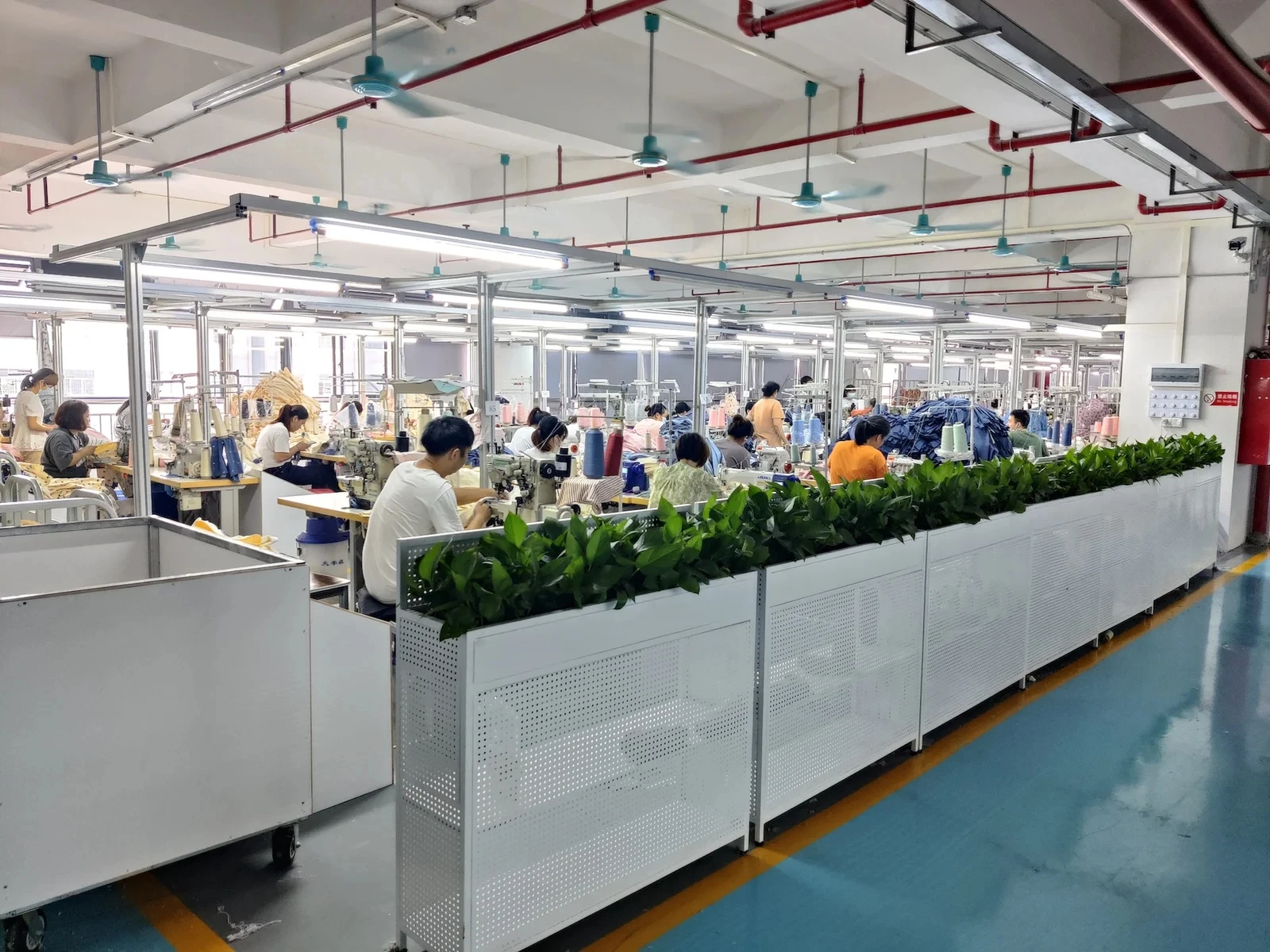
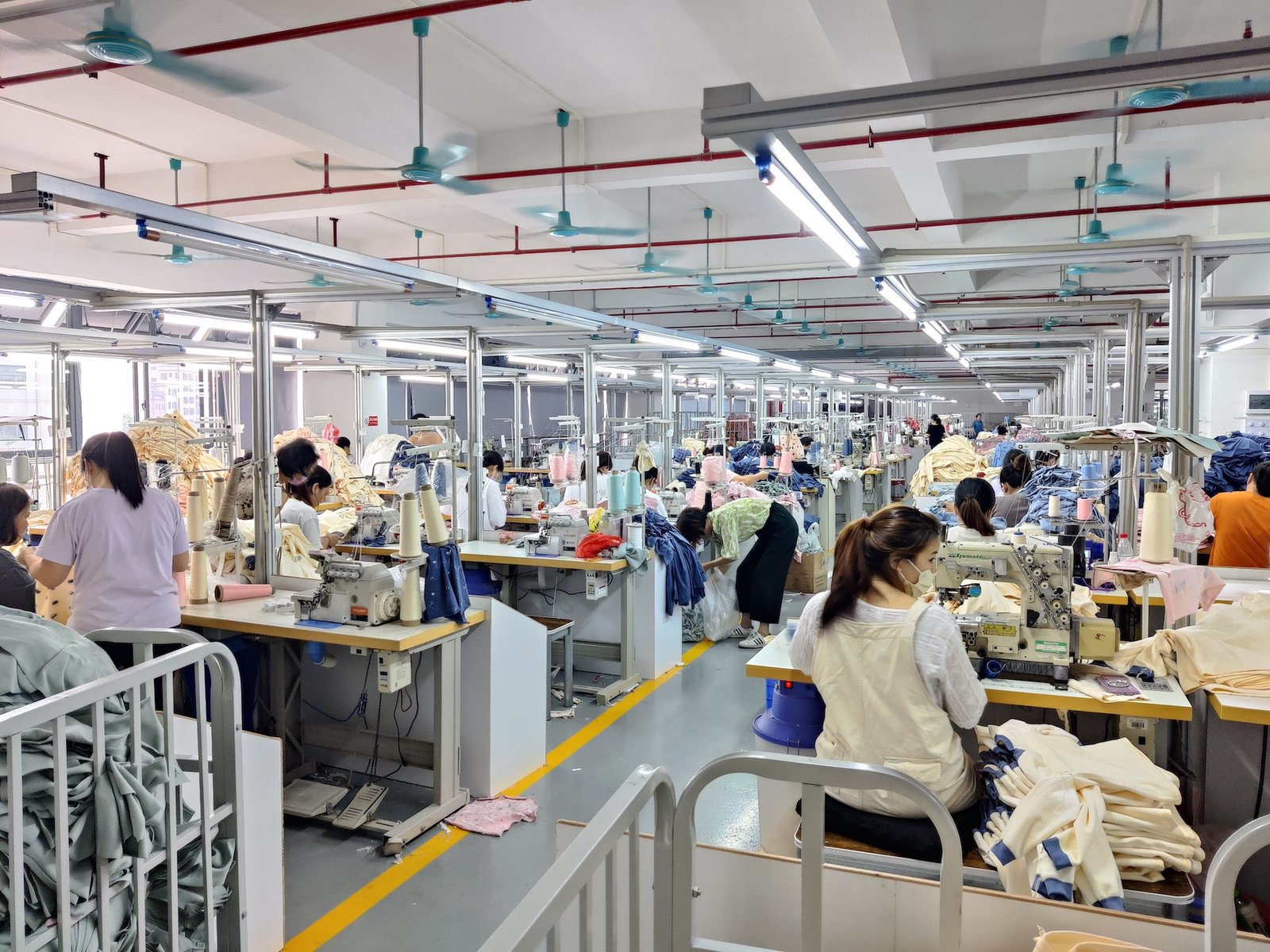
Industrial standards for children’s wear require 10–12 SPI. Lower stitch counts lead to ‘gapping’ under tension, while higher counts can weaken the fabric. Our automated INA Hanging System ensures every machine is calibrated to these exact specs, maintaining a 0.3% defect rate across 1,000,000 pieces monthly.
3.3 Elastic Engineering: Non-Rolling Waistbands
The waistband of a training pant or pajama bottom must be non-rolling. This is achieved by using a soft-knit elastic that is ‘bar-tacked’ at the side seams. Specify ‘Latex-Free’ to avoid allergic reactions—a key detail for US and EU markets.
| Feature | Standard (Low End) | Nuohua Premium Standard | Benefit |
|---|---|---|---|
| Main Seams | 4-Thread Overlock | Flatlock (4-Needle 6-Thread) | Chafe-free, Skin Friendly |
| Stitch Count | 6–8 SPI | 10–12 SPI | High Durability, No Gapping |
| Neckline | Single Needle | Double-Needle w/ Tape | Shape Retention |
4. Section 3: Color, Print, and Dye Logic – Universal Languages
Colors and prints are the ‘soul’ of an inspiration photo. However, ‘Sage Green’ looks different on a MacBook than it does on a Samsung phone. To avoid color variations, your brief must bridge this digital-to-physical gap using international standards.
4.1 The Pantone TCX/TPX System
Every professional Style Brief must include Pantone TCX (Textile Cotton Edition) codes. This is the only way to ensure your ‘Ocean Blue’ matches the dye lot in our Huizhou lab. We provide Lab Dips for your approval before mass production begins.
4.2 Digital vs. Rotary Printing
If your Pinterest photo features a complex farm scene with 12+ colors, Digital Printing is the solution. It offers a ‘zero-feel’ finish where the ink penetrates the fabric. For simple 2-color repeating icons, Rotary Screen Printing is more cost-effective for large volumes. Nuohua offers both, ensuring your design vision is balanced with budget realities.
4.3 Tagless Heat-Transfer Labels
Woven labels are the #1 complaint of children. Your brief should specify Tagless Heat-Transfer labels. These are printed directly onto the inner back of the garment using non-toxic inks. They never itch, they never peel, and they scream ‘Premium Quality’ to your end customers.
5. Section 4: Safety & Grade A Compliance – Protecting Your Brand
In children’s wear, safety is the ceiling of your brand’s potential. If you fail safety testing, your inventory is worthless. This is where Nuohua’s expertise becomes your insurance policy.
5.1 Grade A (GB 31701): Beyond Infants
While many factories only apply Grade A standards to infants (0–3T), Nuohua recommends Grade A for all children’s sleepwear up to size 14. This means zero formaldehyde and strict PH value control (4.0 – 7.5). It is the safest standard in the world and a massive selling point for eco-conscious parents.
5.2 CPSIA and Lead Testing
For the US market, every snap and zipper must be lead-free and phthalate-free. We work with SGS and TUV to provide certified test reports, ensuring your bulk orders sail through customs without being flagged for hazardous materials.
6. Section 5: Building the Tech Pack Brief – A Step-by-Step Guide
Once you have analyzed your inspiration photo, it’s time to compile the Style Brief. At Nuohua, we call this a ‘Mini Tech Pack.’ Here is the checklist of what to include to ensure 100% accuracy:
6.1 The Technical Sketch (Flat)
A simple front and back flat sketch (no models). Tracing your inspiration photo is a great shortcut. Mark the Point of Measure (POM) locations: Waist, Crotch depth, Sleeve length.
6.2 Bill of Materials (BOM)
List every component. Example: ‘Main Fabric: 200GSM Combed Cotton; Elastic: 1/2-inch soft knit; Thread: 100% Cotton-wrapped poly.’
6.3 Construction Callouts
This is where you write: ‘Flatlock all interior seams,’ ‘Double-needle hem on cuffs,’ and ‘Reinforced bar-tack at pocket corners.’
7. Nuohua’s Industrial Advantage: Why Agile Brands Partner with Us
Our Huizhou factory isn’t just a place where things are sewn; it’s an innovation hub for B2B brands. We understand that in the era of TikTok and Instagram, speed and agility are everything.
7.1 Ready stock from 2 pcs: the Low MOQ engine
We support a ready-stock Low MOQ from 2 pcs per style. This allows you to launch 5 different Pinterest-inspired designs with the same budget most factories require for just one. Test the market, gather data, and then scale your winners using our 1,000,000-piece monthly capacity.
7.2 The INA Smart Hanging System
Our factory is equipped with the INA Intelligent Production System. This automated hanging system tracks every single garment at the unit level. It reduces human error and manual handling by 40%, ensuring that your brief is executed with robotic precision while maintaining the ‘Grade A’ softness parents expect.
7.3 AQL 2.5 Inspection Standard
We perform AQL 2.5 inspections on every batch. This is the international gold standard for quality control, ensuring that your inventory is ready for immediate retail fulfillment the moment it arrives at your warehouse.
8. Conclusion: From Inspiration to Inventory
An inspiration photo is a spark, but a Style Brief is the engine. By taking the time to deconstruct your images into technical specs—from Flatlock seams to 5A antibacterial finishes—you eliminate guesswork and protect your profit margins. At Nuohua Garment, we are ready to be that engine for your brand.
Ready to turn your Pinterest board into a physical collection? Let’s start the conversation. Our Huizhou team is standing by to translate your vision into professional B2B inventory that parents trust and children love.
Partner with Nuohua Garment:
- Official Site: https://nuohuagarment.com
- B2B Inquiries: info@nuohuagarment.com
- Direct WhatsApp: +86 138 0966 5006
Appendix: The Economics of Custom Kids’ Underwear Production
Understanding the landed cost of your custom underwear is as important as the design brief itself. In Huizhou, our proximity to raw material markets allows us to maintain competitive pricing even at ready-stock minimum of 2 pcs. However, costs are driven by three variables: Fabric Type, Construction Complexity, and Volume. A bamboo fiber pajama set with flatlock stitching will have a higher unit cost but commands a 3x retail markup compared to standard carded cotton. We work with our B2B partners to optimize these briefs for the best possible margin.
Sustainability is also becoming a mandatory ‘brief’ requirement. We are seeing a massive shift toward GOTS-certified organic cotton and recycled poly blends. By including these in your initial brief, you future-proof your brand against upcoming EU and US environmental regulations. Nuohua’s supply chain is fully audited to support these green initiatives, ensuring your brand story is authentic from fiber to finish.
The Role of Packaging in B2B Success
Finally, your Style Brief should detail the packaging. For B2B retailers, ‘Retail Ready’ is the magic phrase. This means polybags with SKU stickers, FSC-certified hangtags, and moisture-absorbing silica packs. By including these in your production brief, you save yourself the cost and time of re-packaging at your own warehouse. Nuohua provides full private-label packaging solutions in our Huizhou headquarters, allowing you to ship directly from our factory to your end-customers or Amazon FBA centers.
The garment industry is moving toward ‘Micro-Manufacturing’ and ‘Agile Supply Chains.’ Nuohua Garment is proud to lead this charge in Huizhou, Guangdong, China, empowering independent designers and global curators alike to build brands that matter. Your inspiration photo is the beginning—let’s make the reality even better.