
Custom Kids Underwear & Pajama Production: A Buyer’s Process Guide
This guide is part of the Kids Underwear & Sleepwear Sourcing Guide.
Custom kids underwear and pajama production runs on three routes — OEM, ODM and private label — and the route decides your MOQ, your development time and how much of the construction you control. Before bulk production, lock six things: destination market, fabric composition and GSM, the full size grading, trims and labels, an approved PP sample, and the QC tolerances. Ready-stock styles start from 2 pcs on selected in-stock styles, colors and sizes; selected custom styles from 150–300 pcs per color; existing underwear styles with existing prints typically from 1,000 pcs per style and color; standard sleepwear from 1,000 sets per design. Anything outside those routes is confirmed after a specification review.
Most first orders go wrong before the sewing line starts. Not because the factory cannot sew, but because the brief left three or four decisions open — a shrinkage figure, an elastic width, the colour standard for a print, or the MOQ basis nobody asked about. This guide follows the real sequence of a custom kids’ underwear and pajama programme, from route selection to shipment, and flags where buyers usually have to stop and re-decide.
1. The three custom production routes
Not every custom project is the same kind of custom. The three routes differ in who owns the design, who owns the pattern, and where the MOQ sits.
| Route | You supply | We supply | MOQ basis |
|---|---|---|---|
| OEM | Tech pack or approved reference sample | Pattern, fabric sourcing, sampling and bulk production | Existing underwear constructions typically from 1,000 pcs per style and color |
| ODM | Brief, target market and size range | Style development from our existing pattern library, then OEM production | From 150–300 pcs per color on selected styles |
| Private label | Brand artwork, labels and packaging specification | Manufacture and apply your branding to a selected or developed style | Ready-stock styles from 2 pcs on selected in-stock styles, colors and sizes; custom labelling may require a higher minimum |
Going direct to a factory that owns its own pattern room matters most on the OEM route, because that is where a measurement or construction change actually gets implemented. If you are still comparing supplier types, start with how to shortlist and vet a kids’ underwear manufacturer, then come back to this guide once you have a candidate.
2. What has to be locked before a sample is cut
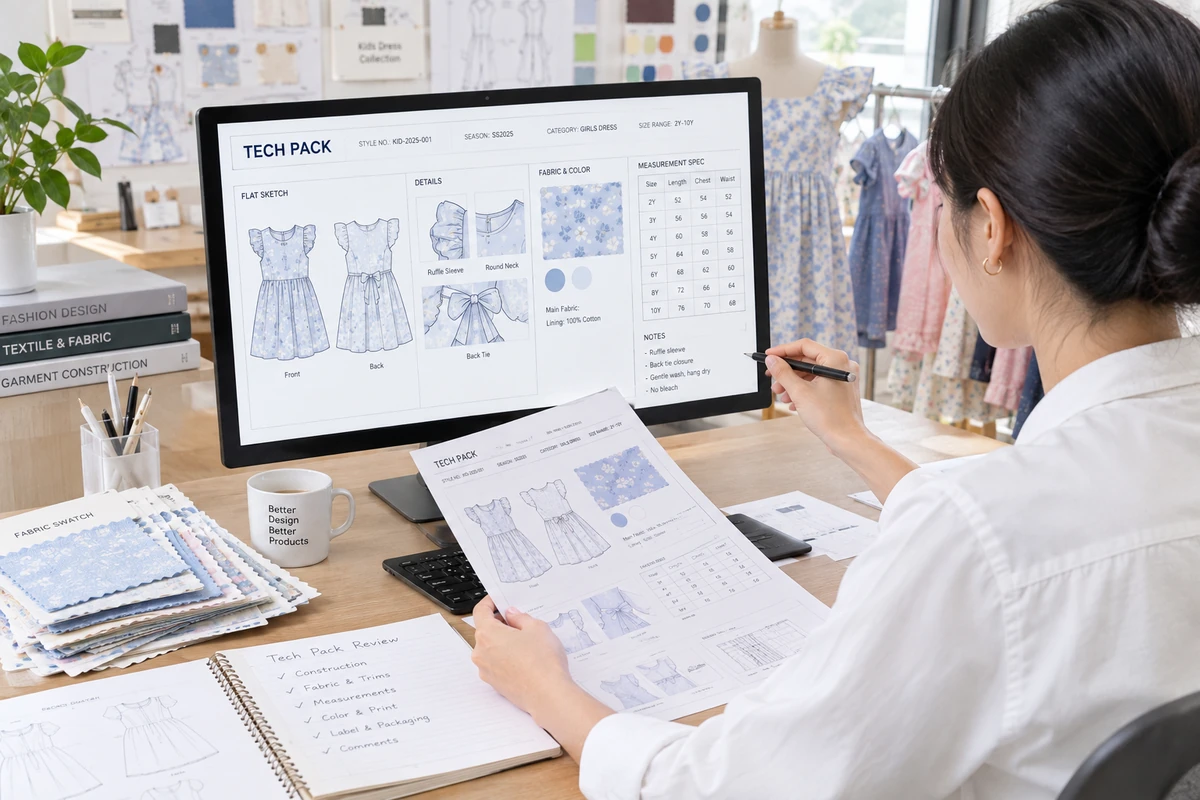
A sample is only as good as the document behind it. Before the pattern room starts, these decisions should exist in writing:
- Construction — brief, hipster, boxer brief, training bra, romper or pajama set; seam type and gusset construction.
- Measurements — the full graded size set, not a single size.
- Fabric — composition, GSM, yarn count, stretch direction and required hand feel.
- Colour standard — a Pantone reference or an approved physical swatch.
- Trims — elastic width and type, waistband, thread, and any fastenings.
- Labels and packing — main label, care label, size label, hangtag, polybag and carton.
A sketch or a set of reference photographs is a workable starting point, but it has to be turned into measurements and a construction specification before sampling. Our tech pack specification guide lists what each sheet has to contain, and building a tech pack from scratch covers the starting point if you do not have one yet.
3. Fabric, hand feel and safety
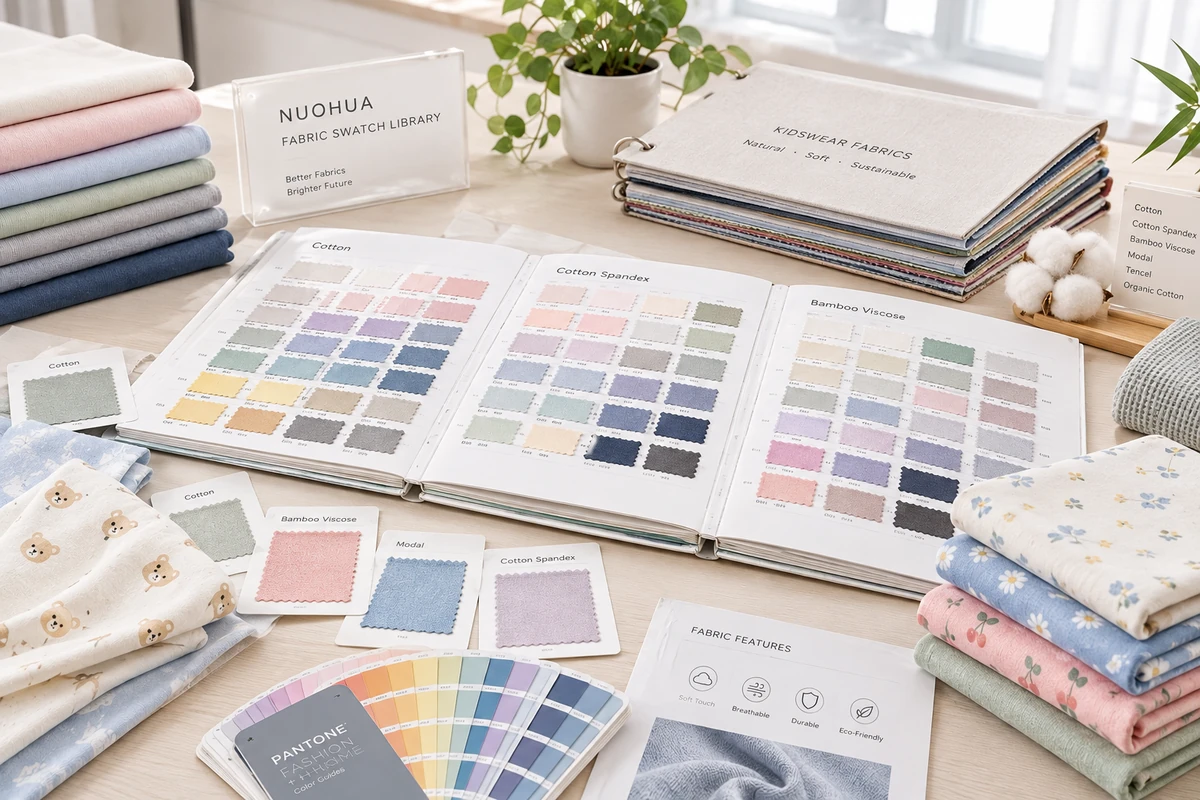
Hand feel is how a buyer judges a fabric. Composition, GSM, shrinkage and colourfastness are how a factory has to judge it. Both have to be written down, because two fabrics that feel identical in a sample room can behave very differently after five washes — one returns to shape, the other does not.
- Composition — 100% cotton, cotton-spandex, viscose from bamboo, modal or a blend. Ask for exact percentages.
- GSM — weight drives opacity, drape and how the garment holds its shape through the season.
- Shrinkage — test after the intended wash cycle, not before cutting.
- Colourfastness — particularly on dark colours in skin-contact areas.
- Stretch and recovery — the waistband elastic and the body knit have to recover together, or the garment will not hold its fit.
On safety, children’s apparel produced in China is developed to GB 31701 Class A for skin-contact items. For the US market, children’s products that are subject to an applicable children’s product safety rule generally require third-party testing by a CPSC-accepted laboratory, with certification through a Children’s Product Certificate (CPC) issued by the domestic manufacturer or the importer. Testing is arranged through qualified laboratories such as SGS, TÜV SÜD or Intertek. OEKO-TEX Standard 100 certification is currently in progress at Nuohua — we do not present it as completed.
Sleepwear carries its own framework. Children’s sleepwear in scope of 16 CFR Parts 1615 and 1616 must meet the applicable sleepwear flammability requirements, while qualifying infant garments and tight-fitting sleepwear are excepted and instead fall under the general wearing-apparel flammability requirements of 16 CFR Part 1610. Intended use and construction decide which path applies — our compliance checklist walks through the market-by-market detail.
4. Size grading: approve a size set, not one size
A perfect size 6 sample proves nothing about sizes 2 or 12. Grading errors show up at the ends of the range, which is exactly where parents shop for growing children.
Before approving the size set, check the graded values rather than only the base size: body length, waist relaxed, waist stretched, rise, leg opening, sleeve length and neck opening. Different markets also expect different size charts, so a chart that sells well in one country can read as “too small” in another even when the measurements are technically correct.
5. Sampling: development, fit and PP sample
Sampling is a sequence, not a single event.
- Development sample — proves the construction is buildable in the chosen fabric.
- Fit sample — measured against the spec sheet; revisions belong here, not after bulk.
- Pre-production (PP) sample — the final reference: fabric, colour, measurements, construction, print placement, trims, labels and packing all locked.
The PP sample is the standard the whole bulk order is measured against, so approve it as a specification rather than as an impression. Anything not approved at PP stage should not appear in bulk production.
6. Bulk production and the QC checkpoints
Bulk starts at the cutting table. Automated cutting reduces the handling that causes distortion and shade problems across a lay, which matters most on printed or high-stretch knits.
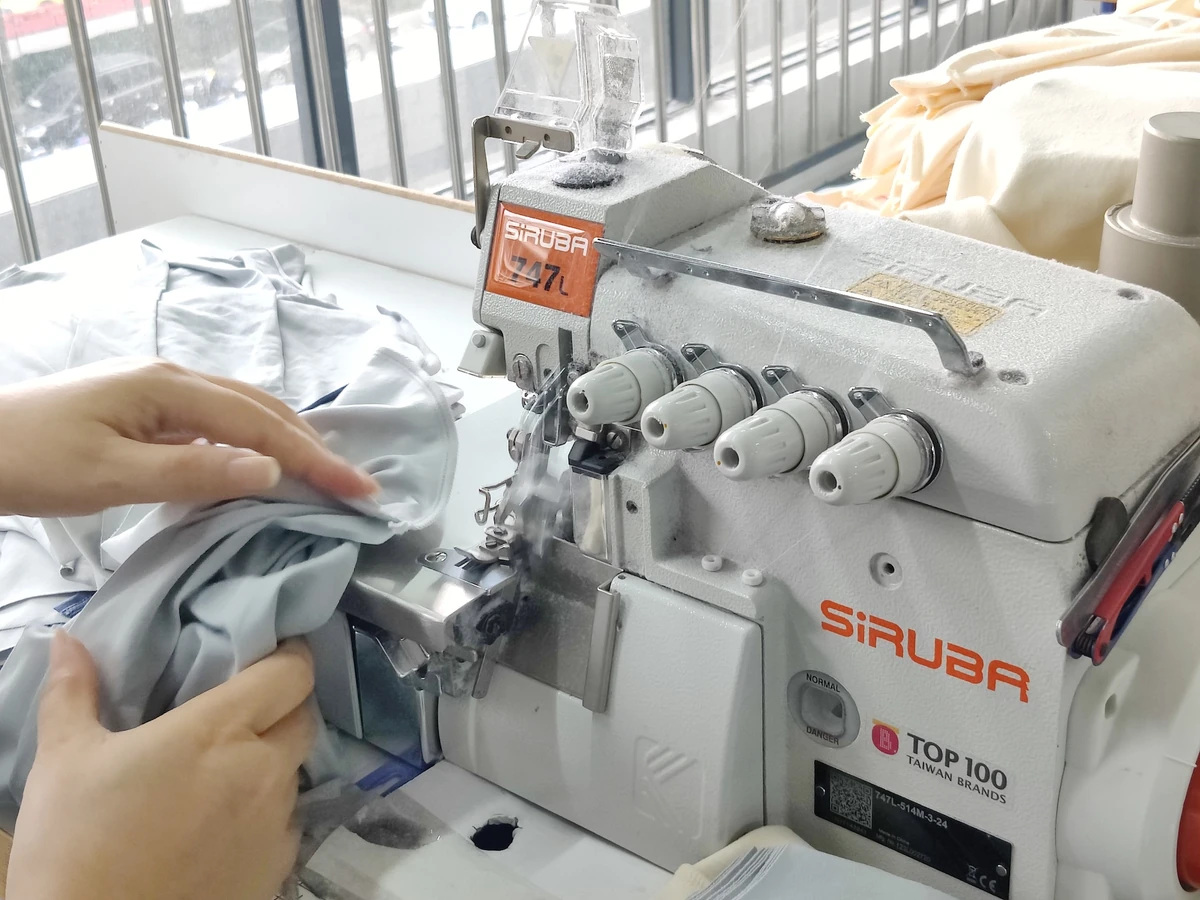
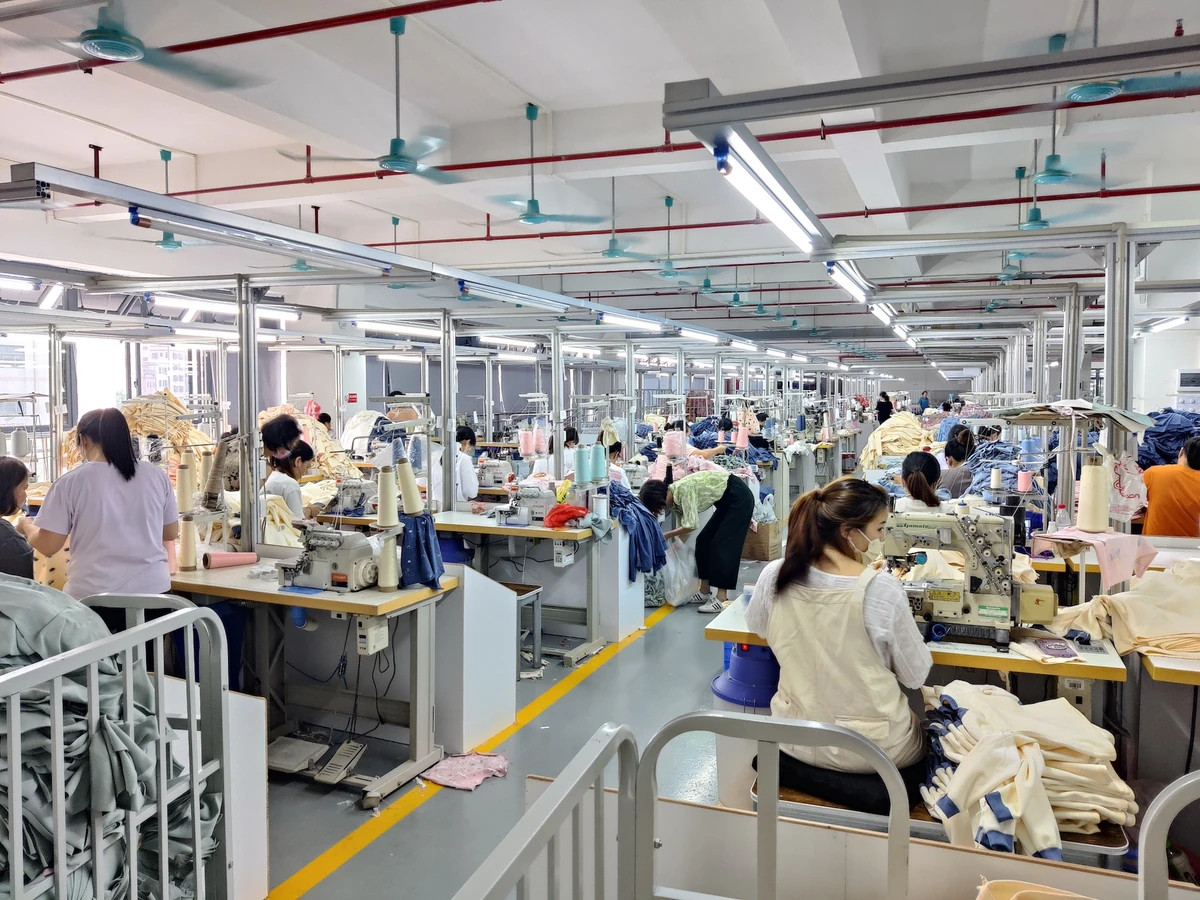
A line should be built so a fault is caught at the station where it happens, not at final inspection. In practice that means fabric inspection before cutting, inline checks at each operation, a final inspection before packing, and needle detection on finished pieces.
Agree the QC standard before the line starts: measurement tolerances per size, defect classification, seam and stitch requirements, print placement tolerance, and the inspection plan. A tolerance agreed in advance is a work instruction; a tolerance argued about afterwards is a discount negotiation.
7. MOQ: what it actually applies to
“MOQ” is not one number. It changes with the route, the fabric and the colour — and the basis matters more than the figure.
| Route | Typical MOQ | What it applies to |
|---|---|---|
| Ready stock | From 2 pcs | Selected in-stock styles, colors and sizes; styles and colours can be mixed |
| Selected low-MOQ custom styles | From 150–300 pcs per color | Selected styles; varies with fabric, size range and customization requirements |
| Kids’ underwear (existing styles, existing prints) | Typically from 1,000 pcs per style and color | Mixed sizes available within that style and colour |
| Kids’ sleepwear (standard custom) | Typically from 1,000 sets per design | Final MOQ may depend on fabric, print method, size range and construction |
| Fully custom (new artwork, new fabric, custom dyeing, new construction) | Confirmed after specification review | Fabric composition, GSM, yarn count, size range, artwork, print method and construction |
Custom fabric development and custom dyeing are quoted separately, per fabric and colour, because both are tied to a minimum dye lot rather than to a garment count. Ask which basis applies before comparing two quotations — a lower MOQ quoted per colour can end up requiring more pieces than a higher MOQ quoted per style. Our low-MOQ kids underwear production page explains how the ready-stock and custom routes are structured.
8. Labels, packaging and shipment
- Labels — woven or printed main label, care label and size label; the care wording has to match the destination market.
- Branding — hangtags, belly bands, stickers and retail-ready packing can be produced to your artwork.
- Cartons — pack ratio, size assortment and carton marking should be agreed before production, not after inspection.
- Shipping — express, air, rail or sea; final lead time is confirmed against quantity, packing and destination.
Ready-stock orders use fast dispatch on selected ready-stock styles. For custom production the schedule is driven by the date the approved PP sample, deposit and packing specification are complete.
9. Pre-bulk production lock-list
| Before bulk | Confirm | Why it matters |
|---|---|---|
| Route | OEM, ODM or private label | Decides pattern ownership, development time and MOQ basis |
| Market | Destination country and sales channel | Drives labelling, testing and documentation |
| Fabric | Composition, GSM, shrinkage, colourfastness | Controls fit, opacity and repeatability |
| Size set | Full graded measurements | One approved size does not validate the range |
| Colour | Pantone reference or approved swatch | Prevents lot-to-lot shade disputes |
| Trims | Elastic, waistband, thread, fastenings | Attachment and recovery are the usual failure points |
| PP sample | Signed-off reference | The single standard for the whole order |
| QC standard | Tolerances and inspection plan | Prevents subjective arguments at final inspection |
| Labels and packing | Artwork, pack ratio, carton marking | Late changes here delay shipment |
10. Frequently asked questions
What is the MOQ for custom kids’ underwear?
It depends on the route. Ready-stock styles start from 2 pcs on selected in-stock styles, colors and sizes. Selected low-MOQ custom styles start from 150–300 pcs per color. Existing underwear styles using existing prints are typically from 1,000 pcs per style and color, with mixed sizes available. Fully custom projects are confirmed after a specification review.
Can I mix sizes within one MOQ?
Yes, on underwear programmes ordered per style and colour, sizes can be mixed within that style and colour. Always check the basis of the quotation, because some suppliers quote MOQ per colour and others per style.
Do I need a tech pack to start?
A complete tech pack shortens development, but it is not a barrier. A brief with reference photographs, a target size range and a fabric direction can be developed into measurements and a construction specification before sampling.
How long does sampling take?
It depends on fabric availability and how much development the style needs. The sequence — development sample, fit revision, PP sample — matters more than a headline number, because every revision restarts the clock.
Do you offer private label on ready-stock styles?
Selected ready-stock products are available from 2 pcs. Private label, custom labels, hangtags and packaging may require different minimum quantities, so confirm the labelling requirement together with the product.
Nuohua’s manufacturing view
We have been manufacturing children’s underwear, sleepwear and baby apparel since 2016. Three observations from the production side:
- Specification gaps cost more than price. A missing shrinkage figure or an unapproved elastic width is more expensive than any unit-price concession.
- Grading is decided at the ends of the range. Buyers approve the middle size; customers wear the smallest and the largest.
- Ask when the brief has to arrive, not how fast the line can run. Launch timing is set by the approval date, not by machine speed.
Related products
Explore manufacturing solutions
Ready to move a custom kids’ underwear or pajama programme into production?
Send your tech pack, reference sample or product brief with your target market, quantity and size range. We will come back with the fabric options, construction notes and MOQ route that fit the project.
More sourcing guides: Kids Underwear & Sleepwear Sourcing Guide · Kids Pajama Style Brief Guide
Regulatory note: This article is provided for general informational purposes and does not constitute legal, regulatory, compliance or product-testing advice. Requirements vary by market, product category, age range, construction, labelling and intended use. Confirm the current requirements and required test methods for your specific product with your testing laboratory, importer or compliance specialist before sampling or placing a bulk order. MOQ ranges and process descriptions in this article reflect Nuohua’s own production routes and project experience; final feasibility depends on product category, fabric, trim, construction, testing scope and order structure.