
Kids underwear development request guide — the document that turns an idea into an accurate first sample. A development request for sampling is the brief you send a factory before the first sample is cut. For kids’ underwear, a strong request contains seven non-negotiables: a clear style brief with reference images, a measurement chart with graded sizes, a precise BOM (fabric, elastic, trims), a colour standard tied to a physical reference, stated compliance (GB 31701 Class A / CPC), MOQ and lead time, and a single owner for sign-off. Get these right and the first sample is close; skip one and you pay for it in sampling rounds.
The gap between “I have an idea” and “I have a wearable sample” is a document. Buyers call it different things — a development request, a sampling brief, an RFQ for development — but its job is always the same: tell the factory exactly what to build so the first sample is worth reviewing instead of worth redoing. For children’s underwear, where fabric handfeel, elastic comfort, and certification all matter more than in adult apparel, a loose brief is expensive. Get the brief wrong and you typically burn two or three sampling rounds — roughly two to three weeks of calendar time — before a sample is wearable. Get it right and the first sample is often the one you approve. This guide walks through what to put in a kids’ underwear development request, with a template you can send today.
If you are still choosing who to send it to, our guide to finding and shortlisting a kids’ underwear manufacturer in China covers the screening step first.
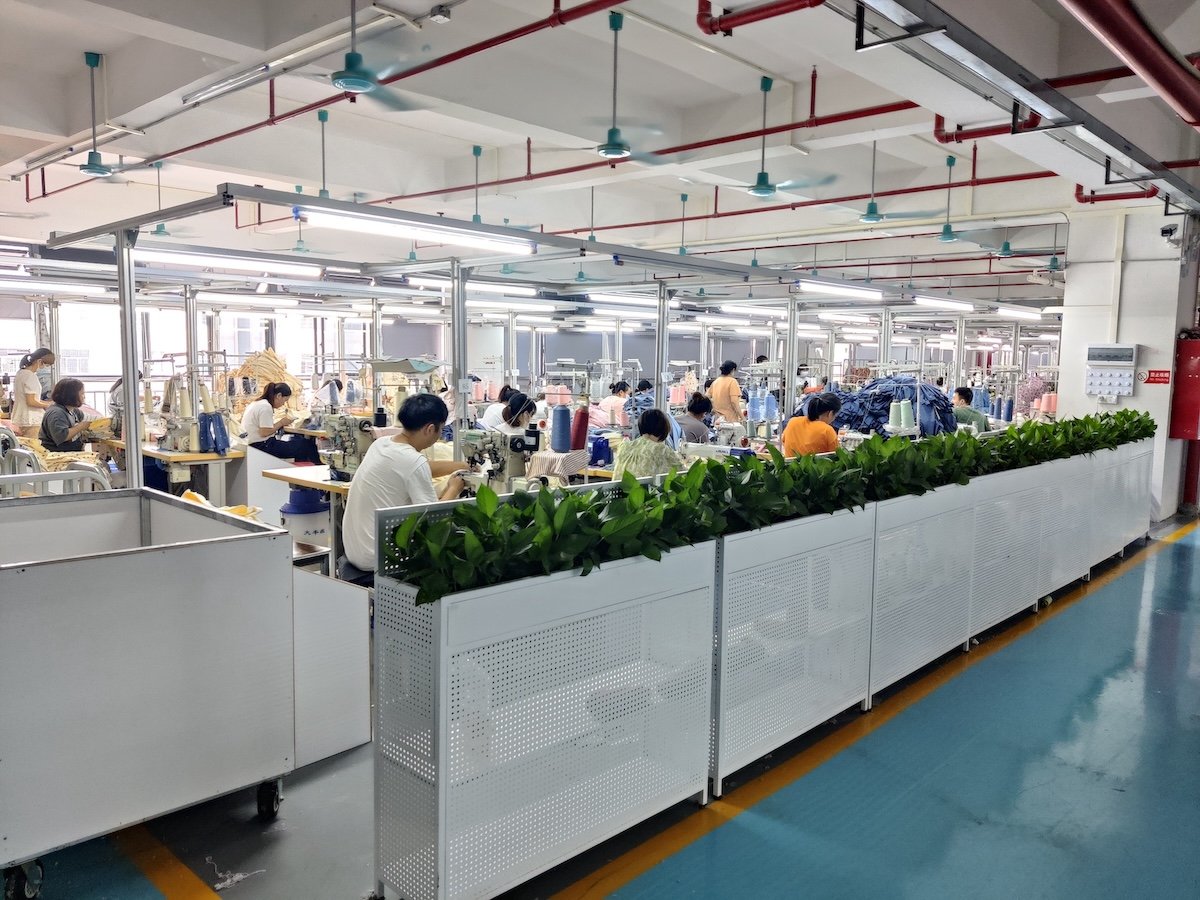
What a Sampling Development Request Actually Is
It is not a purchase order. It is the specification packet that lets a factory produce a prototype — sometimes called a sales sample or first sample — before any bulk commitment. Think of it as the input to the sampling stage: the clearer the input, the closer the output. If you already have a tech pack, the development request is the cover note plus any open questions; if you don’t yet, our guide to creating a kids’ underwear tech pack covers the deeper document the request points to.
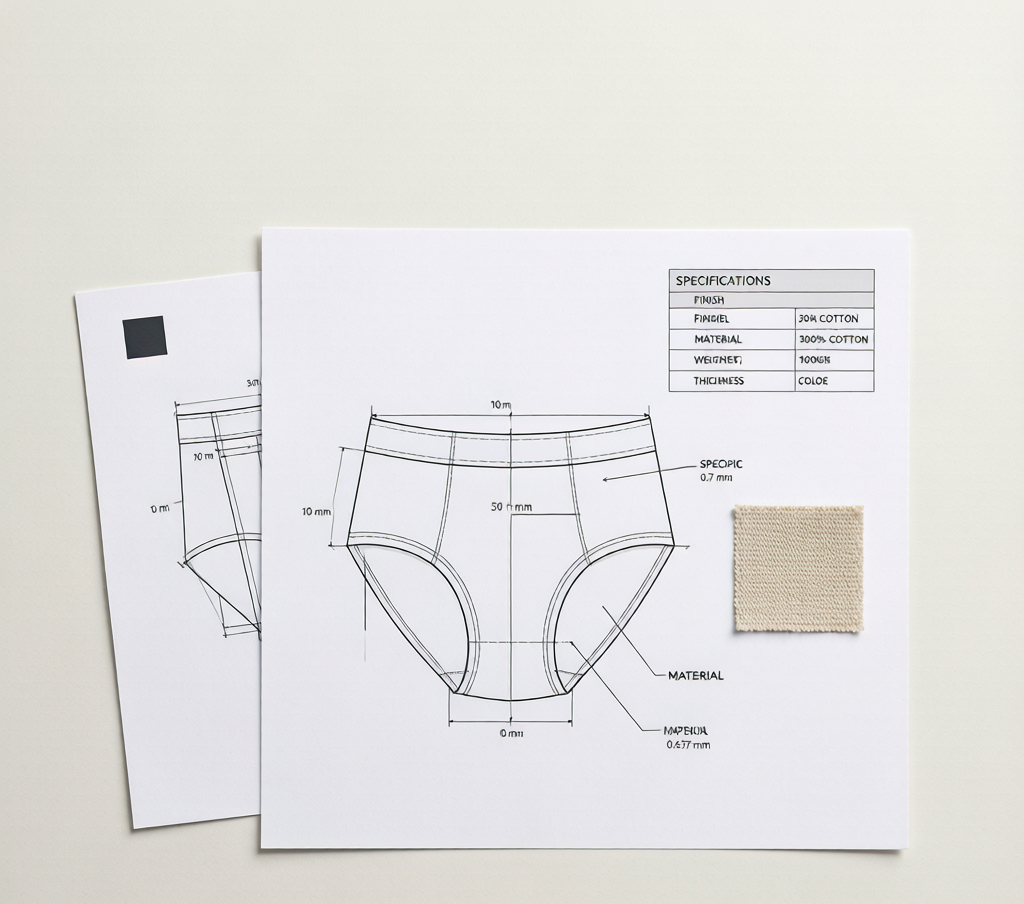
The Seven Elements Every Request Should Include
1. Style brief & reference images
Describe the garment (brief, boxer, training bra, bodysuit), the age range, and the wear occasion. Attach two to four reference images — yours or competitors’ — and note what to copy versus what to ignore. A precise note reads like: “same waistband as image A, but longer leg like image B.”
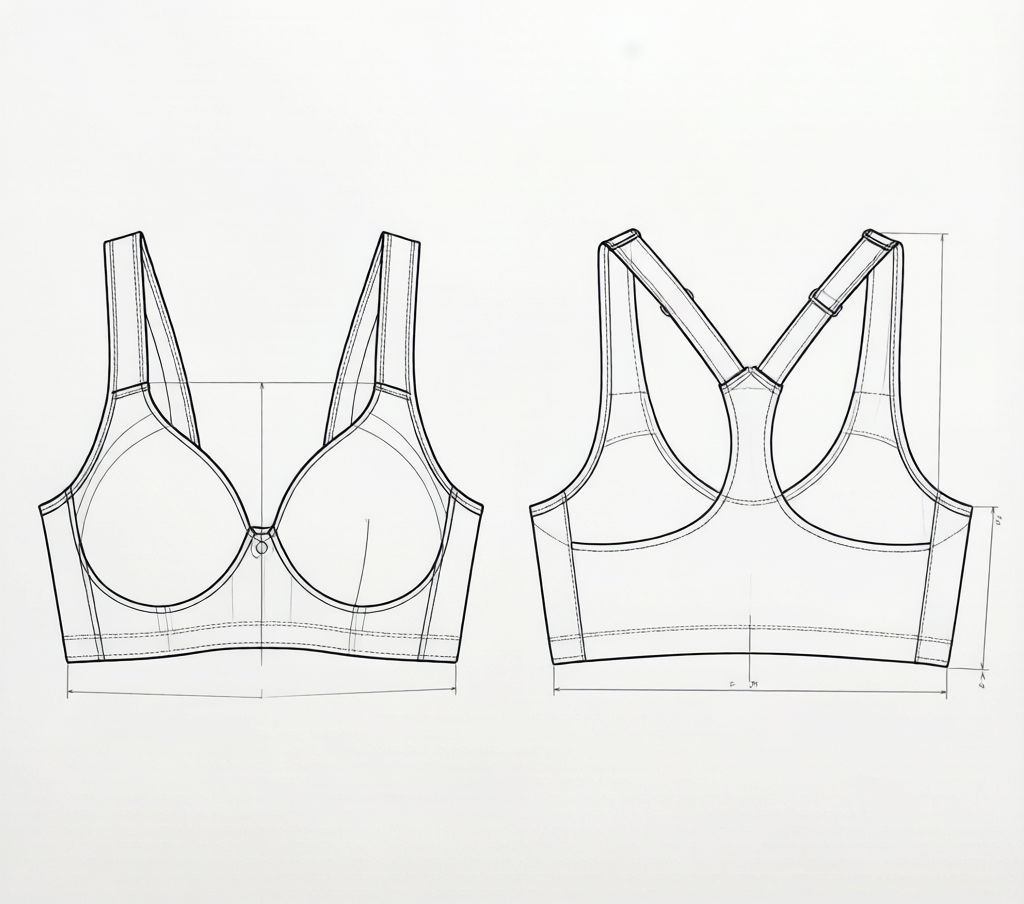
2. Measurement spec & graded size chart
Provide a point-of-measure (POM) chart with tolerances, the size range (for example 2T–6 or 7–14), and the grading rule. Underwear fit is unforgiving: a 1 cm miss at the leg opening reads as “too tight” to a parent. Without a grade, a factory defaults to adult proportions — wrong for kids.
3. Bill of Materials
List fabric composition %, GSM, knit structure, elastic width / tension / latex-free status, trims, and labels. This is the single biggest driver of both cost and sample accuracy; our guide to BOM details explains each line and why it moves the result.
4. Color standards
Give a Pantone TCX/TX or a physical swatch plus tolerance (typically ±0.5–1.0 ΔE). “Match this photo” is not a standard, and it is the quiet cause of most color resamples.
5. Construction & stitch detail
Specify seam types (flatlock, overlock), elastic application (covered, enclosed), and any topstitch. For kids, enclosed seams reduce chafing — say so explicitly, because a default seam may not.
6. Labeling & compliance scope
State which markets the style targets so the factory builds the right care label and certificates in from the start: China (GB 31701 Class A for skin-contact items), the United States (CPC, backed by third-party testing), and test reports from SGS, TÜV SÜD, or Intertek as proof. OEKO-TEX Standard 100 screens for harmful substances and is in progress at Nuohua. Runs bound for the EAEU region may need EAC confirmation, which is verified per order.
7. MOQ, sample quantity & timeline
Tell the factory your intended bulk MOQ per color and how many samples you need (often two to three per size, for fit, photography, and reserve). Give your target ship window so they can flag lead-time risks early instead of at the deadline.
| Element | What to include | Why it matters |
|---|---|---|
| Style brief | Type, age range, 2–4 refs with copy/ignore notes | Aligns intent before cutting |
| Measurements | POM chart + grade + tolerances | Fit is unforgiving for kids |
| BOM | Fabric %, GSM, elastic, trims | Biggest cost & sample lever |
| Color | Pantone or swatch + tolerance | Prevents color resamples |
| Construction | Seam, elastic application, stitch | Comfort & durability |
| Compliance | Target markets + certificates | Customs & safety |
| MOQ & timeline | Bulk MOQ, sample qty, ship window | Lead-time honesty |
A Simple Request Template You Can Send
Copy this skeleton into your next email or briefing doc. Every blank you leave is a guess the factory has to make:
- Style name & type: ____________________
- Age range / size range: ____________________
- Reference images (copy vs ignore): ____________________
- POM chart attached: yes / no
- BOM attached: yes / no (see our BOM guide)
- Color: Pantone / swatch + tolerance ____
- Construction notes: ____________________
- Target markets & certificates: ____________________
- Sample quantity & bulk MOQ: ____________________
- Desired sample date: ____________________
Common Mistakes That Cause Sampling Rework
Avoid these, because each one reliably triggers a resampling round: sending one blurry photo with “make it like this”; omitting the latex-free elastic requirement; forgetting the size grade so the factory defaults to adult proportions; leaving color as “your best match”; not stating the target market, so the wrong certificates get built in; and asking for a sample with no timeline, then rushing it. A precise request costs ten minutes; a resample costs ten days.
| Mistake | What goes wrong | Consequence |
|---|---|---|
| One blurry photo, “make it like this” | Factory guesses the design | 1–2 resampling rounds (~1–2 weeks) |
| No latex-free elastic stated | Wrong elastic; skin-irritation risk | Resample + compliance rework |
| No size grade supplied | Defaults to adult proportions | Fit rejected by parent testers |
| “Your best match” for color | Dye lot drifts from intent | Color resample (~1 week) |
| No target market stated | Wrong certificates built in | Customs hold or redo |
| No timeline, then rush | Lead-time risk found too late | Missed launch window |
How Nuohua Reviews Your Request
When a request lands with us, we (1) confirm every element above is explicit; (2) flag gaps before sampling, not after; (3) build the first sample to the locked spec with the real trims and labels attached; and (4) attach the relevant test references (SGS, TÜV SÜD, Intertek, GB 31701 Class A, CPC). This is the same discipline whether you are still shortlisting a manufacturer or already vetting a long-term OEM/ODM partner, and it pairs with our kids’ underwear production-readiness checklist. If you want to understand where the right fabric and trim clusters sit, our overview of China’s kids’ underwear manufacturing regions is a useful next read.
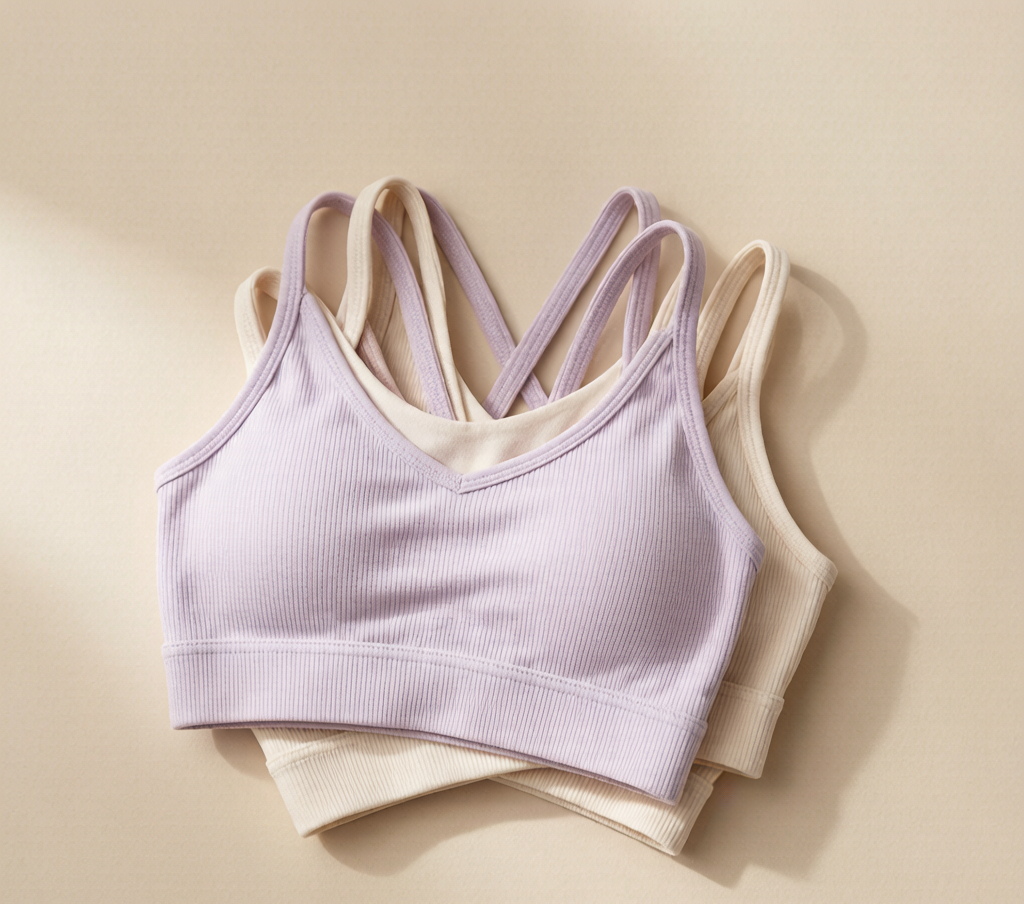
How to Get Your Sample Approved Faster
The request itself is what decides your sampling speed. Four moves consistently shorten the path from brief to approved sample:
- Standardize the format. Use the template above so nothing is left to a follow-up email.
- Complete the fabric spec. Composition, GSM, and dye method decided up front remove the largest source of resampling.
- Spell out construction. Seam type and elastic application written plainly leave zero room for interpretation.
- Build grading into the size chart. A size spec with tolerances lets the factory cut correctly the first time.
- Share production context early. MOQ, timeline, and target price let the factory flag feasibility before cutting, not after.
Questions Manufacturers Will Ask Before Sampling
Most factories, Nuohua included, will ask a short set of questions before the first cut. Having answers ready is the fastest way to start:
Q — What is your intended MOQ per color, and your scaling plan?
A: This sets whether a style is even feasible and which fabric width makes sense.
Q — What is your target price range?
A: It tells the factory which material tier and construction are realistic, not aspirational.
Q — What is your ideal sample and production timeline?
A: Lead time is real; stating it early avoids a deadline that cannot be met.
Q — Which fabric direction do you prefer — bamboo, cotton, or modal?
A: This anchors the BOM and the handfeel you are targeting.
Q — What quality standard and market certification do you need?
A: GB 31701 Class A, CPC, or other marks decide the testing built into the sample.