
Kids underwear elastic waistband guide starts with a simple truth: the waistband is the smallest part of a kids’ underwear item and the most common reason a sample gets rejected. Get the elastic wrong and the garment rides up, leaves marks, or fails a skin-contact test. Get it right and the same style sells through a second season. This guide covers the waistband types that matter for children’s underwear, how to match them to the product, the compliance lines you cannot skip, and the exact spec to send your factory.
For kids’ underwear, specify the waistband explicitly: width (usually 18–38 mm), elastic type (knitted, woven, or soft waistband tape), latex-free status, and recovery after stretch. Pair a wider, softer waistband with training bras and toddler briefs, and a firmer, narrower one with boys’ boxer briefs that need to stay put during play. State skin-safety compliance (GB 31701 Class A for China / CPC for the US) in the same line as the fabric — a vague “soft waistband” is the single most expensive sentence in a sampling request.
In this guide
- Why the waistband decides comfort (and returns)
- The main waistband types for kids’ underwear
- Matching the waistband to the product
- Skin safety & compliance: what a waistband must not contain
- Common waistband mistakes → what they cost you
- How to specify a waistband in your tech pack, BOM, and request
- Questions a manufacturer will ask about the waistband
- How Nuohua builds waistbands
Why the Waistband Decides Comfort (and Returns)
A child wears underwear for ten to fourteen hours a day, every day. The waistband sits against the most sensitive skin on the torso, and unlike a sleeve or a hem it is under constant tension. Three things make or break it:
- Pressure. Too narrow or too tight, and it leaves red marks by midday. Too loose, and the garment slips.
- Recovery. Elastic that does not return to shape after stretching rolls, twists, and looks cheap after two washes.
- Skin contact. Children’s skin is thinner than adults’. Latex, unlabeled dyes, and stiff tapes cause the rash complaints that drive returns.
Get any one of these wrong and the style fails fit testing with parent panels — the most expensive failure because it shows up after sampling, not before. The fix is to specify the waistband as a real component, not a default.
The Main Waistband Types for Kids’ Underwear
There are four constructions buyers actually meet, and they are not interchangeable.
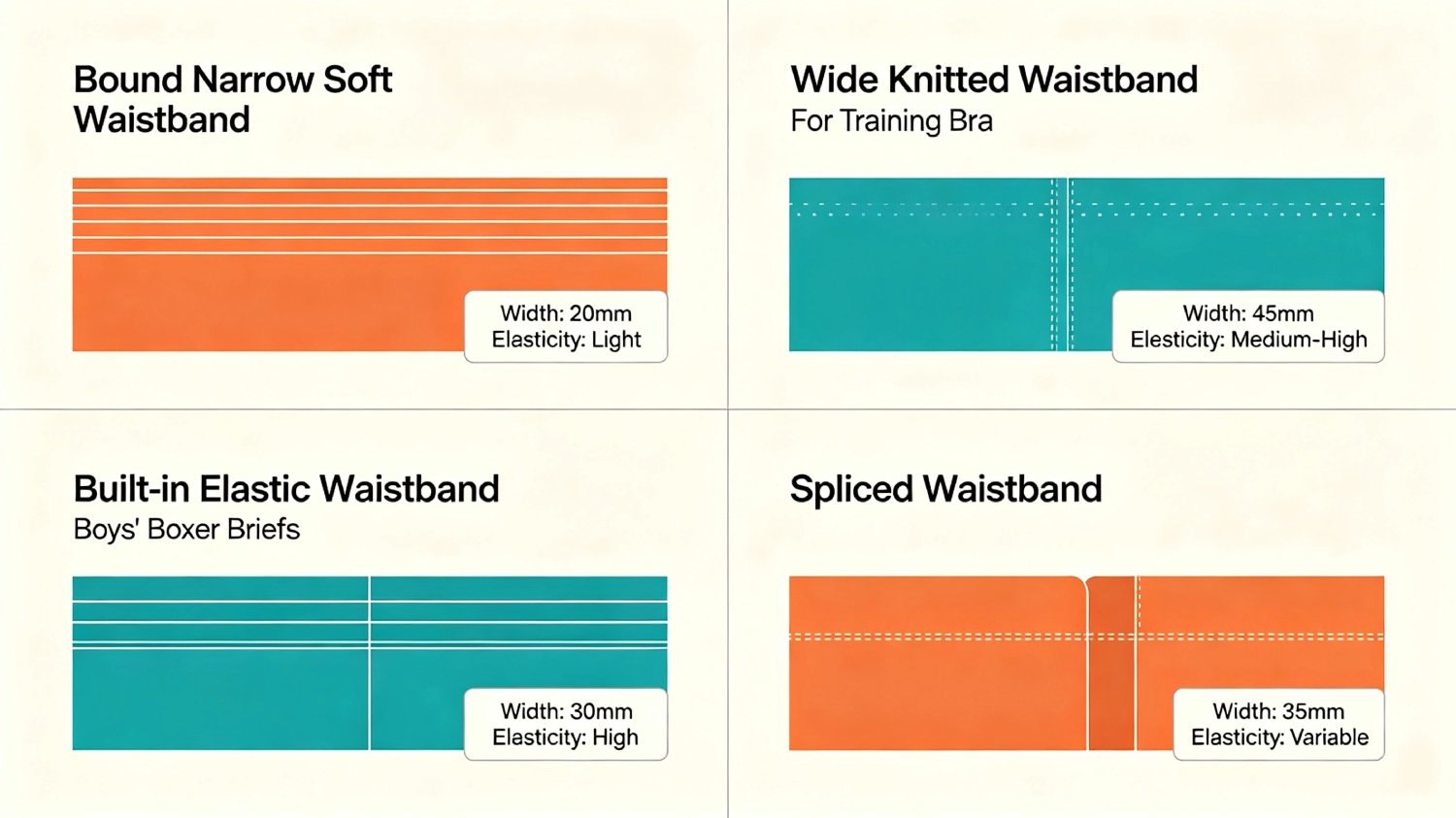
| Type | Typical width | Best for | Watch-out |
|---|---|---|---|
| Bonded / covered waistband | 18–25 mm | Toddler briefs, girls’ hipsters | Needs a clean edge; cheap bonding peels |
| Wide knitted waistband | 28–38 mm | Training bras, soft briefs | Must be latex-free and high-recovery |
| Inserted elastic waistband | 20–30 mm | Boys’ boxer briefs, sport styles | Elastic channel must be even or it twists |
| Pieced waistband | 22–32 mm | Fashion briefs, printed styles | More seams = more points to irritate skin |
Matching the Waistband to the Product
The right waistband is a function of the product, not a catalogue default. Three short rules:
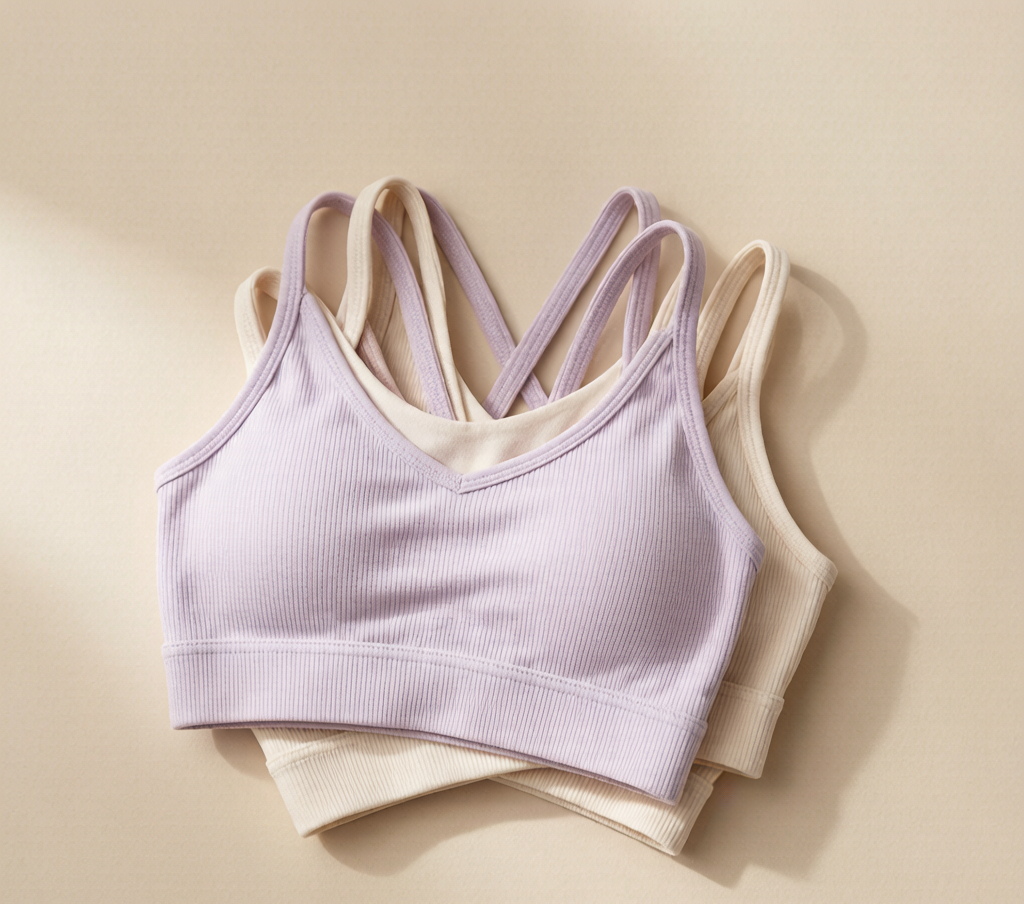
- Training bras & first bras: use a wide knitted, latex-free waistband (30–38 mm). The wearer is adjusting to a garment; softness beats hold. Pair with a bamboo or modal body for breathability.
- Boys’ boxer briefs: use an inserted elastic waistband (22–28 mm) with firm recovery. Active wear needs the garment to stay put, so hold beats softness — but the elastic must still be skin-safe.
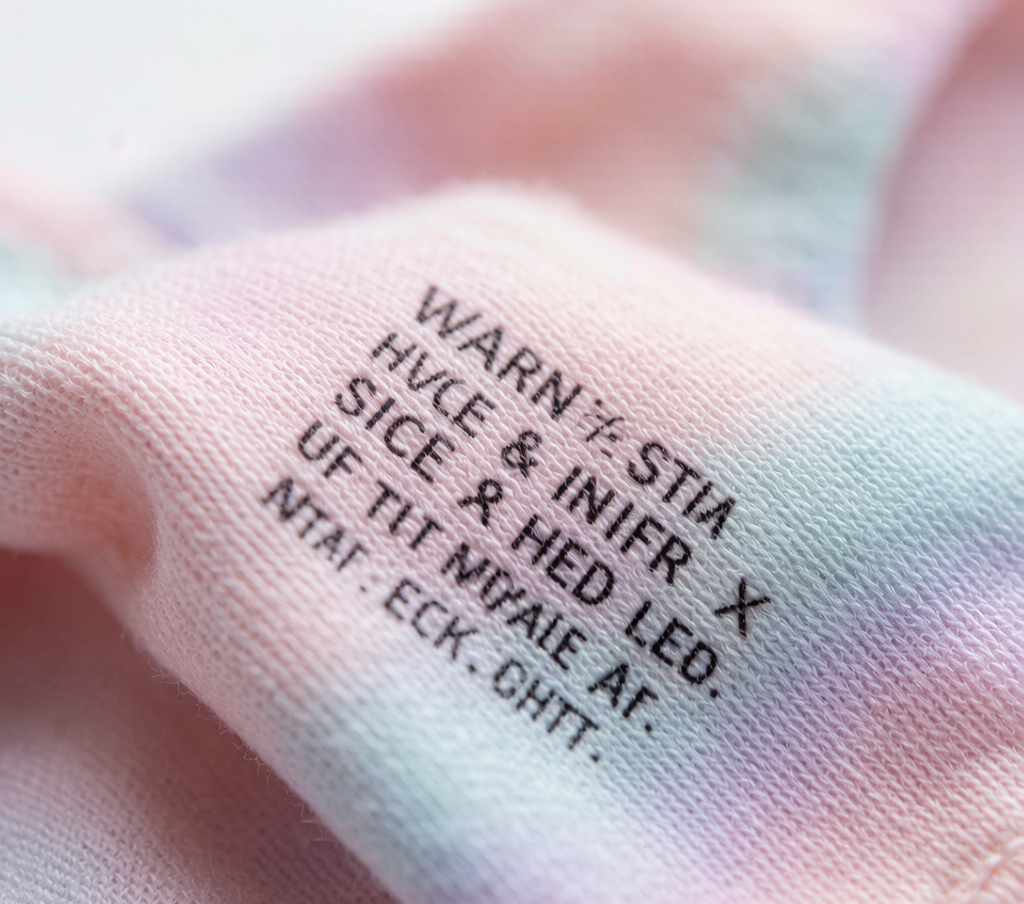
- Toddler & girls’ briefs: a bonded or pieced soft waistband (18–25 mm) with a printed, tag-free label avoids the scratch point at the back.
When you are still shortlisting a manufacturer, this is exactly the kind of product-specific detail a competent supplier should raise unprompted. Our guide to finding and shortlisting a kids’ underwear manufacturer in China covers the questions that surface a factory’s real expertise.
Skin Safety & Compliance: What a Waistband Must Not Contain
For children’s skin-contact garments, the waistband is a compliance component, not a trim. The lines that matter:
- Latex. State “latex-free” explicitly. Latex is a common allergen and many buyers assume it by default. If you do not write it, a factory may use the cheapest elastic that contains it.
- Formaldehyde & azo dyes. Must be within limit for the target market. For China this is built into GB 31701 Class A (the strictest tier, for infants and direct skin contact).
- US market. Children’s sleepwear and underwear fall under CPC (Children’s Product Certificate) requirements; the waistband elastic is part of the tested assembly.
- EU / general. OEKO-TEX Standard 100 is a strong buyer signal — at Nuohua it is currently in progress, so we do not claim it as held; we build to the substance limits regardless.
Verification is done by independent labs — SGS, TÜV SÜD, and Intertek are the ones we work with. The certificate references belong in the same documentation packet as the fabric spec, which is why a waistband line belongs in the BOM, not as an afterthought.
Never write “soft elastic” and stop. A waistband spec without latex-free status, width, and the target compliance standard is not a spec — it is a resample waiting to happen. When you are vetting a long-term OEM/ODM partner, ask to see their elastic supplier’s test report, not just the garment test.
Common Waistband Mistakes → What They Cost You
Each mistake below is cheap to avoid in the brief and expensive to fix after sampling.
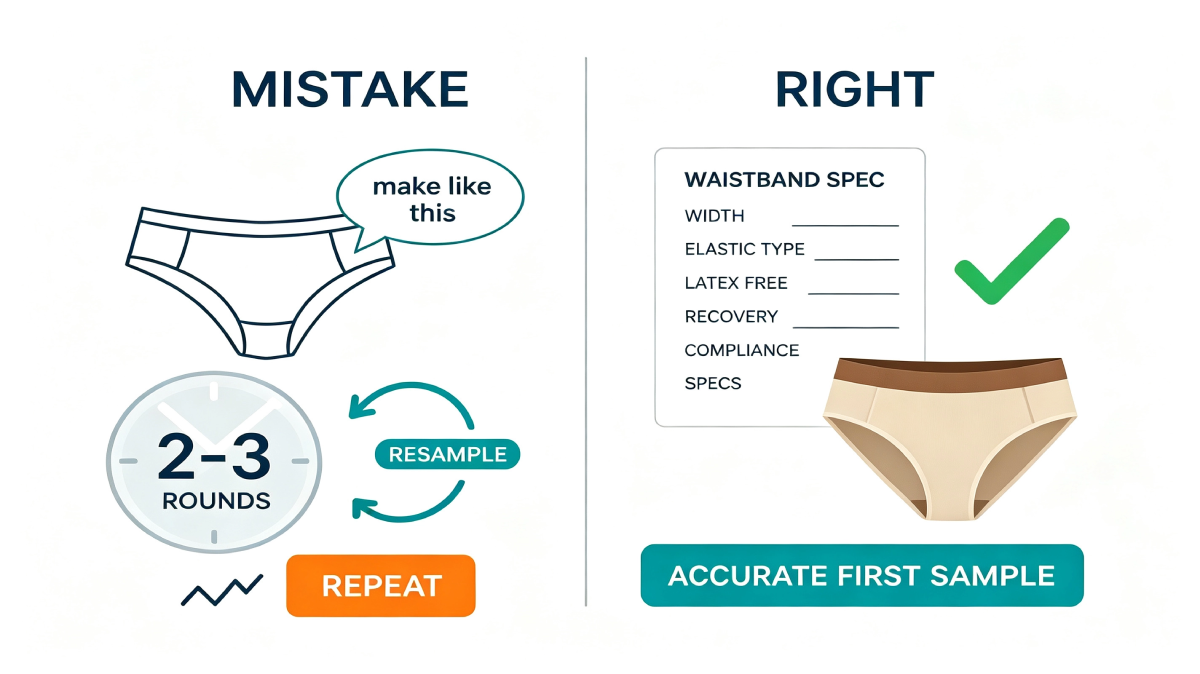
| Mistake | What goes wrong | Consequence |
|---|---|---|
| “Soft waistband, like the photo” | Factory picks cheapest elastic | Red marks, returns, 1–2 resample rounds |
| No latex-free stated | Allergen elastic used | Compliance rework + resample |
| No width given | Defaults to adult proportion | Rolls or rides up on small bodies |
| Compliance omitted | Wrong certificates built in | Customs hold or redo for the market |
| Recovery not specified | Low-recovery elastic | Twists after 2 washes, looks cheap |
How to Specify a Waistband in Your Tech Pack, BOM, and Request
The waistband should appear in three documents, each at a different depth:
- Tech pack: the construction note — type, width, attachment method, and a flat sketch call-out. Our guide to creating a kids’ underwear tech pack shows where the line goes.
- BOM: the elastic as a line item with supplier, composition, width, and compliance. This is the field that drives both cost and sampling accuracy, as we cover in how BOM details affect kids’ underwear cost and sampling.
- Sampling request: the one-line summary you send the factory — “wide knitted waistband, 32 mm, latex-free, GB 31701 Class A”. Our kids’ underwear development request template has the slot built in.
If you already know your region’s sourcing cluster, the waistband elastic is usually sourced close to the fabric mill — our overview of China’s kids’ underwear manufacturing regions explains why.
Questions a Manufacturer Will Ask About the Waistband
A serious factory will ask these before cutting. Having answers ready is the fastest way to start sampling:
Q — Latex-free, yes or no, and to what standard?
A: This decides the elastic supplier and the test method. State it even if the answer is “yes, always.”
Q — What width and recovery do you need?
A: Width in mm and a recovery expectation (e.g. “returns to shape after 50% stretch”). Vague “soft” is not answerable.
Q — Which market and compliance mark?
A: GB 31701 Class A (China), CPC (US), or other. This decides the substances tested in the assembly.
Q — Printed label or woven label at the back?
A: A tag-free printed label removes the scratch point; confirm it is in the brief so the factory does not default to a woven tag.
How Nuohua Builds Waistbands
At Nuohua we treat the waistband as a spec’d component from the first sample. For bamboo and modal bodies we pair a wide knitted, latex-free waistband so the softness matches the fiber; for boys’ boxer briefs we use an inserted elastic with verified recovery so the garment stays put through play. Every children’s style is built to GB 31701 Class A substance limits, with CPC documentation available for the US market, and tested through SGS, TÜV SÜD, or Intertek as the order requires.
The waistband is also where private-label detail lives — a printed, tag-free label in your brand font is the difference between “generic” and “ours.” If you are comparing suppliers, the questions above are the fastest way to tell a factory that specs from one that guesses.
Building a kids’ underwear line with the right waistband?
Send us the product, the age range, and your target market — we will spec the waistband, the fabric, and the compliance in one package.