
Kids Underwear Tech Pack Specification comes down to three lines a factory can actually build from. The lines that decide fit, skin safety, and sampling speed are fabric, lining, and trim. Get them right and the first sample is close. Get them vague and you burn rounds fixing hand-feel, recovery, and compliance after the fact. This guide shows the exact fields to write, with a copy-paste template and the cost of every gap. It pairs with our full tech pack structure guide — here we go deep on the material block only.
Specify fabric, lining, and trim as separate, measurable lines: fiber blend and GSM for fabric; fiber, density, and placement for lining; elastic type, latex-free status, width, and recovery for trim. State skin-safety compliance (GB 31701 Class A for China / CPC for the US) on the same block. A complete material spec typically saves one to two sampling rounds; a vague one (“soft cotton”) usually costs two to three weeks of rework.
In this guide
- Why these three specs decide the sample
- How to write the fabric specification
- Lining details: when kids’ underwear needs them
- Trim specification: elastic, binding, labels, hardware
- A copy-paste spec block for your tech pack
- Common spec gaps and what they cost you
- How Nuohua reviews your material spec
- Frequently asked questions
Why These Three Specs Decide the Sample
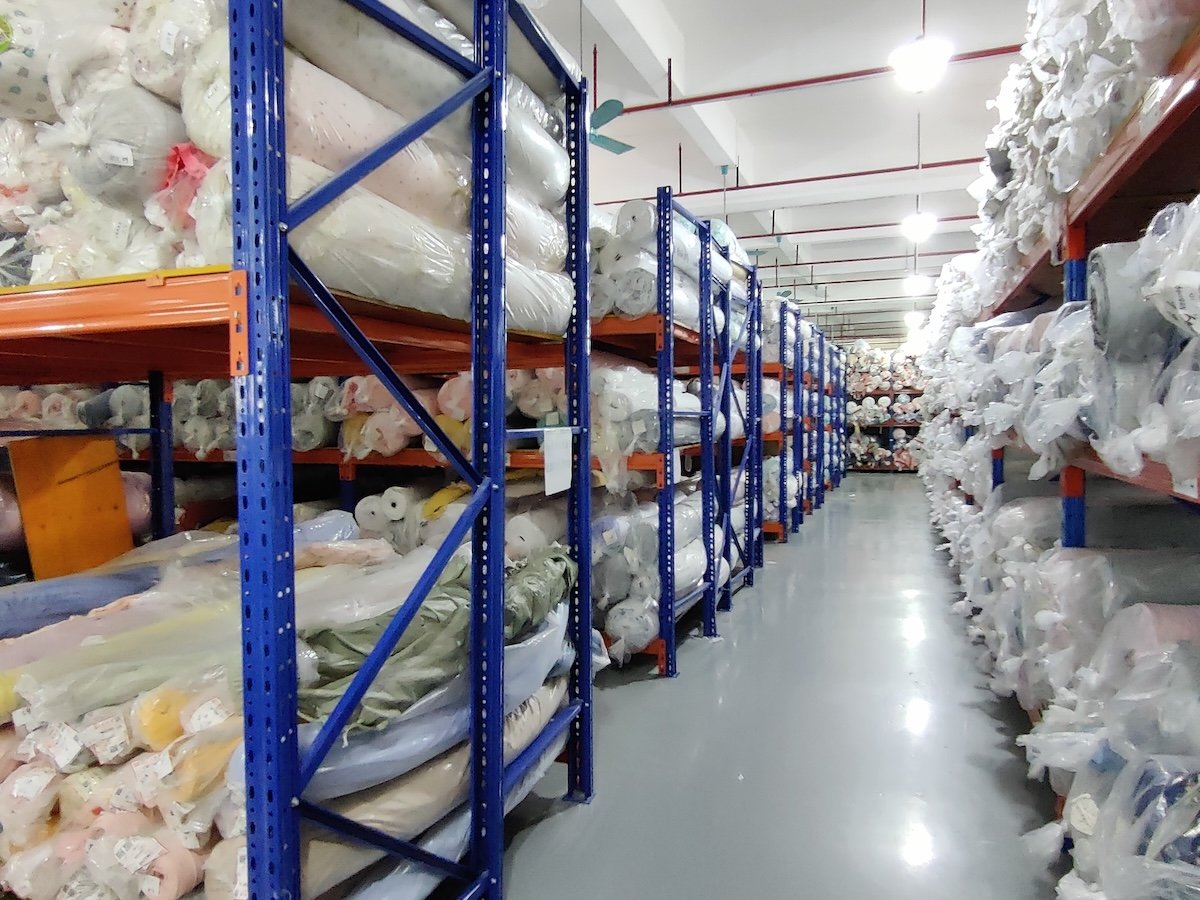
Fabric, lining, and trim are the only places a kids’ underwear item touches skin for ten to fourteen hours a day. They also drive the three variables a factory cannot guess: hand-feel, recovery after stretch, and skin-safety compliance. A flat sketch shows shape; these three lines show what the shape is made of. When a buyer writes “soft cotton” and stops, the factory fills the blank with its default — which is rarely the default the buyer wanted. Our BOM guide covers how material lines ripple into cost; this guide covers how to write them so the first sample is the right one.
How to Write the Fabric Specification
For knitted kids’ underwear, the fabric line should name five things, not one. Treat each as a separate field so there is no ambiguity:
- Fiber blend — e.g. 95% bamboo viscose / 5% elastane, or 100% combed cotton. Name the fiber, not the mood (“soft” is not a fiber).
- GSM (weight) — 150–220 gsm is the normal kids’ underwear band. A number, not “medium weight”.
- Knit construction — single jersey, double cloth, or interlock. This changes breathability and opacity.
- Width / tubular — open width in cm, or tubular diameter, so cutting yield is known.
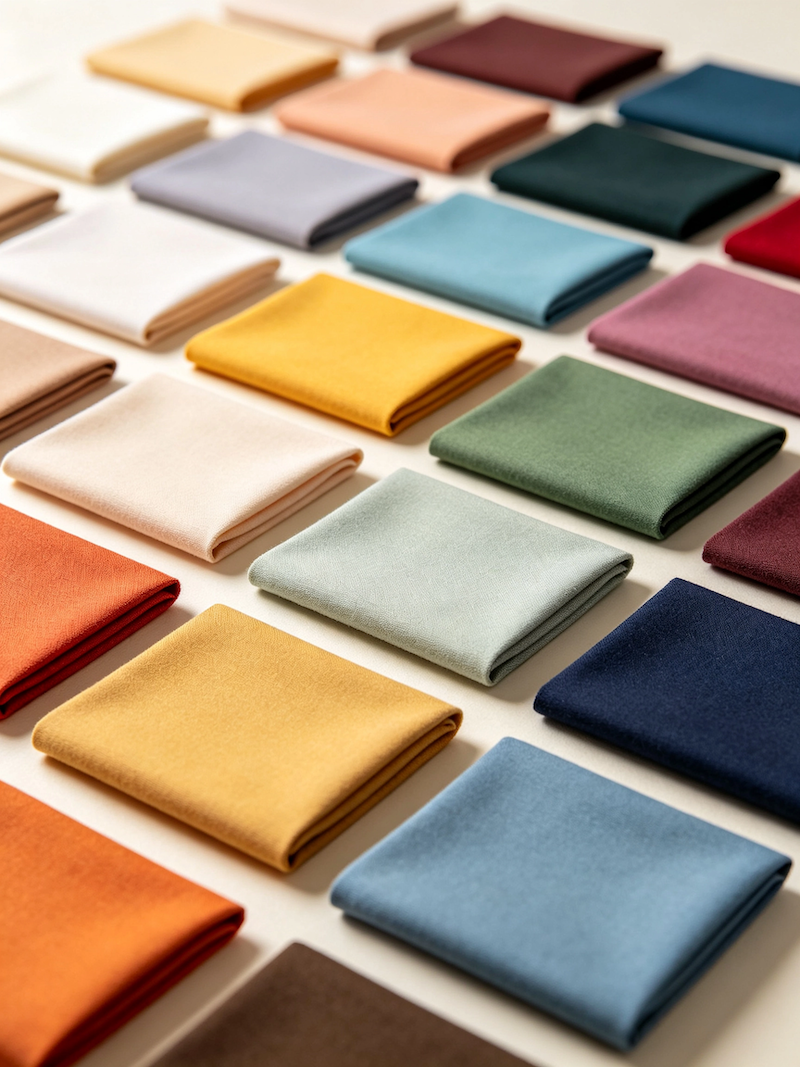
- Dye method & colour standard — piece-dyed or yarn-dyed, matched to a Pantone TCX reference.
| Field | Vague (causes rework) | Buildable spec line |
|---|---|---|
| Fiber | “Cotton” | 95% bamboo viscose / 5% elastane |
| Weight | “Medium” | 180 gsm |
| Construction | (blank) | Double-cloth jersey |
| Width | (blank) | 155 cm open width |
| Colour | “Pink” | Pantone 13-1520 TCX, piece-dyed |
If you are choosing between knit families, our knit vs woven breakdown maps each construction to the right product. The key point: a fabric line with a GSM and a fiber blend is buildable; a fabric line without them is a guess.
Lining Details: When Kids’ Underwear Needs Them
Most everyday kids’ underwear is unlined — the fashion fabric sits against skin. Lining appears in three cases, and each needs its own line:
- Sleepwear & thermal sets — a brushed interior or a separate interlining for warmth; specify fiber and density.
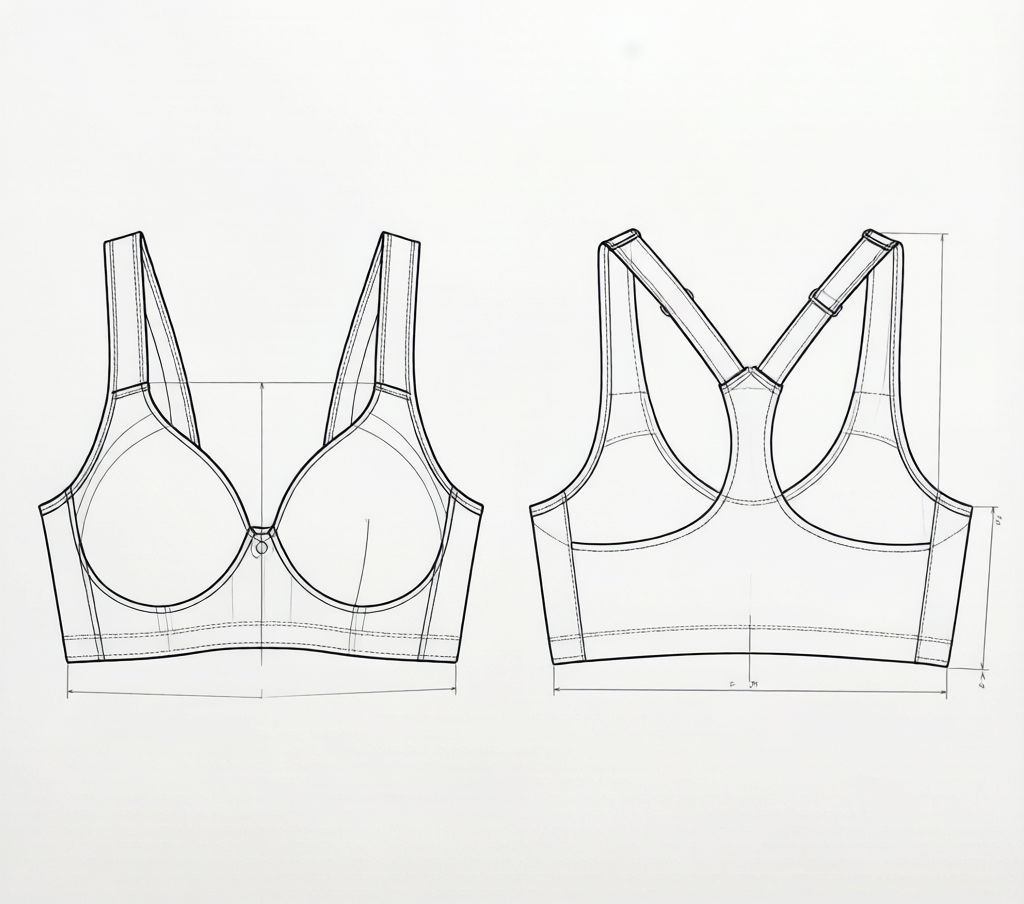
- Padded or structured training bras — a lining behind the cup; specify fiber, colour (match or contrast), and whether it is removable.
- Contrast panels — where a sheer fashion fabric meets skin, a lining layer is required for opacity and compliance.
A lining spec that only says “lined” is incomplete. Write the lining fiber, the density (gsm), the placement (full front / underbust / contrast panel), and whether it is fused or sew-in. For anything touching skin, the lining must meet the same GB 31701 Class A (China) or CPC (US) standard as the shell — state it on the same line.
Trim Specification: Elastic, Binding, Labels, Hardware
Trim is where sampling quietly breaks. A waistband elastic that “feels soft” in the brief becomes a sample that rides up or leaves marks. Write trim as a small table, one row per component:
| Trim | Fields to specify | Why it matters |
|---|---|---|
| Waistband elastic | Type (knitted/woven), width mm, latex-free status, recovery % | Decides ride-up and skin marks |
| Leg elastic | Width mm, latex-free, soft-plush or braided | Decides chafe and red marks |
| Binding / fold-over | Self-fabric or contrast, width mm | Decides edge comfort |
| Care label | Tag-free printed or woven, compliance text | Decides skin safety & law |
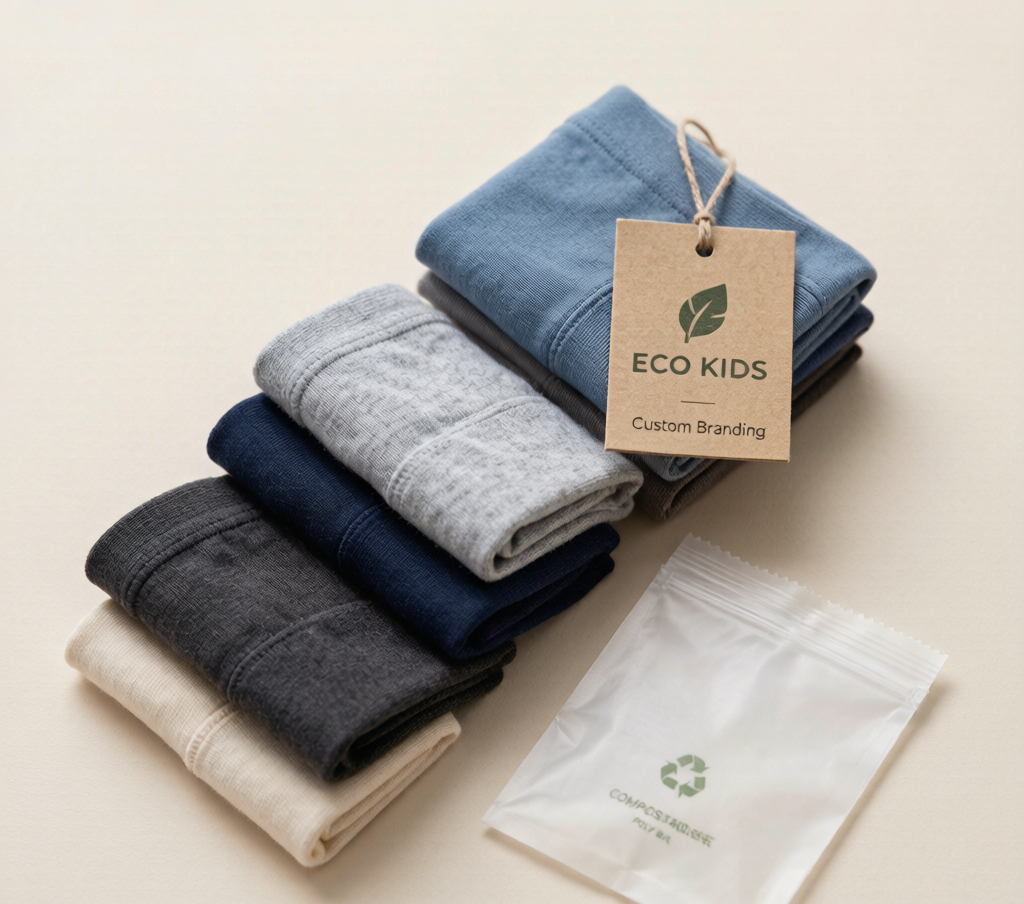
| Hangtag / hardware | Material, print, attachment method | Decides brand finish |
The single most important trim field is latex-free status. For children’s skin-contact garments sold to the US or EU, latex-free elastic is the default buyers expect, and it must be written explicitly — not assumed. Pair it with the recovery rate (e.g. “≥ 90% recovery after 5 stretches”) so the factory cannot substitute a cheaper band that sags after wash two.
A Copy-Paste Spec Block for Your Tech Pack
Drop this block into your tech pack’s material section. Replace the brackets with your values:
Fabric: 95% bamboo viscose / 5% elastane, 180 gsm, double-cloth jersey, 155 cm open width, Pantone 13-1520 TCX piece-dyed.
Lining: None (unlined) — or: 100% combed cotton, 140 gsm, full front, sew-in, same compliance as shell.
Waistband elastic: knitted, 25 mm, latex-free, ≥ 90% recovery after 5 stretches.
Leg elastic: knitted soft-plush, 8 mm, latex-free.
Binding: self-fabric fold-over, 12 mm.
Care label: tag-free printed, GB 31701 Class A / CPC compliant text.
Compliance: GB 31701 Class A (China) / CPC (US); third-party tested by SGS, TÜV SÜD, or Intertek. OEKO-TEX Standard 100 in progress.
This single block removes the most common ambiguity a factory meets. It also feeds directly into a clean BOM, which is what pricing and sampling accuracy are built on.
Common Spec Gaps and What They Cost You
Each gap below is cheap to close in the brief and expensive to fix after sampling. The rounds and days are typical for a small private-label run, not worst case.
| Spec gap | What goes wrong | Typical cost |
|---|---|---|
| Fiber named, no GSM | Factory picks 160 gsm; you wanted 200 — wrong hand-feel | 1 extra round, ~10–14 days |
| Elastic “soft”, no latex-free / width | Wrong recovery; waistband rides up or leaves marks | 1–2 rounds, 2–3 weeks |
| “Lined”, no fiber or density | Lining mismatched to shell; opacity or comfort fails | 1 round, ~7–10 days |
| Colour by name, no Pantone | Dye-lot drift between sizes and reorders | 1 round, ~7 days |
| No compliance line | US/EU shipment blocked at testing | Retest + 2–3 weeks, hard cost |
The pattern is consistent: a missing field is never free, it is just paid later as a resample. A complete block usually saves one to two rounds versus a vague one.
How Nuohua Reviews Your Material Spec
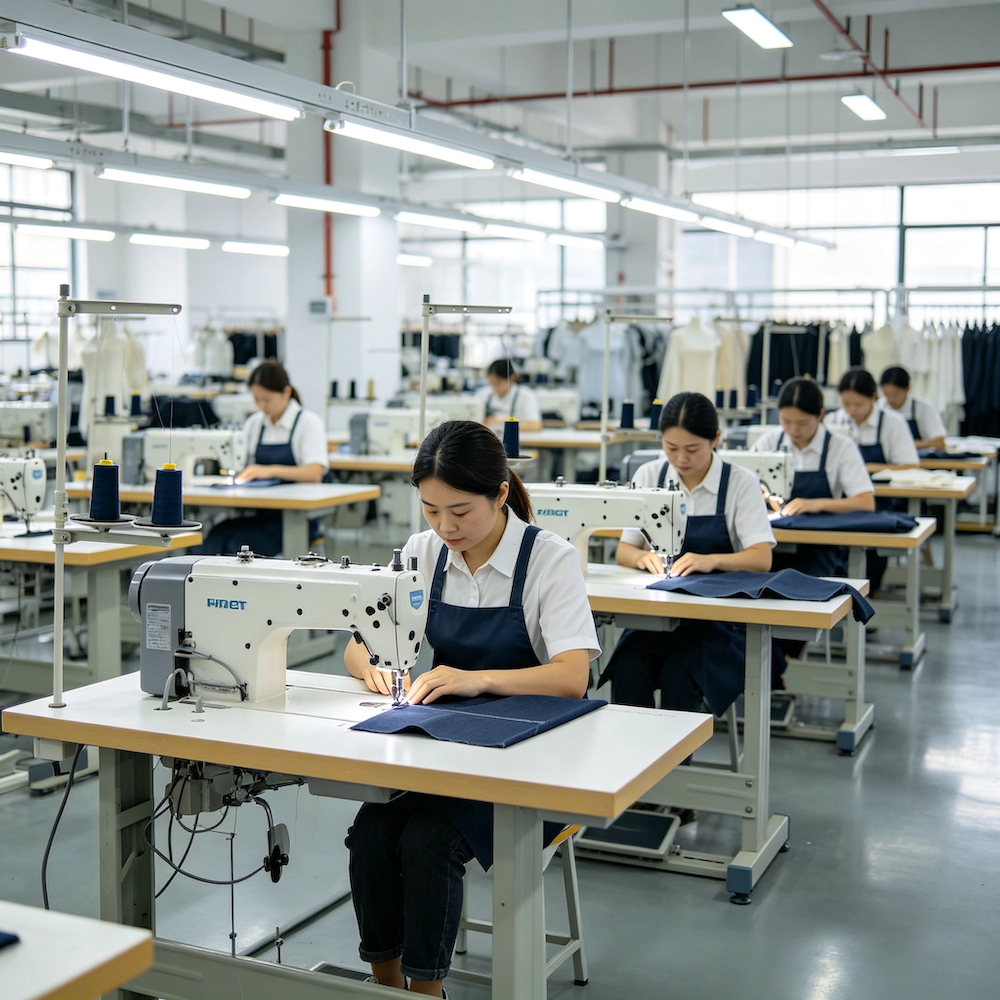
From the factory side, the material block is the first thing we check before quoting, because it drives fabric sourcing, lab testing, and sampling time. When a spec is complete, we can confirm a mill, lock a compliance path (GB 31701 Class A / CPC via SGS, TÜV SÜD, or Intertek), and cut the first sample without a clarification loop. When it is vague, we send one clarification round — and every clarification round pushes your sample date right.
This is why we ask for the material block inside the development request itself, not after. A spec ready at request stage is also what our production-readiness checklist expects before bulk starts. If you are still shortlisting a manufacturer, a clean material spec is the fastest signal that a brand knows its product.
Frequently Asked Questions
Do I need a lining for basic kids’ underwear?
Usually no — unlined knits sit directly against skin and breathe better. Line only sleepwear, thermal sets, structured training bras, or sheer contrast panels.
What GSM is normal for kids’ underwear?
150–220 gsm. Lighter (150–170) for summer briefs, heavier (180–220) for winter or thermal. Name the number so the hand-feel is locked.
Is latex-free elastic required?
For children’s skin-contact garments it is the expected default in the US and EU, and it must be written explicitly. Do not assume the factory will default to it.
Can I just send a photo of the fabric?
A photo helps with colour and hand-feel, but it cannot state GSM, fiber blend, or compliance. Pair the photo with the spec block above.
Send us a material spec, get a sample that fits
Share your fabric, lining, and trim lines using the block above and we will quote against a real BOM — no guessing, no surprise resamples.