
What Determines Kids Clothing MOQ and Reorder Lead Time?
Quick answer: Kids clothing minimum order quantity (MOQ) is not a single factory-wide number. It depends on whether goods are already in stock, whether a suitable material is available, the minimum dye or print batch, pattern and sewing complexity, and the number of sizes and colors. Reorder lead time is similarly conditional: an approved pattern helps, but does not guarantee that the same yarn, fabric shade, elastic, or production slot will remain available.
For a children’s apparel brand, the better question is not “What is your MOQ?” but “Which parts of my specification force a fresh production batch?” That distinction can prevent a small trial order from becoming a delayed or unprofitable launch.
1. Start with the production route, not a headline quantity
NuohuaGarment evaluates different supply routes according to the actual style and material. The planning guide below does not mean every design is eligible for each route.
| Route | Indicative MOQ policy | Main conditions | Reorder question |
|---|---|---|---|
| Selected ready stock | From 2 pieces on selected in-stock styles, colors and sizes | Existing merchandise and available variants | Are the same SKUs still physically available? |
| Selected low-MOQ custom styles | From 150–300 pieces per color on selected styles | Depends on fabric, size range, decoration and customization | Can existing base materials and trims be reused? |
| Existing kids’ underwear / underpants or print programs | Typically from 1,000 pieces per style and color; mixed sizes possible | Approved existing style and applicable print program | Is the same base, waistband and print method available? |
| Custom kids’ sleepwear | Typically from 1,000 sets per design | Specific construction, fabric and safety review | Will the approved fabric and labeling remain unchanged? |
| Full OEM/ODM development | Confirmed after specification review | Fiber blend, GSM, yarn count, print, sizing and construction | Which new components require procurement or validation? |
This table defines routes, not automatic offers. A buyer requesting custom-dyed organic cotton pajamas, a non-stock zipper and a five-color print should not expect the same minimum as an existing in-stock product.
2. The four hidden minimums behind a kidswear MOQ
Fabric knitting and finishing
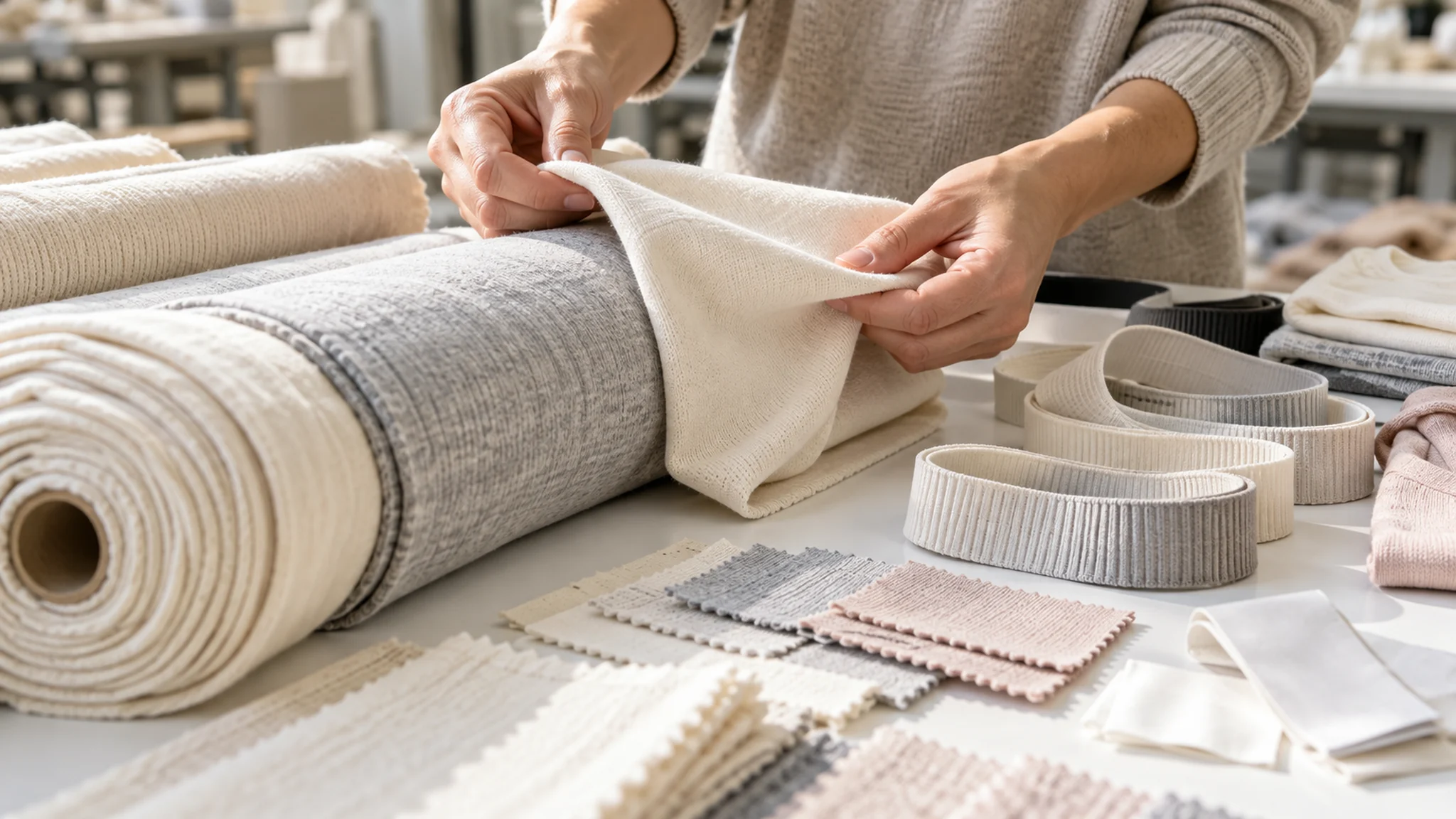
A supplier may need to buy greige knitted material by weight or roll, then finish it to a specific hand feel, shrinkage and GSM. A fabric described simply as “95% cotton, 5% elastane” is not a complete specification. Yarn count, knit construction, width and finishing affect yield and minimum purchase quantities. When the fabric is already available in the correct quality and shade, fewer new procurement operations are needed.
Dye-house and printing economics
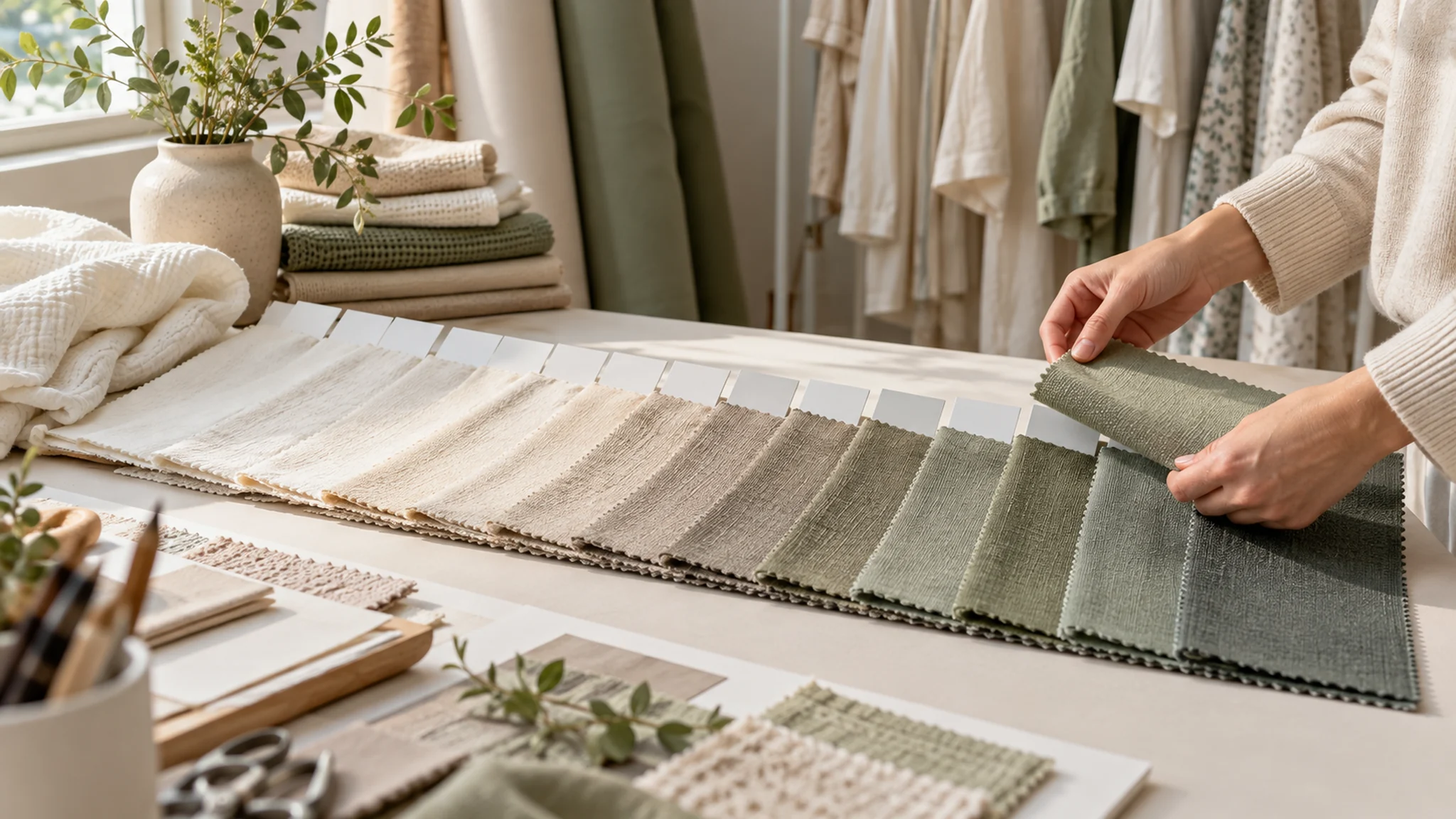
Custom colors may require lab dips and a minimum dye bath. All-over printing may require a separate minimum per artwork or printing method. Two colors of one style may therefore behave like two manufacturing projects even if pattern and sewing steps are identical. A buyer should confirm whether MOQ is per design, per color, per print, or per total order.
Elastic, labels and accessories
Children’s underwear frequently uses custom elastic waistbands, printed care labels and size-specific packaging. An elastic supplier may have a different minimum from the sewing factory. If a small order needs a newly woven brand-name waistband, its component minimum may exceed the finished-garment minimum.
Grading and cutting efficiency
Six sizes do not necessarily multiply MOQ by six: compatible sizes can sometimes be mixed within a color. But every size must have approved pattern pieces and a sellable quantity. An uneven size curve can create inefficient cutting markers and stranded inventory.
3. How MOQ affects the economics of a pilot order
A pilot is successful when it produces reliable evidence about fit, demand and returns—not merely when it ships a tiny quantity. Compare three possible trial structures:
| Pilot structure | Useful when | Main limitation | Decision to make before buying |
|---|---|---|---|
| Buy selected ready stock | Testing sales channel or packaging workflow | Limited control over pattern and materials | Does the exact SKU match your intended customer? |
| Customize an eligible existing style | Testing brand presentation on an existing base | Restricted fabric, color or decoration choices | Which attributes are fixed and which are editable? |
| Develop original OEM style | Differentiation depends on fit, construction or print | Development, validation and fresh component minimums | Is the target margin strong enough for full development? |
Illustrative scenario: A brand wants to test three underwear prints. If each print needs its own minimum, placing 300 pieces total may not meet a requirement of 1,000 pieces per style and color. Buying an eligible ready-stock style is a different purchase, not a way of bypassing a custom print minimum. Do not combine fundamentally different routes in one comparison.
4. The real reorder lead-time formula
Reorder readiness has five separate layers:
- Technical readiness: signed-off tech pack, graded patterns, bill of materials (BOM), print placements and label files.
- Material readiness: fabric, color, elastic and trims physically available or reserved with suppliers.
- Compliance readiness: unchanged or re-evaluated test scope, traceability and market labels.
- Capacity readiness: an actual confirmed production slot and realistic factory loading.
- Logistics readiness: packing approval, inspection schedule, booking and destination transport.
Reusing a pattern reduces pattern-development work, but it does not remove a dye-house queue or guarantee the same fabric lot. If one critical component is replaced, the buyer should consider a targeted validation test and documented approval before production.

5. A practical reorder reservation conversation
Instead of asking, “Can you reserve 10,000 pieces for us?”, ask these questions and request written responses:
- Which greige or finished fabrics are actually held in stock, and by whom?
- What is the supplier’s minimum replenishment quantity for that exact fabric?
- Are color-lot matching and dye variations acceptable within a defined tolerance?
- Which trims need separate purchase orders and minimums?
- What deposit, commercial agreement or forecast commitment is needed to reserve material?
- Can production capacity be tentatively planned without promising an unconfirmed start date?
- What triggers new tests if we change dye house, print technique, or fabric composition?
- Who approves substitutions and what document records the decision?
A forecast is a planning tool; it is not equivalent to an accepted purchase order, booked production or an inventory guarantee.
6. Price validity and change control
Price validity should be stated as a date or clearly bounded interval, with the assumed fabric, currency, quantity, pack method and delivery term listed. A quote is not complete if it omits the date and conditions under which a price could change.
| Change | May affect | Appropriate buyer control |
|---|---|---|
| New color or additional color | Dye minimum, color approval, unit price | Request a revised color-level quote |
| Different GSM or composition | Fabric yield, price, hand feel, tests | Approve new sample and relevant testing |
| Revised size breakdown | Fabric use and cutting yield | Lock size curve before cutting |
| New custom waistband | Trim MOQ and development | Approve artwork and accessory sample |
| Delayed PO confirmation | Raw material price and production window | Obtain updated validity and earliest ship plan |
7. A complete MOQ request template
Copy this structure into an RFQ before contacting a manufacturer:
| Field | What to provide |
|---|---|
| Intended market | Country, retailer or platform, and target age range |
| Product | Underwear, baby romper, pajama set, T-shirt or other |
| Route preference | Selected in-stock, eligible existing style or full OEM |
| Technical specification | Composition, GSM, yarn count, fabric type and reference image |
| Quantity structure | Pieces/sets per style and per color plus size ratio |
| Branding | Label, packaging, elastic, print and placement |
| Approvals | Sample, lab dip, wash test, safety test and responsible sign-off |
| Commercial terms | Required Incoterm, destination, date and price validity |
Downloadable counterpart: templates/moq-reorder-rfq.csv in this package.
8. What to do if your requested MOQ is below the factory threshold
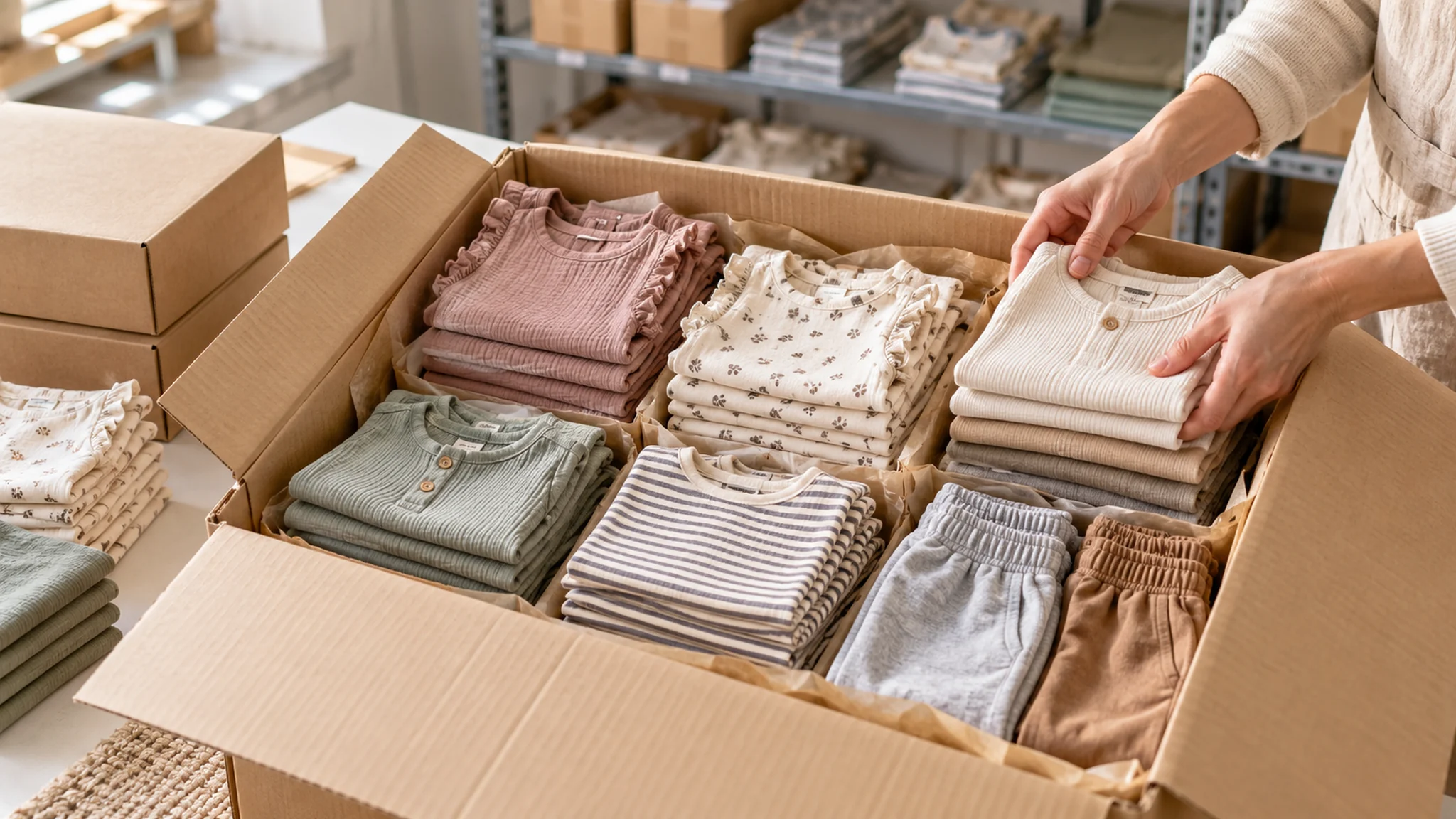
A responsible supplier should describe choices rather than promise that any custom program can be compressed indefinitely. You may simplify the number of colors, use an approved base fabric, postpone bespoke trims, or conduct a separate ready-stock commercial test. Conversely, if the distinguishing feature of your brand is a particular cut or fiber blend, preserve that specification and budget for a proper development run.
Do not solve MOQ with a misleading “stock fabric” claim when the fabric is not actually in stock. Confirm the physical availability and whether the unit price is for stock goods, customized existing goods or newly manufactured merchandise.
9. Worked buying exercise: one style, three buying decisions
Imagine a new brand reviewing a cotton/spandex boxer brief in four sizes. It has a hero print, custom waistband lettering and a planned retail test. Three completely different decisions can follow from that brief:
Decision A — validate consumers first. If an eligible ready-stock product genuinely represents the preferred fit and customer segment, the buyer can use it to check store conversion, returns and packaging feedback. It cannot be presented as a custom print or exclusive OEM design, and inventory is limited to the listed available variations.
Decision B — prioritize brand identity. If a custom printed waistband is non-negotiable, ask for the accessory’s separate MOQ and artwork approval requirements. The supplier may need to source a larger waistband lot than the number of finished trial garments. Ask who owns the residual trim inventory and whether it can be identified and reserved for an actual repeat order.
Decision C — build original fit. If the market requires different rise, leg opening or fabric recovery, use full OEM/ODM development. Record how many samples and revisions must be approved, then judge the business case against the development and material minimums. This may involve more commitment but produces a product defined by the brand rather than by stock availability.
These paths cannot be compressed into one price table without losing the real tradeoffs. Choose the route that validates the most important commercial uncertainty: demand, branding or fit.
10. Build a simple replenishment trigger
A brand should not wait until every size is sold out before asking the factory whether materials exist. For each SKU, establish a point at which projected sell-through and your validated replenishment window overlap. You can calculate a planning trigger from expected demand during total replenishment lead time plus a contingency for supply uncertainty, but treat it as an internal forecast rather than a guaranteed result.
Track separate signals for finished inventory, confirmed raw-material stock, approved sample revision and booked capacity. A forecast of 500 units next quarter is not equivalent to 500 units reserved at the mill. When reporting reorder readiness to management, label the status of each component rather than claiming “production can start tomorrow” because the sewing pattern is on file.
11. What a useful factory response looks like
A strong quotation reply identifies the supply route it assumed, the minimum by color and style, permitted size mixing, the fabric/trim status, sampling needs, date of price validity and items awaiting approval. It should also distinguish production lead time after all approvals from calendar time from first inquiry. For complicated print programs, include a conditional timeline: artwork → strike-off → buyer acceptance → fabric purchase → bulk → inspection. This makes it easier for both parties to take responsibility when the project date changes.
FAQs
Can I order only two pieces of custom children’s underwear?
From two pieces is a selected ready-stock option, not a general custom-manufacturing promise. A custom underwear print program commonly starts from a substantially higher quantity and must be quoted by style and color.
Does mixed-size MOQ mean I can mix colors?
Not necessarily. “Mixed sizes allowed” normally concerns the size curve within an eligible style/color program. Color, artwork and trim minimums must be checked separately.
Is a repeat order always faster than the first order?
No. It can avoid repeated development if specifications are unchanged, but material availability, revised compliance documents and production loading still determine the lead time.
Should a buyer lock the price before the sample is approved?
A preliminary quote can be requested, but final commercial terms should reference the approved specification and state whether fabric, packaging, test scope or currency changes trigger a re-quote.
What is the fastest way to get a realistic quote?
Send one RFQ that includes a tech pack or detailed reference, quantity by style/color/size, target market, branding and shipment terms. Ask the supplier to identify every assumption that remains unconfirmed.
Related reading: Kids Underwear Bulk Order Guide · Low MOQ Kids Underwear Manufacturing · Custom OEM Production
Talk to a Kidswear Manufacturing Specialist
Send your product type, reference images or tech pack, fabric composition, size range, intended market, quantity by style and color, and target delivery date. Request an OEM/ODM feasibility review and quotation. MOQ, sampling, testing responsibilities and delivery milestones are confirmed against your actual specification.