
Recycled Cotton for Kids Clothing: Quality and Testing Guide
Quick answer: Recycled cotton can be a viable material input for some children’s garments, but the usable recycled content depends on fiber origin and length, spinning method, yarn count, knit or woven construction, blending strategy and performance targets. Rather than promising that the highest recycled percentage is always better, brands should compare verified content, test results, hand feel, cost and consistency for the exact product. Mechanical recycling shortens fibers and can affect yarn strength and fabric durability, making application-specific trials important.
In October 2026, Fashion for Good launched its Cotton Reloop Matrix project to map the quality, recycled content and price tradeoffs of commercially available recycled cotton yarns. The project involves demonstrator fabrics and quality-improvement trials; it is research activity, not a finished universal clothing procurement standard.
Project source: Fashion for Good: Cotton Reloop Matrix
1. What recycled cotton actually means
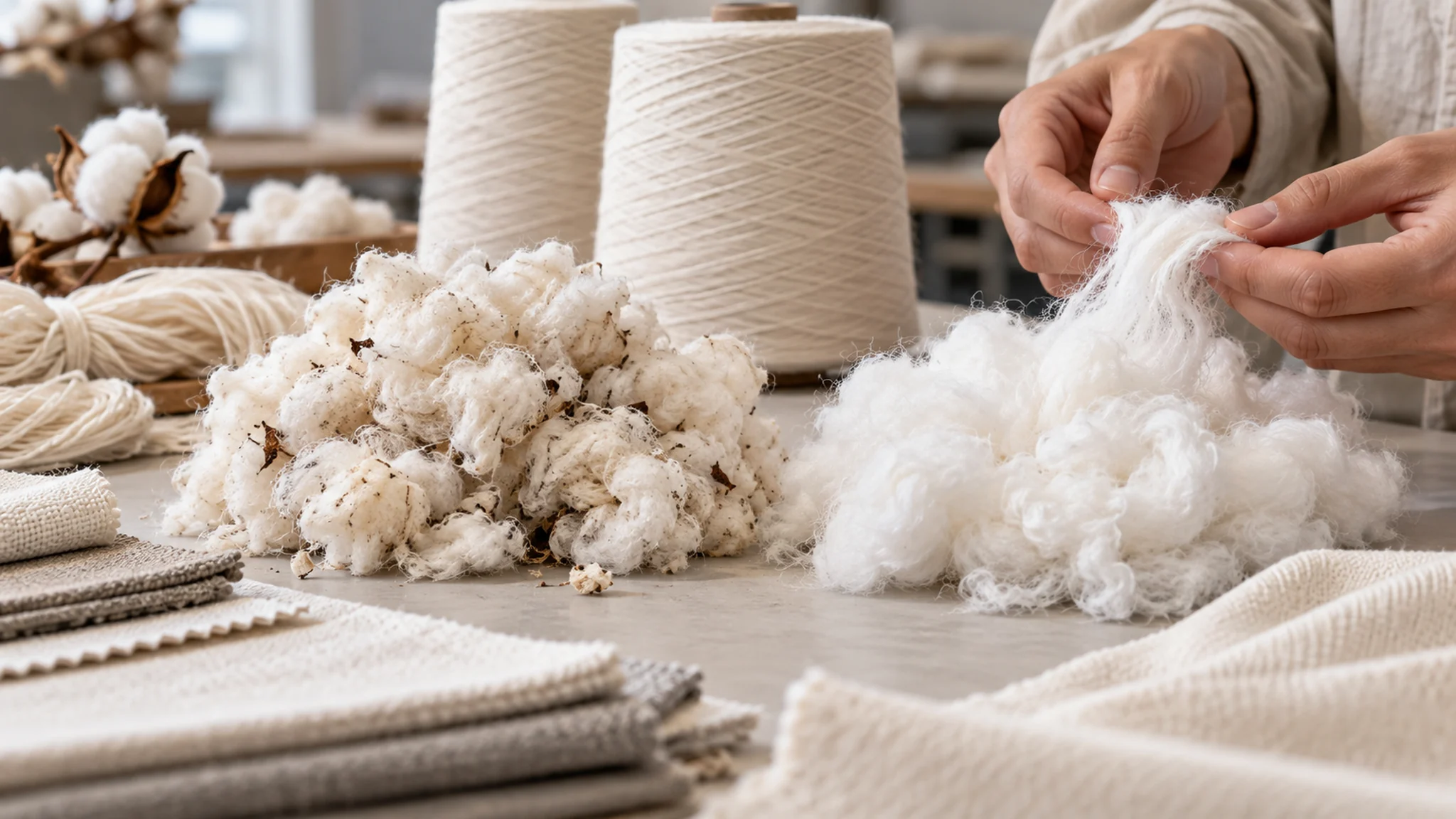
Recycled cotton can originate from pre-consumer textile waste, post-consumer textiles or other defined feedstocks. Different pathways and supply chains have different traceability challenges. A claim should state the definition and applicable chain-of-custody basis instead of simply labeling every cotton fabric “recycled.”
Ask whether the claim concerns fiber percentage by weight, the entire blended fabric, or a certified supply-chain accounting system. Do not equate a mill’s generic recycled-content marketing brochure with evidence for your exact fabric lot.
2. Why mechanical recycling changes fiber behavior
Mechanical recycling involves opening, shredding and reprocessing textiles into fibers that can be spun again. This can shorten fibers and increase variability in the available feedstock. Depending on the process and yarn architecture, this may affect tensile properties, fiber loss, surface fuzz, pilling and fabric durability. The significance depends on the specific design; a soft loungewear knit and a hard-wearing kids’ trouser fabric may have different thresholds.
The commercial question should be: What is the highest validated recycled content for this garment at an acceptable performance and price? That figure must come from supplier and test data, not an arbitrary website recommendation.
3. Compare blended yarn systems rather than percentages alone
| Candidate | Main question | Useful evidence |
|---|---|---|
| Recycled cotton + virgin cotton | Does virgin fiber improve continuity and strength? | Yarn test, fabric test and verified composition |
| Recycled cotton + other cellulosic fibers | Are comfort and performance appropriate? | Blended yarn specification and laundering test |
| Recycled cotton + elastane-containing knit | Does the structure recover and maintain fit? | Stretch/recovery and dimensional stability test |
| Conventional cotton control fabric | What performance/cost baseline applies? | Matched construction and finish test |
If comparing fabrics, keep the construction, dye/finish and intended care as consistent as practicable. Changing both recycled content and knit structure at once makes cause-and-effect hard to interpret.
4. Match test plans to kidswear product types
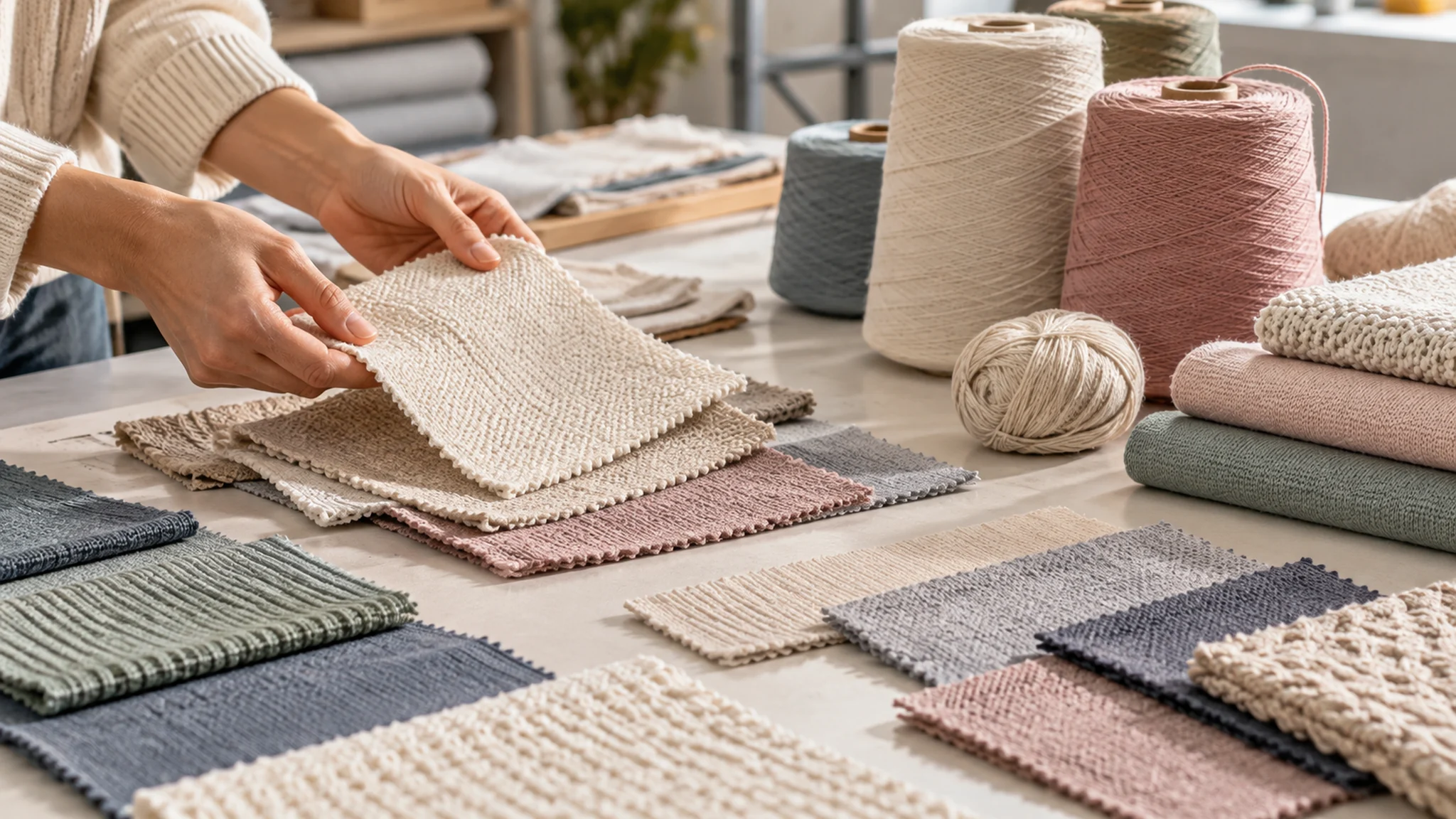
A children’s underwear fabric needs comfortable contact, stable waistband and leg opening, good laundering behavior and appropriate substance controls. Pajamas may require different fit or safety obligations depending on the market; a daywear T-shirt must hold shape and print quality. A blanket recycled percentage does not resolve any of these.
| Product | Priority performance questions | Potential test categories |
|---|---|---|
| Briefs / boxer briefs | Fit, recovery, seam comfort, wash behavior | Dimensional change, stretch/recovery, pilling |
| Kids T-shirt | Appearance, opacity, twist, print durability | Spirality, shrinkage, colorfastness, pilling |
| Sleepwear | Comfort, fit after wash, market-specific safety | Dimensional change plus applicable safety review |
| Woven shirt / dress | Seam strength, drape, wear appearance | Fabric/seam strength, abrasion, colorfastness |
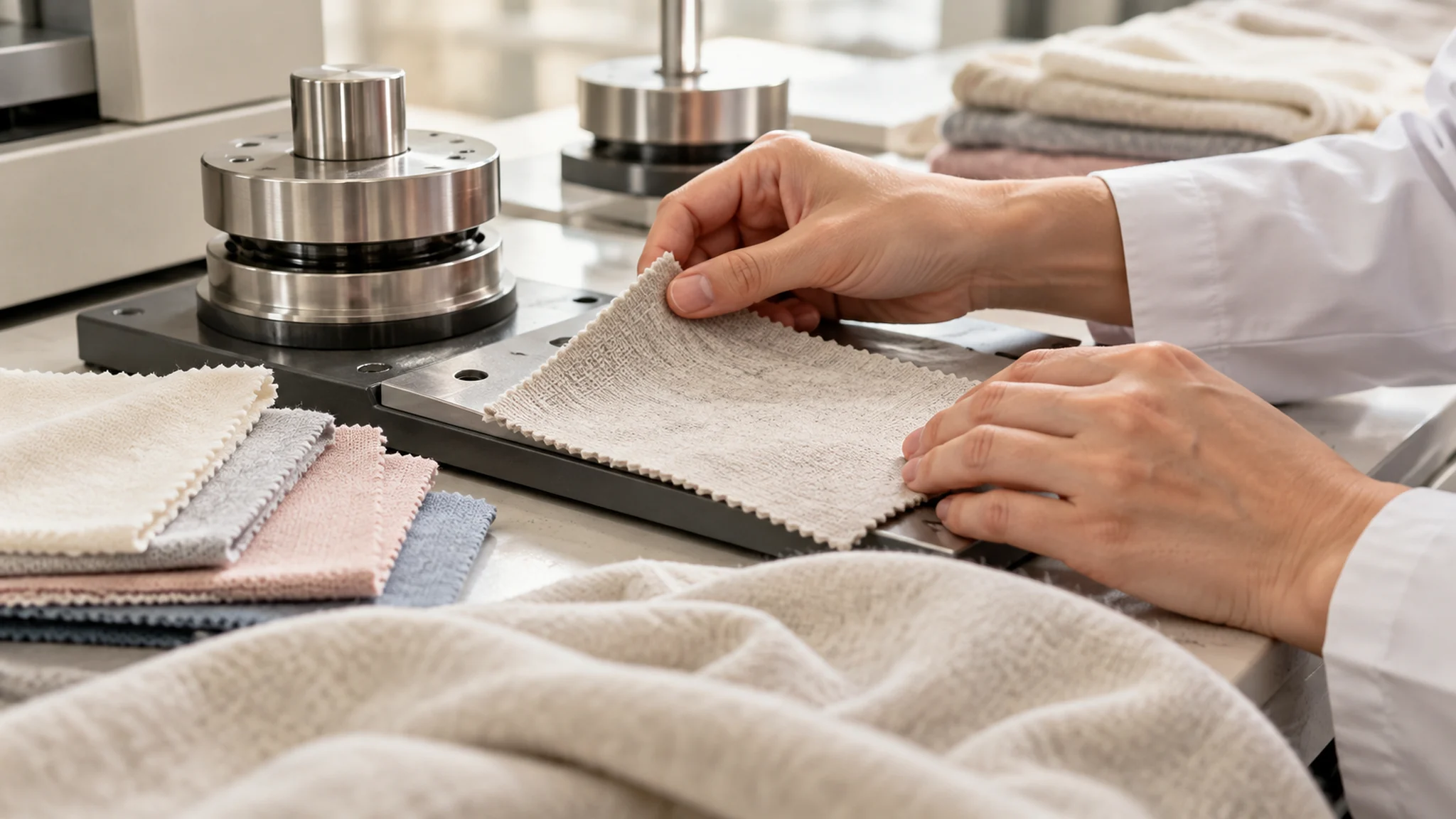
Choose recognized methods and acceptance criteria with the buyer’s technical team or laboratory; test names alone do not define a pass.
5. Create a structured three-material comparison
A practical development trial could request: (A) conventional cotton reference; (B) a recycled/virgin cotton blend; and (C) a second recycled-content candidate, all with documented yarn/fabric characteristics. The supplier should record the actual fiber percentages and prices, not copy unverified nominal targets into marketing.
Score: hand feel after laundering, dimensional stability, strength, pilling, color consistency, sewing behavior, cost/availability and traceability. A higher-performance candidate at a lower recycled percentage may be more suitable than a high-percentage candidate that cannot withstand the expected wear.
6. What can increase the price of a recycled-cotton program?
Potential cost drivers include segregated feedstock handling, fiber blending, specialty spinning, yarn quality control, testing, traceability and constrained supply. These costs may be partly offset by material choices in a particular supply chain, but there is no reliable universal markup percentage. Request project-specific comparisons at the same volume, Incoterm and finished specification.
Also check how the chosen recycled yarn influences the manufacturer’s cutting and sewing efficiency. A cheap fabric that has unstable shrinkage or produces higher rejects can be more costly at finished-garment level.
7. Verify fiber claims carefully
For any recycled-content claim, request the stated standard or verification framework, certificate scope where relevant, transaction or batch documentation when applicable, and a supply-chain record matching the specific fabric. Clarify whether the documentation applies to the finished garment, the fiber supplier, or only one processing stage.
Avoid claims such as “100% eco-friendly,” “carbon neutral” or “zero environmental impact” without a defensible scope and calculation. Recycled content alone does not establish a complete environmental-life-cycle advantage for your finished garment.
8. Convert a material trial into a manufacturing specification
When approving a material, capture fiber composition, source/verification evidence, yarn count, finished GSM, construction, width, finishing method, color/shade limits, laundering protocol, performance acceptance criteria and substitution restrictions. Require approval before changing the cotton source, spinning route or other material characteristics that can affect the garment.
| Approved spec field | Value | Evidence / record |
|---|---|---|
| Recycled-content claim | ___ | Traceability reference |
| Blend composition | ___ | Supplier and verification record |
| Yarn / knit construction | ___ | Technical fabric sheet |
| GSM / width tolerance | ___ | Finished material measurement |
| Shrinkage / appearance | ___ | Agreed test results |
| Durability results | ___ | Test report ID |
| Supply and price validity | ___ | Quotation and material plan |
9. The right way to explain tradeoffs to a brand buyer
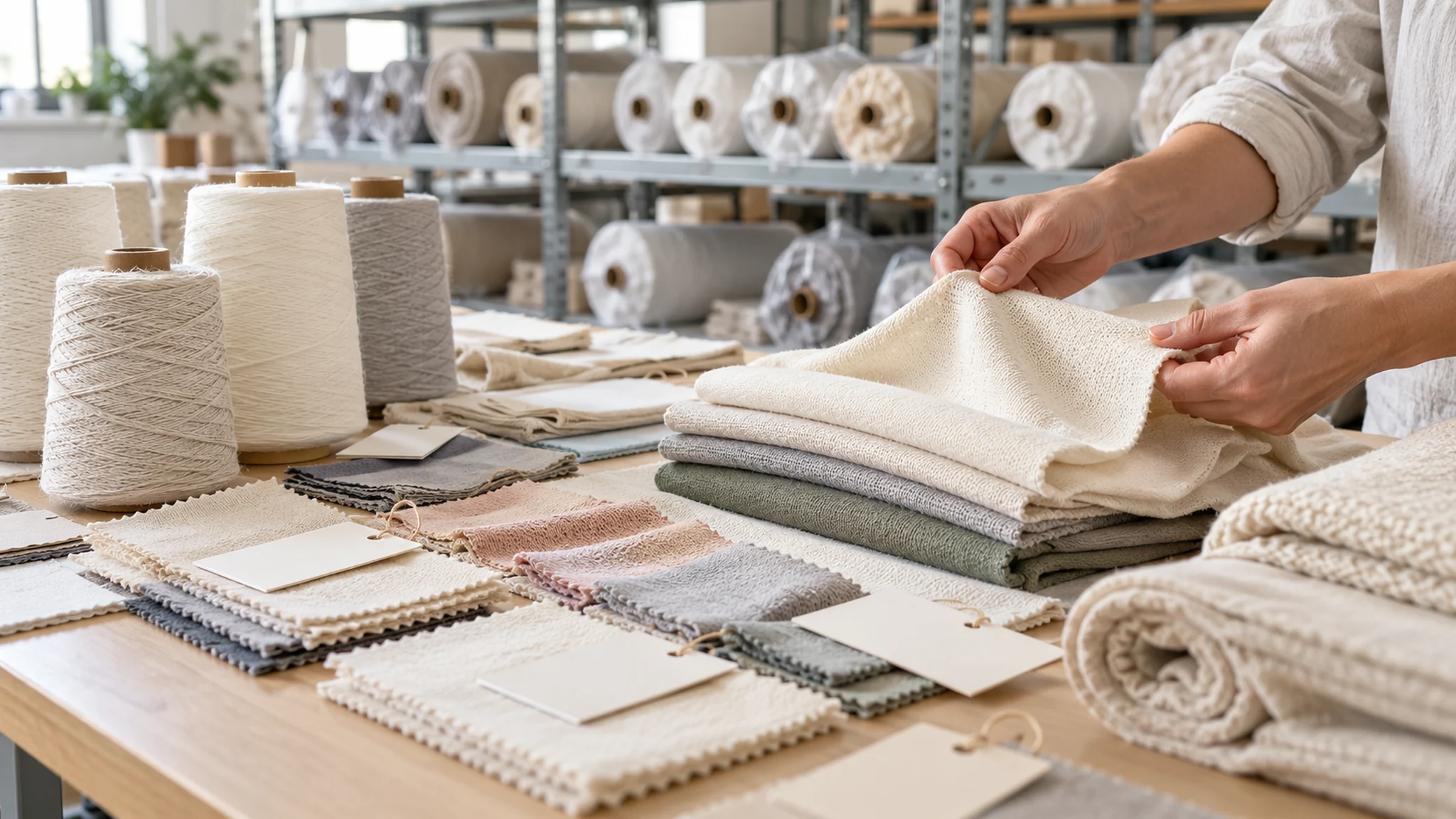
Instead of saying “recycled cotton is always better,” present a performance matrix. Clearly identify observed results, not-yet-tested attributes and unanswered sourcing questions. A buyer may choose a lower recycled-content blend for high-wear children’s underwear while using a higher-content blend in a different product category; the choice should follow measured fitness for purpose.
Template in the package: templates/recycled-cotton-evaluation.csv.
10. A realistic laboratory decision example
A brand wants to compare conventional cotton jersey with two recycled-content alternatives for a children’s everyday T-shirt. It prepares identical target GSM, knit construction, finishing and color requirements where possible. The mill declares the actual fiber composition and yarn parameters for each. Samples are conditioned and tested to agreed methods for dimensional change, pilling, relevant strength, colorfastness and appearance after washing.
The buying team records the numerical observations from actual test reports and separately records sensory feedback on hand feel. It also documents commercial factors—fabric MOQ, unit price, supplier lead time and batch continuity. If candidate B has the strongest performance but less recycled content, it can still be the best decision for a high-wear item. Candidate C might be reconsidered after the mill improves the yarn or finishing process.
The important point is methodological: keep the performance targets fixed before choosing the fabric. Do not adjust the acceptance criteria after seeing the result merely to validate the most marketable composition.
11. Traceability and claims in a multi-supplier yarn chain
A recycled-material story can involve collector, recycler, spinner, knitter/weaver, dye/finish mill, garment factory and brand. Each stage should be mapped according to the verification system used. If a supplier provides a valid certificate, check its exact entity, scope, validity and link to the fiber or material claimed. Some claim systems require transaction-level supporting records; a company’s website badge alone does not resolve chain-of-custody requirements.
Before printing a hangtag, confirm whether the claim concerns total garment weight or only a cotton component, whether other fibers are included in the calculation and whether accepted third-party verification exists. Work with your certification scheme owner or qualified adviser for exact claim wording.
12. Product limitations deserve a place in the decision sheet
A reliable technical presentation should show not just strengths but known limitations and untested conditions. For example, a softer surface may be vulnerable to pilling under a particular abrasion test, while a sturdier yarn blend may feel firmer than the brand wants. Document whether the issue is a failure, a tradeoff or simply an attribute that still requires customer evaluation. Do not turn a brand-preference score into a fabricated lab standard.
FAQs
Is 100% recycled cotton suitable for all kidswear?
No universal answer is defensible. Feasibility depends on feedstock, spinning, fabric construction, intended use and tested performance.
Is a higher recycled percentage always more sustainable?
Not automatically. A credible sustainability evaluation should define the claim, supply-chain scope, durability and relevant environmental impacts.
Does recycled cotton always shrink more?
Not necessarily. Shrinkage depends on many factors, including yarn, construction and finishing. Compare actual test results.
Can a factory guarantee identical recycled cotton for every reorder?
Only a documented supply and change-control plan can make the continuity assessment credible; input variability may require further validation.
What should I send to a manufacturer for a material trial?
A product reference, intended market, composition preference, performance thresholds, quantity and price ceiling, plus any traceability/claim requirements.
Related reading: Kids T-Shirt Fabric Guide · Private Label Baby Clothing · Kids Clothing Quote Comparison
Talk to a Kidswear Manufacturing Specialist
Send your product type, reference images or tech pack, fabric composition, size range, intended market, quantity by style and color, and target delivery date. Request an OEM/ODM feasibility review and quotation. MOQ, sampling, testing responsibilities and delivery milestones are confirmed against your actual specification.