
HS Code Classification & Import Duties for Children’s Underwear Guide
Every children’s underwear shipment that clears customs rests on one small code and one percentage. Get the childrens underwear hs code import duty classification wrong and a container can sit at the port for weeks while you pay demurrage; get the duty rate wrong and your margin quietly disappears across a full season. This guide is written from the factory side, where we see exactly which classification and documentation mistakes hold up real orders. It covers the knitted-versus-woven split, the specific HS codes that apply to boys’, girls’ and babies’ underwear, how cotton and synthetic fibre change the rate, and how to keep your care label, composition and customs declaration aligned.
On this page
- Quick answer: the right HS code for children’s underwear
- Knitted vs woven: Chapter 61 vs Chapter 62 (classify this first)
- The children’s underwear HS codes that actually matter
- Cotton vs synthetic fibre: how composition changes your rate
- US, UK and EU duty rates: the numbers to expect
- Care label, composition and declaration: keeping them aligned
- Common classification mistakes that trigger customs holds
- What your manufacturer should provide (and when to use a broker)
1. Quick Answer: The Right HS Code for Children’s Underwear
Children’s underwear is almost always classified in Chapter 61 (knitted or crocheted), not Chapter 62 (woven). Cotton knitted boys’ underpants and boxer briefs fall under 6107.11; cotton knitted girls’ briefs under 6108.21; synthetic knitted girls’ briefs under 6108.22; and babies’ cotton garments under 6111.20 for children up to 86 cm in height. The fibre content — cotton versus synthetic — is what moves you between subheadings, and it is the single most common reason a shipment is re-classified.
The first thing to internalise is that an HS code is not a style code. Two identical-looking briefs can sit in different subheadings purely because one is cotton and the other is polyester or nylon. That distinction is not pedantry; it changes the duty rate and, in some markets, the documentation you must attach. When a brand sends us a spec for costing, the first customs-relevant question we ask is the fibre composition, because the answer decides the six-digit code before any other design detail does.
The second thing is that “children’s” is not a single category in the tariff. The Harmonized System treats boys’ underpants, girls’ briefs and babies’ garments as three separate headings, each with its own cotton and synthetic subheadings. A private-label line that runs briefs across the full age span — toddler through teen — may need two or three different codes within a single carton, not one.
2. Knitted vs Woven: Chapter 61 vs Chapter 62 (Classify This First)
Chapter 61 covers garments that are knitted or crocheted — a stretch fabric with a visible loop structure. Chapter 62 covers woven garments — a non-stretch fabric with a visible warp and weft. Almost all children’s underwear, boxer briefs and pyjama sets are knitted, so they land in Chapter 61. Get this first split wrong and every subheading after it is wrong too.
Before you can even think about a subheading, you have to place the garment in the right chapter. This is the classification step that non-textile people most often get wrong, because they assume all clothing is classified the same way. It is not. The entire apparel section of the tariff is organised around construction method first, then fibre, then garment type.
Knitted fabric is built from interlocking loops. It stretches, recovers, and is the default for anything worn against the skin — underwear, boxer briefs, pyjamas, bodysuits, vests. Woven fabric is built from two sets of yarns crossing at right angles. It does not stretch (unless spandex is added), and it is the default for structured garments like shirts, trousers and dresses. Underwear is effectively never woven, so for this category you will almost always be in Chapter 61. The only realistic exception is a woven cotton pyjama or nightdress, which belongs in Chapter 62 and carries a different code and rate.
| Feature | Chapter 61 (knitted/crocheted) | Chapter 62 (woven) |
|---|---|---|
| Fabric structure | Interlocking loops; visible knit structure | Crossed warp and weft yarns |
| Stretch | Stretches and recovers (with spandex) | Little to no stretch unless spandex added |
| Typical kids garments | Briefs, boxer briefs, pyjama sets, bodysuits | Shirts, dresses, trousers, woven nightdresses |
| Where underwear lands | Nearly always here (6107 / 6108 / 6111) | Rarely, and only for woven sleepwear |
| Why it matters | Correct starting point for almost all kids underwear | Wrong chapter = wrong code and wrong duty |
In the factory, this split is never ambiguous. We know before cutting whether a fabric is knit or woven, and we state it on the commercial invoice and packing list. The risk appears at the importer’s end, when a cost-cutting re-classification — or a careless data entry — drops a knitted brief into a woven code or vice versa. Customs authorities audit these mismatches routinely, and a knit declared as woven is a red flag that invites a full inspection of the whole carton.
3. The Children’s Underwear HS Codes That Actually Matter
The four codes you will touch most often are 6107.11 (boys’ cotton knitted underpants/boxer briefs), 6107.12 (boys’ synthetic knitted underpants), 6108.21 (girls’ cotton knitted briefs) and 6108.22 (girls’ synthetic knitted briefs), plus 6111.20 for babies’ cotton garments up to 86 cm in height. Match the fibre on your care label to the subheading and you are most of the way to a clean declaration.
The Harmonized System groups children’s underwear into two main headings: 6107 for men’s or boys’ underpants, briefs and similar articles, and 6108 for women’s or girls’ briefs and panties. A third heading, 6111, covers babies’ garments and is the one most brands forget. Within each heading, the next two digits split by fibre, which is why composition matters as much as garment type.
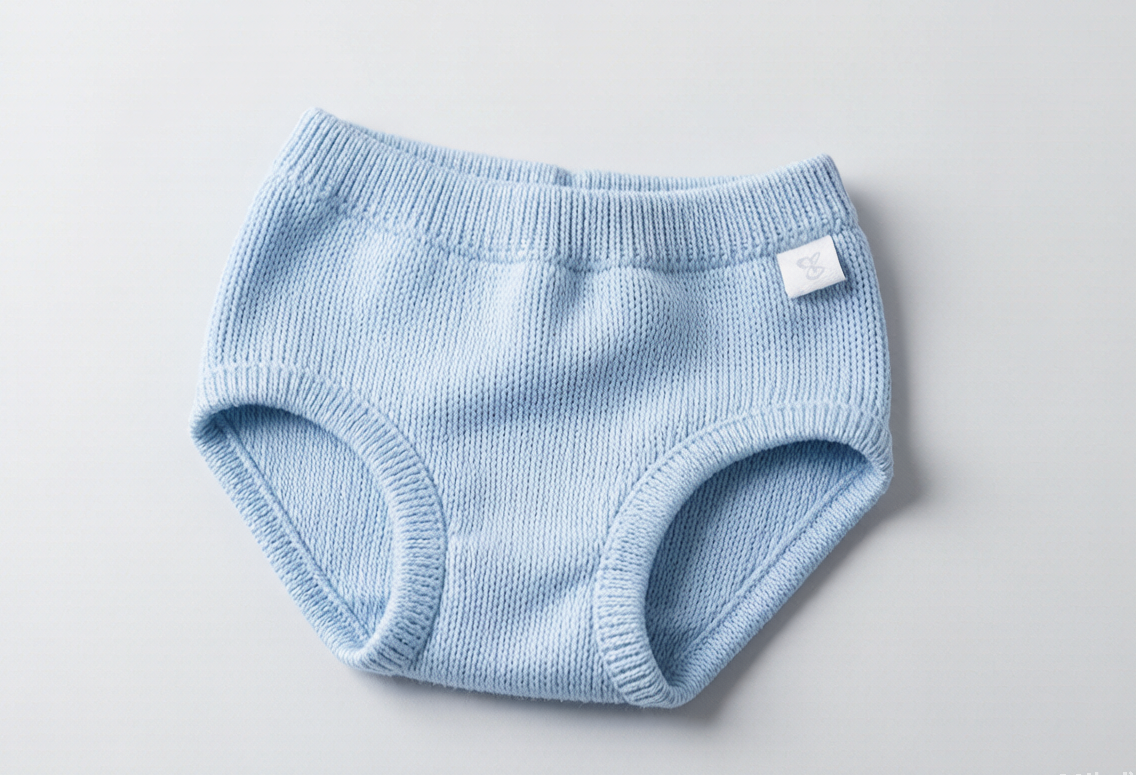
Here is the working reference table we use when a brand asks us to help structure a declaration. Treat the descriptions as guidance for classification, and confirm the final code against the current tariff schedule of your destination market before you ship.
| HS code | What it covers | Fibre | Notes |
|---|---|---|---|
| 6107.11 | Men’s/boys’ underpants, briefs, boxer briefs | Cotton | The default code for boys’ cotton briefs and boxer briefs |
| 6107.12 | Men’s/boys’ underpants, briefs, boxer briefs | Synthetic / man-made fibre | Use for boys’ polyester or nylon styles; rate typically higher than cotton |
| 6108.21 | Women’s/girls’ briefs and panties | Cotton | The default code for girls’ cotton briefs |
| 6108.22 | Women’s/girls’ briefs and panties | Synthetic / man-made fibre | Use for girls’ synthetic briefs; rate typically higher than cotton |
| 6111.20 | Babies’ garments and clothing accessories | Cotton | Applies to children up to 86 cm in height (baby sizing) |
Two details deserve emphasis. First, the 86 cm height threshold on babies’ garments: once a child outgrows baby sizing, the garment moves out of heading 6111 and into 6107 or 6108. A 90 cm toddler’s brief is not a babies’ garment, and declaring it as one is a misclassification. Second, the boys’ and girls’ headings are split by gender, not by style — a unisex brief still has to be assigned to one heading or the other based on how the garment is cut and marketed.
4. Cotton vs Synthetic Fibre: How Composition Changes Your Rate
Within the same heading, cotton and synthetic (man-made fibre) subheadings carry different duty rates. In the US, cotton knitted underwear generally lands around 8.5%, while synthetic knitted underwear typically comes in higher. In the UK and EU, most knitted underwear sits in an MFN range of roughly 8–12%, with the exact figure depending on the subheading. Always confirm the live rate against the current tariff schedule.
This is the point where fibre content stops being a design choice and becomes a cost line. The tariff does not care whether you chose cotton for softness or synthetic for durability; it only cares which subheading the fibre places you in, because that subheading carries a specific rate. The gap between the cotton and synthetic subheadings is real and, across a full season of reorders, it compounds.
In the US, cotton knitted underwear has historically been one of the more moderate apparel classifications, with a base rate around 8.5% for the cotton subheadings. Synthetic and man-made fibre subheadings generally sit higher — sometimes noticeably so. This is one reason cotton-led kids’ lines are easier to cost accurately at the start of a season, while synthetic-led lines need the rate confirmed before you lock your retail margin.
In the UK and the EU, the picture is more uniform: most knitted children’s underwear falls under the Most Favoured Nation (MFN) rate band of roughly 8% to 12%, with the precise number tied to the specific eight- or ten-digit commodity code your broker assigns. A cotton brief and a synthetic brief in the same heading will often differ by a few percentage points, which is small per unit but meaningful at container scale.
The honest advice we give every importer is the same: do not cost a program off a remembered number. Tariff schedules are updated, free-trade agreements and preference rules change the effective rate, and a rate that was correct last season may not be correct now. Treat the figures above as planning ranges, not as the number you print on your landed-cost sheet.
5. US, UK and EU Duty Rates: The Numbers to Expect
For planning, expect US cotton knitted underwear around 8.5% with synthetic subheadings higher; UK and EU MFN rates in the roughly 8–12% band for most knitted kids’ underwear. These are ranges, not final figures — confirm the live rate with a licensed customs broker before you ship, because preferential agreements and schedule updates move the effective number.
Duty is only one part of your landed cost, but it is the part most brands calculate last and regret most. The table below is a planning reference built from the ranges we discussed in the previous section. It is deliberately expressed as ranges rather than precise percentages, because a single published number would be misleading the moment any variable changes.
| Market | Cotton knitted underwear | Synthetic knitted underwear | What else can apply |
|---|---|---|---|
| United States | ≈ 8.5% (base MFN) | Higher than cotton (confirm exact) | Additional duties may apply to China-origin goods — verify with a broker |
| United Kingdom | ≈ 8–12% (MFN band) | ≈ 8–12% (MFN band, confirm subheading) | Preference under trade agreements may reduce the rate |
| European Union | ≈ 8–12% (MFN band) | ≈ 8–12% (MFN band, confirm subheading) | Country-of-origin rules and preference claims affect the effective rate |
The United States line deserves extra attention for anyone importing from China. Beyond the base MFN rate, goods of China origin can be subject to additional Section 301 duties on top of the standard apparel rate. These additional duties have changed several times over recent years, and the exact percentage applying to a given kids’ clothing line on a given day is something only a licensed customs broker — or the current HTS with the active Chapter 99 provisions — can confirm. Do not carry a Section 301 number over from an old quote.
For the UK and the EU, the effective rate is shaped by the same two levers as everywhere else: the exact commodity code and any applicable preference. A brand that can prove origin under a free-trade agreement may pay a reduced or zero rate; a brand that cannot, pays MFN. Origin rules for apparel are notoriously strict because they hinge on where the fabric is knitted and where the garment is cut and sewn, not just where it is shipped from.
6. Care Label, Composition and Declaration: Keeping Them Aligned
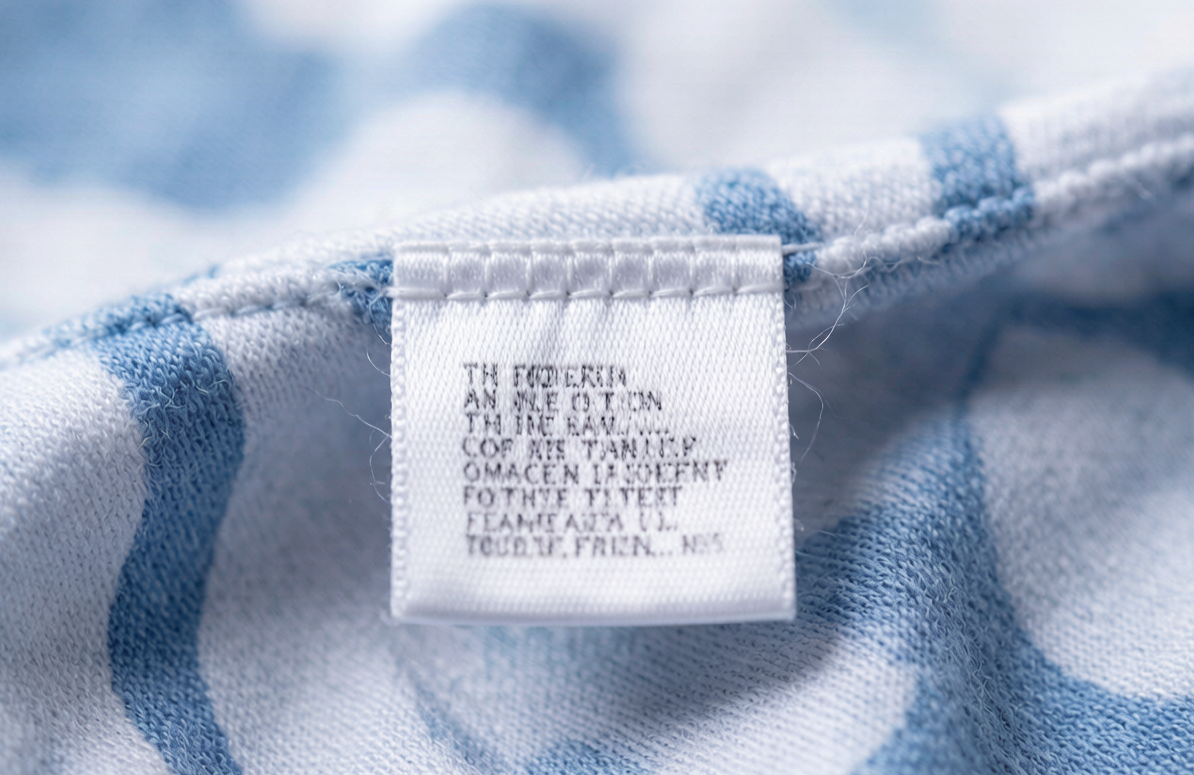
The fibre content printed on your care label must match the fibre you declare on the customs documentation, which must match the subheading you classify under. A label that says cotton while the invoice says polyester is the fastest route to a hold, a re-inspection and a re-classification. Alignment across label, invoice and HS code is a compliance requirement, not a nice-to-have.
Customs authorities do not just read your declaration; they compare it against the physical garment. The care label inside the brief is the first thing an inspector checks, because it is the garment’s own statement of what it is made of. If the label says 95% cotton and your entry is filed under a synthetic subheading, you have created a contradiction that customs can resolve only by stopping the shipment.
This is why the label, the packing list and the commercial invoice must all tell the same story. The chain is simple and unforgiving:
- Care label: states the exact fibre composition by percentage, in the order and format your destination market requires (for example, the EU’s textile fibre labelling rules).
- Commercial invoice: restates the composition and adds the construction (knitted/woven), the quantity, and the value per unit.
- HS code: the subheading that matches that composition and construction.
When these three align, a shipment clears on documentation alone most of the time. When they do not, the shipment is flagged, physically inspected, and in the worst case re-classified into a higher-rate subheading with back-dated duties and, in some jurisdictions, a penalty on top. The cost of a misalignment is never just the duty difference; it is the demurrage, the storage, the missed restock window and the broker’s time to unwind it.
7. Common Classification Mistakes That Trigger Customs Holds
The mistakes that hold up kids’ underwear shipments are predictable: classifying by style instead of fibre, declaring a babies’ code above 86 cm, treating a blend as 100% cotton, and mismatching the care label against the invoice. Every one of these is avoidable with a single review pass before the goods ship.
In our experience, the same handful of errors recur across importers, whether they are first-time private-label founders or established buying teams. None of them are sophisticated; all of them are expensive. Here they are, with the cause and the fix.
| Mistake | What happens | How to fix it |
|---|---|---|
| Classifying by style, not fibre | Two briefs in one carton, wrong subheading | Sort the declaration by fibre content first, then style |
| Babies’ code above 86 cm | Toddler briefs declared under 6111 | Move anything over 86 cm into 6107 / 6108 |
| Blend treated as 100% cotton | Cotton-modal blend filed as pure cotton | State the exact percentage split and classify by the dominant fibre |
| Label vs invoice mismatch | Inspector flags the contradiction, shipment held | Audit label text against invoice before dispatch |
| Knit declared as woven | Wrong chapter, wrong rate, audit trigger | Write “knitted” explicitly on every line item |
| Carrying over an old rate | Landed cost wrong from day one | Re-confirm the rate and any additional duties each season |
Of these, the blend error deserves the most attention from kids’ underwear brands, because blends are the default in this category. A 49.9% modal / 43.3% cotton / 6.8% spandex fabric is not “cotton” for classification purposes — the dominant fibre and the relevant classification rules decide the subheading, and the invoice must state the split precisely. If you are unsure how a blend classifies, your broker can rule on it in minutes with a fibre-content certificate from the factory; that is far cheaper than finding out during an inspection.
8. What Your Manufacturer Should Provide (and When to Use a Broker)
A good manufacturer gives you the fibre composition, construction (knitted/woven), care-label text and per-SKU breakdown on every sample and packing list. A licensed customs broker then turns those facts into the correct code and rate. Split the work this way — factory supplies the facts, broker supplies the classification — and you avoid both misclassification and the temptation to guess.
There is a clean division of labour in every smooth kids’ underwear import. The factory knows what the garment is made of and how it is built; the broker knows how the tariff treats that combination. When a brand tries to do the broker’s job in-house, it misclassifies. When a brand expects the factory to be a customs expert for every destination market, it gets incomplete answers. The reliable path is to keep both roles separate and feed the broker accurate data.
From our side, the minimum we can hand you for a clean entry is:
- Fibre composition per SKU, as an exact percentage split (not a rounded marketing description).
- Construction — knitted or woven — stated per line item.
- Care-label text, so the label and the invoice read identically.
- Garment type and gender split — boys’ brief, girls’ brief, or babies’ garment — so the correct heading is chosen.
- Commercial invoice with quantity, unit value and composition per SKU.
Hand that package to a licensed customs broker and the classification becomes a routine step rather than a gamble. The broker will assign the full commodity code, confirm the base rate, and flag any additional duties — including China-origin Section 301 duties in the US — before the goods are on the water. That is the moment to fix a problem, not after the container has landed.
Planning a kids’ underwear import and want the composition, construction and label data a broker can classify with confidence? Send us your target fibre mix and market, and our team will return a per-SKU documentation breakdown and sampling plan.