
Fast turnaround private label kids clothing is the promise every supplier prints on their homepage — and the one most buyers learn the hard way is only half true. When a manufacturer quotes “2-week delivery,” they are usually describing one narrow slice of the work, not your real path from an approved sample to cartons at the port. This guide breaks the timeline down honestly, stage by stage, and shows what actually compresses it versus what simply trades away quality.
If you are planning a launch, a restock before peak season, or a first custom program, the numbers below will help you spot a realistic quote from a fantasy one — and avoid the reorder that ships late and costs you the season.
Quick Answer
For private-label kids’ clothing, realistic timelines are: 7–14 days for a development sample (if the tech pack and fabric are already confirmed), 25–45 days for first production after sample approval, and 20–35 days for reorders once the style is locked. A “2-week turnaround” almost always refers to a reorder of an existing style, not a new custom program. Pushing below these ranges typically trades away inspection, compliance testing, and consistent fit.
In this guide
- Why “2-Week Turnaround” Is the Most Abused Promise in Kidswear
- The Three Clocks: Sampling, First Production, Reorder
- Realistic Timelines by Order Stage
- What Actually Compresses Lead Time (and What Does Not)
- The Hidden Cost of Rushing: Quality, Compliance, MOQ
- Fast Turnaround vs Print-on-Demand: An Honest Read
- How Nuohua Structures for Speed Without Cutting Corners
- Frequently Asked Questions
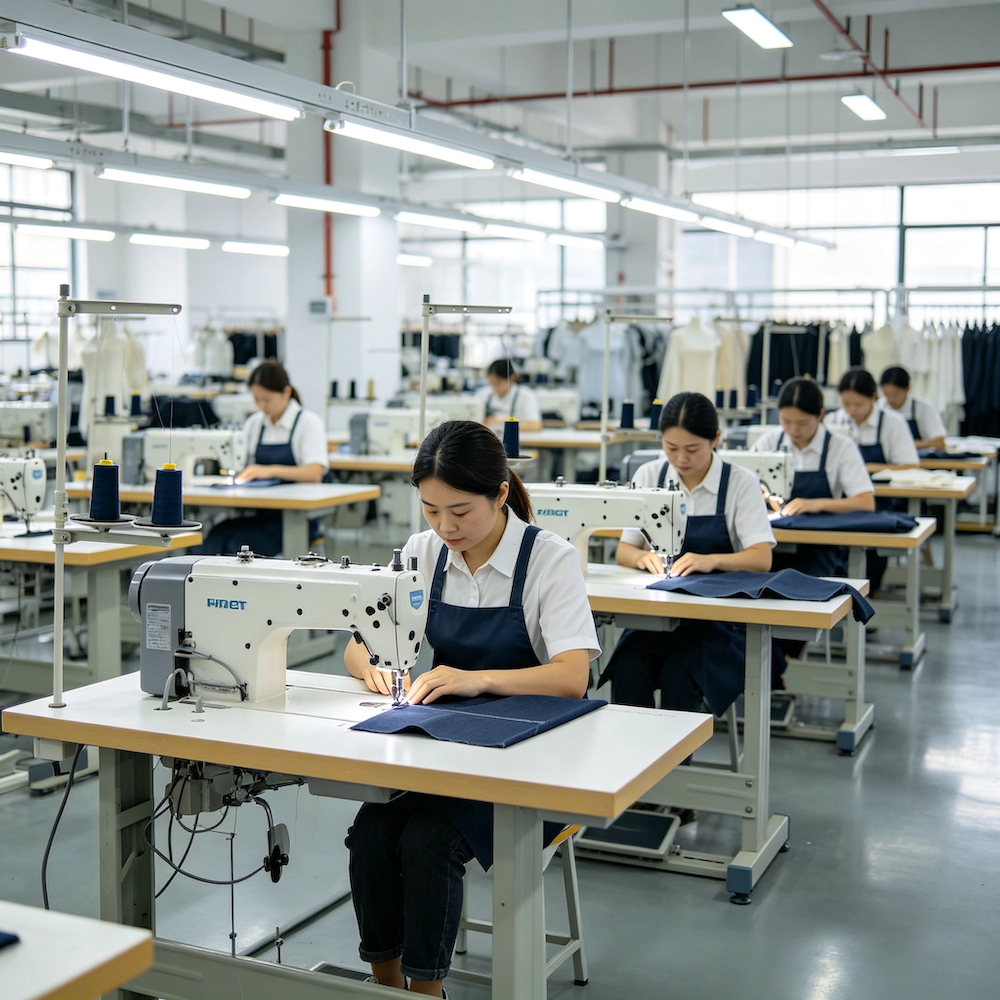
1. Why “2-Week Turnaround” Is the Most Abused Promise in Kidswear
The phrase “fast turnaround” is doing heavy lifting in most supplier pitch decks, and it means three different things to three different people. A factory may quote two weeks because:
- They are quoting the sewing time only — ignoring fabric sourcing, lab dips, pre-production sampling, and QA;
- They are describing a reorder of a style already in their system, not your new design;
- Or they are simply repeating what the last buyer wanted to hear.
None of those is dishonest on its face, but all three hide the part of the clock that actually determines whether your products land before or after your selling window. The fix is to ask one precise question: “From approved pre-production sample to cartons at the port, how many days — and what is excluded?”
2. The Three Clocks: Sampling, First Production, and Reorder
Lead time is not one number; it is three separate clocks that run in sequence. Confusing them is the root of most “they lied about delivery” stories.
2.1 The Sampling Clock
This runs from your tech pack and fabric choice to a wearable, measurable sample. It is the most variable clock because it depends entirely on how ready you are. A brand that arrives with a finished tech pack and an approved fabric can see a development sample in 7–14 days. A brand still deciding on fiber blend and waistband construction can spend 3–4 weeks just in development — and that time is correctly theirs to spend.
2.2 The First-Production Clock
This starts only after you sign off the pre-production sample. It covers bulk fabric booking, cutting, sewing, finishing, inspection, and packing. For a genuine custom program this is realistically 25–45 days. Anyone quoting under three weeks for first production of a new custom style is either running a very specific stock program or skipping a verification step you will pay for later.
2.3 The Reorder Clock
Once the style, graded sizes, approved lab dips, and packaging artwork are all locked in the system, reorders are faster: 20–35 days is a healthy range. This is the number most “2-week turnaround” claims are actually referencing — and it is legitimate, for reorders only.
3. Realistic Timelines by Order Stage
The table below is the honest version of what a custom private-label kidswear program typically looks like when both sides are prepared. Your mileage moves with order complexity, fabric availability, and testing requirements.
| Stage | Realistic range | What drives it up |
|---|---|---|
| Development sample | 7–14 days | Unclear tech pack, undecided fabric, custom prints |
| Pre-production (PP) sample | 5–10 days | New lab dips, new trims to source |
| First production (bulk) | 25–45 days | Spot fabric shortages, CNY shutdown, added compliance testing |
| Reorder (locked style) | 20–35 days | Colour changes, size-range additions |
| Reorder (rush, +fee) | 14–22 days | Capacity queue, air freight instead of sea |

4. What Actually Compresses Lead Time (and What Does Not)
Speed is not magic; it is preparation compounded. The levers that genuinely move the clock:
- Locked tech pack before quoting. A finished spec removes the longest hidden delay — back-and-forth on construction. See our tech pack structure guide for the fields that matter.
- Fabric on hand or pre-booked. Greige or stock-colour fabric cuts weeks versus dye-to-order. This is why we keep colour-zoned inventory for core blends.
- Approved lab dips early. Colour approval is sequential — it cannot run in parallel with bulk cutting until it is signed.
- Right-sized MOQ. Our production-readiness checklist shows what to lock before bulk so the line never stalls waiting on you.
What does not compress lead time: asking nicely, paying a rush fee alone, or switching to a factory that “promises faster.” A rush fee buys queue priority and air freight; it does not create hours that do not exist in cutting and sewing.
The honest manufacturer’s view: we can often hit a 14–22 day reorder when capacity allows and the style is locked. What we will not do is ship first production in 10 days by dropping AQL inspection or skipping the compliance documentation your U.S. entry requires. A fast shipment that gets held at the border is not fast.
5. The Hidden Cost of Rushing: Quality, Compliance, and MOQ
Every day you pull out of the schedule has to come from somewhere. The usual sources are the ones you least want to sacrifice:
- Inspection depth. Compressed QA means higher defect escape rates — the returns and chargebacks show up after launch, not before.
- Compliance testing. Kids’ products entering the U.S. need CPC-backed third-party testing. Skipping or faking it does not save time; it creates a border hold. Our CPC compliance guide explains why this clock is non-negotiable.
- Fit consistency. Rushed grading produces inconsistent sizing across a run — the silent killer of repeat purchase.
- MOQ pressure. “Expedite it” often means minimums climb because the factory must reserve a full line for you.
6. Fast Turnaround vs Print-on-Demand: An Honest Read
Many “instant” kidswear options are actually print-on-demand (POD) or marketplace dropship — different models, not faster manufacturing. POD shines for zero-inventory testing and ships in days, but it runs on generic blanks with limited fabric control, no custom construction, and weak skin-contact certification. For a brand built on fit, fabric, and safety, that trade is rarely worth the speed.
Custom OEM/ODM is slower to start but delivers a product that is actually yours — your pattern, your fabric, your label, your compliance file. The right question is not “which is faster?” but “which model am I in, and when does speed stop being the priority?” Our custom vs off-the-shelf comparison frames the full trade-off.
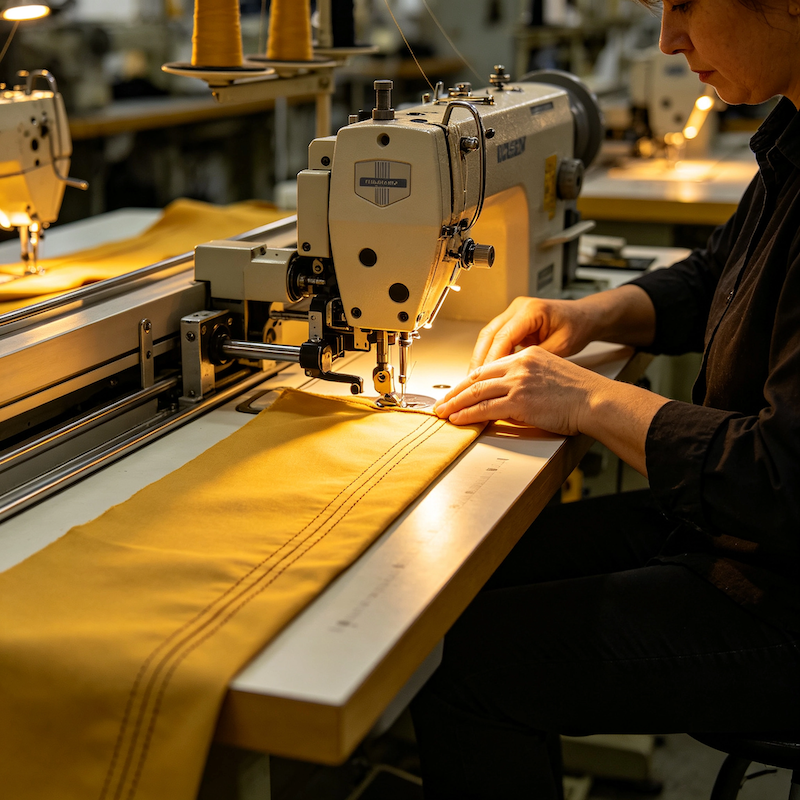
7. How Nuohua Structures for Speed Without Cutting Corners
With 14+ years of kidswear OEM/ODM, our speed comes from three plumbing choices, not heroics:
- Parallel prep. While your PP sample is in review, we pre-book fabric and confirm trim so bulk starts the day you approve — not a week later.
- Locked construction library. Core waistbands, bindings, and finishes are standardized, so most new styles reuse proven blocks instead of reinventing them.
- Built-in compliance. CPC-ready testing through SGS, TÜV SÜD, and Intertek, plus GB 31701 Class A skin-contact standards, run as part of the process — not a last-minute scramble.
The result: first production in the 25–45 day band, reorders in the 20–35 day band, and rush reorders when capacity allows. No fantasy numbers, no border surprises.
8. Frequently Asked Questions
Can you really do a 2-week turnaround?
For a reorder of a locked style with capacity open, yes — often 14–22 days with a rush arrangement. For a brand-new custom program, no honest factory will promise first production in two weeks without dropping verification.
What is the fastest way to shorten my first order?
Arrive with a finished tech pack and pick from stock or pre-booked fabric. That alone removes the longest hidden delay. See our custom production guide for the full path.
Does a rush fee guarantee faster delivery?
It buys queue priority and air freight. It does not create cutting and sewing hours that do not exist, and it never overrides compliance testing.
How do I know a quoted timeline is realistic?
Ask what is excluded, and ask for the clock to start at “approved pre-production sample.” A supplier who can itemize the stages is one you can trust. Our supplier vetting guide has the questions to ask.
Will rushing hurt my compliance paperwork?
It should not — if your manufacturer treats CPC testing as part of production. If a supplier offers to “handle certification later,” treat it as a red flag.