
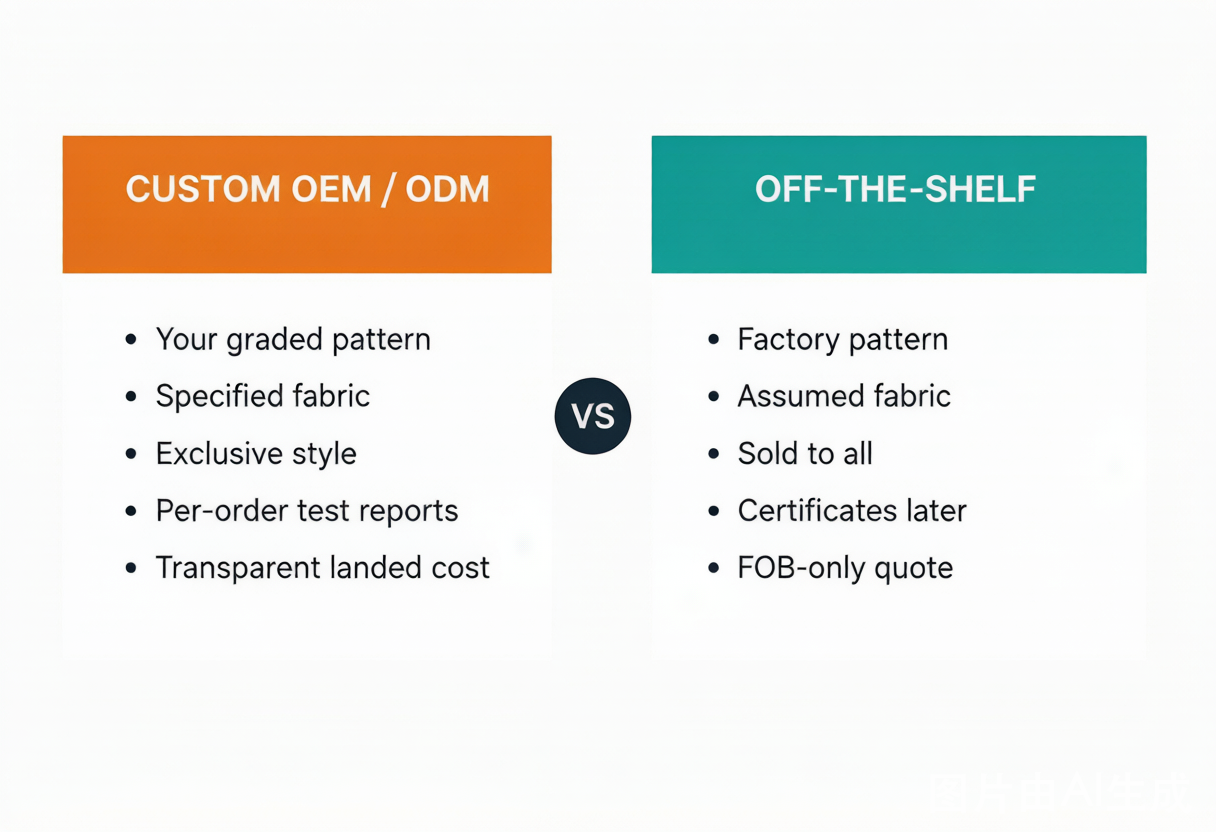
Custom vs. Wholesale Kids Underwear Manufacturing is not a choice between two prices for the same product — it is a choice between two different products. The five differences that decide your brand’s outcome are fit accuracy, fabric and skin safety, brand exclusivity, compliance documentation, and true landed cost. Choose wholesale (off-the-shelf) to test demand fast; choose custom when the garment, the label, and the safety story must be unmistakably yours.
Every private-label buyer reaches the same fork in the road. You can buy finished kids’ underwear from a catalogue and resell it under your name, or you can commission a factory to build the garment to your own specification. The second path is slower and demands more preparation — yet it is the only one that lets the product become yours rather than a slightly relabelled version of what a thousand other shops already stock.
This guide breaks the decision down the way a sourcing manager would weigh it: not as a slogan, but as five concrete differences that show up in returns, margins, and recall risk. If you are still shortlisting a partner, start with our buyer’s guide to vetting a kids’ underwear manufacturer in China — the model you choose determines which questions actually matter.
What’s inside
- Why the sourcing model defines your brand
- What “off-the-shelf import” really means
- What “custom OEM/ODM manufacturing” really means
- The 5 critical differences
- Side-by-side comparison
- The manufacturer’s honest view
- When each model wins
- How Nuohua bridges speed and control
- How to start a custom program
- Frequently asked questions
Why the Sourcing Model Defines Your Brand
The choice between custom and off-the-shelf is rarely about a single order. It sets the ceiling on three things that compound over time: how defensible your margin is, how trustworthy your safety story is, and whether a customer remembers your name or merely the price. A resold catalogue item competes on the same shelf as its twins; a specified garment competes on fit, feel, and provenance that no competitor can copy without rebuilding it. That is why the decision belongs at the strategy table, not just the procurement desk.
What “Off-the-Shelf Import” Really Means
In B2B terms, off-the-shelf (often called stock, wholesale, or ready-made) means you select from styles a factory or trader has already produced, usually under its own pattern and label, and resell them under yours. The garment exists before you place an order. Lead time is short because there is no development — you are buying inventory, not engineering a product.
The upside is real: low commitment, fast replenishment, and the ability to touch a physical sample before you spend a cent. The trade-off is structural. You inherit the factory’s fabric choice, its sizing logic, its quality band, and its colour range. You can change the hangtag; you cannot change the garment. For a category as intimacy-sensitive as children’s underwear, that limitation is not cosmetic — it touches fit against growing bodies and the chemical safety of fabric against skin.
What “Custom OEM/ODM Manufacturing” Really Means
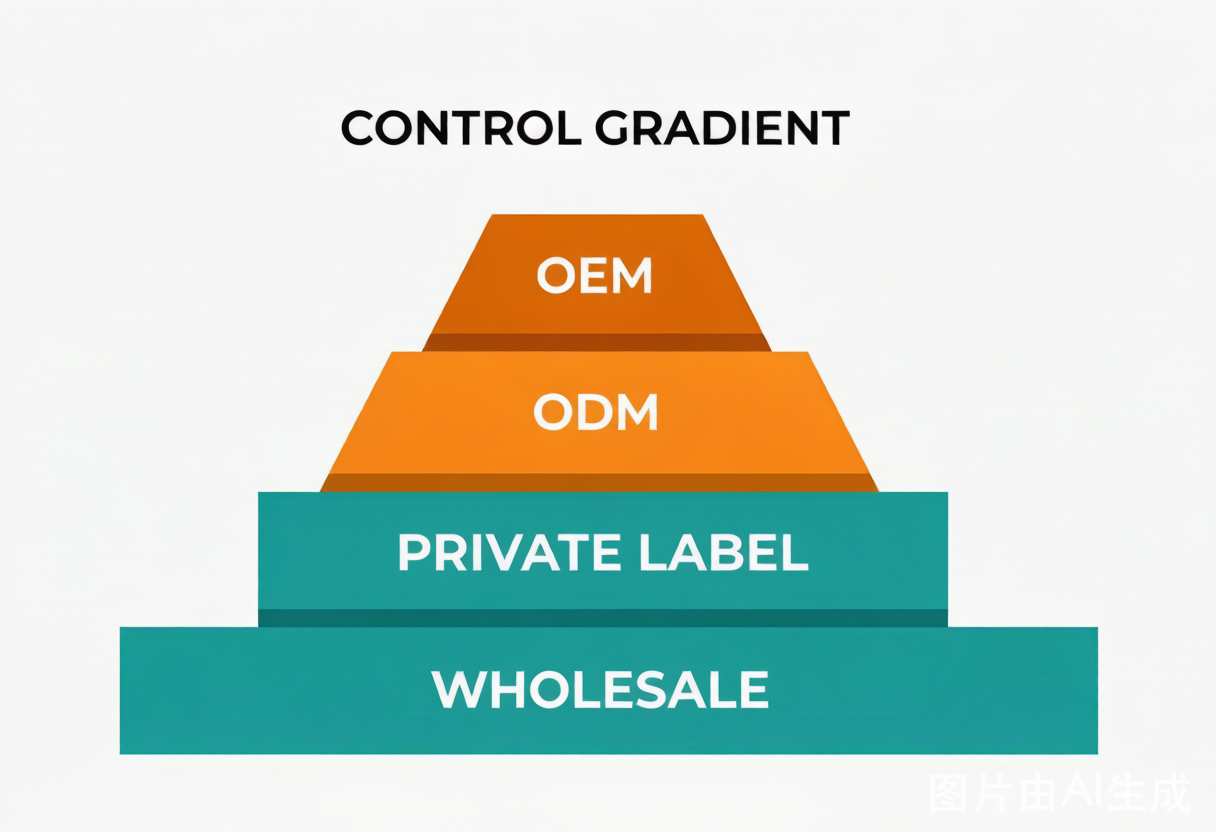
Custom manufacturing means the factory builds to your files. Under OEM you supply the tech pack, measurement chart, or reference sample and the factory executes it; under ODM the factory helps develop the style from an existing direction you approve. Both sit above private label (which rebrands a near-finished base) and far above wholesale (which resells finished stock).
The control gradient the industry repeats is consistent: OEM > ODM > private label > wholesale. More control means more preparation from you — a clear brief, an approved sample, and patience for development — but it also means the approved sample becomes the contractual reference for every unit in the run. That reference is what protects your consistency batch after batch. To see what a complete brief looks like, our tech-pack structure guide walks through every block a factory needs before it can quote accurately.
The 5 Critical Differences That Separate Them
1. Fit and Sizing Accuracy — Graded Patterns vs One-Size-Fits-All
Children do not fit a single global standard. A Chinese size “100” is not the US “3T”, and neither matches the EU “98/104” — the same nominal age maps to different body measurements across markets, and individual factories interpret “relaxed” versus “tailored” cut differently. Off-the-shelf purchases lock you into the source factory’s grading. If that grading runs small for your market, every shipment runs small, and returns climb.
Custom manufacturing lets you define the body standard — EU, US, or Asian — and demand strict adherence to your grading rule during sampling. A precise production-readiness checklist treats the locked size spec as a gate, not an afterthought. For underwear, where a few millimetres decide whether a waistband binds or a leg hole gaps, that control is the difference between a product parents re-buy and one they return.
2. Fabric, Hand-Feel, and Skin Safety — Specified vs Assumed
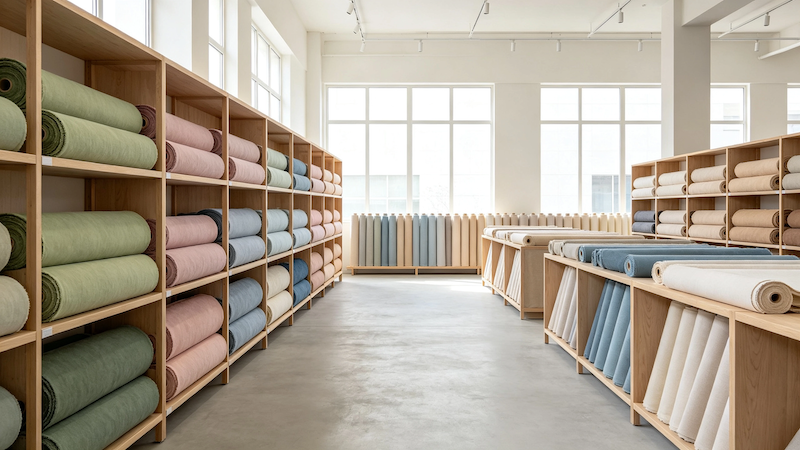
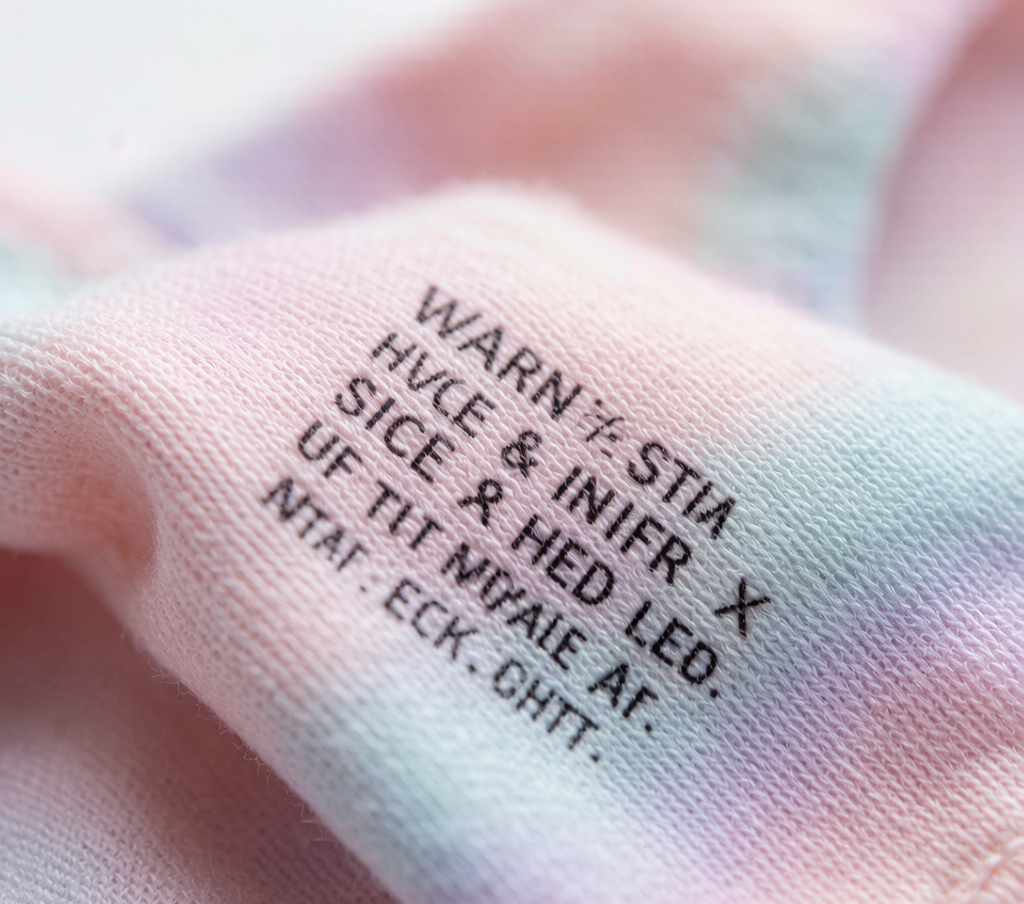
Kids’ underwear is worn against the most sensitive skin for the longest hours of any garment a child owns. Off-the-shelf buyers typically receive whatever fibre the source used, with limited visibility into dye chemistry, elastane percentage, or formaldehyde and phthalate levels. Custom buyers write the fabric specification themselves: fibre composition, GSM, stretch and recovery, and dye standard.
This is where safety documentation lives or dies. A custom program can be built around certified components and verified by independent laboratories — we work with SGS, TÜV SÜD, and Intertek — and align to GB 31701 Class A for infant-grade articles and CPC (Children’s Product Certificate) for the US market. We are also advancing OEKO-TEX Standard 100 certification (in progress). Off-the-shelf stock can meet a market’s floor, but it rarely hands you the per-order test reports that prove it.
3. Brand Identity and Exclusivity — Yours vs the Market’s
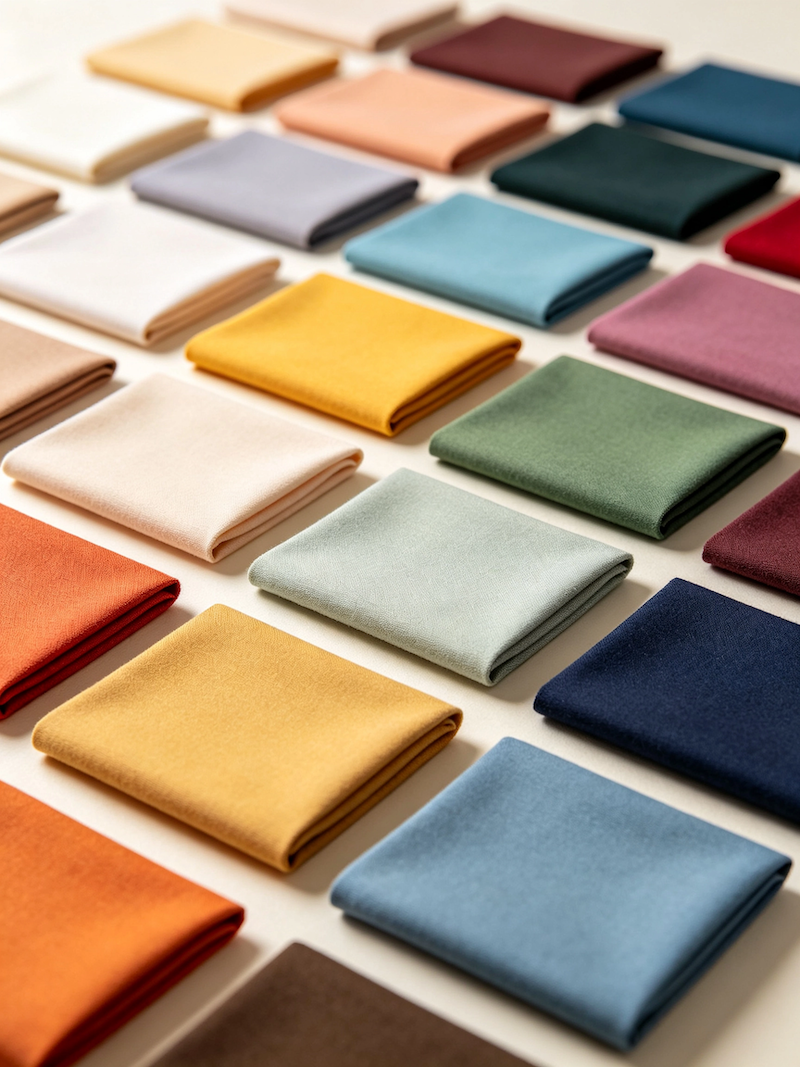
Off-the-shelf inventory is, by definition, available to anyone. Your “exclusive” launch is simultaneously someone else’s “exclusive” launch three towns over. Custom manufacturing makes the garment itself a brand asset: your silhouette, your labelled fit, your Pantone-exact colour, your printed care label, your packaging. Competitors cannot simply reorder it.
4. Compliance and Documentation — Built-In vs After-The-Fact
For children’s products, compliance is not paperwork; it is liability. Off-the-shelf purchases often leave you chasing certificates after the goods have shipped — if the trader can produce them at all. Custom manufacturing bakes compliance into the development stage: restricted-substance testing, label correctness, and traceable component sources are agreed before bulk cutting.
That forward documentation is what lets you answer a retailer’s audit or a market authority’s query without scrambling. It is also where a manufacturer’s honesty matters most — we would rather tell you a claim cannot be met than paper over it. Our OEM/ODM vetting guide lists the documentation questions every serious partner should answer before you sign.
5. Landed Cost and MOQ Flexibility — Transparent vs Fixed
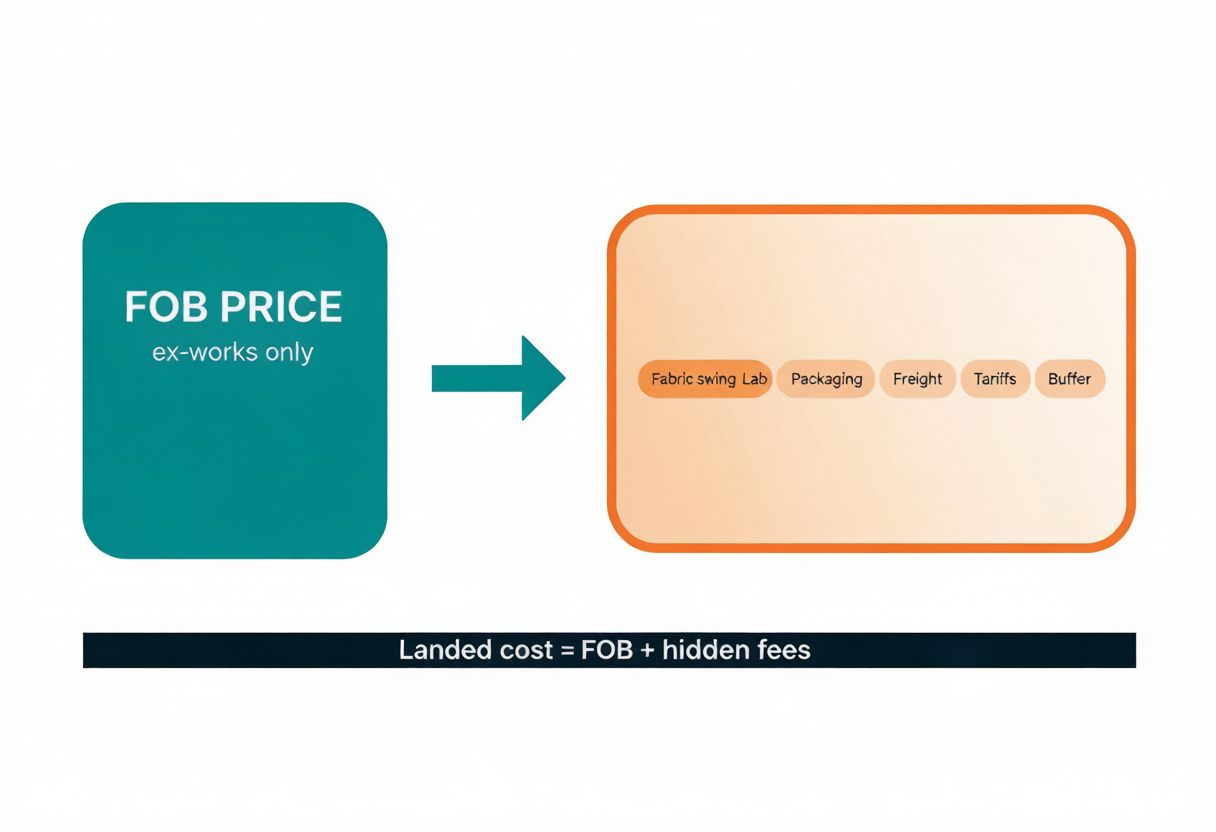
The headline comparison — “off-the-shelf is cheaper” — is usually true at unit level and false at landed level. A wholesale quote is often FOB-only: it omits fabric-price swings, per-colour lab tests, custom packaging, freight volatility, tariffs, and the buffer you need against peak-season delays. Custom manufacturing exposes each line, which sounds like more cost and is actually more control — you see what you pay for and can trade one lever for another.
MOQ is the other half. Off-the-shelf forces you to buy the factory’s case pack; custom lets you scale the run to your demand. At Nuohua the floor is 2 pcs on selected in-stock styles, colors and sizes, with sampling kept flexible so a new label can validate a style before committing to a full run. Our BOM-to-cost guide shows how spec precision — not the sourcing model alone — drives the final number.
Side-by-Side Comparison
| Dimension | Custom OEM / ODM | Off-the-Shelf Import |
|---|---|---|
| Fit control | Your graded pattern; EU/US/Asian standard | Source factory’s grading, fixed |
| Fabric & safety | You specify fibre, GSM, dye, testing | Inherited from stock; limited visibility |
| Exclusivity | Unique silhouette, colour, label, pack | Available to any reseller |
| Compliance docs | Built into development; per-order reports | Often chased after shipment |
| Landed cost | Transparent line-by-line; MOQ 2 pcs on selected in-stock styles, colors and sizes/colour | Low unit, FOB-only, fixed case pack |
| Lead time | Sampling + bulk (weeks to ~2 months) | Ready stock, ships in days–weeks |
| Best for | Building a defensible brand | Testing demand, fast replenishment |
- It cannot give you a unique fit tuned to your target market’s body standard.
- It cannot guarantee Pantone-exact colour or a specified elastane recovery rate.
- It cannot hand you per-order restricted-substance test reports on demand.
- It cannot make the garment exclusive to your brand — only the hangtag is.
- It cannot turn a late trend signal into a corrected run without reordering someone else’s design.
None of this makes off-the-shelf wrong. It makes it a different instrument — superb for validation, weak for differentiation.
The Manufacturer’s Honest View: What Custom Cannot Do Either
Honesty cuts both ways. Custom manufacturing will not save a weak concept, and it is the slower door. You absorb sampling fees, you meet an MOQ, and you wait while patterns are drafted and the first sample surfaces its problems on one garment instead of a thousand. If your only goal is to list something this week, off-the-shelf wins. Custom is an investment in a product that compounds — and it demands that you arrive with at least a rough brief.
When Each Model Wins
Choose off-the-shelf when you are validating a category, need inventory in days, or want to test several silhouettes with minimal capital before committing to a direction.
Choose custom manufacturing when fit, fabric safety, and a recognisable label are the point — which, for children’s underwear, is most of the time. If parents are paying for comfort and trust, a relabelled generic will erode both the moment a competitor undercuts the price.
How Nuohua Bridges Speed and Control
A decade-plus of export experience taught us that brands rarely want pure speed or pure control — they want a sensible sequence. That is why our development starts with a digital step: a 3D virtual sample locks the look and the colourway before a single physical sample is cut, trimming review rounds. The physical sample then confirms the only thing 3D cannot fully prove for stretch knits — fit and recovery against a real body.
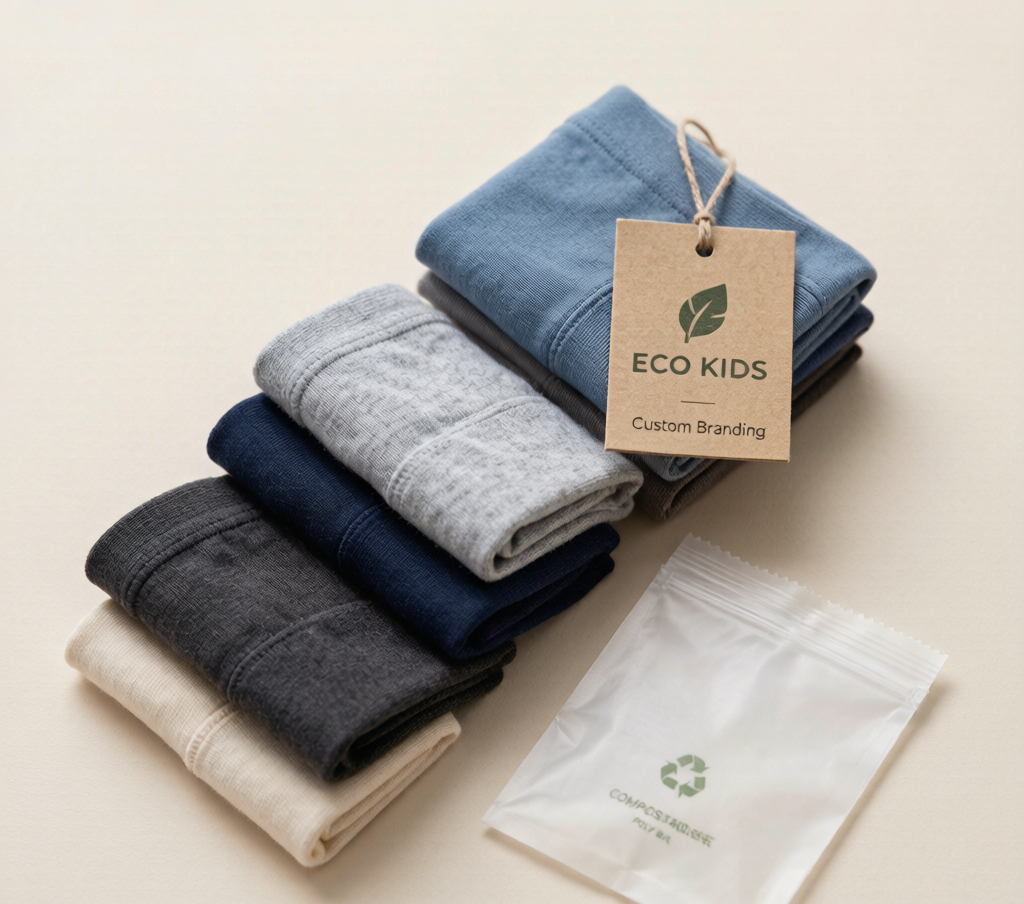
Underneath that workflow sits a certified base: GB 31701 Class A infant-grade alignment, CPC for the US, independent verification through SGS, TÜV SÜD, and Intertek, and OEKO-TEX Standard 100 (in progress). Full customisation — size standard, fabric, colour, label, and packaging — runs from an MOQ of 2 pcs on selected in-stock styles, colors and sizes, with sampling kept flexible so a new label can prove a style before scaling.
How to Start a Custom Program
You do not need a finished tech pack to begin — you need a direction. Our development-request guide shows exactly what to send so the factory can quote and sample without guesswork: target age, fabric intent, colour direction, and the market you must comply with. From there the path is mechanical — brief, digital sample, physical sample, approved reference, bulk — and every stage is documented so the next reorder is identical to the first.
Frequently Asked Questions
Is off-the-shelf always cheaper than custom?
At unit price, usually yes. At landed cost — including testing, packaging, freight, and tariffs — the gap narrows, and custom gives you the transparency to manage it.
Can I mix both models?
Yes, and most mature brands do: off-the-shelf to validate, custom to scale the winners. The risk is letting the two share a SKU identity, which confuses customers about what your brand stands for.
What is the real MOQ for custom kids’ underwear?
At Nuohua it is from 2 pcs on selected in-stock styles, colors and sizes, with sampling flexible. Other factories vary widely; treat any “no MOQ” claim as a sign of trading, not manufacturing.
How long does custom actually take?
Sampling typically runs days to a couple of weeks; bulk production commonly several weeks to about two months depending on order size, fabric availability, and construction complexity. Build buffer around peak seasons.
Do I need a tech pack to go custom?
Not a perfect one. A clear brief and a reference sample get development moving; the factory helps formalise the tech pack during sampling. A vague brief, however, produces a vague sample and a shifting quote.
Ready to build a kids’ underwear line that is unmistakably yours? Explore Nuohua’s OEM/ODM private-label service →
Explore More Nuohua Resources
- Kids’ Underwear Manufacturing — Answers Hub: Direct, sourced answers to the questions B2B buyers ask most (MOQ, certifications, customization, lead time, compliance).
- Trust Center: Verified certifications, our documented quality system, and real manufacturing capabilities.