
Childrens Product Certificate CPC kids underwear and sleepwear brands must file is the single document that decides whether your U.S. shipment clears customs or sits on a dock. Formally the Children’s Product Certificate (CPC), it is not a certificate you buy from a factory — it is a legal declaration issued by you, the importer, confirming your product passed the required third-party tests.
This guide walks private-label buyers through what a CPC actually is, how the rules split between underwear and sleepwear, what the 16 CFR 1615/1616 flammability standard really requires, why tracking labels are a separate obligation, and the new CPSC eFiling mandate that became compulsory on July 8, 2026.
Quick Answer
A CPC is a written declaration (based on third-party lab testing) that a children’s product complies with applicable U.S. safety rules. Kids’ underwear is exempt from flammability standards but still fully regulated (lead, phthalates, labeling). Kids’ sleepwear must pass 16 CFR 1615/1616 flammability testing — unless it is snug-fitting. As of July 8, 2026, U.S. importers must eFile the certificate to CBP before goods arrive. Your factory cannot issue the CPC for you; it can only supply tested, compliant production and the records behind it.
In this guide
- What a Children’s Product Certificate (CPC) Actually Is
- Who Must Issue the CPC (and Why Your Factory Cannot Do It For You)
- The 7 Required Elements of a Compliant CPC
- CPC for Underwear vs Sleepwear: Three Different Compliance Paths
- 16 CFR 1615 & 1616 Explained: The Sleepwear Flammability Test
- Tracking Labels: The Second Certificate You Cannot Skip
- CPSC eFiling 2026: Mandatory Pre-Clearance at the Border
- How Nuohua Supports Your CPC & Compliance Program
- Common CPC Mistakes That Get Shipments Held
- Frequently Asked Questions
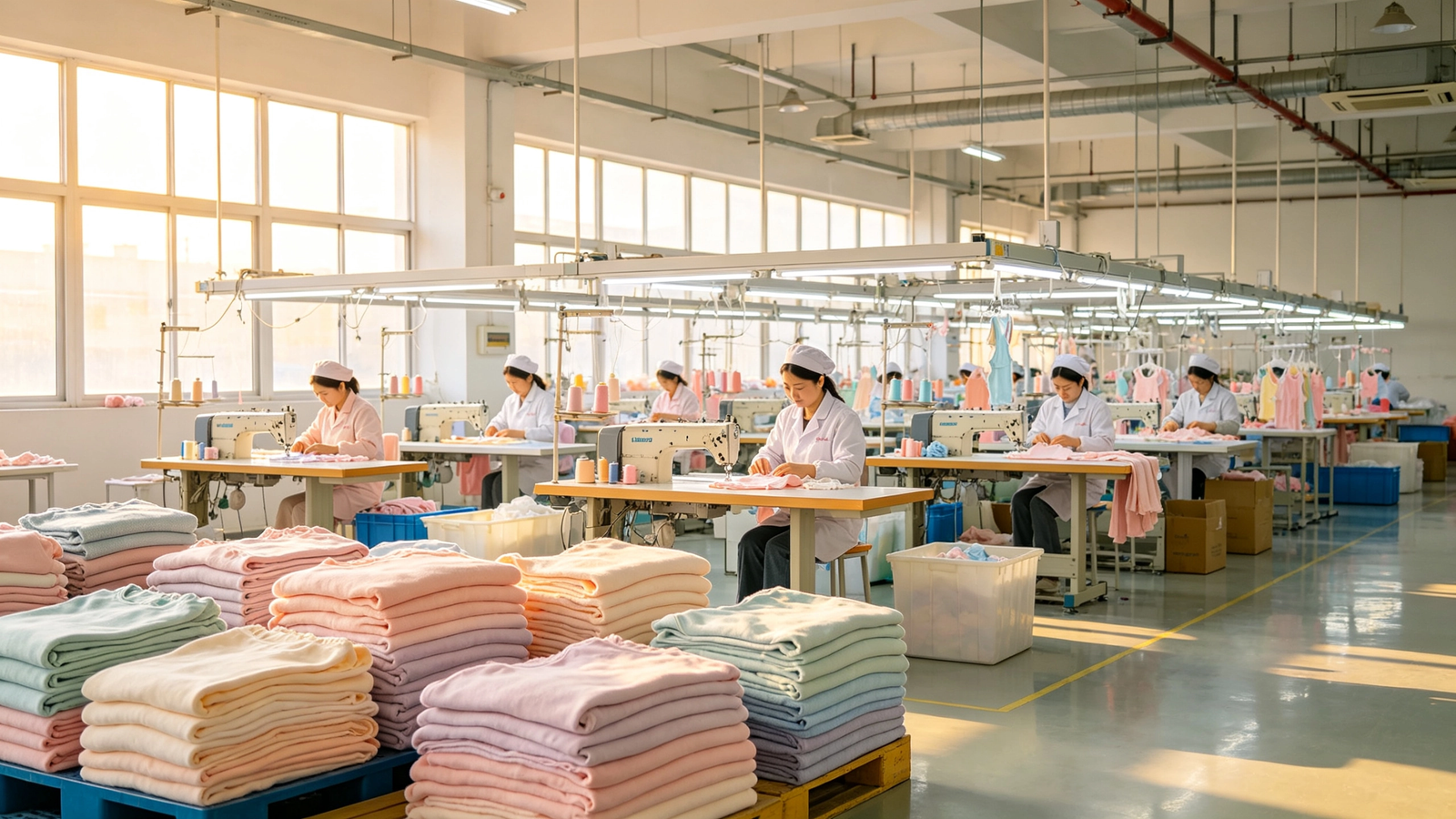
1. What a Children’s Product Certificate (CPC) Actually Is
A Children’s Product Certificate (CPC) is a written document, required under Section 14 of the Consumer Product Safety Act (CPSA) and codified at 16 CFR part 1110, in which the manufacturer or importer certifies that a children’s product complies with all applicable children’s product safety rules.
The key word is written declaration. A CPC is not a government-issued license. It is your own statement — backed by passing test results from a CPSC-accepted, third-party laboratory — that the product meets the rules. The certificate and its supporting test reports must be in English.
A “children’s product” means any consumer product designed or intended primarily for children 12 years of age or younger. That is exactly the category kids’ underwear and sleepwear live in, so a CPC is mandatory for nearly every style you import.
2. Who Must Issue the CPC (and Why Your Factory Cannot Do It For You)
This is the single most misunderstood point in kidswear sourcing, so it is worth stating plainly:
The domestic manufacturer or the U.S. importer is legally responsible for issuing the CPC. The overseas factory — even if it paid for testing — cannot issue it on your behalf. Per 16 CFR § 1110.7, the importer (for products made overseas) drafts and issues the certificate based on passing third-party test results. The testing laboratory provides the data; it does not issue the CPC.
What this means for your supply chain:
- Your factory’s job is to produce to spec and supply tested, compliant materials — including the test reports from a CPSC-accepted lab.
- Your job (or your U.S. entity’s) is to issue the CPC and keep it available to CPSC and Customs within 24 hours of request.
- If the foreign factory already tested the product, you still must recertify it under your own CPC. You cannot simply “reuse” the factory’s certificate as your own.
A capable OEM/ODM partner makes this painless by delivering a complete testing and documentation package, so issuing your CPC is assembly, not investigation.
3. The 7 Required Elements of a Compliant CPC
CPSC does not mandate a template, but every CPC must contain these seven elements, accurate and specific to each product:
| # | Element | What it must state |
|---|---|---|
| 1 | Product identification | Enough detail to match the certificate to the exact product and no other. |
| 2 | Citation to each safety rule | Every applicable CPSC children’s product safety rule (e.g., lead, phthalates, flammability, tracking-label rules). |
| 3 | Importer / domestic manufacturer | Name, address, and phone of the entity issuing the certificate. |
| 4 | Contact for test results | Name, address, phone of a person who can produce the underlying test reports. |
| 5 | Date and place of manufacture | Date and location (city, country) where the product was made. |
| 6 | Date and place of testing | When and where the third-party testing was conducted. |
| 7 | Third-party laboratory | Name, address, phone of the CPSC-accepted lab that performed the testing. |
Missing or vague entries — “China” without a city, a lab not on the CPSC-accepted list, a citation that omits a rule — are among the most common reasons a CPC is rejected during a CPSC or Customs review.
4. CPC for Underwear vs Sleepwear: Three Different Compliance Paths
The biggest compliance mistake brands make is treating “kids’ clothing” as one bucket. For CPC purposes, underwear, sleepwear, and snug-fitting sleepwear follow three different paths — and the difference changes which tests you need.
4.1 Kids’ Underwear — Exempt From Flammability, Still Fully Regulated
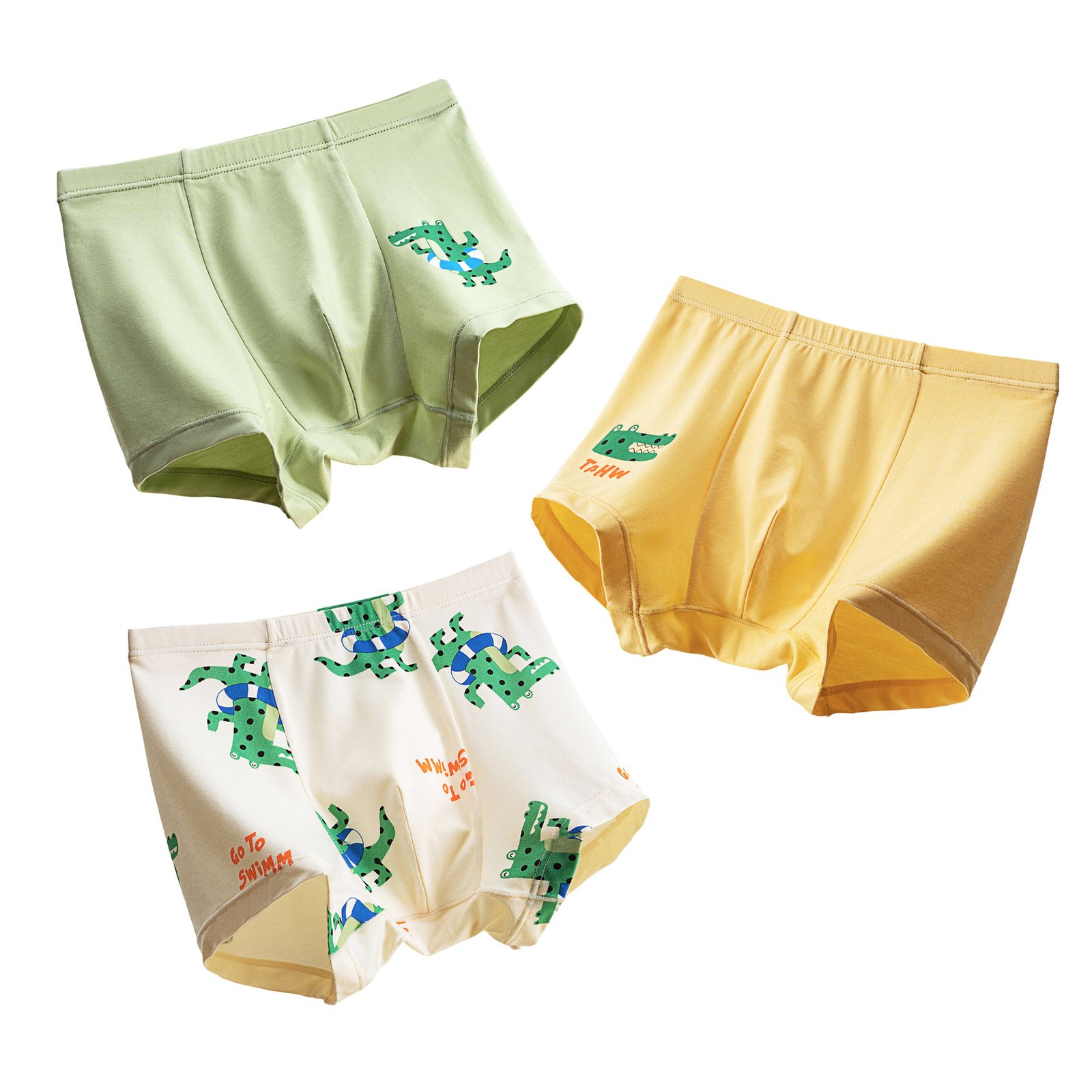
Here is the clarification most suppliers get wrong: children’s underwear is explicitly excluded from the 16 CFR 1615/1616 flammability standards. The CPSC definitions name “diapers and underwear” as outside the sleepwear flammability rules. So your briefs and boxer briefs do not need flame-resistance testing.
But “exempt from flammability” is not “exempt from CPSIA.” Kids’ underwear still requires:
- Total lead content limits in accessible substrates (16 CFR part 1303).
- Phthalates (phthalates) limits in accessible plastic/components (16 CFR part 1307).
- General wearing-apparel flammability compliance (16 CFR part 1610) — the baseline for all clothing.
- A permanent tracking label (see Section 6).
- A CPC citing each of the above.
4.2 Kids’ Sleepwear — 16 CFR 1615 / 1616 Flammability Rules Apply
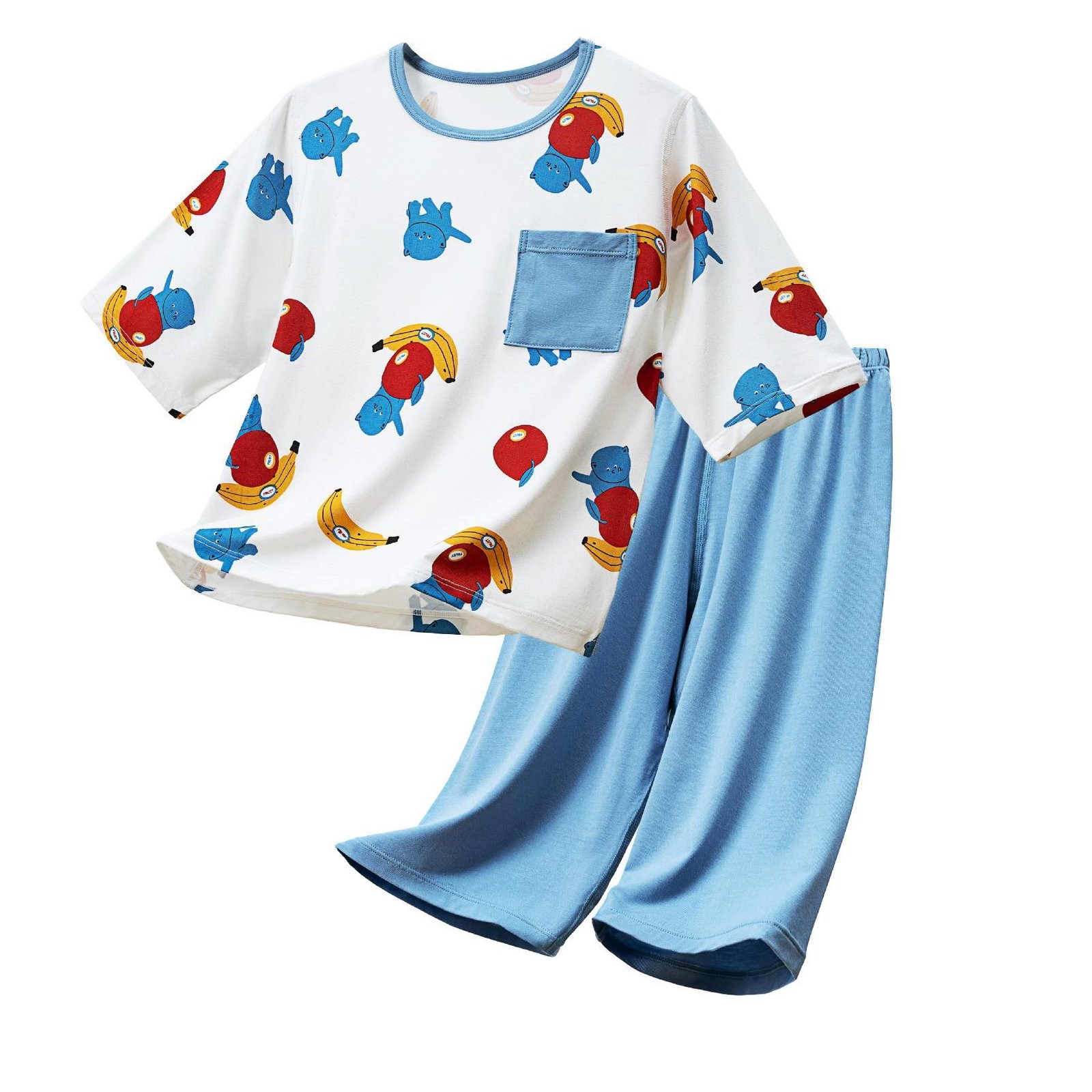
If the product is intended to be worn primarily for sleeping — pajamas, nightgowns, robes, and even loungewear promoted as sleepwear — and it is sized above 9 months, then 16 CFR part 1615 (sizes 0–6X) or part 1616 (sizes 7–14) applies. The fabric and finished garments must pass flammability testing, or the garment must qualify for the snug-fitting exemption below.
This is why a pajama program needs a different testing pathway than an underwear program — and why a manufacturer who runs both must keep the two testing streams separate.
4.3 Snug-Fitting Sleepwear — The Tight-Fit Exemption (and Its Labeling Catch)
There is a well-known loophole that is really a different standard: snug-fitting (tight-fitting) sleepwear is exempt from the 1615/1616 flammability tests, because close-fitting garments are far less likely to contact an open flame. But the exemption is not free:
- The garment must meet specific dimension and fit requirements defined in the regulation.
- It must carry a clear “snug-fitting” / “tight-fitting” warning label telling caregivers the garment must fit snugly to be safe.
- It still must comply with 16 CFR part 1610 (general wearing-apparel flammability).
Why this matters for sourcing: many bamboo and modal children’s sleepwear lines are deliberately designed snug-fitting precisely to use this exemption — avoiding flame-retardant chemistry while staying compliant. If your supplier recommends that route, make sure the labeling and fit spec are locked, because the exemption lives or dies on the label.
5. 16 CFR 1615 & 1616 Explained: The Sleepwear Flammability Test
For sleepwear that is not snug-fitting, the flammability standard is a vertical flame test:
- Five specimens (3.5″ × 10″) are cut from the fabric, seams, and trim.
- Each is held vertically and exposed to a gas flame at the bottom edge for 3 seconds.
- After the flame self-extinguishes, the char length (burned distance) is measured.
- The garment must also pass after 50 launderings — the standard is about durability, not just the first wear.
Pass criteria:
| Metric | Limit |
|---|---|
| Average char length (5 specimens) | ≤ 7.0 inches (17.8 cm) |
| Any single specimen’s char length | ≤ 10 inches (25.4 cm) |
Testing is done at three levels — fabric production units, prototype seams/trim, and finished production garments — so compliance is verified before mass production and again on the line. For a full Amazon-focused walkthrough of this gate, see our bamboo kids’ sleepwear private-label playbook.
6. Tracking Labels: The Second Certificate You Cannot Skip
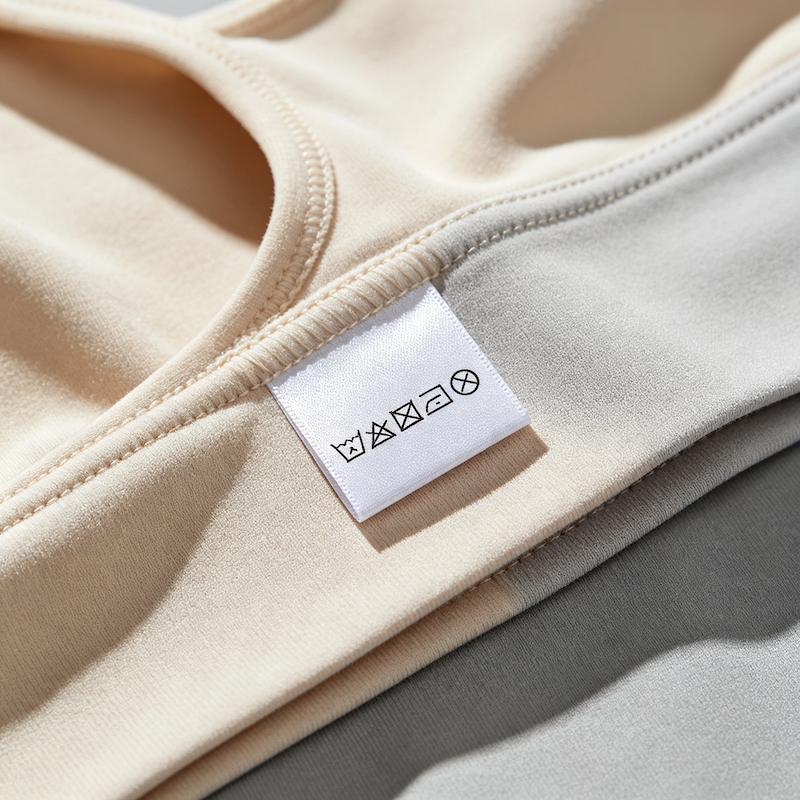
A CPC is the document. A tracking label is the physical mark on the product — and CPSIA requires both. Under CPSIA Section 103, every children’s product must bear a permanent tracking label that lets you trace a unit back to its source.
At minimum, the tracking label must show:
- The name of the manufacturer or private labeler (or a license/certificate number).
- The location and date of production (city and country).
- Cohort information — enough batch, run, or lot detail to identify the specific production source.
The label can sit on the garment, the care tag, or the packaging, but it must be permanent and legible. This is a separate obligation from the CPC; a perfect certificate with no tracking label on the product is still a violation. When you brief a line, your tech pack’s labeling section should spec the tracking label explicitly — our tech-pack structure guide shows where it belongs.
7. CPSC eFiling 2026: Mandatory Pre-Clearance at the Border
Effective July 8, 2026, U.S. importers of regulated consumer products — including all children’s products — must electronically file (eFile) their certificate of compliance with U.S. Customs and Border Protection (CBP) before the goods arrive. The old model of keeping a paper CPC in a folder and producing it on request is over.
The new eFiling rule (revising 16 CFR part 1110) moves compliance verification to pre-clearance at the port. Key facts buyers must know in 2026:
- No de minimis exemption. There is no sample exemption, no low-value exemption, and no small-batch exemption. A 50-piece test order still must be eFiled if the product is CPSC-regulated.
- Two filing modes. The Full PGA Message Set submits all certificate data with each shipment (good for varied catalogs). The Index PGA mode pre-stores certificate data in CPSC’s Product Registry and submits only an index number per shipment (ideal for repeat production of the same SKUs).
- Foreign Trade Zone grace. Goods entered from a U.S. Foreign Trade Zone have until January 8, 2027; everything else is live now.
- Consequence of missing data. Goods arriving without a filed certificate — or with inconsistent data — face hold, fines, or refusal of entry.
Practically, this raises the bar on your manufacturer’s documentation discipline. The factory that can hand you clean, consistent test data and batch records per shipment is the one that keeps your container moving.
8. How Nuohua Supports Your CPC & Compliance Program
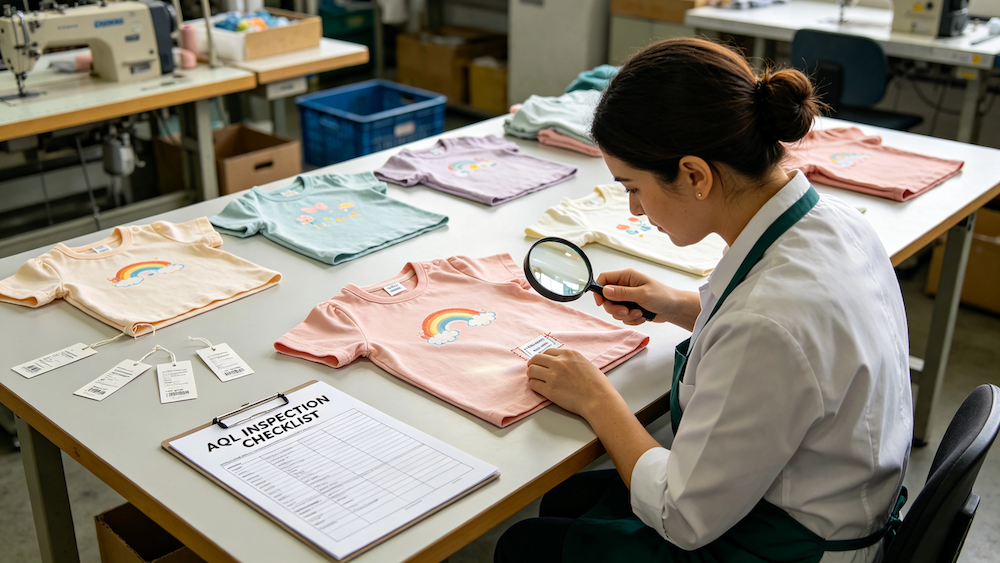
We do not issue your CPC — that is your legal responsibility as importer — but we build the production and documentation foundation that makes issuing it straightforward:
- Third-party testing pathway. We arrange testing through CPSC-accepted laboratories (including SGS, TÜV SÜD, and Intertek) for lead, phthalates, flammability (where applicable), and fabric safety, and we deliver the pass reports your CPC cites.
- Tracking-label production. We print and attach permanent tracking labels (manufacturer, location, date, batch) as a standard part of the labeling package — not an afterthought.
- Grade A skin safety baseline. Our kids’ products are built to GB 31701 Class A (China’s strictest infant/children’s textile safety class), our in-house baseline that aligns with the spirit of global children’s safety rules.
- EcoCosy® authorized fiber option. As an authorized EcoCosy® partner, we can supply branded, biodegradable viscose with full chain-of-custody documentation for eco-positioned lines.
- OEKO-TEX® Standard 100 — in progress. We are advancing OEKO-TEX® certification; ask for the current status on your program.
Most of this is captured early in our quote checklist and production-readiness checklist, both of which carry a dedicated compliance and testing step. For the full picture of how compliance fits into a custom program, see our custom production guide and our Trust Center.
9. Common CPC Mistakes That Get Shipments Held
- Assuming the factory’s certificate is yours. You must issue your own CPC; the factory’s test data supports it, but the certificate is your declaration.
- Mixing up underwear and sleepwear testing. Underwear skips 1615/1616; sleepwear does not (unless snug-fitting). Getting this wrong either wastes money on unneeded flame tests or ships non-compliant sleepwear.
- Snug-fit sleepwear without the label. The exemption is void if the warning label and fit spec are not correct.
- No tracking label on the product. A valid CPC does not fix a missing physical tracking label.
- Lab not CPSC-accepted. Only tests from CPSC-accepted labs support a CPC. Verify the lab is on the list.
- Missing eFiling in 2026. Since July 8, 2026, an un-filed certificate can hold your shipment at the border regardless of how good the product is.
10. Frequently Asked Questions
Does kids’ underwear need flame-retardant testing?
No. Children’s underwear is excluded from 16 CFR 1615/1616. It still needs lead, phthalate, 16 CFR 1610 flammability, and tracking-label compliance, plus a CPC.
Can my Chinese factory issue the CPC for me?
No. The U.S. importer (or domestic manufacturer) must issue the CPC. The factory supplies tested, compliant production and the lab reports behind it.
Is eFiling required for a small sample order?
Yes. As of July 8, 2026, there is no sample, low-value, or small-batch exemption for CPSC-regulated children’s products.
What is the difference between 1615 and 1616?
1615 covers children’s sleepwear sizes 0–6X; 1616 covers sizes 7–14. Both use the same vertical-flame test and char-length limits.
Do snug-fitting pajamas need flammability testing?
No, but only if they meet the regulation’s fit dimensions and carry the required snug-fitting warning label. They still must meet 16 CFR 1610.
What does Nuohua actually provide for compliance?
Third-party testing through CPSC-accepted labs (SGS, TÜV SÜD, Intertek), permanent tracking-label production, GB 31701 Class A baseline production, and the documentation package you need to issue your own CPC.