
Kids T-Shirt Manufacturing: Fabric, Fit, Decoration and Quality Control
A children’s t-shirt looks like the simplest product in a kidswear range. It is also the product most likely to arrive looking slightly wrong: a neckline that opens after two washes, a print that cracks across the chest, a body that fits the approved sample but not the size next to it.
This guide is written for brands, retailers and buying teams sourcing kids t-shirt manufacturing. It covers what actually drives the specification, how to choose fabric direction, where fit and grading decisions get made, which decoration methods survive bulk production, the construction details buyers tend to underestimate, and the quality checkpoints worth agreeing before the line starts.
On this page
- What actually drives a kids t-shirt specification
- Fabric direction: what to choose and what it changes
- Fit, pattern and the size set
- Decoration: what prints well and what does not
- Construction details buyers underestimate
- The production chain, step by step
- Quality checkpoints for a t-shirt order
- MOQ and manufacturing route
- What to send for a t-shirt quote
- Buyer checklist before you approve bulk
Read this first: what determines your t-shirt unit
Four decisions set most of the cost, risk and lead time in a kids t-shirt order. They are also the four that get deferred longest.
- Fabric direction — the base cloth sets hand feel, shrinkage behaviour, and how well a print takes.
- Fit and size set — one approved sample size does not validate the range. Grading is a decision, not a formality.
- Decoration method — print and embroidery carry their own approval rounds, and their own failure modes.
- Construction specification — neckband, shoulder tape, seams, hems and labels are where a cheap t-shirt reads cheap.
What Actually Drives a Kids T-Shirt Specification
A t-shirt specification is not a list of preferences — it is a set of decisions that interact. Change the fabric and the print method may have to change with it. Change the fit and the size grading follows. Decide all four dimensions in the brief and the order runs predictably; leave two of them to sampling and you will pay for it in revision rounds.
The table below is the one worth filling in before you request pricing. It is deliberately written in the order the decisions should be made, not the order they usually arrive.
| Specification dimension | What you are deciding | What it changes downstream |
|---|---|---|
| Product positioning | Everyday basic, fashion-led, or gifting / premium. | Fabric direction, decoration method, packaging and the tolerances you can afford to accept. |
| Fabric direction | Knit type, fibre blend, and how the cloth should behave after washing. | Print adhesion and distortion, shrinkage, drape, and how the garment reads in the hand. |
| Fit block | Straight or fitted, drop shoulder or set-in, body length and hem finish. | Pattern work, grading increments, fabric consumption per size, and packing size. |
| Size set | Which sizes you actually stock, and the size curve you expect to sell. | Cut-plan efficiency, per-size unit cost, and which measurements matter most in QC. |
| Decoration | Print, embroidery, or a combination — and how many colours and placements. | Approval rounds before production, price per piece, and wash-durability expectations. |
| Construction details | Neckband, shoulder tape, side seams, hem stitch, and label type. | How the garment survives wear — and whether it still looks like your brand after five washes. |
| Labelling and packing | Care and content labelling, hangtags, polybag or retail-ready packing. | What the product can legally be sold as in your market, and how it is received in your warehouse. |
Fabric Direction: What to Choose and What It Changes
Choose the fabric for how the garment has to behave, not only for how it feels on a swatch. For children’s t-shirts the practical questions are: does it hold shape after washing, does it take the decoration you have chosen, and does it shrink consistently across the size set. Confirm composition, weight and shrinkage performance for your specific order before sampling rather than carrying a figure over from a previous season.
| Fabric direction | Works well for | What to watch |
|---|---|---|
| Single jersey, cotton the everyday default | Core basics, high-volume programmes, screen-printed graphics. | Shrinkage control and neckline recovery — the two most visible failure points on a basic tee. |
| Cotton with a small amount of stretch | Fitted body shapes, active and playwear, better shape retention. | Print behaviour changes on a stretch base: a graphic that passes on a flat swatch can distort once worn. |
| Rib knit | Neckbands, cuffs, and retro or ringer-style silhouettes. | Fine artwork distorts across the ribs. Keep ribbed panels simple or unprinted. |
| Heavier brushed or looped knits | Autumn / winter weight tees and layering pieces. | Packing volume, and whether fine print detail survives a textured surface. |
| Blends with regenerated cellulose fibres modal, viscose, and similar | Soft-hand premium basics where feel is the selling point. | Consistency of hand feel and colour across bases, especially when one shade runs on two fabrics. |
| Organic cotton programmes | Brands building a materials story around a certified fibre. | Where a certification is claimed, the supporting document must cover the material actually used in your order. Confirm scope before you put it on a label. |
Fit, Pattern and the Size Set
Approve a size set, not a size. A t-shirt that fits perfectly at one size tells you nothing about the sizes either side of it, because grading increments are a design decision. Review the key measurements across the whole range and agree tolerances before production, so that “correct fit” means the same thing to your team and the factory.
Kids t-shirts fail on fit in predictable places. These are the measurements worth reviewing across the full range, not just on the sample size:
| Measurement point | Why it matters | How it usually goes wrong |
|---|---|---|
| Chest / body width | Sets whether the garment skims or hugs, and how it layers. | Grading too aggressively means the largest sizes look boxy and the smallest look tight. |
| Body length | Determines whether the tee stays tucked or rides up when a child moves. | Inconsistent increments across the range; growth is not linear by age. |
| Shoulder and sleeve | Drives the silhouette — drop shoulder reads casual, set-in reads neat. | Sleeve length and armhole depth graded separately, producing an awkward mid-range size. |
| Neck opening | Comfort for the wearer and the single strongest signal of quality. | Opening too wide after wash; the neckband loses recovery and the garment looks worn out. |
| Hem finish | Affects how the body falls and how the garment ages. | Hem twist after washing if the fabric was not relaxed and cut correctly. |
The sample-size trap. A single approved sample is the most common reason a t-shirt order gets rejected at final inspection. If your tech pack specifies measurements for one size only, expect the factory to grade by its own house rules — which may not match your market or your brand’s fit intent.
Decoration: What Prints Well and What Doesn’t
Decoration method should be chosen together with the fabric, not after it. The same artwork behaves differently on a flat cotton jersey, a stretch base and a rib knit. Test the decoration on the actual production fabric at the actual scale before bulk, and treat each added colour or placement as an added approval round.
| Method | Best suited to | Main risk to manage |
|---|---|---|
| Screen print — placement | Front or back graphics, bold and simple artwork. | Registration and cure on knits; distortion when the motif crosses a stretch area. |
| Screen print — all-over | Repeating patterns across the garment. | Scale must be re-approved per size block; each colour adds a step and a cost. |
| Digital print where the fabric base allows | Fine detail, many colours, or artwork that would be uneconomic to separate. | Colour reads differently across bases; the same file is not the same result on two fabrics. |
| Embroidery | Small logos, chest marks, tonal detail. | Backing adds weight and can feel stiff on a light jersey; thread colour must be matched to the approved shade, not to a screen. |
| Appliqué / patch | Texture-led graphics and premium positioning. | Edge finish and how the patch behaves after repeated washing and wear. |
What buyers send
- A screenshot of the artwork
- Print size described as “medium”
- Colour given as “the pink one”
- One placement position for all sizes
- No instruction on what happens at scale
What the factory needs
- Vector or high-resolution artwork file
- Print width and height, in units
- Colour reference for each colour used
- Placement spec per size block
- Strike-off approval before bulk
Construction Details Buyers Underestimate
Two t-shirts in the same fabric at the same price can feel completely different because of construction. Neckband, shoulder tape, seam type and hem stitch are where a garment either keeps its shape or collapses. Specify them in the tech pack — do not assume they are standard.
| Detail | What good looks like | What it prevents |
|---|---|---|
| Neckband | Ribbed band with adequate recovery, applied so the opening returns to shape after being pulled over the head. | A neckline that waves or gapes after a few washes — the fastest way for a garment to look old. |
| Shoulder tape | Tape or binding across the shoulder seams on knits. | Seam stretch and distortion when the garment is pulled on and off repeatedly. |
| Side seams and stitch type | Consistent stitch density with a clean finish inside the garment. | Puckering, skipped stitches and visible inconsistency between operators. |
| Hem and sleeve finish | Even hem depth with no twist after washing. | Hem twist, which is a fabric-relaxation issue that shows up only after the customer’s first wash. |
| Labels | Soft or tagless main label; care and content labelling that meets your market’s requirements. | Comfort complaints, and labelling that blocks a retailer or marketplace from accepting the goods. |
The Production Chain, Step by Step
A t-shirt programme runs in six stages. Each one depends on the approval before it, which is why compressing a stage does not compress the chain — it moves the risk to the next handover.
Brief and tech pack
Product positioning, fabric direction, size set, decoration intent, labelling and packing.
Fabric and colour approval
Fabric confirmed for behaviour, not only hand feel. Colour approved against a physical standard.
Pattern and size set
Pattern developed against the fit block; grading reviewed across the full range.
Decoration approval
Strike-off or embroidery trial on the production fabric, at the correct scale per size block.
Pre-production sample
Fabric, fit, decoration, trims, labels and packing locked as the bulk reference.
Bulk, inspection and packing
Production against the approved reference, with agreed checkpoints and final inspection.
Quality Checkpoints for a T-Shirt Order
Quality is not a claim, it is an agreed standard. Measurement tolerances, workmanship criteria and inspection points should be written down before production starts — because the cheapest moment to resolve a quality question is before the goods exist.
| Stage | What is checked | Why agreeing it early matters |
|---|---|---|
| Incoming fabric | Composition and weight against the specification; shade against the approved standard. | Most colour disputes are settled here or not at all — after cutting, the evidence is gone. |
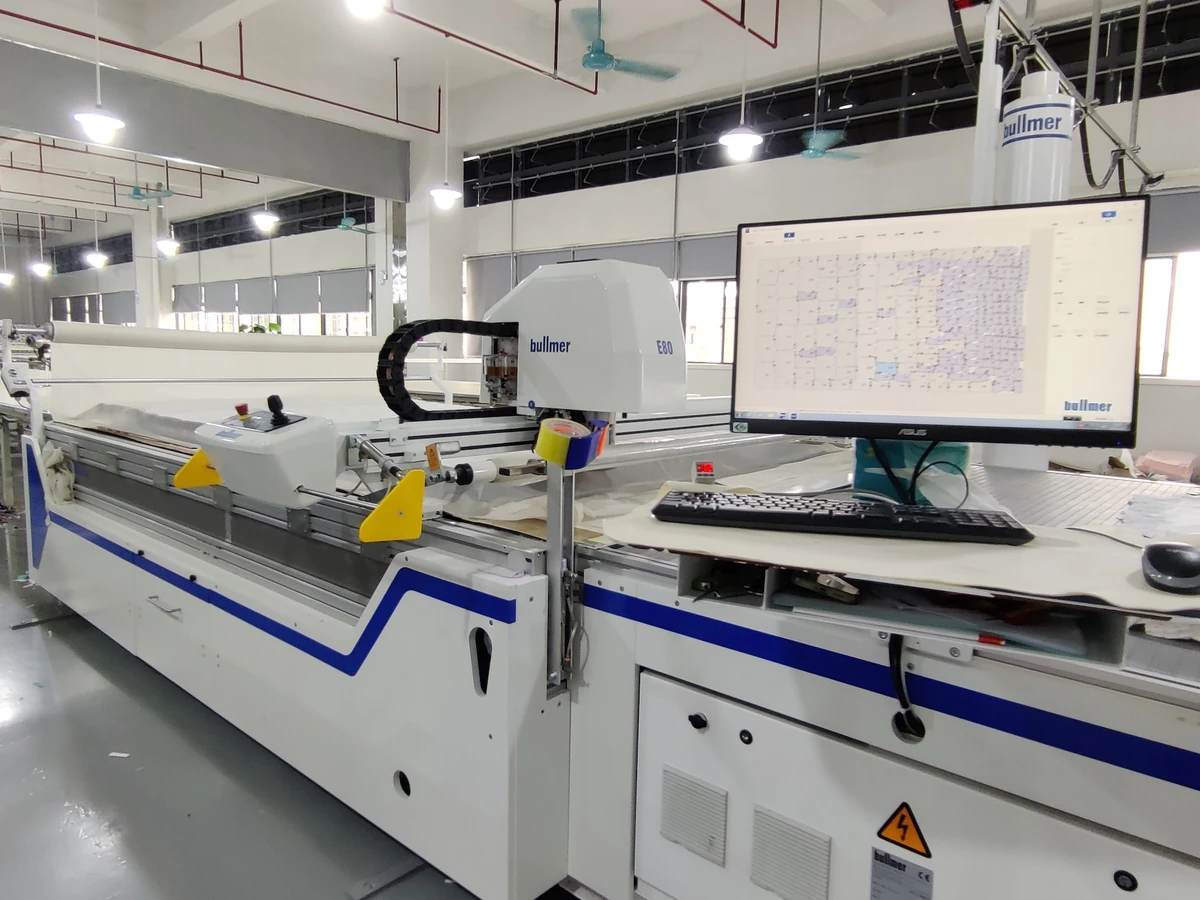
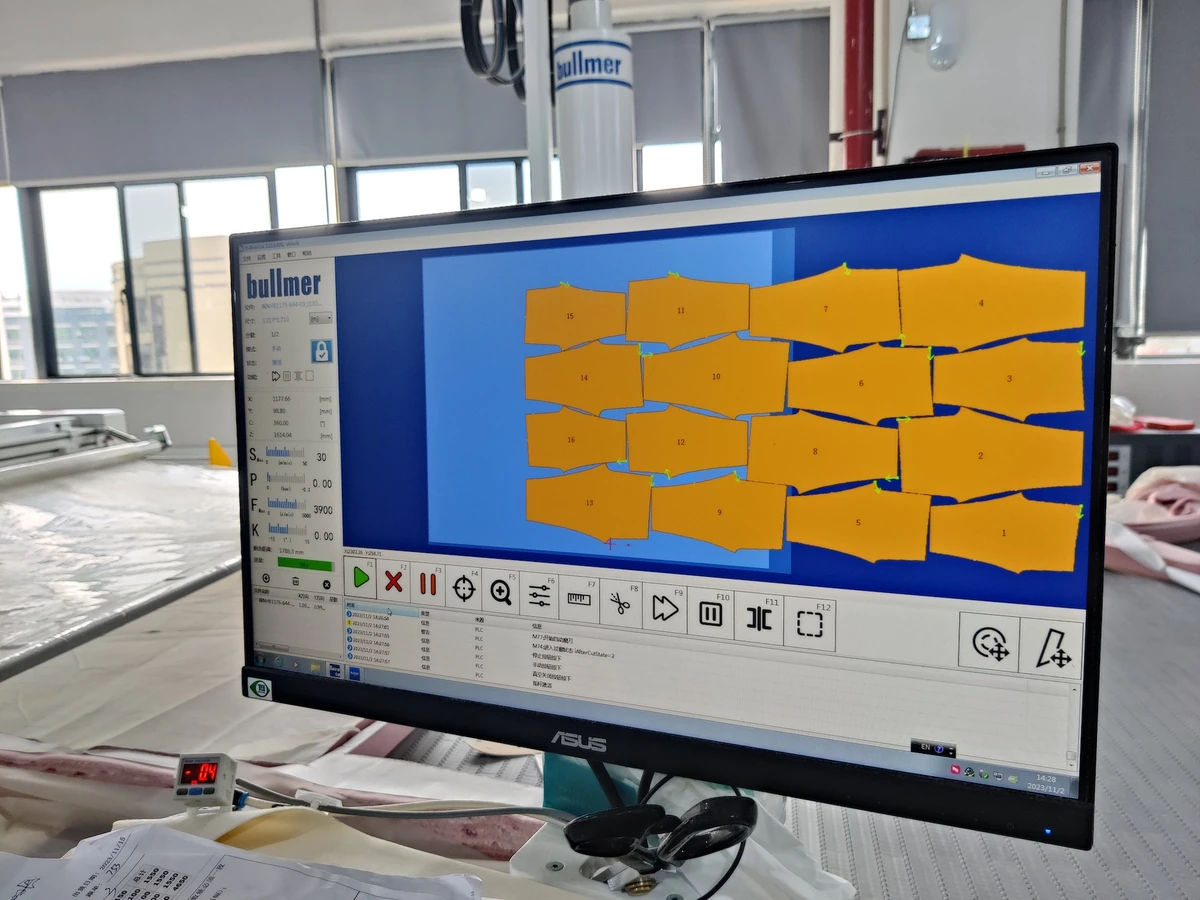
| Spreading and cutting | Panel count, ply alignment, and whether the cut matches the graded pattern. | Cutting errors cannot be corrected later; they become sizing errors in the finished goods. |
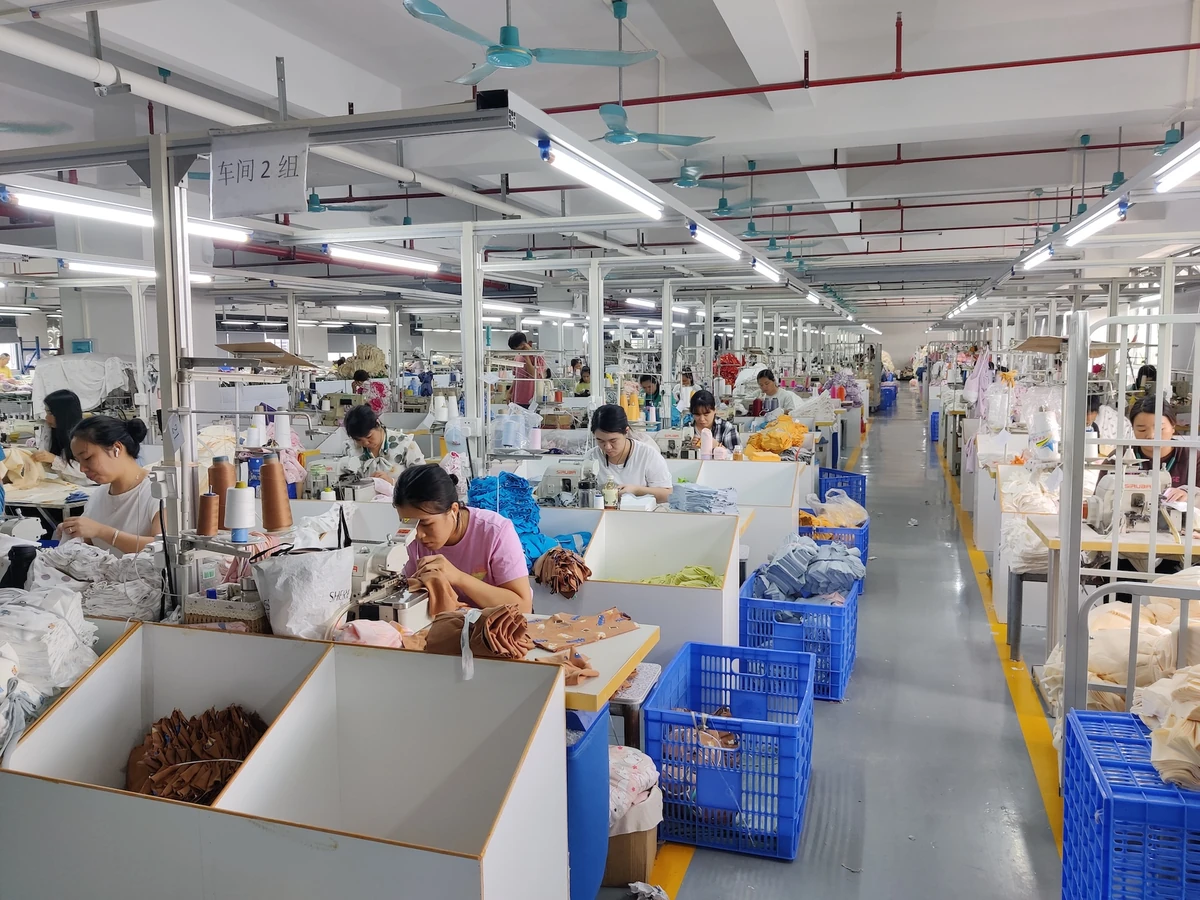
| In-line sewing | Stitch density, seam quality, neckband application, decoration placement. | Catching a systematic fault at piece fifty is a fraction of the cost of catching it at piece five thousand. |
| Final inspection | Measurement against tolerance, workmanship, decoration integrity, labelling, packing. | Converts a subjective “this looks wrong” into a measurable pass or fail. |
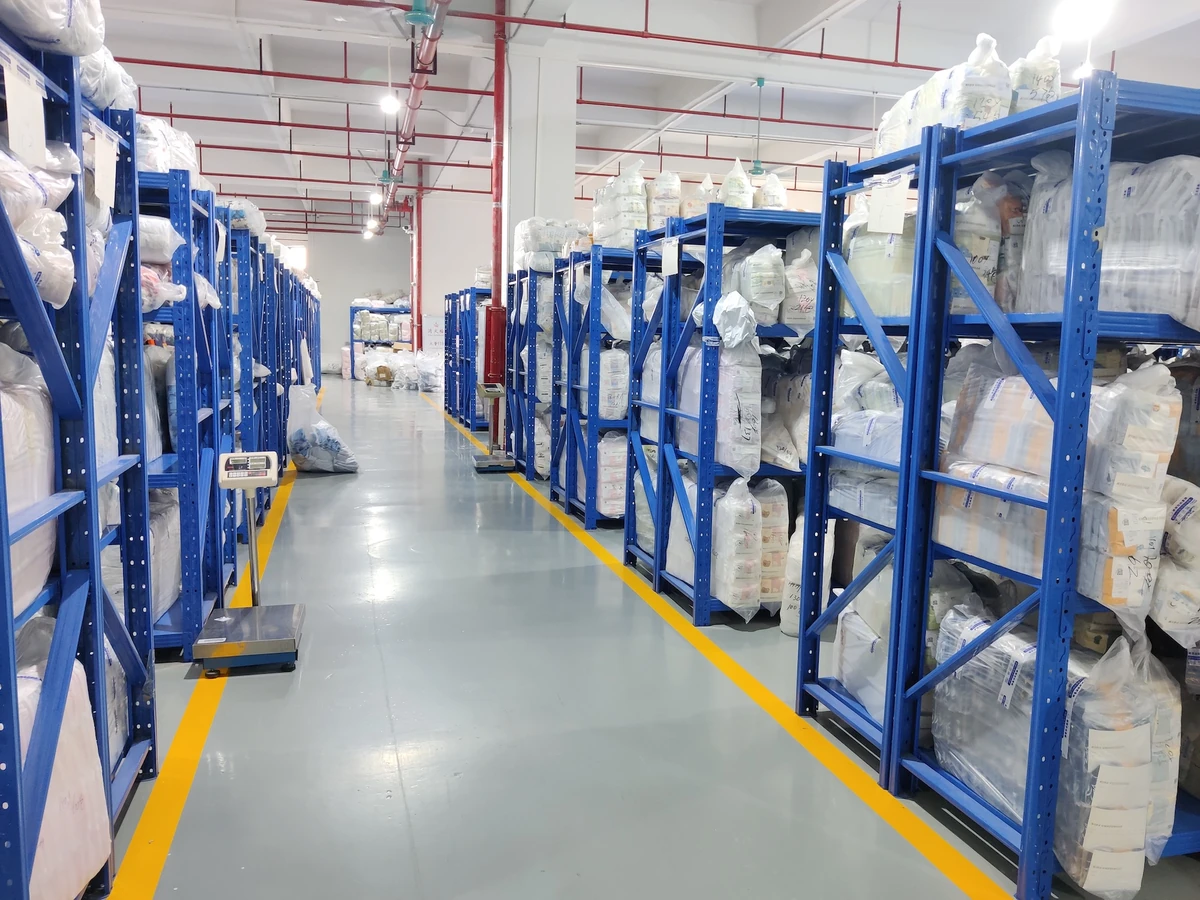
| Pre-shipment | Carton count, size and colour assortment per carton, packing specification. | Stops a correct order arriving as an incorrect delivery, which is a different problem entirely. |
Write the tolerance down. State the acceptable measurement range for each key point, and accept that “as per approved sample” is not a standard — it is an instruction to argue later. A tolerance table takes twenty minutes and prevents the single most expensive kind of dispute in apparel production.
MOQ and Manufacturing Route
MOQ is not one number. It depends on the manufacturing route you choose, and the route should be chosen by how much development risk you want to take on — not by which number looks smallest.
| Route | Typical MOQ | What it means in practice |
|---|---|---|
| Ready stock | From 2 pcs | On selected in-stock styles, colours and sizes. The fastest and lowest-risk way to test a design or top up a proven style. |
| Selected custom styles | From 150–300 pcs per colour | On selected styles, with the requirement depending on fabric, size range and how much customisation is requested. |
| Full custom / ODM development | MOQ varies by product and specifications | Confirmed after reviewing fabric composition, weight, yarn count, size range, artwork, print method and construction. Custom fabric and custom dyeing are quoted separately. |
For a first t-shirt programme, the lower-risk structure is usually to prove the fit and the artwork on an existing style, then move into development once you know what actually sells. That sequence costs a little more per season and considerably less per mistake.
What to Send for a T-Shirt Quote
The fastest way to get a usable quote is to send the six items below. Missing any one of them usually turns a quote into a round of questions, which is the slowest part of any sourcing process.
| Item | What to include |
|---|---|
| 1. Style reference | A tech pack, a sketch, a reference garment, or a link to something close to what you want. |
| 2. Fabric direction | Fibre preference and the behaviour you need — softness, structure, stretch, or a materials story. |
| 3. Size set | Your target size range and, if you have one, your own size chart. |
| 4. Decoration | Artwork file, number of colours, placement, and print size. |
| 5. Quantity and route | Target quantity, whether you want ready stock or development, and your expected size curve. |
| 6. Market and timing | Destination market, labelling needs, and the date the goods must be sellable. |
Buyer Checklist Before You Approve Bulk
If every line below is answered, the order is genuinely ready for production. If two or more are open, you are buying a revision round.
- Fabric composition, weight and shrinkage performance confirmed for this order
- Colour approved against a physical standard, with a shade band agreed
- Fit approved across the full size set, not one sample size
- Measurement tolerances written down and agreed before production
- Decoration tested on the production fabric, at the correct scale per size block
- Neckband, shoulder tape, seam type and hem finish specified in the tech pack
- Pre-production sample approved and retained as the bulk reference
- Label construction and care / content labelling confirmed for the destination market
- Where a certification is claimed, the supporting document covers this material and this order
- Inspection criteria and checkpoints agreed in advance
- Packing specification and carton assortment confirmed
Related Manufacturing Guides
Kids t-shirt programmes
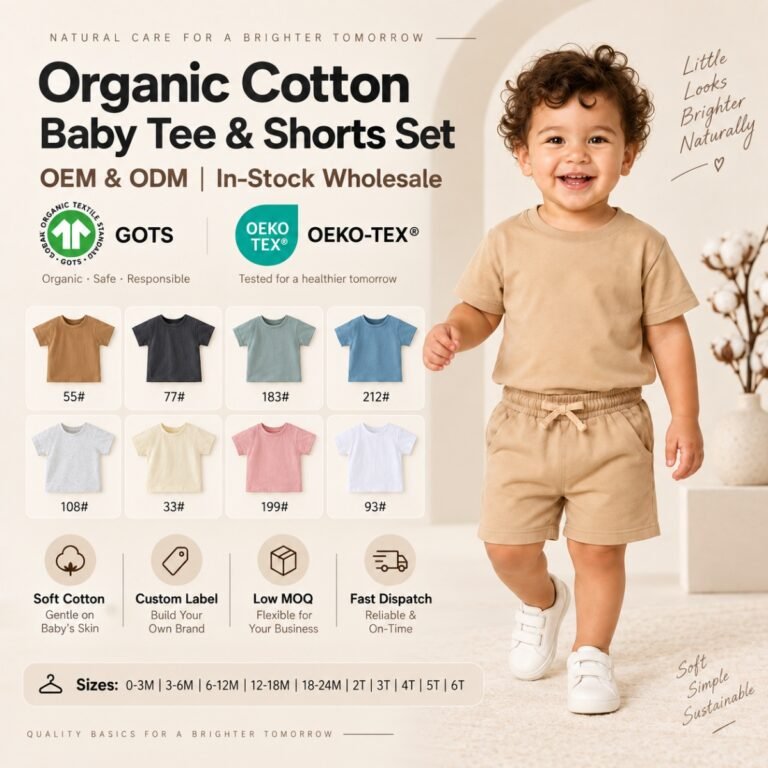
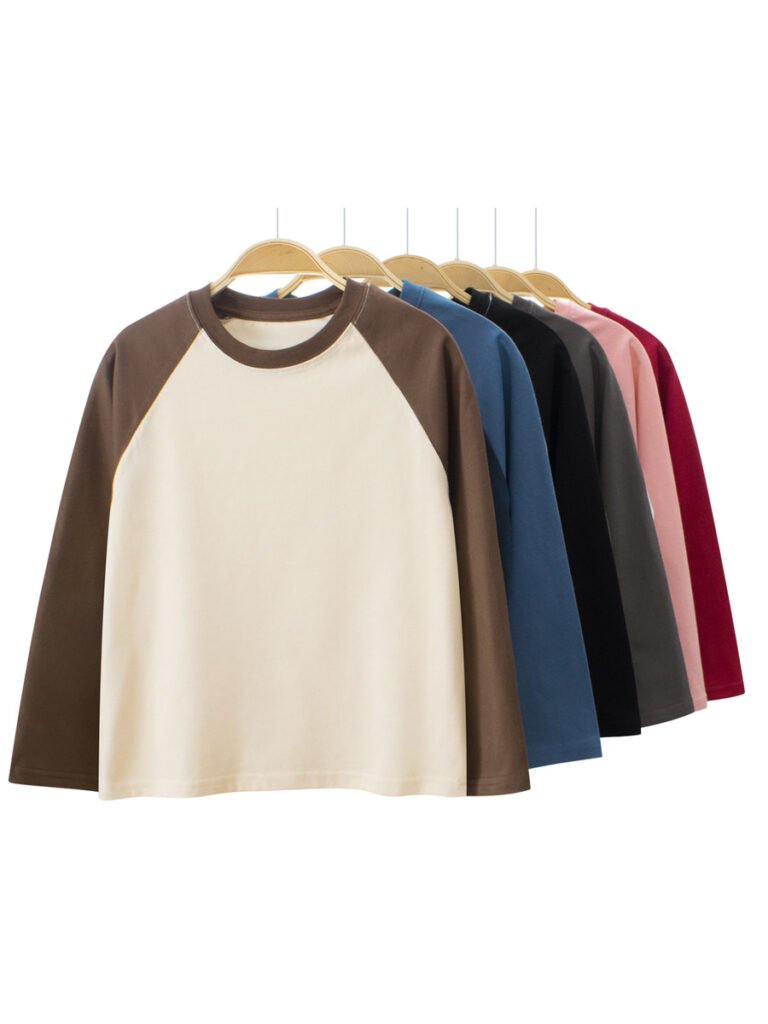
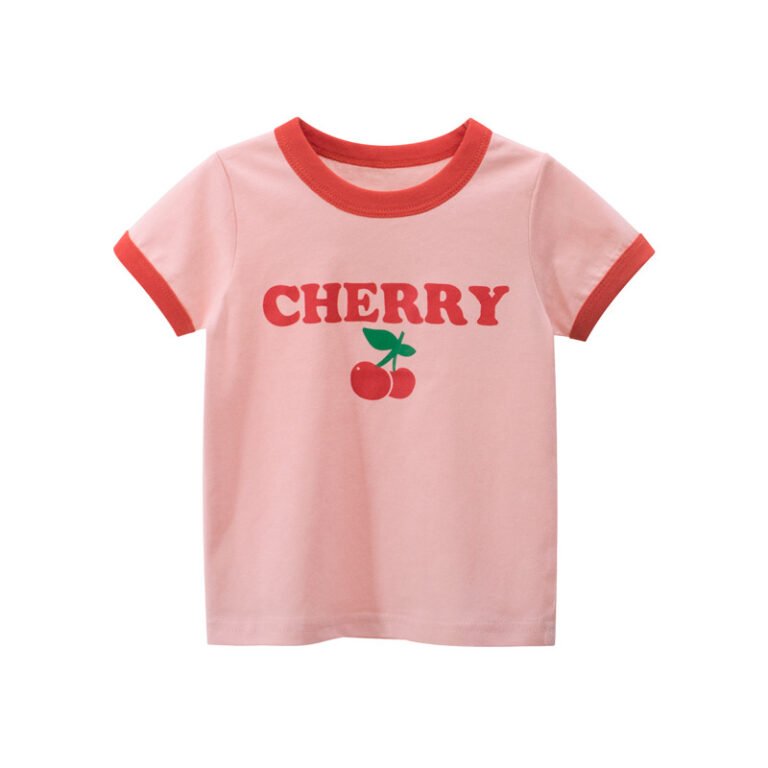
Kids T-Shirts · Organic Cotton Baby T-Shirt · Blank Kids Raglan T-Shirts
Manufacturing and development
Kids Clothing Manufacturer · OEM Kids Clothing · Private Label Kids Clothing · Wholesale OEM / ODM Service
Related Products
Start Your T-Shirt Programme
Ready to develop a kids t-shirt range?
Send your tech pack, reference garment or product idea with your target market, size range, quantity and decoration requirements. We will come back with the fabric options, construction notes and the manufacturing route that fits the project.
Fabric, construction and MOQ guidance in this article reflects Nuohua Garment’s own production routes and project experience. It is practical sourcing guidance, not industry-wide standards. MOQ ranges vary by product and specification and are confirmed per project. Composition, weight, shrinkage and certification scope must be confirmed for the specific order before sampling. Certification and labelling requirements vary by market — confirm the applicable requirements with your testing laboratory, importer or compliance specialist before ordering.