How to Choose a Kids Underwear Manufacturer in China
This guide is part of the Kids Underwear & Sleepwear Sourcing Guide.
Vet Kids Underwear Manufacturer China by starting with the supplier type — an OEM/ODM factory, a trading company, or a marketplace agent — then shortlist from a real manufacturing cluster such as Guangdong, Fujian, or Zhejiang. Cut the list fast with first-pass red flags (no GB 31701 Class A / CPC documentation is the fastest way to disqualify a supplier). This guide is the top of the funnel: how to find suppliers, tell the trading companies from real factories, and the five questions to ask before you ever request a quote.
Choosing a children’s underwear manufacturer in China is less about finding the cheapest quote and more about finding a partner who can protect a brand’s reputation in the most safety-sensitive category there is. This guide is the top of the funnel: how to find suppliers, tell the types apart, and build a shortlist you can trust. The deeper “how to audit them” work lives in our separate OEM/ODM partner vetting framework.
1. Three supplier types you’ll meet
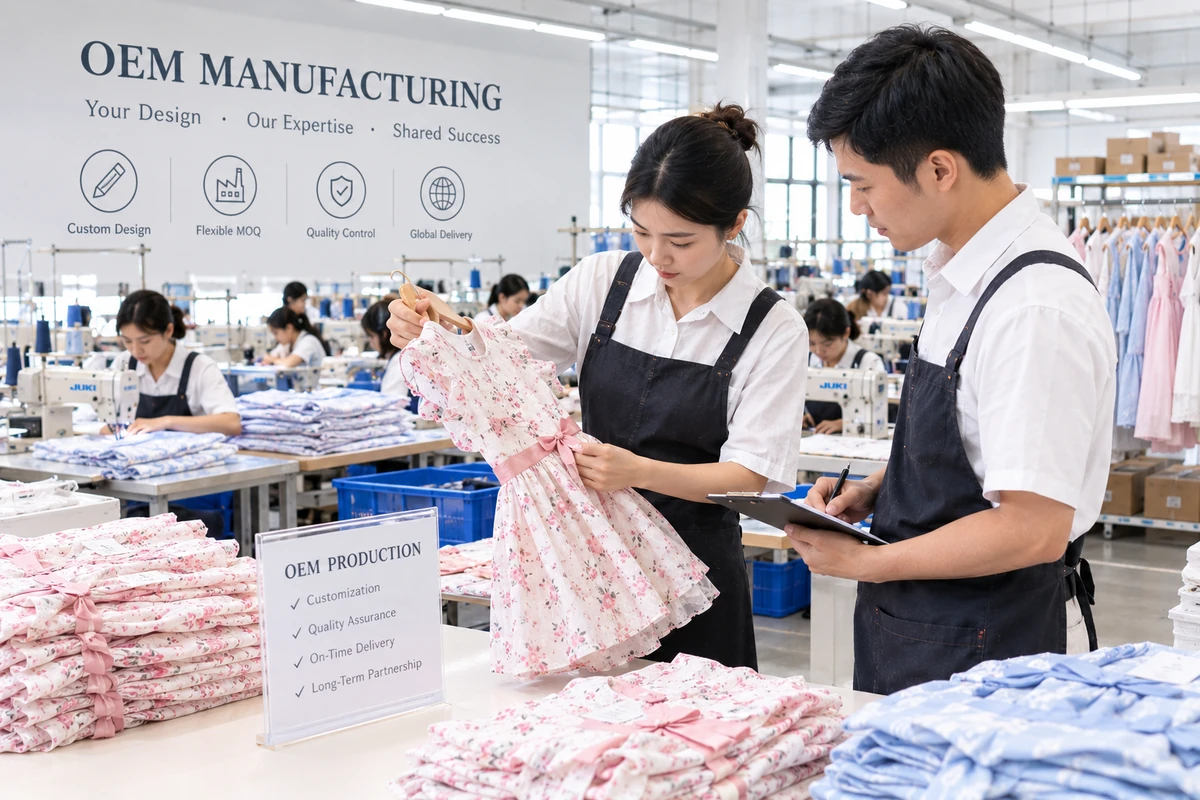
Not every “manufacturer” is a factory. Knowing which one you’re talking to changes your price, your control, and your risk.
- OEM/ODM factory — Owns the production line and often the patterns. Best for private-label and custom development, lowest landed cost at volume, and the only type that can truly guarantee process consistency. MOQs vary; flexible factories such as Nuohua run as low as 2 pcs per selected in-stock style & color.
- Trading company — A sourcing intermediary that aggregates several factories. Faster to onboard and easier to communicate with, but you pay a margin and have less visibility into who actually stitches the garment.
- Marketplace agent — Sellers you meet on platforms like Alibaba. Convenient for discovery, but quality is inconsistent and “factory” claims need verification. Our safe Alibaba sourcing guide covers the guardrails.
2. Where to source: clusters & channels
China’s kids’ underwear supply is geographically concentrated. Sourcing from a cluster means deeper sub-supplier networks, faster sampling, and competitive pricing.
| Cluster | Known for | Best fit |
|---|---|---|
| Guangdong (Huizhou, Guangzhou) | Bamboo/cotton kids’ basics, private-label OEM/ODM, export maturity | Brands wanting compliant export production |
| Fujian | Sports & knitwear supply chains, large-scale output | Volume programs, performance fabrics |
| Zhejiang (Wenzhou, Yiwu) | Cost-driven commodity underwear, fast turnover | Price-sensitive, high-volume SKUs |
For the full regional trade-off, see our China kids’ underwear manufacturing regions comparison. Beyond clusters, the main channels are B2B platforms, trade shows (Canton Fair, CBME), and referrals from other brands.
3. First-pass red flags (cut the list fast)
You don’t need a full audit to eliminate bad fits. These signals let you drop 80% of candidates in one email exchange.
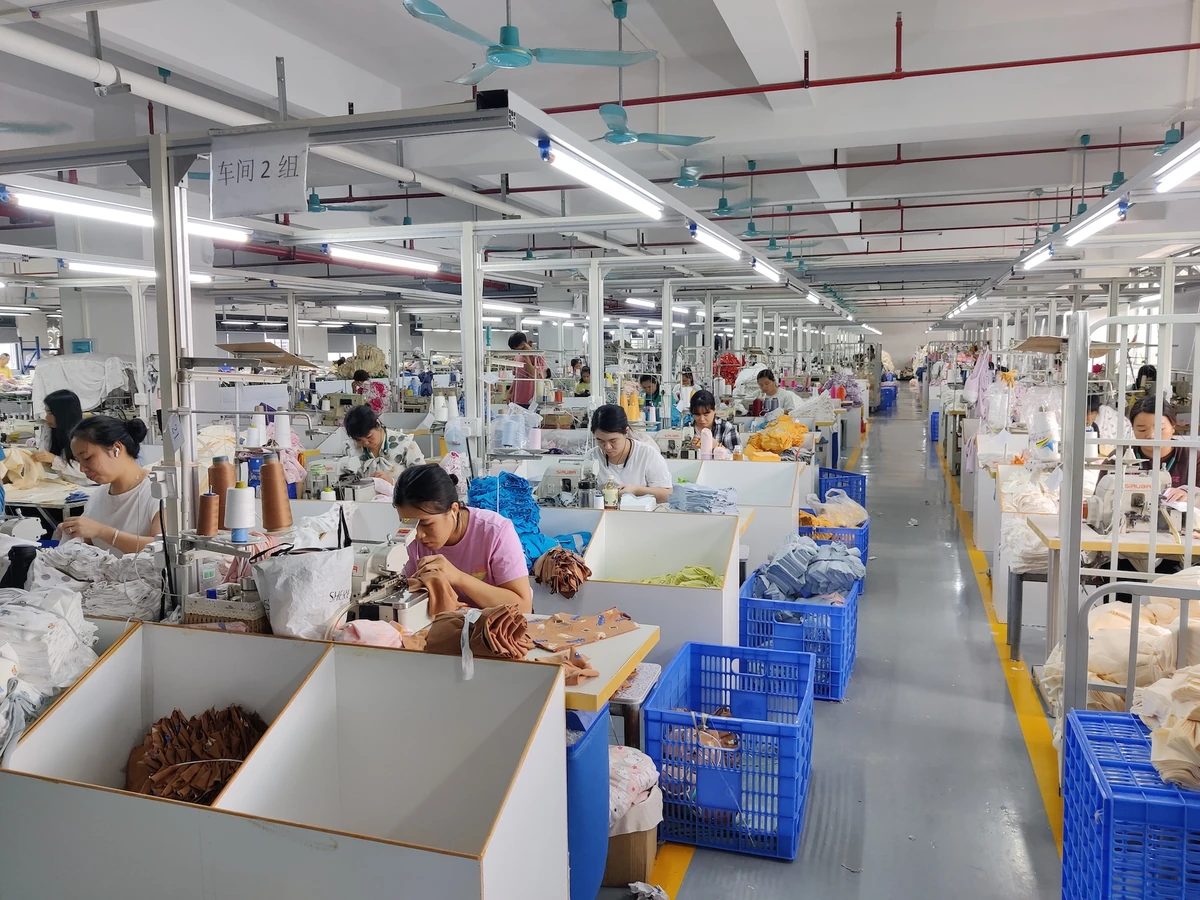
Walk away if a supplier: (1) cannot show GB 31701 Class A and, for the US, CPC documentation for skin-contact kids’ items; (2) refuses a virtual factory tour or won’t share a factory profile; (3) is vague about fabric composition or dye lots; (4) demands an MOQ far above your stage; or (5) has no third-party test reports from labs such as SGS, TÜV SÜD, or Intertek.
4. Five questions to ask before you request a quote
Once the red flags are clear, these five questions separate a real production partner from a talker.
- What certifications do you hold for kids’ skin-contact items? Expect GB 31701 Class A, CPC for the US market, and third-party testing by SGS / TÜV SÜD / Intertek. (OEKO-TEX Standard 100 is a plus — at Nuohua it is currently in progress.)
- What is the MOQ per style and per color? Low-MOQ suppliers let you test prints and fits without tying up cash.
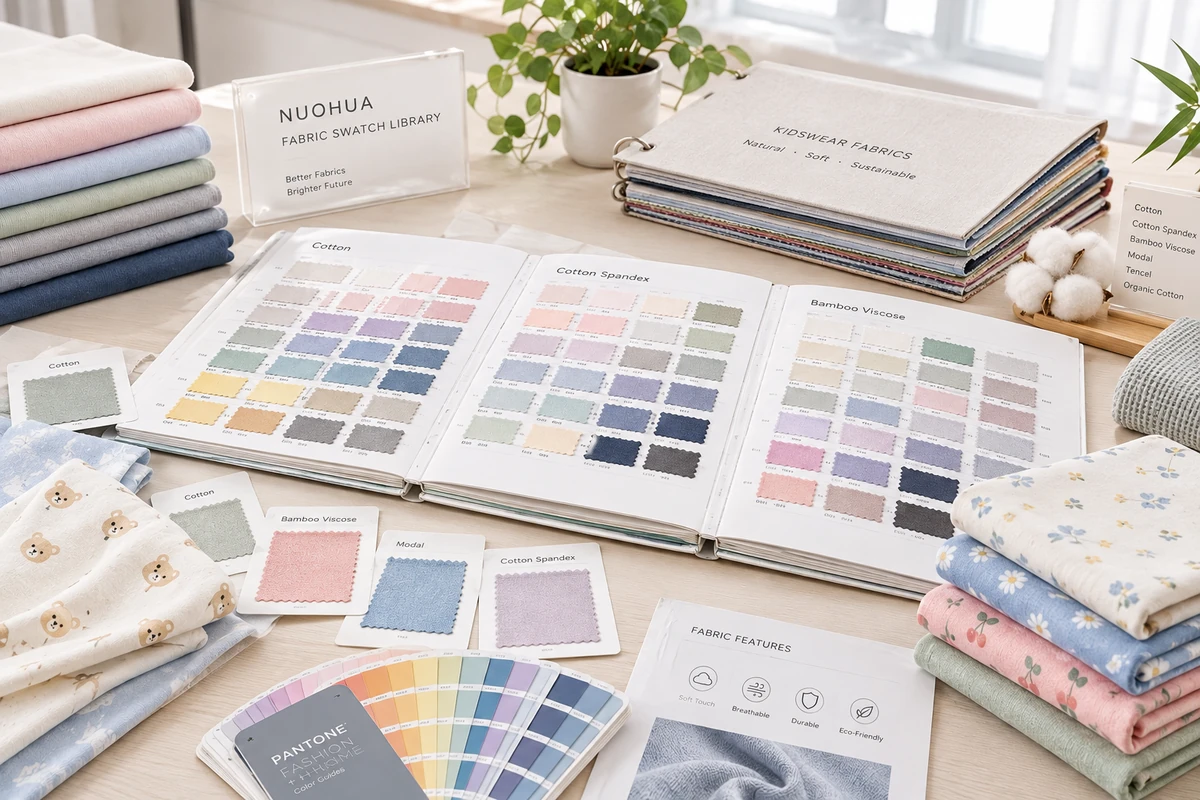
- How far can you customize? Sizing, fabric, color (to Pantone), trims, private label, and packaging.
- What are lead time and monthly capacity? Sampling speed matters as much as bulk speed for a growing brand.
- Can you share a factory profile or audit report? A confident supplier sends this without hesitation — and it feeds directly into the next step.
5. Match the supplier to your stage
| Your stage | What to prioritize | MOQ expectation |
|---|---|---|
| Startup / new brand | Low risk, sampling flexibility, private label | ~2 pcs on selected in-stock styles, colors and sizes |
| Scaling brand | OEM/ODM depth, consistent quality, audit trail | 300–1,000 pcs |
| Volume retailer | Multi-line capacity, certificates, logistics | 3,000+ pcs |
6. From shortlist to audit
A shortlist is not a decision. The candidates that survive the red flags and the five questions still need a structured audit before you commit volume — covering compliance, machinery, sampling discipline, communication, and long-term partnership fit.
That deeper framework is its own guide: How boutique kidswear brands vet an OEM/ODM partner. Pair it with our OEM production-readiness checklist so your first order starts clean.
7. Why Nuohua fits the shortlist
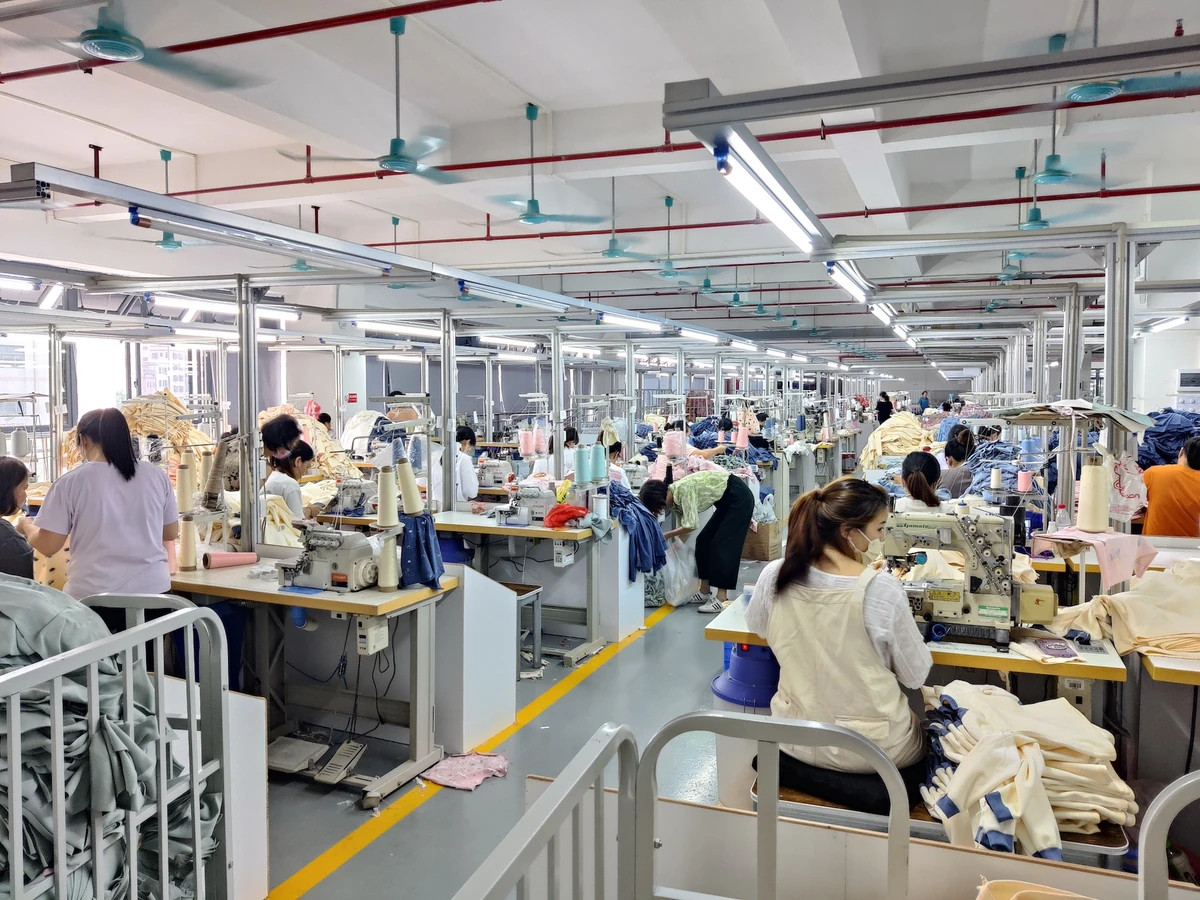
Nuohua Garment is a kidswear OEM/ODM manufacturer based in Huizhou, Guangdong, China with 10+ years producing children’s underwear, pajamas, vests, and homewear. For buyers shortlisting a partner, the relevant facts are:
- Compliance: GB 31701 Class A (Grade A), CPC for the US market, with third-party testing by SGS, TÜV SÜD, and Intertek. OEKO-TEX Standard 100 is in progress.
- Low MOQ: 2 pcs per selected in-stock style & color, with flexible sampling for new prints and fits.
- Full customization: sizing, fabric, Pantone colorways, trims, private label, and packaging.
- Transparent process: a factory profile and virtual tour are available on request.
Frequently asked questions
Is Guangdong better than Zhejiang for kids’ underwear?
Guangdong (especially Huizhou) leads on compliant export-grade basics and private-label OEM/ODM maturity; Zhejiang wins on rock-bottom commodity pricing. For safety-sensitive kids’ items, compliance capability usually outweighs the small unit-cost gap.
Do I need a trading company or a factory?
If you have a clear spec and want the best cost and control, go direct to an OEM/ODM factory. A trading company helps when you need many unrelated categories sourced at once and can absorb the margin.
What is the minimum order for a new brand?
Flexible factories run about 2 pcs per selected in-stock style & color, which lets a new brand validate a print or fit before scaling.
How do I verify a factory is real?
Ask for a factory profile, a virtual tour link, and third-party test reports, then cross-check the business on platforms such as Alibaba or 1688. Refusal to share any of these is itself a red flag.
Ready to shortlist a production partner you can trust?