
How Kids’ Training Bras Are Manufactured: Construction, Fit and Safety
A children’s training bra is one of the hardest garments in kidswear to get right. It sits against skin for a full day, it has to stay comfortable through growth and washing, and it has to do all of that without the seams, labels or fastenings that make an adult garment comfortable being the very things that irritate a child.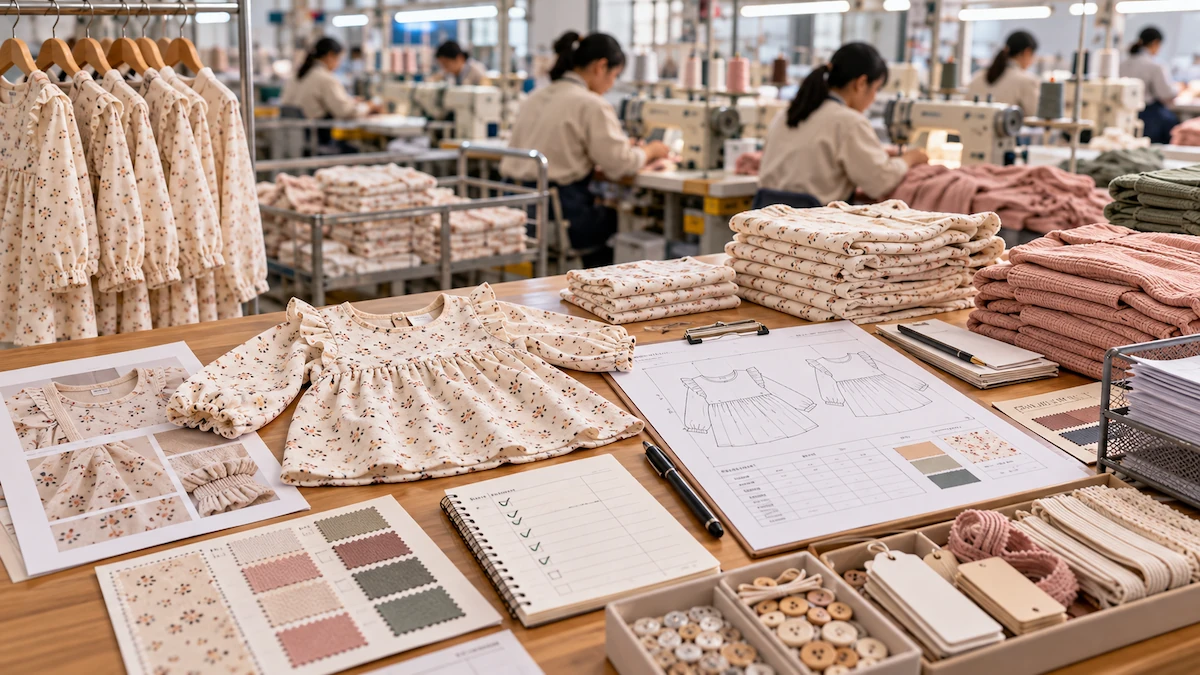
This guide follows the actual production sequence — fibre, fabric, edge construction, fastenings, grading, colour, labelling, inspection and packing — and flags the decisions that have to be settled before a sample is cut. For the wider development sequence, see custom kids underwear development.
01Start with the fibre, not the style
Training bra fit is decided by stretch and recovery, not by which style reads better on a sketch. The fibre blend determines how the garment behaves after the tenth wash, which is roughly when a parent decides whether to reorder.
- Cotton and cotton-spandex — the default for everyday programmes. Predictable, breathable, easy to dye.
- Modal or viscose from bamboo — softer hand feel and better drape for premium lines; needs a controlled wash cycle.
- Blended knits — combine fibre softness with the recovery the elastic needs.
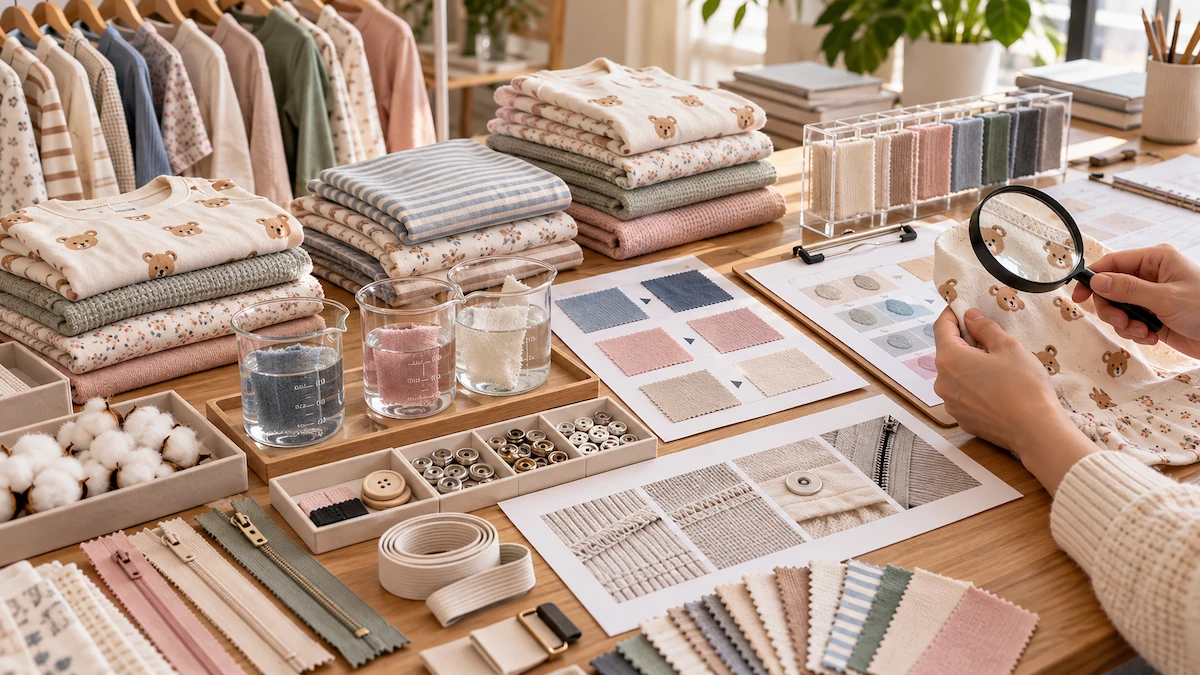
Ask for composition percentages, GSM and a wash-test result before you judge hand feel. Two fabrics that feel identical in a sample room can behave completely differently after five washes. Our combed cotton vs cotton-spandex comparison covers the trade-offs in detail.
02Seam and edge construction: the decision that defines comfort
This is the step most buyers get wrong, because the three construction routes look similar on a hanger and behave very differently on skin.
| Construction | How it is made | What it means for the wearer | Development notes |
|---|---|---|---|
| Circular-knit (seamless) body | Knitted as one piece on dedicated circular-knit machinery, so the body has no side seams | Fewer edges against skin | A specialist route: it needs dedicated machine capability and its own pattern work, so grade and size range have to be reviewed early |
| Flat-seam / flatlock | Cut panels joined with a flat seam that lies flat against the body | Comfortable, durable, holds shape through washing | The standard route for kidswear programmes; the seam must be tested for bulk and recovery |
| Covered-seam / bound edge | Raw edge wrapped or bound with a separate trim | Soft finish, good shape retention at neckline, armhole and leg opening | Adds a trim and a step; useful where edges need structure |
The practical question is not which construction sounds strongest, but which one can hold its recovery across the full graded size range. A construction that works at the sample size can open up or bunch at the top of the range. See bound vs flatlock seams in kids’ underwear for the seam-level detail.
03Edges, straps and fastenings that do not irritate
- Neckline, armhole and hem — the finish has to stay flat after washing. Elastic banding must be specified by width and stretch, not by feel.
- Straps — width and support should follow the graded size range, not a single sample. A strap that stays put on a size 130 can dig at 160.
- Closures and hardware — if a style uses a closure, specify the material and finish, and review it against the requirements of the destination market rather than assuming a generic finish is acceptable.
- Labels — covered below. Printed or tag-free labelling removes one of the most common causes of irritation.
Elastic specification deserves its own conversation: elastic and waistband selection is where recovery and comfort are won or lost.
04Grading for a growing body
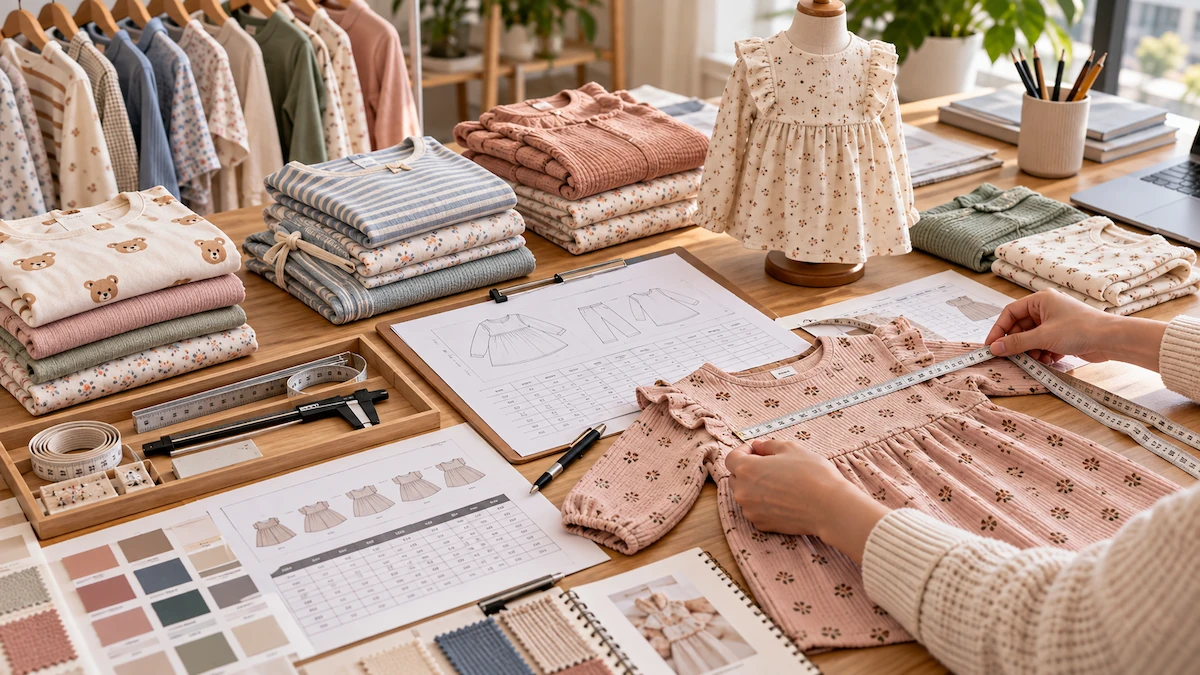
A training bra programme lives or dies at the ends of its size range. The middle size always passes; the smallest is too tight and the largest does not support. Before approving a size set, check the graded values for chest, underband, strap length and total length, and confirm the increments make sense for the age group you are selling to.
Market expectations differ as well. A chart that sells in one country can read as too small in another even when the measurements are technically correct — our size chart reference for US, EU, UK and AU sets out the differences.
05Colour, dyeing and wash performance
Colour on a skin-contact garment has two jobs: it has to match the approved standard, and it has to stay there. Specify a Pantone reference or a signed physical swatch, then require a wash test on the production fabric rather than on a lab sample.
Dark shades deserve particular attention — colourfastness against light and skin contact is the risk area, not the initial appearance. Our construction and wash-performance notes and defect root-cause guide explain the failure modes to test for.
06Labelling and skin-contact requirements
Children’s apparel produced in China is developed to GB 31701 Class A for skin-contact items. For the US market, children’s products subject to an applicable children’s product safety rule generally require third-party testing by a CPSC-accepted laboratory, with certification through a Children’s Product Certificate (CPC) issued by the domestic manufacturer or the importer. Testing is arranged through qualified laboratories such as SGS, TÜV SÜD or Intertek. OEKO-TEX Standard 100 certification is currently in progress at Nuohua — we do not present it as completed.
On the garment itself, care and size information should be printed or heat-transferred rather than sewn into a position that contacts skin. Wording has to match the destination market. The market-by-market detail sits in our compliance checklist.
07Inspection and packing
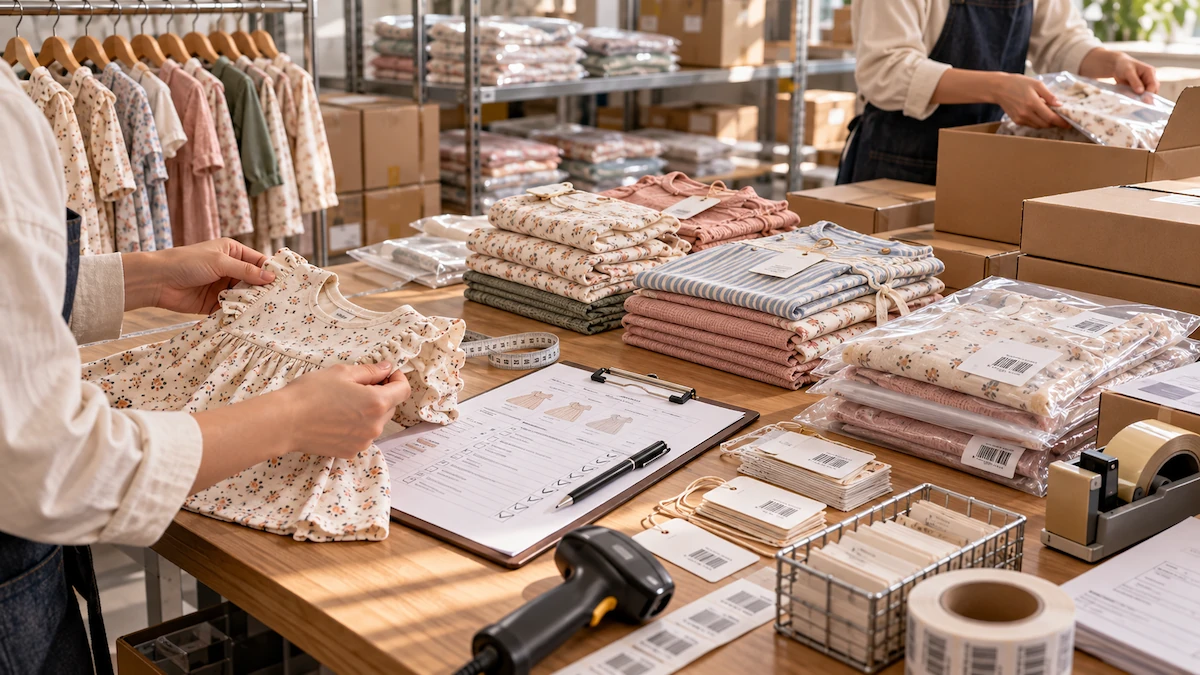
Agree the inspection standard before the line starts: measurement tolerances per size, defect classification, seam and stitch requirements, and the inspection plan. Incoming fabric should be inspected before cutting, checks should run inline at each operation, and finished pieces should pass needle detection. Packing specifications — polybag, hangtag, size assortment and carton marking — belong in the same document as the garment specification.
What to lock before you approve a training bra sample
Buyer’s pre-production checklist
- Destination market and applicable skin-contact requirements confirmed
- Fabric composition, GSM and shrinkage approved on production fabric
- Elastic width, stretch and recovery specified per size
- Full graded size set measured, not the sample size only
- Colour standard signed off (Pantone or physical swatch) with wash test
- Label wording and position approved; no sewn-in label at skin contact
- PP sample signed off as the reference for bulk
- Inspection tolerances and packing specification in writing
Frequently asked questions
Do training bras need a different pattern from regular underwear?
Yes. Underband tension, strap placement and coverage differ, and they have to hold across the full size range rather than at one size.
What is the minimum order for a custom training bra?
It depends on the route. Selected low-MOQ custom styles start from 150–300 pcs per color; existing underwear styles using existing prints are typically from 1,000 pcs per style and color, with mixed sizes available. Fully custom development is confirmed after a specification review.
Which construction is most comfortable for tweens?
Comfort comes from the finish, not the label on it. A well-built flat or covered seam that stays flat after washing is usually more comfortable than a construction that only removes seams on paper.
Can the care label be printed instead of sewn in?
Yes, and for skin-contact items printed or heat-transferred care and size information is normally the better choice. The wording still has to match the destination market.
How long does development take?
It depends on fabric availability and how much pattern work the style needs. The sequence — development sample, fit revision, PP sample — matters more than a headline number, because each revision restarts the clock.
Nuohua’s manufacturing view
We have been manufacturing children’s underwear and sleepwear since 2016. Two things we would tell any brand starting a training bra programme:
- Fix the elastic before you fix the print. Prints sell the first order; recovery sells the second.
- Approve the size set, not the sample size. The size on the fit model is almost never the size that generates returns.
Related products
Explore manufacturing solutions
Developing a training bra or underwear collection?
Send your tech pack, reference sample or product brief with your target market, quantity and size range. We will come back with the construction options, elastic specification and MOQ route that fit the project.
More sourcing guides: Kids Underwear & Sleepwear Sourcing Guide · GB 31701, CPC and OEKO-TEX explained
Regulatory note: This article is provided for general informational purposes and does not constitute legal, regulatory, compliance or product-testing advice. Construction availability, machine capability and grading feasibility are confirmed per project against the approved specification. Requirements vary by market, product category, age range, construction, labelling and intended use — confirm the current requirements for your specific product with your testing laboratory, importer or compliance specialist.