
When you search for a private label kids underwear supplier, you are rarely looking at a list of factories. You are looking at a list of companies — some of which own sewing lines, and many of which do not. That single difference decides your unit cost, your control over materials, and who actually fixes a defect when a batch arrives wrong.
This guide breaks the market into the three supplier types you will actually meet — the manufacturer (factory), the trading company, and the sourcing agent — and shows you how to tell them apart, what each one is worth, and how to verify that the person on the other side of the screen owns the machines they claim to own.
The short version: a factory gives you the lowest price and the most direct control, but expects you to manage development and quality control yourself. A trading company bundles everything into one convenient contract, at the cost of transparency. A sourcing agent works for you on commission, but adds a layer with no direct production control. For most kids’ underwear brands, the factory is where you want to end up — and the rest of this guide explains how to get there safely.
If you are still deciding how a private label line fits your brand, start with our overview of private label kids underwear.
On this page
- The Three Supplier Types at a Glance
- Buying Direct from a Factory: The Trade-Offs
- Buying Through a Trading Company: The Trade-Offs
- Buying Through a Sourcing Agent: The Trade-Offs
- How to Verify You Are Talking to a Real Factory
- Which Supplier Type Fits Your Brand Stage
- Red Flags That Signal a Middleman or a Weak Partner
- Questions to Ask Any Private Label Kids Underwear Supplier
1. The Three Supplier Types at a Glance
There are exactly three ways to source private label kids’ underwear: a manufacturer (the factory that cuts and sews), a trading company (a middleman that buys from factories and resells), and a sourcing agent (a person or firm you hire to find and vet factories). They differ on price, control, minimum order quantities, and who you hold accountable.
Here is the difference in one sentence each.
A manufacturer — also called a factory or OEM/ODM partner — owns the production line. It runs cutting, sewing, finishing, packing, and usually its own quality-control team. When you buy direct, your order goes onto its sewing lines, and the only margin you pay is the factory’s own.
A trading company does not own a production line. It sources from multiple factories, marks up the price, and sells to you under a single contract. A good trading company is a legitimate convenience layer for small buyers; a bad one hides the factory name so you cannot cut it out next time.
A sourcing agent is hired by you, the buyer. It finds factories, negotiates on your behalf, and may run inspections — for a commission or a fixed fee. Unlike a trader, it is supposed to act in your interest rather than buy low and sell high.
The reason this distinction matters is cost and accountability. Every layer between you and the sewing floor adds roughly 5–30% to the price and one more person to chase when something goes wrong. In kids’ underwear, where the GB 31701 Class A (China children’s A-class safety standard) applies and sizing consistency is non-negotiable, that extra layer also decides whether you can trace your garments back to the machines that made them.
| Factor | Manufacturer (Factory) | Trading Company | Sourcing Agent |
|---|---|---|---|
| Owns the production line | Yes | No | No |
| Typical unit price | Lowest — factory margin only | Factory price + 10–30% markup | Factory price + 5–10% commission or fee |
| Design & development control | Full — direct to pattern and QC teams | Limited — relayed through the factory | Indirect — via the agent’s network |
| MOQ flexibility | Direct negotiation with the line | Higher, as orders are aggregated | Depends on the factory the agent finds |
| Accountability when defects happen | Direct — you speak to the sewing floor | One contract, factory one step removed | Agent mediates between you and factory |
| Best for | Brands with a tech pack and a QC plan | Small buyers who want convenience | First-time importers who want guidance |
2. Buying Direct from a Factory: The Trade-Offs
A factory is the cheapest and most controllable option — but it expects you to arrive prepared with a clear tech pack, realistic minimums, and your own QC plan. If you can do those three things, a factory beats any middleman on price, lead time, and accountability.
What you gain. The lowest unit price, because there is no middleman markup. Direct access to the pattern, sample, and QC teams, which makes revisions faster. The ability to inspect the real production floor rather than a showroom. And full control over materials and compliance documents — a point that matters more in children’s wear than almost anywhere else.
What you give up. You carry more of the workload. You manage communication, QC scheduling, and export logistics yourself. You also meet real minimums. For custom kids’ underwear the typical MOQ is 2 pcs on selected in-stock styles, colors and sizes; for sleepwear or pajama sets it is 1,000 sets per design. A genuine factory will not take a 10-piece “custom” order, because setting up the line costs more than the order is worth.
A real factory profile is specific, not vague. Ours, for reference: established in 2016, an 8,000 sqm facility, 300+ staff, monthly capacity over 1,000,000 pieces, a 6-stage QC process that ends in needle detection, a defect rate under 0.3%, and an INA hanging production system. Numbers like these are the kind of detail a factory states instantly — and a trader fumbles.
3. Buying Through a Trading Company: The Trade-Offs
A trading company is the fastest route for a small, mixed first order — one contact, easy communication, and combined quantities — but you pay a 10–30% markup and usually cannot see which factory actually sews your underwear.
What you gain. Convenience. One point of contact, often with stronger English, one contract, and one shipment that can combine underwear, socks, and sleepwear. A trading company handles export paperwork and consolidation, and it can bundle small orders across several factories to reach minimums you could not hit on your own.
What you give up. Transparency. Many traders will not tell you the factory name or address, because if they did, you could buy direct next time. That means you cannot verify the production floor, cannot confirm the safety standard yourself, and cannot be sure your reorder goes back to the same machines.
This matters more for kids’ underwear than for adult basics. Children’s garments fall under GB 31701 Class A (China children’s A-class safety standard), and the factory behind your order is the entity responsible for meeting it. A trader who hides the factory is also hiding the one party that can prove compliance. When a trading company works well, it feels like a one-stop shop; when it works badly, you discover the true cost only after a reorder arrives from a different factory with a different fit.
4. Buying Through a Sourcing Agent: The Trade-Offs
A sourcing agent works for you, not the factory — it finds suppliers, negotiates, and can run inspections for a commission — but it adds a layer, has no direct production control, and varies wildly in quality, so vet the agent as hard as you would a factory.
What you gain. Alignment. An agent earns from you, so in theory it is on your side. A good agent brings local knowledge, factory vetting, negotiation leverage, and on-the-ground QC inspection, plus a language bridge for a buyer who has never imported before.
What you give up. A layer. You pay a commission — typically 5–10% — and you still do not own production. The agent has no direct control over the sewing floor; it can only influence the factory it recommended. And “agent” is a self-applied label: plenty of people who call themselves sourcing agents are actually traders collecting a spread, and plenty more are part-timers with no real leverage.
The single best question to separate the two: ask the agent exactly how it is paid — fixed fee or a percentage of order value — and whether it will share the factory name and let you contract with that factory directly. A real agent has no problem with either. A trader-in-disguise will dodge both.
5. How to Verify You Are Talking to a Real Factory
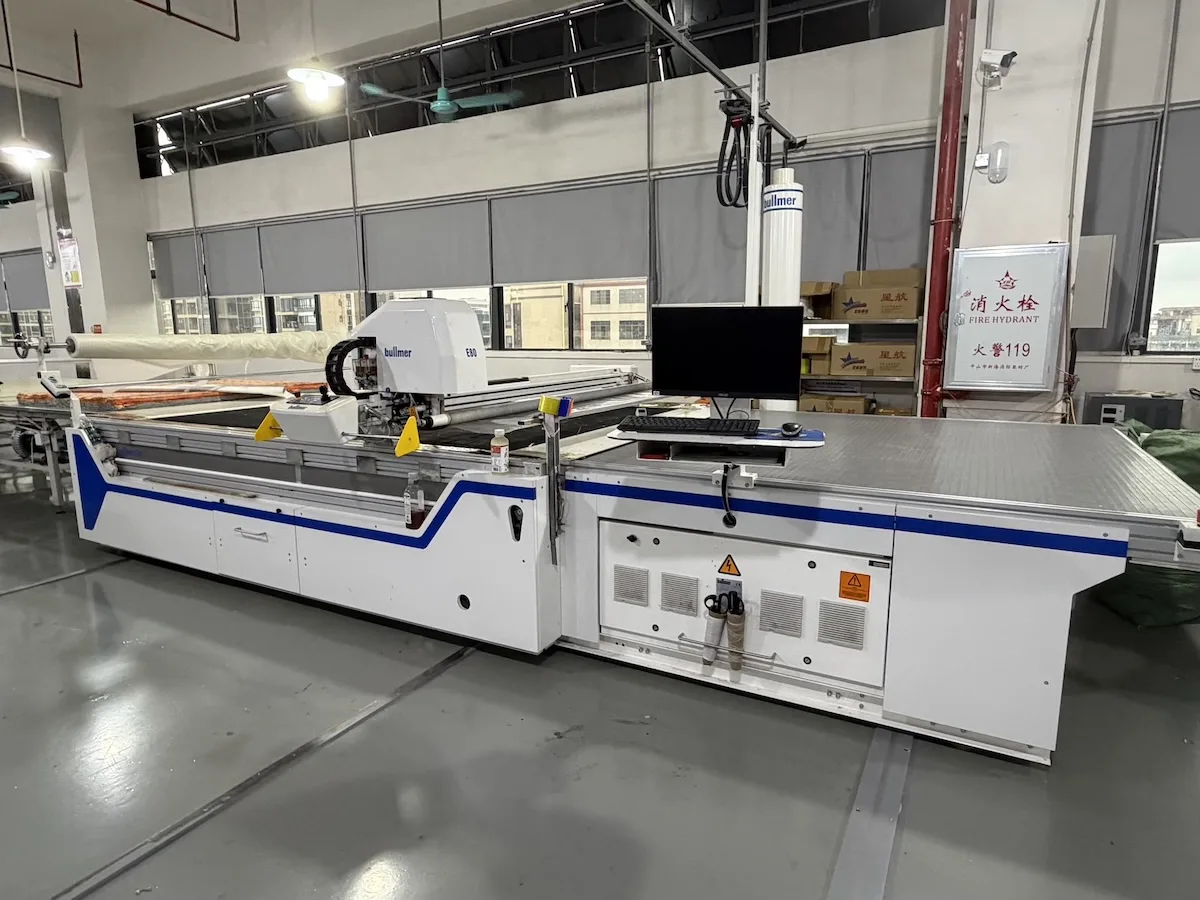
Ask for three things: a live video tour of the production floor, a factory name and address that match the business license, and photos of the cutting and sewing lines with a dated reference. A real factory can show all three the same day; a trader stalls or sends an office.
Verification is not about catching a liar — it is about confirming who owns the machines. Work through these five checks in order.
1. Live video tour. Ask them to walk the cutting room, the sewing lines, the packing area, and the QC station — and to show a current date or your order reference on camera at the same time. A showroom tour or a pre-recorded clip is not a factory tour.
2. Business license cross-check. The factory name and address on the business license should match the premises you see on camera, and the invoice should come from the same legal entity you are ordering against. Check the address on a map and, where possible, the export records.
3. Production floor, not office. A wall of samples is not a factory. Ask specifically to see cutting and sewing in operation, not the meeting room.
4. Equipment questions. Ask how many sewing lines they run, whether they use needle detection, and what production system they use. A factory answers instantly with numbers; a middleman answers with marketing words.
5. Compliance documents. A genuine kids’ underwear factory should confirm its garments meet GB 31701 Class A (China children’s A-class safety standard) and point you to third-party testing by SGS, TÜV SÜD, or Intertek to support your CPC (Children’s Product Certificate) for the US market.
| What to request | A real factory does | A trader does |
|---|---|---|
| Live video tour of the production floor | Agrees and shows cutting + sewing live | Shows an office or sends pre-recorded clips |
| Factory name + address on the license | Matches the premises on camera | Vague, mismatched, or refused |
| Photos with a dated reference | Current date or your order number visible | Reuses old or stock photos |
| Equipment questions (lines, needle detector) | Immediate, specific numbers | Generic marketing answers |
| Compliance documents | Shares GB 31701 Class A and third-party test reports | Deflects, or sends logos without documents |
6. Which Supplier Type Fits Your Brand Stage
For a small market test, a trading company or agent is usually fine. Once you have a tech pack and repeat colours, move to a factory — the switch pays for itself above roughly 300–500 pieces per style, when the markup you shed outweighs the management you take on.
The right supplier is a moving target. A founder placing a first order of 60 pieces across four styles does not need a factory; they need convenience and low risk. A founder reordering 1,000 pieces of a proven best-seller needs consistency and the lowest possible unit cost, and every middleman between them and the line is now pure overhead.
The transition usually happens between the first test order and the first production run. Keep the trading company for the messy, exploratory phase; switch to the factory once you can answer the questions a factory will ask you — materials, construction, sizing, and target cost.
| Brand stage | Order profile | Best supplier type | Why |
|---|---|---|---|
| Pre-launch / market test | 50–200 pieces, several styles | Trading company or agent | Small mixed quantities, one contact, low risk |
| First production run | 300–1,000 pieces, a few proven styles | Factory (direct) | Price and control now matter more than convenience |
| Scaling / reorders | 1,000+ pieces per style | Factory (direct) | Consistency, unit cost, and compliance traceability |
| Multi-category expansion | Underwear + sleepwear + accessories | Factory or trader | Factory if one line; trader for mixed categories |
7. Red Flags That Signal a Middleman or a Weak Partner
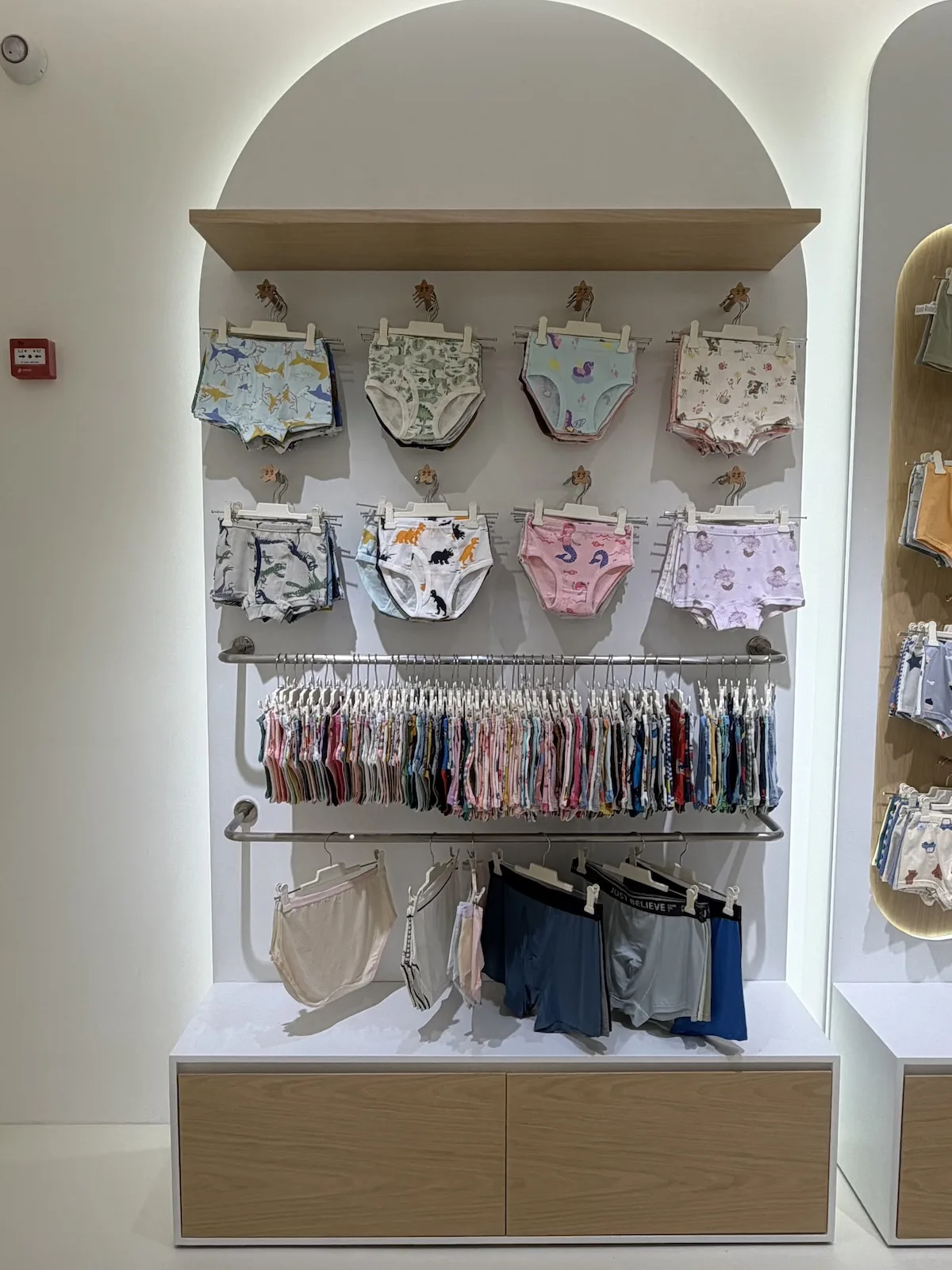
The clearest warnings are a refusal to do a live video tour, a company name that does not match the factory you are paying, unrealistically low minimums on custom work, and a price too good to be true with no factory proof. Two or more of these and you are almost certainly not dealing with a factory.
Most sourcing problems announce themselves early, in the first few messages. Watch for these eight signals.
| Red flag | What it usually means |
|---|---|
| Refuses or endlessly postpones a live video tour | No factory access — a trader or agent |
| Invoice name does not match the factory name; office address | You are paying a middleman |
| Accepts tiny custom MOQs (e.g., 10 pieces) | Not a real production line |
| Cannot say how many sewing lines or QC steps it runs | No factory knowledge |
| Sends certification logos without documents | Compliance claims are not verifiable |
| Price far below market with no explanation | Possible material substitution or cut corners |
| Cannot explain Incoterms or the export process | Inexperienced middleman |
| Asks you to pay into a personal account | High risk of fraud or no recourse |
8. Questions to Ask Any Private Label Kids Underwear Supplier
Before you pay any deposit, ask who owns the factory, where it is, whether you can tour it live, what the minimum is per style and colour, and which safety standard the kids’ garments meet — with test reports to prove it. Vague written answers are themselves an answer.
Send these before you request a quote. The way a supplier answers is often more revealing than the answers themselves.
- Identity. What is the factory’s registered name and address? Can you share the business license?
- Verification. Can we do a live video tour of the cutting, sewing, and packing areas?
- Production. How many sewing lines do you run, what is your monthly capacity, and do you use needle detection?
- Quality. What is your QC process, and what defect rate do you target?
- Compliance. Do your kids’ garments meet GB 31701 Class A (China children’s A-class safety standard)? Can you provide third-party test reports from SGS, TÜV SÜD, or Intertek for CPC documentation?
- MOQ and price. What is your minimum per style per colour, what is the sampling fee, and what are the payment terms?
- Lead time. What are your sample and bulk lead times, and how do they shift in peak season?
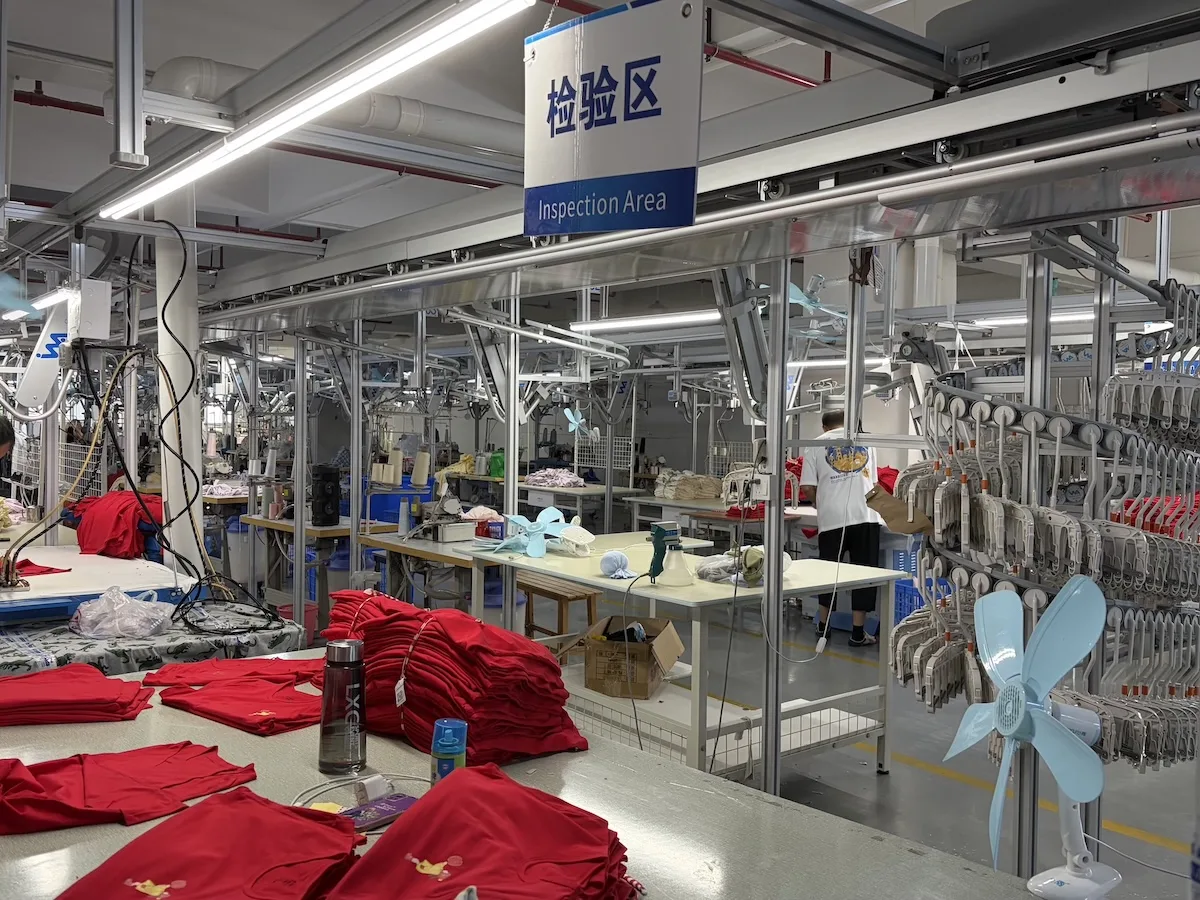
Ready to source kids’ underwear from a supplier you can actually verify? Nuohua Garment is a kids’ underwear & sleepwear OEM/ODM manufacturer with an 8,000 sqm facility, 300+ staff, a 6-stage QC process with needle detection, and GB 31701 Class A compliance — with third-party test documentation available on request.
Start a development request with Nuohua Garment → or contact our team.