
How Much Does a Kids’ Underwear Sample Cost? Real Factory Price Breakdown
Sampling is the moment a kids’ underwear brand finds out whether the factory it is talking to is a production partner or a middleman collecting deposits. The single question every founder asks first — “how much does a kids underwear sample cost?” — is actually the wrong question, because the fee itself tells you almost nothing. What matters is what the fee buys, why a one-off sample costs more per piece than bulk, and what happens to the money when you place an order. This guide answers all three from the sample room floor, using real factory ranges rather than marketing numbers.
On this page
- Quick answer: what a kids underwear sample actually costs
- What the sampling fee actually buys
- Why a single sample costs more than a bulk garment
- Sample fee refund rules and how the MOQ offsets your cost
- The three sample stages and what each one is for
- How to cut sampling costs without cutting corners
- Sample cost vs total development cost: the real numbers
- A sample request checklist for your first order
1. Quick Answer: What a Kids’ Underwear Sample Actually Costs
A custom kids underwear sample cost typically lands between US$80 and US$150 per style from a real OEM/ODM factory. That is the range for a properly made pre-production sample with a new pattern, cut from the correct fabric, sewn by a sample-room machinist — not a mock-up printed on the nearest available cloth. Anything quoted far below that is usually not a true sample, and anything far above it usually includes hidden management fees.
Before you anchor on that number, understand what it represents. The US$80–150 range is the industry’s honest middle for a single development sample of a brief, boxer brief or triangle style. It is not a fixed price list, because four variables move the figure: how much pattern work the style needs, whether the fabric is in-stock or must be developed, how many samples you need in parallel, and how many revision rounds you go through.
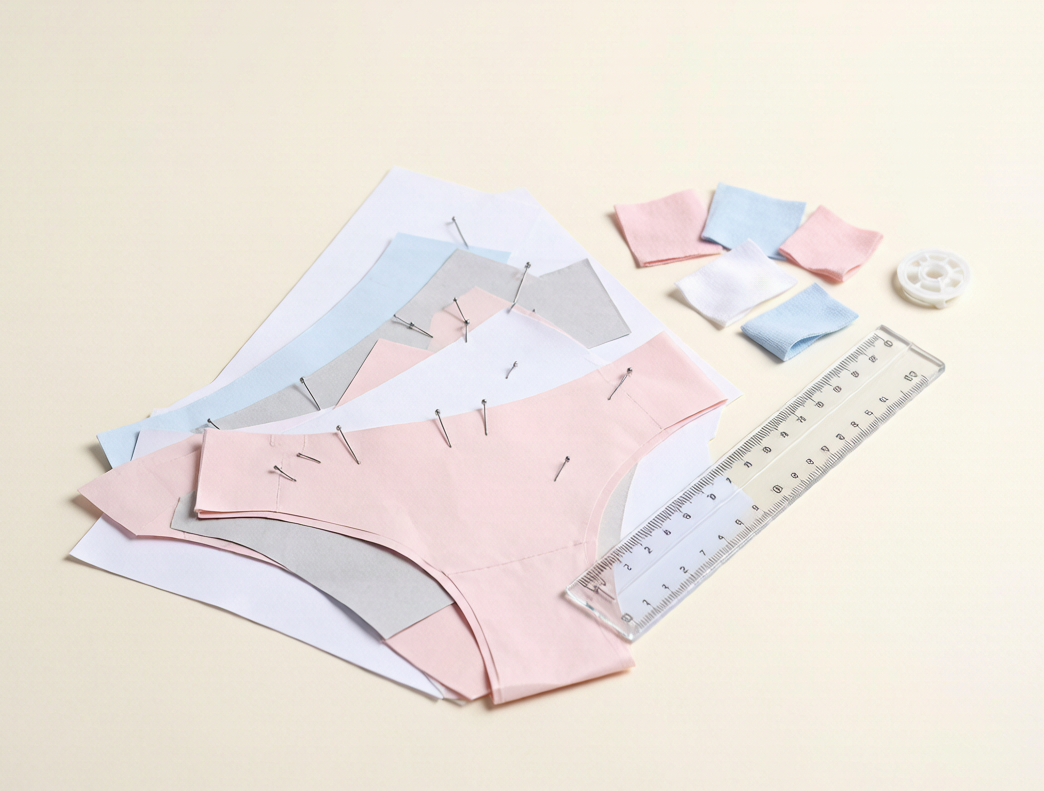
What the fee is not is a profit centre. A factory that treats sampling as a revenue stream is a factory you should walk away from, because it signals exactly how the bulk order will be managed. The manufacturers worth working with price a sample at roughly what it costs them to make it, and then credit that amount back against your first order.
2. What the Sampling Fee Actually Buys
The fee buys four distinct things: pattern and paper-template work, a small cut of the correct fabric, one machinist’s sewing time, and machine set-up. None of them is the fabric itself, which is why asking “is the fabric included?” is less useful than asking “whose pattern is this and how many revisions are covered?”
The four components, in the order they happen:
- Pattern and paper-template work. A sample-room pattern maker takes your tech pack and reference sizes and drafts a base pattern, then grades it into the size run you specified. This is the most skilled and most expensive hour in the process. A pattern that is off by half a centimetre at the leg opening will look fine on the table and fail on a child, so this step is not rushed.
- Fabric cut. The correct fabric is pulled and a single piece set is cut by hand. If the style uses an in-stock base — such as our 91.9% Lenzing™ Modal / 8.1% Spandex interlock at 220–240 GSM or the 49.9% Lenzing™ Modal / 43.3% Cotton / 6.8% Spandex interlock at roughly 220 GSM — there is no setup fee for the fabric itself. If the fabric is a custom development, the fabric cost sits separately.
- Sewing labour. A sample is sewn by a senior machinist, not a production line. The same person who will later write the operation breakdown for the line sews your first piece, which means you are paying for skill, not speed.
- Machine set-up. Waistband attachments, leg elastic tension and stitch settings are dialled in for your style. On a bulk run this cost is spread across thousands of pieces; on a sample it lands entirely on one.
| Component | What it is | Why it costs what it costs |
|---|---|---|
| Pattern & grading | Drafting and grading the base pattern to your size run | Skilled sample-room labour, not line labour |
| Fabric cut | One hand-cut piece set in the correct fabric | Single-unit cutting, no spreading efficiency |
| Sewing labour | Senior machinist assembles the first piece | One machinist, full set-up, no line speed |
| Machine set-up | Elastic tension, stitch and waistband settings | Fixed cost concentrated on one garment |
3. Why a Single Sample Costs More Than a Bulk Garment
A sample costs more per piece than bulk because every fixed cost — pattern making, machine set-up, cutting and supervision — is amortised over one garment instead of thousands. The marginal material cost of a sample is tiny; the fixed labour behind it is not, and that labour cannot be spread until the order exists.
This is the concept of amortisation, and it explains almost everything confusing about garment pricing. In bulk, a waistband machine is set up once and then runs for days, spreading its set-up time across the entire run. A cutter cuts hundreds of plies in a single spread. A pattern, once drafted and graded, serves an entire production year.
Concretely, a garment that costs US$2.10 to make in bulk might carry US$60–80 of up-front pattern and set-up work in its first sample, because the first sample is where all of that work is born. The moment you place a bulk order, that same pattern and set-up work is re-used, and the per-unit cost collapses to the material-plus-line-labour figure you were originally quoted.
4. Sample Fee Refund Rules and How the MOQ Offsets Your Cost
At a legitimate factory, the sample fee is refundable — it is deducted from, or credited against, your first bulk order once you meet the minimum. With Nuohua Garment the custom kids’ underwear MOQ is 2 pcs on selected in-stock styles, colors and sizes; when your first order reaches that MOQ, the sampling fee you paid is offset against the order total.
This is the single most important section in this article, because it separates a partner from a vendor. The refund rule exists to reassure you that the factory is not in the business of “earning sample fees” — it is in the business of earning bulk orders. A factory that refunds the sample fee on your first order is signalling that it wants the long relationship, not the one-off payment.
How the mechanics usually work:
- You pay the sample fee when development begins, and the factory produces the sample against your tech pack.
- When you approve the sample and place a bulk order that meets the MOQ, the sample fee is credited against the order invoice.
- If you do not proceed to bulk, the sample fee is simply the cost of the development work already performed — it is not refunded, because the work was real.
| Scenario | What happens to the sample fee | Why |
|---|---|---|
| You approve and order at MOQ | Deducted from the bulk invoice | The factory wants the ongoing order, not the fee |
| You order below MOQ | Fee retained or partially credited | Bulk economics have not been reached |
| You pause after sampling | Fee retained | The pattern and set-up work was already performed |
| You reorder the same style later | No new pattern fee | The pattern is on file from the first run |
Two clarifications matter. First, “refund” in garment manufacturing almost always means a credit against the order, not cash returned to your card. The factory has already spent the money on real labour, so a credit is the honest mechanism. Second, the refund is tied to the MOQ — 2 pcs on selected in-stock styles, colors and sizes on stock-fabric programs for custom kids’ underwear with us — because that is the point at which the factory’s bulk economics begin and the sample fee can genuinely be absorbed.
For sleepwear and pajama sets, the logic is identical but the MOQ is different — 1,000 sets per design — because the fabric development and cutting economics for sets are larger. Do not mix the two minimums up when you are budgeting a refund against a first order.
5. The Three Sample Stages and What Each One Is For
Development samples, fit samples and the pre-production (PP) sample are three different objects with three different jobs. You do not need all three for every style, but you should never go to bulk on a development sample alone — the PP sample is the one that locks the line’s specification.
Founders often collapse the sampling process into “a sample,” then wonder why the bulk garment looks different from what they approved. The answer is usually that they approved the wrong stage. Each stage exists to answer a different question, and skipping one shifts the risk to bulk, where a mistake costs thousands of units instead of one.
| Stage | What it answers | Typical use |
|---|---|---|
| Development sample | Does the style, fabric and construction work at all? | Confirming the design direction early |
| Fit sample | Does it fit a real child across the size run? | Adjusting waist, hip and leg-opening grades |
| Pre-production (PP) sample | Does it match the final locked specification exactly? | The reference the bulk line must reproduce |
The development sample is the first physical version of your idea. It proves the concept and surfaces the obvious problems — a leg opening that is too tight, a waistband that does not recover, a print that does not sit where you expected. It is rarely worn by a child; it is looked at, measured and discussed.
The fit sample is where the size run is tested on live children, not mannequins. This is the stage where the 10 cm height-grade and the waist increments from your size chart get validated against real bodies. Most pattern corrections happen here, and they are cheap precisely because they happen before bulk.
The PP sample is the contract. It is made from the actual bulk fabric, with the actual trims and the actual print, to the final sealed specification. The bulk line is set up to reproduce the PP sample, and your final inspection will measure the bulk against it. When someone says “seal the sample,” this is what they mean.
6. How to Cut Sampling Costs Without Cutting Corners
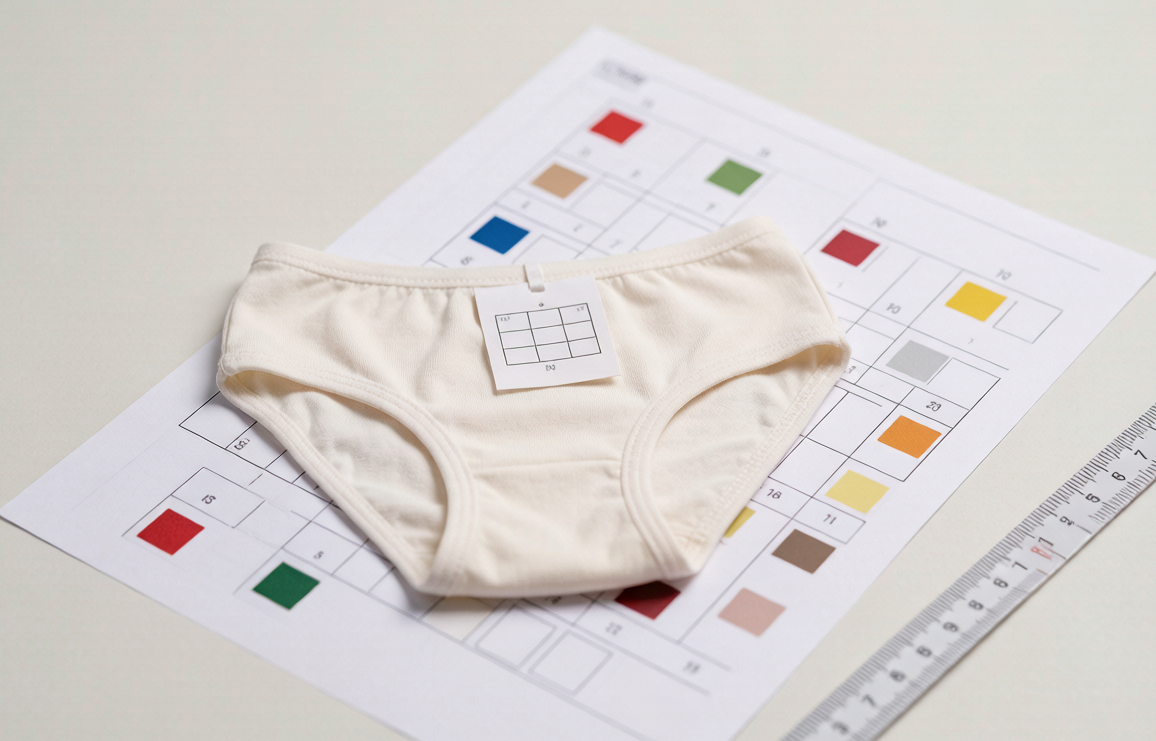
The two highest-leverage ways to reduce sampling cost are to submit a complete, accurate tech pack and to fix your colours to standard references before development begins. Both reduce the number of revision rounds, and revision rounds — not the first sample — are where sampling budgets actually die.
The US$80–150 first sample is rarely the problem. The problem is the third and fourth sample, each of which re-triggers pattern, cut and sewing work because something changed. The brands that spend the least on sampling are not the ones who negotiate the fee down; they are the ones who get the first sample right enough that round two is a confirmation instead of a correction.
Concrete ways to reduce the number of rounds:
- Provide a complete standard size chart. If you already have height, waist, hip and leg-opening measurements in a defensible chart, the factory grades once instead of guessing and re-grading. This is covered in depth in our size chart guide.
- Fix colours to accurate references. Give a Pantone number or a physical swatch rather than a photograph. Screen colours and phone photos are the single largest source of “this isn’t the colour I approved” revisions.
- Specify the fabric up front. If you are on an in-stock base, say so. Custom fabric development adds a separate timeline and cost, and it should be a deliberate choice, not an accidental discovery.
- Submit a complete tech pack. A tech pack that omits the rise, the leg elastic width or the waistband finish will force a correction sample. Every missing field is a future revision.
- Batch your samples. If you plan to launch three styles, sample them in one development cycle rather than sequentially, so the pattern room can share set-up work.
7. Sample Cost vs Total Development Cost: The Real Numbers
The sample fee is a small fraction of your true development cost. The larger, often invisible, costs are your own design time, shipping samples back and forth, and the cost of any bulk correction that a weak sample program failed to catch. Budget for the sample fee, but plan for the whole development cycle.
Founders fixate on the sample fee because it is the first number they see in writing. But a US$120 sample is a rounding error against the real cost of developing a kids’ underwear line: your own hours, the shipping and courier costs of moving samples between continents, and the risk cost of getting it wrong.
| Cost | Typical scale | Who pays it |
|---|---|---|
| Sample fee (per style) | US$80–150 | You, credited back at MOQ |
| Courier / shipping of samples | Varies by region and urgency | You |
| Custom fabric development | Separate, style-dependent | You |
| Your design and fit-testing time | Hidden, often the largest | You |
| Bulk correction cost (if samples are skipped) | Potentially the whole margin | You |
The last row is the one to internalise. The entire purpose of a well-run sampling program is to push risk out of bulk, where a mistake is multiplied by the order quantity, and into development, where a mistake costs one garment. A brand that treats the sample fee as “expensive” is implicitly choosing to carry that risk into bulk instead — and bulk is where it is actually expensive.
8. A Sample Request Checklist for Your First Order
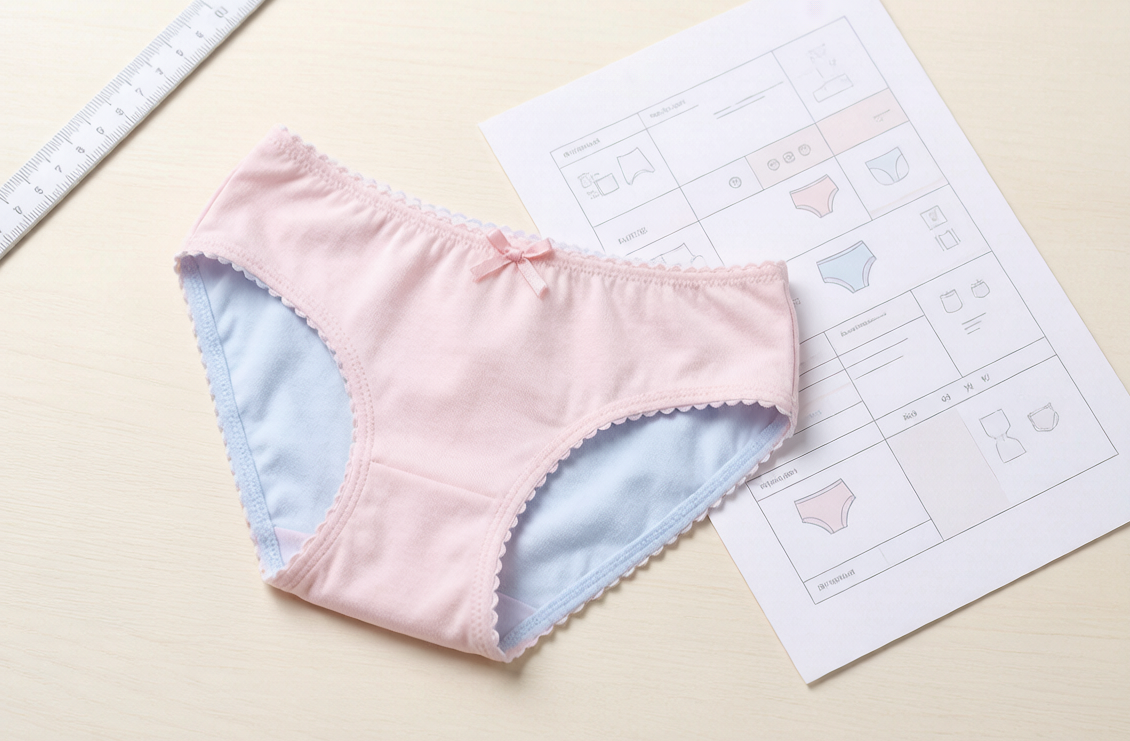
Before you pay any sample fee, confirm six things in writing: the fee amount, what stage it covers, whether it is refunded at MOQ, who owns the pattern, the expected revision count, and the timeline. A sample fee with no written terms is a red flag, not a bargain.
Close the loop with a checklist you can paste into your first email to a factory. It turns a vague “can I get a sample?” into a professional development request — which is, not coincidentally, the kind of request factories prioritise.
- Style and size run: which cut (brief, boxer brief, triangle) and which sizes you want sampled.
- Fabric: in-stock base or custom development, with the composition you want.
- Colour: Pantone references for prints and a physical reference for the fabric.
- Size chart: your height, waist, hip and leg-opening measurements if you have them.
- Tech pack: at minimum, the rise, waistband finish, leg elastic width and label placement.
- Fee terms: the sample fee amount, what it covers, and the refund condition at MOQ.
- Timeline: when the first sample lands and how many revision rounds are included.
Send all of that in one message and you will get back a useful answer, because you will have removed every reason for a factory to ask a clarifying question. Send only “how much is a sample?” and you will get back a number with no context — and a number with no context is how bad sourcing decisions get made.
Ready to sample your first style with a factory that credits the fee back at MOQ? Send your size chart, colour references and target fabric, and our team will return a sampling plan with clear, written terms.