
In June 2026, the European Commission published the results of its first coordinated laboratory campaign dedicated to checking whether clothing labels tell the truth about fiber composition. The numbers were bad enough that the Commission called mislabelling a “systemic issue”: of 132 garments tested, 37% carried wrong fiber labels. Tops failed at 54%. And in the category that should worry every kidswear buyer reading this — baby clothing — 1 garment in 4 failed.
This article breaks down what the campaign actually found, why kids’ and baby garments keep appearing on enforcement lists, and — from the factory side of the table — the specific checkpoints that stop a wrong label from ever reaching your cartons. Nuohua manufactures children’s underwear and sleepwear, so we will be concrete about what a factory can and cannot guarantee.
Quick Answer
The EU’s JACOP 2025 market-surveillance campaign lab-tested 132 garments and found 37% had inaccurate fiber labels — wrong percentages, cheaper substituted fibers, or invented fiber names. Failure was worst in blended fabrics (up to 64%) and online purchases (46%). EU Regulation 1007/2011 allows only a 3% manufacturing tolerance on multi-fiber products, so “roughly right” is not compliant. The protection for a kids’ brand is procedural: mill certificates checked at fabric intake, third-party fiber composition testing on the actual production lot, and a locked BOM — not the supplier’s word.
In this guide
- What the EU’s 2025 Fiber Testing Campaign Found
- The Three Ways a Fiber Label Goes Wrong
- Why Kids’ and Baby Clothing Is a High-Risk Category
- The 3% Tolerance Rule: How Precise a Label Must Be
- Where Fiber Labelling Sits in the Kids’ Compliance Stack
- How a Factory Prevents Fiber Substitution: Our Checkpoints
- What Comes Next: ESPR and the Digital Product Passport
- A Buyer’s Fiber-Verification Checklist Before Bulk
- Frequently Asked Questions
1. What the EU’s 2025 Fiber Testing Campaign Found
The campaign ran under the EU’s Joint Actions on Compliance of Products (JACOP) 2025 programme. Market-surveillance authorities in eight member states — Cyprus, Denmark, Finland, Germany, Italy, Lithuania, Malta and Portugal — purchased 132 garments (104 in shops, 28 online) and sent them to an accredited laboratory in Italy for fiber analysis. The sample included 44 tops, 36 baby clothing items, 15 activewear pieces, 12 nightwear garments, 5 scarves and 20 other items.
The results, published by the European Commission on 18 June 2026:
| Product category | Failure rate | Composition group | Failure rate |
|---|---|---|---|
| Scarves | 80% | Natural + artificial fiber blends | 64% |
| Tops | 54% | Blends of natural fibers | 46% |
| Baby clothing | 25% | 100% single natural fiber | 15% |
| Nightwear | 16% | Online purchases (channel) | 46% |
| Activewear | 13% | In-store purchases (channel) | 36% |
Enforcement followed: sales of 18 products were stopped, others were ordered relabelled or corrected, and 41 products were registered in the EU’s shared market-surveillance system. Notably, many failing products — especially imports from outside the EU — lacked basic manufacturer information on the label, which makes recalls harder and puts the burden squarely on the importer: you.
Read that baby-clothing number again: 1 in 4 tested baby garments carried a wrong fiber label. Even “100% single natural fiber” claims — the simplest label possible — failed 15% of the time. If your supply chain runs on supplier declarations alone, you are statistically likely to be selling mislabelled product without knowing it.
2. The Three Ways a Fiber Label Goes Wrong
The campaign identified three distinct failure modes, and they matter because each one has a different root cause — and a different fix.
2.1 The percentage is off
The label says 95% cotton / 5% elastane; the lab finds 88/12. The fibers are the right ones, but the ratio drifted — usually because the mill changed yarn lots between the approved sample and bulk, or blended leftover stock. This is the most common failure and the easiest to prevent with lot-level testing.
2.2 A cheaper fiber was substituted
The label says cotton; the fabric contains polyester. The label says modal; it is generic viscose. This is not drift — it is economics. When a buyer squeezes price below what the declared fiber costs, somewhere in the chain someone “solves” the math with a cheaper input. Our guide on EcoCosy® modal vs generic modal shows how large the quality gap behind an identical-looking label can be.
2.3 The fiber is misnamed or invented
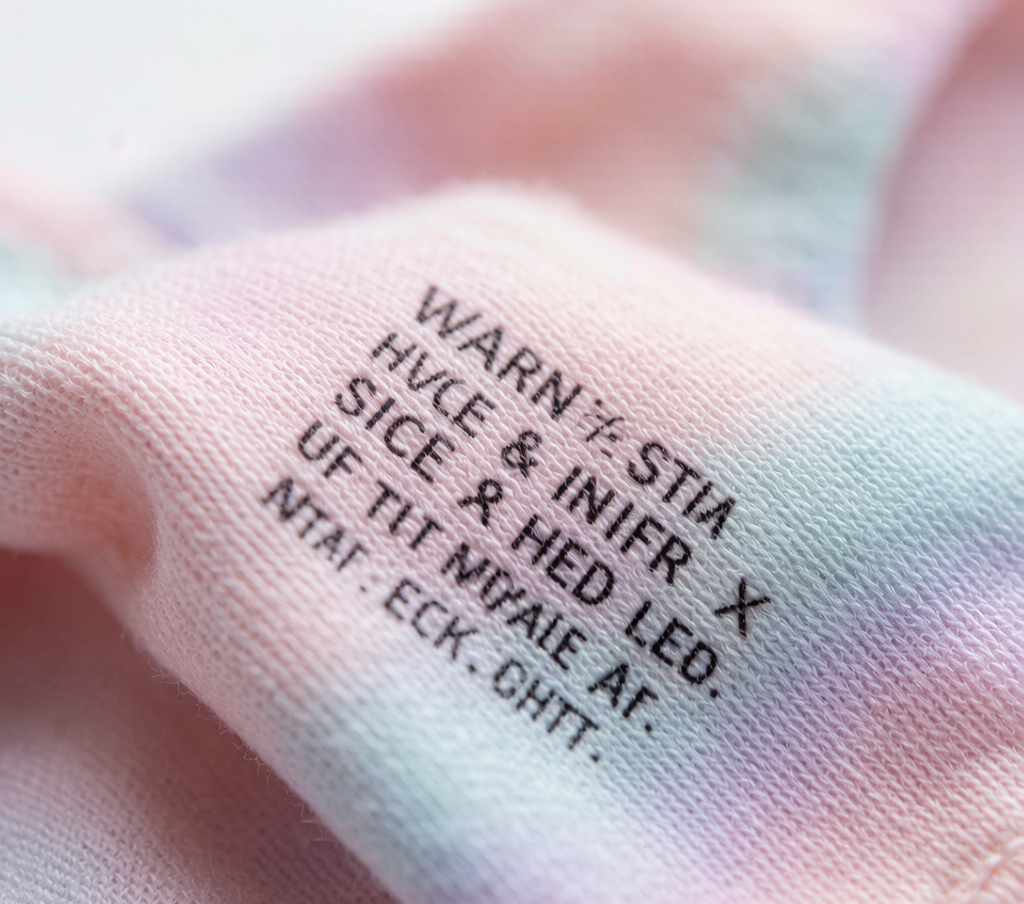
Fantasy names (“milk silk”, “ice cotton” used as a fiber declaration rather than a trade name), or fibers declared under names not permitted by EU Regulation 1007/2011. A classic kidswear example: “bamboo” is not a legal fiber name for viscose made from bamboo — the correct declaration is viscose (or rayon in the US). We explain the naming rules in our bamboo fabric guide.
3. Why Kids’ and Baby Clothing Is a High-Risk Category
Baby clothing failed at twice the rate of activewear in the EU tests. That is not random. Kidswear concentrates several risk factors at once:
- Small orders, long chains. Children’s brands often order smaller volumes, which pushes them toward traders and re-sellers — each extra hand between you and the mill is a place where the fabric can quietly change. Our guide on finding and shortlisting a kids’ underwear manufacturer covers how to tell a factory from a middleman.
- Blends are the norm. Kids’ underwear and sleepwear live in the exact composition groups that failed worst: cotton/elastane, cotton/viscose, modal and bamboo-viscose blends. Blends failed at 46–64% in the EU campaign versus 15% for single fibers.
- Price pressure meets premium claims. “100% organic cotton”, “natural bamboo”, “soft modal” command premiums in kidswear — which is precisely the incentive structure that produces substitution.
- The stakes are higher than a fine. For an adult T-shirt, a wrong label is a commercial problem. For skin-contact children’s garments, fiber composition connects directly to safety claims, care instructions and flammability behaviour — areas covered in our kids’ underwear & sleepwear compliance checklist.
4. The 3% Tolerance Rule: How Precise a Label Must Be
EU Regulation No 1007/2011 — the Textile Labelling Regulation — is stricter than most buyers realise:
- Multi-fiber products get a manufacturing tolerance of only 3% between declared and actual composition (relative to total fiber weight). A “95% cotton / 5% elastane” garment that tests at 90/10 is non-compliant, full stop.
- A product labelled “100%”, “pure” or “all” one fiber may contain no other fibers beyond tiny technical allowances (2% for extraneous fibers unavoidable in good manufacturing practice; 5% for carded-cycle products).
- Only fiber names on the regulation’s official list may be used — trade names and marketing words are not fiber declarations.
The practical consequence: fiber composition must be engineered and controlled like a measurement, not written like a slogan. The place to lock it is the tech pack and BOM — our guides on specifying fabric, lining and trim in a tech pack and how BOM details affect cost and sampling show exactly how to write a composition line a lab can verify.
5. Where Fiber Labelling Sits in the Kids’ Compliance Stack
One honest clarification, because certifications get blurred together in sales conversations: fiber labelling accuracy and product safety are separate legal layers, and passing one does not certify the other.
| Layer | What it governs | Example framework |
|---|---|---|
| Fiber labelling | Is the declared composition true? | EU Reg 1007/2011; US Textile Fiber Products Identification Act |
| Chemical & physical safety | Formaldehyde, pH, colorfastness, banned dyes, mechanical hazards | GB 31701 Class A (China’s strictest infant/toddler textile class — the standard we build to) |
| Market-entry certification | Documentation legally required to import/sell | CPC / CPSIA for the US |
| Substance testing programs | Voluntary harmful-substance certification | OEKO-TEX Standard 100 (Nuohua: in progress) |
A factory that treats GB 31701 Class A as its manufacturing baseline is already running the discipline that fiber-label accuracy needs — lot control, incoming-material verification, third-party lab relationships — because Class A compliance is impossible without them. But the fiber-composition test itself is a separate line item, and a serious supplier will show it to you separately.
6. How a Factory Prevents Fiber Substitution: Our Checkpoints
From the manufacturing side, fiber-label accuracy is not a promise — it is four checkpoints. This is how we run them at Nuohua for children’s underwear and sleepwear:
- Locked composition in the BOM. The fiber content, yarn count and GSM are written into the bill of materials at development — e.g. 95% combed cotton / 5% spandex, not “cotton blend”. Vague spec lines are where substitution hides. (See our combed cotton vs cotton-spandex guide for why the exact blend matters on children’s skin.)
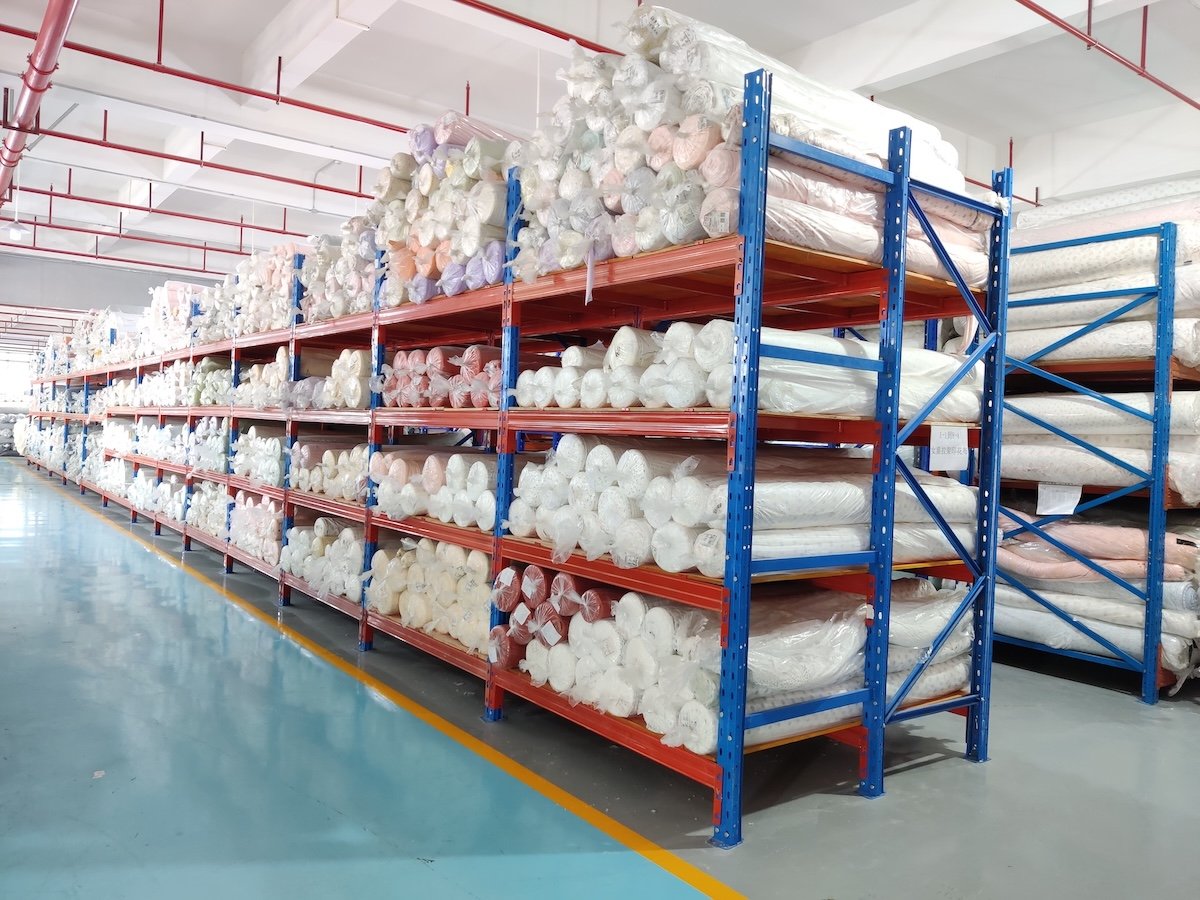
- Mill documentation at fabric intake. Every incoming lot arrives with the mill’s test certificate and is logged against the order. Fabric with paperwork that does not match the BOM does not enter the warehouse.
- Third-party testing on the production lot. For programs that require it, we arrange fiber composition and Class A safety testing through SGS, TÜV SÜD or Intertek — on fabric from the actual bulk lot, not a golden sample. The report carries the lab’s name, not ours, which is the entire point.
- Label content checked as a QC item. Care/content labels are proofed against the BOM before printing and verified again at final inspection, so the garment, the paperwork and the printed label say the same thing.
What a factory cannot do: we cannot make a below-cost target price compatible with the declared premium fiber. When a quote for “100% cotton” comes in under the market price of the cotton alone, the label is already broken — it just has not been tested yet. Honest suppliers will tell you this at quotation, not at the recall.
These checkpoints, along with our test reports and factory documentation, are laid out in our Trust Center for buyers who want to verify rather than take our word for it.
7. What Comes Next: ESPR and the Digital Product Passport
The Commission has signalled that JACOP-style fiber checks are not a one-off. Two developments raise the stakes for kidswear brands selling into Europe:
- ESPR (Ecodesign for Sustainable Products Regulation) will bring textiles under mandatory ecodesign requirements, with accurate fiber identification as a foundation — you cannot claim recyclability or circularity for a fabric whose composition is wrong.
- The Digital Product Passport (DPP) will make composition, traceability and sustainability data digitally scannable on textile products. A wrong fiber declaration stops being a paper problem and becomes a permanently queryable public record.
Brands that build lot-level fiber verification into their sourcing now will treat DPP as paperwork. Brands that rely on supplier declarations will treat it as an audit they did not prepare for.
8. A Buyer’s Fiber-Verification Checklist Before Bulk
Before you approve any children’s garment for production, run this list:
- Is the exact fiber composition (legal fiber names + percentages) written in the tech pack and BOM — not a marketing name?
- Has the supplier provided the mill’s test certificate for the bulk fabric lot, and does it match the BOM?
- Is there a third-party fiber composition test (SGS / TÜV SÜD / Intertek or equivalent) on the production lot — not only on the development sample?
- Does the printed content label match the test report, in the languages your markets require?
- Does the label carry your manufacturer/importer identification? (Missing trader information was a repeated enforcement finding in the EU campaign.)
- For blends: does your quote make economic sense for the declared fibers? If not, ask why before you pay the deposit.
- Is fiber verification written into your pre-production readiness checklist so it happens every order, not just the first one?
9. Frequently Asked Questions
Did more than half of all clothing really fail the EU fiber checks?
No — the overall failure rate was 37% of 132 tested garments. The 54% figure applies to tops specifically; scarves failed at 80% and baby clothing at 25%. All figures come from the European Commission’s JACOP 2025 campaign results published in June 2026.
Is a 2–3% difference between the label and the lab result a violation?
Up to 3% deviation on multi-fiber products is within the EU’s manufacturing tolerance. Beyond that, the label is non-compliant — even if the fibers themselves are correctly named.
Can I legally label bamboo-viscose kidswear as “bamboo”?
Not as the fiber declaration. In the EU the fiber is viscose; in the US the FTC requires “rayon (from bamboo)”. “Bamboo” can appear in marketing text, but the content label must use the legal fiber name.
Does GB 31701 Class A certify fiber composition?
No — and we say this as a factory that builds to it. GB 31701 Class A governs safety parameters for infant and children’s textiles (formaldehyde, pH, colorfastness, mechanical safety and more). Fiber-label accuracy is a separate test under labelling law. A rigorous supplier documents both, separately.
Who is legally responsible if my private-label garments are mislabelled — me or the factory?
In the EU and US, the brand/importer placing the product on the market carries the legal responsibility. That is exactly why you should demand lot-level test evidence from your manufacturer instead of inheriting their assumptions.
How much does a fiber composition test cost?
Typically a small two-to-low-three-figure sum per fabric at an accredited lab — trivial against the cost of a blocked shipment, forced relabelling or a delisted ASIN. We help clients scope which tests their specific market requires during development.