
Every kids’ underwear brand sells a brief, a boxer and a triangle. Very few can tell you why theirs matters. Kidswear brand story positioning is the discipline that turns an everyday basic — a pair of briefs a child wears and outgrows — into something a parent chooses on purpose, remembers and reorders. This guide shows how to build a kidswear brand story and positioning strategy that works for everyday basics, balancing functional benefits with emotional resonance, so your label stands out in a category that looks interchangeable at first glance.
On this page
- Kidswear brand story positioning: why basics need a point of view
- Why basics are a positioning problem, not a product problem
- The four elements of a kidswear brand story
- Choosing a niche: what everyday basics can actually mean
- Turning functional benefits into emotional resonance
- How your factory story becomes part of your brand story
- Writing your positioning statement and testing it
- A brand story checklist for kidswear founders
1. Kidswear Brand Story Positioning: Why Everyday Basics Need a Point of View
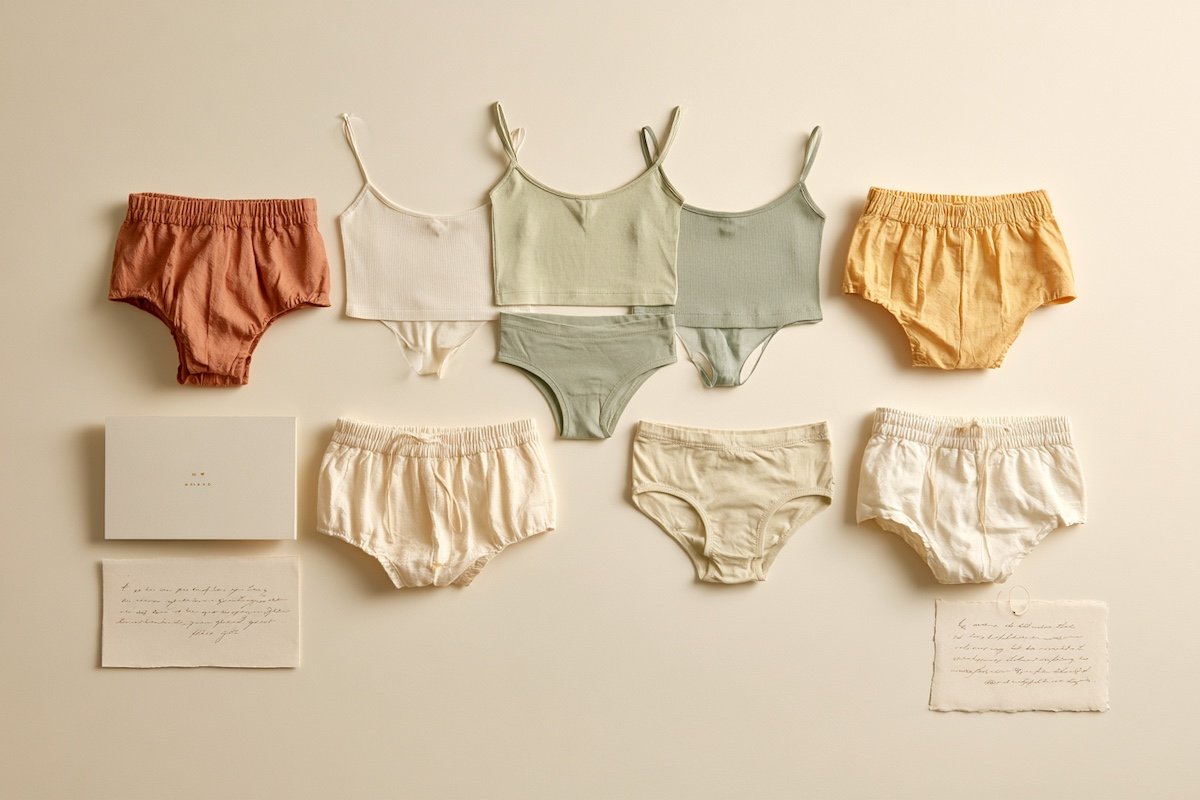
Kidswear brand story positioning is the answer to one question: why should a parent choose your basics over the ten identical-looking options beside them? For everyday underwear, the answer cannot be “we are softer” — everyone says that. It must be a specific point of view, told through a story, that makes your brand the obvious choice for a particular parent.
Basics are the hardest category in kidswear to differentiate. A white brief is a white brief is a white brief, and a parent shopping on autopilot buys on price and familiarity. Positioning is what breaks that autopilot. It is the deliberate decision about who you are for, what you promise, and why you are the only brand that makes that promise in that way.
The mistake most founders make is treating the brand story as a marketing exercise they will “write later”. In practice, the story is upstream of everything: it decides your fabric choices, your prints, your sizing philosophy, your packaging and your price. A brand that cannot say what it stands for ends up copying whatever is selling — and copying is how you become interchangeable.
2. Why Basics Are a Positioning Problem, Not a Product Problem
You are not losing sales because your briefs are worse; you are losing them because the parent cannot tell them apart. In everyday basics, the product is a solved problem — the differentiation has to come from positioning, not from adding features nobody asked for.
Parents already know what a good pair of kids’ underwear should do: fit, wash, last and not irritate. A functional improvement is worth having, but it is rarely a durable moat — a rival factory can match a waistband or a fabric within a season. What they cannot copy is your position: the specific promise, aimed at the specific parent, that you have spent a year earning.
This is why chasing features is a trap for basics. Add a slightly softer waistband and you have a spec, not a brand. The brands that win in basics win on clarity: they name a customer — parents of eczema-prone toddlers, parents buying first school underwear — name a promise — three pairs that survive a term — and say it everywhere.
| Approach | Example | How long the advantage lasts |
|---|---|---|
| Feature | Extra-soft waistband | Weeks to a season |
| Fabric | Long-staple modal blend | A season or two |
| Positioning | Underwear that survives a school term | Years, compounds |
| Story | Made for the first week of school | Years, compounds |
3. The Four Elements of a Kidswear Brand Story
A working kidswear brand story has four parts: a hero (the parent and child you serve), a problem (the specific frustration you solve), a promise (what you guarantee) and a reason to believe (the proof behind the promise). Most brands only have the promise, which is why their stories sound like everyone else’s.
Stories have structure, and brands that use it are easier to remember. The four elements:
- The hero. Your customer is the hero, not you. Name the parent and the child: first-time parents, size-conscious parents of tall toddlers, school-uniform households, allergy-aware households. The narrower the hero, the sharper the story.
- The problem. The specific, recurring frustration you remove. “Finding underwear that stays soft after fifty washes” is a problem; “kids’ underwear” is a category.
- The promise. What you guarantee in one sentence. A promise has a verb: survives, fits, calms, simplifies.
- The reason to believe. The proof. This is where your fabric, your sizing philosophy and your factory’s QC discipline come in — not as the story, but as the evidence the story is true.
Notice where the factory fits: it is the reason to believe, not the hero. A brand story built around “our 300-worker factory” is a brochure. A brand story built around “underwear that survives a term, because every batch passes six-stage QC with needle detection and a defect rate under 0.3%” is a promise with proof.
4. Choosing a Niche: What “Everyday Basics” Can Actually Mean
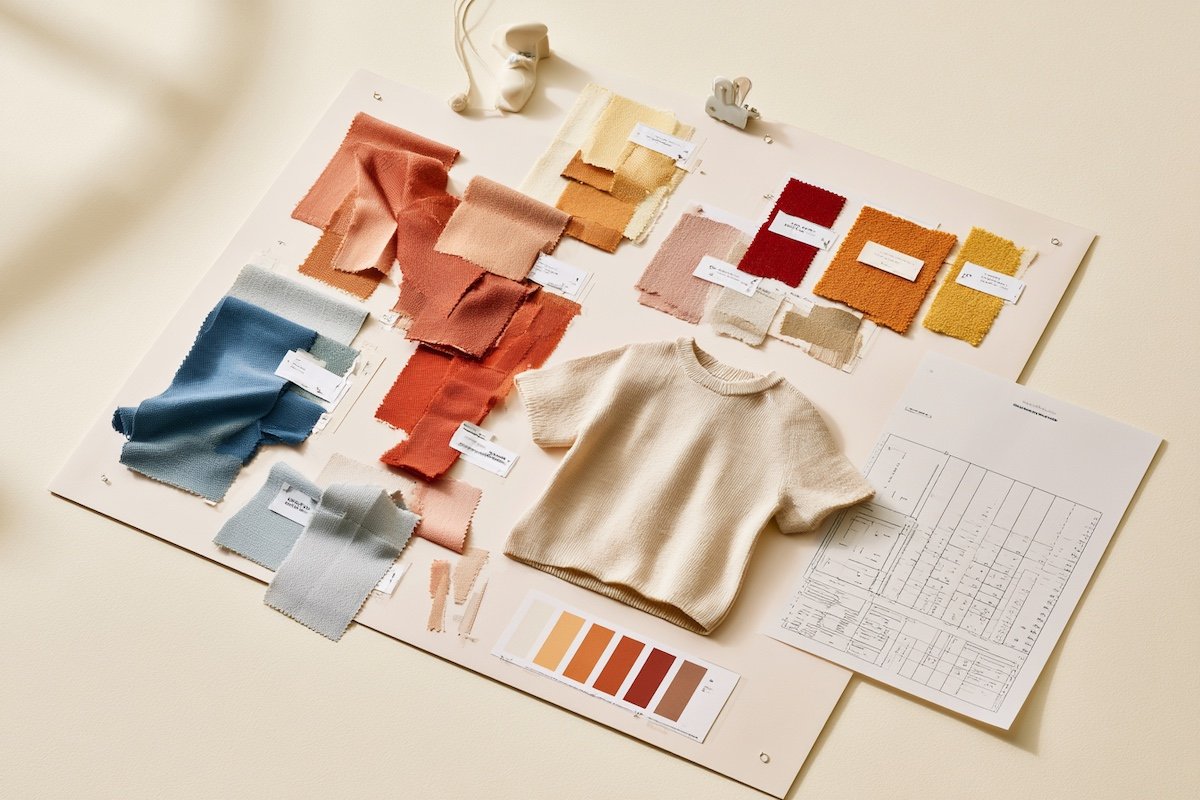
Everyday basics is a category, not a niche. A defensible niche is a specific customer with a specific need you can serve better than a generalist — by age, by skin type, by occasion, by sizing, by value system or by geography. Pick one and say no to the rest.
“Everyday basics” is where most kidswear brands start and where most stay stuck, because it is a category that contains everyone. Positioning is the act of choosing which everyone you mean. Real, defensible niches inside kids’ underwear include:
- By age and stage. Potty-training underwear, first school underwear, tween basics that do not look babyish.
- By skin and sensitivity. Underwear for eczema-prone or allergy-aware households, where fabric and dye choices are the promise.
- By sizing need. Tall and slim fits, or extended sizes from 90 to 160 cm that grow with the child.
- By occasion. School-term packs, holiday sets, everyday sets that remove the morning decision.
- By value system. Longer-lasting basics that parents buy fewer of, on purpose.
The niche you choose dictates the product. A school-term brand needs durability and easy reorder; a sensitivity brand needs a specific fabric and proof of safety — such as GB 31701 Class A compliance or an OEKO-TEX application in progress; a sizing brand needs a graded chart from 90 to 160 cm. Position first, then let the position specify the product — never the other way around.
| Niche | Customer | The promise the product must keep |
|---|---|---|
| School-term basics | Parents packing for the school week | Survives a term of washing |
| Sensitive-skin underwear | Eczema-prone, allergy-aware parents | Fabric and dyes that do not irritate |
| Tall-and-slim sizing | Parents of tall, lean children | Fits without riding or gaping |
| First underwear | Potty-training households | Easy on, easy off, easy to wash |
| Extended sizing | Parents across 90 to 160 cm | One brand that grows with the child |
5. Turning Functional Benefits Into Emotional Resonance
Functional benefits get you considered; emotional resonance gets you remembered and reordered. The bridge is translation: every feature — six-stage QC, a modal-cotton blend — becomes a feeling — peace of mind, one less thing to think about on a school morning.
Parents buy kids’ underwear functionally and repurchase it emotionally. The first order is often rational — does it fit, is it safe, is it a fair price — but the second order is a feeling: this is the brand I do not have to think about, the one that got it right. Positioning is what earns the second order.
The translation below shows how to move from spec to story. The rule: state the feature once, then always lead with the feeling.
| Functional feature | What it actually does | The feeling to lead with |
|---|---|---|
| 6-stage QC with needle detection | Catches defects before shipping | I never have to check what is in the pack |
| Defect rate under 0.3% | Fewer returns and complaints | It just works, every time |
| Modal-cotton blend at the right GSM | Soft, breathable, durable | Comfortable enough they forget they are wearing it |
| Sizes 90 to 160 cm | One brand across years | I buy one brand as they grow |
| 3,000+ print designs | Endless options | They get to choose, I get consistency |
6. How Your Factory Story Becomes Part of Your Brand Story
Your factory is a reason to believe, not the story itself — but a credible, specific factory story is one of the fastest ways to earn trust in a category full of anonymous white-label goods. Use concrete facts — years, scale, QC, defect rate — never vague claims.
A parent will not bond with your factory, but they will trust a brand that is transparent about how its products are made. The factory story works as supporting evidence: a sentence or two on your about page, a line on the packaging, a paragraph in your Amazon brand story. What makes it credible is specificity.
The difference between a claim and a reason to believe: “high-quality manufacturing” is a claim anyone can make; “made in an 8,000 sqm facility by a team of 300+ specialists running six-stage QC with needle detection and a defect rate under 0.3%” is a fact that sounds like proof. Nuohua Garment, founded in 2016, produces 1,000,000+ pieces a month and keeps 3,000+ print designs in the archive — these are the details that turn a vague promise into something a parent can trust.
Use the factory story selectively. Lead with the parent’s problem, not the production line. The factory appears in the “reason to believe” slot: when a parent wonders whether the softness will last or whether the waistband will survive, the QC story answers. When a parent wonders who you are, the brand story answers.
7. Writing Your Positioning Statement and Testing It
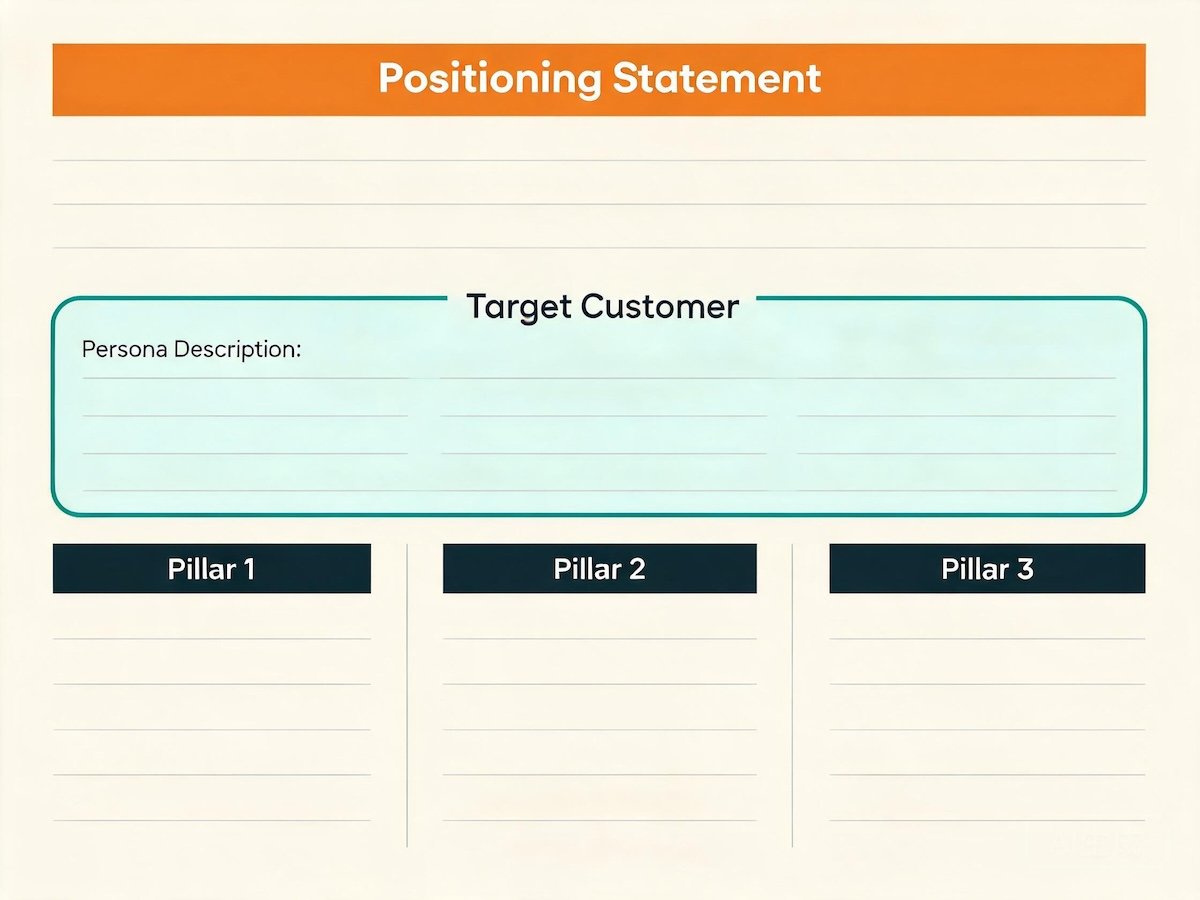
A positioning statement has a proven formula: “For [hero], [brand] is the [category] that [promise], because [reason to believe].” Write one sentence, then test it against three questions: would the customer care, can a competitor copy it, and do your product and factory actually deliver it?
The formula forces clarity because it has no room for adjectives. Fill it in for a kidswear basics brand and you get something like: “For parents packing the school week, [Brand] is the kids’ underwear that survives a whole term of washing, because every batch passes six-stage QC with needle detection and a defect rate under 0.3%.” That is a position. Compare it to “premium, comfortable kids’ underwear for modern families” — which says nothing because it excludes no one.
Test the statement before you build on it:
- Would the customer care? If the promise does not map to a real, recurring frustration, it is a slogan, not a position.
- Can a competitor copy it? If the answer is yes within one season, it is a feature. A position is harder to copy because it is tied to who you are, not what you make.
- Can you deliver it? Your product and your factory must actually make the promise true. A durability promise needs the QC record to back it; a sensitivity promise needs the fabric and the safety documentation.
8. A Brand Story Checklist for Kidswear Founders
Work through the checklist in order: choose the hero, name the problem, write the promise, gather the proof, pick the niche, translate features into feelings, write the one-sentence position, and test it. The story is finished when you can say it out loud in one sentence and mean it.
- Name the hero. One parent, one child, written down.
- Name the problem. The recurring frustration you remove.
- Write the promise. One sentence with a verb.
- Gather the proof. Fabric, sizing, QC and factory facts that make it true.
- Choose the niche. Which parent, and which “no”, are you committing to?
- Translate features into feelings. Lead with the feeling everywhere.
- Write the position. The one-sentence formula, tested against the three questions.
Your brand story deserves a factory that can back it with proof. Tell us your hero, your promise and your niche, and our team will match you with the fabrics, prints and QC documentation to make it real. Email info@nuohuagarment.com or WhatsApp +86 150 1198 5393.