Short on time? Start with the 4 most-read brand-building articles — or scroll down for the complete library organised by stage.
Building a Kidswear Brand Is Not Building a Smaller Adult Brand
The instinct when launching a children’s clothing label is to treat it as adult apparel in smaller sizes. It is not, and the difference shows up in three places that decide whether a brand survives its second year.
- Your customer outgrows the product. A child moves through sizes on a predictable clock, which makes repeat purchase structural rather than something you have to manufacture through marketing.
- The buyer and the wearer are different people. The parent evaluates safety, washability and value; the child evaluates comfort and whether the waistband itches. Both have to be satisfied or the reorder does not happen.
- Trust compounds differently. Parents talk to other parents, and a fabric that survives a hundred washes earns word of mouth that no ad spend buys.
This library is organised around that reality — the sizing cycle, the two-audience problem, and the trust economics of children’s basics.
Stage 1 — Positioning and Brand Story
Everyday basics are the hardest category in which to differentiate, because the product itself looks similar across brands. What separates the brands that hold margin from the ones that compete on price is a reason to exist that is specific enough to be repeatable.
- Brand story and positioning — how to stand out when the garment itself is a commodity.
- How to build a kids underwear brand — a private label launch plan from positioning to first production run.
Stage 2 — Protect the Name Before You Spend on It
Trademark work is unglamorous and almost always done too late. The cost of clearing a name before you print labels, build packaging and register domains is a fraction of the cost of discovering a conflict after you have launched.
- Trademark and brand protection in the US and EU — what to register, where, and in what order.
Reminder. Trademark clearance is one of the few brand-building errors that can be genuinely unrecoverable. Do this before printing labels.
Stage 3 — Where You Sell: Own Store, Marketplace or Both
The channel decision shapes everything downstream — your packaging, your compliance documentation, your unit economics and how much control you keep over the customer relationship. There is no universally right answer, but there are predictable trade-offs.
- Shopify store setup for beginners — what to configure before you drive a single visitor.
- Launching an Amazon private label brand — the 2026 playbook.
- FBA vs FBM for small apparel brands — which model fits which stage.
- Amazon compliance for kids apparel sellers — CPSIA and safety documentation you will be asked for.
- Listing optimisation — converting search visibility into sales.
Stage 4 — Pre-Launch: Audience, Waitlist and Drop
A launch is not a day; it is a sequence. Brands that build an audience before inventory arrives convert at a completely different rate from those that launch to silence and then buy ads.
- Pre-launch waitlist and drop strategy — building hype, capturing emails and timing the first drop.
Stage 5 — Content, Photography and Marketing
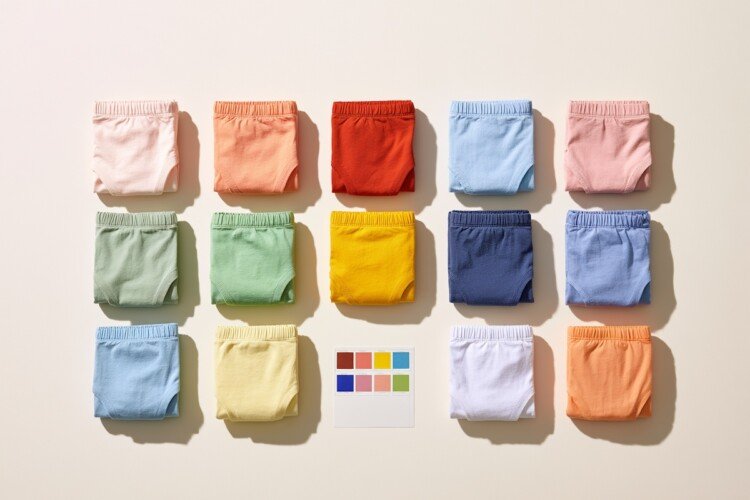
Children’s apparel sells on texture and movement, which makes it unusually dependent on the quality of its images and video. Flat lays convert for basics; lifestyle content does the work of making a commodity feel considered.
- Product photography that converts — flat lay, hanger and UGC approaches.
- TikTok and Instagram marketing — organic short video, lifestyle content and influencer seeding.
- Parenting influencer collaborations — briefs, contracts and outreach that protect your brand.
Stage 6 — Retention: Turning Growth Into Repeat Purchase
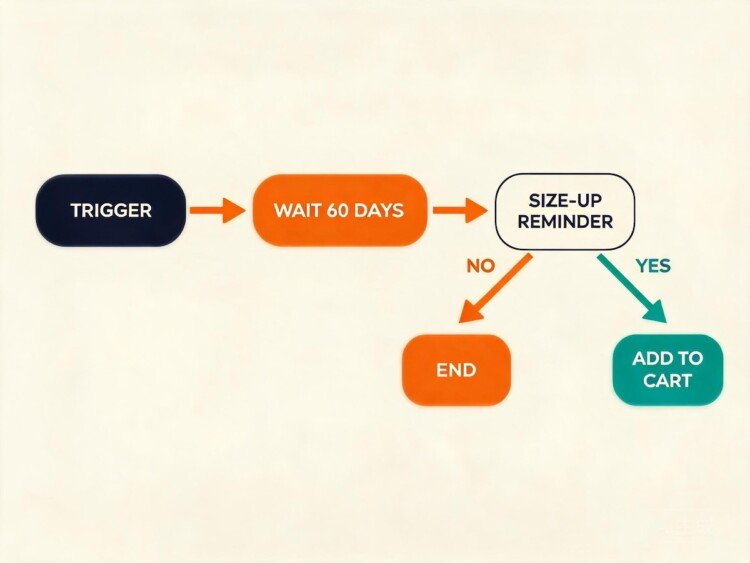
This is the stage most kidswear brands underinvest in, and it is the one where the category’s structural advantage actually pays. A child does not simply grow out of a size on a schedule you can predict — they grow out of it at a moment a parent can be reminded of. That makes retention a timing problem more than a persuasion problem.
- Email and SMS retention — turning growth sizing cycles into repeat purchases.
- DTC pricing and margin for kids basics — profitability and bundle strategies that survive discounting.
Stage 7 — Pricing for Margin, Not for Volume
Basics invite a race to the bottom, and the brands that win it are usually the ones that regret it. Margin in children’s apparel is defended through fabric choice, bundle construction and retention — not through being the cheapest listing in the category.
- Pricing and margin strategy — how to model profitability before you commit to a cost price.
The Four Mistakes That Slow Kidswear Brands Down
- Launching on price.You will attract customers who leave for the next cheaper listing, and you will have trained the market to value you on cost.
- Treating sizing as admin rather than strategy.The sizing cycle is the most reliable repeat-purchase trigger in the category. Brands that map it and communicate around it retain far better.
- Skipping trademark clearance.Discovering a conflict after packaging is printed is one of the few brand-building errors that can be genuinely unrecoverable.
- Designing for the parent and forgetting the wearer.A garment a parent approves of and a child refuses to put on does not get reordered.
Ready to manufacture? Send your tech pack and target quantity to request a quote — itemised pricing comes back within one to two business days.
Who This Guide Is For
These articles are written for founders and small teams launching or scaling a children’s clothing label — underwear, sleepwear and everyday basics in particular. They assume you are making real commercial decisions with limited budget, and they favour specific, checkable guidance over inspiration.
Where a topic overlaps with manufacturing — choosing fabric, understanding minimums, specifying a tech pack — we have kept it in our sourcing guide library rather than duplicating it here. The two are designed to be read together: this one covers building the brand, that one covers making the product.
They assume you are making real commercial decisions with limited budget, and they favour specific, checkable guidance over inspiration.
Founder-facing library on launching and scaling a private-label kids underwear or sleepwear brand. Request a quote.