
Email SMS Retention Kidswear Sizing Cycles is where the real profit of a childrenswear brand is made, and it is almost entirely ignored by founders chasing the next first sale. A child grows through the entire 90–160 cm range in a handful of years, which means every customer you acquire is structurally programmed to buy from you again and again — but only if your retention flows are timed to the growth spurt instead of the calendar. This guide maps the exact email and SMS workflows that turn a first order into a multi-year repurchase relationship.
On this page
- Why kidswear retention is a sizing problem, not a loyalty problem
- The growth sizing cycle as a repeat-purchase engine
- The core email flows every kidswear brand needs
- SMS and the timing of the repurchase nudge
- Segmentation that respects the buyer and the wearer
- What to measure, and the second-order rate that decides it
- Why retention only works when the product reorders well
1. Why Kidswear Retention Is a Sizing Problem, Not a Loyalty Problem
Kidswear customers do not churn because they stop liking your brand; they churn because their child outgrows the product. Retention in this category is therefore a timing problem — send the next-size message at the right moment and the repurchase happens almost automatically.
Most retention playbooks are written for categories where the customer chooses to return. Kidswear is different: the customer is already committed to returning, because the child is growing whether anyone markets to them or not. The only question is whether they return to you or to the first convenient alternative. Win that question and you have built, for the price of a well-timed email, one of the highest-lifetime-value customers in all of ecommerce.
The strategic shift this demands is simple but profound. Stop thinking of retention as a loyalty program that rewards affection, and start thinking of it as a sizing service that anticipates the next physical milestone. A parent who receives a message at exactly the moment their child’s underwear is starting to feel snug is not being marketed to — they are being helped, and help is the strongest retention lever there is.
The data you need to run this is already in your orders. Every purchase records a size, which maps to a height band, which maps to an expected outgrow date. From those three fields you can predict, with useful accuracy, when each customer will need the next size up — and that prediction is the entire machinery of kidswear retention.
2. The Growth Sizing Cycle as a Repeat-Purchase Engine
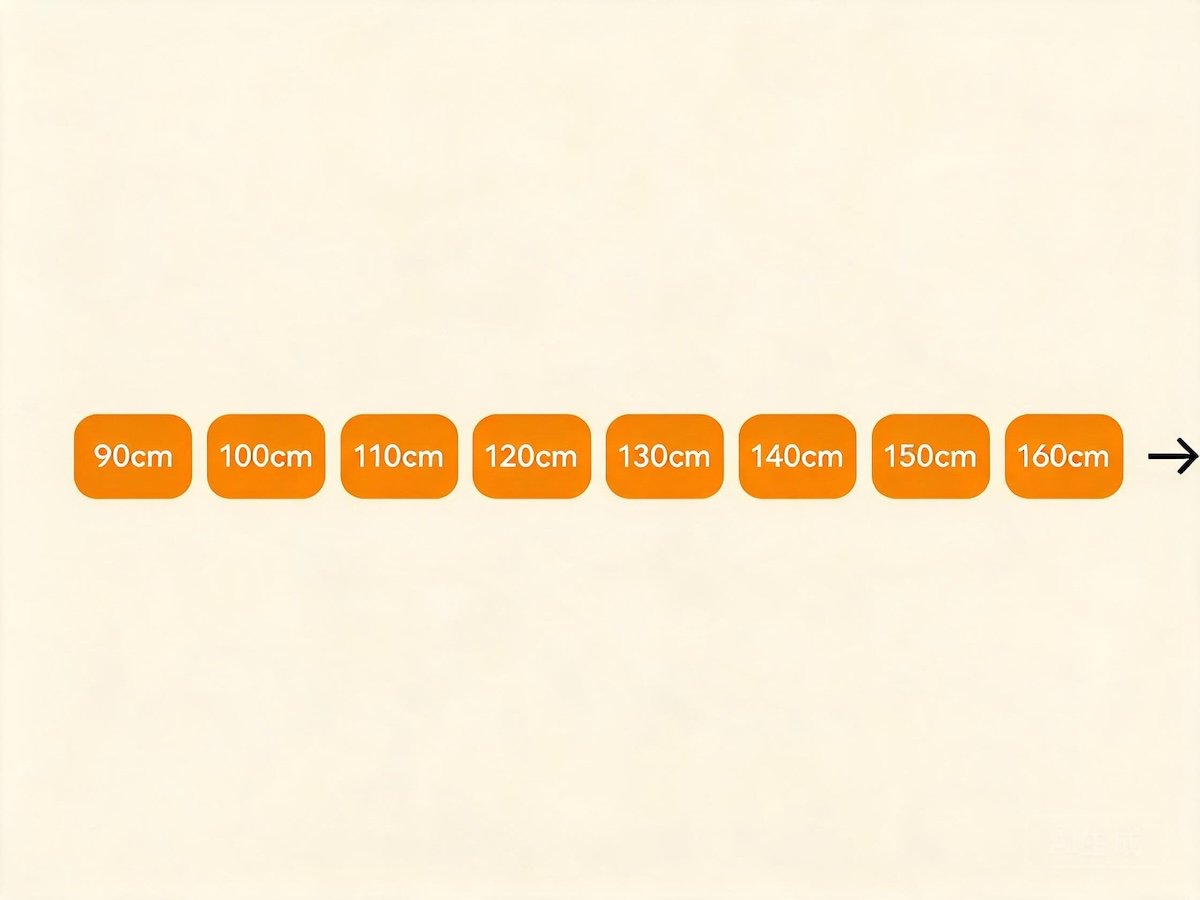
The growth sizing cycle is the predictable sequence of size-ups a child moves through, from 90 cm up to 160 cm, and each transition is a natural repurchase moment. Map your size run to age and you map the future demand of every customer you acquire.
Children do not grow on a random schedule; they grow on a well-documented curve that maps height to age with useful consistency. A brand that sells across the 90–160 cm range is selling into a customer who will, within a few years, need nearly every size in that range. Each transition — from 100 cm to 110 cm, from 110 cm to 120 cm — is a repurchase event that costs you nothing to create, because biology already created it.
The practical task is to turn that biological fact into a marketing schedule. For each size band, estimate the typical dwell time — how many months a child stays in that band before moving up — and set that as the trigger for your next-size reminder. A child in 100 cm underwear today is, in a predictable number of months, a 110 cm customer. Your only job is to be the brand that shows up first at that moment.
| Size band | Typical dwell time | Repurchase trigger |
|---|---|---|
| 90–110 cm | Shortest dwell, fastest growth | Next-size reminder at first signs of snugness |
| 110–130 cm | Moderate dwell | Seasonal plus next-size flow |
| 130–150 cm | Longer dwell | Back-to-school and wardrobe-refresh flows |
| 150–160 cm | Final band before adult sizing | Last-chance size-up and sibling hand-me-down angle |
Two refinements sharpen the engine. First, dwell time shortens at the younger end of the range — toddlers outgrow 90 cm faster than ten-year-olds outgrow 140 cm — so your early-band flows should fire more frequently. Second, the final band is a retention risk in disguise: a child approaching 160 cm is about to leave your category entirely, so the right message is not another pair of underwear but a graceful hand-off, ideally to a younger sibling.
3. The Core Email Flows Every Kidswear Brand Needs
Five flows do most of the work: a welcome series, a size-up reminder, a wash-and-wear win-back, a back-to-school refresh and a sibling hand-me-down. Everything else is refinement on top of these five.
Email is the backbone of kidswear retention because it carries the one thing SMS cannot: context. A size-up reminder works because it can explain why the message is arriving now — the child’s age, the typical growth curve, the specific benefit of moving up before the garment gets snug. Build the five flows below and you have covered the majority of the revenue available in the channel.
- Welcome series. Capture the child’s size and age on signup, then deliver a three-email series that sets expectations, demonstrates fit and stores the data that powers every future flow.
- Size-up reminder. The engine of the whole system. Triggered by dwell time since the last purchase, it recommends the next size up with a fit explanation and a gentle nudge.
- Wash-and-wear win-back. A message that asks whether the last set still fits and recovers well, and offers the next size if the answer is no.
- Back-to-school refresh. A seasonal flow timed to the school calendar that bundles a wardrobe top-up across sizes.
- Sibling hand-me-down. A flow for families with a younger child, positioning the older child’s outgrown size as a reason to buy new for the next one.
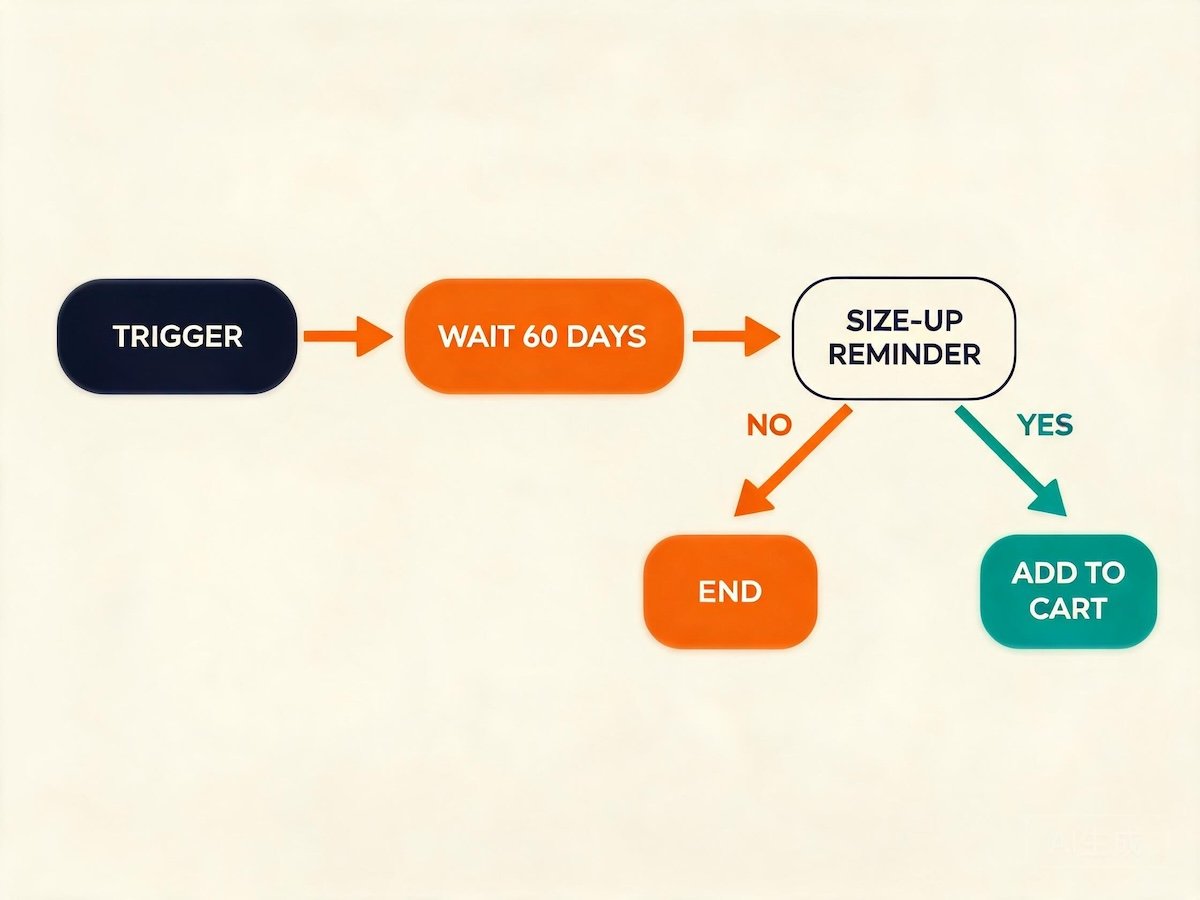
The welcome series deserves special attention because it is where the sizing data gets captured. Ask for the child’s current size and date of birth at signup, not just the parent’s email. Those two fields are what make every downstream flow accurate, and a welcome series that trades a small discount for that data pays for itself many times over.
4. SMS and the Timing of the Repurchase Nudge
SMS is for the moment, not the explanation. Use it for the short, urgent nudges — the next-size reminder, the drop alert, the restock ping — and let email carry the context that makes the nudge make sense.
SMS converts because it lands in the one channel parents check without thinking, but it also fatigues faster than any other channel if overused. The discipline is to reserve it for messages that are genuinely time-sensitive and short enough to be read in two seconds. A size-up reminder sent as a single line — “Is [child’s name]’s 100 cm starting to feel snug? 110 cm is in stock.” — is exactly the right shape.
The moments worth an SMS in kidswear are few and specific: the next-size reminder, a limited-drop announcement, a restock of a popular print, and a cart reminder for a size the customer already browsed. Everything else belongs in email. The moment you send an SMS that could have been an email, you have spent the channel’s trust on a message that did not need it.
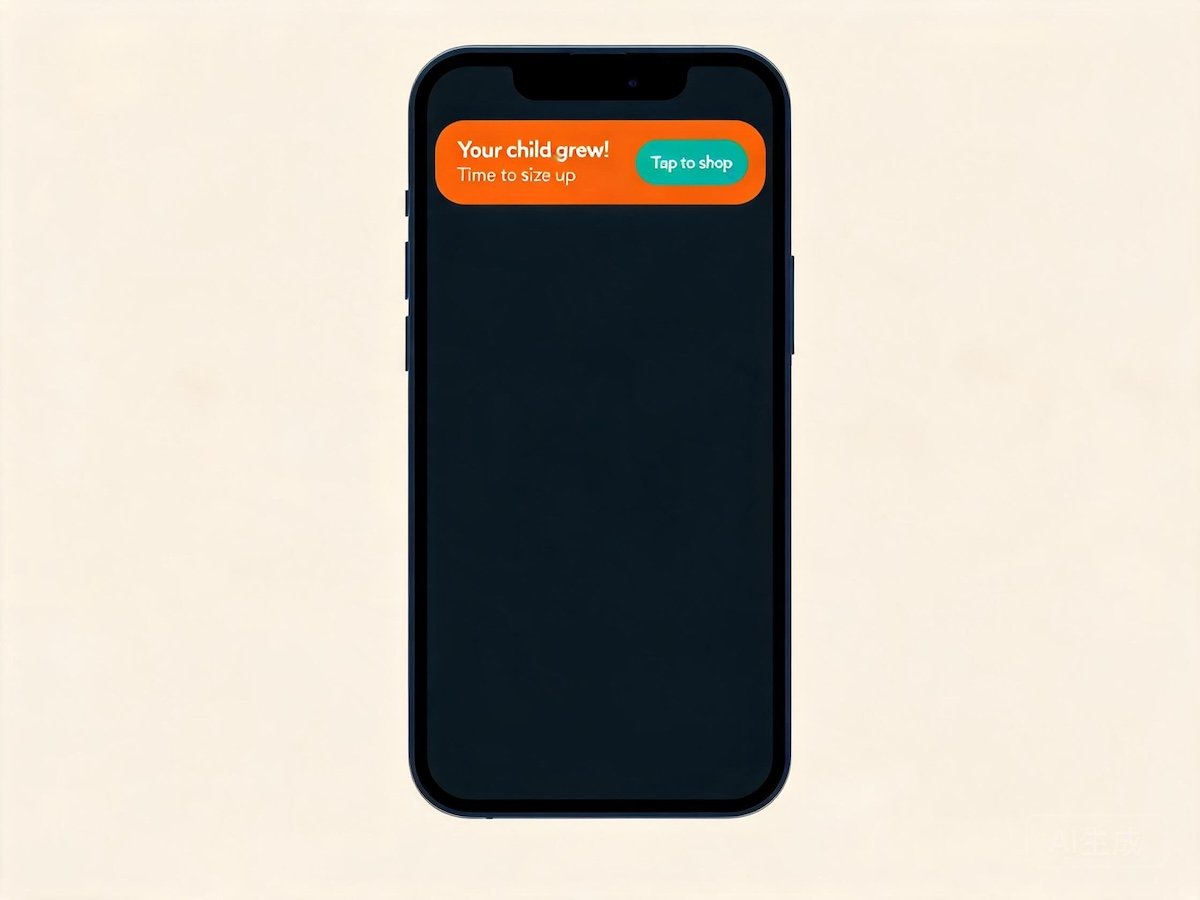
Compliance is not optional in SMS. The US market requires express consent and a clear opt-out, and the same expectations now shape most regions. Obtain permission at signup, honour every opt-out instantly, and keep frequency low. A retention channel that feels like a service survives for years; one that feels like a robocall dies in a week.
5. Segmentation That Respects the Buyer and the Wearer
Segment by the child, not just the customer: size band, age, number of children and purchase cadence are the four fields that matter. A message that names the child and knows their size outperforms a generic blast every time.
Generic segmentation treats every customer as the same parent. Kidswear rewards the opposite: segmentation that models the wearer, because the wearer’s size and age are what determine what to send and when. Four fields carry most of the signal — current size band, the child’s age, how many children the household has, and how recently and regularly the parent has bought.
With those fields you can do the things a blast can never do. Address the child by name. Recommend the specific next size rather than a generic category. Offer a sibling discount to households with two children. Suppress the size-up flow for a customer who just bought two sizes up. Each of these is a small personalisation that, in aggregate, is the difference between a retention channel that annoys and one that helps.
| Field | What it enables | Example use |
|---|---|---|
| Size band | Next-size recommendations | Trigger the size-up flow at the right dwell time |
| Child age | Growth-curve prediction | Adjust dwell time for younger children |
| Number of children | Sibling and bundle angles | Hand-me-down and multi-size flows |
| Purchase cadence | Win-back and refresh timing | Re-engage lapsed parents seasonally |
Personalisation is where the buyer-wearer split pays off most visibly. A parent reads a message that says “[child’s name] is probably ready for 110 cm” as thoughtful and attentive; they read “check out our new arrivals” as noise. The first builds a relationship that lasts the full 90–160 cm journey; the second gets unsubscribed.
6. What to Measure, and the Second-Order Rate That Decides It
Measure open rate and revenue per recipient, but treat second-order rate — the share of first-time buyers who make a second purchase — as the north star, because it is the single metric that tells you whether the sizing engine is actually working.
Retention metrics are easy to read and easy to misread. Open rates and click rates tell you whether the message landed; they do not tell you whether the relationship is compounding. The metric that matters is second-order rate: what share of customers who bought once come back for a second purchase, and how quickly. A kidswear brand with a healthy second-order rate has built a machine; a brand with a strong open rate and a weak second-order rate has built a newsletter.
Beyond second-order rate, watch two supporting numbers. Revenue per recipient measures how much money each flow returns for each person it touches, which is how you decide which flows to scale and which to trim. Time-to-second-purchase measures how quickly the sizing engine is converting, and a shrinking number means your dwell-time triggers are getting more accurate.
7. Why Retention Only Works When the Product Reorders Well
No flow can manufacture a second order if the product does not survive the first one. Retention email and SMS amplify product quality; they cannot substitute for it, and every defect is a permanently lost repeat customer.
Here is the hard truth at the centre of kidswear retention: the most perfectly timed size-up flow in the world will not save a product that disappoints. A parent whose first purchase arrived with a loose seam, a faded print or a waistband that lost its recovery will not click the next-size email — they will buy the next size somewhere else. Retention is a multiplier, and a multiplier of zero is still zero.
This is why the factory you choose is a retention decision before it is a sourcing decision. A manufacturer running 6-stage QC with needle detection and holding a defect rate under 0.3% is protecting the experience that makes your flows work. The needle-detection step matters beyond safety compliance — it is the kind of detail that prevents the single bad item that ends a customer relationship, and at scale, with a million-plus pieces a month, it is the difference between a retention engine and a refund queue.
Compliance supports retention too, because trust is a retention asset. Surface your GB 31701 Class A compliance for the China market or CPSIA with a Children’s Product Certificate (CPC) for the US, tested through third-party labs such as SGS, Intertek or TÜV SÜD, and you give the parent one more reason to stay. When the sizing promise, the quality promise and the safety promise all hold, the repurchase is not something you have to sell — it is something the parent already decided to do the moment the last pair fit.
Retention flows only pay back when the product reorders well across the whole 90–160 cm run. If you want a kids underwear or sleepwear partner whose 6-stage QC protects your second-order rate, send your size range and current quality requirements.
Email info@nuohuagarment.com · WhatsApp +86 150 1198 5393 · Request a quote at nuohuagarment.com