
This guide is part of the Kids Underwear & Sleepwear Sourcing Guide.
A private label kids’ underwear manufacturer produces children’s underwear and sleepwear to your specifications, then ships it with your brand label, tag, and packaging. You own the brand and the customer relationship; the factory owns production. For a new brand, a private label program typically runs from an approved tech pack to shipment in 6–8 weeks at a MOQ of 2 pcs on selected in-stock styles, colors and sizes. Children’s underwear carries stricter safety rules than adult apparel (CPSIA in the US, GPSR/EN 14682 in the EU, GB 31701 Class A in China), so your manufacturer’s quality system matters more than the unit price.
Private label is one of the fastest ways for a new brand to reach market — but in children’s apparel it carries responsibilities that adult-fashion brands never face. A dress that fits slightly off is a return; children’s underwear that fails a fiber check or a safety rule is a recall. That difference is why this guide is built specifically for children’s underwear and sleepwear — a category with its own compliance, fabric, and quality rules. If you are launching or scaling a kids’ underwear brand, the sections below walk through the model, the process, the buyers who use it, the MOQ math, the pricing logic, and the kids-specific standards that protect your brand at the border.
- What Is Private Label Kids’ Underwear?
- Private Label vs OEM vs ODM
- Who Should Choose Private Label?
- How the Private Label Process Works
- How to Choose a Kids’ Underwear Manufacturer
- MOQ Explained: 2 / 150–300 / 1,000 / 3,000+
- Private Label Pricing: What Drives Your Unit Cost
- Why Kids’ Underwear Needs Different Quality Standards
- Common Private Label Mistakes
- A Real Launch Case Study
- Free Downloadable Resources
- Frequently Asked Questions
What Is Private Label Kids’ Underwear?
Private label is a sourcing model where a factory makes a product and puts your brand on it. In children’s underwear, that means the manufacturer handles pattern, fabric, cutting, sewing, finishing, and quality control, while you provide — or approve — the design direction, the tech pack, the label and tag artwork, and the packaging. The result leaves the factory wearing your brand, not theirs.
For a new brand, private label is attractive because it lets you go to market without owning a factory, hiring a sewing line, or learning knitting machines. You focus on the brand, the customer, and the channel; the manufacturer focuses on making safe, consistent product. The trade-off is that your differentiation comes from design, fabric story, fit, and service — not from proprietary manufacturing technology.
The term is often confused with OEM and ODM. The distinction matters when you brief a factory, because it changes who writes the spec. We cover it in the next section, and in full in our OEM vs ODM vs Private Label guide.
Private Label vs OEM vs ODM
These three labels get used loosely, so here is the practical difference for kids’ underwear:
- ODM (Original Design Manufacturing): the factory designs the styles; you pick from its existing catalog and re-label them. Fastest to launch, lowest development cost, least exclusivity.
- OEM (Original Equipment Manufacturing): you bring the design, tech pack, and specs; the factory builds to your specification. More control, more exclusivity, more upfront work.
- Private Label: sits between the two. You may start from the factory’s base styles and customize fabric, color, label, and packaging — or bring your own tech pack. You always own the brand identity.
The right model depends on your stage. A first-time Amazon seller often starts with private label on proven base styles; a boutique brand with a strong design point of view usually moves to OEM. Our full comparison includes a decision framework for choosing between them.
Who Should Choose Private Label?
Private label kids’ underwear is not one audience — it serves several very different brand types. Knowing which one you are helps you brief the factory correctly.
Boutique & Independent Brands
Small design-led brands use private label to launch a curated line without a minimum that would tie up capital. They usually care most about fabric hand-feel, color accuracy, and a beautiful label and tag. A 100–300 piece opening run is realistic.
Amazon & Marketplace Sellers
Marketplace sellers need FBA-ready packing from day one: scannable FNSKU, suffocation warnings, correct poly-bag thickness. They also face the strictest compliance gate (CPSIA / CPC in the US). Private label lets them test a niche — bamboo sleepwear, organic briefs — with low risk. Our Amazon private-label playbook covers this in detail.
Shopify & DTC Brands
Direct-to-consumer brands live or die on repeat purchase and reviews. They use private label to control fit consistency and fabric story, then build a subscription or bundle model. Skincare-grade softness and a memorable unboxing matter more than the lowest price.
Baby & Children’s Stores
Brick-and-mortar and specialty retailers want reliable replenishment and a coherent size run (100–150 / 4T–12T). They value a manufacturer who can hold a locked BOM so reorder lots match the first run exactly.
Chain Retailers & Distributors
Larger buyers use private label to build an exclusive house brand. They need documentation maturity: test reports, tracking labels, and a quality agreement. Their MOQ is higher, but so is volume and stability.
Which one are you?
If you are unsure, start by answering three questions: (1) Do you have a tech pack or need the factory’s base styles? (2) What is your first order budget per style? (3) Which market’s compliance do you must meet? Your answers point straight to the right model and MOQ.
How the Private Label Process Works
A successful private label program is a sequence, not a single order. The flow below shows the typical path from an idea to a shipped carton. Most steps have a dedicated guide — linked where relevant.
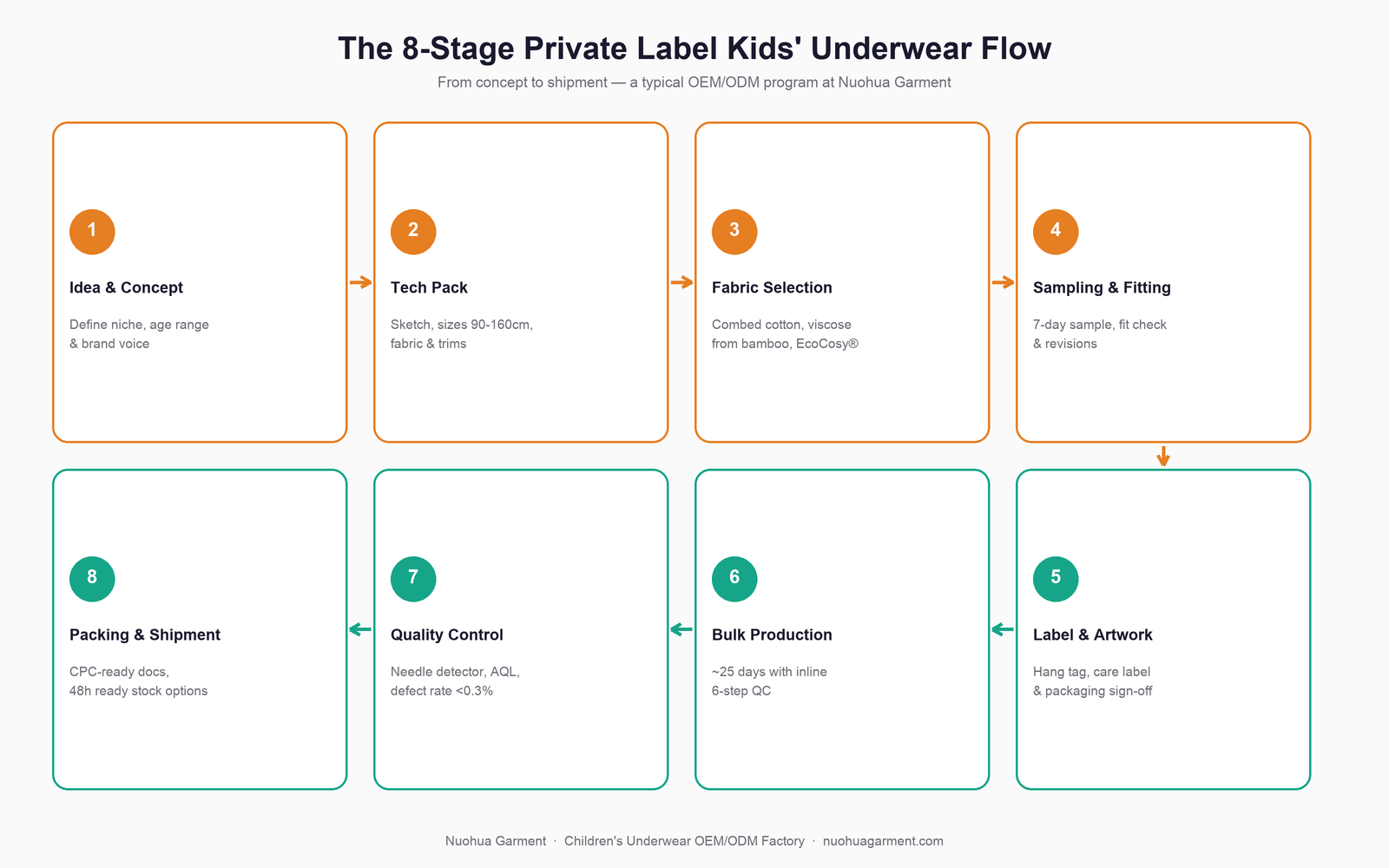
1. Idea & Concept
You define the niche (e.g. bamboo sleepwear for toddlers), the age range, and your brand voice. No factory needed yet — just a clear brief.
2. Tech Pack
The tech pack is the single source of truth: flats, measurements, materials, construction, labeling, and compliance. A strong tech pack is what keeps sampling short. See our tech pack structure guide.
3. Fabric Selection
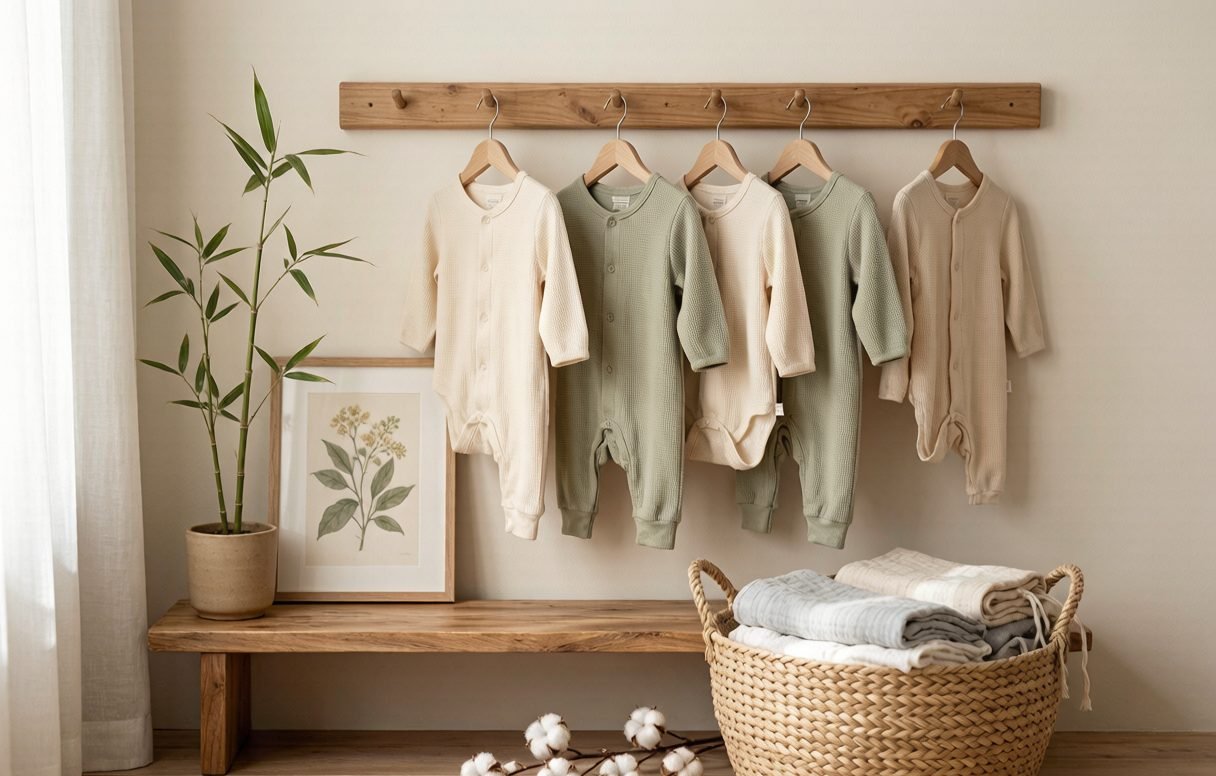
You choose the fiber blend (100% combed cotton, 95/5 cotton-spandex, bamboo viscose, modal, or EcoCosy®), the GSM (weight), and the hand-feel. Fabric drives both comfort and cost.
Eco-conscious from fiber to finish. European and North American DTC brands increasingly brief us on sustainable lines, and we build them without the guesswork: organic cotton and low-impact, non-toxic reactive dyes for skin-contact items, with construction to GB 31701 Class A. Tell us whether your brief calls for organic cotton, viscose from bamboo, or EcoCosy® — we map compliance and costing together from the first sample.
4. Sampling & Fitting
You review a prototype, then a pre-production (PP) sample. For knitwear, 3D virtual sampling can speed the first review — our 3D sampling guide explains where it helps and where a physical sample is still required. Our sampling request guide shows how to write the request that avoids rework.
5. Label & Artwork Approval
Care label content, brand tag, country of origin, and packaging artwork are approved. This is where compliance text (fiber %, warnings, tracking label) gets locked.
6. Bulk Production
Cut, sew, trim, and finish run against the locked BOM and the signed PP sample. Color labs and size grading are confirmed before the line starts.
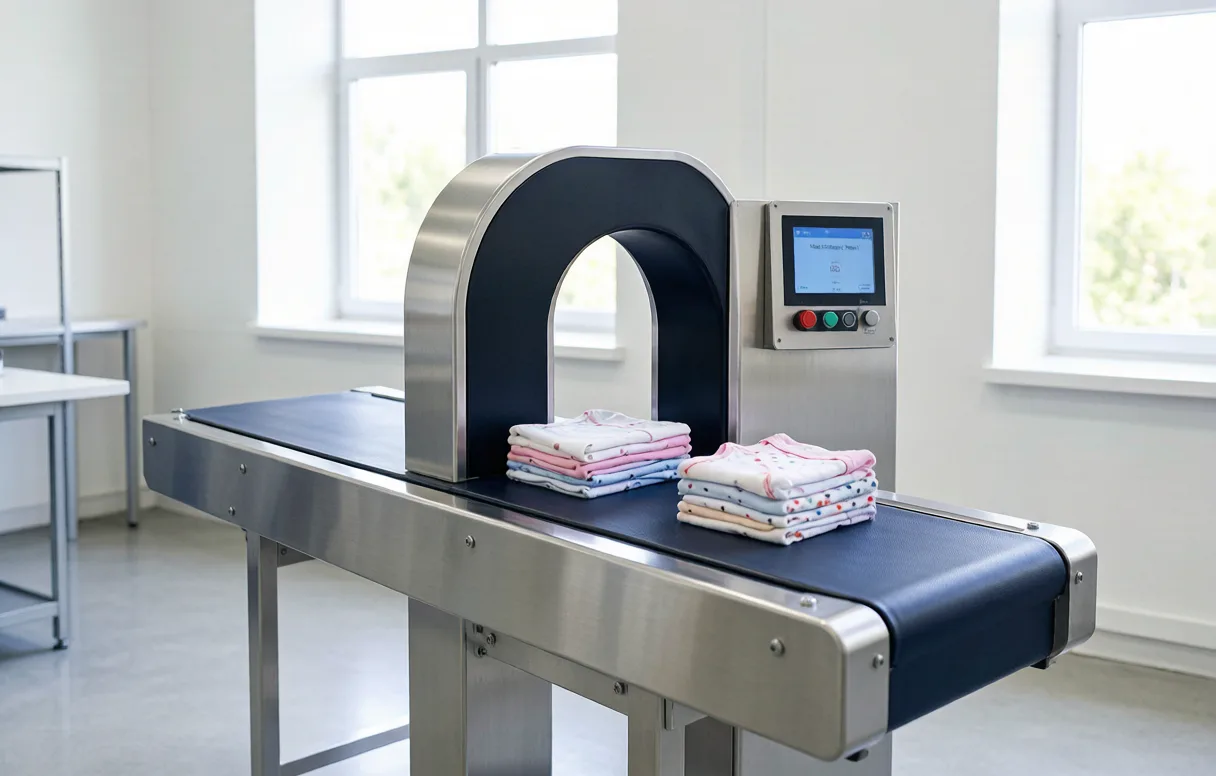
7. Quality Control
In-line checks during production plus a final AQL inspection. Our AQL inspection guide explains the sampling math behind a 2.5 AQL level.
8. Packing & Shipment
Fold, poly-bag, carton, and ship with the documents your forwarder needs. Timelines vary, but a typical first order from approved tech pack to shipment runs 6–8 weeks.
Industry reference figures for planning purposes — exact specs depend on your tech pack.
| Dimension | Large OEM factories | Small traders / SOHO | Nuohua Garment |
|---|---|---|---|
| MOQ | 3,000–5,000 pcs per style (industry reference) | 50–100 pcs, quality hard to guarantee | 2 pcs on selected in-stock styles, colors and sizes |
| Compliance & testing | Complete docs, but large orders only | Often no CPC / GB 31701 reports | CPC · GB 31701 Class A · OEKO-TEX (in progress) |
| Sampling & lead time | Sample 15–20 days / bulk 45+ days (industry reference) | Unstable sampling | Sample 7 days / bulk 25 days |
| QC & safety | Basic spot check | Almost no professional equipment | 100% needle inspection + 6-step QC, defect rate <0.3% |
How to Choose a Kids’ Underwear Manufacturer
The question is not “who is cheapest” — it is “who will still be making safe, consistent product on reorder six months from now.” For children’s underwear, weight your shortlist on these points:
- Kids-specific experience: underwear is close-fitting and skin-contact; a factory used to dresses is not automatically ready for it.
- Compliance maturity: can they speak to CPSIA, GPSR, EN 14682, and GB 31701 Class A without blinking?
- Sampling discipline: do they return a signed PP sample you can hold them to?
- QC transparency: in-line checks plus a documented final inspection, not just a final glance.
- Communication: do they answer spec questions clearly, or just say “no problem” to everything?
Our manufacturer shortlist guide walks the first-pass red flags, and our vetting scorecard gives the questions to ask before you sign.
Before you send a purchase order, confirm you are production-ready: an approved PP sample, a finalized tech pack, locked fabric and GSM, approved color labs, and final label and packaging artwork. Our production-readiness checklist and quote checklist turn those points into a packet you can actually send — and a factory can actually quote from without guessing.
MOQ Explained: 2 / 150–300 / 1,000 / 3,000+
Minimum order quantity decides how much capital you commit before you know if a style sells. For kids’ underwear, MOQ is usually expressed per style and color. Here is what different levels typically mean:
| MOQ / style & color | Best for | Unit price | Trade-off |
|---|---|---|---|
| From 2 pcs | First launch, testing a niche | Highest | Lowest risk; you validate fit and demand before scaling |
| 150–300 per color | Early scaling, 2–3 colors | Mid-high | Balances test cost with a sellable run |
| 1,000 per style and color | Established SKU, steady reorder | Mid | Better price; more capital tied up per run |
| 3,000+ per colour | Chain / distributor volume | Lowest | Best unit economics; slowest to pivot if a style underperforms |
The key insight: a lower MOQ does not mean “worse factory” — it means you pay a small premium per piece to keep risk down. As a new brand, starting at 2 pcs on selected in-stock styles, colors and sizes lets you test three colors for the price of one big bet. Our low-MOQ guide explains how a ready-stock minimum of 2 pcs lowers launch risk, and our custom vs off-the-shelf comparison shows when manufacturing your own beats importing stock.
Private Label Pricing: What Drives Your Unit Cost
Every quote you receive is built from the same cost blocks. Understanding them helps you read a quote — and negotiate one — instead of just comparing bottom lines. For kids’ underwear, the unit cost is usually driven by five things.
Fabric & Fiber Blend
This is normally the largest single variable. 100% combed cotton, a 95/5 cotton-spandex blend, bamboo-viscose, modal, and EcoCosy® sit at different price points, and GSM (weight) moves the number further — a 180 gsm interlock costs more than a 150 gsm jersey of the same fiber. A small change in blend can shift cost by a noticeable percentage, which is exactly why a locked BOM protects your margin on reorder.
Trims & Hardware
Waistband elastic, binding, labels, and any hardware (rings, slides) are small items with outsized variance. A printed logo elastic costs more than a plain one; a woven brand tag costs more than a heat-transfer; a custom dyed-to-Pantone trim adds a setup fee. These are the line items most quotes hide inside “trim” — ask for them broken out.
Compliance & Testing
For kids’ product, testing is not optional in regulated markets. Third-party tests (SGS / TÜV SÜD / Intertek) for fiber content, flammability where applicable, and restricted substances are a real cost that scales with the number of colorways and fabrics tested. Budget for it explicitly rather than discovering it after the quote.
MOQ & Customization
As the table above shows, unit price falls as volume rises and as customization falls. A 100-piece run in your own print costs more per piece than a 1,000-piece run on a factory base style. Customization — your print, your label, your pack — is what you pay the premium for, and it is what makes the product yours.
Finishing & Packaging
Folding method, poly-bag spec, hang tags, belly bands, and carton configuration all add cost. FBA-ready packing (scannable FNSKU, suffocation warning, correct bag thickness) is a small per-unit add that saves you re-work at the warehouse. Our quote checklist lists the details to send so the quote you get is the price you pay.
Read the quote like a factory
A suspiciously low quote usually means one of three things: a fabric substitution, trims omitted, or testing not included. Ask which fiber, which GSM, which elastic, and whether compliance testing is in the price. The answer tells you more than the number.
Why Kids’ Underwear Needs Different Quality Standards
This is the section most “private label manufacturer” articles skip — and it is the one that protects your brand. Children’s underwear is worn against the most sensitive skin, for the longest hours, by the least able to complain. Three differences matter:
Skin-Contact Safety & GB 31701 Class A
In China, children’s textiles are graded A / B / C by skin-contact safety; Class A is the strictest and applies to products for infants and young children. At Nuohua we build kids’ underwear to GB 31701 Class A as our internal baseline — it is the standard we engineer to, not a certificate we claim to hold. For the EU and UK, the comparable frame is the General Product Safety Regulation (GPSR) plus chemical rules such as REACH; for fiber-content accuracy, EU Regulation 1007/2011 allows only a 3% tolerance. Our EU fiber-label guide explains why that 3% margin is tighter than most new brands expect.
Small Parts, Drawstrings & Elastics
Kids’ garments are assessed for choking and entanglement risk. EN 14682 restricts drawstrings on children’s clothing; small decorative parts need secure attachment; and waistband elastics must be tested for both recovery and skin safety. A manufacturer who treats underwear like a dress will miss these. Two points deserve extra attention for underwear specifically:
- Elastic recovery. A waistband that stretches out after two washes is a returned product. We test elastics for stretch-and-recovery cycles, not just initial tension, because children’s underwear is laundered far more often than outerwear.
- Why close-fitting gets more scrutiny. Underwear sits against the skin for most of the day, so chemical and mechanical irritation risks are weighted higher by regulators than for a loose dress. That is the real reason kids’ underwear is held to a stricter baseline (Class A) than adult basics.
Our compliance checklist lists the points to verify before production.
Fiber Accuracy & Third-Party Testing
“95% cotton / 5% spandex” must actually test at 95/5 within tolerance — and a batch change can drift it. We lock the BOM and verify fabric at intake, and where the market requires it, product is tested by independent laboratories such as SGS, TÜV SÜD, or Intertek. These are third-party reports named on the certificate, not claims we make ourselves.
Certifications: What We Hold vs What You File
Some certifications are often confused. To be clear and honest:
- OEKO-TEX Standard 100: at Nuohua this is in progress — we do not claim to currently hold a valid certificate. Our OEKO-TEX guide shows how to verify any supplier’s claim.
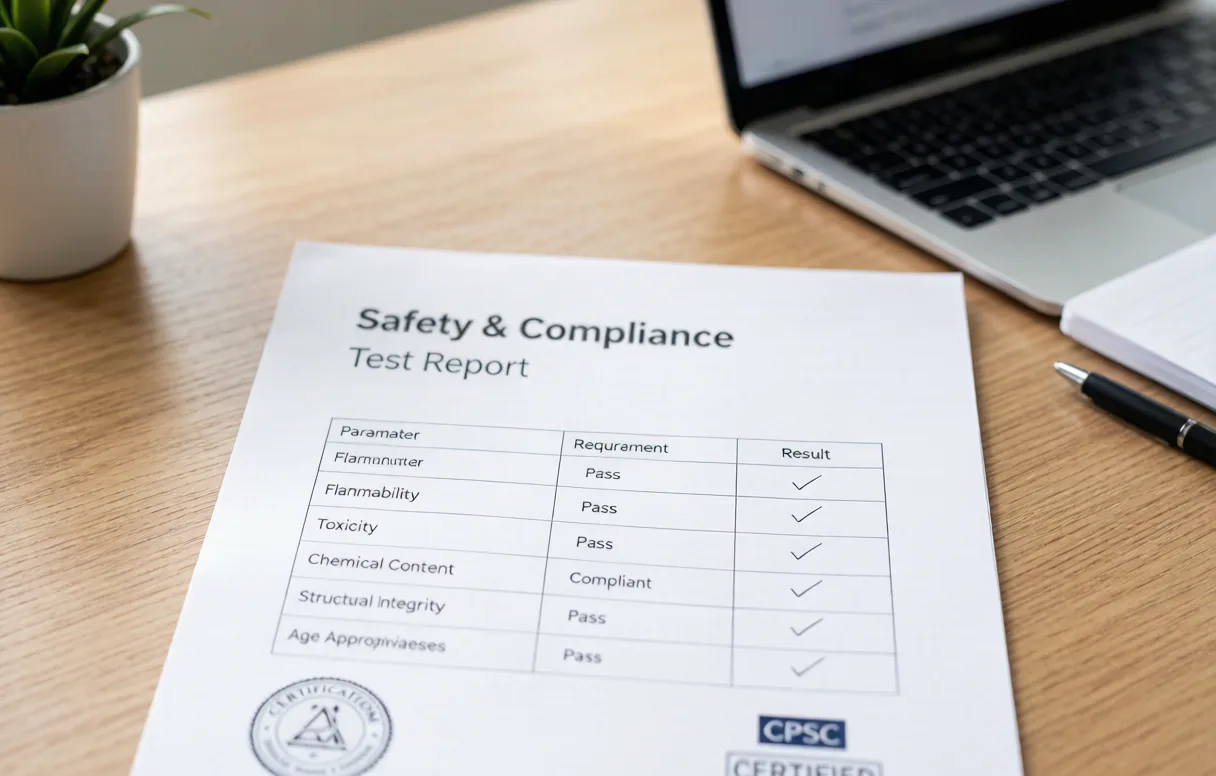
- CPC (Children’s Product Certificate): for the US, the importer issues the CPC based on testing; the factory cannot issue it for you. Our CPC guide explains the 7 required elements.
- GB 31701 Class A: the safety grade we build to, as noted above.
What a private label factory cannot do for you
An honest partner tells you the limits. A factory cannot issue your CPC, cannot guarantee a platform (Amazon, Target) will approve your listing, and cannot make a 100-piece run cost the same as a 10,000-piece run. What we can do is build to a locked spec, document the process, and support your compliance program with real test data.
Common Private Label Mistakes
Most failed first launches are not about the factory — they are about the brief. The recurring mistakes:
- Choosing on price only. The cheapest quote often hides a fabric substitution that fails at the border.
- Ignoring fiber-label law. A 3% drift on a “95/5” claim can trigger a recall in the EU. Plan the BOM lock early.
- Skipping the PP sample. Without a signed pre-production sample, “it looked different” becomes a dispute you cannot win.
- No CPSIA / CPC plan for the US. Many sellers learn about tracking labels and eFiling only after a hold at the border.
- Vague labeling artwork. Care label, country of origin, and warnings must be finalized before bulk — not after.
- Over-ordering the first run. A 100-piece test teaches more than a 1,000-piece guess.
Our brand-startup roadmap covers the end-to-end sequence so these gaps do not surface mid-launch. The good news is that every mistake above is preventable with the launch checklist in the next section — most failures come from skipping the checklist, not from the factory itself.
A Real Launch Case Study
The timeline below is a representative first-order flow for a US boutique brand. Numbers are typical, not a guarantee — every program depends on tech-pack readiness, fabric availability, and test requirements.
- Week 0 — Brief & tech pack. Brand shares a reference style and a basic tech pack; we advise on fabric and GSM.
- Week 1 — Fabric & lab-dip. Bamboo-viscose blend selected; color labs approved against Pantone.
- Week 2 — Proto sample. First physical sample reviewed for fit and hand-feel; one round of revisions.
- Week 3 — PP sample signed. Pre-production sample approved and locked as the production standard. 300 pieces per style committed.
- Weeks 4–6 — Bulk production. Cut, sew, and in-line QC against the locked BOM.
- Week 7 — Final inspection. AQL 2.5 final inspection; minor trim fix corrected before carton.
- Week 8 — Shipped. Folded, poly-bagged, cartoned with CPC and test summary; delivered to the brand’s US forwarder ~42 days after kickoff.
Why the timeline held
The brand avoided the usual slips because the tech pack was clear, the PP sample was signed, and compliance (CPC, tracking label, fiber accuracy) was planned at Week 0 — not discovered at Week 7.
What would have broken it: a vague tech pack (adds a sampling round), an unapproved lab-dip (stops bulk), or a CPC discovered at Week 7 (holds the container at the border). The single biggest protector of a launch date is deciding compliance at Week 0, not after production. For a US-bound order, build the CPC and eFiling step into the schedule from the start — our CPC guide shows where it sits.
Where this fits your private label knowledge center. This page is the hub; the linked articles are the deep nodes — the OEM/ODM/PL comparison, the MOQ logic, the tech-pack and sampling guides, the CPC and OEKO-TEX explainers, and the AQL inspection standard. Read this guide first for the map, then open the node you need next. That is how a buyer builds real confidence before sending a purchase order, and it is exactly the cluster structure search engines reward.
Free Downloadable Resources
Private Label Kids’ Underwear Launch Checklist (PDF)
A one-page, six-phase checklist covering concept, tech pack, sampling, compliance, production, and shipment. Use it with your current factory or bring it to us as the standard we work to.
Frequently Asked Questions
Ready to Build Your Private Label Kids’ Underwear Line?
Nuohua Garment is a children’s underwear and sleepwear OEM/ODM factory building to GB 31701 Class A, with a ready-stock minimum of 2 pcs per style and color and third-party testing support. Tell us your niche and we will map the fastest safe path from tech pack to shipment.