
An Amazon Kids Underwear Private Label is still one of the most accessible entries into the children’s apparel market in 2026, but it is no longer a low-effort win. The category is crowded, compliance is stricter than ever, and the sellers who survive are the ones who treat sourcing and product quality as the foundation of the business rather than an afterthought. This guide walks through the entire launch path in order — product definition, factory vetting, compliance, sampling, ordering, and the listing launch itself — so you can go from idea to a live, compliant listing without the expensive mistakes that sink most first-time sellers.
On this page
- Is a kids underwear private label still worth launching in 2026?
- Step 1: Define your product and size range first
- Step 2: Vet an OEM/ODM factory properly
- Step 3: Lock compliance before you list
- Step 4: Sample, revise, and seal the spec
- Step 5: Order quantity, MOQ, and cash flow
- Step 6: Build the listing and launch
- Launch timeline and budget checkpoints
1. Is a Kids Underwear Private Label Still Worth Launching in 2026?
Yes — with a caveat. Kids underwear is a replenishment category with strong repeat-purchase economics and simpler returns than most apparel, but the days of listing a generic product and winning on price alone are over. In 2026 the winners differentiate on fit, fabric, compliance and branding, not on being the cheapest listing in the search results.
The reason it is harder now is structural: the search results are full of near-identical multi-packs, advertising costs have risen, and compliance enforcement is no longer optional. The sellers who thrive are the ones who own their product, not the ones who resell a stock design and hope.
That is exactly why a real OEM/ODM manufacturer matters. A factory partner with genuine production capability — for reference, Nuohua Garment has operated since 2016, runs an 8,000 sqm facility with 300+ staff and a capacity of 1,000,000+ pieces per month — gives you the three things a reseller can never offer: a private pattern, a controlled fabric, and a documented quality process. Our library of 3,000+ print designs also means you can differentiate without paying for custom art on your first order.
2. Step 1: Define Your Product and Size Range First
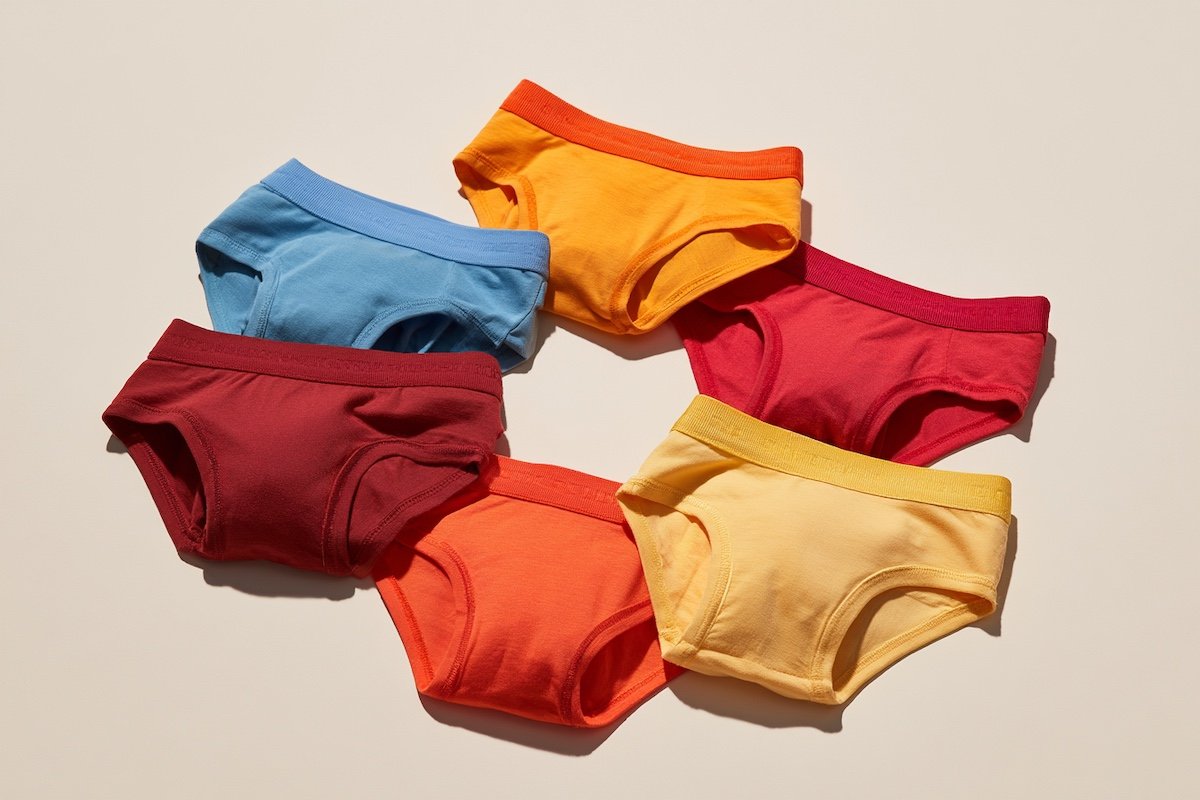
Before contacting any factory, decide three things: the cut (brief, boxer brief, or triangle), the size range, and the pack format. These three decisions drive your MOQ, your landed cost per unit, and the structure of your listing content — so make them on paper before you make them in fabric.
Founders almost always start this step backwards, choosing colours and prints before the product. The cut matters more: briefs, boxer briefs and triangle styles each appeal to a different parent, fit differently, and carry different fabric and elastic requirements. Pick one cut, prove it sells, then extend the range.
The size range is the next decision, and it has a direct cost consequence. Our production runs from 90 cm to 160 cm, covering roughly ages 2 to 14. Launching the full range maximises your addressable market but multiplies SKU count and per-colour order quantity, so most first-time sellers do better launching a narrower band — say 100 cm to 140 cm — and expanding after the first reorder.
Pack format is the third lever. A multi-pack of five or seven pairs raises average order value, absorbs the per-unit fulfilment cost, and looks more compelling in a hero image than a single pair, which is harder to make profitable once shipping is priced in.
| Decision | Your options | Why it matters now |
|---|---|---|
| Cut | Brief, boxer brief, triangle | Determines pattern, elastic, and fabric consumption |
| Size range | 90 cm to 160 cm (full) or a narrower band | Directly drives SKU count and total order quantity |
| Pack format | Single pair vs multi-pack | Shapes average order value and shipping economics |
| Colour and print | Solids, prints, or a themed set | Affects dyeing minimums and sample cost |
3. Step 2: Vet an OEM/ODM Factory Properly
A real OEM/ODM factory gives you the pattern, the fabric sourcing, the production and the quality control under one roof — and it can prove it with a production line, a sample room and a documented QC process, not with a polished website alone.
The single most valuable skill in this launch is telling a factory apart from a trading company: a trading company buys the garment from the real factory, marks it up, and leaves you with no direct line to the people who fix problems. A factory answers to you directly.
There are concrete things to ask for that a trading company struggles to provide. Ask to see the production floor on a video walkthrough, the sample room’s workflow, and the quality control process in writing, stage by stage. Nuohua Garment runs a documented six-stage QC process that ends with needle detection and holds a defect rate under 0.3% — numbers a factory is proud to share and a middleman cannot.
Also ask how fabric is sourced. A genuine manufacturer develops its own base fabrics or holds long-term mill relationships, which is how it controls colour consistency and delivery. If a supplier cannot tell you the fabric composition and GSM of its own base cloth without checking with someone else, you are probably talking to a reseller.
4. Step 3: Lock Compliance Before You List
For the US market you need CPSIA compliance and a Children’s Product Certificate (CPC) backed by third-party testing at a CPSC-accepted laboratory, plus a permanent tracking label on every unit. In China, the factory’s standard is GB 31701 Class A for infant and toddler textiles. Sort this out before your first order, not after Amazon flags the listing.
Compliance separates a launch that stays live from one that gets suppressed. Children’s products sold in the United States fall under the CPSIA, which requires third-party testing and a CPC certifying that the product meets the applicable safety rules — lead content, phthalates, and any small-parts or flammability requirements. The testing is done by a CPSC-accepted laboratory such as SGS, Intertek or TUV SUD.
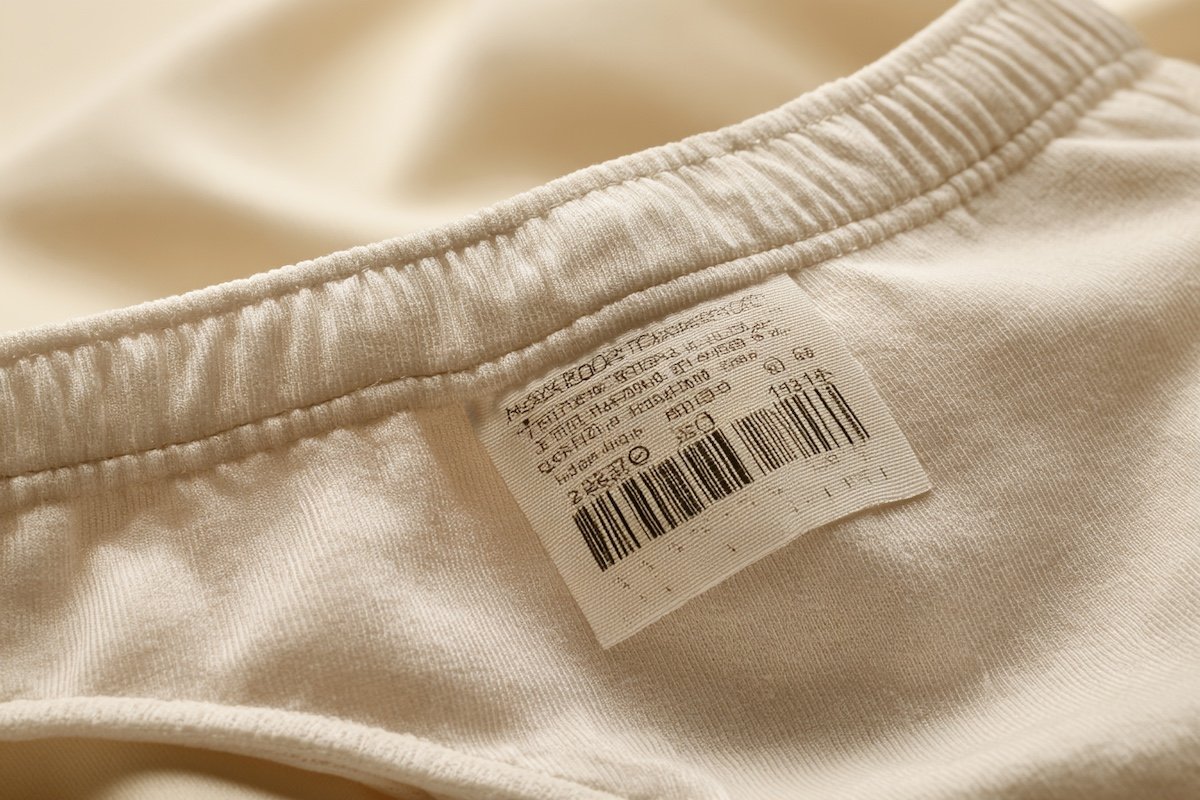
Two details trip up sellers most often. The first is the tracking label: every children’s product must carry a permanent mark with the manufacturer’s name, production location, date of manufacture, and a batch code so it can be traced back in a recall. It must survive washing. The second is that the CPC is per product — a multi-pack of briefs in five colours is one product, but a different cut or fabric composition is a different certificate.
On the China side, the relevant standard is GB 31701, with Class A applying to infant and toddler garments worn directly against the skin. Ask your factory to confirm which class applies and keep the test reports on file. If a factory is applying for OEKO-TEX certification, treat that as in progress rather than certified until the certificate is issued.
5. Step 4: Sample, Revise, and Seal the Spec
Never go to bulk on a digital mock-up. Order a development sample first, then a pre-production (PP) sample, and seal the PP sample as the reference your bulk line must reproduce. This is where fit problems get caught for the cost of one garment instead of thousands.
The sampling stage moves risk out of bulk and into development, where a mistake costs a single piece. The process has three stages that are easy to confuse. The development sample proves the style, fabric and construction work at all. The fit sample tests the size run on real children. The PP sample is the contract: made from the actual bulk fabric and trims, to the final specification, and sealed as the reference the line must match.
What you bring to this stage determines how many rounds it takes. A complete tech pack — rise, waistband finish, leg elastic width, label placement — plus a Pantone reference for prints and a physical reference for fabric colour, collapses the revision count. Screen colours are the single biggest source of “this is not what I approved” resamples, so fix colour with a physical lab-dip approved in daylight.
The sample fee itself is a small fraction of your development cost, and a legitimate factory credits it back against your first bulk order once you meet the minimum. Treat a supplier that will not put refund terms in writing as a red flag — it usually means you are paying a middleman’s markup on top of the real sample cost.
6. Step 5: Order Quantity, MOQ, and Cash Flow
For kids underwear the realistic MOQ is 3,000 to 5,000 pieces per single colour. Sleepwear and pajama sets start at 1,000 sets per design, and baby sizes at 150–300 pcs per color on selected styles. Plan your cash flow around these real numbers, not around the tiny minimums some agencies advertise.
MOQ is the point where most first-time sellers’ budgets meet reality. A private label product cannot be produced in print-on-demand quantities: fabric is dyed in minimum lot sizes, the cutting floor is set up for a spread of hundreds of plies, and the line is configured for a full run. The minimum exists because that is where the factory’s setup cost gets absorbed.
Here is the honest structure, category by category:
| Category | MOQ per single colour | What it reflects |
|---|---|---|
| Kids underwear | 3,000 – 5,000 pcs | Dyeing and cutting minimums on the base fabric |
| Sleepwear / pajama sets | 1,000 sets | Set construction and trims |
| Baby sizes | 150–300 pcs per color on selected styles | Finer-gauge fabric and stricter finishing |
Notice the MOQ is quoted per single colour, not per order — a five-colour multi-pack can mean five times the colour minimums. One way to manage this is to launch with fewer colours and let the multi-pack mix carry the variety.
Your unit cost is not fixed either — it varies by fabric, construction, print complexity and quantity, and a serious factory quotes it per design. Budget using industry benchmarks, then confirm the real number once your spec is locked — which is why sampling comes first.
7. Step 6: Build the Listing and Launch
Launch with a multi-pack hero listing, a mobile-first title, size-chart infographics in the image stack, and a review-generation plan that stays within Amazon’s rules. The listing is where all of your sourcing work finally converts into revenue.
By the time your inventory is on the water, build the asset that sells it. The title matters most: Amazon truncates titles aggressively on mobile, so lead with the keyword, size and pack format, and leave the adjectives for later. “Kids Underwear, 5 Pack, Boys Cotton Boxer Briefs, Ages 4-10” outperforms a long string of marketing words, because the customer can see the offer in the first line.
The image stack does the job your copy cannot. A hero shot, a size chart infographic, a fabric close-up, and a lifestyle shot together answer the questions that would otherwise become returns. For kids apparel the size chart is the highest-leverage image, because fit anxiety is the number one reason parents abandon a cart or return a multi-pack.
Reviews are the engine of an underwear launch, but only when they are earned the right way. Use the request-a-review button and the Vine program, and never manufacture reviews — a compliance suspension ends a launch faster than any competitor could. A product that genuinely fits and holds up through washing earns the repeat reviews that carry the category.
8. Launch Timeline and Budget Checkpoints
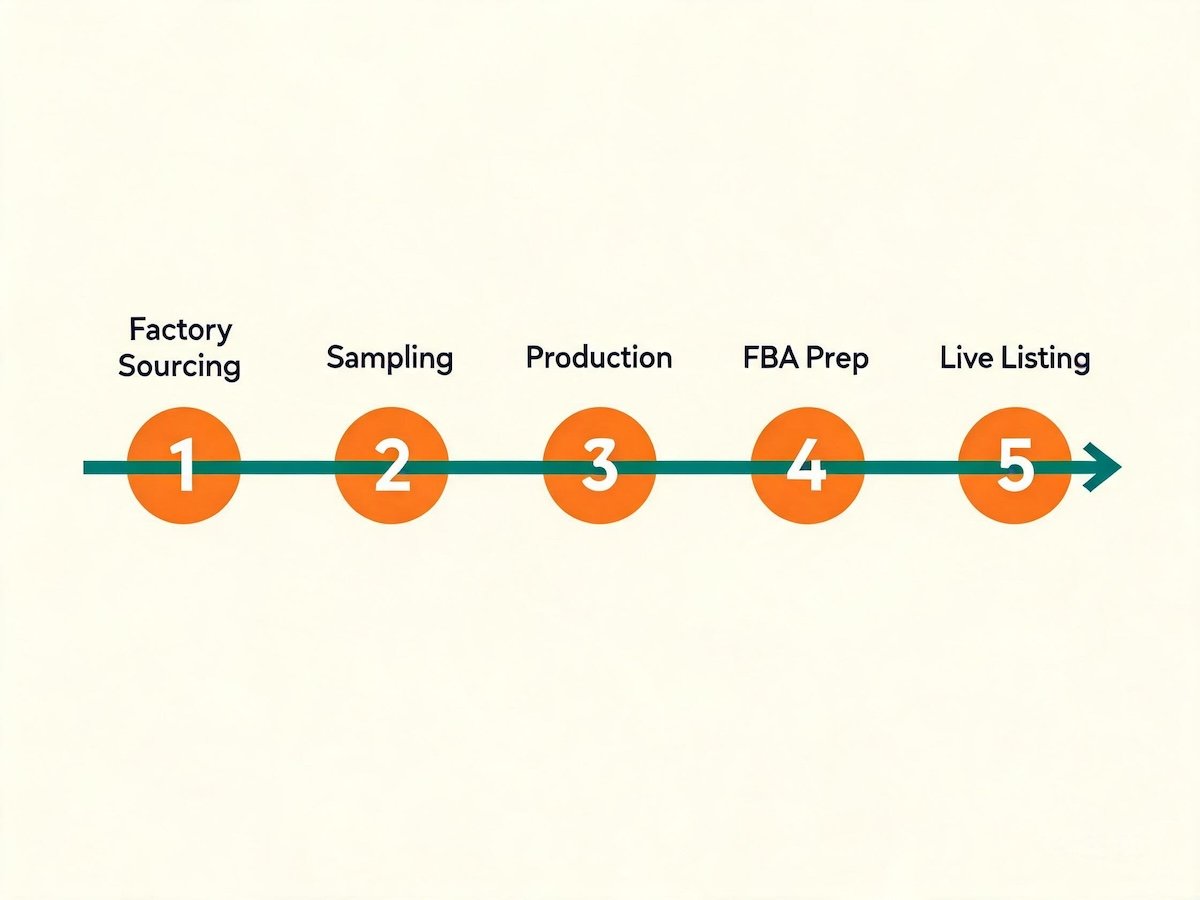
A realistic first launch, from idea to live listing, runs roughly 12 to 16 weeks — with the factory’s production lead time as the longest single block. Budget for sampling, testing, first inventory and launch advertising as four separate line items, and you will not stall at the finish line.
The timeline is easier to manage when you see where the weeks go: product definition and factory vetting take one to two weeks, sampling and revisions run two to four, compliance testing runs one to two, and production plus shipping is the long pole — commonly four to six weeks of production plus ocean freight. Build the listing in parallel with production, not after it.
- Weeks 1-2: define the product, size range and pack format; shortlist and vet factories.
- Weeks 3-6: sampling, fit testing, colour approval, and spec sealing.
- Weeks 6-8: third-party compliance testing and CPC preparation.
- Weeks 7-13: bulk production and shipping, while you build the listing and image stack.
- Weeks 13-16: inventory inbound, listing live, launch advertising on.
The budget checkpoints mirror the timeline: keep separate lines for the sample fee, testing, first inventory (your largest outlay), and launch advertising. The most common failure we see is a good product that ran out of budget two weeks before launch because the founder spent it all on inventory.
Ready to move from idea to a compliant, launch-ready product? Email info@nuohuagarment.com or message us on WhatsApp at +86 150 1198 5393 with your cut, size range and target quantity, and we will return a sourcing plan with real MOQs and a written sampling process.