
Kidswear Color Trends 2027: From Trend Forecast to Bulk Dyeing
Colour is where a trend forecast meets a dye house, and where most ranges quietly lose money. A forecast can name “oatmeal with a clay accent” in one sentence; bulk dyeing has to reproduce that clay accent across 8,000 metres, three deliveries and a re-order six months later. The 2027 palette — warm neutrals with one concentrated accent — is unusually friendly to production, but only if the colour plan is built like a production spec, not a mood board.
This is a production-side reading of 2027 kidswear colour trends. It follows our standard 12-point structure and treats lab dips, shade bands and colorfastness as the real subject, not the footnote.
On this page
- What is the trend?
- Why is it growing?
- Which kidswear products fit?
- What should buyers change?
- Production feasibility
- Fabric & construction
- MOQ, cost and lead time
- Market & compliance considerations
- Nuohua’s 20-year manufacturing view
- Buyer checklist
- Related manufacturing guides
- Turn the trend into a production plan
Back to the 2027 kidswear trends overview — colour trends are one spoke of the full cluster.
1. What is the trend?
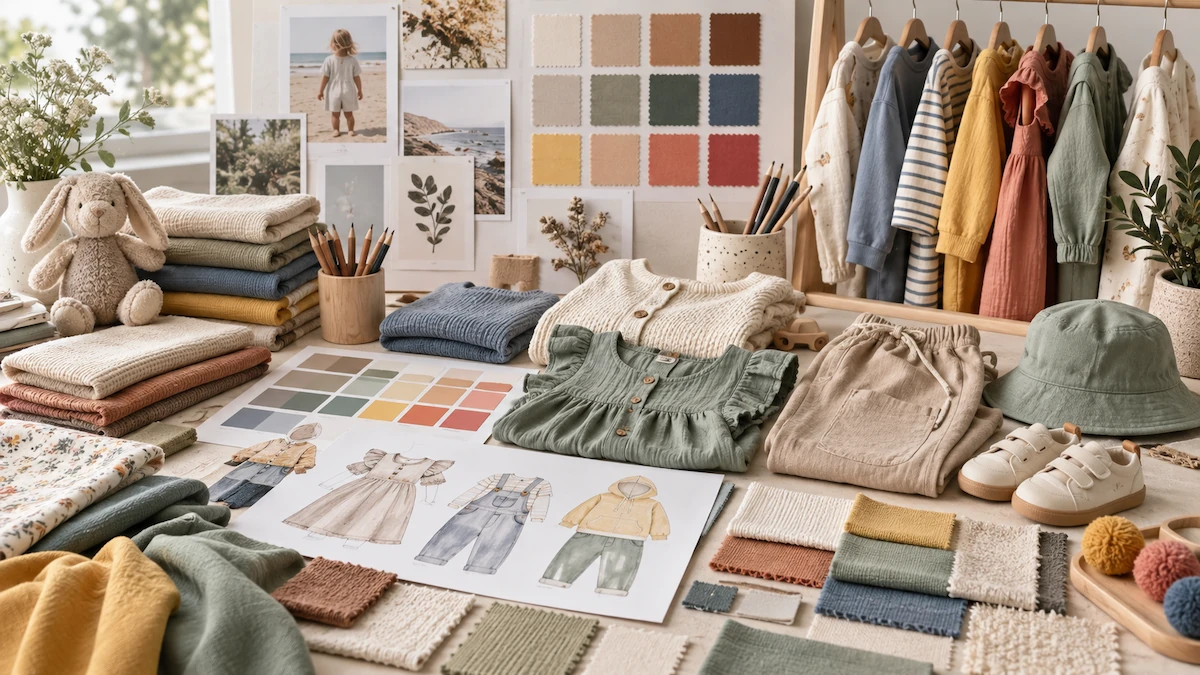
The 2027 kidswear palette is warm neutrals (oatmeal, clay, sage, warm grey) carrying one saturated accent, plus a low-chroma “barely-there” range for infants. The production-relevant point is that this palette needs fewer dye lots and tolerates tighter shade bands than a multi-bright season.
The commercial story of 2027 colour is restraint. Where a few seasons pushed five or six competing bright colours per range, 2027 concentrates the energy: a quiet base with one deliberate accent. That is good news for the dye house, because the number of distinct colourways — and therefore the number of lab dips and approval cycles — falls.
| Colour group | Examples | Where the cost sits |
|---|---|---|
| Warm neutral base | Oatmeal, clay, sand, warm grey | Low — one dye lot can serve a whole range |
| Single saturated accent | Terracotta, mustard, petrol, berry | Low-Moderate — one or two accent dips |
| Low-chroma infant range | Putty, powder, ecru, pale sage | Low — tight shade band, easy re-order |
| Tonal gradient sets | Three steps of one hue | Moderate — needs a defined shade band |
A “direction” is not a dye spec. Clay is not a Pantone number. The next sections exist to convert the forecast into a reproducible bulk colour.
2. Why is it growing?
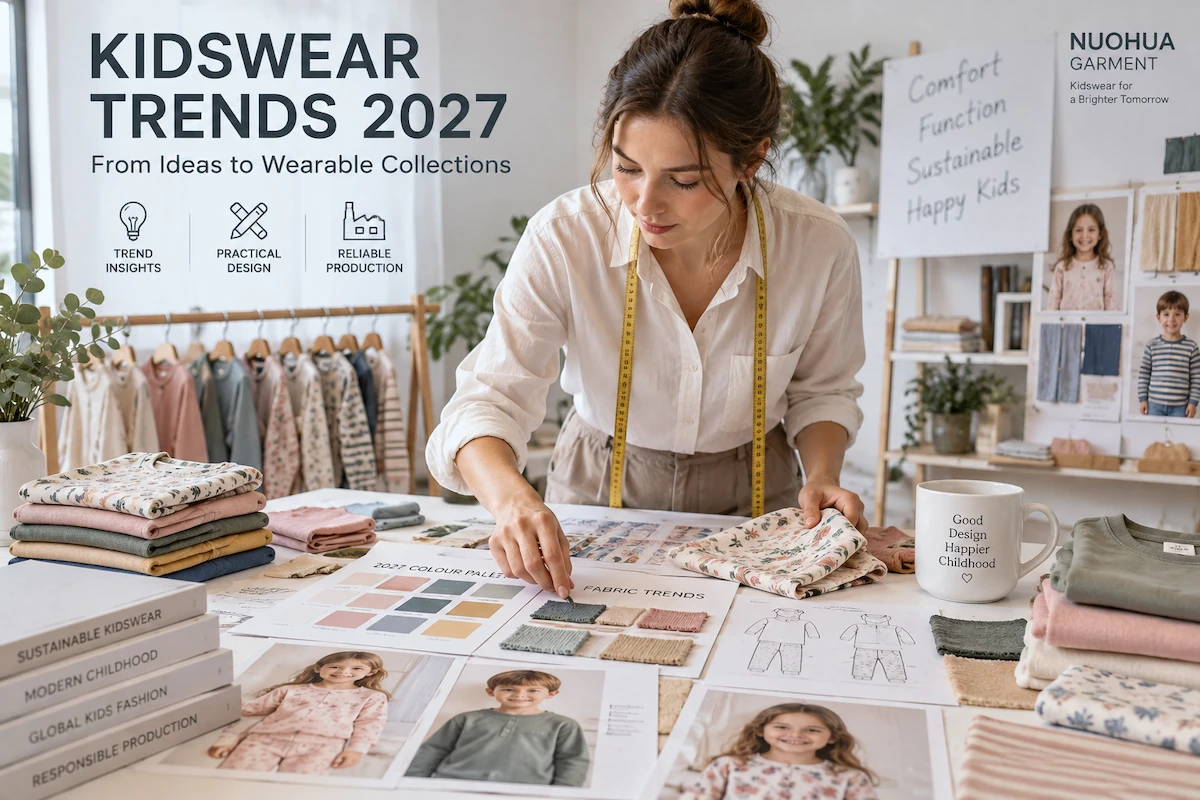
Three forces: parents buying fewer, longer-lasting garments reward neutral bases that survive trend churn; retailers shifting shelf space to coordinated tonal ranges; and brands reducing colourway count to cut development and inventory cost.
Market signalWe read the 2027 colour direction from colour and material forecasting services, kidswear retail assortments, trade media and our own production data — the same four source types used across the cluster.
Nuohua manufacturing viewA colour only becomes a plan once it passes the second question: can it be dyed repeatedly, to a shade band a buyer will accept, across the order quantity and re-orders?
- Fewer, longer-lasting garments.Neutral bases stay sellable across seasons, so parents and retailers both favour them. That directly reduces the number of colourways a range needs.
- Retail assortment shift to tonal ranges.Coordinated tonal sets need fewer distinct dyes and read as “designed” rather than “varied.” Assortment that survived a buying committee is the strongest signal.
- Colourway count is a cost lever.Each extra colourway is a lab dip, an approval cycle, a separate bulk dye lot and a separate inventory line. Brands are finally pricing that.
3. Which kidswear products fit?
Produce: tonal coordinated sets, neutral-base ranges with one accent, low-chroma infant programmes. Avoid overdoing: six-bright “rainbow” ranges, un-banded gradients that drift between deliveries, and accent colours specified only as a name with no target shade.
| Produce this | Avoid overdoing | Why |
|---|---|---|
| Tonal coordinated sets (one base, one accent) | Six-competing-bright ranges | Each bright is a dye lot, an approval, an inventory line |
| Neutral-base range with a single accent | Accent named only (“terracotta”) with no target | No target = no reproducible dip; re-orders drift |
| Low-chroma infant programme | Un-banded gradients between deliveries | Drift fails the shade band and the buyer’s eye |
| One dye lot serving a whole range | Per-style unique colours with no shared lot | Kills the main 2027 production advantage |
4. What should buyers change?
Change three habits: brief colour as a target shade plus tolerance, not a name; define a shade band before bulk; and design ranges to share one dye lot wherever possible.
| Change | Current practice | Change to | Why |
|---|---|---|---|
| Colour brief | “Terracotta top” | Target shade + tolerance band | A name is not a reproducible dye |
| Shade control | Approved at dip, forgotten at bulk | Shade band locked before bulk | Bulk drifts without a band to measure against |
| Range architecture | Each style its own colour | Shared neutral base across styles | One dye lot cuts cost and re-order risk |

5. Production feasibility
Feasibility is high for neutral-base ranges sharing one dye lot and moderate for tonal gradients (which need a defined shade band). The main risks are dip-to-bulk drift, cross-fabric shade variance, and colourfastness on the accent.
- Target set.A reference shade plus tolerance, not a name.
- Lab dip approved.Physically approved against the target, not by photo.
- Shade band defined.The acceptable spread across bulk is agreed before dyeing.
- Cross-fabric check.The same colour on two bases reads differently; both must sit in band.
- Colorfastness tested.Accent colours especially — wash, rub and light.
- Re-order plan.The dip is retained so the second lot matches the first.
- Second-quality budget.Out-of-band units priced into the first run.
| Element | Feasibility | Note |
|---|---|---|
| Neutral base, one dye lot | High | Lowest risk; serves a whole range |
| Single accent, banded | High | One dip; colourfastness verified |
| Tonal gradient, banded | Medium-High | Needs a defined band across steps |
| Accent on multiple bases | Medium | Cross-fabric variance needs control |
| Six-bright range | Low-Medium | Cost and drift scale with colourway count |
6. Fabric & construction
The same 2027 colour behaves differently on different bases: a clay accent on interlock reads deeper than on jersey, and on viscose from bamboo it reads cooler. Base selection and dye method (piece-dyed vs yarn-dyed) decide whether the bulk matches the dip.
Colour mechanics. Piece-dyeing a finished garment is flexible and cheap for small runs but drifts more between lots. Yarn-dyeing is steadier across re-orders but costs more and suits stable programmes. We cover base behaviour in our fabric weight guide and opacity, density & colour guide — this article only states which colour plan fits 2027.
Dye and finish failure modes
- Dip-to-bulk drift.The approved dip is 0.5 units off the bulk lot. Solved by a locked shade band, not by eyeballing.
- Cross-fabric variance.The same clay on interlock and jersey fails to match. Solved by approving both bases against the band.
- Colourfastness loss on accent.A saturated accent crocks or washes pale. Solved by colourfastness testing before bulk, covered in our colourfastness guide.
7. MOQ, cost and lead time
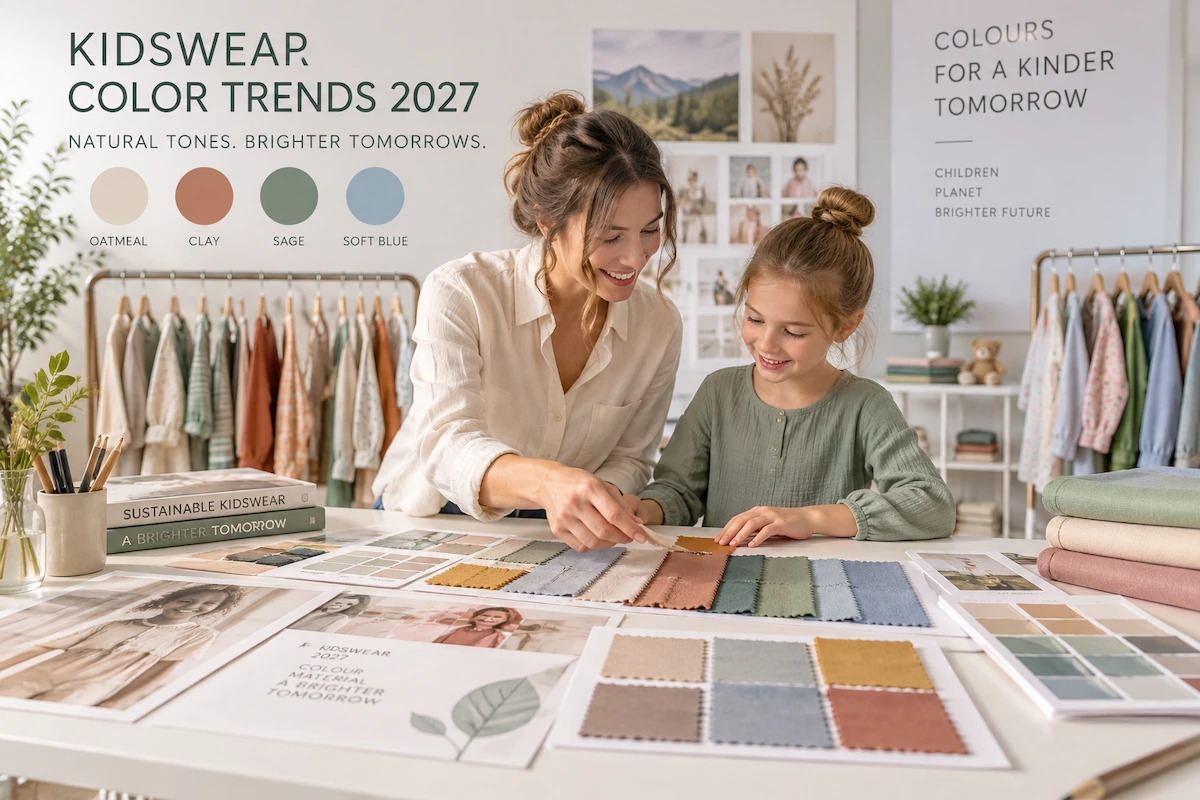
Custom dye sits on the “reviewed by fabric and colour” route; From 150–300 pcs per color on selected styles, depending on fabric, size range and customization requirements and can mix colours. Cost is driven by dye-lot count and colourfastness testing; lead time is driven by lab-dip approval cycles.
| Route | MOQ |
|---|---|
| Stock fabric + existing colour | From 2 pcs on selected in-stock styles, colors and sizes (mixable) |
| Custom dye (Pantone / lab dip) | Reviewed based on fabric and colour |
| Custom fabric development | Quoted separately, per fabric and colour |
Four cost levers:
- Dye-lot count.One shared neutral lot across a range is the cheapest colour plan there is.
- Colourway count.Each accent is a dip, approval and inventory line.
- Colourfastness testing.Accents need it; budget it once, not per re-order if the dip is retained.
- Re-order retention.Keeping the approved dip avoids re-approval cost later.
Lead-time chain: target + tolerance → lab dip → approval → shade band lock → bulk dye → colourfastness test → QC → freight. For a 2027 colour range, the colour brief should reach the factory by late Q1 2027 to absorb dip and re-dip time before the season.
8. Market & compliance considerations
Colour itself is not a regulated “trend,” but the dyes and finishes behind it are. Confirm azo-dye restrictions and colourfastness against the destination market; we reference REACH and GB 31701 Class A where relevant and verify through testing laboratories, not supplier statements.
Restricted substances.Certain azo dyes and other colour-related substances are restricted in the EU (REACH) and under other frameworks. We cover the certification position in our safety certifications guide. Colourfastness to skin contact is part of children’s garment safety and is tested, not assumed.
What we do not claim.We do not use “eco dye” or “organic colour” as unqualified selling claims. Where a certification is in progress it is stated as such; where a test is required it is run through a recognised laboratory.
9. Nuohua’s 20-year manufacturing view
Two decades of dyeing tell us: the dip is not the bulk, the band is the contract, and a retained dip is cheaper than a re-approved one. The 2027 restrained palette is the easiest we have seen to keep consistent across re-orders.
- The dip is not the bulk.We have seen a perfect dip become a 1.5-unit-off bulk lot because nobody locked a band. The band is the real specification.
- Retain the dip.A second lot dyed six months later without the retained dip drifts. Keeping it is the cheapest insurance there is.
- Shared lots are underused.Brands still specify per-style colours when one neutral lot would serve the range. The 2027 palette makes sharing obvious.
- Accents need testing.Saturated accents crock more than neutrals; we test them by default, not on complaint.
One question we would reframe.“What are the colours for 2027?” is the wrong first question. The right first question is “how many dye lots can this range share, and what band will the buyer accept?” — because the forecast is free, the reproduction is what costs.
10. Buyer checklist
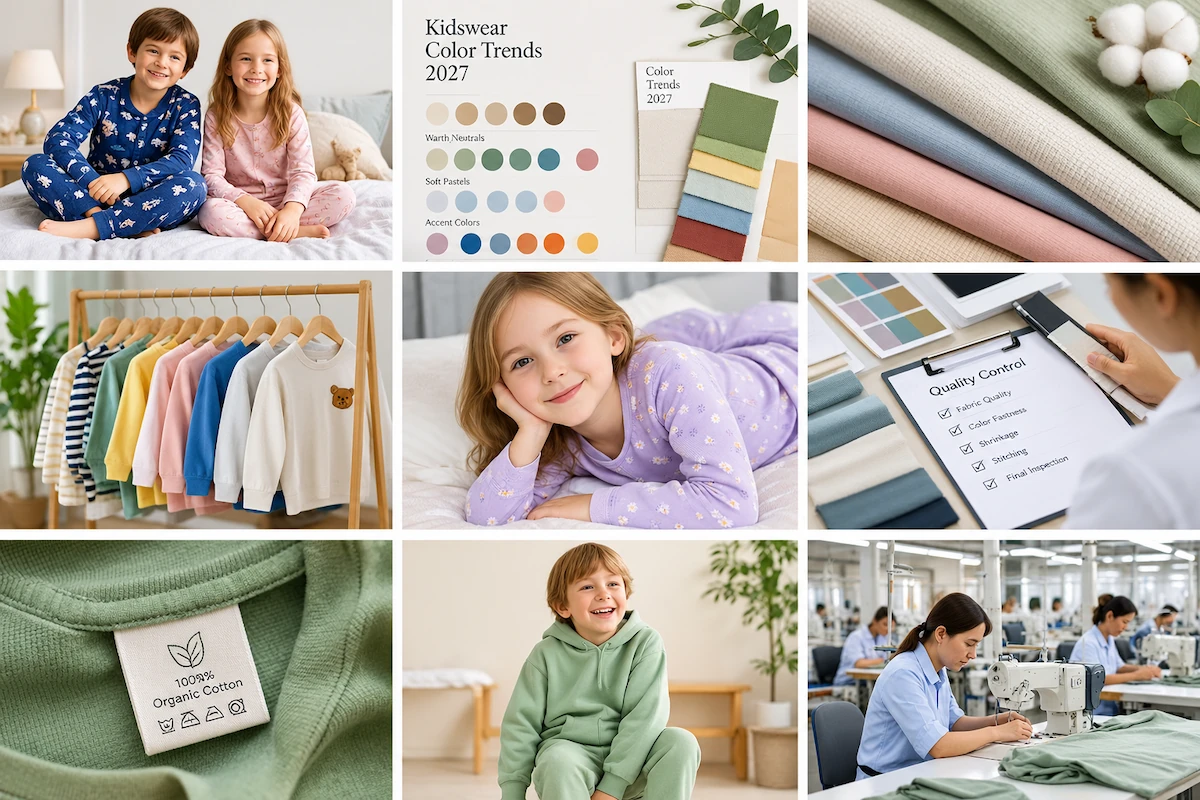
Ten checks before you brief a 2027 colour range: target + tolerance set, dip approved physically, band locked, cross-fabric checked, accent tested, lot shared, re-order retained, MOQ route known, cost levers priced, lead time mapped.
- Set each colour as a target shade plus tolerance, not a name.
- Approve the lab dip physically against the target.
- Lock the shade band before bulk dyeing.
- Approve the colour on every base it will appear on.
- Colourfastness-test the accent (wash, rub, light).
- Architect the range to share one neutral dye lot.
- Retain the approved dip for re-orders.
- Know the MOQ route: From 150–300 pcs per color on selected styles, depending on fabric, size range and customization requirements; custom dye reviewed per fabric and colour.
- Price the dye-lot and testing cost levers.
- Send the colour brief by late Q1 2027 to absorb dip cycles.
11. Related manufacturing guides
12. Turn the trend into a production plan
Turn the 2027 palette into a reproducible bulk colour.
Send us your target shades (with tolerance) and the bases they will appear on. We will return a lab-dip and shade-band plan that holds across re-orders — and a cost read on how many dye lots your range actually needs.
Or start with our lab dip & bulk approval guide.
Standards verified as of 2026-09; regulations change — confirm colourfastness and restricted-substance requirements with a recognised laboratory before ordering. This article is a Nuohua buyer-side assessment, not an industry standard. Nuohua Garment — kidswear OEM & ODM manufacturer since 2016.