
A Parenting Influencer Kidswear Collaboration is the fastest way to buy trust in a category where the buyer is a parent and the reviewer is a child who cannot yet write one. But trust is not a gift — it is a transaction with terms, and the founders who treat a collaboration as a handshake deal are the ones who lose content rights, pay twice for the same post, or watch a creator misread their brand. This guide covers the whole arc: how to pick the right creators, how to write a brief they will actually follow, what a contract must protect, and how to turn one collaboration into months of reusable assets.
On this page
- Why parenting influencers convert where ads do not
- How to pick creators for fit, not follower count
- Writing a campaign brief that gets followed
- The contract clauses that protect your brand
- Usage rights, exclusivity and what they cost
- The outreach message that gets a reply
- Turning one collaboration into a reusable asset library
1. Why Parenting Influencers Convert Where Ads Do Not
Parenting influencers convert because they sit inside the trust network where kidswear decisions are actually made: a parent watching another parent whose child is the same age and size. A recommendation from that source lands with the authority of lived experience, which no studio ad can replicate.
Kidswear purchases run on a specific anxiety: the parent cannot try the garment on themselves, and the child’s feedback is unreliable for anything beyond “I like the dinosaur.” The parent therefore borrows confidence from someone who has already run the experiment — another parent whose child is visibly in the same size band and the same daily routine. That is exactly what a parenting influencer supplies.
The mechanics are well documented: micro and nano parenting creators typically deliver higher engagement and lower cost per acquisition than macro creators, because their audiences are smaller but far more aligned. A creator with a focused following of parents of toddlers is worth more to a kids underwear brand than a lifestyle creator with ten times the reach and an audience of unrelated adults.
The mistake founders make is treating the creator as a billboard rather than a partner in demonstration. A parenting influencer’s value is not the size of the audience; it is the credibility of the demonstration — the child wearing the garment in a real home, through a real morning, on camera. Everything in this guide is organised around protecting and amplifying that demonstration.
2. How to Pick Creators for Fit, Not Follower Count
Select creators whose child is inside your size band, whose audience skews to parents, and whose feed already documents real family life. A creator with 8,000 aligned followers will outperform one with 200,000 generic followers almost every time.
Follower count is a proxy for reach, but reach is not conversion, and in kidswear the mismatch between the two is severe. A creator with a large audience of young adults without children can deliver millions of impressions and zero sales, because nobody watching is in the market. Alignment — the overlap between the creator’s audience and your buyer — is the metric that actually moves product.
The criteria to score a creator against:
- Child age and size. The creator’s child should sit within your size range of 90–160 cm, and ideally within the specific band of the collection you are promoting.
- Audience composition. Look for a follower base that is predominantly parents, ideally mothers, in your target geography.
- Feed authenticity. The creator should already post genuine family content, not a polished studio feed. Authenticity is what makes the demonstration believable.
- Engagement quality. Read the comments, not just the counts. Are parents asking sizing questions and tagging friends? That is the signal you want.
- Disclosure history. A creator who clearly labels sponsored content is protecting you as much as themselves — it signals a professional who understands platform rules.
3. Writing a Campaign Brief That Gets Followed
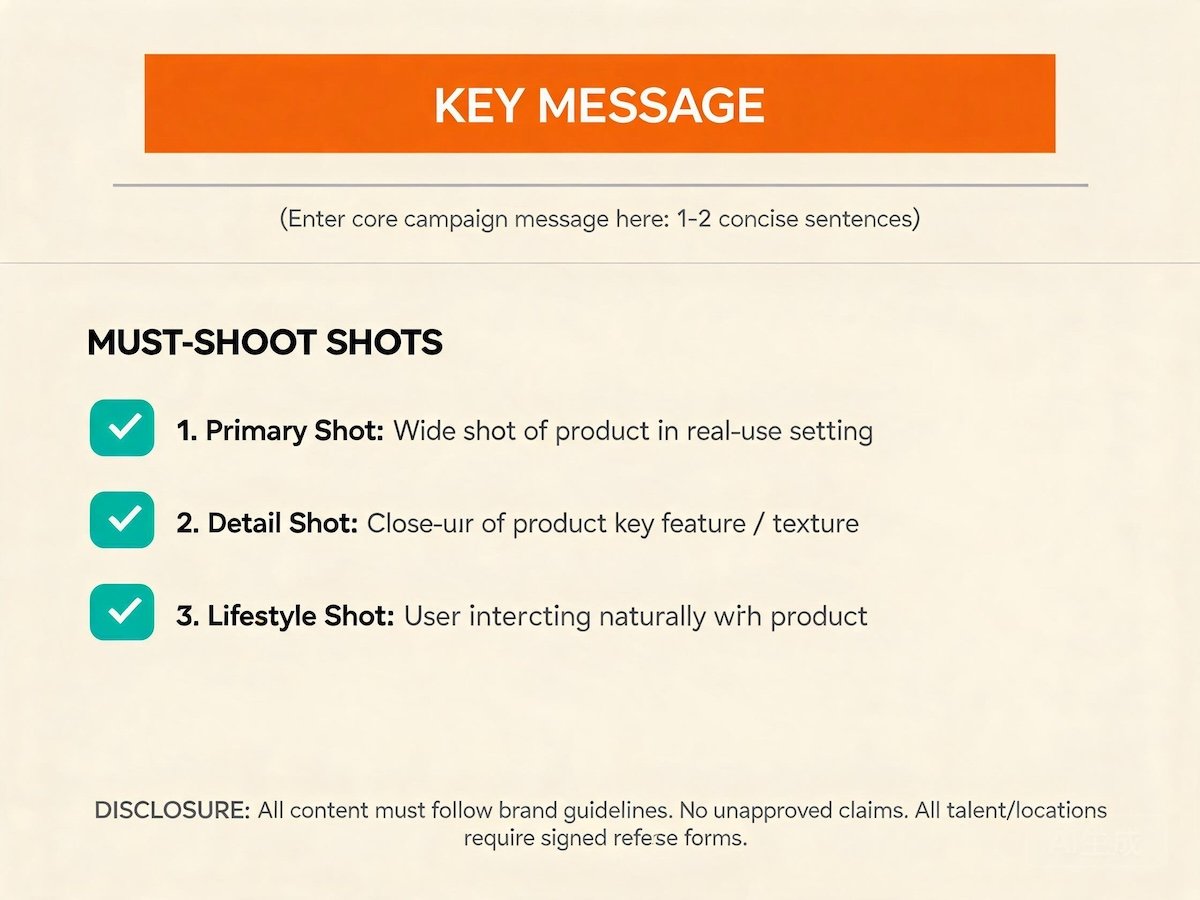
A brief works when it is short, specific and built around one demonstrable benefit. Give the creator a single message, two to three required shots, a clear disclosure requirement and room to speak in their own voice — and almost nothing else.
The most common failure in a parenting influencer kidswear collaboration is a brief so long it gets skimmed and ignored. Creators do not lack creativity; they lack clarity about what you need the post to achieve. A brief that lists twenty talking points guarantees that the one point that mattered — the fit demonstration, the waistband recovery, the print — gets lost.
A brief that gets followed contains five elements and no more:
- The one message. State the single benefit the post must convey, in one sentence. Everything else is optional.
- The required shots. Ask for two or three specific visuals: a full outfit on the child, a close-up of the waistband, a wash-and-wear after shot.
- The fit demonstration. Explicitly ask the creator to show the child’s size and, where possible, how the garment sits at that size.
- Disclosure. Require a clear, platform-compliant disclosure such as the platform’s paid-partnership label.
- Voice freedom. Tell the creator to describe the product in their own words, because scripted copy is the fastest way to make a post sound like an ad.
4. The Contract Clauses That Protect Your Brand
Every collaboration needs a written agreement covering at least four things: deliverables, usage rights, exclusivity and disclosure. If usage rights are not in writing, you do not own the content — you have merely paid to see it posted once.
The contract is where founders lose the most, because they skip it in the name of speed and then discover too late that they cannot reuse the content they paid for. A collaboration without written terms is a gift, not a purchase. The four clauses below are the minimum, and they apply even to a nano creator receiving product only.
| Clause | What it covers | Why it matters |
|---|---|---|
| Deliverables | The exact posts, formats and dates required | Defines what you are actually paying for |
| Usage rights | Your right to repurpose content in ads, email and on site | Turns one post into a reusable asset |
| Exclusivity | A window during which the creator will not promote a direct competitor | Protects the category adjacency you paid for |
| Disclosure | The creator’s obligation to label the post as sponsored | Keeps both parties compliant with platform rules |
Usage rights deserve the closest attention, because they are the difference between a post and an asset. Specify the term — twelve months is a common, reasonable window — the channels where you may reuse the content, and whether the right is exclusive or shared. A creator who grants twelve months of repurposing rights is giving you ad creative, email heroes and product-page reviews for the price of a single post.
Exclusivity, by contrast, is usually worth negotiating rather than demanding in full. A narrow exclusivity — “will not promote a competing kids underwear brand for 30 days” — is affordable and protective. A broad exclusivity that bars the creator from any childrenswear for a year is expensive and rarely necessary. Aim for the narrow window that protects your adjacency without pricing the collaboration out of reach.
5. Usage Rights, Exclusivity and What They Cost
Usage rights and exclusivity are the two negotiable variables that move an influencer’s price. Expect to pay a premium for longer usage terms and for exclusivity windows, and treat both as a percentage uplift on the base fee rather than a fixed line item.
Creator pricing is not a fixed menu; it is a base fee adjusted by the rights you ask for. The base fee covers the creator’s time to produce and post. Usage rights add value because you are asking to use the content beyond the original post, and exclusivity adds value because you are asking the creator to decline competing work for a period. Both are legitimate costs, and both are negotiable.
Rather than quoting invented rates — which vary too much by region, niche and audience to be useful — think in structure. The base fee reflects reach and engagement. A twelve-month usage grant typically adds a meaningful uplift, and a competitor-exclusivity window adds a further one, with the size of each uplift proportional to the value it extracts from the creator’s future options. The disciplined move is to price the collaboration in three parts and decide which parts you actually need.
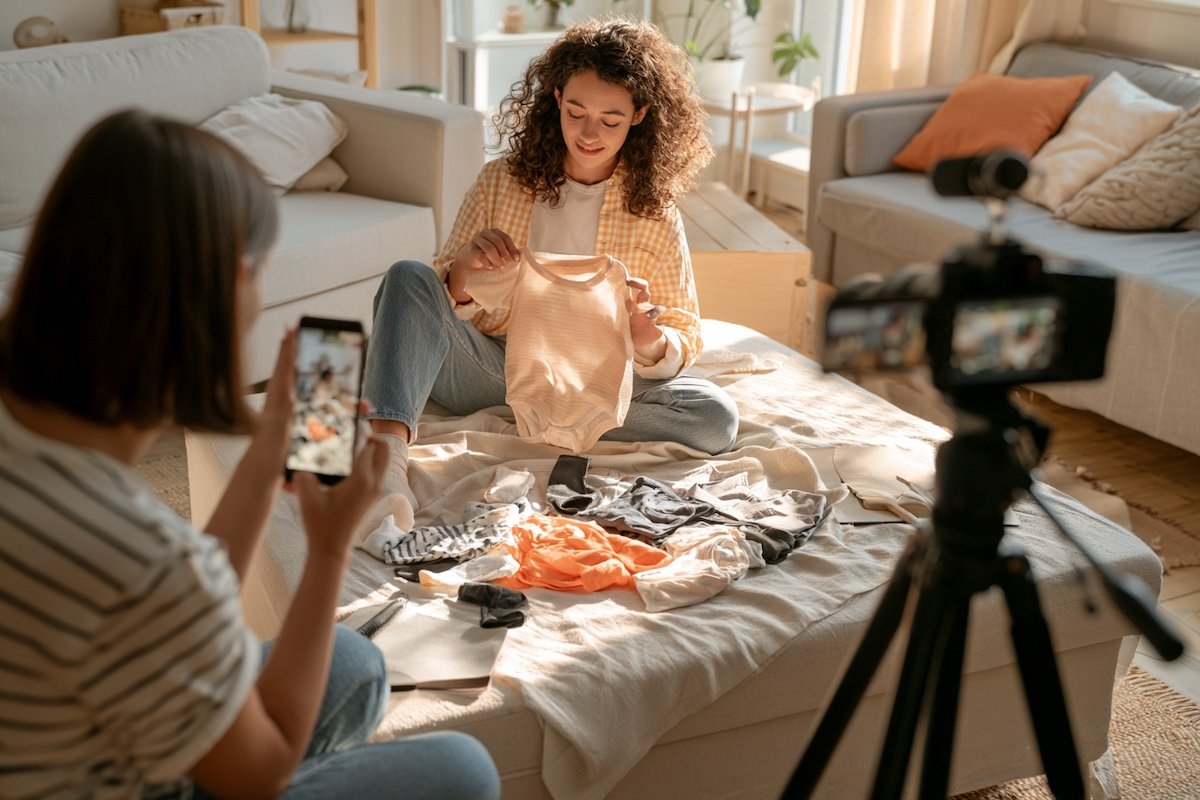
For a gifting-plus-fee micro collaboration, the usage-rights conversation is where most value is won or lost. A creator who is happy to accept product and a small fee may balk at handing over twelve months of reuse rights for nothing. Solving that tension up front — usually by paying a modest usage uplift — is cheaper than discovering after the post goes live that you cannot legally run it as an ad.
6. The Outreach Message That Gets a Reply
A creator outreach message that gets a reply is short, specific and respectful of their time: say who you are, why their audience is the right fit, what the collaboration involves, and what is in it for them — in four sentences or fewer.
Parenting creators are flooded with generic pitches that begin “Hey babe, love your content” and end with a demand for a free post. The way to stand out is to demonstrate, in the first two lines, that you have actually looked at their feed and understood their audience. Specificity is the entire strategy.
A working outreach template in four moves:
- Open with the specific. Name the post of theirs you watched and why it matters — “the size-up video you did for your daughter’s school uniforms” — not a generic compliment.
- State the fit. Explain, in one sentence, why their audience overlaps with your buyer: “your followers are parents of toddlers, which is exactly who we make briefs for.”
- Describe the collaboration. Say what you are offering — a gifting bundle, a usage fee, or both — and what you are asking for in return.
- Make the next step effortless. Close with a single, low-friction ask: a reply, a short email, or a link to a one-page brief.

The gifting pack itself is part of the pitch. One pair of underwear is a weak gesture; a small bundle across a few prints and sizes gives the creator something to open, photograph and show their child choosing from. It also signals that you understand the category — parents buy in sets, not singles.
7. Turning One Collaboration into a Reusable Asset Library
With usage rights secured, one collaboration should feed at least four surfaces: an ad, an email hero, a product-page review and a shoppable post. Repurposing is where the economics of influencer marketing are actually made.
The single post is not the product; the library is. A parenting influencer kidswear collaboration that is used once and archived is a missed opportunity, because the same clip that performs as a feed post can be cut into a paid ad, dropped into a welcome email, pinned to a product page and turned into a carousel. Every surface reuses the trust you already bought.
The repurposing workflow is straightforward. Save every asset the creator delivers in one organised folder, keyed by format and child size. Cut the hero clip into shorter edits for ads. Extract still frames for email and product-page imagery. Transcribe the creator’s spoken lines into pull-quotes for the site. With a small, disciplined library, one collaboration round supports a month of content across every channel you own.
Over time this compounds into the most valuable marketing asset a kidswear brand can hold: a library of real children, in real homes, wearing your product across the full 90–160 cm size run. That is not just content; it is the answer to every sizing and trust objection a parent brings to the page, already filmed and already believed.
Great collaborations need a product that holds up on camera and reorders well afterward. If you want a kids underwear or sleepwear partner that protects your influencer investment with 6-stage QC and a 3,000+ print archive, send your range and target sizes.
Email info@nuohuagarment.com · WhatsApp +86 150 1198 5393 · Request a quote at nuohuagarment.com