
The Amazon FBA vs FBM small apparel brand decision is the one that quietly determines whether your margins survive the first year. FBA buys you the Buy Box, Prime delivery and hands-off operations; FBM keeps your cash flow lean and your inventory under your own control. For a small apparel brand running many sizes and colours, the right answer is rarely one or the other — it is usually a deliberate mix. This guide breaks down the real costs, risks and decision points so you can choose on numbers, not on habit.
On this page
- The core trade-off: control vs convenience
- What FBA actually costs a small apparel brand
- What FBM actually costs (and saves)
- Why multi-SKU apparel inflates FBA’s per-unit fees
- Inventory risk: storage, aging, and returns
- Hybrid models: FBA for winners, FBM for testers
- Which model fits your stage: a decision framework
- Lowering your landed cost so either model works
1. The Core Trade-Off: Control vs Convenience
FBA trades margin and control for Prime eligibility and hands-off operations; FBM trades convenience for lower per-unit fulfillment cost, thinner cash tied up in stock, and full control over inventory. Neither is cheaper in every case — the difference is where the cost and the risk land.
Fulfillment by Amazon means you send inventory to Amazon’s warehouses, and Amazon picks, packs, ships and handles customer service on every order. In exchange you pay per-unit fulfillment fees, monthly storage fees, and a share of the sale. The benefit is enormous: your products become Prime-eligible, which for many shoppers is the difference between buying and scrolling past.
Fulfillment by Merchant means you keep the inventory and fulfill orders yourself or through a third-party warehouse. You pay no Amazon fulfillment fee, but you also carry the entire operational burden — packing, shipping, tracking, and handling returns and customer messages within Amazon’s strict response windows. The benefit is margin and control; the cost is your own time and the loss of the Prime badge.
For a small apparel brand the trade-off is sharper than for most categories, because apparel is a multi-SKU, size-driven product with a high return rate. That structure changes the arithmetic on both sides, and it is why copying what a one-SKU electronics seller does will mislead you.
2. What FBA Actually Costs a Small Apparel Brand
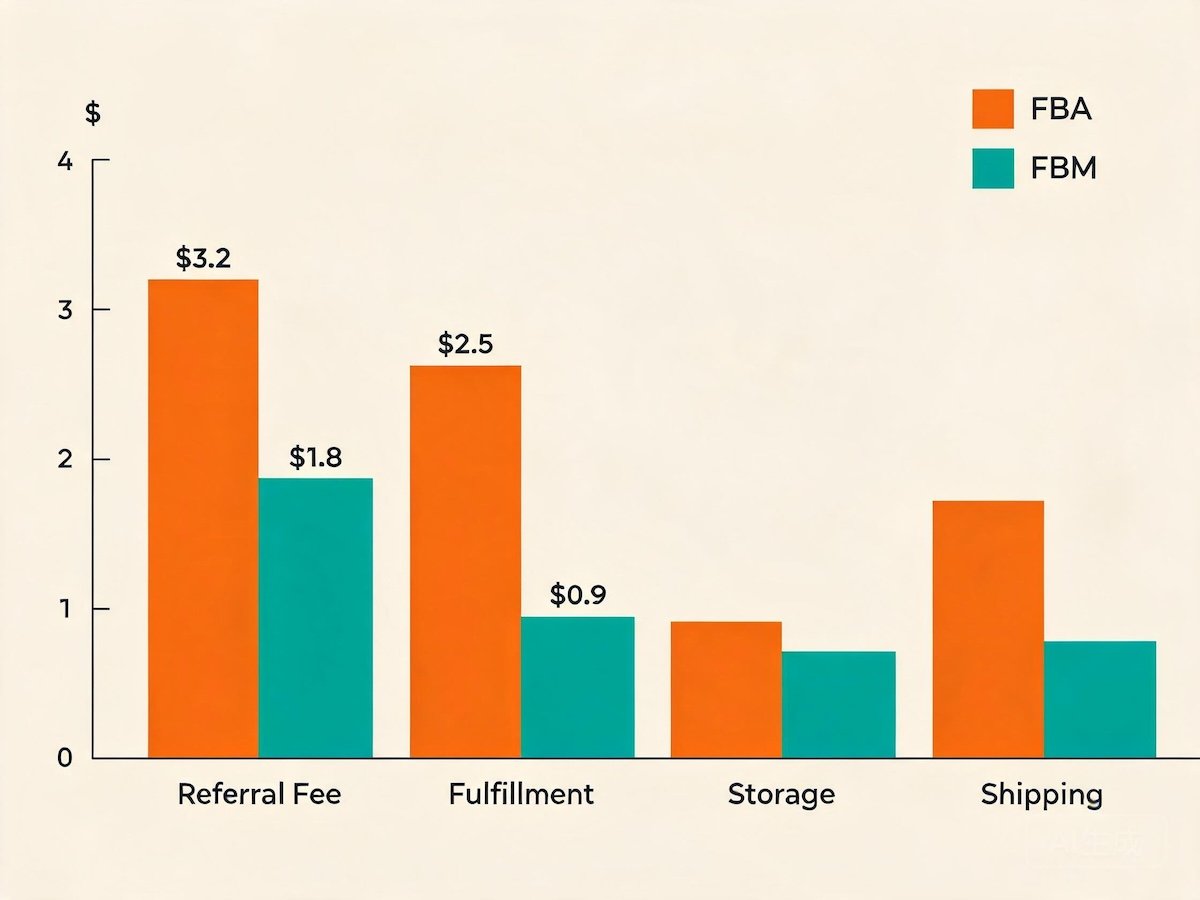
FBA’s cost is three layers: the referral fee on every sale, the fulfillment fee per unit, and monthly storage — plus long-term storage penalties on inventory that sits. For a low-priced, multi-pack apparel item, the fulfillment fee can eat a meaningful slice of margin before marketing is even considered.
The referral fee is the same whether you use FBA or FBM, so it is not part of the comparison — but it is worth knowing it comes off the top of every sale. The FBA-specific costs start with the fulfillment fee, which is charged per unit based on size and weight. Apparel is light but bulky, and a multi-pack of kids underwear often falls into a size tier that makes the per-unit fee significant relative to its price.
Storage is the second FBA cost, and it behaves differently for apparel. Apparel is seasonal and size-driven, so a brand holding a full size run across several colours pays monthly storage on units that may not sell for months, and higher fees once inventory sits beyond a threshold. A slow-selling size or colour quietly becomes a recurring bill.
The third cost is the one sellers forget: inbound shipping and preparation. Sending inventory to Amazon requires labelling, packing to Amazon’s specifications, and paying freight to the warehouse — a fixed overhead that a small brand without scale feels sharply.
| Cost layer | How it is charged | Why apparel feels it |
|---|---|---|
| Referral fee | Percentage of sale price | Same for FBA and FBM, but comes off first |
| Fulfillment fee | Per unit, by size and weight tier | Multi-packs are bulky relative to price |
| Monthly storage | Per cubic foot per month | Full size runs and colours sit for months |
| Inbound and prep | Freight, labelling, packing | Fixed overhead that small brands feel sharply |
3. What FBM Actually Costs (and Saves)
FBM removes Amazon’s fulfillment and storage fees, which can be the difference between break-even and profit on a low-priced apparel item — but it hands you the packing, shipping, tracking and return handling, and it costs you the Prime badge that many shoppers filter by.
The direct saving is real. Without the per-unit fulfillment fee and the monthly storage bill, the margin on a multi-pack can improve substantially — enough that some apparel brands run FBM precisely because FBA’s fees would push them into loss on every sale.
The hidden cost is your own operations. Every FBM order must be packed, labelled and shipped within Amazon’s handling window, with tracking uploaded, or your account health suffers. Customer messages must be answered quickly. Returns must be processed and restocked by you. For a founder running the business alone, this is a second job, and it scales poorly as order volume grows.
The other real cost is conversion. Prime shoppers filter by Prime eligibility, and an FBM listing without it competes for a smaller pool of buyers. The counterweight is that FBM lets you offer pricing that FBA fees would not allow, and for price-sensitive parents buying basics, that can close the gap. The model that wins depends on whether your buyer cares more about speed or price.
4. Why Multi-SKU Apparel Inflates FBA’s Per-Unit Fees
Apparel is the worst-case category for FBA’s fee structure because it is light but bulky, and a single design explodes into many SKUs — one per size, per colour. Every one of those SKUs is a separate inventory line paying separate fees and separate storage.
A one-SKU product pays FBA fees once. A kids underwear multi-pack in five colours across six sizes is thirty SKUs, each with its own fulfillment tier, storage footprint and inventory position. The design decision you made for the customer — more choice — is the same decision that multiplies your FBA cost base.
This is the structural reason small apparel brands feel FBA more than others. The per-unit fees are built around standardized size tiers, and apparel’s combination of light weight and bulk means it often lands in a tier whose fee is disproportionate to the item’s price — and edge-of-range sizes sell slower and sit in storage longer, quietly penalizing the breadth a size-run brand needs.
The practical response is SKU discipline, not less choice. Launch a narrower size band and fewer colours, prove the velocity, and expand only the SKUs that actually sell. A brand that launches the full range on day one pays storage and fulfillment on its worst sellers; a brand that launches lean pays it on its best.

5. Inventory Risk: Storage, Aging, and Returns
The biggest hidden risk in the FBA vs FBM choice is inventory — specifically, what happens to stock that does not sell. FBA charges escalating storage and removal fees on aging inventory, while FBM leaves the same unsold stock sitting in your own space where at least you control the cost.
Inventory is where the two models diverge most sharply over time. Under FBA, unsold stock is a recurring cost: it occupies Amazon’s storage, accrues monthly fees, and eventually triggers long-term storage and removal fees if it ages past the threshold. A size or colour that does not sell becomes a bill you keep paying, and the only escape is a removal order that costs money too.
Under FBM, the same unsold stock sits in your own warehouse or your home, where the carrying cost is whatever space is worth to you. That is not free — capital is tied up either way — but the cost is visible and under your control, and you can discount or bundle slow sellers without paying Amazon to move them.
Returns complicate both paths. Apparel returns run higher than most categories, and a returned multi-pack must be inspected, re-packed and either restocked or written off. FBA handles the logistics but charges for it and can mark returned units unfulfillable; FBM leaves the entire return process on you. Neither model makes returns pleasant — they just place the burden in different hands.
6. Hybrid Models: FBA for Winners, FBM for Testers
The most profitable small apparel brands rarely commit to one model. They test new designs and sizes through FBM to avoid storage risk, then move proven sellers into FBA to capture the Prime badge and the Buy Box. The hybrid approach lets each SKU pay for the model it actually needs.
The false choice in this debate is the idea that a brand must pick a side. Amazon allows a single account to run both FBA and FBM, and sellers who use that flexibility treat it as a portfolio decision. A new design with unproven demand goes FBM first, so a slow start does not accrue storage fees; a proven best-seller goes FBA, where Prime and the Buy Box compound its velocity.
The mechanics are straightforward in principle: keep a small FBM stock for testing and long-tail sizes, and send only your winners into FBA. In practice it requires discipline, because the same SKU split across two fulfillment channels needs careful inventory accounting and a clear rule for when a tester “graduates” to FBA.
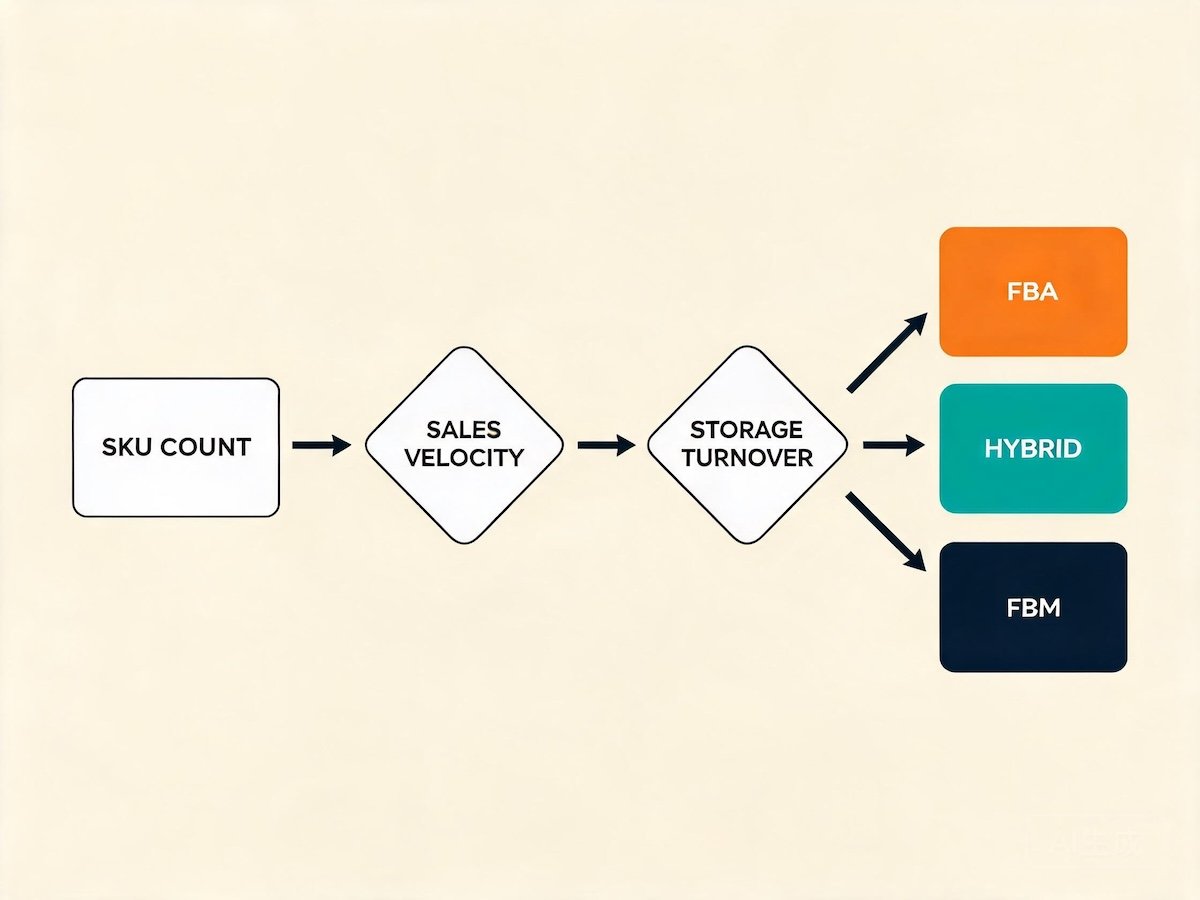
The graduation rule most brands settle on is velocity-based: once a SKU sells steadily enough that its storage turns over quickly, FBA’s fees are worth paying for the Prime conversion lift. Before that threshold, the SKU stays FBM. It is a simple rule that keeps cash flow lean during the risky early phase and only spends on FBA where it demonstrably pays.
7. Which Model Fits Your Stage: A Decision Framework
Start FBM when you are launching, low on cash, or testing many SKUs; move to FBA once you have proven sellers, Prime-sensitive buyers, and the capital to fund inbound inventory. Most brands land on a hybrid that follows their sales velocity, not a permanent allegiance.
The decision is easier when you separate it from identity and tie it to stage. A founder with limited capital and an unproven product should start FBM, because a thin cash position does not need a storage bill on inventory that might not move. A founder with proven demand and Prime-sensitive buyers should move to FBA, where the conversion lift outweighs the fees.
A few signals push clearly in one direction. A Prime-dominated niche makes FBA’s conversion advantage hard to overcome; a low-priced, price-sensitive product may leave FBM as the only path to a healthy margin. Seasonal inventory favours FBM, which avoids off-season storage, while order volume that outgrows hand-packing makes FBA’s operations relief the deciding factor.
Write the signals down and let them decide, rather than asking “which is better” in the abstract. The correct answer for a single-SKU electronics brand is not the correct answer for an apparel brand running thirty size-and-colour combinations.
| Situation | Lean toward | Why |
|---|---|---|
| Launching, unproven demand | FBM | Avoid storage risk while demand is unknown |
| Thin cash position | FBM | Keep capital out of Amazon’s storage fees |
| Proven best-sellers | FBA | Prime and Buy Box compound existing velocity |
| Prime-dominated niche | FBA | Conversion lift outweighs the fees |
| Seasonal or slow sizes | FBM | No storage bill through the off-season |
8. Lowering Your Landed Cost So Either Model Works
Fulfillment is only half the margin equation; the other half is landed cost. A lower factory price, a well-planned size run, and a quality process that reduces returns improve the numbers under both FBA and FBM — which is why sourcing and fulfillment are the same decision.
The reason so many sellers tie themselves in knots is that the fulfillment choice is visible while the sourcing choice is not — but the two interact directly. If your landed cost per unit is high, FBA’s fees push you into loss; if it is low, they are a rounding error. The brand that sources well has a real choice between models; the brand that sources poorly has no good option.
Landed cost is set at the factory, and it is set by four things: the unit price, which varies by fabric, construction and quantity; the MOQ, which for kids underwear runs 3,000 to 5,000 pieces per single colour; the size-run mix, which determines how much slow-selling stock you carry; and the quality, which determines your return rate. A factory that helps you plan the size run and holds a defect rate under 0.3% is directly improving your fulfillment economics.
This is the quiet conclusion of the whole question: the best way to make either model work is to start with a product that costs less to land and returns less often. Fulfillment strategy then becomes a tuning decision on top of a healthy unit-economics base, not a desperate search for a model that rescues a bad margin.
Ready to build the landed-cost foundation that makes either fulfillment model work? Email info@nuohuagarment.com or message us on WhatsApp at +86 150 1198 5393 with your target product, size range and quantity, and we will help you plan a size run and unit cost that leaves real margin for fulfillment.